
Deutsch-Chinesische Enzyklopädie, 德汉百科
 Architektur

 Campania

Das Schloss Caserta (italienisch Reggia di Caserta[1]) im italienischen Caserta, etwa 40 Kilometer nördlich von Neapel, ist eines der größten Schlösser Europas. Die Barockanlage wurde als Residenz der Bourbonen für deren Herrschaft über die Königreiche Neapel und Sizilien errichtet. Der Bau begann 1751 unter Karl VII. nach den Plänen Luigi Vanvitellis und wurde unter Karls Sohn Ferdinand im Wesentlichen vollendet.
Das Schloss, das regelmäßig um vier Innenhöfe gruppiert ist, gehört mit 1217 Zimmern zu den größten Barockbauwerken Europas. Die Fassade ist zur – nur in Grundzügen ausgeführten – Planstadt ausgerichtet. Durch die mittlere Achse ergibt sich ein Blick auf den 3 km langen Barockgarten, der in einen Bergpark übergeht.
Seit Dezember 1997 gehört Schloss Caserta zum UNESCO-Welterbe.
卡塞塔王宫(意大利语:Reggia di Caserta,意大利语发音:[ˌrɛdʒdʒa di kaˈzɛrta])是位于意大利南部卡塞塔的前皇家宅邸,那不勒斯王国波旁王朝建造的。这是世界最大的宫殿建筑,也为18世纪欧洲最大的建筑物之一,拥有235000平方米的占地面积和1200个房间。1997年被联合国教育科学文化组织指定为世界文化遗产。


从斯德哥尔摩乘车西行约半小时,就到了风景如画的皇后岛,沿湖岸步行,可以看见湖中白鸥点点,野鸭成群,湖水湛蓝,对岸树影依稀,林屋幽雅,置身其中,宛若仙境。
岛上有17世纪的瑞典王宫—德洛特宁宫(也叫皇后岛宫),现在是瑞典王室的主要住宅,王室为了让年轻一辈的家庭成员有较宽敞的庭园,于是就从旧城搬到皇后 岛/德洛特宁岛居住。王宫是与丹尔赛宫风格相同的宫殿建筑,虽然规模较小,但一眼望去,满目皆是绿意,花园里有喷泉、雕塑、花圃、黄杨木的树林,和矮小的 树木,像一块绿色的直立岩石一样朝上方指着天空。王宫是著名的瑞典建筑世家泰辛家族所规划建造大泰辛开始奠定王宫基础结构,小泰辛设计庭园,历经两代建筑 大师的心血,终于建成了这座有小凡尔赛宫之称的王宫。
虽然瑞典王室住在皇后岛的王宫中,但是多数宫殿仍开放供游人参观。王宫内部17世纪到19世纪的建筑装饰富丽堂皇,令人流连忘返。穿过庭院便可到接见厅和 礼仪厅,王宫的大公园中有瑞典版的大特里阿农(为凡尔赛宫花园内的皇家别墅)、中国宫殿与另风味的宝塔以及异国风味的宝塔尖顶和装饰性的阳台。 大约400年前,瑞典国王约翰三世在这里修建了一座名叫“石头房子”的宫殿,国王喜爱这里就像喜爱皇后一样,因此将这里命名为“皇后岛”,宫殿也称为“皇 后岛宫”。1661年,“石头房子”在一场大火中被化为灰烬,只有很少一部分保存下来。后来瑞典组织重新设计建造,同时吸收了法国、荷兰古典建筑的特点, 使整座宫殿具有瑞典、法国和荷兰建筑的特色。8世纪末,古斯塔夫三世国王的朝臣在中国宫殿的花园中晒太阳取暖,并且过着乡村生活。
宫殿的左翼是皇家大剧院,1792年,瑞典国王古斯塔夫三世在此遇刺身亡,从此,大剧院被迫关闭。直到1920年,人们要求重新启用剧院。剧院启封后,人 们发现一百多年前使用的各种道具、装置、设备和剧台都保存得相当完好,只要稍加改造和整修便可以使用。于是政府同意拨款整修剧院。经过两年多的修复,剧院 重新投入使用。从此,各地的名剧团经常到这里演出,上演一些著名的古典戏剧。
前往路线:从市政厅前登上游艇,30分钟即可到达。
开放时间:夏季8:00~20:00;冬季 9:00~17:00。门票约60克朗。(Quelle: www.nordic.com.cn/sweden/Travel/sweden-TR006.asp)
Schloss Drottningholm ist ein schwedisches Residenzschloss auf der Insel Lovön im See Mälaren in der Gemeinde Ekerö. Es war ursprünglich ein königliches Lustschloss und ist heute neben seiner musealen Nutzung zugleich privater Wohnsitz der schwedischen Königsfamilie Bernadotte, derzeit von König Carl XVI. Gustaf und seiner Ehefrau Silvia, die 1982 den Südflügel bezogen und seither das Stockholmer Schloss nur noch zu Repräsentationszwecken benutzen.
Die Gesamtanlage des Kronguts Drottningholm steht seit 1935 als Byggnadsminne unter staatlichem Schutz und wurde als erstes schwedisches Kulturdenkmal in die Liste des Weltkulturerbes der UNESCO aufgenommen, und zwar aufgrund zweier besonderer Gebäude, des Chinesischen Pavillons (Kina slott) und des Schlosstheaters (Slottsteater). Schloss Drottningholm wird wegen seiner kunstgeschichtlichten Stellung auch als „schwedisches Versailles“ bezeichnet.

 Islas Baleares


Das Königliche Palais (niederländisch Koninklijk Paleis), auch bekannt als Palais auf dem Damm (niederländisch Paleis op de Dam) und Rathaus auf dem Damm (niederländisch Stadhuis op de Dam), befindet sich an der Westseite des Dam-Platzes im Stadtzentrum von Amsterdam. Es wurde von 1648 bis 1665 – als sich Amsterdam im Goldenen Zeitalter auf dem Höhepunkt seiner Macht befand – nach Entwürfen des Architekten Jacob van Campen im niederländisch-klassizistischen Stil als Rathaus errichtet. Die Bildhauerarbeiten stammen aus der Werkstatt von Artus Quellinus.
1808 wurde das Gebäude erstmals nicht als städtisches Rathaus, sondern als königliches Palais verwendet. Seit 1939 wird es dauerhaft von der Königsfamilie des Hauses Oranien-Nassau zu Repräsentationszwecken und als Gästehaus für Staatsgäste genutzt, jedoch nicht als Sitz der Königsfamilie.[1] Direkt vor dem Palais, wo früher ein gotisches Rathaus stand, erhob sich ab 1856 das Denkmal De Eendracht (‚die Eintracht‘) von Louis Royer, das 1914 neu verlegten Straßenbahngleisen weichen musste. 1956 wurde auf dem Platz das Nationalmonument errichtet. Gebäude und Monument wurden zum Rijksmonument erklärt.
阿姆斯特丹王宫(荷兰语:Koninklijk Paleis Amsterdam 或 Paleis op de Dam)位于荷兰阿姆斯特丹水坝广场,是依据议会法案荷兰王室的三座宫殿之一(另两座是豪斯登堡宫和诺代恩德宫),根据国会法案由威廉-亚历山大使用。
 La Rioja
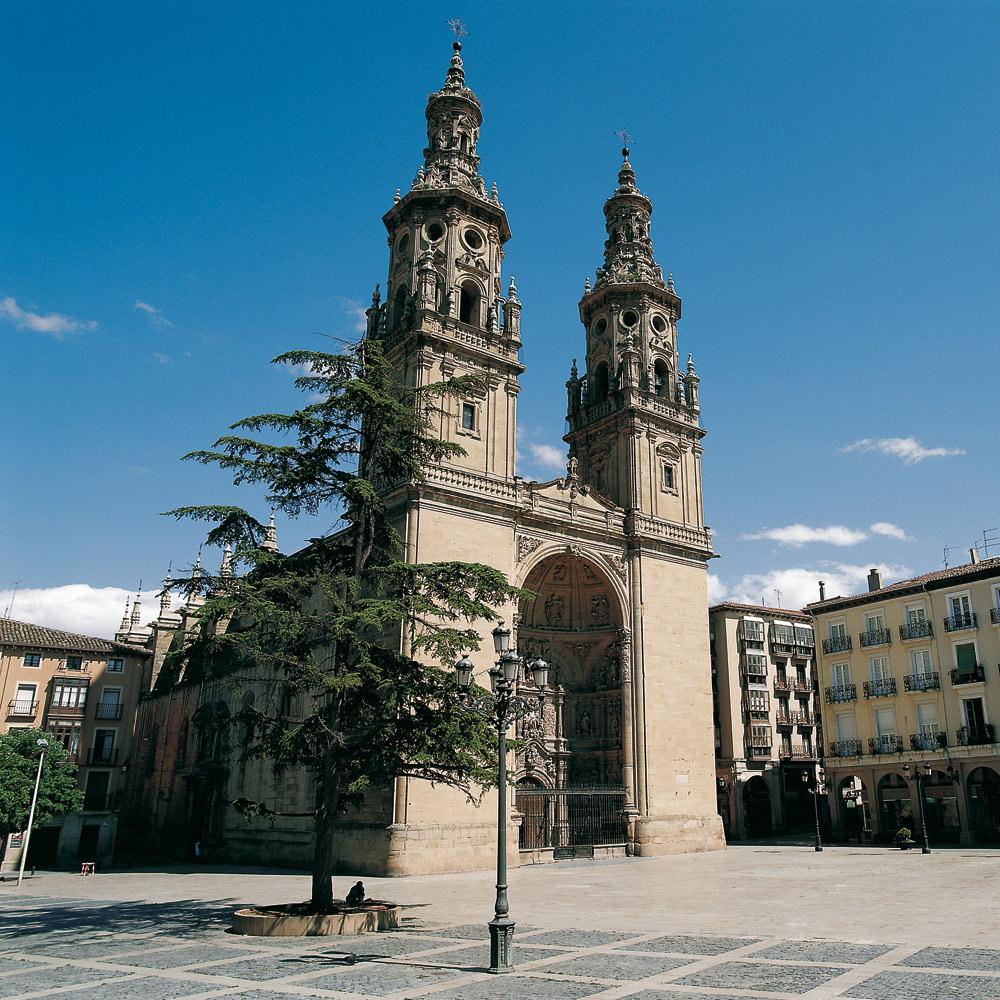
Die der Gottesmutter Maria geweihte Kathedrale Santa María de la Redonda ist eine Kirche in der Stadt Logroño in der Autonomen Gemeinschaft und Provinz La Rioja im Norden Spaniens. Neben der Kathedrale von Calahorra und der Kathedrale von Santo Domingo de la Calzada ist sie eine von drei Bischofskirchen der Diözese Calahorra y La Calzada-Logroño. Als Teil des nordspanischen Jakobswegs (Camino Francés) gehört sie seit 1993 zum UNESCO-Welterbe.
圣玛丽亚·德拉·雷东达大教堂(Santa María de la Redonda)是一座供奉圣母玛利亚的教堂,位于西班牙北部拉里奥哈自治区及拉里奥哈省的洛格罗尼奥市。它与卡拉奥拉大教堂和圣多明各·德拉卡尔萨达大教堂并列,是卡拉奥拉和拉卡尔萨达-洛格罗尼奥教区的三座主教座堂之一。作为西班牙北部圣雅各之路(Camino Francés)的一部分,该教堂自1993年起被列入联合国教科文组织世界遗产名录。
 Berlin
 Parteien und Regierung
 Deutschland
 Geschichte
 J 0 - 500 nach Christus
 Religion
 Rheinland-Pfalz
 Urlaub und Reisen
 Weltkulturerbe

Die Konstantinbasilika (Evangelische Kirche zum Erlöser) in der rheinland-pfälzischen Stadt Trier, dem früheren römischen Augusta Treverorum, war ursprünglich eine römische Palastaula. Sie wurde als Audienzhalle der römischen Kaiser, die im 4. Jahrhundert in der Stadt residierten, erbaut. An diese Zeit und Zweckbestimmung erinnert die Benennung nach Konstantin dem Großen als Konstantinbasilika. Die Bezeichnung des Bauwerks als Basilika stammt vom Heimatforscher Johannes Steiner im 19. Jahrhundert, der sie einer spätantiken Lobrede auf den Kaiser Konstantin entnahm.[1] Sie ist aus heutiger Sicht unpassend, da sie nicht dem Bautyp einer Basilika, sondern dem einer Saalkirche entspricht. Auch der katholische Ehrentitel Basilika trifft nicht zu, denn das Bauwerk war nie eine katholische Kirche.
Im Frühmittelalter kam die ausgebrannte Ruine in den Besitz der Trierer Bischöfe. Diese bauten sie in ein burgartiges Anwesen um. 1614 wurden Süd- und Ostwand abgerissen und der Rest in die neue Bischofsresidenz, das Kurfürstliche Palais, integriert. In den Jahren 1844 bis 1856 wurde das kirchenartige Gebäude wiederhergestellt, am 28. September 1856[2] eingeweiht und „auf ewige Zeiten“ der evangelischen Kirchengemeinde übergeben, die sie seither als Kirche nutzt. Damit ist es das älteste als Kirche genutzte Gebäude Deutschlands. Am 14. August 1944 wurde die Basilika durch einen amerikanischen Luftangriff stark beschädigt und brannte dabei völlig aus. Der Wiederaufbau erfolgte in den 1950er-Jahren. Dabei wurde die Gestaltung des Innenraums auf steinsichtige Außenwände und eine Holzkassettendecke reduziert.
Seit 1986 ist die Konstantinbasilika Teil des UNESCO-Welterbes „Römische Denkmale, Dom St. Peter und Liebfrauenkirche in Trier“. Sie ist zudem ein geschütztes Kulturgut nach der Haager Konvention. An römischer Bausubstanz erhalten sind die im Norden liegende Apsis, die Westwand, Mauerreste von Vorgängerbauten unterhalb des heutigen Fußbodens sowie Reste von römischen Außenmalereien an der West- und Nordfassade.
位于莱茵兰-普法尔茨州特里尔市(即古罗马时期的奥古斯塔·特雷维罗鲁姆)的君士坦丁大教堂(救世主新教教堂),最初是一座罗马宫廷大厅。它作为4世纪驻扎于此的罗马皇帝的接见厅而建。该建筑以“君士坦丁大帝”命名,即“君士坦丁大教堂”,正是为了纪念这一历史时期及其最初的用途。该建筑被称为“大教堂”这一名称,源自19世纪的地方史学家约翰内斯·施泰纳,他将其取自一篇晚古时期颂扬君士坦丁大帝的演说。从当今视角来看,这一称谓并不恰当,因为该建筑并非属于大教堂(Basilika)的建筑类型,而是属于大厅式教堂。此外,天主教的荣誉称号“大教堂”也不适用,因为该建筑从未作为天主教堂使用过。
Architektur
Byzantinische Architektur
Architektur
Römische Architektur
Geschichte
K 500 - 1000 nach Christus
Geschichte
J 0 - 500 nach Christus
Geschichte
L 1000 - 1500 nach Christus

君士坦丁堡(希腊语:Κωνσταντινούπολις、Κωνσταντινούπολη;拉丁语:Constantinopolis;奥斯曼土耳其文:قسطنطینیه;现代土耳其语:İstanbul)是土耳其最大城市伊斯坦布尔的旧名,现在则指伊斯坦布尔金角湾与马尔马拉海之间的地区。它曾经是罗马帝国、拜占庭帝国、拉丁帝国和奥斯曼帝国的首都。
公元330年,罗马帝国皇帝君士坦丁一世在拜占庭建立新都,命名为新罗马(拉丁语:Nova Roma;希腊语:Νέα Ρώμη),但该城普遍被以建立者之名称作君士坦丁堡。在公元12世纪时[1],君士坦丁堡是全欧洲规模最大且最为繁华的城市[2]。
后来拜占庭帝国逐渐衰落,领土范围也缩减到君士坦丁堡及其周边地区。公元1453年,君士坦丁堡被奥斯曼帝国攻陷,此后成为奥斯曼帝国的新首都,再次繁荣起来。西方学者们习惯上将基督教治下(330年至1453年)的该城称作君士坦丁堡,而将此后伊斯兰教治下的城市称作伊斯坦布尔。如今,君士坦丁堡之名仍然被东正教沿用,教众们将君士坦丁堡教会的领袖,亦是整个东正教会名义上地位最高的领袖称作君士坦丁堡普世牧首。
君士坦丁堡亦以其宏伟的建筑而闻名。著名的建筑包括圣索菲亚大教堂、君士坦丁堡大皇宫、君士坦丁堡竞技场和黄金城门,大道与广场在其间星罗棋布。在1204年和1453年两次被劫掠之前,君士坦丁堡还保存着为数众多的艺术和文学作品[3]。在被奥斯曼帝国攻克之时,该城已经逐渐破败,但在此后得到了迅速的复兴与发展,并于17世纪中叶再次成为当时世界第一大城市[1]。
Die Stadt Konstantinopel wurde von dorischen Siedlern aus dem griechischen Mutterland um 660 v. Chr. unter dem Namen Byzantion gegründet. Am 11. Mai 330 n. Chr. machte sie der römische Kaiser Konstantin der Große zu seiner Hauptresidenz, baute sie großzügig aus und benannte sie offiziell in Nova Roma (Νέα Ῥώμη Nea Rhōmē, „Neues Rom“) um. In der Spätantike beanspruchte die Stadt auch den Rang als „Zweites Rom“. Nach dem Tod Kaiser Konstantins 337 wurde die Stadt offiziell in Constantinopolis umbenannt. Sie war die Hauptstadt des Oströmischen Reichs und blieb dies – abgesehen von der Eroberung im Vierten Kreuzzug – ununterbrochen bis zur Eroberung durch die Osmanen 1453. Unter den Namen Kostantiniyye / قسطنطينيه und استانبول / Istānbūl war es dann bis 1923 die Hauptstadt des Osmanischen Reichs.[1]
Spätestens ab 1930 setzte sich der Name Istanbul, der bereits im Seldschukischen und Osmanischen Reich gebräuchlich war,[2] auch international durch. Als Prototyp einer imperialen Stadt ist es seit dem 4. Jahrhundert eine Weltstadt.
コンスタンティノープル(英: Constantinople、ラテン語: Constantinopolis、古代ギリシア語: Κωνσταντινούπολις)は、東ローマ帝国の首都であった都市で、現在のトルコの都市イスタンブールの前身である。
強固な城壁の守りで知られ、330年の建設以来、1453年の陥落まで難攻不落を誇り、東西交易路の要衝として繁栄した。正教会の中心地ともなり、現在もコンスタンティノープル総主教庁が置かれている。
コンスタンティノープルは、330年にローマ皇帝コンスタンティヌス1世が、古代ギリシアの植民都市ビュザンティオン (古希: Βυζάντιον) の地に建設した都市である。この地は古来よりアジアとヨーロッパを結ぶ東西交易ルートの要衝であり、また天然の良港である金角湾を擁していた。都市名は「コンスタンティヌスの町」を意味する。
330年より東ローマ帝国の行政首都として建設された[1]。西ローマ帝国において西方正帝が消失した後には同地で「新ローマ」「第2のローマ」とする意識が育ち、遅くとも6世紀中頃までには定着した。東ローマ帝国の隆盛と共に、30万~40万の人口を誇るキリスト教圏最大の都市として繁栄し、「都市の女王」「世界の富の3分の2が集まる所」とも呼ばれた。また古代の建造物が残る大都市としてその偉容を誇った。正教会の首長であるコンスタンティノープル総主教庁が置かれ、正教会の中心ともなり、ビザンティン文化の中心でもあった。都市の守護聖人は聖母マリアである。
コンスタンティノープルは強固な城壁の守りでも知られ、東ローマ帝国の長い歴史を通じて外敵からの攻撃をたびたび跳ね返した。しかし1204年に第4回十字軍の攻撃を受けると衰退が加速した。1453年にオスマン帝国によりコンスタンティノープルが陥落し、東ローマ帝国が滅亡すると、この街はオスマン帝国の首都となった。日本ではこれ以後をトルコ語によるイスタンブールの名で呼ぶことが多い。ただし、公式にイスタンブールと改称されるのはトルコ革命後の1930年である。
Constantinople (Greek: Κωνσταντινούπολις, translit. Kōnstantinoúpolis; Latin: Cōnstantīnopolis) was the capital city of the Roman Empire (330–395), of the Byzantine Empire (395–1204 and 1261–1453), and also of the brief Crusader state known as the Latin Empire (1204–1261), until finally falling to the Ottoman Empire (1453–1923). It was reinaugurated in 324 from ancient Byzantium as the new capital of the Roman Empire by Emperor Constantine the Great, after whom it was named, and dedicated on 11 May 330.[5] The city was located in what is now the European side and the core of modern Istanbul.
From the mid-5th century to the early 13th century, Constantinople was the largest and wealthiest city in Europe.[6] The city was also famed for its architectural masterpieces, such as the Greek Orthodox cathedral of Hagia Sophia, which served as the seat of the Ecumenical Patriarchate, the sacred Imperial Palace where the Emperors lived, the Galata Tower, the Hippodrome, the Golden Gate of the Land Walls, and the opulent aristocratic palaces lining the arcaded avenues and squares. The University of Constantinople was founded in the fifth century and contained numerous artistic and literary treasures before it was sacked in 1204 and 1453,[7] including its vast Imperial Library which contained the remnants of the Library of Alexandria and had over 100,000 volumes of ancient texts.[8] It was instrumental in the advancement of Christianity during Roman and Byzantine times as the home of the Ecumenical Patriarch of Constantinople and as the guardian of Christendom's holiest relics such as the Crown of Thorns and the True Cross.
Constantinople was famed for its massive and complex defences. The first wall of the city was erected by Constantine I, and surrounded the city on both land and sea fronts. Later, in the 5th century, the Praetorian Prefect Anthemius under the child emperor Theodosius II undertook the construction of the Theodosian Walls, which consisted of a double wall lying about 2 kilometres (1.2 mi) to the west of the first wall and a moat with palisades in front.[9] This formidable complex of defences was one of the most sophisticated of Antiquity. The city was built intentionally to rival Rome, and it was claimed that several elevations within its walls matched the 'seven hills' of Rome. Because it was located between the Golden Horn and the Sea of Marmara the land area that needed defensive walls was reduced, and this helped it to present an impregnable fortress enclosing magnificent palaces, domes, and towers, the result of the prosperity it achieved from being the gateway between two continents (Europe and Asia) and two seas (the Mediterranean and the Black Sea). Although besieged on numerous occasions by various armies, the defences of Constantinople proved impregnable for nearly nine hundred years.
In 1204, however, the armies of the Fourth Crusade took and devastated the city, and its inhabitants lived several decades under Latin misrule. In 1261 the Byzantine Emperor Michael VIII Palaiologos liberated the city, and after the restoration under the Palaiologos dynasty, enjoyed a partial recovery. With the advent of the Ottoman Empire in 1299, the Byzantine Empire began to lose territories and the city began to lose population. By the early 15th century, the Byzantine Empire was reduced to just Constantinople and its environs, along with Morea in Greece, making it an enclave inside the Ottoman Empire; after a 53-day siege the city eventually fell to the Ottomans, led by Sultan Mehmed II, on 29 May 1453,[10] whereafter it replaced Edirne (Adrianople) as the new capital of the Ottoman Empire.[11]
Constantinople (en latin Constantinopolis, en grec ancien Κωνσταντινούπολις (Kônstantinoúpolis), en grec moderne Κωνσταντινούπολη (Konstantinoúpoli), en turc ottoman قسطنطینیه (Kostantiniyye), en arménien Կոստանդնուպոլիս (Kostandnoupolis) est l'appellation ancienne et historique de l'actuelle ville d'Istanbul en Turquie (du 11 mai 330 au 28 mars 1930). Son nom originel, « Byzance » (en grec ancien Βυζάντιον (Byzántion), venant soit du mot grec buzō signifiant « resserré » en référence au Bosphore, soit du mot thrace βυζή buzē : « rivage »), n'était plus en usage à l'époque de l'Empire, mais a été repris depuis le XVIe siècle par les historiens modernes.
Les habitants de Byzance sont les « Byzantins » et ceux de Constantinople les « Constantinopolitains »N 1. Depuis le XVIe siècle, les historiens modernes ont élargi la signification de « Byzantins » à tous les citoyens de l'Empire romain d'Orient, lui-même qualifié de « byzantin ». « Constantinople » est la francisation de Konstantinoupolis, qui, en grec, signifie « ville de Constantin ». Ce nom lui a été donné par l'empereur romain Constantin Ier lui-même, qui choisit d'en faire la capitale de l'empire à partir du 11 mai 330 et qui la proclama la « Deuxième Rome »1,N 2.
Costantinopoli (in latino: Constantinopolis; in greco: Κωνσταντινούπολις, Konstantinoupolis), o Nuova Roma (in latino Nova Roma, in greco Νέα Ῥώμη, Nea Rōmē), o la Città d'Oro, sono alcuni dei nomi e degli epiteti dell'odierna città di Istanbul, sulle rive del Bosforo, maggior centro urbano della Turchia. Il nome Costantinopoli fu in particolare tenuto dalla città nel periodo intercorrente tra la rifondazione ad opera dell'imperatore romano Costantino I e la conquista da parte del sultano ottomano Maometto II.
Durante tale periodo la città fu una delle capitali dell'Impero romano (anni 330-395) e capitale dell'Impero romano d'Oriente (anni 395-1204 e 1261-1453) e dell'Impero latino (anni 1204-1261). Il nome rimase comunque in uso anche durante l'Impero ottomano, quando era nota ufficialmente come Kostantîniyye (قسطنطينيه) in lingua turca ottomana e come Costantinopoli presso gli occidentali, sino al 1930, quando il nome Istanbul in lingua turca venne ufficializzato e reso esclusivo dalle autorità turche.
È inoltre la città che subì più assedi nella storia umana, capitolando solamente due volte: la prima durante il saccheggio dei crociati nel 1204 e la seconda quando fu definitivamente conquistata dagli ottomani nel 1453.
Constantinopla (en griego antiguo: Κωνσταντινούπολις, Kōnstantinoúpolis, abreviado como en griego medieval ἡ Πόλις, ί Pόlis, 'La Ciudad'; en latín Cōnstantinōpolis, en turco otomano formal Konstantiniyye) es el nombre histórico de la actual ciudad de Estambul (en idioma turco İstanbul), situada a ambos lados del Estrecho del Bósforo en Turquía, y que fue capital de distintos imperios a lo largo de la historia: del Imperio romano (330-395), del Imperio romano de Oriente o Imperio bizantino (395-1204 y 1261-1453), del Imperio latino (1204-1261) y del Imperio otomano (1453-1922), que empezó con la Caída de Constantinopla y terminó con la Ocupación de Constantinopla.
Estratégicamente situada entre el Cuerno de Oro y el mar de Mármara en el punto de encuentro de Europa y Asia, la Constantinopla bizantina fue baluarte de la Cristiandad y heredera del mundo griego y romano.[cita requerida] A lo largo de la Edad Media fue la mayor y más rica ciudad de Europa[cita requerida], y conocida como «la Reina de las Ciudades» (Basileuousa Polis). Por otra parte, fue llamada la Encrucijada del Mundo, pues era el nexo de comercio entre Asia, Europa y África (marítimo).
Dependiendo de sus gobernantes y el momento histórico, ha tenido diferentes nombres; entre los más comunes están Bizancio (en griego Byzantion), Stamboul o Nueva Roma (en griego Νέα Ῥώμη, en latín Nova Roma), este último un nombre más eclesiástico que oficial. Fue conocida por la Guardia Varega con el nombre de Miklagarðr (Gran Ciudad). Fue rebautizada oficialmente Estambul (su nombre actual) en 1930 mediante la Ley Turca de Servicio Postal, una de las reformas nacionales impulsadas por Atatürk.