
Deutsch-Chinesische Enzyklopädie, 德汉百科
 Architecture

 Religion

 Music


 History
 World Heritage


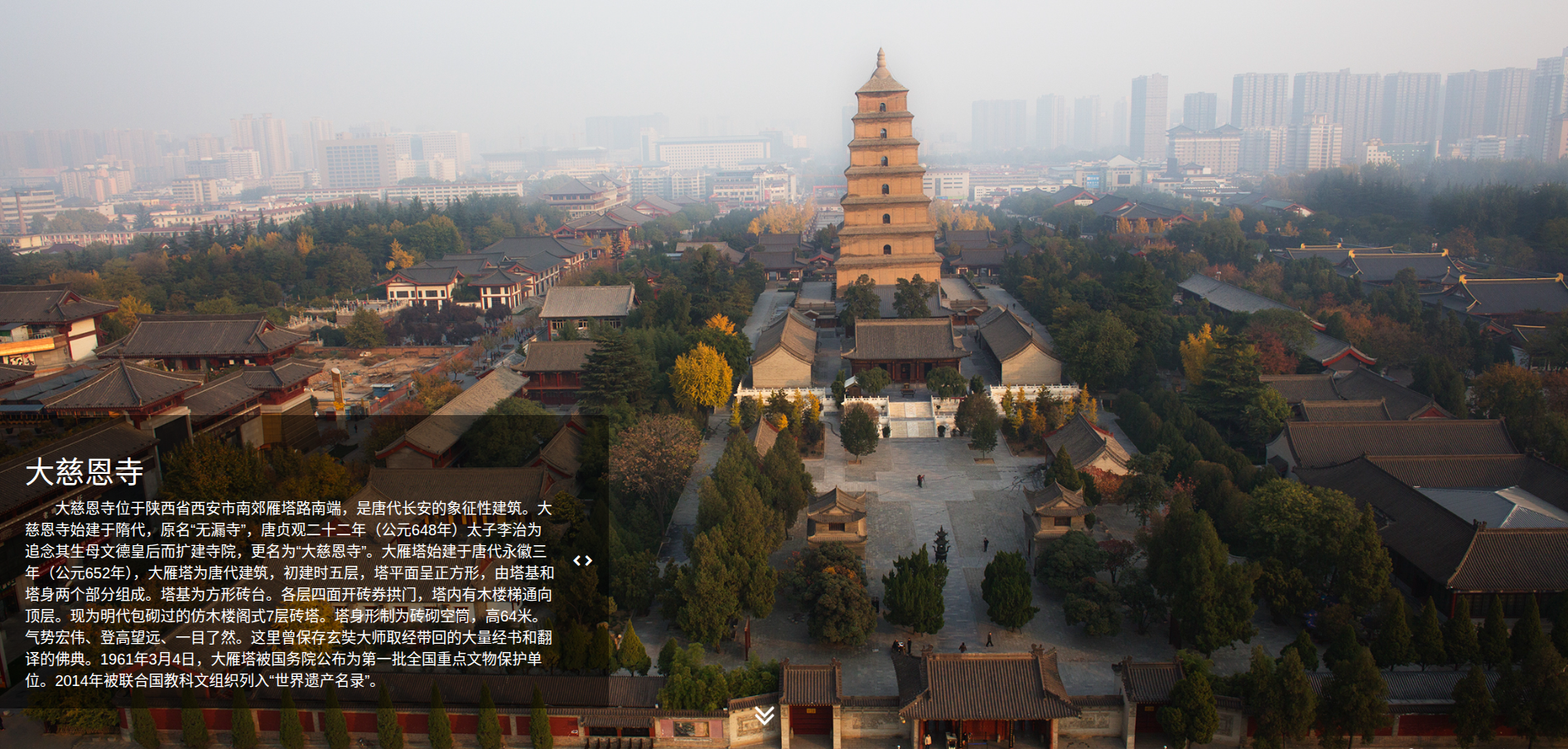
大雁塔,位于今中华人民共和国陕西省西安市雁塔区大慈恩寺内,为一座七层方形佛塔,起初是玄奘三藏为保存佛经而建造的砖塔,现已成为西安市内著名古迹及标志性建筑,同时也是西安市市徽当中的主要组成部分。唐代新科进士流行在塔壁签名留念,故雁塔题名一词也成为考取进士的别称。
唐永徽三年(652年),为了保管从印度带回来的数百部梵本佛经,玄奘在大慈恩寺西院主持修建一座西域风格的藏经塔,初称慈恩寺塔,此后被改称为雁塔,最终与荐福寺内的小雁塔相区别而被改称为大雁塔。而关于“雁塔”这一名称的来历,流传较广的说法认为是根据“埋雁建塔”的典故来命名的。
Die Große Wildganspagode (chinesisch 大雁塔, Pinyin Dàyàn Tǎ) ist eine 64 m hohe Pagode in der chinesischen Stadt Xi’an. Sie entstand im Jahr 652, im Hof des Klosters der Großen Wohltätigkeit, das Kaiser Gaozong zum Gedenken an seine verstorbene Mutter errichten ließ.
Die Große Wildganspagode steht auf der Liste der Denkmäler der Volksrepublik China und ist seit 2014 Bestandteil der UNESCO-Welterbestätte mit dem Titel Seidenstraßen: das Straßennetzwerk des Chang'an-Tianshan-Korridors.[1]

 Saxony
 Vacation and Travel
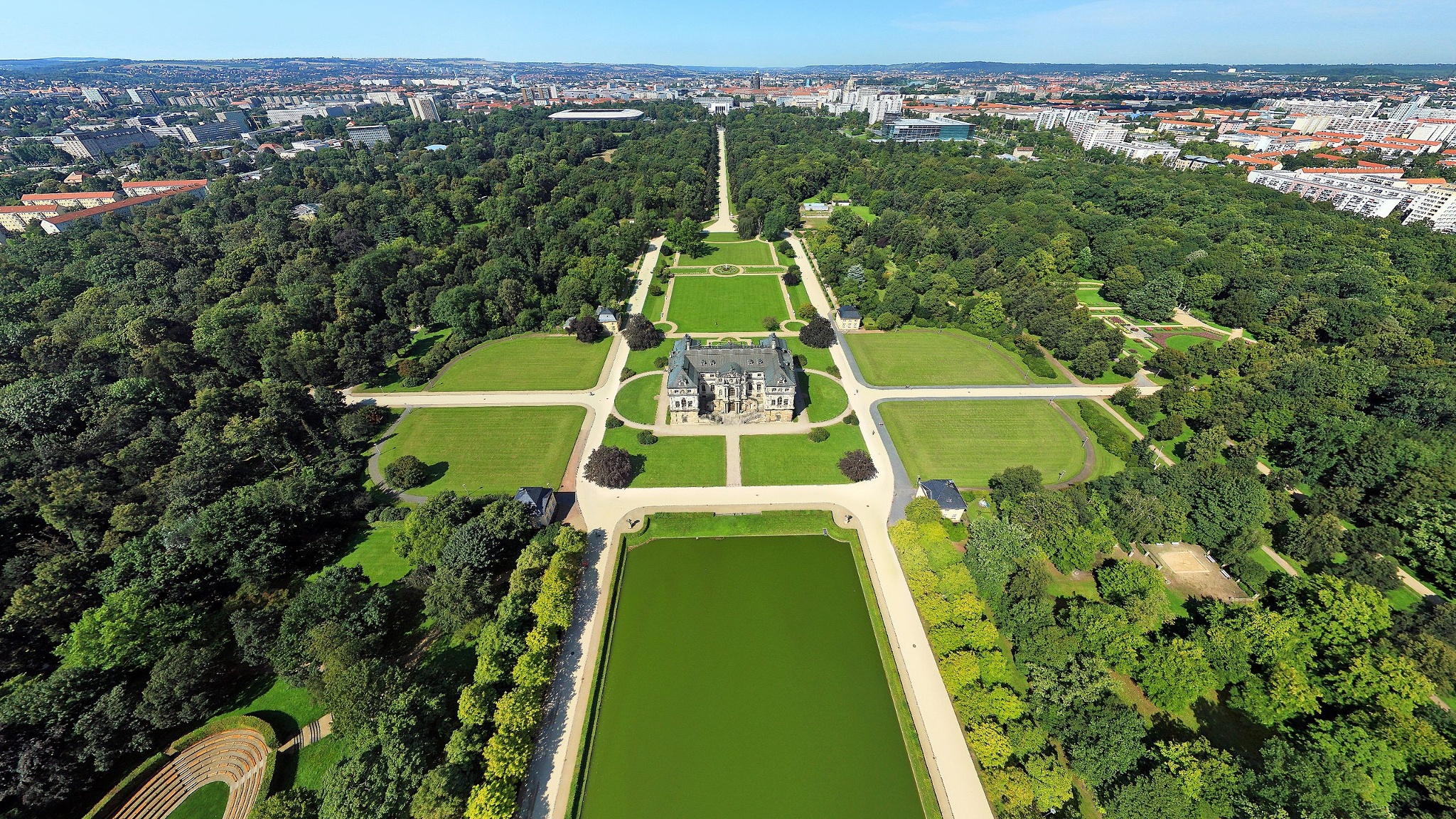
Der Große Garten in Dresden ist eine Parkanlage barocken Ursprungs. Der heutige größte Park der Stadt wurde ab 1676 auf Geheiß des Kurfürsten Johann Georg III. angelegt und im Laufe seiner Geschichte mehrfach erweitert, so dass er einen annähernd rechteckigen Grundriss auf einer Fläche von circa 1,8 Quadratkilometern aufweist. Seine Längsausdehnung beträgt etwa 1900 Meter, die Breite erreicht maximal 950 Meter. Im Zentrum des Parks befindet sich als bedeutendstes Bauwerk das unter der Leitung von Wolf Caspar von Klengel und Johann Georg Starcke um 1680 errichtete Sommerpalais. Der Große Garten wurde im Laufe seiner über dreihundertjährigen Geschichte vielfach überformt, wobei die barocke Grundstruktur erkennbar geblieben ist, aber von einem Barockgarten im engeren Sinne nicht mehr gesprochen werden kann.
德累斯顿大花园是一座巴洛克风格的公园。它是今天德累斯顿最大的公园,1676 年由选帝侯约翰-格奥尔格三世(Johann Georg III)下令修建,在其历史上曾多次扩建,因此其布局几乎呈长方形,占地约 1.8 平方公里。
 Lower Saxony



大皇宫(泰语:พระบรมมหารชวัง,皇家转写:Phra Borom Maha Ratcha Wang[3])是泰国扎克里王朝最早建成的王宫,位于曼谷拍那空县,自1782年以来,一直是泰国(暹罗)王室的公定居住地点。在1925年以前,是暹罗王室和朝廷的所在地。如今,大皇宫是泰国王室举行重大典礼及接见国宾的场所,亦是曼谷的地标和重要旅游目的地。
大皇宫坐落在拉达那哥欣岛西南部的昭披耶河畔,整个区域大致呈长方形,由白色宫墙包围,占地面积21.84万平方米,是由宫殿、佛寺、楼阁、广场和园地组成的建筑群。大皇宫分为外廷、中廷、内廷、花园,及一处王室寺庙玉佛寺,共五个部分:外廷主要是公共建筑;中廷包括摩天宫殿群、节基皇殿群、兜率皇殿群;内廷是后宫所在。其中,玉佛寺、中廷和外廷的一部分开放参观,数个宫务部门仍在此办公。
大皇宫于1782年由拉玛一世下令修建。拉玛一世创立扎克里王朝,取代吞武里王朝,并将都城自吞武里迁至昭披耶河对岸,即今日泰京曼谷。之后,大皇宫又经过诸代国王的修葺扩建,尤其是在拉玛五世朱拉隆功统治期间,建起多座有欧洲风格特点的宫殿。1925年,暹罗王室基本迁出大皇宫,迁至律实宫等城外宫殿。1932年,暹罗发生立宪革命,建立君主立宪制,大皇宫不再是政府机关的办公地。
Der Große Palast (Thai: พระบรมมหาราชวัง, Aussprache: [pʰráʔ bɔrom máʔhăː râtt͡ɕʰáʔwaŋ], im engl. Sprachgebrauch: „Grand Palace“) war die offizielle Residenz der Könige von Siam (heutiges Thailand) in Bangkok vom Ende des 18. Jahrhunderts bis zur Mitte des 20. Jahrhunderts. Nach dem Tod des Königs Ananda Mahidol (Rama VIII.) 1946 im Borom-Phiman-Palast beschloss König Bhumibol Adulyadej (Rama IX.) die Verlegung der Residenz in die Chitralada-Residenz des Dusit-Palastes.
タイのバンコク・プラナコーン区にある王宮(タイ語: พระบรมมหาราชวัง、英語: Grand Palace)はタイ国王の「公的」な居住地であり、国内すべての宮殿の中でもっとも重要であるとされる宮殿。ただし、実際にはラーマ9世以降国王は居住しておらず、日常的な公務もここで行われていないが、戴冠式、上級王族の葬儀、国王誕生日謁見の儀等重要式典の際は、ここで執り行われる。大まかに外朝と内朝に分かれているが、一般公開されているのは、外朝の一部のみで、内朝が全く公開されていない。また、現在僅かな一部の区域がウボンラット王女の住居としても確保されている。
The Grand Palace (Thai: พระบรมมหาราชวัง, RTGS: Phra Borom Maha Ratcha Wang[1]) is a complex of buildings at the heart of Bangkok, Thailand. The palace has been the official residence of the Kings of Siam (and later Thailand) since 1782. The king, his court, and his royal government were based on the grounds of the palace until 1925. King Bhumibol Adulyadej (Rama IX), resided at the Chitralada Royal Villa and his successor King Vajiralongkorn (Rama X) at the Amphorn Sathan Residential Hall, both in the Dusit Palace, but the Grand Palace is still used for official events. Several royal ceremonies and state functions are held within the walls of the palace every year. The palace is one of the most popular tourist attractions in Thailand.
Construction of the palace began on 6 May 1782, at the order of King Phutthayotfa Chulalok (Rama I), the founder of the Chakri Dynasty, when he moved the capital city from Thonburi to Bangkok. Throughout successive reigns, many new buildings and structures were added, especially during the reign of King Chulalongkorn (Rama V). By 1925, the king, the Royal Family and the government were no longer permanently settled at the palace, and had moved to other residences. After the abolition of absolute monarchy in 1932, all government agencies completely moved out of the palace.
In shape, the palace complex is roughly rectangular and has a combined area of 218,400 square metres (2,351,000 sq ft), surrounded by four walls. It is situated on the banks of the Chao Phraya River at the heart of the Rattanakosin Island, today in the Phra Nakhon District. The Grand Palace is bordered by Sanam Luang and Na Phra Lan Road to the north, Maharaj Road to the west, Sanam Chai Road to the east and Thai Wang Road to the south.
Rather than being a single structure, the Grand Palace is made up of numerous buildings, halls, pavilions set around open lawns, gardens and courtyards. Its asymmetry and eclectic styles are due to its organic development, with additions and rebuilding being made by successive reigning kings over 200 years of history. It is divided into several quarters: the Temple of the Emerald Buddha; the Outer Court, with many public buildings; the Middle Court, including the Phra Maha Monthien Buildings, the Phra Maha Prasat Buildings and the Chakri Maha Prasat Buildings; the Inner Court and the Siwalai Gardens quarter. The Grand Palace is currently partially open to the public as a museum, but it remains a working palace, with several royal offices still situated inside.
L'ancien Palais royal de Bangkok (Thai : พระบรมมหาราชวัง, Phra Borom Maha Ratcha Wang) de Bangkok a été construit en 1782 par le roi Rama Ier, le fondateur de la dynastie cariouati, sur la rive droite (orientale) de la Chao Phraya quand il a déménagé la capitale de Thonburi à Bangkok. Tout au long de règnes successifs, beaucoup de nouveaux bâtiments et structures ont été ajoutés, en particulier pendant le règne du roi Chulalongkorn (Rama V).
Le palais abrite non seulement la résidence royale et la salle du trône, mais aussi un grand nombre de bureaux gouvernementaux et le temple du Bouddha d'émeraude (Wat Phra Kaeo, récemment rénové).
Le monarque actuel, le roi Vajiralongkorn (Rama X), réside actuellement au palais Chitralada, mais le Grand Palais est encore utilisé pour les événements officiels. Plusieurs cérémonies royales se déroulent dans les murs du palais chaque année.
Un canon historique, le Phaya Tani, lui fait face depuis le Ministère de la défense.
Il grande palazzo reale (in thailandese พระบรมมหาราชวัง, traslitterazione RTGS: Phra Borom Maha Ratcha Wang) è un complesso di edifici situato nel distretto centrale di Phra Nakhon a Bangkok, la capitale della Thailandia.
È la residenza ufficiale dei re di Thailandia dal 1785. La costruzione del palazzo iniziò nel 1782, all'inizio del regno di Rama I, che trasferì la capitale dalla vicina Thonburi a Bangkok. Nel corso degli anni il palazzo è stato diverse volte ampliato, con la costruzione di nuovi edifici, e modificato con l'abbattimento o il restauro degli edifici obsoleti.
El Gran Palacio Real (en tailandés: พระบรมมหาราชวัง, Phra Borom Maha Ratcha Wang) es un complejo de edificios en Bangkok, Tailandia, que sirvió como residencia oficial del rey de Tailandia desde el siglo XVIII hasta mediados del siglo XX. Con la muerte del rey Ananda Mahidol en el Palacio de Baromphiman, el rey Bhumibol Adulyadej trasladó la residencia oficial al Palacio Chitralada.
La construcción del conjunto del complejo palaciego se inició en 1792, durante el reinado de Rama I. Se encuentra situado al este del río Chao Phraya, protegido por el mismo. El resto del complejo se encuentra defendido por una valla de 1.900 metros de longitud que agrupa un área de 218.400 metros cuadrados. Más allá de la valla se encuentra un canal, creado también con propósitos defensivos. Así la zona asemeja una isla, conocida como Rattana Kosin. Los lugares más destacadas son el templo Wat Phra Kaew, que contiene al Buda de Esmeralda, y el edificio de estilo renacentista italiano Chakri Mahaprasad Hall.
Большой дворец (тайск. พระบรมมหาราชวัง, Пхрабароммахарадчаванг) — комплекс зданий в Бангкоке, Таиланд.
Большой дворец служил резиденцией королей Таиланда начиная с XVIII века. Строительство дворца началось в 1782 году, во время правления короля Рамы I, когда он переместил столицу страны из Тхонбури в Бангкок. Дворец постоянно расширялся, со временем было построено множество новых зданий и сооружений различного назначения. В настоящее время дворец для проживания королей Таиланда не используется. Король Рама IX проживал во дворце Читралада.
 Museum

 Performing Arts
 Salzburg
