
Deutsch-Chinesische Enzyklopädie, 德汉百科
 Israel
 Religion
 Architecture
 History
 Art
Art
 Literature
 Music
Music
 World Heritage

基督教相传于公元1, 2世纪时开始流传于罗马帝国统治下的各族人民之间,为耶稣所创立,初时为犹太教一个下层派别,后分裂为新的宗教。4世纪时,定为罗马帝国国教。当时的官方语为拉丁语,民间语为希腊语。中世纪基督教教会为欧洲封建社会的支柱,禁止人民思想自由,敌视科学研究。 以后基督教分为三大派别:天主教(Katholizismus)、东正教(Orthodox)和新教(Protestantismus)。
20世纪,世界基督教会联合会成立。截至21世纪初,基督徒超过二十亿人,约占全球人口三分之一,与佛教、伊斯兰教并列世界三大宗教, 并在中国五大宗教占据两席。 而天主教为首的教会,也成为世界上最大的非政府教育、医疗和慈善机构。
基督教是信仰耶稣基督为神之圣子与救世主(弥赛亚)的一神教。发源于西亚的巴勒斯坦地区,以《圣经》为最高宗教经典,信徒称为基督徒,基督徒组成的团体则称为教会或基督教会。由于部分教义源流自犹太教,因而被认为是亚伯拉罕诸教之一,现今亦与伊斯兰教、佛教共同视为世界三大宗教。其分为天主教、东正教、新教等三大宗派,但因历史发展的缘故,汉语所称的“基督教”常专指新教,基督教整体则又另以“基督宗教”、“基督信仰”或“广义基督教”称之。
基督教的共同信仰认为三位一体的独一神(汉语亦译为上帝或天主)创造了世界,并按照神自己的形像造人,由人来管理世界[1],后来人犯罪堕落,带来了死亡;圣父派遣其子耶稣道成肉身,在其在世33年的最后,为世人的罪被钉死在十字架上,在三天后从死里复活而后升天,赐下圣灵与信徒同在;他的死付上了罪的赎价,使一切信他的人得到拯救,并在神内有永生。
按照基督教在4世纪的历史纪载,第一个教会在耶稣升天与圣灵降临(约公元30至33年)后由耶稣的使徒建立,之后耶稣的使徒及信徒们不断向外宣教,并快速在当时管辖巴勒斯坦的罗马帝国境内及周边地区传播;虽曾长期遭罗马帝国政府迫害,但约于公元325年由君士坦丁大帝宣布合法化,狄奥多西大帝时更定为罗马帝国的国教,至此成为西方世界的主要宗教。之后因罗马帝国分裂后西方世界东西部的差异化发展,导致11世纪发生东西教会大分裂,形成以罗马教宗为首的公教会(天主教)、以及君士坦丁堡普世牧首为首的正教会(东正教)。16世纪时,西欧又爆发了反对教宗权威的宗教改革运动,马丁·路德(路德派)、约翰·喀尔文(喀尔文派)、乌里希·慈运理等神学家与英国国王亨利八世(安立甘派)先后脱离天主教而自立教会,日后出现了许多教义相近的教会,这些教会即为后世所统称的新教。
基督教虽起源于中东,但在7世纪创立的伊斯兰教兴起后,今日在当地的信徒人口反而居于少数。由于基督教重视传教事业(又称为“大使命”),加上西方国家自地理大发现以来对世界经济及文化发展上强势的影响力,使得基督教的传布范围遍及整个世界,基督教文化更成为世界许多文明的重要骨干。粗估统计全球超过三分之一的人口信仰基督教,至今信徒人口逾24亿,是当今世界信仰人口最多的宗教,三大宗派中又以天主教的信徒占约半数最多;基督徒最多的国家则是美国及巴西,大约占人口的75%[2][3]。
Das Christentum ist eine Weltreligion, die aus dem Judentum hervorging. Ihre Anhänger werden Christen genannt, die Gesamtheit der Christen wird auch als die Christenheit bezeichnet.
Von zentraler Bedeutung für das Christentum ist Jesus von Nazaret, ein jüdischer Wanderprediger, der etwa in den Jahren 28–30 unserer Zeitrechnung auftrat und in Jerusalem hingerichtet wurde. Seine Jünger erkannten in ihm nach seiner Kreuzigung und Auferstehung den Sohn Gottes und den vom Judentum erwarteten Messias. In ihren Bekenntnissen nennen sie ihn Jesus Christus. Der Glaube an ihn ist in den Schriften des Neuen Testaments grundgelegt. Die weitaus meisten Christen glauben an einen Gott (Monotheismus)[1] als eine Dreifaltigkeit, das heißt eine Wesenseinheit aus Vater, Sohn und Heiligem Geist.[2][3] Daneben existieren innerhalb des Christentums kleinere antitrinitarische Gruppierungen.[4][5]
Die zahlreichen Konfessionen bzw. Kirchen innerhalb des Christentums lassen sich in vier Hauptgruppen zusammenfassen: die römisch-katholische Kirche, die orthodoxen Kirchen, die protestantischen und die anglikanischen Kirchen. Mit rund 2,26 Milliarden Anhängern ist das Christentum vor dem Islam (über 1,8 Milliarden) und dem Hinduismus (rund 900 Millionen) die am weitesten verbreitete Religion weltweit.[6]
キリスト教(キリストきょう、基督教、ギリシア語: Χριστιανισμός、ラテン語: Religio Christiana、英語: Christianity)は、ナザレのイエスをキリスト(救い主)として信じる宗教[1][2]。イエス・キリストが、神の国の福音を説き、罪ある人間を救済するために自ら十字架にかけられ、復活したものと信じる[2]。その多く(カトリック教会[3]・聖公会[4]・プロテスタント[5][6][7][8]・正教会[9]・東方諸教会[10]など)は「父なる神」[注 1]と「その子キリスト」[注 2]と「聖霊」を唯一の神(三位一体・至聖三者)として信仰する。
世界における信者数は22億人を超えており、すべての宗教の中で最も多い[11]。
Christianity[note 1][2] is a Abrahamic monotheistic religion based on the life and teachings of Jesus of Nazareth as described in the New Testament. Its adherents, known as Christians, believe that Jesus Christ is the Son of God and savior of all people, whose coming as the Messiah was prophesied in the Old Testament.[3] Most Christians get baptized, celebrate the Lord's Supper, pray the Lord's Prayer and other prayers, have clergy, and attend group worship services.
Christianity began as a Second Temple Judaic sect in the 1st century in the Roman province of Judea. Jesus' apostles and their successors, the Apostolic Fathers, spread the religion across large parts of the Middle East, Europe, Ethiopia, Transcaucasia, and some other parts of Asia, despite initial persecution. The Roman emperor Constantine the Great converted to Christianity and decriminalized it in the Edict of Milan (313). He convened the First Council of Nicaea (325), where Early Christianity was consolidated into what would become the state religion of the Roman Empire (380).[4][5][6] The council formulated the Nicene Creed (325), and the Church Fathers supervised the compilation of the Christian Bible (5th century).[7] The period of the first seven ecumenical councils is sometimes referred to as the Great Church, the united full communion of the Catholic Church, Eastern Orthodox Church, and Oriental Orthodoxy before their schisms. Oriental Orthodoxy split after the Council of Chalcedon (451) over differences in Christology. The Eastern Orthodox Church and the Catholic Church separated in the East–West Schism (1054), especially over the authority of the Pope. Similarly, in 1521 Protestants were excommunicated from the Roman Catholic Church in the Protestant Reformation over Papal primacy, the nature of salvation and other ecclesiological and theological disputes.[8]
Christianity and Christian ethics have played a prominent role in the development of Western civilization,[9][10][11][12][13] particularly around Europe during Late Antiquity and the Middle Ages. Following the Age of Discovery (15th–17th century), Christianity was spread into the Americas, Oceania, sub-Saharan Africa and the rest of the world via missionary work and colonization.[14][15][16]
It is the world's most populous religious group,[17][18] with over 2.4 billion followers,[19][20][21] or 33% of the global population, comprising a majority of the population in about two-thirds of the countries in the world.[21] Today, the four largest branches of Christianity are the Catholic Church (1.3 billion), Protestantism (920 million), the Eastern Orthodox Church (260 million)[22] and Oriental Orthodoxy (86 million).
Le christianisme est une religion abrahamique, originaire du Proche-Orient, fondée sur l'enseignement, la personne et la vie de Jésus de Nazareth, tels qu'interprétés à partir du Nouveau Testament. Il s'agit d'une religion du salut considérant Jésus-Christ comme le Messie annoncé par les prophètes de l'Ancien Testament. La foi en la résurrection de Jésus est au cœur du christianisme car elle signifie le début d'un espoir d'éternité libéré du mal.
Les premières communautés chrétiennes naissent au Ier siècle en Judée et dans les grandes villes de la diaspora juive telles que Rome, Éphèse, Antioche et Alexandrie. Le christianisme se développe à partir du IIe siècle dans l'Empire romain, dont il devient la religion officielle à la fin du IVe siècle, mais aussi en Perse, en Inde et en Éthiopie. Au Moyen Âge, le christianisme devient majoritaire en Europe, tandis qu'il s'amenuise face à l'islam au Proche-Orient. Il est devenu la religion la plus importante de la planète en raison de son expansion en Amérique à partir du XVIe siècle et en Afrique depuis le XXe siècle. Il est actuellement présent dans tous les pays. En 2015, le nombre total de chrétiens dans le monde est évalué à 2,4 milliards, ce qui en fait la religion comptant le plus de fidèles, devant l'islam et l'hindouisme.
Les Églises chrétiennes sont regroupées en différentes branches, dont les principales sont le catholicisme, le christianisme orthodoxe et le protestantisme représentant respectivement 51 %, 11 % et 38 % du total des chrétiens en 2017.
Il cristianesimo è una religione a carattere universalistico, originatasi dal giudaismo nel I secolo, fondata sulla venuta e predicazione, contenuta nei Vangeli, di Gesù di Nazareth, inteso come figlio del Dio d'Israele e quindi Dio egli stesso, incarnato, morto e risorto per la salvezza dell'umanità, ovvero il Messia promesso, il Cristo.[1][2]
Insieme a ebraismo e islam, il cristianesimo è classificato da alcuni come "religione abramitica"[3][4], è una monolatria. Il Cristianesimo è la religione più diffusa, con una stima di circa 2,1 miliardi di fedeli nel mondo al 2000[5].
Il cristianesimo emerge dal giudaismo nel I secolo; alle origini si presenta con il duplice aspetto di giudeo-cristianesimo (i cui membri ritenevano che solo i circoncisi potevano essere salvati) ed etno-cristianesimo (o cristianesimo dei Gentili, che comunque devono osservare la legge di Mosè), come si desume dai racconti degli Atti di Luca e da alcune lettere di Paolo (come la Lettera ai Galati, le lettere ai Corinzi), mostrando tuttavia che le due anime convivono senza alcuna scissione, e di avere raggiunta una formula di concordia con il primo concilio di Gerusalemme (Atti 15).
I cristiani assunsero dal giudaismo le sue Sacre scritture, definite poi Antico Testamento, nella versione tradotta in greco ellenistico (anche a causa della prevalente origine greco-romana della maggioranza dei primi adepti), dottrine fondamentali come il monoteismo, la fede in un messia o cristo, alcune forme del culto (incluso il sacerdozio), concetti di luoghi e tempi sacri, l'idea che il culto debba essere modellato secondo il modello celeste, l'uso dei Salmi nelle preghiere comuni.
Il cristianesimo inteso come religione distinta da quella ebraica iniziò a delinearsi dopo il cosiddetto "Sinodo di Jamnia" in cui venne presa posizione decisa circa l'estraneità della "Via"[6] dall'ebraismo ortodosso, a partire dalla seconda metà del II secolo.
Successivamente la Chiesa post-apostolica lentamente si organizzò attorno alla cosiddetta pentarchia dei cinque patriarcati di Roma, Costantinopoli, Alessandria, Antiochia e Gerusalemme.
Inizialmente si ebbe una secolare contesa critica tra varie correnti per la formazione della prima Cristianità, correnti che si rifacevano a diverse raccolte di testi ritenuti sacri. Tale contesa terminò nel IV secolo con la conversione dell'Imperatore Costantino I (battezzato in punto di morte da un vescovo ariano[7]) il quale fece indire il Concilio di Nicea per far emergere una sola corrente ed eliminare le altre. Contestualmente la Cristianità divenne una religione approvata ufficialmente e i vescovi Cristiani, vittime in precedenza del potere militare, ne passarono al comando[8].
Nel 380 Teodosio con l'Editto di Tessalonica la rese l'unica religione ufficiale dell'impero romano ricorrendo anche a mezzi cruenti per reprimere le resistenze dei pagani.[9]
Nel 1054 contese teologiche circa i dogmi trinitari, il celibato ecclesiastico ed altre questioni minori culminarono nel Grande Scisma tra Chiesa cattolica e Chiesa ortodossa.
Circa cinque secoli dopo lo scandalo delle indulgenze spinse Lutero a causare un altro scisma e quindi a fondare il Protestantesimo.
Nell'Europa dell'est l'instaurazione di regimi marxisti, per definizione materialisti, ha avuto come conseguenza un processo di scristianizzazione pianificata di stato che è avvenuto iniziando dalla Russia (ex Unione Sovietica) e poi, nel dopoguerra, nei paesi governati da regimi comunisti satelliti dell'URSS. In seguito alla caduta dei regimi, dopo il 1989, è stata ristabilita, in buona parte dei casi, la libertà di culto.
El cristianismo (del latín christianismus, y este del griego χριστιανισμός)1 es una religión abrahámica monoteísta basada en la vida, enseñanzas y milagros de Jesús de Nazaret, tal y como se presentan en el Nuevo Testamento, que es la segunda parte de la Biblia, el libro sagrado de los cristianos. Con 2400 millones de seguidores,234 una de cada tres personas en el mundo es cristiana, por lo que es la religión más extensa del mundo.56 Los cristianos creen que Jesús es el hijo de Dios, así como el Mesías (o Cristo) profetizado en el Antiguo Testamento, que sufrió, fue crucificado, descendió al infierno y resucitó de entre los muertos para dar vida eterna a quienes crean y confíen en él para la redención de sus pecados. Las cuatro ramas más importantes del cristianismo son el catolicismo (1300 millones de adherentes), el protestantismo (920 millones), la Iglesia ortodoxa (270 millones) y las Iglesias ortodoxas orientales (86 millones). El movimiento que busca restaurar la unidad de la Iglesia cristiana recibe el nombre de ecumenismo.
El cristianismo surgió del judaísmo789 a mediados del siglo I d. C.1011 en la provincia romana de Judea. Los primeros líderes de las comunidades cristianas fueron los apóstoles y sus sucesores los padres apostólicos. Este cristianismo primitivo se extendió, pese a ser una religión minoritaria y perseguida, por Judea, Siria, Europa, Anatolia, Mesopotamia, Transcaucasia, Egipto y Etiopía. El cristianismo fue legalizado en el Imperio romano mediante el Edicto de Milán, en el año 313. El emperador Constantino se convirtió al cristianismo y convocó el Concilio de Nicea (325), en el que se formuló el credo niceno. El cristianismo se convirtió en la religión oficial del Imperio romano en el año 380, bajo el emperador Teodosio I el Grande.121314 Durante estos primeros siglos, los Padres de la Iglesia gradualmente consolidaron las doctrinas del cristianismo y supervisaron el desarrollo del canon del Nuevo Testamento.15
La Iglesia de los primeros siete concilios ecuménicos se conoce frecuentemente como la «Gran Iglesia», porque la Iglesia católica, la Iglesia ortodoxa y las Iglesias ortodoxas orientales estaban en plena comunión.16 Las Iglesias orientales se separaron tras el Concilio de Calcedonia (451) por diferencias cristológicas. La Iglesia ortodoxa se separó de la Iglesia católica en 1054 por diferencias acerca de la autoridad del papa. El protestantismo, aunque es en realidad un conjunto de denominaciones, aparece por primera vez durante la Reforma protestante del siglo XVI, y criticaban lo que percibían como importantes desviaciones teológicas y eclesiológicas por parte de la Iglesia católica.17 El descubrimiento de América en 1492 extendió el cristianismo por América. La Iglesia católica impulsó la Contrarreforma como respuesta a la Reforma protestante, a través del Concilio de Trento (1545-1563).
Algunos de los escritos sagrados cristianos son compartidos con el judaísmo. El Tanaj constituye, junto con la Biblia griega —más antigua que el Tanaj en su forma actual—, la base y la fuente para el Antiguo Testamento de las diferentes biblias cristianas. Por este motivo, el cristianismo es considerado una religión abrahámica, junto con el judaísmo y con el islam.
Algunos estudios del siglo xx no toman como fecha incontrovertible el año 33 d. C. para la muerte de Jesucristo. Hay quienes, al indagar en las fechas, sugieren que pudo haber un desfase de 4 a 8 años entre el inicio del cómputo de la era cristiana y la fecha precisa del nacimiento de Jesús de Nazaret, conocido como Cristo.18 En adición a esto, no hay clara certeza ni consenso entre estos autores de que este haya muerto a la edad de 33 años, tal como algunos textos bíblicos parecen mostrar.Nota 3 En sus primeras décadas, el cristianismo era considerado por algunos como una doctrina sectaria de las tradiciones judías ortodoxas.20 Desde que el cristianismo se convirtió en la religión oficial del Imperio romano en el siglo iv, ha influido de manera significativa en la cultura occidental y en muchas otras.
Христиа́нство (от греч. Χριστός — «Пома́занник», «Месси́я») — авраамическая мировая религия, основанная на жизни и учении Иисуса Христа, описанных в Новом Завете[1]. Христиане верят, что Иисус из Назарета есть Мессия, Сын Божий и Спаситель человечества[2]. Христиане не сомневаются в историчности Иисуса Христа.
Христианство — самая крупная мировая религия как по численности приверженцев, которых около 2,3 млрд, так и по географической распространённости — в каждой стране мира есть хотя бы одна христианская община.
Наиболее крупные течения в христианстве — католицизм, православие и протестантизм. В 1054 году произошёл раскол христианской церкви на католическую и православную). Появление протестантизма стало результатом реформационного движения в Католической церкви в XVI веке.
Христианство возникло в I веке в Палестине, находившейся на тот момент под властью Римской империи, первоначально в среде арамеоязычного населения Междуречья и уже в первые десятилетия своего существования получило распространение и в других провинциях и среди других этнических групп[3].
В качестве государственной религии христианство впервые было принято в Великой Армении в 301 году[4][5][6]. При императоре Константине I, начиная с эдикта 313 года о свободе вероисповедания (см. Миланский эдикт), христианство стало обретать статус государственной религии и в Римской империи[7].
Albania
Andorra
Armenia
Azerbaijan
Australia
 Bavaria
Belarus
Belgium
Bosnia Herzegovina
Bulgaria
Bavaria
Belarus
Belgium
Bosnia Herzegovina
Bulgaria
 Campania
Denmark
Campania
Denmark
 Performing Arts
Germany
England
Estonia
Eurovision Song Contest,ESC
Performing Arts
Germany
England
Estonia
Eurovision Song Contest,ESC
 Holidays
Finland
France
Georgia
Greece
Holidays
Finland
France
Georgia
Greece
 Hessen
 Ile-de-France
Ireland
Iceland
Israel
Italy
Croatia
Latvia
Lithuania
Luxembourg
Ile-de-France
Ireland
Iceland
Israel
Italy
Croatia
Latvia
Lithuania
Luxembourg
 Madrid
Malta
Morocco
Moldawien
Monaco
Montenegro
Netherlands
Northern Ireland
Nordmazedonien
Madrid
Malta
Morocco
Moldawien
Monaco
Montenegro
Netherlands
Northern Ireland
Nordmazedonien
 North Rhine-Westphalia
Norwegen
Austria
Poland
Portugal
North Rhine-Westphalia
Norwegen
Austria
Poland
Portugal
 Provence-Alpes-Côte d´Azur
Romania
Russia
San Marino
Schottland
Sweden
Switzerland
Serbia
Slovakia
Slovenia
Spain
Czech Republic
Turkey
Ukraine
Hungary
United Kingdom
Provence-Alpes-Côte d´Azur
Romania
Russia
San Marino
Schottland
Sweden
Switzerland
Serbia
Slovakia
Slovenia
Spain
Czech Republic
Turkey
Ukraine
Hungary
United Kingdom
 Vienna
Cyprus
Vienna
Cyprus



欧 洲广 播联盟主办的一项歌唱比赛,自从1956年在瑞士Lugano(卢加诺)举办第一届以后,每年会举行一次,由在上一届获得冠军的国家承办(挺有意思的)。 比赛的结果不是评委说了算,而是由全欧洲的电视观众决定。歌曲演唱完毕,会给出十分钟时间,由电视观众打投票电话进行评选,投票范围为除自己国家外的其他 所有歌手。这个大赛还有个特色就是不规定歌手必须是这个国家的“自己人”,各个国家可以根据自己的情况请“外援”,比较出名的有Celine Dion在1988年代表瑞士参赛并拿了冠军。欧洲电视歌曲大赛采用了全欧洲各国竞赛的方式,来自各国的选手带上自己最精彩的节目,让我们有了更丰富的音 乐享受,整个晚会的气氛活跃,的确有不少好歌。欧洲歌唱大赛是欧洲最高水平的比赛,每个国家都会派出代表自己国家的歌手参赛欧视歌曲大赛已成为具有优秀传 统的欧陆年度音乐大赛,虽然只是欧洲范围内的音乐赛事,但是已经成为众多本地音乐艺人走向国际舞台的最佳跳板,是同类型比赛中规模最大者之一。在2008 年,一共有43个欧洲及邻近国家派出代表参加比赛,并有1.5亿观众透过电视观看了决赛。欧洲电视歌唱大赛经过50多年的发展,已经成为欧洲规模最大、影 响力最广、商业运作最成功的文艺活动。
和国内的歌唱比赛有所不同,欧洲电视歌唱大赛突出的是跨地域性和全民参与性。本届大赛共有38个国 家参加,观看决赛的电视观众有1.5亿之众,而参加采访的各国记者人数就超过2200人。比赛规定,大赛的优胜者由参赛国观众投票决定,但投票者不得将票 投给自己国家的选手。每名参赛者表演结束后,都会留下10分钟时间给观众投票。随着通讯手段的进步,手机短信、电话和电脑网络都被列为有效的投票方式,这 些选票最终由设在德国的一个数据中心进行处理,比赛全部结束后半小时内观众即可获悉大赛最终结果。
虽然每年代表各国参赛的歌手或乐队不一 定代表该国最高水平,但一定是该国当前最流行或者最具发展潜力的音乐组合。两位在现场的芬兰小伙子告诉记者,芬兰人对洛迪乐队疯狂的演唱风格不一定都喜 欢,但芬兰人能夺取冠军相当不容易。毕竟芬兰已经参加了近40届大赛,夺冠还是头一次。
通过该项大赛走红的明星并不少见,瑞典乐队的“芭 芭”就因1974年夺冠而一举成名,席琳·迪翁也在1988年爱尔兰举办的欧洲电视歌唱比赛中获得过冠军,二人组合“神秘园”1995年曾代表挪威夺得过 大奖,甚至爱尔兰著名的《大河之舞》,也是通过在该项比赛评分间隙进行的表演而走向世界比赛中每个国家派出一个歌手或一个乐团演唱一首自选的歌曲,之后观 众透过电话、短信或网络投选最喜欢的歌手,再统计各国的票数间接选出优胜者。而胜出者所代表的国家自动成为下年决赛的东道主。
在过去52届比赛,爱尔兰代表胜出了7次,是各国之冠,联合王国、法国和卢森堡代表各胜出了5次并列第二。历届优胜者中,ABBA(1974年)和席琳·狄翁(1988年)成了国际知名的巨星。
欧洲电视歌唱大赛由欧洲广播电视联盟主办,该联盟的成员国每年通过自己的选拔方式确定本国的参赛选手和曲目。每年5月份,半决赛和决赛通过现场直播方式在承办国进行。
Der Eurovision Song Contest (ESC; übersetzt „Liederwettbewerb der Eurovision“; bis 2001 in Deutschland unter dem französischen Namen Grand Prix Eurovision de la Chanson[1]) ist ein internationaler Musikwettbewerb von Komponisten und Textdichtern, vorgetragen von Gesangsinterpreten, der seit 1956 jährlich von der Europäischen Rundfunkunion (EBU) im Rahmen der Eurovision veranstaltet wird. Die Anregung dazu war vom Sanremo-Festival beeinflusst, das bereits 1951 ins Leben gerufen wurde. Beim ESC sind die Rundfunkanstalten aller Staaten der EBU teilnahmeberechtigt. Dieser Rundfunkunion gehören mehrheitlich europäische und einige Radio- und Fernsehstationen benachbarter westasiatischer und nordafrikanischer Staaten an.
Da die Shows auch außerhalb des Sendegebiets der EBU übertragen werden, konnte der Eurovision Song Contest über die Jahre hinweg auch eine große Fangemeinde in Australien, Neuseeland, Teilen Asiens (Japan, China, Südkorea, Hongkong, Indien), Mexiko und Teilen Südamerikas, Kanada und den USA gewinnen.[2] Insgesamt werden die Übertragungen des ESC von mehr als 200 Millionen Zuschauern gesehen. Im Jahr 2016 erhielt der ESC die Karlsmedaille für europäische Medien.
ユーロビジョン・ソング・コンテスト(英語:Eurovision Song Contest、フランス語:Concours Eurovision de la Chanson)[1]は、欧州放送連合(EBU)加盟放送局によって開催される、毎年恒例の音楽コンテストである。
大会では、各国代表のアーティストはそれぞれ生放送で自らの楽曲を披露し、引き続いてそれぞれの参加国が他国に投票して大会の優勝者を決定する。各国代表の参加者は、欧州放送連合に加盟する全国網の放送局を通じて大会に参加しており、放送局は自国代表のアーティストと楽曲を決定し、また自国の視聴者に大会を生中継する。大会は1956年の第1回大会以降、毎年開催されており、世界的に見ても長寿のテレビ番組のひとつであり[2]、その視聴者の数も1億人から6億人程度と見積もられている[3][4]。ユーロビジョン・ソング・コンテストは、オーストラリア、カナダ、中華人民共和国、エジプト、インド、日本、ヨルダン、メキシコ、ニュージーランド、フィリピン、大韓民国、台湾、タイ王国、ベトナム、ウルグアイなど、大会に参加していないヨーロッパ域外の国々でも放送された[5][6][7]。2000年以降は、コンテストは公式サイトよりインターネットでも中継されており[8]、2006年には140カ国近くから7万4千人以上が視聴している[9]。
The Eurovision Song Contest (French: Concours Eurovision de la chanson),[1] often simply called Eurovision, is an international song competition held primarily among the member countries of the European Broadcasting Union. Each participating country submits an original song to be performed on live television and radio, then casts votes for the other countries' songs to determine the winner. At least 50 countries are eligible to compete as of 2018,[2] and since 2015, Australia has been allowed as a guest entrant.[3][4][5][6]
Winning the Eurovision Song Contest often provides a short-term career boost for artists, but rarely results in long-term success.[7] Some exceptions are ABBA (winner in 1974 for Sweden), Bucks Fizz (winner in 1981 for the United Kingdom), and Celine Dion (winner in 1988 for Switzerland), all of whom launched successful careers.
Based on the Sanremo Music Festival held in Italy since 1951, Eurovision has been broadcast every year since its inauguration in 1956, making it the longest-running annual international television contest and one of the world's longest-running television programmes. It is also one of the most watched non-sporting events,[8] with audience figures of between 100 million and 600 million internationally.[9][10] It has been broadcast in several countries that do not compete, such as the United States, Canada, New Zealand, and China. Since 2000, it has been broadcast online via the Eurovision website.[11] The contest has been described as having kitsch appeal.[12][13]
Ireland holds the record for most victories, with seven wins, including four times in five years in 1992, 1993, 1994, and 1996. Under the current voting system, in place since 2016, the highest-scoring winner is Salvador Sobral of Portugal who won the 2017 contest in Kiev, Ukraine, with 758 points; under the previous system, the highest-scoring winner was Alexander Rybak of Norway with 387 points in 2009.
Le Concours Eurovision de la chanson (en anglais : Eurovision Song Contest) est un événement annuel organisé par l'Union européenne de radio-télévision, l'UER. Il réunit les membres de l'Union dans le cadre d'une compétition musicale, diffusée en direct et en simultané par tous les diffuseurs participants. Il est retransmis à la télévision (par câble et satellite), la radio et sur Internet. Appelé plus communément Eurovision, d'après le réseau télévisé du même nom, il a été inventé par le directeur général de la télévision publique suisse, Marcel Bezençon, sur le modèle du Festival de Sanremo, créé peu de temps auparavant. Sa toute première édition a eu lieu le 24 mai 1956, à Lugano, en Suisse. Sept pays fondateurs ont concouru alors pour la victoire. Depuis, le Concours s'est tenu chaque année, sans aucune interruption. Le nombre de pays participants n'a cessé d'augmenter, passant de sept à une quarantaine au XXIe siècle. À travers les décennies, le Concours a évolué, s'est adapté et réinventé, accompagnant les développements technologiques et musicaux, mais aussi historiques et politiques.
L'Eurovision possède certains attributs symboliques qui ont pérennisé son ancrage dans les mémoires, comme son thème d'ouverture, le prélude orchestral du Te Deum de Marc-Antoine Charpentier. De même, sa procédure de vote, souvent perçue comme sa séquence la plus importante, se déroule selon un schéma récurrent et des règles bien précises. Elle est devenue un véritable rituel annuel.
L'Eurovision est ouvert aux seuls membres actifs de l'UER. Ces membres sont des diffuseurs soit de pays situés dans la Zone européenne de radiodiffusion soit des diffuseurs de pays situés en dehors de cette zone mais membres du Conseil de l'Europe. Tous doivent être membres de l'Union internationale des télécommunications. Cela inclut donc des pays situés en Europe, en Asie et en Afrique. Le Concours est aussi retransmis en direct sur les autres continents, notamment en Afrique du Sud, en Australie, au Canada, en Corée du Sud, aux États-Unis, en Nouvelle-Zélande et en Chine.
L'Eurovision demeure l'un des plus anciens programmes télévisés au monde, et le plus important concours musical jamais organisé. Son succès a dépassé les frontières du continent européen et il a inspiré de nombreuses autres compétitions musicales.
L'Eurovision Song Contest (o Concours Eurovision de la Chanson, anche solo Eurovision o ESC, e noto in Italia anche come Eurofestival) è un festival musicale internazionale nato nel 1956, a Lugano in Svizzera, e organizzato annualmente dai membri dell'Unione europea di radiodiffusione (UER).
Dalla prima edizione del 1956 il concorso è stato trasmesso ogni anno senza interruzioni in tutto il mondo ed è uno dei programmi televisivi più longevi. È anche l'evento non sportivo più seguito al mondo[1]: i dati di ascolto degli ultimi anni a livello internazionale sono stati stimati tra i 100 e i 600 milioni.[2][3][4][5][6]
Dal 2000 il concorso viene trasmesso anche via internet e dal 2016 viene trasmesso anche in diretta sul canale ufficiale YouTube dell'evento, che nel 2018 conta circa 2,5 milioni di iscritti.[7][8]
El Festival de la Canción de Eurovisión (en francés Concours Eurovision de la Chanson; en inglés Eurovision Song Contest) es un concurso televisivo de carácter anual, en el que participan intérpretes representantes de las televisiones (en su mayoría públicas) cuyos países son miembros de la Unión Europea de Radiodifusión. El festival ha sido transmitido cada año desde 1956, siendo el programa de televisión más antiguo que aún se transmite en el mundo,1 recibiendo en 2015 el récord Guinness como la competición musical televisiva más longeva del mundo.2 Además, es el festival de la canción más grande en términos de audiencia, la que se ha estimado entre 100 y 600 millones internacionalmente. El evento es transmitido en todo el mundo, incluso en países que no participan en el mismo. El festival es históricamente conocido por ser promotor de música pop. Sin embargo, en años recientes se han presentado en el festival varios temas pertenecientes a otros géneros, como árabe, dance, tango, reguetón, heavy metal, pop-rap, punk, rock, electrónica, entre otros.
El nombre del concurso viene de la Red de Distribución de Televisión de Eurovisión (Eurovision Network), que está controlada por la Unión Europea de Radiodifusión (UER) y puede alcanzar audiencias potenciales de más de mil millones de personas. Cualquier miembro activo de la UER puede participar en el Festival, por lo que la aptitud para formar parte de este magno evento no está determinada por la inclusión geográfica dentro del continente europeo (a pesar del prefijo «Euro» en «Eurovisión»), que no tiene que ver con la Unión Europea. Al paso de los años, el festival ha crecido de un simple experimento televisivo a una institución internacional de grandes proporciones y el término «Eurovisión» es reconocido a lo largo del mundo.
Para la edición 2015, se invitó a Australia a participar en el certamen, lo que supuso que se convierta en el primer miembro asociado de la UER (y no activo) que participa en Eurovisión, así como en el primer país oceánico.3 La edición más reciente, el Festival de la Canción de Eurovisión 2018, fue realizada entre el 8 de mayo y el 12 de mayo de 2018 en Lisboa, Portugal. Israel se proclamó ganadora con el tema «Toy», interpretado por la cantante Netta Barzilai.
Ко́нкурс пе́сни «Еврови́дение» (англ. Eurovision Song Contest; фр. Concours Eurovision de la chanson) — международный конкурс эстрадной песни среди стран-членов Европейского вещательного союза (ЕВС — англ. European Broadcasting Union)[1]. Владельцем всей интеллектуальной собственности, производящейся в рамках конкурса, также является Европейский вещательный союз[2].
В конкурсе участвует по одному представителю от каждой из стран-членов ЕВС, которые подали заявки на участие. Фестиваль проходит в прямом эфире. От каждой страны может участвовать один представитель (солист или музыкальный коллектив), исполняющий песню длительностью не более трёх минут. Во время выступления на сцене должно выступать не более шести артистов одновременно. После выступления всех участников наиболее популярная песня определяется путём голосования телезрителей и жюри, в котором участвуют все страны, выступавшие в финале и полуфинале[3].
Конкурс проходит ежегодно, начиная с 1956 года, и является одним из самых популярных неспортивных мероприятий в мире[4], с аудиторией до 600 млн зрителей[5][6]. «Евровидение» также транслируется в Киргизии, Казахстане, Канаде, Египте, Индии, Ливане, Южной Африке, Южной Корее, США и некоторых других странах, несмотря на то, что они не участвуют в конкурсе и находятся за пределами Европы[7][8]. Начиная с 2000 года, конкурс постоянно транслируется в сети Интернет[9], интернет-аудитория постоянно растёт: в 2006 году онлайн-трансляцию посмотрело 74 тысячи человек[10], в 2017 — свыше 600 тысяч.
«Евровидение» в значительной мере повлияло на известность участвовавших на нём артистов. Например, легендарные группы «АББА» (ABBA, Швеция — 1974)[11], «Чингисхан» (Dschinghis Khan, Германия — 1979)[12] и певица Селин Дион (Швейцария — 1988)[13] стали всемирно известными после триумфальных выступлений на песенном фестивале[14][15].

犹太教(希伯来语:יהדות Yahadut),中文曾俗称挑筋教[注 1]或一赐乐业教,是在公元前西亚地区的游牧民族希伯来人中产生的,是犹太人的信仰、价值观和生活方式。犹太教是一神论的宗教,其主要经典是包括妥拉(摩西五经)在内的塔纳赫(即希伯来圣经,基督教称为旧约圣经),以及包括口传律法(密西拿)、口传律法注释(革马拉)以及圣经注释(米德拉什)在内的塔木德,对信奉犹太教的犹太人而言,犹太教是上帝和以色列人立约的关系[1]。
犹太人是一种宗教及种族结合的群体[2],包括生来就是犹太人,或是皈依犹太教的人。在2012年时,犹太人人口估计共1400万,约占世界总人口的0.2%[3]。其中42%住在以色列,其余42%住在美国和加拿大,剩下的大部分住在欧洲,其余的住在南美、亚洲、非洲及澳洲[4]。
犹太教崇拜独一的真神(一神信仰,希伯来语:יהוה),是希伯来人内部的民族宗教。犹太教认为《塔木德》是仅次于《希伯来圣经》的经籍。当亚历山大大帝征服希伯来人的犹太原居地后,希伯来人也易名为犹太人并散落到希腊帝国各处,公元前3世纪,希腊化的埃及托勒密王朝君主托勒密二世,召集70多位懂希腊语的犹太人,集中整理犹太教文献并译成希腊语,即目前基督教使用的希腊语圣经中的旧约全书部分,所谓七十士译本。后来犹太国被罗马帝国彻底摧毁,犹太教位于耶路撒冷的圣殿被拆毁,只留下一段残破的西墙(俗称哭墙),犹太人散落到欧亚各地。
历史上,犹太人在世界各地面对多次毁灭性的灾难和逼害。犹太人由于两千多年一直分散在世界各地,语言、文字已经分化,只是靠着统一的宗教及文化维系其单一的民族性。
基督宗教方面,由于新约圣经记载犹太人逼害基督徒,且杀害耶稣基督,尽管早年的基督徒也是犹太人,只是后来使徒保罗(圣保罗)等把基督教传至罗马帝国,信仰基督教的人远多于犹太人。
天主教会及正教会在逾千年历史一直迫害犹太人,教宗若望·保禄二世在1992年,承认天主教会对抗及歧视犹太人,造成了他们逾承受苦难昀历史。
部分犹太人向往自己民族的辉煌历史。19世纪,犹太复国主义(锡安主义)思潮兴起,各地犹太人以买地,驱赶,掠夺等手段陆续回到巴勒斯坦,建立以色列这个世界上唯一犹太国家。
由于在遵守方式和程度的差异,现今的犹太教主要有三大派系,分别是正统派、保守派及改革派。在三大派系之外,卡拉派也是犹太教的组成部分,可萨人信奉的就是卡拉派,目前卡拉派在以色列约有40000名信徒。
一些宗教学者将犹太教、基督教和伊斯兰教通称为亚伯拉罕诸教,因为三者均奉旧约中的亚伯拉罕为他们的先知。
Unter Judentum (von griechisch ἰουδαϊσμός ioudaismos, hebräisch יהדות Jahadut) versteht man einerseits die Religion, die Traditionen und Lebensweise, die Philosophie und meist auch die Kulturen der Juden (Judaismus) und andererseits die Gesamtheit der Juden.[1]
Die jüdische Religion, die als „ethischer Monotheismus“ umschrieben wird,[2] ist die älteste der monotheistischen abrahamitischen Religionen. Sie hat eine Geschichte von mehr als 3000 Jahren, in denen sie sich entwickelt hat.
Man unterscheidet zwischen aschkenasischem und sephardischem Judentum, seit dem Durchbruch der jüdischen Aufklärung gibt es zusätzlich religiöse Unterteilungen in Reformjudentum, konservatives und liberales Judentum sowie orthodoxes Judentum mit verschiedenen Strömungen.
Grundlage des Judentums ist die Torah (hier deutsch „Gesetz“),[3] das sind die fünf Bücher Moses, die den für das Judentum wichtigsten Teil der hebräischen Bibel (Tanach) bilden, sowie die die Torah erläuternden rabbinischen Schriften, die traditionellerweise als „mündliche Torah“ bezeichnet werden.
Im Jahr 2010 lebten weltweit etwa 13,5 bis 15 Millionen Juden, die meisten in Israel und in den Vereinigten Staaten von Amerika. 10 bis 15 Prozent davon werden der jüdischen Orthodoxie zugerechnet.
ユダヤ教(ユダヤきょう、ヘブライ語: יהדות[1])は、古代の中近東で始まった唯一神ヤハウェ(יהוה)を神とし、選民思想やメシア(救世主)信仰などを特色とするユダヤ人の民族宗教である。ただしメシア思想は、現在ではハバド・ルバヴィッチ派などを除いて中心的なものとなっていない。 『タナハ』(キリスト教の『旧約聖書』に当たる書物)が重要な聖典とされる。
『タナハ』 (ヘブライ語ラテン文字転記:tanakh)、『ミクラー』 (miqra') と呼ばれる書を聖典とする。これはキリスト教の『旧約聖書』に当たる書物である。ただし、成立状況が異なるので、キリスト教とは書物の配列が異なる。イスラム教でも『モーセ五書』は『コーラン』に次いで重要視される。ユダヤ教では、この他にタルムードをはじめとしたラビ文学も重視する
しかし、ユダヤ教は信仰、教義そのもの以上に、その前提としての行為・行動の実践と学究を重視し、キリスト教、特にルター主義とは違う[2]。例えば、ユダヤ教の観点からは、信仰を持っていたとしても、アミーダー・アーレーヌー・ムーサーフなどを含んだシャハリート・ミンハー・マアリーブを行わないこと、シェマア・イスラーエールを唱えないこと、ミクラーを読まないこと、食事の前とトイレの後の手洗いと祈りを行わないこと、戸口のメズーザーに手を当てて祈りを行わないこと、カシュルートを実行しないこと、タルムード・トーラー、ベート・ミドラーシュ、イェシーバー、コーレールなどミクラーとラビ文学の研究を行わないこと、シャッバートを行わないこと、パーラーシャーを読まないことなどは、ユダヤ教徒としてあるべき姿とは言えない。「信じるものは救われる」などという講義をするラビはとても考えられない。そのため改宗にも時間がかかり、単なる入信とは大きく異なる[3]。
Judaism (originally from Hebrew יהודה, Yehudah, "Judah";[1][2] via Latin and Greek) is the religion of the Jewish people. It is an ancient, monotheistic, Abrahamic religion with the Torah as its foundational text.[3] It encompasses the religion, philosophy, and culture of the Jewish people.[4] Judaism is considered by religious Jews to be the expression of the covenant that God established with the Children of Israel.[5] Judaism encompasses a wide body of texts, practices, theological positions, and forms of organization. The Torah is part of the larger text known as the Tanakh or the Hebrew Bible, and supplemental oral tradition represented by later texts such as the Midrash and the Talmud. With between 14.5 and 17.4 million adherents worldwide,[6] Judaism is the tenth largest religion in the world.
Within Judaism there are a variety of movements, most of which emerged from Rabbinic Judaism, which holds that God revealed his laws and commandments to Moses on Mount Sinai in the form of both the Written and Oral Torah.[7] Historically, this assertion was challenged by various groups such as the Sadducees and Hellenistic Judaism during the Second Temple period; the Karaites and Sabbateans during the early and later medieval period;[8] and among segments of the modern non-Orthodox denominations. Modern branches of Judaism such as Humanistic Judaism may be nontheistic.[9] Today, the largest Jewish religious movements are Orthodox Judaism (Haredi Judaism and Modern Orthodox Judaism), Conservative Judaism, and Reform Judaism. Major sources of difference between these groups are their approaches to Jewish law, the authority of the Rabbinic tradition, and the significance of the State of Israel.[10] Orthodox Judaism maintains that the Torah and Jewish law are divine in origin, eternal and unalterable, and that they should be strictly followed. Conservative and Reform Judaism are more liberal, with Conservative Judaism generally promoting a more traditionalist interpretation of Judaism's requirements than Reform Judaism. A typical Reform position is that Jewish law should be viewed as a set of general guidelines rather than as a set of restrictions and obligations whose observance is required of all Jews.[11][12] Historically, special courts enforced Jewish law; today, these courts still exist but the practice of Judaism is mostly voluntary.[13] Authority on theological and legal matters is not vested in any one person or organization, but in the sacred texts and the rabbis and scholars who interpret them.[14]
The history of Judaism spans more than 3,000 years.[15] Judaism has its roots as an organized religion in the Middle East during the Bronze Age.[16] Judaism is considered one of the oldest monotheistic religions.[17][18] The Hebrews and Israelites were already referred to as "Jews" in later books of the Tanakh such as the Book of Esther, with the term Jews replacing the title "Children of Israel".[19] Judaism's texts, traditions and values strongly influenced later Abrahamic religions, including Christianity, Islam and the Baha'i Faith.[20][21] Many aspects of Judaism have also directly or indirectly influenced secular Western ethics and civil law.[22][page needed] Hebraism was just as important a factor in the ancient era development of Western civilization as Hellenism, and Judaism, as the background of Christianity, has considerably shaped Western ideals and morality since Early Christianity.[23]
Jews are an ethnoreligious group[24] including those born Jewish, in addition to converts to Judaism. In 2015, the world Jewish population was estimated at about 14.3 million, or roughly 0.2% of the total world population.[25] About 43% of all Jews reside in Israel and another 43% reside in the United States and Canada, with most of the remainder living in Europe, and other minority groups spread throughout Latin America, Asia, Africa, and Australia.[25]
Le judaïsme (du grec Ιουδαϊσμός, yiddish : יידישקייט yiddishkeit, ladino : ג’ודאיסמו Djudaismo, allemand : Judentum, hébreu : יהדות yahadout) est variablement défini comme « une forme de vie religieuse dont la caractéristique essentielle est la croyance à un Être suprême, auteur — de quelque manière qu'on conçoive son action — de l'univers qu'il gouverne par sa providence »1, ou comme « la religion des Juifs, ainsi que la théologie, la loi et les traditions culturelles du peuple juif »2, ou comme « une religion […], une culture — résultat ou fondement de la religion, mais ayant un devenir propre, […] une sensibilité diffuse faite de quelques idées et souvenirs, de quelques coutumes et émotions, d’une solidarité avec les juifs persécutés en tant que juifs »3 ou comme « l'ensemble des rituels et des autres pratiques, des croyances et des valeurs, des loyautés historiques et politiques qui constituent l'allégeance au peuple d'Israël »4.
Cette pluralité est tributaire d’une part de l’évolution du terme au cours de l’histoire, celui-ci désignant originellement l’ensemble des traits caractérisant le peuple juif, constitué des descendants des Israélites provenant de l’antique terre d'Israël et de ceux qui les ont rejoints par la conversionnote 1, et d’autre part de la différence de perception selon l'appartenance ou non au judaïsme. Il a souvent été représenté comme une « religion juive » antithétique de la religion chrétienne, alors que des Juifs le définissent aussi au-delà ou en dehors du fait religieux5, certains philosophes, comme Daniel Boyarin ou Bernard-Henri Lévy, allant jusqu’à dire que la religion en tant que théologie édifiée par une croyance, des dogmes et une instance suprême, centrale et doctrinale « n’appartient pas à l’esprit du judaïsme »6.
Le judaïsme n’en possède pas moins ses textes fondamentaux, compilés dans le Tanakh (Torah, Nevi'im et Ketouvim), également appelé Bible hébraïque. Il y est dit que le monde a été créé par une entité une et unique, éternelle, omnipotente, omnisciente, omniprésente, juste et miséricordieuse dont le nom, considéré comme trop saint pour être prononcé, est devenu ineffable. Cet être a contracté une alliance avec les pères du peuple d’Israël, promettant de prendre ce peuple comme « trésor entre tous les peuples » pour autant que les enfants d’Israël respectent sa loi, qui comprend une composante cultuelle doublée d’une dimension éthique, ainsi que des aspects civils, matrimoniaux et législatifs. L’adhésion à cette loi induit une manière de se comporter, de se vêtir, de se nourrir, de se mouvoir propre à ceux qui y adhèrent. De plus, son interprétation qui n’a vraisemblablement jamais été unique ni unifiée engendre diverses écoles de traditions et de pensées, dont la plupart considèrent toutefois les textes comme le support écrit d’une parole divine éternelle et perpétuellement renouvelée à travers son étude au cours des générations. L’existence de cette tradition orale qui tend à affranchir la Bible des contingences historiques, permet au judaïsme, né en un lieu particulier dans un peuple particulier, de survivre à la dispersion géographique de ce peuple et à la perte de ses supports tangibles comme son autonomie politique ou le temple construit pour héberger la divinité.
Il marque l’histoire du monde avec l’émergence du monothéisme, croyance héritée par les christianismes et les différentes formes d’islam dont le développement historique a fini par marginaliser le judaïsme.
L'Ebraismo (in ebraico: יהדות?) indica sia una religione monoteista sia uno stile di vita sia una tradizione culturale diffusa all'interno del popolo ebraico, nelle varie comunità presenti in tutti i paesi del mondo.
Come religione l'odierno ebraismo, detto anche ebraismo rabbinico, è l'evoluzione maggioritaria della religione biblica, frutto secondo la tradizione, dell'alleanza (Briberit) tra Dio, indicato nella Torah con il nome di Yahweh, e il popolo ebraico. I suoi testi fondamentali sono la Torah, il Tanakh e la tradizione orale supplementare, rappresentata dai testi della Mishnah e del Talmud.
Al suo centro, il Tanakh è un resoconto del rapporto di Israele con Dio, dalla loro storia più antica fino alla costruzione del Secondo Tempio (ca. 535 a.C.). Abramo è ritenuto il primo "ebreo" e padre del popolo ebraico. Come ricompensa per il suo atto di fede in un solo Dio, gli fu promesso che Isacco, suo secondo figlio, avrebbe ereditato la Terra d'Israele (che allora si chiamava Canaan). Più tardi Giacobbe e i suoi figli furono ridotti in schiavitù in Egitto e Dio comandò Mosè di guidare l'Esodo fuori dall'Egitto. Sul Monte Sinai ricevette la Torah. Alla fine, Dio li portò alla Terra d'Israele dove il tabernacolo venne eretto nella città di Silo e per oltre 300 anni radunò la nazione compatta contro gli attacchi di nemici. Col passare del tempo, il livello spirituale della nazione declinò al punto che Dio permise che i Filistei catturassero il tabernacolo stesso. Il popolo di Israele poi disse al profeta Samuele che avevano bisogno di essere governati da un re permanente e Samuele nominò Saul come loro re. Quando il popolo convinse Saul ad andare contro un comando trasmessogli da Samuele, Dio disse a Samuele di nominare Davide in sua vece.[1]
Una volta che Davide salì al trono, disse al profeta Natan che voleva costruire un tempio permanente, e come ricompensa per le sue azioni, Dio promise a Davide che avrebbe permesso al figlio, Salomone, di costruire tale primo tempio permanente e che il trono non si sarebbe mai più discostato dai suoi figli.
La tradizione rabbinica sostiene che i dettagli e l'interpretazione della legge, chiamata Torah orale o Legge orale, erano in origine una tradizione non scritta basata su ciò che Dio aveva detto a Mosè sul Monte Sinai. Tuttavia, man mano che le persecuzioni degli ebrei aumentarono e i dettagli correvano il rischio di essere dimenticati, tali leggi orali furono registrate da Rabbi Yehudah HaNasi (Giuda il Principe) nella Mishnah, redatta verso il 200 d.C. Il Talmud è una compilazione sia della Mishnah che della Ghemara, commentari rabbinici redatti nel corso dei tre secoli successivi. La Ghemara ha origine da due importanti centri di studi ebraici, la Palestina e Babilonia. Di conseguenza, si sono sviluppati due corpi di analisi, con la relativa creazione di due opere talmudiche: la compilazione più antica si chiama Talmud di Gerusalemme (Yerushalmi), redatta durante il IV secolo in Israele. Il Talmud babilonese (Bavli) è composto dalle discussioni tenute nei centri di studio dai saggi Ravina I, Ravina II e Rav Ashi negli anni 500, pur continuando a essere modificato successivamente.[2]
Alcuni storici critici si oppongono all'idea che i testi sacri, compresa la Bibbia ebraica (Tanakh), siano stati ispirati divinamente. Molti di tali studiosi accettano i principi generali dell'ipotesi documentale e suggeriscono che la Torah consista di testi incongruenti editi insieme in un modo che enfatizza le narrazioni divergenti.[3][4][5] Molti asseriscono che durante il Primo Tempio il popolo di Israele credeva che ogni nazione avesse il proprio dio, ma che il loro fosse superiore agli altri dei.[6] Si afferma inoltre che il monoteismo stretto si sviluppò durante l'Esilio babilonese, forse come reazione al dualismo zoroastriano.[7] Secondo questa opinione, fu solo nel periodo ellenico che la maggioranza degli ebrei finirono per credere che il loro dio fosse l'unico dio, e che si formò la nozione di una nazione ebraica ben definita identica alla religione ebraica.[1][8]
L'accademico e biblista John Day asserisce che le origini dello Yahweh testamentario, El, Asherah e Baal, potrebbero essere radicate nella prima religione cananea, che si concentrava su un pantheon di dèi molto simili al pantheon greco.[9]
El término judaísmo se refiere a la religión, tradición y cultura del pueblo judío. Es la más antigua de las tres religiones monoteístas,4 junto con el cristianismo y el islam, originadas en Medio Oriente, llamadas «religiones del Libro» o «abrahámicas». Cuenta con el menor número de fieles entre ellas. Históricamente, del judaísmo derivan las religiones del cristianismo e islamismo.
Aunque no existe un cuerpo único que sistematice y fije el contenido dogmático del judaísmo, su práctica se basa en las enseñanzas de la Torá, también llamada Pentateuco, compuesto por cinco libros. A su vez, la Torá o el Pentateuco es uno de los tres libros que conforman el Tanaj (o Antiguo Testamento), a los que se atribuye inspiración divina.
En la práctica religiosa ortodoxa, la tradición oral también desempeña un papel importante. Según las creencias, fue entregada a Moisés junto con la Torá y conservada desde su época y la de los profetas. La tradición oral rige la interpretación del texto bíblico, la codificación y el comentario. Esta tradición oral fue transcrita, dando nacimiento a la Mishná, que posteriormente sería la base del Talmud y de un enorme cuerpo exegético, desarrollado hasta el día de hoy por los estudiosos. El compendio de las leyes extraídas de estos textos forma la ley judía o Halajá.
El rasgo principal de la fe judía es la creencia en un Dios omnisciente, omnipotente y providente, que habría creado el universo y elegido al pueblo judío para revelarle la ley contenida en los Diez Mandamientos y las prescripciones rituales de los libros tercero y cuarto de la Torá. Consecuentemente, las normas derivadas de tales textos y de la tradición oral constituyen la guía de vida de los judíos, aunque la observancia de las mismas varía mucho de unos grupos a otros.
Otra de las características del judaísmo, que lo diferencia de las otras religiones monoteístas, radica en que se considera no solo como una religión, sino también como una tradición, una cultura y una nación.56 Las otras religiones trascienden varias naciones y culturas, mientras que el judaísmo considera la religión y la cultura concebida para un pueblo específico. El judaísmo no exige de los no judíos unirse al pueblo judío ni adoptar su religión, aunque los conversos son reconocidos como judíos en todo el sentido de la palabra. Asimismo, el judío ha sido comisionado por sus escrituras a ser «luz a las naciones» y propagar el monoteísmo ético por todo el mundo. La religión, la cultura y el pueblo judío pueden considerarse conceptos separados, pero están estrechamente interrelacionados. La tradición y la cultura judía son muy diversas y heterogéneas, ya que se desarrollaron de modos distintos en diferentes comunidades y cada comunidad local incorporó elementos culturales de los distintos países a los que llegaron los judíos a partir de la dispersión.
Иудаи́зм, иуде́йство (др.-греч. Ἰουδαϊσμός), «иудейская религия» — религиозное, национальное и этическое[1] мировоззрение, сформировавшееся у еврейского народа, одна из древнейших монотеистических[K 1] религий человечества и самая древняя из существующих по настоящее время[3][4].
Иудеи — этнорелигиозная группа[5], включающая тех, кто был рождён евреем, и тех, кто обратился в иудаизм. В 2015 году численность иудеев во всём мире оценивалась в 14,3 миллиона, или около 0,2 % от всего населения Земли. Около 42 % всех иудеев проживает в Израиле и около 42 % проживает в США и Канаде, большинство остальных проживает в Европе[6].
Иудаизм заявляет об исторической преемственности, охватывающей более чем 3000 лет.
 International cities
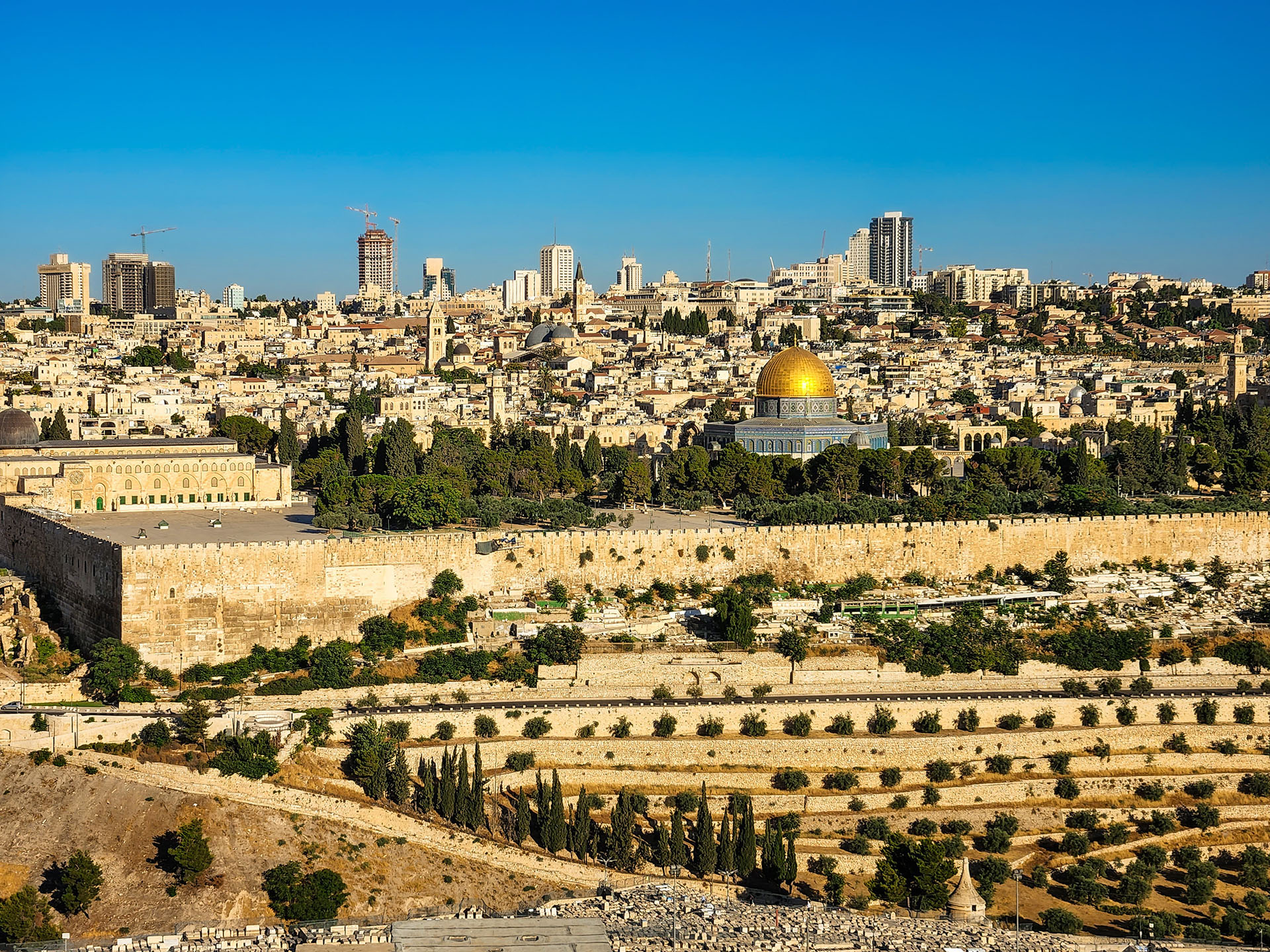
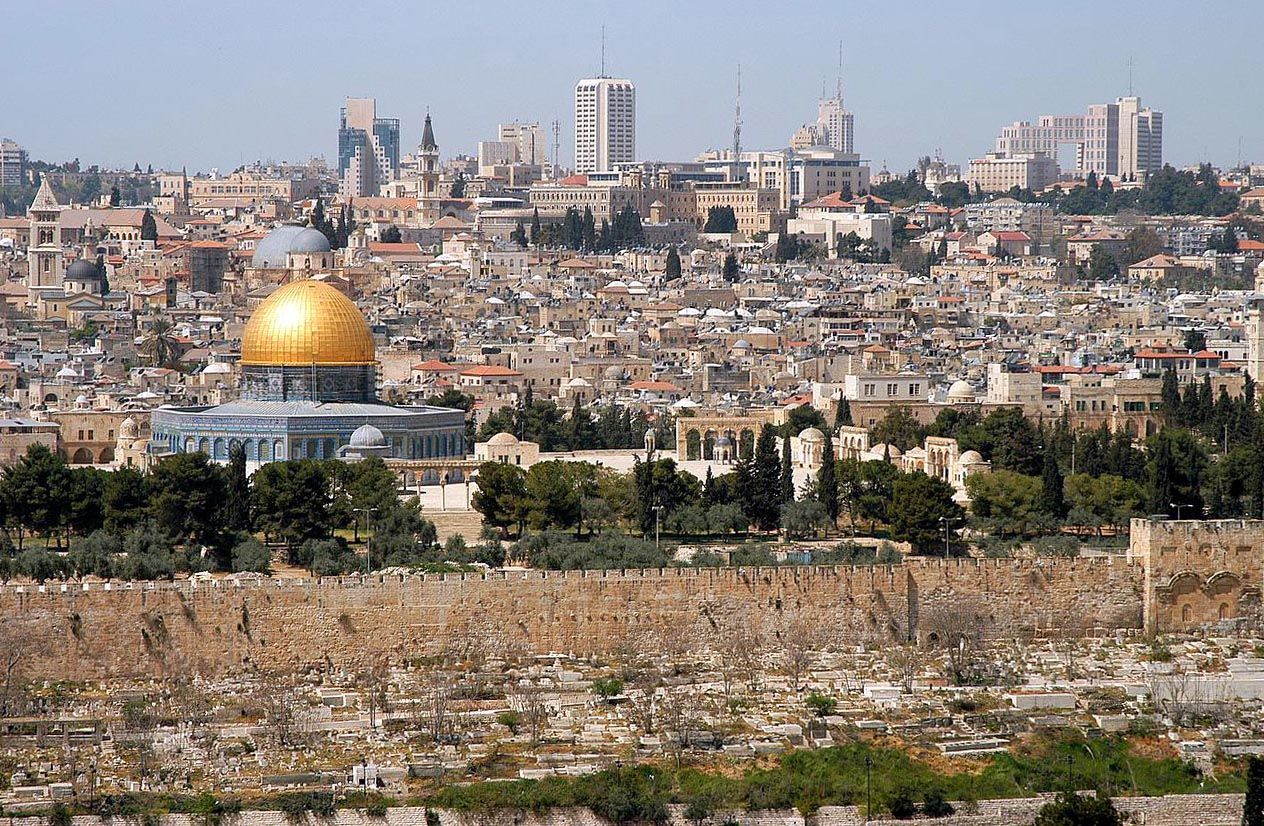
耶路撒冷市 (Jerusalem) 位于巴勒斯坦中部犹地亚山的四座山丘上,是一座举世闻名的历史古城,距今已有5000多年的历史。四周群山环抱,面积158平方公里,由东部旧城和西部新城组成。海拔835米,63.4万(2000年),是以色列最大城市。
耶路撒冷旧城是一座宗教圣城,是犹太教、伊斯兰教和基督教世界三大宗教发源地,三教都把耶路撒冷视为自己的圣地。宗教和传统、历史和神学以及神圣的处所和祈祷的房屋,使耶路撒冷成为备受犹太教徒、基督教徒和穆斯林崇敬的神圣城市。 耶路撒冷所在地最早叫“耶布斯”,这是因为很早以前阿拉伯迦南人的一个名叫“耶布斯”的部落从阿拉伯半岛迁徙到这里定居下来,修建村庄,构筑城堡,并以部 落的名字命名此地。后来,迦南人又在这里修建城市,并定名为“尤罗萨利姆”。大约在公元前一千年左右,犹太王国创始人大卫征服了这个地方,将它作为犹太王 国的都城,继续沿用“尤罗萨利姆”的名称,为使它希伯莱化,称为“尤罗萨拉姆”。 中文以此译为“耶路撒冷”,意为“和平之城”。阿拉伯人称该城为“古德斯”,即“圣城”。 (Quelle: www.mjjq.com/)
耶路撒冷(希伯来语: יְרוּשָׁלַיִם,拉丁化:Yerushaláyim;阿拉伯语: القُدس,拉丁化:al-Quds,汉译:古都斯或古德斯,意为“神圣的”;唐朝时期的景教徒曾根据叙利亚语“Ūrišlem”译作乌梨师敛[2][3])为以色列和巴勒斯坦境内的一座城市,位于地中海和死海之间,是古代巴勒斯坦中部的全球宗教重镇,也是完整保留人类信仰文明演进史的一个历史城市。耶路撒冷同时是犹太教、基督教和伊斯兰教三大亚伯拉罕宗教(或称“三大天启宗教”)的圣地。自公元前10世纪,所罗门王建成第一圣殿起,耶路撒冷一直是犹太教信仰的中心和最神圣的城市[4],昔日圣殿的遗迹西墙,仍是犹太教最神圣的所在。基督徒也相当重视耶路撒冷,因为根据《圣经》记载,耶稣在这里受难、埋葬、复活、升天。伊斯兰教亦将耶路撒冷列为麦加、麦地那之后的第三圣地,以纪念穆罕默德的夜行登霄[5],并在圣殿山上建造2座清真寺——阿克萨清真寺和圆顶清真寺来纪念这一事件。
自1967年第三次中东战争之后,以色列控制了全部的耶路撒冷地区,包括西耶路撒冷和东耶路撒冷,以及老城区。以色列和巴勒斯坦都声称耶路撒冷是他们的首都,因为以色列坚称这里是他们主要的政府机构,而巴勒斯坦则称预见这座城市是他们的政权所在地。不过,这两个声称在国际社会上都没有得到广泛的承认,认为该市的最终地位尚未确定,有待以色列和巴勒斯坦双方谈判决定。多数国家都将大使馆设在特拉维夫[6][7]。今天耶路撒冷仍然是以巴冲突的中心。以色列现行政区划上设耶路撒冷区,面积652平方公里,只有一个分区,即耶路撒冷分区。
2006年,耶路撒冷市区面积为126平方公里,人口约724,000人,这两项指标均居以色列和巴勒斯坦各城市之首[8][9][10]。
今天的耶路撒冷,是一个对比强烈的城市,不同文化、不同宗教、不同民族、社会不同阶层,同处一城;城市的东西两部分截然不同,发展水平悬殊。老城雅法门以西的西耶路撒冷(1967年以前属于以色列的市区)是现代以色列的核心地带(如果再继续向西数十公里,就是以特拉维夫为中心的“古什·但”区域),而老城及其东、北、南三面的东耶路撒冷(1967年后以色列占领的争议区域)则以巴勒斯坦人为主。最特别的地方是面积只有1平方公里,被一圈城墙所围绕的耶路撒冷老城[11],其中又分为4个宗教与种族聚居区:犹太区、基督徒区、亚美尼亚区和穆斯林区。耶路撒冷最重要的也引起重大争议的宗教圣地,均位于此处:犹太教的西墙和圣殿山、穆斯林的圆顶清真寺和阿克萨清真寺,以及基督徒的圣墓教堂和苦路。
Jerusalem (hebräisch  ירושלים?/i, Jeruschalajim [jeʁuʃa'lajim]; arabisch القدس al-Quds ‚die Heilige‘; altgriechisch Ἱεροσόλυμα Hierosólyma [n. pl.], oder Ἰερουσαλήμ Ierousalḗm [f., indecl.]; lateinisch Hierosolyma [n. pl. oder f. sg.], Hierosolymae [f. pl.], Hierusalem oder Jerusalem [n., indecl.]) ist eine Stadt in den judäischen Bergen zwischen Mittelmeer und Totem Meer mit rund 882.000 Einwohnern.
In Jerusalem begegnen sich viele Kulturen der Antike und Moderne. Die Altstadt ist in das muslimische, jüdische, christliche und armenische Viertel gegliedert und von einer Mauer umgeben.
Der politische Status der Stadt ist international umstritten und Teil des Nahostkonflikts. Jerusalem wurde von Israel, das das gesamte Stadtgebiet kontrolliert, als seine Hauptstadt deklariert. Der Staat Palästina beansprucht Ost-Jerusalem als seine Hauptstadt. In Jerusalem befinden sich der Sitz des Staatspräsidenten, die Knesset und das Oberste Gericht als Teil des politischen Systems Israels, die 1918 gegründete Hebräische Universität sowie die Holocaustgedenkstätte Yad Vashem und der Israel National Cemetery. Ostjerusalem, das bedeutende religiöse Stätten des Judentums, Christentums und des Islam beherbergt, wird von gemäßigteren Palästinenser-Organisationen jedoch als Hauptstadt eines zukünftigen palästinensischen Staates beansprucht, während radikalere Palästinenser-Organisationen die gesamte Stadt als Hauptstadt fordern.
エルサレムまたはイェルサレムは、イスラエルおよびパレスチナ自治区にある都市。
イスラエルはエルサレムが自国の「首都」であると宣言しているものの、国際連合など国際社会はこれを認めておらず[1][2]、イスラエルの首都はテルアビブであるとみなし[1][2]ている。したがって、イスラエルと国交を持つ諸国も、大使館や領事館はエルサレムでなくテルアビブに置いてきた。ただし、2017年になってアメリカ合衆国のドナルド・トランプ大統領はエルサレムをイスラエルの首都であると明言[1][2]。2018年5月、アメリカ大使館をテルアビブからエルサレムに移転させた[3]。
Jerusalem (/dʒəˈruːsələm/; Hebrew: יְרוּשָׁלַיִם Yerushaláyim; Arabic: القُدس al-Quds)[note 2] is a city in the Middle East, located on a plateau in the Judaean Mountains between the Mediterranean and the Dead Sea. It is one of the oldest cities in the world, and is considered holy to the three major Abrahamic religions—Judaism, Christianity, and Islam. Both Israel and the Palestinian Authority claim Jerusalem as their capital, as Israel maintains its primary governmental institutions there and the State of Palestine ultimately foresees it as its seat of power; however, neither claim is widely recognized internationally.[note 3][8]
During its long history, Jerusalem has been destroyed at least twice, besieged 23 times, attacked 52 times, and captured and recaptured 44 times.[9] The part of Jerusalem called the City of David was settled in the 4th millennium BCE.[10] Jerusalem was named as "Urusalim" on ancient Egyptian tablets, probably meaning "City of Shalem" after a Canaanite deity, during the Canaanite period (14th century BCE). During the Israelite period, significant construction activity in Jerusalem began in the 9th century BCE (Iron Age II), and in the 8th century the city developed into the religious and administrative center of the Kingdom of Judah.[11] In 1538, the city walls were rebuilt for a last time around Jerusalem under Suleiman the Magnificent. Today those walls define the Old City, which has been traditionally divided into four quarters—known since the early 19th century as the Armenian, Christian, Jewish, and Muslim Quarters.[12] The Old City became a World Heritage Site in 1981, and is on the List of World Heritage in Danger.[13] Since 1860 Jerusalem has grown far beyond the Old City's boundaries. In 2015, Jerusalem had a population of some 850,000 residents, comprising approximately 200,000 secular Jewish Israelis, 350,000 Haredi Jews and 300,000 Palestinians.[14][note 4] In 2011, the population numbered 801,000, of which Jews comprised 497,000 (62%), Muslims 281,000 (35%), Christians 14,000 (around 2%) and 9,000 (1%) were not classified by religion.[16]
According to the Bible, King David conquered the city from the Jebusites and established it as the capital of the united kingdom of Israel, and his son, King Solomon, commissioned the building of the First Temple.[note 5] These foundational events, straddling the dawn of the 1st millennium BCE, assumed central symbolic importance for the Jewish people.[18][19] The sobriquet of holy city (עיר הקודש, transliterated ‘ir haqodesh) was probably attached to Jerusalem in post-exilic times.[20][21][22] The holiness of Jerusalem in Christianity, conserved in the Septuagint[23] which Christians adopted as their own authority,[24] was reinforced by the New Testament account of Jesus's crucifixion there. In Sunni Islam, Jerusalem is the third-holiest city, after Mecca and Medina.[25][26] In Islamic tradition, in 610 CE it became the first qibla, the focal point for Muslim prayer (salat),[27] and Muhammad made his Night Journey there ten years later, ascending to heaven where he speaks to God, according to the Quran.[28][29] As a result, despite having an area of only 0.9 square kilometres (0.35 sq mi),[30] the Old City is home to many sites of seminal religious importance, among them the Temple Mount with its Western Wall, Dome of the Rock and al-Aqsa Mosque, and the Church of the Holy Sepulchre. Outside the Old City stands the Garden Tomb.
Today, the status of Jerusalem remains one of the core issues in the Israeli–Palestinian conflict. During the 1948 Arab–Israeli War, West Jerusalem was among the areas captured and later annexed by Israel while East Jerusalem, including the Old City, was captured and later annexed by Jordan. Israel captured East Jerusalem from Jordan during the 1967 Six-Day War and subsequently annexed it into Jerusalem, together with additional surrounding territory.[note 6] One of Israel's Basic Laws, the 1980 Jerusalem Law, refers to Jerusalem as the country's undivided capital. All branches of the Israeli government are located in Jerusalem, including the Knesset (Israel's parliament), the residences of the Prime Minister (Beit Aghion) and President (Beit HaNassi), and the Supreme Court. While the international community rejected the annexation as illegal and treats East Jerusalem as Palestinian territory occupied by Israel,[34][35][36][37] Israel has a stronger claim to sovereignty over West Jerusalem.[38][39]
Jérusalem /ʒe.ʁy.za.lɛm/ (ou Salem, également nommée Hiérosolyme ou Solyme en ancien français ; יְרוּשָׁלַיִם Yerushaláyim en hébreu [dénomination israélienne officielle] ; arabe : القدس al Quds ou اورشليم Ûrshalîm [dénomination israélienne officielle en arabe]) est une ville du Proche-Orient que les Israéliens ont érigée en capitale, que les Palestiniens souhaiteraient comme capitale et qui tient une place centrale dans les religions juive, chrétienne et musulmane.
La ville s’étend sur 126 km2 pour une population de 901 300 habitants en 20171. La ville, chef-lieu du district de Jérusalem, est cosmopolite : s'y mêlent de nombreuses religions, peuples, groupes socio-économiques. La partie nommée vieille ville, entourée de remparts, est constituée de deux quartiers à dominante arabe, dits quartier chrétien et quartier musulman, ainsi que d’un quartier à dominante arménienne et d’un quartier à dominante juive.
Gerusalemme (AFI: /ʤeruzaˈlɛmme/[2][3]; in ebraico: יְרוּשָׁלַיִם?, Yerushalayim, Yerushalaim e/o Yerushalaym ascolta[?·info]; in arabo: القُدس, al-Quds, "la (città) santa"[4], sempre in arabo: أُورْشَلِيم, Ūrshalīm, in greco Ιεροσόλυμα, Ierosólyma, in latino Hierosolyma o Ierusalem, per antonomasia è definita "La Città Eterna"[5]), capitale giudaica tra il X e il VI secolo a.C.[6], è la capitale contesa di Israele e città santa nell'Ebraismo, nel Cristianesimo e nell'Islam. Si trova sull'altopiano che separa la costa orientale del Mar Mediterraneo dal Mar Morto, a est di Tel Aviv, a sud di Ramallah, a ovest di Gerico e a nord di Betlemme.
La Città Vecchia e le sue mura, considerate patrimonio dell'umanità dall'UNESCO, racchiudono in meno di un chilometro quadrato molti luoghi di grande significato religioso come il Monte del Tempio, il Muro del pianto, la Basilica del Santo Sepolcro, la Cupola della Roccia e la Moschea al-Aqsa. Nel corso della sua storia Gerusalemme è stata distrutta e ricostruita due volte ed è stata assediata, conquistata e riconquistata in decine di occasioni.
La parte orientale di Gerusalemme è stata occupata[7] dallo Stato di Israele nel 1967, e nel 1980 il parlamento israeliano approvò una legge fondamentale (l'equivalente di un emendamento costituzionale) che proclamava unilateralmente "Gerusalemme, unita e indivisa [...]".[8] Il Consiglio di sicurezza delle Nazioni Unite nella risoluzione 478 ha definito la legge nulla e priva di validità[9], una violazione del diritto internazionale[10] e un serio ostacolo al raggiungimento della pace in Medio Oriente[11][12].
Jerusalén (en hebreo, יְרוּשָׁלַיִם Yerushaláyim (?·i); en árabe, القـُدْس al-Quds (?·i)) es la capital de Israel y su ciudad más grande y poblada, con 865 7004 residentes en un área de 125,1 kilómetros cuadrados.2 Los asentamientos más antiguos en Jerusalén son del V milenio a. C. y es una de las ciudades más antiguas del mundo.5 Jerusalén tiene un profundo significado religioso para el cristianismo, el judaísmo y el islam. Geográficamente, se sitúa en los montes de Judea, entre el mar Mediterráneo y la ribera norte del mar Muerto, y se ha extendido bastante más allá de los límites de la Ciudad Vieja.
El estatus de la parte oriental de la ciudad, conquistada en 1967 por Israel, se encuentra disputado, ya que en este sector —referido habitualmente como Jerusalén Este o Jerusalén Oriental, que incluye la Ciudad Vieja— es donde el Estado de Palestina pretende establecer su capital. Israel discute las reclamaciones palestinas y, tras la Guerra de los Seis Días, considera la ciudad como un todo unificado y un mismo municipio, declarándola como su capital "eterna e indivisible" mediante la Ley de Jerusalén en 1980. Esta anexión ha provocado un amplio rechazo en la comunidad internacional, materializado en la resolución 478 del Consejo de Seguridad de la ONU, que la consideró contraria al Derecho Internacional,6 y en señal de protesta por este acto unilateral los Estados miembros de las Naciones Unidas acabaron por trasladar sus embajadas a Tel Aviv, tal como pedía la resolución.
Jerusalén fue habitada por los jebuseos antes de la llegada de las tribus hebreas a Canaán a principios del siglo XIII a. C. Históricamente, y según la tradición, fue la antigua capital del Reino de Israel y del Reino de Judá, y siglos más tarde del reino franco de Jerusalén.7
La Ciudad Vieja de Jerusalén fue declarada Patrimonio de la Humanidad por la Unesco en 1981.
Иерусали́м (ивр. יְרוּשָׁלַיִם Йерушала́(й)им (audio) (инф.), араб. القُدس аль-К̣удс[комм. 1], أورشليم Ӯршалӣм (Ӯрушалӣм)[комм. 2], أورشليم القدس, Ӯршалӣм-аль-К̣удс[комм. 3] (audio) (инф.)) — столица Израиля[3][4][5][6][7], город на Ближнем Востоке. Расположен на плато в Иудейских горах на водоразделе между Средиземным и Мёртвым морями, на высоте 650—840 м над уровнем моря; климат средиземноморский, с жарким, сухим летом и мягкой, влажной зимой. Город является священным для трёх крупнейших авраамических религий — иудаизма, христианства и ислама. Населён представителями множества национальных, этнических и религиозных деноминаций; численность населения Иерусалима (без пригородов) составляет 865 721 жителей.
23 января 1950 года Кнессет (Израильский парламент) провозгласил Иерусалим столицей Государства Израиль[8]; с 1967 года в результате Шестидневной войны Израиль стал контролировать всю территорию города: как Западный Иерусалим, так и Восточный. В 1980 году Кнессет провозгласил Иерусалим единой и неделимой столицей Израиля[3][9]. Израильский суверенитет над восточной частью города[10] и статус всего Иерусалима как столицы Израиля не признаны значительной частью международного сообщества[11][12][13], которое относится к Восточному Иерусалиму как к палестинской территории, оккупированной Израилем[14][15][16][17]. Статус Иерусалима остаётся одной из центральных тем палестино-израильского конфликта.
Иерусалим является одним из древнейших городов мира: первые поселения датируются IV тысячелетием до н. э. В XI веке до н. э. город был занят евреями и провозглашён столицей Израильского царства, а с X века до н. э. — Иудейского. После распада Римской империи Иерусалим отошёл к Византии. С этого момента начинается христианизация города. C захватом в 639 году арабским халифом Умаром ибн Хаттабом город начинает приобретать мусульманский облик. В 1099—1187 и 1229—1244 годах Иерусалим был под властью крестоносцев.
В 1538 году при Сулеймане Великолепном вокруг Иерусалима были построены стены. Сегодня эти стены определяют границы Старого города, который традиционно разделяется на четыре квартала, известные с начала XIX века как Армянский, Христианский, Еврейский и Мусульманский кварталы[18]. В 1981 г. Старый город стал объектом Всемирного наследия, и включён в Список всемирного наследия, находящегося под угрозой[19]. Современный Иерусалим разросся далеко за пределы границ Старого города.
Исторически в основе экономики города лежит его привлекательность для паломников и светских туристов. Однако всё большую роль в экономике Иерусалима играют современные высокотехнологичные предприятия; в 2005 году город признан одним из пяти наиболее динамично развивающихся технологических центров планеты. В Иерусалиме также расположены многие художественные и культурные площадки, в том числе всемирно известный Музей Израиля. Город является государственным телерадиовещательным центром страны. Основанный в 1925 г. Еврейский университет в Иерусалиме входит в первые две сотни учебных заведений мира.
 Education and Research
Belgium
Breakthrough Prize
Education and Research
Belgium
Breakthrough Prize
 Fundamental Physics Breakthrough Prize
Bulgaria
Denmark
Germany
Finland
France
Greece
Israel
Italy
Netherlands
Norwegen
Austria
Poland
Portugal
Romania
Sweden
Switzerland
Genf
Serbia
Slovakia
Spain
Czech Republic
Hungary
United Kingdom
Fundamental Physics Breakthrough Prize
Bulgaria
Denmark
Germany
Finland
France
Greece
Israel
Italy
Netherlands
Norwegen
Austria
Poland
Portugal
Romania
Sweden
Switzerland
Genf
Serbia
Slovakia
Spain
Czech Republic
Hungary
United Kingdom
 Important International Organizations
 Science and technology
*World famous research institutions
Science and technology
*World famous research institutions
欧洲核子研究中心(法语:Organisation Européenne pour la Recherche Nucléaire;英文:European Organization for Nuclear Research,通常被简称为CERN ),是世界上最大的粒子物理学实验室,也是万维网的发祥地。它成立于1954年9月29日,总部位于瑞士日内瓦西北部郊区的法瑞边境上,享有治外法权。CERN目前有21个成员国。以色列是第一个也是目前唯一一个非欧洲成员国。
CERN也被用来称呼它的实验室,其主要功能是为高能物理学研究的需要,提供粒子加速器和其它基础设施,以进行许多国际合作的实验。同时也设立了资料处理能力很强的大型电脑中心,协助实验数据的分析,供其他地方的研究员使用,形成了一个庞大的网络中枢。
欧洲核子研究中心现在已经聘用大约三千名的全职员工。并有来自80个国籍的大约6500位科学家和工程师,代表500余所大学机构,在CERN进行试验。这大约占了世界上的粒子物理学圈子的一半。
粒子物理学博物馆欢迎一般公众在办公时间参观。除此之外,事前预约的话每天上下午共有两个时段可以参观实际的实验工作,并备有导览说明。导览员来自各国的实验合作者,可以提供多种语言的向导。
Das CERN, die Europäische Organisation für Kernforschung, ist eine Großforschungseinrichtung bei Meyrin im Kanton Genf in der Schweiz. Am CERN wird physikalische Grundlagenforschung betrieben, insbesondere wird mit Hilfe großer Teilchenbeschleuniger der Aufbau der Materie erforscht. Der derzeit bedeutendste ist der Large Hadron Collider, der 2008 in Betrieb genommen wurde.
Das Akronym CERN leitet sich vom französischen Namen des Rates ab, der mit der Gründung der Organisation beauftragt war, dem Conseil européen pour la recherche nucléaire. Die offiziellen Namen des CERN sind European Organization for Nuclear Research im Englischen beziehungsweise Organisation européenne pour la recherche nucléaire im Französischen.[1]
Derzeit hat das CERN 22 Mitgliedstaaten. Mit etwa 3.200 Mitarbeitern (Stand: 31. Dezember 2015)[2] ist das CERN das weltweit größte Forschungszentrum auf dem Gebiet der Teilchenphysik. Über 10.000 Gastwissenschaftler[2] aus 85 Nationen arbeiten an CERN-Experimenten. Das Jahresbudget des CERN belief sich 2014 auf ungefähr 1,11 Milliarden Schweizer Franken (ca. 1 Milliarde Euro).[3]
Das CERN ist außerdem der Geburtsort des World Wide Web.[4]

伊斯兰教是与佛教和基督教并列的世界三大宗教。公元七世纪初诞生于阿拉伯半岛。它是由伊斯兰教的先知穆罕默德所创,目前世界上有10亿多信徒,他们大多分布在阿拉伯国家,以及中非、北非、中亚、西亚、东南亚和印度、巴基斯坦、中国;有些国家还以伊斯兰教为国教。
伊斯兰教诞生于阿拉伯半岛的社会大变动时期。四方割据,战乱频繁。内忧外患,危机重重。在宗教信仰上,原始宗教盛行,人们崇拜自然物体,并且各个部落 都有自己的神,同时,犹太教和基督教也开始向半岛传播,但它们的学说并不适合这种形势。因此实现半岛的和平统一和社会安宁是阿拉伯社会的出路。这时候先知 穆罕默德出现了,他以"安拉是唯一的真神"为口号,提出禁止高利贷,"施舍济贫""和平安宁"等主张,反映了当时社会的要求。伊斯兰教就是在这样一个转折 的时刻诞生的。
(Quelle:http://cn.netor.com/know/islam/islan1.htm)
伊斯兰教(阿拉伯语:الإسلام, al-’islām;发音:[ʔislæːm]  聆听[注 1])又称回教、清真教、回回教、天方教、大食法、大食教度,伊斯兰教是以《古兰经》和圣训为教导的一神教宗教,也是世界三大宗教之一。《古兰经》被伊斯兰信徒(穆斯林)视为造物主安拉命天使给其使者逐字逐句的启示,而圣训为造物主最后的先知穆罕默德的言行录(由同伴们转述收集)。伊斯兰这一名称来自《古兰经》,源自闪语字根S-L-M,意为“顺从(造物主)”;实际上穆斯林(伊斯兰教徒)的名字也来自这个字根,意为“顺从者”、“实现和平者”。
信仰独一且无与伦比的安拉,并认为人生的唯一目的是崇拜或顺从安拉;伊斯兰教认为安拉在人类历史长河派遣了众多先知给全人类,历代各个民族都有先知,包括易卜拉欣(亚伯拉罕)、穆萨(摩西)、尔撒(耶稣)等,先知穆罕默德是最后一位,古兰经载有他所得的讯息。伊斯兰教的基本功修包括五功,是为“念、礼、斋、课、朝”,五功是穆斯林需要奉行的五个义务[1]。伊斯兰教还拥有自己的一套宗教法律,该法律实际触及生活及社会的每一个层面,由饮食、金融到战事以及福利等各方面。
在先知穆罕默德逝世后,伊斯兰帝国持续扩张,占据着大片的地区,促使哈里发国的诞生,传教活动亦刺激更多人改信伊斯兰教[2]。早期哈里发的宗教政策、穆斯林的经济及商贸开拓及后来奥斯曼帝国的扩张都使伊斯兰教从麦加向大西洋及太平洋的方向扩散,形成穆斯林世界。
多数的穆斯林属于逊尼派(素尼派)(75%-90%)及什叶派(10%-20%)两大派别[参 1][参 2][3],另外两派中均有人同时信仰伊斯兰神秘主义[4]。伊斯兰教是中东、中亚、东南亚主要部分及非洲的大部分的主流宗教。在法国、德国、中国西北部、俄罗斯西南部及加勒比地区都可找到庞大的穆斯林社群。穆斯林最多的国家是印度尼西亚,这里居住着全球穆斯林总数的15%[5]。南亚、中东及撒哈拉以南非洲的穆斯林分别占全球总数的25%、20%及15%[参 2]。皈依伊斯兰教的穆斯林几乎可在世界的每个角落都可找到。截至2010年,全球约有16亿穆斯林,占23.4%人口[参 3]。在信徒人数上,伊斯兰教是世界第二大宗教,被认为是世上增长得最快的宗教[6][参 4]。
Der Islam ist eine monotheistische Religion, die im frühen 7. Jahrhundert n. Chr. in Arabien durch Mohammed gestiftet wurde. Mit über 1,8 Milliarden[1] Mitgliedern ist der Islam nach dem Christentum (ca. 2,2 Milliarden Mitglieder)[2] heute die Weltreligion mit der zweitgrößten Mitgliederzahl.
Der Islam wird allgemein auch als abrahamitische,[3] als prophetische[4] Offenbarungsreligion[5] und als Buch- oder Schriftreligion[6] bezeichnet.
Das arabische Wort Islām (islām / إسلام) ist ein Verbalsubstantiv zu dem arabischen Verb aslama („sich ergeben, sich hingeben“). Es bedeutet wörtlich das „Sich-Ergeben“ (in den Willen Gottes), „Sich-Unterwerfen“ (unter Gott), „Sich-Hingeben“ (an Gott), oft einfach mit Ergebung, Hingabe und Unterwerfung wiedergegeben.[7]
Die Bezeichnung für denjenigen, der dem Islam angehört, ist Muslim. Die Pluralform im Deutschen ist Moslems oder Muslime, Muslimas oder Musliminnen.
Die zehn Länder mit dem größten Anteil an der muslimischen Weltbevölkerung sind Indonesien (12,9 %), Pakistan (11,1 %), Indien (10,3 %), Bangladesch (9,3 %), Ägypten und Nigeria (jeweils 5 %), Iran und Türkei (jeweils 4,7 %) sowie Algerien (2,2 %) und Marokko (ca. 2 %). In ihnen zusammengenommen leben mehr als zwei Drittel aller Muslime.[8] Die wichtigste überstaatliche islamische Organisation ist die Organisation für Islamische Zusammenarbeit (OIC) mit Sitz in Dschidda. Ihr gehören 56 Staaten an, in denen der Islam Staatsreligion, Religion der Bevölkerungsmehrheit oder Religion einer großen Minderheit ist. Teilweise muslimisch geprägte europäische Länder sind Albanien, Bosnien und Herzegowina, Kosovo, Nordmazedonien und die (geographisch nur teilweise in Europa liegende) Türkei. Viele weitere Länder haben muslimische Minderheiten.
Die wichtigste textliche Grundlage des Islams ist der Koran (arabisch القرآن al-qurʾān ‚Lesung, Rezitation, Vortrag‘), der als die dem Propheten Mohammed offenbarte Rede Gottes gilt.
Die zweite Grundlage bilden die Hadithe (arabisch حديث, DMG ḥadīṯ ‚Erzählung, Bericht, Mitteilung, Überlieferung‘) zur Sunna Mohammeds (Sunna, arabisch سنة ‚Brauch, gewohnte Handlungsweise, überlieferte Norm‘), der als der „Gesandte Gottes“ (Rasūl, arabisch رسول ‚Gesandter, Sendbote, Apostel‘‘) Vorbildcharakter für alle Muslime hat.
Die sich aus diesen Texten ergebenden Normen werden in ihrer Gesamtheit als Scharia bezeichnet (شريعة / šarīʿa im Sinne von „Weg zur Tränke, Weg zur Wasserquelle, deutlicher, gebahnter Weg“; auch: „religiöses Gesetz“, „Ritus“).
イスラム教(イスラムきょう、イスラーム教、イスラーム、和名・漢字圏名: 回教)は、唯一絶対の神(アラビア語でアッラー)を信仰し、神が最後の預言者を通じて人々に下した(啓示した)とされるクルアーンの教えを信じ、従う一神教である。
ユダヤ教やキリスト教の影響を受けた唯一神教で、偶像崇拝[注釈 1]を徹底的に排除し、神への奉仕を重んじ、信徒同士の相互扶助関係や一体感を重んじる点に大きな特色があるとされる。アッラーを崇拝するが、アッラーとは、もともとアラビアの多神教の神々の中の一人であった[1]が、ムハンマドがメッカを占領すると、他の多神教の神々の像は全て破壊され、そして作ることや描くことも禁止され、その神だけを崇拝するようになった。
日本語における「イスラーム」(isurāmu) はアラビア語のإسلام (islām) の長母音に即した形でカタカナに音写した語である。この語は、「自身の重要な所有物を他者の手に引き渡す」という意味を持つaslama(アスラマ)という動詞の名詞形であり、神への絶対服従を表す。ムハンマド以前のジャーヒリーヤ時代には宗教的な意味合いのない人と人との取引関係を示す言葉として用いられていた。ムハンマドはこのイスラームという語を、唯一神であるアッラーフに対して己の全てを引き渡して絶対的に帰依し服従するという姿勢に当てはめて用い、そのように己の全てを神に委ねた状態にある人をムスリムと呼んだ。このような神とムスリムとの関係はしばしば主人と奴隷の関係として表現される[2]。
イスラームの啓典であるクルアーンの中の法制的部分やムスリム(イスラム教徒)の従うべき規範を定めたシャリーア(イスラム法)を重視する論者は、『イスラームはその定めにのっとって行うべき行為として単に宗教上の信仰生活のみを要求しているのではなく、イスラム国家の政治のあり方、ムスリム間やムスリムと異教徒の間の社会関係にわたるすべてを定めている。』と主張している。このことから、『イスラームとは、単なる宗教の枠組みに留まらない、ムスリムの信仰と社会生活のすべての側面を規程する文明の体系である』という理解の仕方がある。
この理解に基づいて、近年はイスラーム研究者の間で「イスラム教」あるいは「イスラーム教」という「宗教」の側面のみを意味する「教 (-ism)」の字を取り去って単に「イスラーム」と表記すべきであるという主張が行われ、ある程度の市民権を得つつある。この主張に従えば、イスラームの規程する諸側面すべてをイスラームと呼び、宗教としての側面をイスラム教、イスラーム教と呼んで区別できる可能性もある。
しかし一方で、このようなイスラーム理解はイスラームの律法的側面を過度に強調しており、スーフィズムにみられる精神主義などの多様なイスラームの形態を反映していない、という批判も強い。
Islam (/ˈɪslɑːm/)[note 1] is an Abrahamic monotheistic religion teaching that there is only one God (Allah),[1] and that Muhammad is the messenger of God.[2][3] It is the world's second-largest religion[4] with over 1.8 billion followers or 24% of the world's population,[5] most commonly known as Muslims.[6] Muslims make up a majority of the population in 50 countries.[4] Islam teaches that God is merciful, all-powerful, unique[7] and has guided humankind through prophets, revealed scriptures and natural signs.[3][8] The primary scriptures of Islam are the Quran (revealed in Classical Arabic), viewed by Muslims as the verbatim word of God, and the teachings and normative example (called the sunnah, composed of accounts called hadith) of Muhammad (c. 570 – 8 June 632 CE).
Muslims believe that Islam is the complete and universal version of a primordial faith that was revealed many times before through prophets including Adam, Abraham, Moses and Jesus.[9][10][11] Muslims consider the Quran to be the unaltered and final revelation of God.[12] Like other Abrahamic religions, Islam also teaches a final judgment with the righteous rewarded paradise and unrighteous punished in hell.[13][14] Religious concepts and practices include the Five Pillars of Islam, which are obligatory acts of worship, and following Islamic law (sharia),[verification needed] which touches on virtually every aspect of life and society, from banking and welfare to women and the environment.[15][16] The cities of Mecca, Medina and Jerusalem are home to the three holiest sites in Islam.[17]
Aside from the theological narrative,[18][19][20] Islam is historically believed to have originated in the early 7th century CE in Mecca,[21] and by the 8th century the Umayyad Islamic caliphate extended from Iberia in the west to the Indus River in the east. The Islamic Golden Age refers to the period traditionally dated from the 8th century to the 13th century, during the Abbasid Caliphate, when much of the historically Muslim world was experiencing a scientific, economic and cultural flourishing.[22][23][24] The expansion of the Muslim world involved various caliphates such as the Ottoman Empire, traders and conversion to Islam by missionary activities (dawah).[25]
Most Muslims are of one of two denominations; Sunni (85–90%)[26] or Shia (10–15%).[27] About 13% of Muslims live in Indonesia, the largest Muslim-majority country,[28] 31% of Muslims live in South Asia,[29] the largest population of Muslims in the world,[30] 20% in the Middle East–North Africa,[31] where it is the dominant religion,[32] and 15% in Sub-Saharan Africa.[33] Sizeable Muslim communities are also found in the Americas, the Caucasus, Central Asia, China, Europe, Mainland Southeast Asia, the Philippines, and Russia.[34][35] Islam is the fastest-growing major religion in the world.[36][37][38]
L'islam (arabe : الإسلام ; Alʾislām, la soumission et la sujétion aux ordres de Dieu1) est une religion abrahamique s'appuyant sur le dogme du monothéisme absolu (تَوْحيد, tawhid) et prenant sa source dans le Coran, considéré comme le réceptacle de la parole de Dieu (الله, Allah) révélée à Mahomet (محمّد, Muḥammad), proclamé par les adhérents de l'islam comme étant le dernier prophète de Dieu2, au VIIe siècle en Arabie au sud-ouest de l'Asie3. Un adepte de l'islam est appelé un musulman ; il a des devoirs cultuels, souvent appelés les « piliers de l'islam ».
En 2015, le nombre de musulmans dans le monde est estimé à 1,8 milliard, soit 24 % de la population mondiale4, ce qui fait de l'islam la deuxième religion du monde après le christianisme et devant l'hindouisme. C’est, chronologiquement parlant, le troisième grand courant monothéiste de la famille des religions abrahamiques, après le judaïsme et le christianisme, avec lesquels il possède des éléments communs.
L’islam se répartit en différents courants, dont les principaux sont le sunnisme, qui représente 90 % des musulmans5, le chiisme et le kharidjisme.
Les musulmans croient que Dieu est indivisible (sans fils)6 et inimaginable (sans image)7 et que l'islam est la religion naturelle au sens où elle n'a pas besoin de la foi en l'unicité divine pour constater l'existence de Dieu, cette vérité étant donnée tout entière dès le premier jour et dès le premier Homme (soit Adam)8. Ainsi, elle se présente comme un retour sur les pas d'Abraham (appelé, en arabe, Ibrahim par les musulmans) du point de vue de la croyance, le Coran le définissant comme étant l'étalon-pied, la lieue de la Kaaba, le mille d'Abraham (milla ta Ibrahim)9,10,11, c'est-à-dire une soumission exclusive à la volonté d'Allahnote 1,note 2,note 3.
Le Coran reconnaît l'origine divine de l'ensemble des livres sacrés du judaïsme et du christianismenote 4, tout en estimant qu'ils seraient, dans leurs interprétations actuelles, le résultat d'une falsification partielle12 : le Suhuf-i-Ibrahim (les Feuillets d'Abraham), la Tawrat (le Livre de Moïse13 identifié à la Torah), le Zabur de David et Salomon (identifié au Livre des Psaumes) et l'Injil (l'Évangile de Jésus14).
Le Coran établit l'importance de la Sunna de Mahomet qui est connue par des transmissions de ses paroles, faits et gestes, approbations (y compris silencieuses)15,note 5, récits appelés hadîths, auxquels se réfèrent la majorité des musulmans pour l'établissement de règles juridiques (fiqh) permettant la compréhension et l'accomplissement des adorations du musulman au quotidien. Les différentes branches de l'islam ne s'accordent pas sur les compilations de hadiths à retenir comme authentiques. Le Coran et les hadiths dits « recevables » sont deux des quatre sources de la loi islamique, la charia, les deux autres étant le consensus (ijma’) et l'analogie (qiyas). Il établit également le devoir d'aimer la famille de Mahomet (ahl al-bayt).
L'islam (pronunciato in italiano AFI: /iˈzlam/ (tradizionale) o /ˈizlam/ (comune)[1][2]; in arabo: إسلام, Islām [ʔɪˈslæːm][3]) è una religione monoteista manifestatasi per la prima volta nella penisola araba, nella cittadina higiazena della Mecca, nel VII secolo dell'era cristiana ad opera di Maometto (in arabo محمد, Muḥammad), considerato dai musulmani l'ultimo profeta portatore di legge (Khātam al-Nabiyyīn), inviato da Dio (in arabo الله, Allāh) al mondo per ribadire definitivamente la Rivelazione, annunciata per la prima volta ad Adamo (آدم, Ādam), il primo uomo e il primo profeta.
Con circa 1,8 miliardi di fedeli, ossia il 23% della popolazione mondiale,[4][5] l'islam è la seconda religione del mondo per consistenza numerica e vanta un tasso di crescita particolarmente significativo.[6][7][8] Il 13% dei musulmani vive in Indonesia, che è anche il paese musulmano più popolato, il 25% nell'Asia meridionale, il 20% in Vicino Oriente, Maghreb e Medio Oriente e il 15% nell'Africa subsahariana.[9] Minoranze considerevoli si trovano anche in Europa, Cina, Russia e America.
Il simbolo della mezzaluna islamica è stato introdotto dagli ottomani con la presa di Costantinopoli nel 1453.
El islam23 (en árabe: الإسلام, al-Islām (?·i)) es una religión monoteísta abrahámica cuyo dogma se basa en el Corán, el cual establece como premisa fundamental para sus creyentes que «No hay más Dios que Alá4 y que Mahoma es el último mensajero de Alá».5 La palabra árabe Allah, hispanizada como Alá, significa Dios y su etimología es la misma de la palabra semítica El, con la que se nombra a Dios en la Biblia. Los eruditos islámicos definen al islam como: «La sumisión a Dios el Altísimo a través del monoteísmo, la obediencia y el abandono de la idolatría».6 Los seguidores del islam se denominan musulmanes (del árabe muslim مسلم, 'que se somete'). Creen que Mahoma es el último de los profetas enviados por Dios y sello de la Profecía.7 El libro sagrado del islam es el Corán,8 que según los musulmanes fue dictado por Alá a Mahoma a través de Yibril (el arcángel Gabriel).
Se aceptan como profetas principalmente (pero no limitándose) a Adán, Noé, Abraham, Moisés, Salomón y Jesús (llamado Isa). Además del Corán, los musulmanes de tradición sunita siguen así mismo los hadices y la sunna del profeta Mahoma, que conforman el Registro histórico de las acciones y las enseñanzas del Profeta. Se aceptan también como libros sagrados la Torá (el Pentateuco de los cristianos), los Libros de Salomón y los Evangelios (el Nuevo Testamento).
El islam es una religión abrahámica monoteísta que adora exclusivamente a Alá sin copartícipes. Es la segunda religión más grande del mundo, tras el cristianismo y la que tiene mayor crecimiento en términos de seguidores, quienes se estima alcanzan a 1.8 miles de millones o el 24.1% de la población, quienes se conoce como musulmanes. Los musulmanes son la mayoría de la población en 50 países.
El islam se inició con la predicación de Mahoma en el año 622 en La Meca (en la actual Arabia Saudita). Bajo el liderazgo de Mahoma y sus sucesores, el islam se extendió rápidamente. Existe discrepancia entre los musulmanes y no musulmanes de si se extendió por imposición religiosa o militar, o por conversión de los pueblos al islam.
Исла́м (араб. الإسلام — «покорность»[1], «предание себя [Единому] Богу»[1]) — самая молодая[2] и вторая по численности приверженцев, после христианства, мировая монотеистическая авраамическая религия[1]. Число приверженцев — более 1,8 млрд человек, проживающих в более чем 125 странах мира[3]. В 28 странах ислам является государственной или официальной религией. Большинство мусульман (85-90 %) составляют сунниты, остальные — шииты, ибадиты[1]. Проповедник ислама — пророк Мухаммед (571—632)[1]. Священная книга — Коран[1]. Второй важнейший источник исламского вероучения и права — Сунна, представляющая совокупность преданий (хадис) об изречениях и деяниях пророка Мухаммеда[1]. Язык богослужения — арабский[1]. Приверженцев ислама называют мусульманами.
 Geography
Israel
IMF Developed countries
IMF Developed countries
TOP4
Geography
Israel
IMF Developed countries
IMF Developed countries
TOP4
 Military, defense and equipment
Nuclear Weapon
Military, defense and equipment
Military, defense and equipment
Nuclear Weapon
 States of Asia
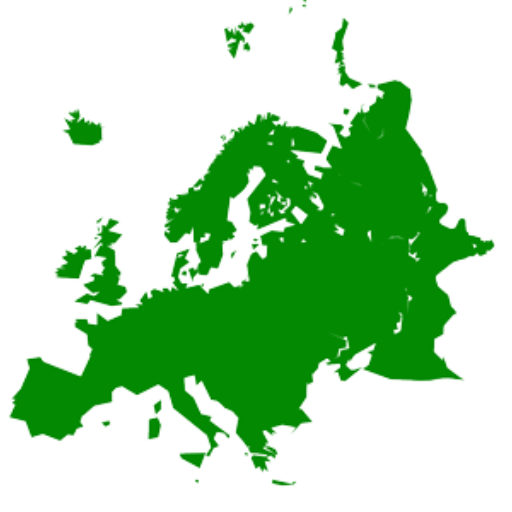 States of Europe


以色列国(希伯来语: מְדִינַת יִשְׂרָאֵל;阿拉伯语:دَوْلَة إِسْرَائِيل) ,通称以色列(希伯来语:יִשְׂרָאֵל;阿拉伯语:إِسْرَائِيل,罗马化:Isrāʾīl),是位于中东地区的一个主权国家,1948年5月14日独立建国,人口900余万,主要人口为犹太人,以希伯来语为官方语言,通用英语。
以色列位于亚欧大陆交界处,自古为各民族交汇之处。其国家位处阿拉伯半岛西北角、地中海东岸和红海亚喀巴湾北岸,与巴勒斯坦领土(约旦河西岸地区、加沙地带)交错相邻,北接黎巴嫩,东北邻叙利亚,东与约旦接壤[10],西南则为埃及西奈半岛。
以色列领土范围不大,根据联合国1947年巴勒斯坦分治决议,以色列面积1.52万平方公里。经过四次中东战争后,以色列目前实际控制面积约2.5万平方公里。以色列国土南北长约470km,东西最宽处宽约135km[11],整体南北长,东西窄。地形和气候相当多样[12][13]。以色列的金融及科技创新中心为特拉维夫[14],而耶路撒冷则为其法定首都、各政府机构所在地(国防部除外)及其辖下的第一大城市,外国使领馆驻特拉维夫。以色列对耶路撒冷的主权在国际上有争议[15]。
以色列所居领土历史上曾为多个国家统治。包括古埃及、新亚述帝国、新巴比伦帝国、波斯第一帝国、希腊马其顿帝国、托勒密埃及、塞琉古帝国、罗马共和国和罗马帝国、东罗马帝国、波斯第二帝国、阿拉伯帝国、法蒂玛王朝、塞尔柱帝国、十字军(耶路撒冷王国)、埃及马穆鲁克王朝、奥斯曼土耳其帝国以及大英帝国。1918年,奥斯曼帝国一战战败,退出该地区,随即阿拉伯部落纷争。1922年,国际联盟委托英国托管。受犹太复国主义兴起和反犹主义影响,二战后,大批犹太移民迁入。
1947年11月29日,联合国大会181号决议确定支持在巴勒斯坦托管地推行分治方案,支持以巴分别成立独立国家,耶路撒冷及其周边地区则由国际管理[16][17]。
1948年5月14日,世界犹太复国主义组织及犹太援以协会主席戴维·本-古里安宣告“犹太国家在以色列家园建立,称为以色列国”,将于托管期结束之时起开始运作[18][19][20]。5月15日零时,英国对巴勒斯坦的托管终止。[17][21]以色列建国次日,邻近的阿拉伯国家便集结了军队发动第一次中东战争争夺前巴勒斯坦托管地,与以色列军队交战[22][23],后双方战线沿当今被称做“绿线”处停战。约旦占领了绿线至约旦河的地区,并于1950年宣布将其并入约旦王国,约旦认为此地所有的阿拉伯人为约旦国民。
此后,以色列与阿拉伯邻国多次发生阿以冲突[24],以色列逐渐控制了约旦河西岸地区(1967年–现在)、西奈半岛(1956年–1957年、1967年–1982年)、南黎巴嫩局部地区(1982年–2000年)、加沙地带(1967年–2005年;但2005年撤退后仍被视为占领)以及戈兰高地。 以色列将其法律管辖范围拓展至戈兰高地和东耶路撒冷。根据1993年以巴签订的奥斯陆协议, 以色列对约旦河西岸的“B”和“C”区行使部分或完全的管辖权,“A”区则由阿拉伯人完全自治 [25][26][27][28]。由于以阿双方多年以来都未遵循或承认1947年联大181决议划定的以色列和巴勒斯坦国国界,冲突不断,国际社会只能有限调解以巴冲突,至今仍未达成和平。以色列至今不承认巴勒斯坦为独立国家,但以色列和埃及及约旦已经分别签署和平条约。
根据以色列中央统计局数据,以色列人口于2019年已达到900万,为世界唯一的犹太人占多数国家,其中约75%为犹太裔,20.8%为阿拉伯裔,人数达177万(包括德鲁兹派和多数东耶路撒冷阿拉伯人)[29][30][31]。绝大多数阿拉伯裔以色列人为定居的逊尼派穆斯林,少数为半定居的内盖夫贝都因人;其余则为基督徒和德鲁兹人。其他少数族裔包括马龙派、撒马利亚人、多姆人和罗姆人、非裔希伯来以色列人、其他撒哈拉以南非洲人[32]、亚美尼亚人、切尔克斯人、越南船民等。以色列亦有一定数量的来自非洲和亚洲的外国劳工和政治庇护者[3]。
依根据《以色列基本法》,以色列为“犹太和民主国家”[33]。以色列为代议民主制国家[34],采用议会制、比例代表制和普遍选举制[35][36]。总理为政府首脑,议会为立法机关。以色列为一发达国家,经济合作与发展组织成员国[37],2014年其名义国内生产总值排名世界第37。该国具有较高水平的劳动力,为全球教育程度最高的国家之一,其公民拥有高等教育学历的比例亦为世界最高之一[38][39]。其生活水平为中东最高和亚洲第四高[40][41][42],其人口预期寿命亦居世界前列[43]。
Israel (hebräisch ישראל Jisra'el) bzw. in Langform Staat Israel (hebräisch Medinat Jisra'el) ist ein Staat in Vorderasien an der Ostküste des Mittelmeers. Israel ist der einzige Staat der Welt mit mehrheitlich jüdischer Bevölkerung und gemäß eigenem Selbstverständnis Nationalstaat des jüdischen Volkes.[8][9][10][11] Israel gehört geographisch zum Maschrek und grenzt an den Libanon, Syrien, Jordanien, Ägypten sowie an Gazastreifen und Westjordanland. Hauptstadt und bevölkerungsreichste Stadt ist Jerusalem, größtes Ballungszentrum ist Gusch Dan um die am Mittelmeer gelegene Metropole Tel Aviv-Jaffa. Politik und Geschichte des Staates sind erheblich durch den andauernden Nahostkonflikt geprägt.
Das Gebiet des heutigen Israel gilt als Wiege des Judentums, sowie später auch der zwei anderen, jüngeren abrahamitischen Religionen. Es stand jedoch seit Christi Geburt nacheinander unter römischer, byzantinischer, arabischer, osmanischer und zuletzt britischer Fremdherrschaft. Die dort seit rund 3.000 Jahren ansässigen Juden (Hebräer) wurden im Laufe dessen mehrfach vertrieben (jüdische Diaspora). Ab dem ausgehenden 19. Jahrhundert bestanden unter europäischen Juden, nicht zuletzt aufgrund der dort zunehmenden Judenverfolgung, Bestrebungen, im damals osmanischen Palästina wieder einen jüdischen Nationalstaat zu errichten (Zionismus, benannt nach Zion / dem Tempelberg). Die ersten politischen Grundsteine dafür wurden beim Ersten Zionistischen Weltkongress in Basel im Jahr 1897 unter der Leitung von Theodor Herzl gelegt, die beabsichtigte Staatsgründung nahm durch die Balfour-Deklaration von 1917 konkretere Formen an. Von 1920 bis 1948 bestand das Völkerbundsmandat für Palästina unter britischer Vorherrschaft, verstärkte jüdische Einwanderung und Aufbau staatlicher Strukturen führten zu Konflikten mit der arabischen Bevölkerung. Der UN-Teilungsplan für Palästina von 1947 sollte diese beilegen, wurde allerdings von arabischer Seite abgelehnt. Am 14. Mai 1948 erfolgte die Israelische Unabhängigkeitserklärung und sogleich ein Angriff der arabischen Nachbarstaaten. Die nachfolgende, jüngere Geschichte Israels ist seither von dem andauernden arabisch-israelischen Konflikt geprägt.
Das politische System Israels basiert auf einem parlamentarischen Regierungssystem. Regierungschef ist der von der Knesset gewählte Ministerpräsident, das Staatsoberhaupt der Staatspräsident mit überwiegend repräsentativen Aufgaben. Israel ist als freiheitlich-demokratischer Rechtsstaat mit einem ausgeprägtem Sozialstaat verfasst; das Land gilt gemeinhin als die „einzige Demokratie im Nahen Osten“. Der zentralistisch verwaltete Staat ist in sechs Bezirke und diese wiederum in 71 Städte, 141 Gemeinden und 53 Regionalverbände (Zusammenschlüsse mehrerer kleinerer Ortschaften zu Verwaltungsgemeinschaften) unterteilt.
Das dicht besiedelte Land hat 2019 etwa 9 Mio. Einwohner, davon ca. 6,7 Mio. Juden (74,2 %), 1,9 Mio. nichtjüdische Araber (20,9 %) und einige weitere traditionell im Land beheimatete Minderheiten wie Aramäer,[12] Samaritaner, Armenier, Tscherkessen und Roma.[4] Das Rückkehrgesetz gestattet es allen Juden, sich in Israel niederzulassen. Seit etwa 1990 leben auch zunehmend legale asiatische und osteuropäische Arbeitsmigranten sowie illegale Einwanderer aus Afrika im Land.
Die jüdische Bevölkerung setzt sich aus Aschkenasim, Misrachim, Sephardim, Falaschen sowie aus jemenitischen Juden zusammen, wobei eine zunehmende Verschmelzung dieser Gruppen zu beobachten ist. Die Mehrheit arabischer Israelis sind Muslime, eine Minorität unter den Arabern in Israel bilden Christen und Drusen.
Trotz widriger äußerer Umstände (exponierte geografische Lage, Mangel an Wasser und Rohstoffen, Abhängigkeit von ausländischem Kapital, Kriege mit den arabischen Nachbarstaaten) ist es Israel gelungen, einen hoch entwickelten Industriestaat aufzubauen. Die heutige israelische Wirtschaft ist von einer fortschrittlichen Landwirtschaft und einer spezialisierten, stark exportorientierten Industrie geprägt. Wichtige Industriesektoren sind die Diamantenverarbeitung, die chemische und pharmazeutische Industrie sowie die Halbleitertechnik, im Dienstleistungssektor ist die Finanzwirtschaft, die Softwareentwicklung und der Tourismus zu nennen. Von wachsender Bedeutung ist die High-Tech-Industrie; das Land hat die höchsten Ausgaben für Forschung und Entwicklung pro Einwohner und die höchste Dichte an Start-ups weltweit. Ausgeprägt ist die hohe soziale Ungleichheit, die hauptsächlich durch die unzureichende wirtschaftliche Integration der arabischen und ultraorthodoxen Bevölkerungsteile bedingt ist. Das Land ist seit 2010 Mitglied der OECD. Nach dem Index der menschlichen Entwicklung (HDI) weltweit auf Platz 22 (Platz 1 im Nahen Osten, Platz 4 in Asien, Stand 2017) und zählt damit zu den sehr hoch entwickelten Volkswirtschaften.[13]
イスラエル国(イスラエルこく、ヘブライ語: מְדִינַת יִשְׂרָאֵל、アラビア語:دَوْلَة إِسْرَائِيل、英語: State of Israel :[ˈɪzrɪəl, ˈɪzreɪəl])、通称イスラエル(ヘブライ語: יִשְׂרָאֵל)は、西アジアに位置する共和制国家。北はレバノン、北東はシリア、東はヨルダン、東と西はパレスチナ自治区のヨルダン川西岸とガザ地区[9]、南西はエジプトと国境を接している。
実質的な首都はテルアビブであり、経済と技術の中心地をなす[10]。一方、イスラエル政府としてはエルサレムを首都と宣言しているが、エルサレムに対する国家の主権は国際的には限定的にしか認められていない[11][12][13][14]。
イスラエルには、アフリカから類人猿が最も早く移動してきた証拠がある[15]。カナン族の存在は青銅器時代中期から考古学的に証明されており[16][17]、イスラエル王国とユダ王国は鉄器時代に誕生した[18][19]。紀元前720年頃、新アッシリア帝国がイスラエル王国を滅ぼした[20]。ユダ王国はその後、バビロニア帝国、ペルシャ帝国、ヘレニズムの帝国に征服され、ユダヤ人の自治州として存在していた[21][22]。マカバイ戦争が成功し、紀元前110年にはハスモン朝の独立国となった[23]が、紀元前63年にはローマ共和国の従属国となり、紀元前37年にはヘロデ朝が置かれ、紀元後6年にはローマ帝国のユダヤ属州が誕生したのである[24]。ユダヤ人の反乱により、ユダヤ属州は壊滅的な打撃を受け[25]、ユダヤ人は追放され[26][27]、シリア・パレスティナに改称されるまで、ユダヤはローマの属州として存続した[28]。この地域におけるユダヤ人の存在は、何世紀にもわたってある程度継続している。7世紀にビザンチン帝国からアラブ人に奪われたレバント地方は、1099年の第1回十字軍、1187年のアイユーブ朝による征服までイスラム教徒の支配下にあった。13世紀にはエジプトのマムルーク朝がレバントに支配を広げ、1517年にオスマン帝国に敗れるまで支配した。19世紀には、ユダヤ人の民族意識の高まりからシオニスト運動が起こり、パレスチナへの移住が始まった。
パレスチナは、第一次世界大戦後にオスマン帝国から割譲され、1920年から1948年まで大英帝国の委任統治領となった。第二次世界大戦が始まると、委任統治領は大規模な爆撃を受け、イシューブのユダヤ人は連合国側に従軍した。1944年、イギリスは武器の供給とユダヤ人旅団の結成に同意した。緊張が高まる中、イギリスはアラブ人とユダヤ人の両派をなだめるために、1947年に国際連合がパレスチナ分割決議を採択し、アラブ人とユダヤ人の独立国家と国際化されたエルサレムの設立を勧告した[29]。翌年、ユダヤ機関はイスラエルの独立を宣言し、1948年のアラブ・イスラエル戦争では、イギリス委任統治領の大部分をイスラエルが占領したが、ヨルダン川西岸とガザは近隣のアラブ諸国が占領していた[30]。その後、イスラエルはアラブ諸国といくつかの戦争を経験し[31]、1967年6月の第三次中東戦争以降は、ヨルダン川西岸地区、ゴラン高原、ガザ地区などの占領地を保有している(2005年の分離独立後も占領地とみなされているが、法律の専門家の中にはこの主張に異論がある)[32][33][34]。その後の立法措置により、ゴラン高原と東エルサレムではイスラエル法が全面的に適用され、ヨルダン川西岸ではイスラエルの入植地への「パイプライニング」により部分的に適用されている[35][36][37][38]。イスラエルによるパレスチナ自治区の占領は、現代における世界最長の軍事占領であると国際的に考えられている[39]。イスラエルとパレスチナの紛争を解決するための努力は、最終的な和平合意には至っていないが、イスラエルはエジプトとヨルダンの両国と和平条約を締結している。
イスラエルは基本法の中で、自らをユダヤ人と民主主義の国家であり、ユダヤ人の国民国家であると定義している[40]。国は、議会制、比例代表制、普通選挙を採用した自由民主主義国家である[41][42]。首相は政府の長であり、クネセトは立法府である。2019年現在の人口は約900万人[43]で、イスラエルは先進国であり、OECD加盟国である[44]。名目GDPでは世界第31位の経済規模を持ち、現在紛争中の国の中では最も先進的な国である。中東で最も生活水準が高く、軍事訓練を受けた国民の割合[45]、高等教育の学位を持つ国民の割合[46]、GDP比の研究開発費[47]、女性の安全性[48]、平均寿命[49]、革新性[50]、幸福度[51]などで世界の上位にランクインしている。
Israel (/ˈɪzriəl, ˈɪzreɪəl/; Hebrew: יִשְׂרָאֵל, romanized: Yisra'el; Arabic: إِسْرَائِيل, romanized: ʾIsrāʾīl), officially known as the State of Israel (Hebrew: מְדִינַת יִשְׂרָאֵל, Medinat Yisra'el), is a country in Western Asia. It is situated on the southeastern shore of the Mediterranean Sea and the northern shore of the Red Sea, and shares borders with Lebanon to the north, Syria to the northeast, Jordan on the east, the Palestinian territories of the West Bank and the Gaza Strip to the east and west,[23] respectively, and Egypt to the southwest. Tel Aviv is the economic and technological center of the country,[24] while its seat of government and proclaimed capital is Jerusalem, although international recognition of the state's sovereignty over the city is limited.[25][26][27][28][fn 4]
Israel has evidence of the earliest migration of hominids out of Africa.[29] Canaanite tribes are archaeologically attested since the Middle Bronze Age,[30][31] while the Kingdoms of Israel and Judah emerged during the Iron Age.[32][33] The Neo-Assyrian Empire destroyed Israel around 720 BCE.[34] Judah was later conquered by the Babylonian, Persian and Hellenistic empires and had existed as Jewish autonomous provinces.[35][36] The successful Maccabean Revolt led to an independent Hasmonean kingdom by 110 BCE,[37] which in 63 BCE however became a client state of the Roman Republic that subsequently installed the Herodian dynasty in 37 BCE, and in 6 CE created the Roman province of Judea.[38] Judea lasted as a Roman province until the failed Jewish revolts resulted in widespread destruction,[37] the expulsion of the Jewish population[37][39] and the renaming of the region from Iudaea to Syria Palaestina.[40] Jewish presence in the region has persisted to a certain extent over the centuries. In the 7th century CE, the Levant was taken from the Byzantine Empire by the Arabs and remained in Muslim control until the First Crusade of 1099, followed by the Ayyubid conquest of 1187. The Mamluk Sultanate of Egypt extended its control over the Levant in the 13th century until its defeat by the Ottoman Empire in 1517. During the 19th century, national awakening among Jews led to the establishment of the Zionist movement followed by immigration to Palestine.
The land was controlled as a mandate of the British Empire from 1920 to 1948, having been ceded by the Ottomans at the end of the First World War. The Second World War saw the mandate bombed heavily. Once the British agreed to supply arms and form a Jewish Brigade in 1944, Yishuv Jews officially entered the conflict on the side of the allies. At the end of the war, amidst growing tensions with the conflict-weary British, the United Nations (UN), eager to appease both Arab and Jewish factions, adopted a Partition Plan for Palestine in 1947 recommending the creation of independent Arab and Jewish states, and an internationalized Jerusalem.[41] The plan was accepted by the Jewish Agency but rejected by Arab leaders.[42][43][44] The following year, the Jewish Agency declared the independence of the State of Israel, and the subsequent 1948 Arab–Israeli War saw Israel establishment over most of the former Mandate territory, while the West Bank and Gaza were held by neighboring Arab states.[45] Israel has since fought several wars with Arab countries,[46] and since the Six-Day War in June 1967 held occupied territories including the West Bank, Golan Heights and the Gaza Strip (still considered occupied after the 2005 disengagement, although some legal experts dispute this claim).[47][48][49][fn 5] Subsequent legislative acts have resulted in the full application of Israeli law within the Golan Heights and East Jerusalem, as well as its partial application in the West Bank via "pipelining" into Israeli settlements.[50][51][52][53] Israel exerts full control over almost two-thirds of the West Bank and partial control over 165 Palestinian enclaves; Israel's occupation of the Palestinian territories is internationally considered to be the world's longest military occupation in modern times.[fn 5][57] Efforts to resolve the Israeli–Palestinian conflict have not resulted in a final peace agreement, while Israel has signed peace treaties with both Egypt and Jordan.
In its Basic Laws, Israel defines itself as a Jewish and democratic state, and the nation state of the Jewish people.[58] The country is a liberal democracy with a parliamentary system, proportional representation, and universal suffrage.[59][60] The prime minister is head of government and the Knesset is the legislature. With a population of around 9 million as of 2019,[61] Israel is a developed country and an OECD member.[62] It has the world's 31st-largest economy by nominal GDP, and is the most developed country currently in conflict.[63] It has the highest standard of living in the Middle East,[22] and ranks among the world's top countries by percentage of citizens with military training,[64] percentage of citizens holding a tertiary education degree,[65] research and development spending by GDP percentage,[66] women's safety,[67] life expectancy,[68] innovativeness,[69] and happiness.[70]
IsraëlNote 2 (/is.ʁa.ɛl/), en forme longue l'État d'Israël (respectivement en hébreu יִשְׂרָאֵל (Yisrā'el) et מְדִינַת יִשְׂרָאֵל (Medīnat Yisra'el) /mediˈnat jisʁaˈʔel/ ; en arabe إِسْرَائِيلُ (Isrā'īl) et دولة إسرائيل (Dawlat Isrā'īl)), est un État situé sur la côte orientale de la mer Méditerranée au Proche-Orient en Asie occidentale. Son indépendance est proclamée le 14 mai 1948, après le vote du plan de partage de la Palestine le 29 novembre 1947 par l'Organisation des Nations unies (ONU) qui met fin au mandat britannique et qui prévoit la création d’un État juif et d’un État arabe. Les premières bases politiques en ce sens ont été posées lors du premier congrès mondial sioniste à Bâle en 1897 sous la direction de Theodor Herzl.
Israël est une démocratie parlementaire. Le Premier ministre, désigné par le président et confirmé par le Parlement (la Knesset), est le chef de l'exécutif. La Knesset (assemblée), où siègent cent vingt députés élus au scrutin proportionnel intégral à un tour, représente le pouvoir législatif. La Cour suprême, composée de neuf juges, sert à la fois de pouvoir judiciaire et de Cour d'appel. Le pays a établi sa capitale à Jérusalem, choix qui n’est pas reconnu par une grande partie de la communauté internationale. Tel Aviv est le centre diplomatique, économique et financier du pays.
Israël est également le seul État au monde où la population est majoritairement juive avec une proportion de 75 %. Le 19 juillet 2018, la Knesset adopte une nouvelle loi fondamentale de l'État d'Israël qui fait d'Israël l'État-nation du peuple juif. La population non juive comprend principalement des Arabes pour la plupart des descendants des Arabes de l'époque de la Palestine mandataire aussi appelés Arabes israéliens ; ils représentent 21 % de la population : 85 % d'entre eux sont musulmans7.
Depuis sa création en 1948, l'État d'Israël s'est confronté à plusieurs reprise avec des pays arabes voisins. L'Égypte et la Jordanie ont signé un traité de paix avec lui, mais Israël reste en conflit avec la Syrie, le Hezbollah au Liban et le Hamas dans la bande de Gaza. En outre, de nombreux pays de la région ne reconnaissent pas, voire rejettent, son existence.
Israele, ufficialmente Stato d'Israele (in ebraico: , Medinat Yisra'el; in arabo: دولة اسرائيل, Dawlat Isrā'īl), è uno Stato del Vicino Oriente affacciato sul mar Mediterraneo e che confina a nord con il Libano, con la Siria a nord-est, Giordania a est, Egitto e golfo di Aqaba a sud e con i territori palestinesi, ossia Cisgiordania (comprendente le regioni storiche di Giudea e Samaria) a est, e Striscia di Gaza a sud-ovest[7][8].
Situato in Medio Oriente, occupa approssimativamente un'area che secondo i racconti biblici in epoca antica era compresa nel Regno di Giuda e Israele e nella regione della Cananea, soggetta nel tempo al dominio di numerosi popoli, tra cui egizi, assiri, babilonesi, romani, bizantini, arabi e ottomani, nonché teatro di numerose battaglie etnico-religiose. In età contemporanea è stata parte del mandato britannico della Palestina, periodo durante il quale fu soggetta a flussi immigratori di popolazioni ebraiche, incoraggiate dalla nascita del movimento sionista nella città svizzera di Basilea (1897) che mirava alla costituzione di un moderno Stato ebraico. Dopo la seconda guerra mondiale e la Shoah, anche per cercare di porre rimedio agli scontri tra ebrei e arabi, il 29 novembre 1947 l'Assemblea generale delle Nazioni Unite nella risoluzione n. 181 approvava il piano di partizione della Palestina che prevedeva la costituzione di due Stati indipendenti, uno ebraico e l'altro arabo. Alla scadenza del mandato britannico il moderno Stato d'Israele fu quindi proclamato da David Ben Gurion il 14 maggio 1948[9][10][11].
Tale ripartizione fu però osteggiata da gruppi antisionisti e dalla totalità dei rappresentanti palestinesi, nonché dai vicini Paesi arabi. Dopo alcuni scontri già all'indomani del voto della risoluzione, terminato il ritiro delle truppe britanniche, la Lega Araba avviò una guerra contro il neonato Stato ebraico, dando origine a una serie di conflitti arabo-israeliani; accordi di pace sui confini furono in seguito raggiunti solo con Egitto (1979) e Giordania (1994). Rispetto ai territori palestinesi non esistono tuttora confini precisi. Oltre a estendere il territorio dello Stato dopo la prima guerra arabo-israeliana del 1948 (denominata da parte israeliana guerra d'Indipendenza, mentre da parte araba Nakba, "catastrofe"), rispetto a quanto previsto dalla risoluzione ONU, Israele ha anche occupato i territori della Cisgiordania, compresa Gerusalemme Est, della Striscia di Gaza e delle alture del Golan dopo la guerra dei sei giorni del 1967 e nel corso degli anni vi ha costruito nuovi centri abitati.
Lo Stato palestinese, proclamato nel 1988 e ammesso come osservatore permanente dell'ONU nel 2012, ma non riconosciuto come tale da Israele e da altri Paesi, controlla la striscia di Gaza, dalla quale Israele sì è ritirata unilateralmente nel 2005 (facendone evacuare anche coattamente i ventuno insediamenti) e solo alcune zone della Cisgiordania, che rivendica interamente anche se rimane prevalentemente controllata da Israele, secondo le decisioni degli accordi di Oslo del 1993. La sovranità israeliana non è riconosciuta da molti Stati arabi, mentre rappresentanti palestinesi hanno riconosciuto Israele nel 1993, come parte degli stessi accordi di Oslo[Nota 3]. Diversi tentativi di accordi di pace non hanno finora dato i frutti sperati e l'area continua quindi a essere geopoliticamente instabile.
All'aprile 2015 la popolazione israeliana era di 8.345.000 abitanti[3][4]. È l'unico Stato al mondo a maggioranza ebraica (il 74,9% della popolazione[3][4]) e con una consistente minoranza di arabi (circa il 20%, in prevalenza di religione musulmana, ma anche cristiana o drusa)[12].
La legge fondamentale del 1980 (Israele non ha un organico testo costituzionale, ma una pluralità di "leggi fondamentali") afferma che la capitale è Gerusalemme, rivendicata come tale anche dallo Stato di Palestina almeno nella sua parte orientale, ma non riconosciuta come capitale di Israele dalla maggior parte dei membri dell'ONU[Nota 4]. Quasi tutti gli Stati che hanno relazioni diplomatiche con Israele mantengono le proprie ambasciate a Tel Aviv[13], centro finanziario del Paese, o nelle vicinanze, ma mantengono comunque sedi consolari a Gerusalemme.
Le due leggi fondamentali del 1992 sulla dignità e la libertà e sul diritto all’occupazione proclamano che Israele è uno stato “ebraico e democratico”[14][15] e la legge fondamentale del 2018 definisce Israele come “stato-nazione del popolo ebraico[16][17]. Israele è governato da un sistema parlamentare a rappresentanza proporzionale. È considerato un Paese sviluppato, è membro dell'OCSE[18] e secondo il Fondo monetario internazionale nel 2013 era al 37º posto nella lista degli Stati per prodotto interno lordo. Ha inoltre il più alto indice di sviluppo umano in Medio Oriente[19] ed è uno dei Paesi con la più alta aspettativa di vita nel mondo[20].
Israel —oficialmente Estado de Israel (en hebreo: מְדִינַת יִשְרָאֵל Medinat Yisra'el, AFI: [mediˈnat jisʁaˈʔel]; en árabe, دولة إِسرائيل, romanizado: Dawlat Isrā'īl, AFI: [dawlat ʔisraːˈʔiːl])— es un país soberano de Asia, ubicado en la región de Oriente Próximo y que se encuentra en la ribera sudoriental del mar Mediterráneo. Limita al norte con el Líbano, al este con Siria y Jordania, con Palestina y el mar Muerto al este en Cisjordania, al oeste con la Franja de Gaza, al suroeste con Egipto y al sur con el golfo de Áqaba, en el mar Rojo. Con una población de casi 9 millones de habitantes,8 la mayoría de los cuales son judíos, Israel es el único Estado judío del mundo.13 Es también el hogar de árabes musulmanes, cristianos, drusos y samaritanos, así como otros grupos religiosos y étnicos minoritarios. La capital —con reconocimiento internacional limitado—, sede del gobierno y mayor ciudad del país es Jerusalén; el principal centro económico y financiero se encuentra en Tel Aviv-Yafo y el mayor centro industrial se localiza en Haifa.
El nuevo estado de Israel identifica sus raíces con la antigua Tierra de Israel (ארץ ישראל Eretz Yisraˈel), un concepto central para el judaísmo desde hace más de 3000 años.14 Después de la Primera Guerra Mundial y durante la partición del Imperio otomano, la Sociedad de Naciones aprobó el Mandato británico de Palestina con la intención de crear un «hogar nacional para el pueblo judío».15 En 1947, las Naciones Unidas aprobaron la partición de Palestina en dos Estados, uno judío y uno árabe.16 El 14 de mayo de 1948, el Estado de Israel declaró su independencia, seguida por la Guerra árabe-israelí de 1948 con los vecinos países árabes, que se negaron a aceptar el plan de la ONU. Las sucesivas victorias en una serie de guerras posteriores confirmaron su independencia y ampliaron las fronteras del Estado judío más allá de lo dispuesto en el Plan de Partición de las Naciones Unidas. Israel ha estado en conflicto con muchos de los países árabes vecinos, con numerosos enfrentamientos armados desde entonces.17 Desde su fundación, las fronteras de Israel e incluso el derecho a existir del propio Estado ha estado sujeto a controversias, especialmente entre sus vecinos árabes. Sin embargo, Israel ha firmado tratados de paz con Egipto y Jordania, y se han hecho esfuerzos para alcanzar un acuerdo permanente con la Autoridad Nacional Palestina.181920212223242526 En enero de 2020, el presidente de Estados Unidos, Donald Trump, presentó junto al entonces primer ministro israelí, Benyamin Netanyahu, un plan de paz unilateral para resolver el conflicto.272829
Israel es una democracia representativa con un sistema parlamentario y sufragio universal.13 El primer ministro actúa como jefe de Gobierno y la Knéset como cuerpo legislativo de Israel. En términos de producto interior bruto, su economía está situada en el puesto 43.º según el Fondo Monetario Internacional. A su vez, Israel está altamente situado entre los países de Oriente Próximo en desarrollo humano,30 libertad de expresión31 y competitividad económica.32
Изра́иль (ивр. יִשְׂרָאֵל, араб. إِسْرَائِيل), официально — Госуда́рство Изра́иль (ивр. מְדִינַת יִשְׂרָאֵל Медина́т Исраэ́ль, араб. دَوْلَة إِسْرَائِيل Даула́т Исра’и́ль), — государство на Ближнем Востоке. Население на 31 декабря 2019 года — 9 136 000 человек[6]; территория — 22 072 км². Занимает 96-е место в мире по численности населения и 148-е по территории.

Расположен на Ближнем Востоке, у восточного побережья Средиземного моря. На севере граничит с Ливаном, на северо-востоке — с Сирией, на востоке — с Иорданией и территорией Западного берега реки Иордан, на юго-западе — с Египтом и сектором Газа. Столица — Иерусалим[комм. 2]. Государственный язык — иврит; арабский язык обладает особым статусом.
Унитарное государство, демократическая парламентская республика. Подразделяется на 6 административных округов.
Индустриальная страна с динамично развивающейся экономикой. Объём ВВП к апрелю 2019 года составил свыше 381 миллиарда долларов США (39,16 тысяч долларов США на душу населения)[10]. В списке стран по индексу развития человеческого потенциала находится на 22-м месте в мире: индекс 0,903[11]. Денежная единица — новый израильский шекель.
Декларация независимости была провозглашена 14 мая 1948 года (5 ияра 5708 года)[комм. 1] на основании резолюции Генеральной Ассамблеи ООН № 181, принятой 29 ноября 1947 года. Согласно Декларации Независимости, Израиль является еврейским государством. В то же время Израиль является многонациональным и демократическим государством, где, наряду с евреями, равные права имеют и все прочие этнические группы, вне зависимости от вероисповедания. Израиль отличается значительным этнокультурным разнообразием. Основное население страны: 6 772 000 человек — евреи (74,1 %), 1 916 000 человек — арабы (21 %), 448 000 человек — прочие (4,9 %)[6].

《塔木德》(希伯来文:תלמוד,Talmud,为教导或学习之意)是犹太教中地位仅次于《塔纳赫》的宗教文献。源于公元前2世纪至公元5世纪间,记录了犹太教的律法、条例和传统。其内容分三部分,分别是密西拿——口传律法、革马拉——口传律法注释、米德拉什——圣经注释。
由于《革马拉》分为以色列与巴比伦两个版本,因此《塔木德》也分为《耶路撒冷塔木德》(或称《巴勒斯坦塔木德》)及《巴比伦塔木德》[1]。
Der Talmud (hebräisch תַּלְמוּד, deutsch Belehrung, Studium) ist eines der bedeutendsten Schriftwerke des Judentums. Er besteht aus zwei Teilen, der älteren Mischna und der jüngeren Gemara, und liegt in zwei Ausgaben vor: Babylonischer Talmud (hebräisch תַּלְמוּד בַּבְלִי Talmud Bavli) und Jerusalemer Talmud (hebräisch תַּלְמוּד יְרוּשָׁלְמִי Talmud Jeruschalmi). Der Talmud enthält selbst keine biblischen Gesetzestexte (Tanach), sondern zeigt auf, wie diese Regeln in der Praxis und im Alltag von den Rabbinern verstanden und ausgelegt wurden.

如果想在特拉维夫享受购物的乐趣,市区中除了拥有许多的大型购物商场外,特拉维夫的市民通常还会选择到贾法跳蚤市场。在这里所能找到的物品,除了花样繁多之外,在 价格上,绝对也是保证令人满意的便宜价位。
特拉维夫是仅次于安特卫普的重要的首饰钻石和加工中心。二占以后,从欧洲移民到以色列原来掌握钻石加工厂和商业技能的犹太人,在特拉维夫重操旧业,在政府 的积极支持下逐渐成为举足轻重的钻石加工商贸中心。钻石商可以用钻石货品作为抵押在银行贷款,同时这些钻石仍然可由钻石商支配,进行加工和商业活动。 1995年,以色列钻石出口额为38亿美元,1 996年为41亿美元,占以色列整个工业出口额的1/3左右。
 Economy and trade
 Afghanistan
Egypt
Albania
Angola
Antigua and Barbuda
Argentina
Armenia
Australia
Bahrain
Bangladesh
Barbados
Belgium
Belize
Benin
Bolivia
Botsuana
Brazil
Brunei Darussalam
Bulgaria
Burkina Faso
Burundi
Chile
China
Columbia
Costa Rica
Côte d´Ivoire
Cuba
Denmark
Demokratische Republik Kongo
Germany
Dominica
Dominikanische Republik
Djibouti
Ecuador
Estonia
Afghanistan
Egypt
Albania
Angola
Antigua and Barbuda
Argentina
Armenia
Australia
Bahrain
Bangladesh
Barbados
Belgium
Belize
Benin
Bolivia
Botsuana
Brazil
Brunei Darussalam
Bulgaria
Burkina Faso
Burundi
Chile
China
Columbia
Costa Rica
Côte d´Ivoire
Cuba
Denmark
Demokratische Republik Kongo
Germany
Dominica
Dominikanische Republik
Djibouti
Ecuador
Estonia
 European Union
Fidschi
European Union
Fidschi
 Financial
Finland
France
Gabun
Gambia
Georgia
Ghana
Grenada
Greece
Guatemala
Guinea
Guinea-Bissau
Guyana
Honduras
Hongkong Tebiexingzhengqu-HK
India
Indonesia
Ireland
Iceland
Israel
Italy
Jamaika
Japan
Yemen
Jordan
Cambodia
Cameroon
Canada
Kap Verde
Kasachstan
Katar
Kenya
Kyrgyzstan
Croatia
Kuwait
Laos
Lesotho
Latvia
Liberia
Liechtenstein
Lithuania
Luxembourg
Macau Tebiexingzhengqu-MO
Madagaskar
Malawi
Malta
Morocco
Mauritania
Mauritius
Mexico
Moldawien
Financial
Finland
France
Gabun
Gambia
Georgia
Ghana
Grenada
Greece
Guatemala
Guinea
Guinea-Bissau
Guyana
Honduras
Hongkong Tebiexingzhengqu-HK
India
Indonesia
Ireland
Iceland
Israel
Italy
Jamaika
Japan
Yemen
Jordan
Cambodia
Cameroon
Canada
Kap Verde
Kasachstan
Katar
Kenya
Kyrgyzstan
Croatia
Kuwait
Laos
Lesotho
Latvia
Liberia
Liechtenstein
Lithuania
Luxembourg
Macau Tebiexingzhengqu-MO
Madagaskar
Malawi
Malta
Morocco
Mauritania
Mauritius
Mexico
Moldawien
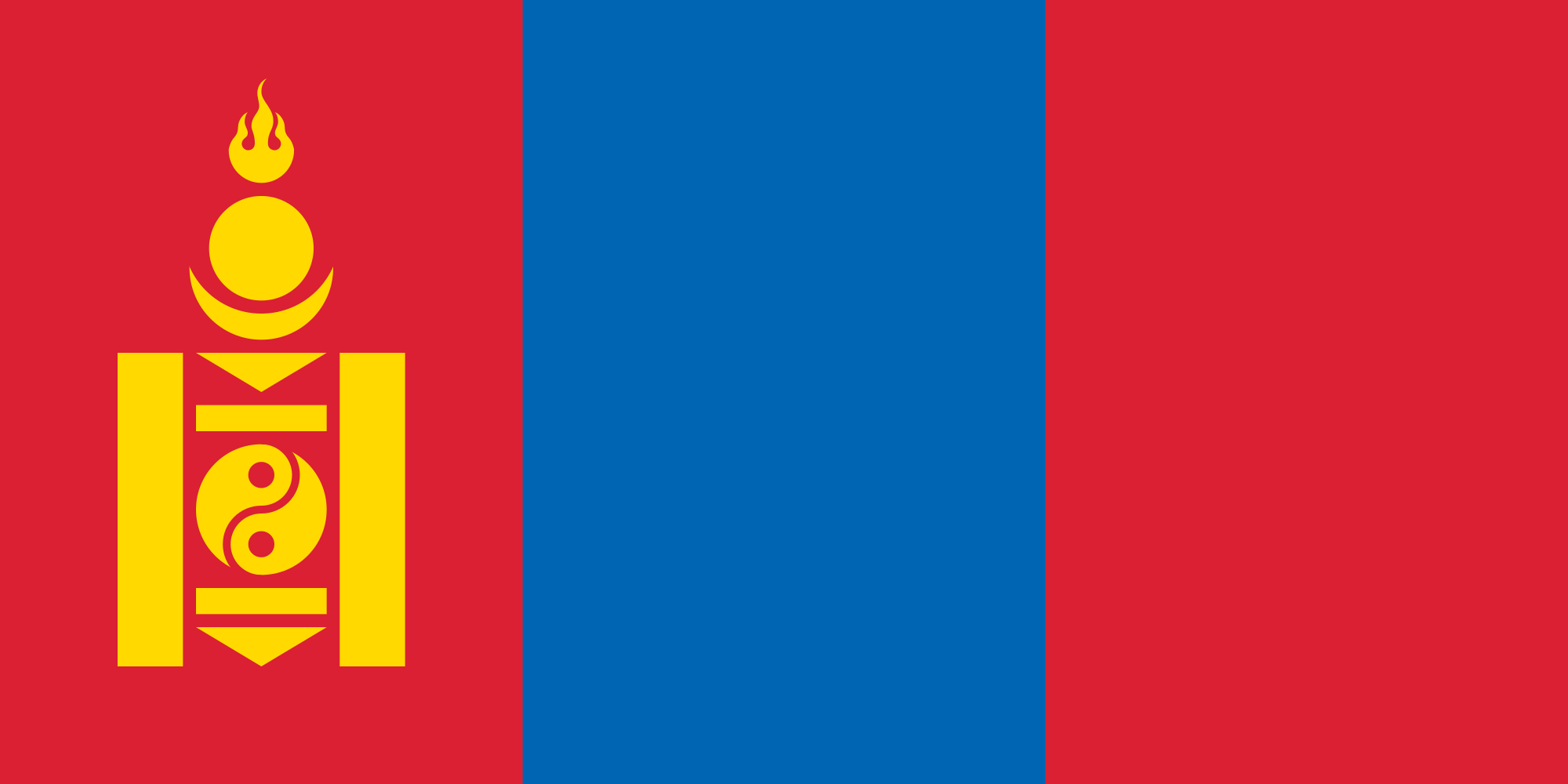 Mongolei
Montenegro
Mosambik
Myanmar
Namibia
Nepal
New Zealand
Nicaragua
Netherlands
Niger
Nigeria
Nordmazedonien
Norwegen
Oman
Austria
Pakistan
Panama
Papua-Neuguinea
Paraguay
Peru
Philippines
Poland
Portugal
Republik El Salvador
Republik Haiti
Republik Kongo
Republic of Korea
Ruanda
Romania
Russia
Salomonen
Sambia
Samoa
Saudi Arabia
Sweden
Sweden
Switzerland
Genf
Senegal
Seychellen
Sierra Leone
Simbabwe
Singapore
Slovakia
Slovenia
Spain
Sri Lanka
Saint Kitts and Nevis
St. Lucia
St. Vincent and the Grenadines
South Africa
Suriname
Swasiland
Tajikistan
Taiwan Sheng-TW
Tansania
Thailand
Togo
Tonga
Trinidad und Tobago
Tschad
Czech Republic
Tunisia
Turkey
Uganda
Ukraine
Hungary
Uruguay
Vanuatu
Venezuela
United Arab Emirates
United States
United Kingdom
Vietnam
Important International Organizations
World Trade Organization
Roberto Azevêdo
World Trade Organization
Mike Moore
World Trade Organization
Ngozi Okonjo-Iweala
World Trade Organization
Pascal Lamy
World Trade Organization
Peter Sutherland
World Trade Organization
Renato Ruggiero
World Trade Organization
Supachai Panitchpakdi
Central African Republic
Cyprus
Mongolei
Montenegro
Mosambik
Myanmar
Namibia
Nepal
New Zealand
Nicaragua
Netherlands
Niger
Nigeria
Nordmazedonien
Norwegen
Oman
Austria
Pakistan
Panama
Papua-Neuguinea
Paraguay
Peru
Philippines
Poland
Portugal
Republik El Salvador
Republik Haiti
Republik Kongo
Republic of Korea
Ruanda
Romania
Russia
Salomonen
Sambia
Samoa
Saudi Arabia
Sweden
Sweden
Switzerland
Genf
Senegal
Seychellen
Sierra Leone
Simbabwe
Singapore
Slovakia
Slovenia
Spain
Sri Lanka
Saint Kitts and Nevis
St. Lucia
St. Vincent and the Grenadines
South Africa
Suriname
Swasiland
Tajikistan
Taiwan Sheng-TW
Tansania
Thailand
Togo
Tonga
Trinidad und Tobago
Tschad
Czech Republic
Tunisia
Turkey
Uganda
Ukraine
Hungary
Uruguay
Vanuatu
Venezuela
United Arab Emirates
United States
United Kingdom
Vietnam
Important International Organizations
World Trade Organization
Roberto Azevêdo
World Trade Organization
Mike Moore
World Trade Organization
Ngozi Okonjo-Iweala
World Trade Organization
Pascal Lamy
World Trade Organization
Peter Sutherland
World Trade Organization
Renato Ruggiero
World Trade Organization
Supachai Panitchpakdi
Central African Republic
Cyprus

世界贸易组织(简称世贸组织或世贸;英语:World Trade Organization,缩写为 WTO;法语:Organisation Mondiale du Commerce,缩写为 OMC;西班牙语:Organización Mundial del Comercio,缩写为 OMC)是负责监督成员经济体之间各种贸易协议得到执行的一个国际组织,前身是1948年起实施的关税及贸易总协定的秘书处。
世贸总部位于瑞士日内瓦,现任总干事是罗伯托·阿泽维多。截至2016年7月29日,世界贸易组织共有164个成员。[5]世界贸易组织的职能是调解纷争,加入WTO不算签订一种多边贸易协议,但其设置的入会门槛可以做为愿意降低关税、法政上配合、参与国际贸易的门票,它是贸易体制的组织基础和法律基础,是众多贸易协定的管理者,是各成员贸易立法的监督者,是就贸易提供解决争端和进行谈判的场所。该机构是当代最重要的国际经济组织之一,其成员间的贸易额占世界贸易额的绝大多数,被称为“经济联合国”。
Die Welthandelsorganisation (englisch World Trade Organization, WTO; französisch Organisation mondiale du commerce, OMC; spanisch Organización Mundial de Comercio, OMC) ist eine internationale Organisation mit Sitz in Genf, die sich mit der Regelung von Handels- und Wirtschaftsbeziehungen beschäftigt. Sie wurde am 15. April 1994 aus dem General Agreement on Tariffs and Trade (GATT) in der Uruguay-Runde nach siebenjähriger Verhandlungszeit gegründet. Am 1. Januar 1995 nahm sie ihre Arbeit in Genf auf. Die WTO ist neben dem IWF und der Weltbank eine der zentralen internationalen Organisationen, die Handels- und Wirtschaftspolitik mit globaler Reichweite verhandelt.
世界貿易機関(せかいぼうえききかん、英: World Trade Organization、略称:WTO)は、自由貿易促進を主たる目的として創設された国際機関である。常設事務局がスイスのジュネーブに置かれている。
GATT(ガット)ウルグアイ・ラウンドにおける合意によって、世界貿易機関を設立するマラケシュ協定(WTO設立協定)に基づいて1995年1月1日にGATTを発展解消させて成立した。
本来GATTは、第二次世界大戦後の安定を見据え、国際通貨基金および国際復興開発銀行とともに設立が予定されていた国際貿易機関(ITO)の設立準備の際に、暫定協定として結ばれたものであった。国際貿易機関の設立が廃案となり、GATTがその代替として発展強化されていくうちに、再びこの分野の常設機関が求められ、WTOが設立されることとなった。発展解消であるため、GATTの事務局及び事務局長もWTOへと引き継がれることとなった[4]。
WTOはGATTを継承したものであるが、GATTが協定(Agreement)に留まったのに対し、WTOは機関(Organization)であるのが根本的な違いである。
を基本原則としている。また、物品貿易だけでなく金融、情報通信、知的財産権やサービス貿易も含めた包括的な国際通商ルールを協議する場である。
対抗処置の発動では、紛争処理機関(パネル)の提訴に対し全加盟国による反対がなければ採択されるというネガティブ・コンセンサス方式(逆コンセンサス方式)を採用した強力な紛争処理能力を持つ。これは国際組織としては稀な例であり、コンセンサス方式を採っていたGATTとの大きな違いで、WTOの特徴の一つといえる。
新多角的貿易交渉(新ラウンド)は、2001年11月にカタールのドーハで行われた第4回WTO閣僚会議で開始を決定し、ドーハ・ラウンドと呼ばれていた。2002年2月1日の貿易交渉委員会で新ラウンドがスタートした。しかし9年に及ぶ交渉は先進国と、急速に台頭してきたBRICsなど新興国との対立によって中断と再開を繰り返した末、ジュネーブで行われた第4回WTO閣僚会議(2011年12月17日)で「交渉を継続していくことを確認するものの、近い将来の妥結を断念する」(議長総括)となり事実上停止状態になった。
その後、2013年のバリ島における閣僚会議で、貿易円滑化協定を含む合意が成立し、2014年7月まで貿易円滑化協定をWTO協定に加える(附属書1Aに追加)するための文書を一般理事会で採択すべきとされた[5]。しかしインドが合意を蒸し返す状態で反対したため期限までに採択できなかった[6]。その後食糧備蓄への補助金の問題で先進国側が譲歩することでようやくインドが合意し、2014年11月27日の一般理事会で貿易円滑化協定が採択された[6]。WTO加盟国の3分の2が改正を受諾した日に発効することになっており、2017年2月22日にこの要件を満たし、協定が発効した。
The World Trade Organization (WTO) is an intergovernmental organization that regulates international trade. The WTO officially commenced on 1 January 1995 under the Marrakesh Agreement, signed by 124 nations on 15 April 1994, replacing the General Agreement on Tariffs and Trade (GATT), which commenced in 1948. It is the largest international economic organization in the world.[5][6]
The WTO deals with regulation of trade in goods, services and intellectual property between participating countries by providing a framework for negotiating trade agreements and a dispute resolution process aimed at enforcing participants' adherence to WTO agreements, which are signed by representatives of member governments[7]:fol.9–10 and ratified by their parliaments.[8] The WTO prohibits discrimination between trading partners, but provides exceptions for environmental protection, national security, and other important goals.[9] Trade-related disputes are resolved by independent judges at the WTO through a dispute resolution process.[9]
The WTO's current Director-General is Roberto Azevêdo,[10][11] who leads a staff of over 600 people in Geneva, Switzerland.[12] A trade facilitation agreement, part of the Bali Package of decisions, was agreed by all members on 7 December 2013, the first comprehensive agreement in the organization's history.[13][14] On 23 January 2017, the amendment to the WTO Trade Related Aspects of Intellectual Property Rights (TRIPS) Agreement marks the first time since the organization opened in 1995 that WTO accords have been amended, and this change should secure for developing countries a legal pathway to access affordable remedies under WTO rules.[15]
Studies show that the WTO boosted trade,[16][17][9] and that barriers to trade would be higher in the absence of the WTO.[18] The WTO has highly influenced the text of trade agreements, as "nearly all recent [preferential trade agreements (PTAs)] reference the WTO explicitly, often dozens of times across multiple chapters... in many of these same PTAs we find that substantial portions of treaty language—sometime the majority of a chapter—is copied verbatim from a WTO agreement."[19]
L'Organisation mondiale du commerce (OMC ; en anglais : World Trade Organization, WTO, en espagnol : Organización Mundial del Comercio, OMC) est une organisation internationale qui s'occupe des règles régissant le commerce international entre les pays. Au cœur de l'organisation se trouvent les accords de l'OMC, négociés et signés en avril 1994 à Marrakech1 par la majeure partie des puissances commerciales du monde2 et ratifiés par leurs assemblées parlementaires. L'OMC a pour but principal de favoriser l'ouverture commerciale. Pour cela, elle tâche de réduire les obstacles au libre-échange, d'aider les gouvernements à régler leurs différends commerciaux et d'assister les exportateurs, les importateurs et les producteurs de marchandises et de services dans leurs activités.
Depuis 2001, le cycle de négociation mené par l'OMC est le Cycle de Doha3. Bien que l'OMC ne soit pas une agence spécialisée de l'ONU, elle entretient des liens avec cette dernière4. Le siège de l'OMC est au Centre William-Rappard, à Genève. Depuis le 1er septembre 2013, l'organisation est présidée par le Brésilien Roberto Azevêdo qui a été élu directeur général.
L'Organizzazione mondiale del commercio, abbreviato in OMC (in inglese: World Trade Organization, WTO), è un'organizzazione internazionale creata allo scopo di supervisionare numerosi accordi commerciali tra gli stati membri. Vi aderiscono[3] 164 Paesi, a cui se ne aggiungono altri 22 con ruolo di osservatori,[4] comprendendo così oltre il 95% del commercio mondiale di beni e servizi.[5]
La sede dell'OMC si trova, dal 1995, presso il Centro William Rappard a Ginevra, Svizzera.[6]
La Organización Mundial del Comercio (OMC) fue establecida en 1995. Tiene su sede en Ginebra, Suiza, y sus idiomas oficiales son el inglés, el francés y el español. La OMC no forma parte del sistema de las Naciones Unidas, y tampoco de los organismos de Bretton Woods como el Banco Mundial o el FMI.Nota 1
Всеми́рная торго́вая организа́ция (ВТО; англ. World Trade Organization (WTO), фр. Organisation mondiale du commerce (OMC), исп. Organización Mundial del Comercio) — международная организация, созданная 1 января 1995 года с целью либерализации международной торговли и регулирования торгово-политических отношений государств-членов. ВТО образована на основе Генерального соглашения по тарифам и торговле (ГАТТ), заключенного в 1947 году и на протяжении почти 50 лет фактически выполнявшего функции международной организации, но не являвшегося тем не менее международной организацией в юридическом смысле.
ВТО отвечает за разработку и внедрение новых торговых соглашений, а также следит за соблюдением членами организации всех соглашений, подписанных большинством стран мира и ратифицированных их парламентами. ВТО строит свою деятельность, исходя из решений, принятых в 1986—1994 годах в рамках Уругвайского раунда и более ранних договоренностей ГАТТ. Обсуждения проблем и принятие решений по глобальным проблемам либерализации и перспективам дальнейшего развития мировой торговли проходят в рамках многосторонних торговых переговоров (раунды). К настоящему времени проведено 8 раундов таких переговоров, включая Уругвайский, а в 2001 году стартовал девятый в Дохе, Катар. Организация пытается завершить переговоры по Дохийскому раунду переговоров, который был начат с явным акцентом на удовлетворение потребностей развивающихся стран. По состоянию на декабрь 2012 года будущее раунда переговоров в Дохе остаётся неопределённым: программа работы состоит из 21 части, а первоначально установленный окончательный срок 1 января 2005 года был давно пропущен[3]. В ходе переговоров возник конфликт между стремлением к свободной торговле и стремлением множества стран к протекционизму, особенно в плане сельскохозяйственных субсидий. До сих пор эти препятствия остаются главными и мешают любому прогрессу для запуска новых переговоров в рамках Дохийского раунда. По состоянию на июль 2012 года, существуют различные группы переговоров в системе ВТО для решения текущих вопросов в плане сельского хозяйства, что приводит к застою в самих переговорах[4].
Штаб-квартира ВТО расположена в Женеве, Швейцария. Глава ВТО (генеральный директор) — Роберту Карвалью ди Азеведу, в штате самой организации около 600 человек[5].
На 26 апреля 2015 года в ВТО состояли 162 страны[6].
Правила ВТО предусматривают ряд льгот для развивающихся стран. В настоящее время развивающиеся страны — члены ВТО имеют (в среднем) более высокий относительный уровень таможенно-тарифной защиты своих рынков по сравнению с развитыми. Тем не менее, в абсолютном выражении общий размер таможенно-тарифных санкций в развитых странах гораздо выше, вследствие чего доступ на рынки высокопередельной продукции из развивающихся стран серьёзно ограничен[7].
Правила ВТО регулируют только торгово-экономические вопросы. Попытки США и ряда европейских стран начать дискуссию об условиях труда (что позволило бы считать недостаточную законодательную защиту работников конкурентным преимуществом) были отвергнуты из-за протестов развивающихся стран, которые утверждали, что такие меры только ухудшат благосостояние работников в связи с сокращением числа рабочих мест, снижением доходов и уровня конкурентоспособности[7].
Mitglieder der WTO
| Staat | Beitrittsdatum |
|---|---|
 Ägypten Ägypten |
30. Juni 1995 |
 Afghanistan Afghanistan |
29. Juli 2016 |
 Albanien Albanien |
8. September 2000 |
 Angola Angola |
23. November 1996 |
 Antigua und Barbuda Antigua und Barbuda |
1. Januar 1995 |
 Argentinien Argentinien |
1. Januar 1995 |
 Armenien Armenien |
5. Februar 2003 |
 Australien Australien |
1. Januar 1995 |
 Bahrain Bahrain |
1. Januar 1995 |
 Bangladesch Bangladesch |
1. Januar 1995 |
 Barbados Barbados |
1. Januar 1995 |
 Belgien Belgien |
1. Januar 1995 |
 Belize Belize |
1. Januar 1995 |
 Benin Benin |
22. Februar 1996 |
 Bolivien Bolivien |
12. September 1995 |
 Botswana Botswana |
31. Mai 1995 |
 Brasilien Brasilien |
1. Januar 1995 |
 Brunei Brunei |
1. Januar 1995 |
 Bulgarien Bulgarien |
1. Dezember 1996 |
 Burkina Faso Burkina Faso |
3. Juni 1995 |
 Burundi Burundi |
23. Juli 1995 |
 Chile Chile |
1. Januar 1995 |
 Volksrepublik China Volksrepublik China |
11. Dezember 2001 |
 Costa Rica Costa Rica |
1. Januar 1995 |
 Dänemark Dänemark |
1. Januar 1995 |
 Deutschland Deutschland |
1. Januar 1995 |
 Dominica Dominica |
1. Januar 1995 |
 Dominikanische Republik Dominikanische Republik |
9. März 1995 |
 Dschibuti Dschibuti |
31. Mai 1995 |
 Ecuador Ecuador |
21. Januar 1996 |
 El Salvador El Salvador |
7. Mai 1995 |
 Elfenbeinküste Elfenbeinküste |
1. Januar 1995 |
 Estland Estland |
13. November 1999 |
 Eswatini Eswatini |
1. Januar 1995 |
 Europäische Union Europäische Union |
1. Januar 1995 |
 Fidschi Fidschi |
14. Januar 1996 |
 Finnland Finnland |
1. Januar 1995 |
 Frankreich Frankreich |
1. Januar 1995 |
 Gabun Gabun |
1. Januar 1995 |
 Gambia Gambia |
23. Oktober 1996 |
 Georgien Georgien |
14. Juni 2000 |
 Ghana Ghana |
1. Januar 1995 |
 Grenada Grenada |
22. Februar 1996 |
 Griechenland Griechenland |
1. Januar 1995 |
 Guatemala Guatemala |
21. Juli 1995 |
 Guinea Guinea |
25. Oktober 1995 |
 Guinea-Bissau Guinea-Bissau |
31. Mai 1995 |
 Guyana Guyana |
1. Januar 1995 |
 Haiti Haiti |
30. Januar 1996 |
 Honduras Honduras |
1. Januar 1995 |
 Hongkong Hongkong |
1. Januar 1995 |
 Indien Indien |
1. Januar 1995 |
 Indonesien Indonesien |
1. Januar 1995 |
 Irland Irland |
1. Januar 1995 |
 Island Island |
1. Januar 1995 |
 Israel Israel |
21. April 1995 |
 Italien Italien |
1. Januar 1995 |
 Jamaika Jamaika |
9. März 1995 |
 Jemen Jemen |
26. Juni 2014 |
 Japan Japan |
1. Januar 1995 |
 Jordanien Jordanien |
11. April 2000 |
 Kambodscha Kambodscha |
13. Oktober 2004 |
 Kamerun Kamerun |
13. Dezember 1995 |
 Kanada Kanada |
1. Januar 1995 |
 Kap Verde Kap Verde |
23. Juli 2008 |
 Kasachstan Kasachstan |
30. November 2015 |
 Katar Katar |
13. Januar 1996 |
 Kenia Kenia |
1. Januar 1995 |
 Kirgisistan Kirgisistan |
20. Dezember 1998 |
 Kolumbien Kolumbien |
30. April 1995 |
 Demokratische Republik Kongo Demokratische Republik Kongo |
1. Januar 1997 |
 Republik Kongo Republik Kongo |
27. März 1997 |
 Kroatien Kroatien |
30. November 2000 |
 Kuba Kuba |
20. April 1995 |
 Kuwait Kuwait |
1. Januar 1995 |
 Laos Laos |
2. Februar 2013 |
 Lesotho Lesotho |
31. Mai 1995 |
 Lettland Lettland |
10. Februar 1999 |
 Liberia Liberia |
14. Juli 2016 |
 Liechtenstein Liechtenstein |
1. September 1995 |
 Litauen Litauen |
31. Mai 2001 |
 Luxemburg Luxemburg |
1. Januar 1995 |
 Macau Macau |
1. Januar 1995 |
 Madagaskar Madagaskar |
17. November 1995 |
 Montenegro Montenegro |
29. April 2012 |
 Malawi Malawi |
31. Mai 1995 |
 Malaysia Malaysia |
1. Januar 1995 |
 Malediven Malediven |
31. Mai 1995 |
 Mali Mali |
31. Mai 1995 |
 Malta Malta |
1. Januar 1995 |
 Marokko Marokko |
1. Januar 1995 |
 Mauretanien Mauretanien |
31. Mai 1995 |
 Mauritius Mauritius |
1. Januar 1995 |
 Nordmazedonien Nordmazedonien |
4. April 2003 |
 Mexiko Mexiko |
1. Januar 1995 |
 Moldau Moldau |
26. Juli 2001 |
 Mongolei Mongolei |
29. Januar 1997 |
 Mosambik Mosambik |
26. August 1995 |
 Myanmar Myanmar |
1. Januar 1995 |
 Namibia Namibia |
1. Januar 1995 |
 Nepal Nepal |
23. April 2004 |
 Neuseeland Neuseeland |
1. Januar 1995 |
 Nicaragua Nicaragua |
3. September 1995 |
 Niederlande Niederlande |
1. Januar 1995 |
 Niger Niger |
13. Dezember 1996 |
 Nigeria Nigeria |
1. Januar 1995 |
 Norwegen Norwegen |
1. Januar 1995 |
 Oman Oman |
9. November 2000 |
 Österreich Österreich |
1. Januar 1995 |
 Pakistan Pakistan |
1. Januar 1995 |
 Panama Panama |
6. September 1997 |
 Papua-Neuguinea Papua-Neuguinea |
9. Juni 1996 |
 Paraguay Paraguay |
1. Januar 1995 |
 Peru Peru |
1. Januar 1995 |
 Philippinen Philippinen |
1. Januar 1995 |
 Polen Polen |
1. Juli 1995 |
 Portugal Portugal |
1. Januar 1995 |
 Ruanda Ruanda |
22. Mai 1996 |
 Rumänien Rumänien |
1. Januar 1995 |
 Russland Russland |
22. August 2012 |
 Salomonen Salomonen |
26. Juli 1996 |
 Sambia Sambia |
1. Januar 1995 |
 Saudi-Arabien Saudi-Arabien |
11. Dezember 2005 |
 Samoa Samoa |
10. Mai 2012 |
 Schweden Schweden |
1. Januar 1995 |
 Schweiz Schweiz |
1. Januar 1995 |
 Senegal Senegal |
1. Januar 1995 |
 Seychellen Seychellen |
26. April 2015 |
 Sierra Leone Sierra Leone |
23. Juli 1995 |
 Simbabwe Simbabwe |
5. März 1995 |
 Singapur Singapur |
1. Januar 1995 |
 Slowakei Slowakei |
1. Januar 1995 |
 Slowenien Slowenien |
30. Juli 1995 |
 Spanien Spanien |
1. Januar 1995 |
 Sri Lanka Sri Lanka |
1. Januar 1995 |
 St. Kitts und Nevis St. Kitts und Nevis |
21. Februar 1996 |
 St. Lucia St. Lucia |
1. Januar 1995 |
 St. Vincent und die Grenadinen St. Vincent und die Grenadinen |
1. Januar 1995 |
 Südafrika Südafrika |
1. Januar 1995 |
 Südkorea Südkorea |
1. Januar 1995 |
 Suriname Suriname |
1. Januar 1995 |
 Tadschikistan Tadschikistan |
2. März 2013 |
 Taiwan[1] Taiwan[1] |
1. Januar 2002 |
 Tansania Tansania |
1. Januar 1995 |
 Thailand Thailand |
1. Januar 1995 |
 Togo Togo |
31. Mai 1995 |
 Tonga Tonga |
27. Juli 2007 |
 Trinidad und Tobago Trinidad und Tobago |
1. März 1995 |
 Tschad Tschad |
19. Oktober 1996 |
 Tschechien Tschechien |
1. Januar 1995 |
 Tunesien Tunesien |
29. März 1995 |
 Türkei Türkei |
26. März 1995[2] |
 Uganda Uganda |
1. Januar 1995 |
 Ukraine Ukraine |
16. Mai 2008 |
 Ungarn Ungarn |
1. Januar 1995 |
 Uruguay Uruguay |
1. Januar 1995 |
 Venezuela Venezuela |
1. Januar 1995 |
 Vereinigte Arabische Emirate Vereinigte Arabische Emirate |
10. April 1996 |
 Vereinigtes Königreich Vereinigtes Königreich |
1. Januar 1995 |
 Vereinigte Staaten Vereinigte Staaten |
1. Januar 1995 |
 Vanuatu Vanuatu |
24. August 2012 |
 Vietnam Vietnam |
11. Januar 2007 |
 Zentralafrikanische Republik Zentralafrikanische Republik |
31. Mai 1995 |
 Zypern Zypern |
30. Juli 1995 |
Egypt
Armenia
Azerbaijan
Belarus
India
Indonesia
Iran
Israel
Japan
Kasachstan
Kyrgyzstan
Moldawien
Mongolei
Republic of Korea
Russia
Singapore
Tajikistan
Thailand
Hungary
Vietnam
Important International Organizations

Die Eurasische Entwicklungsbank (Eurasian Development Bank - EDB) ist eine internationale Entwicklungsbank, die in die Entwicklung der Volkswirtschaften, den Handel und andere Wirtschaftsbeziehungen sowie die Integration in den eurasischen Ländern investiert. Auf der Grundlage des eingezahlten Kapitals (Stand: Januar 2023) gehören zu den Hauptaktionären: Russland (44,78 %) Kasachstan (37,28 %) Belarus (5,21 %) Tadschikistan (4,25 %) Kirgisistan (4,22 %) Armenien (4,22 %)
欧亚开发银行是一家总部位于哈萨克斯坦阿拉木图的开发性金融机构,成立于2006年。该银行主要投资欧亚大陆国家的经济发展项目。该银行在圣彼得堡设有分行,并在阿斯塔纳、比什凯克、杜尚别、埃里温、明斯克和莫斯科设有代表处。
截至2023年1月,该银行的主要股东有:
- 俄罗斯 (44.78 %)
- 哈萨克斯坦 (37.28%)
- 白俄罗斯 (5.21 %)
- 塔吉克斯坦 (4.25%)
- 吉尔吉斯斯坦 (4.22%)
- 亚美尼亚(4.22%)
 Transport and traffic
 Companies
