Deutsch-Chinesische Enzyklopädie, 德汉百科
 Art
Art

 History
 Literature
 Music
Music
 Review
浪漫主义(德语:Romantik;法语:Romantisme;英语:Romanticism)是开始于18世纪德国的艺术、文学及文化运动,发生于1790年工业革命开始的前后。浪漫主义注重以强烈的情感作为美学经验的来源,并且开始强调如不安及惊恐等情绪,以及人在遭遇到大自然的壮丽时所表现出的敬畏。浪漫主义是对于启蒙时代以来的贵族和专制政治文化的颠覆,以艺术和文学反抗对于自然的人为理性化。浪漫主义重视民间艺术、自然以及传统,主张一个根基于自然的知识论,以自然的环境来解释人类的活动,包括了语言、传统、习俗。浪漫主义受到了启蒙运动的理念影响,也吸收了中世纪文化复古的艺术成分。
法国大革命和工业革命里发生的事件和其背后的意识形态也影响了浪漫主义运动。浪漫主义致力于宣扬那些在他们看来被忽略了的英雄个人所达成的成就,它正当化了个人的艺术想像力,并将其作为最重要的美学权威之一,突破了对于艺术的传统定义。浪漫主义对于历史和自然题材的强烈诉诸,便是形成这种理念的基础。
Die Romantik ist eine kulturgeschichtliche Epoche, die vom Ende des 18. Jahrhunderts bis weit in das 19. Jahrhundert hinein dauerte und sich insbesondere auf den Gebieten der bildenden Kunst, der Literatur und der Musik äußerte, aber auch die Gebiete Geschichte, Theologie und Philosophie sowie Naturwissenschaften und Medizin umfasste. In der Literatur der Romantik (ca. 1795–1848) unterscheidet man Frühromantik (bis 1804), Hochromantik (bis 1815) und Spätromantik (bis 1835). In der Malerei dauert die Spätromantik bis Ende des 19. Jahrhunderts, in der Musik bis Anfang des 20. Jahrhunderts (Gustav Mahler, Richard Strauss).
ロマン主義(ロマンしゅぎ、英: Romanticism、仏: Romantisme、独: Romantik、伊: Romanticismo、西: Romanticismo、葡: Romantismo)は、主として18世紀末から19世紀前半にヨーロッパで、その後にヨーロッパの影響を受けた諸地域で起こった精神運動のひとつである。それまでの理性偏重、合理主義などに対し感受性や主観に重きをおいた一連の運動であり、古典主義と対をなす。恋愛賛美、民族意識の高揚、中世への憧憬といった特徴をもち、近代国民国家形成を促進した。その動きは文芸・美術・音楽・演劇などさまざまな芸術分野に及んだ。のちに、その反動として写実主義・自然主義などをもたらした。
Romanticism (also known as the Romantic era) was an artistic, literary, musical and intellectual movement that originated in Europe towards the end of the 18th century, and in most areas was at its peak in the approximate period from 1800 to 1850. Romanticism was characterized by its emphasis on emotion and individualism as well as glorification of all the past and nature, preferring the medieval rather than the classical. It was partly a reaction to the Industrial Revolution,[1] the aristocratic social and political norms of the Age of Enlightenment, and the scientific rationalization of nature—all components of modernity.[2] It was embodied most strongly in the visual arts, music, and literature, but had a major impact on historiography,[3] education,[4] chess, social sciences, and the natural sciences.[5][failed verification] It had a significant and complex effect on politics, with romantic thinkers influencing liberalism, radicalism, conservatism, and nationalism.[6]
The movement emphasized intense emotion as an authentic source of aesthetic experience, placing new emphasis on such emotions as apprehension, horror and terror, and awe—especially that experienced in confronting the new aesthetic categories of the sublimity and beauty of nature. It elevated folk art and ancient custom to something noble, but also spontaneity as a desirable characteristic (as in the musical impromptu). In contrast to the Rationalism and Classicism of the Enlightenment, Romanticism revived medievalism[7] and elements of art and narrative perceived as authentically medieval in an attempt to escape population growth, early urban sprawl, and industrialism.
Although the movement was rooted in the German Sturm und Drang movement, which preferred intuition and emotion to the rationalism of the Enlightenment, the events and ideologies of the French Revolution were also proximate factors. Romanticism assigned a high value to the achievements of "heroic" individualists and artists, whose examples, it maintained, would raise the quality of society. It also promoted the individual imagination as a critical authority allowed of freedom from classical notions of form in art. There was a strong recourse to historical and natural inevitability, a Zeitgeist, in the representation of its ideas. In the second half of the 19th century, Realism was offered as a polar opposite to Romanticism.[8] The decline of Romanticism during this time was associated with multiple processes, including social and political changes.[9]
Le romantisme est un mouvement culturel apparu à la fin du XVIIIe siècle en Allemagne et en Angleterre et se diffusant à toute l’Europe au cours du XIXe siècle, jusqu’aux années 1850. Il s’exprime dans la littérature, la peinture, la sculpture, la musique, la politique et la danse et se caractérise par une volonté de l'artiste d'explorer toutes les possibilités de l'art afin d'exprimer ses états d'âme : il est ainsi une réaction du sentiment contre la raison, exaltant le mystère et le fantastique et cherchant l'évasion et le ravissement dans le rêve, le morbide et le sublime, l'exotisme et le passé, l'idéal ou le cauchemar d'une sensibilité passionnée et mélancolique. Ses valeurs esthétiques et morales, ses idées et thématiques nouvelles ne tardent pas à influencer d'autres domaines, en particulier la peinture et la musique.
Il Romanticismo è stato un movimento artistico, musicale, culturale e letterario sviluppatosi al termine del XVIII secolo in Germania (Romantik). Preannunciato in alcuni dei suoi temi dal movimento preromantico dello Sturm und Drang,[2] si diffuse poi in tutta Europa nel XIX secolo.
El Romanticismo es un movimiento cultural que se originó en Alemania y en Reino Unido a finales del siglo xviii como una reacción revolucionaria contra la Ilustración y el Neoclasicismo, confiriendo prioridad a los sentimientos.1 Es considerado como el primer movimiento de cultura que cubrió el mapa completo de Europa. En la mayoría de las áreas estuvo en su apogeo en el período aproximado de 1800 a 1850.2
El Romanticismo es un movimiento cultural crucial para poder comprender la cultura occidental moderna. La filosofía, el arte, la literatura, la música y la política fueron influenciados por este movimiento, durante el turbulento periodo que se extendió entre el periodo que se conoce como revoluciones burguesas, que en su definición política se conocen como revoluciones liberales. En este período el mundo occidental se había sacudido por la Revolución de las Trece Colonias de Inglaterra en 1776, la Revolución Francesa en 1789 y por la Primera Revolución industrial que empezaba a cambiar la vida tradicionalmente agraria. Por lo tanto los nuevos modos de vida se debían reflejar en nuevos modos de pensar. El romanticismo pasó a significar esta nueva experiencia de mundo.3
Su característica fundamental es la ruptura con la tradición clasicista basada en un conjunto de reglas estereotipadas. La libertad auténtica es su búsqueda constante, por eso su rasgo revolucionario es incuestionable. Debido a que el Romanticismo es una manera de sentir y concebir la naturaleza, así como a la vida y al ser humano mismo, es que se presenta de manera distinta y particular en cada país donde se desarrolla, e incluso dentro de una misma nación, se manifiestan distintas tendencias, proyectándose ello también en todas las artes.
Se desarrolló en la primera mitad del siglo XIX, extendiéndose desde Inglaterra y Alemania hasta llegar a otros países europeos. Su vertiente literaria se fragmenta posteriormente en diversas corrientes, como el parnasianismo, el simbolismo, el decadentismo o el prerrafaelismo, reunidas en la denominación general de posromanticismo, del cual derivó el llamado modernismo hispanoamericano. Tuvo fundamentales aportes en los campos de la literatura, la pintura y la música. Posteriormente, una de las corrientes vanguardistas del siglo XX, el surrealismo, llevó al extremo los postulados románticos de la exaltación del yo.
Романти́зм (фр. romantisme) — идейное и художественное направление в европейской и американской культуре конца XVIII века — первой половины XIX века, характеризуется утверждением самоценности духовно-творческой жизни личности, изображением сильных (зачастую бунтарских) страстей и характеров, одухотворённой и целительной природы. Распространилось на различные сферы деятельности человека. В XVIII веке романтическим называли всё странное, живописное и существующее в книгах, а не в действительности. В начале XIX века романтизм стал обозначением нового направления, противоположного[1] классицизму и Просвещению.


 Bavaria
 Life and Style
 Companies
 Germany, Austria, Switzerland
Companies
*Centuries-old companies in the world
Germany, Austria, Switzerland
Companies
*Centuries-old companies in the world


罗伊·福克斯·利希滕斯坦(英语:Roy Fox Lichtenstein /ˈlɪktənˌstaɪn/,1923年10月27日—1997年9月29日),美国波普艺术艺术家。其作品常以卡通人物如米老鼠、唐老鸭、大力水手等作为画中主角,后又模仿通俗连环画,创作了一批以少女为主题的爱情画和以空战为内容的战争画。
利希滕斯坦研究过蒙德里安、马蒂斯、塞尚、莫奈,美国的德·库宁、帕洛克、雷明顿等人的作品,以及东方的美术。
Roy Fox Lichtenstein (* 27. Oktober 1923 in Manhattan, New York City; † 29. September 1997 ebenda) war ein US-amerikanischer Lehrer und Maler der Pop Art. Neben Andy Warhol war er der wohl bekannteste Vertreter dieser Kunstrichtung. Der Durchbruch gelang ihm 1961 mit dem Bild Look Mickey (dt. Schau mal Micky), sein Stil wurde der industrielle Stil des gedruckten Comics. In seinen späteren Arbeiten orientierte Lichtenstein sich dagegen wieder an seinen expressionistischen und surrealen Wurzeln. Mit dem Kyoto-Preis wurde ihm 1995 eine der höchsten Auszeichnungen für Verdienste um Wissenschaft und Kunst verliehen.
 Architecture

 Fashion world
 Colleges and Universities in Europe

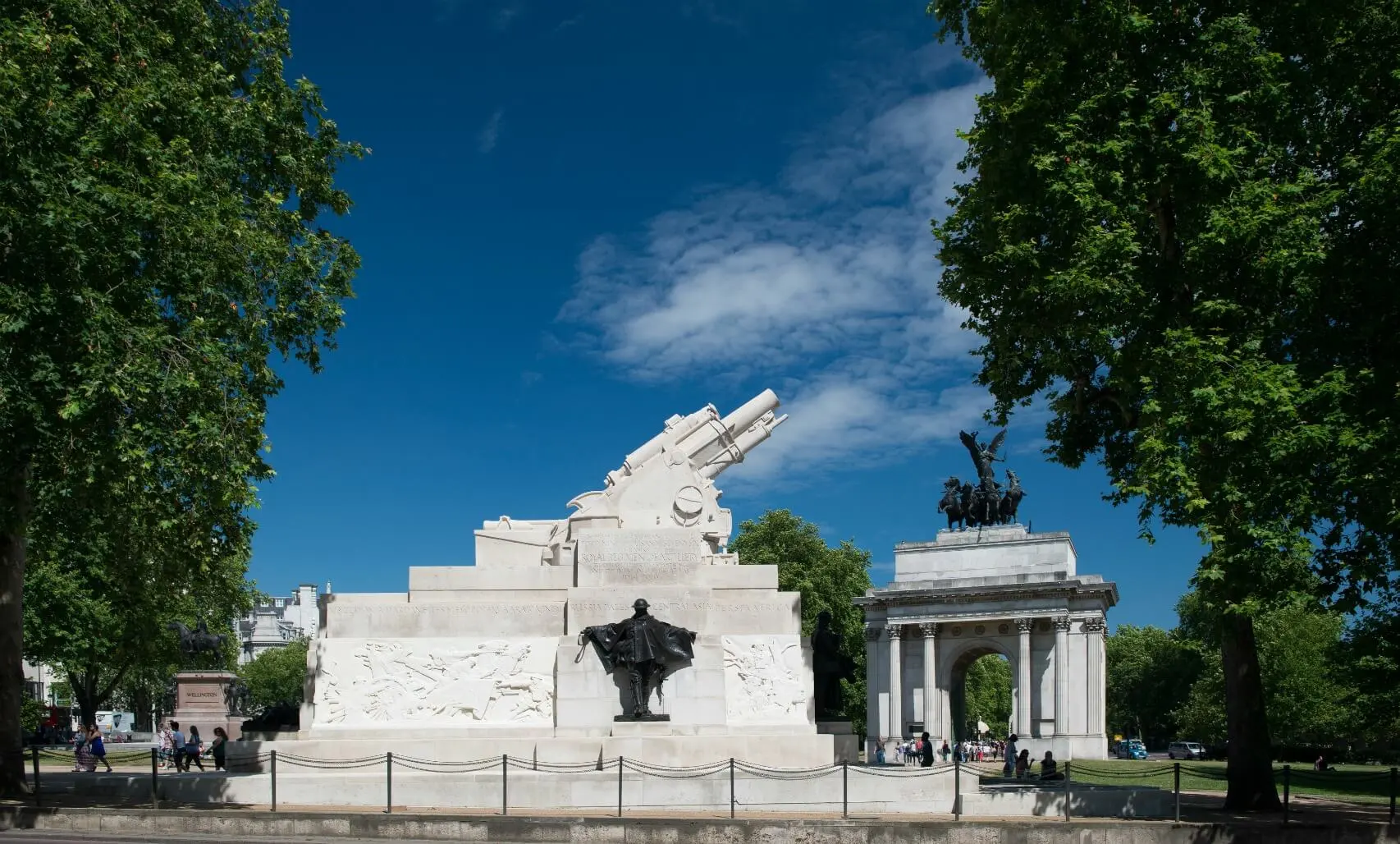
Das Royal Artillery Memorial ist eine Gedenkstätte für den Ersten Weltkrieg an der Hyde Park Corner in London, England. Das von Charles Sargeant Jagger entworfene und von Lionel Pearson architektonisch gestaltete Denkmal wurde 1925 eingeweiht und erinnert an die 49.076 Soldaten der Royal Artillery, die im Ersten Weltkrieg gefallen sind. Der statische Charakter des Konflikts, insbesondere an der Westfront, bedeutete, dass die Artillerie eine wichtige Rolle im Krieg spielte, obwohl physische Erinnerungen an die Kämpfe in den Jahren nach dem Krieg oft vermieden wurden. Der Royal Artillery War Commemoration Fund (RAWCF) wurde 1918 gegründet, um die Gedenkfeiern des Regiments zu leiten, da er sich der Unzufriedenheit mit den Gedenkstätten für frühere Kriege bewusst war. Der RAWCF wandte sich an mehrere namhafte Architekten, doch da er auf einer visuellen Darstellung der Artillerie bestand, war keiner in der Lage, einen zufriedenstellenden Entwurf zu erstellen. So wandte man sich an Jagger, selbst ein ehemaliger Soldat, der im Krieg verwundet worden war. Jagger entwarf einen Entwurf, der 1922 angenommen wurde, den er jedoch vor dem Bau noch mehrmals abänderte.