
Deutsch-Chinesische Enzyklopädie, 德汉百科
 Turkey
 Geography

 Afghanistan
Armenia
Azerbaijan
Asian Development Bank,ADB
Asian Development Bank,ADB
Afghanistan
Armenia
Azerbaijan
Asian Development Bank,ADB
Asian Development Bank,ADB
 Kimimasa Tarumizu
Asian Development Bank,ADB
Haruhiko Kuroda
Asian Development Bank,ADB
Masao Fujioka
Asian Development Bank,ADB
Masatsugu Asakawa
Asian Development Bank,ADB
Mitsuo Sato
Asian Development Bank,ADB
Shiro Inoue
Asian Development Bank,ADB
Tadao Chino
Asian Development Bank,ADB
Takehiko Nakao
Asian Development Bank,ADB
Takeshi Watanabe
Asian Development Bank,ADB
Taroichi Yoshida
Australia
Bangladesh
Bhutan
Brunei Darussalam
China
Denmark
Germany
Kimimasa Tarumizu
Asian Development Bank,ADB
Haruhiko Kuroda
Asian Development Bank,ADB
Masao Fujioka
Asian Development Bank,ADB
Masatsugu Asakawa
Asian Development Bank,ADB
Mitsuo Sato
Asian Development Bank,ADB
Shiro Inoue
Asian Development Bank,ADB
Tadao Chino
Asian Development Bank,ADB
Takehiko Nakao
Asian Development Bank,ADB
Takeshi Watanabe
Asian Development Bank,ADB
Taroichi Yoshida
Australia
Bangladesh
Bhutan
Brunei Darussalam
China
Denmark
Germany
 European Union
 Financial
International Bank for Cooperation
Finland
France
Georgia
Hongkong Tebiexingzhengqu-HK
India
Indonesia
Ireland
Italy
Japan
Cambodia
Canada
Kasachstan
Kyrgyzstan
Laos
Luxembourg
Malaysia
Financial
International Bank for Cooperation
Finland
France
Georgia
Hongkong Tebiexingzhengqu-HK
India
Indonesia
Ireland
Italy
Japan
Cambodia
Canada
Kasachstan
Kyrgyzstan
Laos
Luxembourg
Malaysia
 Mongolei
Myanmar
Nepal
New Zealand
Netherlands
Austria
Pakistan
Papua-Neuguinea
Philippines
Portugal
Republic of Korea
Salomonen
Sweden
Singapore
Sri Lanka
Taiwan Sheng-TW
Takehiko Nakao
Thailand
Tonga
Turkey
Turkmenistan
Uzbekistan
United States
United Kingdom
Vietnam
Mongolei
Myanmar
Nepal
New Zealand
Netherlands
Austria
Pakistan
Papua-Neuguinea
Philippines
Portugal
Republic of Korea
Salomonen
Sweden
Singapore
Sri Lanka
Taiwan Sheng-TW
Takehiko Nakao
Thailand
Tonga
Turkey
Turkmenistan
Uzbekistan
United States
United Kingdom
Vietnam
 Important International Organizations
 Economy and trade
Economic and political research
Economy and trade
Economic and political research

亚洲开发银行(英语:Asian Development Bank,缩写:ADB,简称亚银、亚行、亚开行),香港旧译亚洲发展银行,属于亚太地区的政府之间金融机构,其目的是为了促进亚洲经济与社会的发展。1966年12月19日成立,有31个创始会员国,目前有68个成员体,其中亚太有49个。总部设置于菲律宾马尼拉并在世界各地拥有31个办事处。亚洲开发银行仿照世界银行的股权制度,依照成员体的资本比例,得到相应比例的投票权。2014年以来,亚洲开发银行发布亚太创意生产指数年度报告。[3][4]亚洲开发银行为联合国观察员。
The Asian Development Bank (ADB) is a regional development bank established on 19 December 1966,[4] which is headquartered in the Ortigas Center located in the city of Mandaluyong, Metro Manila, Philippines. The company also maintains 31 field offices around the world[5] to promote social and economic development in Asia. The bank admits the members of the United Nations Economic and Social Commission for Asia and the Pacific (UNESCAP, formerly the Economic Commission for Asia and the Far East or ECAFE) and non-regional developed countries.[6] From 31 members at its establishment, ADB now has 68 members.
The ADB was modeled closely on the World Bank, and has a similar weighted voting system where votes are distributed in proportion with members' capital subscriptions. ADB releases an annual report that summarizes its operations, budget and other materials for review by the public.[7] The ADB-Japan Scholarship Program (ADB-JSP) enrolls about 300 students annually in academic institutions located in 10 countries within the Region. Upon completion of their study programs, scholars are expected to contribute to the economic and social development of their home countries.[8] ADB is an official United Nations Observer.[9]
El Banco Asiático de Desarrollo (BAsD) es una organización financiera para el desarrollo económico de Asia y el Pacífico. Su objetivo principal es la erradicación de la pobreza y facilitar ayudas para mejorar el nivel de vida de la población de la región a través de préstamos y colaboración técnica.
Creado en 1966 por 31 países. Hoy cuenta con 67 miembros (48 regionales y 19 no regionales). Estados Unidos y Japón son sus principales accionistas, con el 15,6% del capital cada uno.
El Banco tiene como su principal objetivo la lucha contra la pobreza. Para ello busca promover el crecimiento económico y la cooperación en la región de Asia-Pacífico, y acelerar el proceso de desarrollo económico de sus países miembros. Las dos terceras partes de personas pobres del mundo (aquellos que viven con menos de dos dólares diarios por persona), cerca de 1.800 millones de pobres, viven en esta región. El BAsD aprobó una nueva Estrategia a Largo Plazo (2008-2020) centrada en un crecimiento económico, medioambientalmente sostenible e integración regional.
Азиа́тский банк разви́тия (англ. Asian Development Bank) — банк, основанный в 1966 году, его главной задачей является стимулировать рост экономики в Азии и на Дальнем Востоке, направляя в эти регионы прямые займы и оказывая техническое содействие.
Штаб-квартира в Маниле (Филиппины). Президентом АБР с 28 апреля 2013 года является японец Такэхико Накао. 17 января 2020 года президентом станет Масацугу Асакава, избранный 2 декабря 2019 года[1].
Afghanistan
Egypt
Armenia
Azerbaijan
Ethiopia
Australia
Bangladesh
Beijing Shi-BJ
Brunei Darussalam
China
Denmark
Demokratische Republik Timor-Leste
Germany
Fidschi
Financial
International Bank for Cooperation
Finland
France
Georgia
Hongkong Tebiexingzhengqu-HK
India
Indonesia
Iran
Ireland
Iceland
Israel
Italy
Jordan
Cambodia
Kasachstan
Katar
Kyrgyzstan
Laos
Luxembourg
Malaysia
Malediven
Malta
Mongolei
Myanmar
Nepal
New Zealand
Netherlands
Norwegen
Oman
Austria
Pakistan
Philippines
Poland
Portugal
Republic of Korea
Russia
Samoa
Saudi Arabia
Sweden
Switzerland
Singapore
Spain
Sri Lanka
South Africa
Tajikistan
Thailand
Turkey
Hungary
Uzbekistan
United Arab Emirates
United Kingdom
Vietnam
Important International Organizations
Economy and trade
Economic and political research
Cyprus

亚洲基础设施投资银行(英语:Asian Infrastructure Investment Bank,縮寫:AIIB),简称亚投行,是一个愿意向亚洲国家和地區的基础设施建设提供资金支持的政府间性质的亚洲区域多边开发机构,成立的目的是促进亚洲区域的互联互通建设和经济一体化的进程,並且加大中國與其他亚洲國家和地区的合作力度。总部设在中国北京,法定资本为1,000亿美元。[2]
中华人民共和国主席习近平于2013年10月2日在雅加达同印度尼西亚总统苏西洛举行会谈时首次倡议筹建亚投行。[3]2014年10月24日,中国、印度、新加坡等21国在北京正式签署《筹建亚投行备忘录》。[2]2014年11月25日,印度尼西亚签署备忘录,成为亚投行第22个意向创始成员国。[4]
2015年3月12日,英国正式申请作为意向创始成员国加入亚投行,[5]成为正式申请加入亚投行的首个欧洲国家、主要西方国家。[6]随后法国、意大利、德国等西方国家纷纷以意向创始成员国身份申请加入亚投行。[7]接收新意向创始成员国申请截止日期3月31日临近,韩国[8]、俄罗斯[9]、巴西[10]等域内国家和重要新兴经济体也抓紧申请成为亚投行意向创始成员国。
各方商定将于2015年年中完成亚投行章程谈判并签署,年底前完成章程生效程序,正式成立亚投行。[11]
Die Asiatische Infrastrukturinvestmentbank (亞洲基礎設施投資銀行 / 亚洲基础设施投资银行, kurz: 亞投行 / 亚投行, englisch Asian Infrastructure Investment Bank, AIIB) ist eine multilaterale Entwicklungsbank, die 2014 von verschiedenen Staaten gegründet wurde und im Wettbewerb zur Weltbank, zum Internationalen Währungsfonds und zur Asiatischen Entwicklungsbank steht.
Anlass zur Initiative der Gründung war insbesondere die Unzufriedenheit Chinas über eine Dominanz der US-Amerikaner im Internationalen Währungsfonds, der keine faire Verteilung der globalen Machtverhältnisse aus Sicht Chinas widerspiegelte.[2] Da sich die US-Amerikaner strikt weigerten, eine Änderung der Stimmverhältnisse zu implementieren, begann China 2013 mit der Gründung der Initiative. Neben den 21 Gründungsmitgliedern haben im Jahr 2015 auch unter anderem Deutschland, Italien, Frankreich und das Vereinigte Königreich ihr Interesse bekundet, als nicht-regionale Mitglieder die neue Entwicklungsbank zu unterstützen.[3]
Die Gründungsurkunde der AIIB wurde am 29. Juni 2015 von Vertretern aus 57 Ländern in Peking unterzeichnet.[4] Die Bank nahm im Januar 2016 ihre Arbeit ohne Beteiligung der USA und Japan auf.[5]
Joachim von Amsberg ist der "Vizepräsident für Politik und Strategie".
アジアインフラ投資銀行(アジアインフラとうしぎんこう、英: Asian Infrastructure Investment Bank, AIIB、中: 亚洲基础设施投资银行,亞洲基礎設施投資銀行)は、国際開発金融機関のひとつである。
中華人民共和国が2013年秋に提唱し主導する形で発足した[1]。「合計の出資比率が50%以上となる10以上の国が国内手続きを終える」としていた設立協定が発効条件を満たし、2015年12月25日に発足し[2][3]、2016年1月16日に開業式典を行った[1][4]。
57か国を創設メンバーとして発足し[1][5]、2017年3月23日に加盟国は70カ国・地域となってアジア開発銀行の67カ国・地域を超え[6][7]、一方で日本、アメリカ合衆国などは2017年の現時点で参加を見送っている[8]。 創設時の資本金は1000億ドルである[9]。
The Asian Infrastructure Investment Bank (AIIB) is a multilateral development bank that aims to support the building of infrastructure in the Asia-Pacific region. The bank currently has 93 members from around the world [7]. The bank started operation after the agreement entered into force on 25 December 2015, after ratifications were received from 10 member states holding a total number of 50% of the initial subscriptions of the Authorized Capital Stock.[8]
The United Nations has addressed the launch of AIIB as having potential for "scaling up financing for sustainable development"[9] and to improve the global economic governance.[10] The starting capital of the bank was $100 billion, equivalent to 2⁄3 of the capital of the Asian Development Bank and about half that of the World Bank.[11]
The bank was proposed by China in 2013[12] and the initiative was launched at a ceremony in Beijing in October 2014.[13] It received the highest credit ratings from the three biggest rating agencies in the world, and is seen as a potential rival to the World Bank and IMF.[14][15]
La Banque asiatique d'investissement dans les infrastructures (BAII ou AIIB), est une banque d'investissement proposée par la République populaire de Chine dans le but de concurrencer le Fonds monétaire international, la Banque mondiale et la Banque asiatique de développement1 pour répondre au besoin croissant d'infrastructures en Asie du Sud-Est et en Asie centrale. Cette banque s'inscrit dans la stratégie de la nouvelle route de la soie, développée par la Chine.
La Banca Asiatica d'Investimento per le infrastrutture (AIIB), fondata a Pechino nell'ottobre 2014, è un'istituzione finanziaria internazionale proposta dalla Repubblica Popolare Cinese. Si contrappone al Fondo Monetario Internazionale, alla Banca Mondiale e all'Asian Development Bank[1], le quali si trovano sotto il controllo del capitale e delle scelte strategiche dei paesi sviluppati come gli Stati Uniti d'America.[2] Scopo della Banca è fornire e sviluppare progetti di infrastrutture nella regione Asia-Pacifico attraverso la promozione dello sviluppo economico-sociale della regione e contribuendo alla crescita mondiale.
El Banco Asiático de Inversión en Infraestructura (Asian Infrastructure Investment Bank o AIIB) es una institución financiera internacional propuesta por el gobierno de China. El propósito de este banco de desarrollo multilateral es proporcionar la financiación para proyectos de infraestructura en la región de Asia basado en un sistema financiero de préstamo1 y el fomento del sistema de libre mercado en los países asiáticos.
El AIIB está considerado por algunos como una versión continental del FMI y del Banco Mundial, y busca ser un rival por la influencia en la región del Banco de Desarrollo asiático (ADB), el cual esta alineado a los intereses de potencias, tanto regionales (Japón), como globales (Estados Unidos, la Unión Europea).2
El banco fue propuesto por Xi Jinping en 2013 e inaugurado con una ceremonia en Pekín en octubre de 2014. La ONU se a mostrado entusiasta con la propuesta china, a la que a descrito como el FMI del futuro y a señalado como "una gran propuesta para financiar el desarrollo sostenible" y "mejorar la gobernanza económica mundial". La entidad constó inicialmente con 100 mil millones de dolares, es decir, la mitad del dinero de que posee el Banco Mundial.
La entidad a recibido inversión por parte de corporaciones financieras estadounidenses como la Standard & Poor's, Moody's o Fitch Group34. Actualmente la entidad consta de 87 miembros, incluyendo los 57 miembros fundadores. Bélgica, Canadá, y Ucrania están barajando unirse al AIIB. Estados Unidos, Japón y Colombia no tienen intención de participar. China a prohibido a Corea del Norte unirse, instigando además una política de aislamiento contra esta por parte del AIIB.
Азиатский банк инфраструктурных инвестиций (АБИИ) (англ. Asian Infrastructure Investment Bank, AIIB) — международная финансовая организация, создание которой было предложено Китаем. Основные цели, которые преследует АБИИ, — стимулирование финансового сотрудничества в Азиатско-Тихоокеанском регионе, финансирование инфраструктурных проектов в Азии от строительства дорог и аэропортов до антенн связи и жилья экономкласса[1].
По заявлениям вице-премьера России Игоря Шувалова, AБИИ не рассматривается как потенциальный конкурент МВФ, Всемирного банка и Азиатского банка развития (АБР). Однако эксперты рассматривают AIIB как потенциального конкурента базирующихся в США Международного валютного фонда (МВФ) и Всемирного банка. После сообщений об успехах AIIB американский министр финансов США Джейкоб Лью предупредил, что международным финансовым организациям в США, таким как ВБ и МВФ, грозит потеря доверия [2][3].
Китай, Индия и Россия возглавили организацию, оказавшись в тройке крупнейших владельцев голосов. При этом на важнейшие решения КНР имеет фактическое право вето[4].
 Performing Arts
 Music
Music

阿斯潘多斯国际戏剧芭蕾舞节(土耳其语:Aspendos Uluslararası Opera ve Bale Festivali)自 1994 年起由土耳其国家歌剧院和芭蕾舞团在土耳其安塔利亚附近的阿斯本多斯举办,来自多个国家的国际歌剧和芭蕾舞团参加了该活动。歌剧节每年 6 月和 7 月在拥有两千年历史的罗马剧院举行。该剧院是世界上保存最完好的古剧院之一,建筑的许多原始特征都保存完好。
Das Internationale Opern- und Ballettfestival Aspendos (türkisch: Aspendos Uluslararası Opera ve Bale Festivali) wird seit 1994 in Aspendos in der Nähe von Antalya (Türkei) von der türkischen Staatsoper und dem türkischen Staatsballett mit internationaler Beteiligung von Opern- und Ballettkompanien aus mehreren Ländern veranstaltet. Das Festival findet jährlich im Juni und Juli in dem zweitausend Jahre alten römischen Theater statt. Das Theater gilt als eines der am besten erhaltenen antiken Theater der Welt, in dem noch viele Originalmerkmale des Gebäudes erhalten sind.
 Party and government

 Architecture
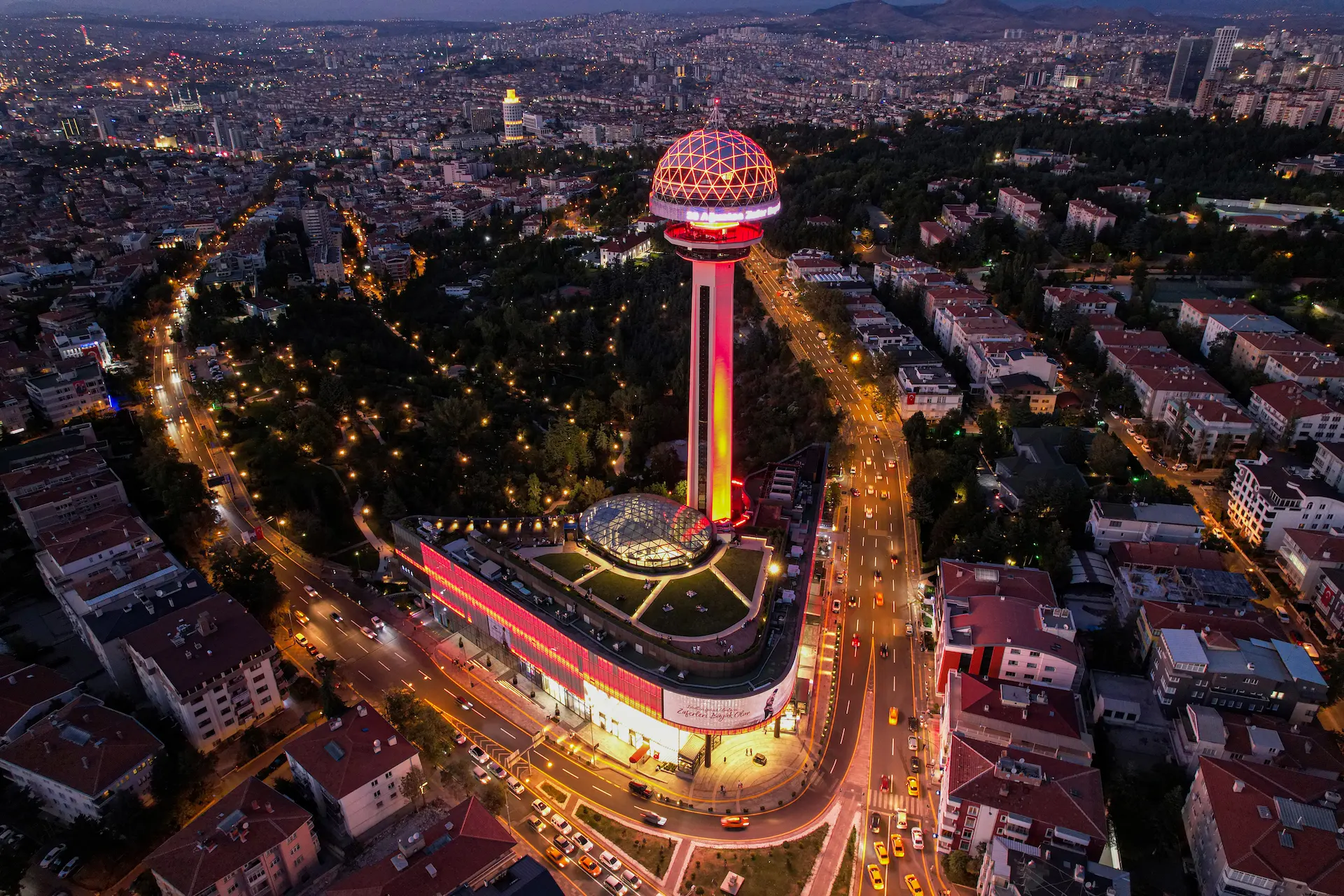
Der Atakule-Turm ist ein 125 Meter hoher Turm mit einem Drehrestaurant in der türkischen Hauptstadt Ankara. Der Atakule-Turm wurde 1989 als Aussichtsturm und neues Wahrzeichen der Stadt fertiggestellt. Außer der Aussichtsplattform und des Restaurants befinden sich noch eine Spielhalle, ein Burger-King-, ein Kentucky Fried Chicken- und ein Pizza-Hut-Restaurant und ein Einkaufszentrum um den Atakule-Turm herum. Er liegt ca. 4 km südlich des Kızılay-Platzes, des Stadtzentrums Ankaras.
Seit dem 12. Juni 2011 ist der Atakule-Turm mit einer LED-Beleuchtungsanlage ausgestattet. Über 10.000 einzeln über DMX ansteuerbare Pixel sorgen jede Stunde für verschiedene Farbszenarien und Shows.
阿塔库莱塔是一座高125米的塔楼,位于土耳其首都安卡拉,塔内设有一家旋转餐厅。阿塔库莱塔于1989年竣工,作为观景塔和城市的新地标。
 Art
Art
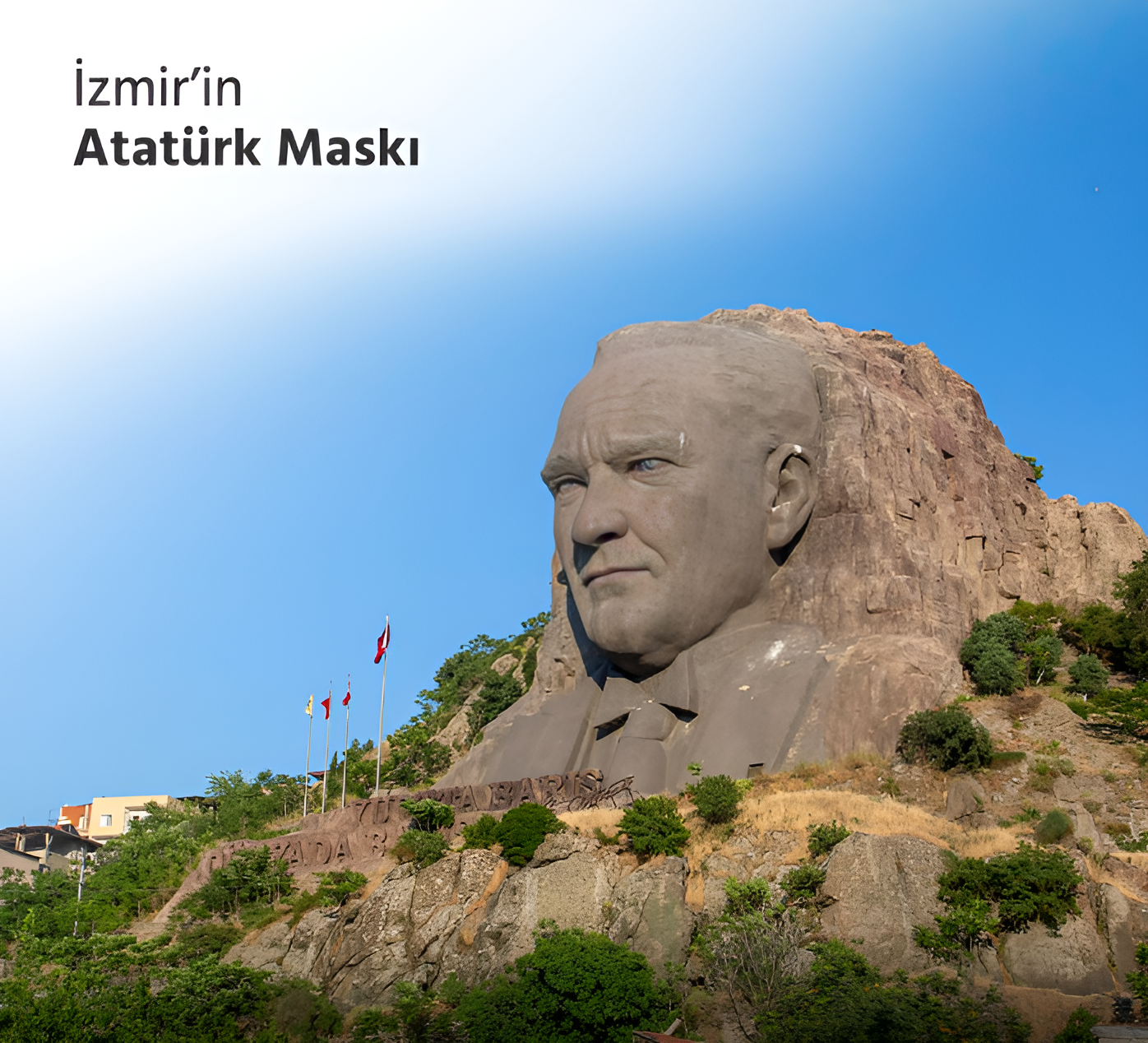
阿塔图尔克面具(土耳其语:Atatürk Maskı)是现代土耳其的创始人穆斯塔法-凯末尔-阿塔图尔克的大型混凝土半身雕像,位于伊兹密尔的布卡区。雕塑于 2009 年完工,耗资 420 万英镑。
Die Atatürk-Maske (türkisch: Atatürk Maskı) ist eine große Betonbüste von Mustafa Kemal Atatürk, dem Gründer der modernen Türkei, im Stadtteil Buca von İzmir. Die Skulptur wurde 2009 für 4,2 Mio. ₺ fertiggestellt.
 Sport
Sport
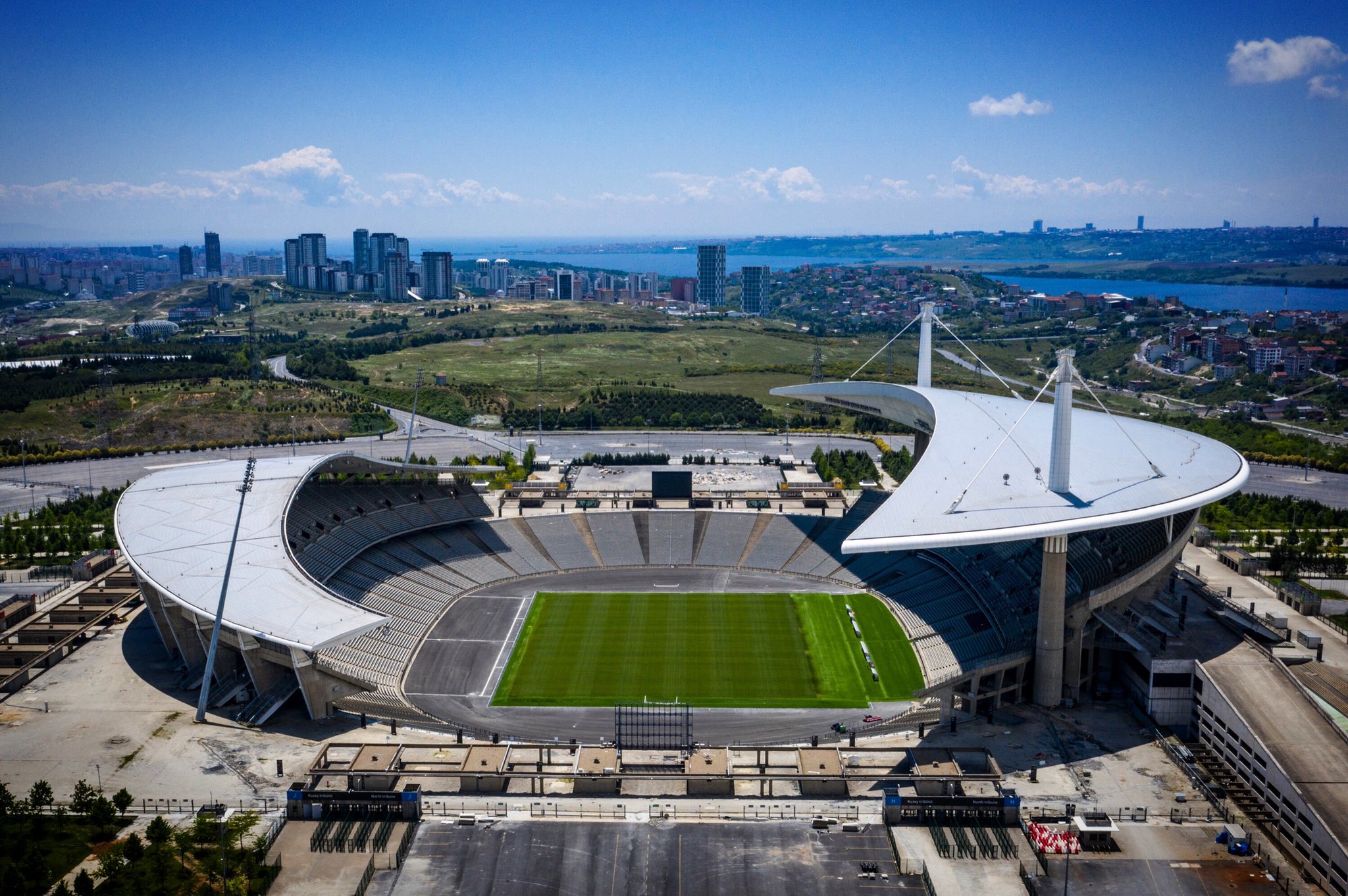
Veranstaltungen Endspiel der Türkiye Kupası 2003/04 Endspiel der UEFA Champions League 2004/05 Endspiel der Türkiye Kupası 2004/05 Türkischer Fußball-Supercup: 2009, 2010 Spiele von Galatasaray Istanbul (2003–2004) Spiele von Istanbul BB (2007–2014) Spiele von Beşiktaş Istanbul (2013–2016) Endspiel der Türkiye Kupası 2019/20 Spiele des Fatih Karagümrük SK (seit 2020) Endspiel der UEFA Champions League 2022/23
 Energy resource
 Renewable Energy

Das Atatürk-Denkmal (türkisch İzmir Atatürk Anıtı) ist ein Monument in der westtürkischen Hafenstadt Izmir, das dem Befreiungskrieg gewidmet ist und den Staatsgründer der Türkei, Mustafa Kemal Atatürk, als Reiter abbildet. Das Denkmal befindet sich in der „Straße der Republik“. Diese Straße befindet sich an der Küste von Izmir, das Denkmal selbst befindet sich 60 Meter südöstlich der Golf von Izmir des Ägäischen Meeres.
阿塔图尔克纪念碑(土耳其语:İzmir Atatürk Anıtı)是土耳其西部海港城市伊兹密尔的一座纪念碑,用于纪念解放战争,描绘的是骑在马背上的土耳其国家创始人穆斯塔法-凯末尔-阿塔图尔克。纪念碑位于 “共和国街”。这条街位于伊兹密尔海岸,纪念碑本身位于爱琴海伊兹密尔湾东南 60 米处。
 Transport and traffic
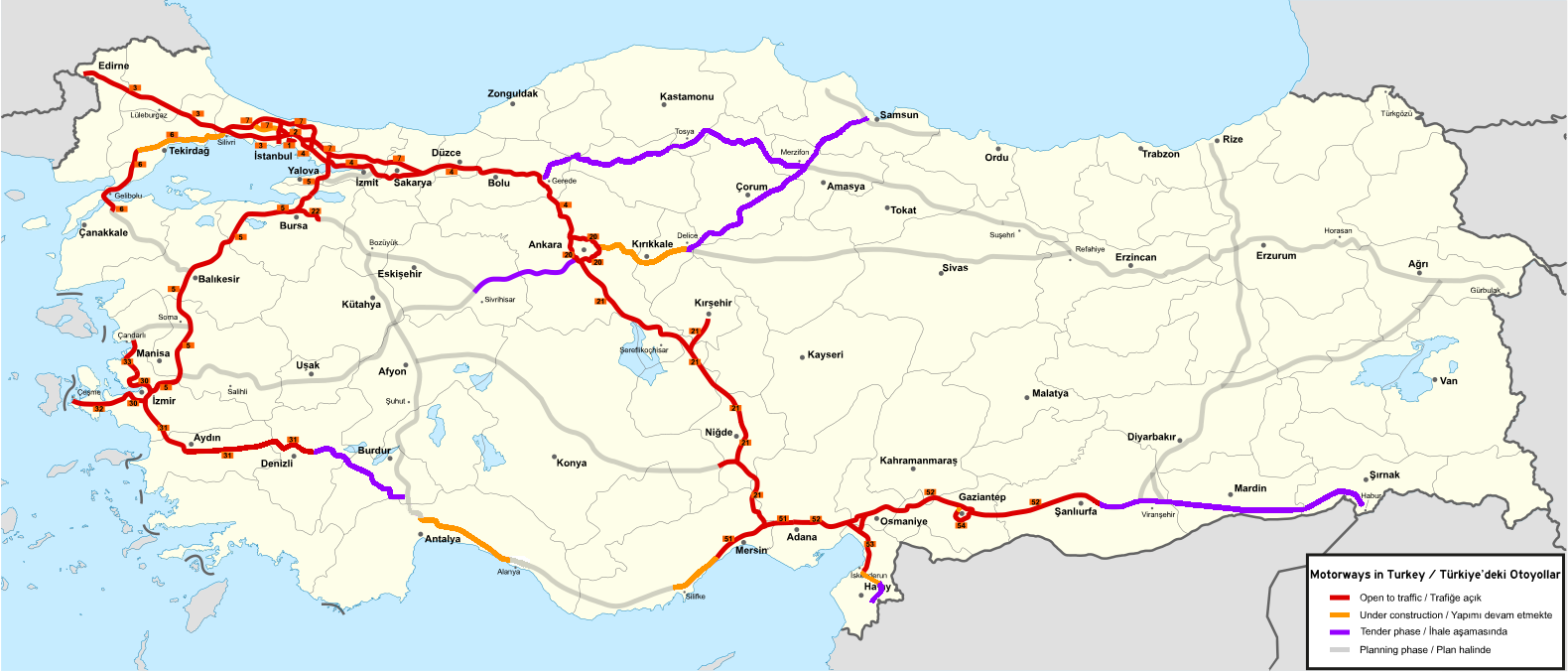
Das türkische Autobahnnetz (türkisch Otoyol) umfasste Ende 2020 inklusive Zubringer eine Länge von 3523 km.[1] Die Nummerierung erfolgt grob nach ihrem Standort, so sind die Autobahnen im Großraum Istanbul einstellig, im Bereich Adana zweistellig mit führender fünf. In der Türkei galt auf Autobahnen bis Juli 2022 ein Tempolimit von 120 km/h, alle Autobahnen sind mindestens sechsspurig und teilweise beleuchtet. Ab dem 1. Juli 2022 gilt auf den Autobahnen ein erhöhtes Tempolimit von 130 km/h, auf bestimmten neueren Strecken, die diese Geschwindigkeit zulassen (O-5, O-6, O-7 sowie O-21) gilt ein Tempolimit von 140 km/h.[2]


 Automobile
 Exhibition
