漢德百科全書 | 汉德百科全书
 Japan
Japan
 Literatur

Der Yomiuri-Literaturpreis (jap. 読売文学賞, Yomiuri-bungaku-shō) ist ein japanischer Literaturpreis, der seit 1949 von der Yomiuri-Zeitung vergeben wird. Der Preis war gedacht, um nach der Niederlage im Zweiten Weltkrieg einen erneuten Aufschwung der japanischen Literatur zu unterstützen.
读卖文学奖是一個日本文学奖项,1949年由读卖新闻社设置。最初分小说(含戏曲)、文艺评论、诗歌、文學研究(含翻译等)四个项目。1951年单设戏曲奖,1968年增设随笔纪行奖。现改为小说、戏曲、随笔與纪行、评论与传记、诗歌俳句、研究翻译六大项目。授奖对象为上一年度发表的各类优秀作品,每年2月颁奖。奖品为砚台、獎金200萬日元。
 Medien und Presse

Yomiuri Shinbun (Yomiuri-Zeitung, japanisch 読売新聞, in altem Schriftzug Kyujitai 讀賣新聞) ist eine japanische Tageszeitung mit Sitz in Tokio. Sie wurde 1874 gegründet und wird in den Metropolregionen Tokio, Osaka und Fukuoka veröffentlicht. Die Zeitung erscheint als Morgenausgabe, mit einer Auflage von derzeit etwa 6,87 Millionen, und als Abendausgabe, mit einer Auflage von etwa 1,77 Millionen Exemplaren (Stand: 1. Halbjahr 2022). Damit gilt sie als die auflagenstärkste Zeitung der Welt. Insgesamt erreicht sie etwa 23,70 Millionen Leser (Stand: 1. Halbjahr 2013).[1] Yomiuri Shinbun ist politisch konservativ ausgerichtet und steht der langjährigen Regierungspartei, der Liberaldemokratischen Partei, nahe.[2]
 Geographie

 Wirtschaft und Handel
Argentinien
Australien
Brasilien
China
Deutschland
England
Wirtschaft und Handel
Argentinien
Australien
Brasilien
China
Deutschland
England
 Europäische Union
Frankreich
Europäische Union
Frankreich
 Hamburg
 Hand in Hand
Indien
Indonesien
Italien
Japan
Kanada
Mexiko
Hand in Hand
Indien
Indonesien
Italien
Japan
Kanada
Mexiko
 Ohio-OH
 Ontario-ON
 Parteien und Regierung
Parteien und Regierung
Parteien und Regierung
 Gruppe der zwanzig wichtigsten Industrie- und Schwellenländer
 Provence-Alpes-Côte d´Azur
 Queensland-Qld
Republik Korea
Russland
Saudi-Arabien
Südafrika
Türkei
Vereinigte Staaten
Vereinigtes Königreich
Queensland-Qld
Republik Korea
Russland
Saudi-Arabien
Südafrika
Türkei
Vereinigte Staaten
Vereinigtes Königreich
 Washington, D.C.
Zhejiang Sheng-ZJ
Washington, D.C.
Zhejiang Sheng-ZJ
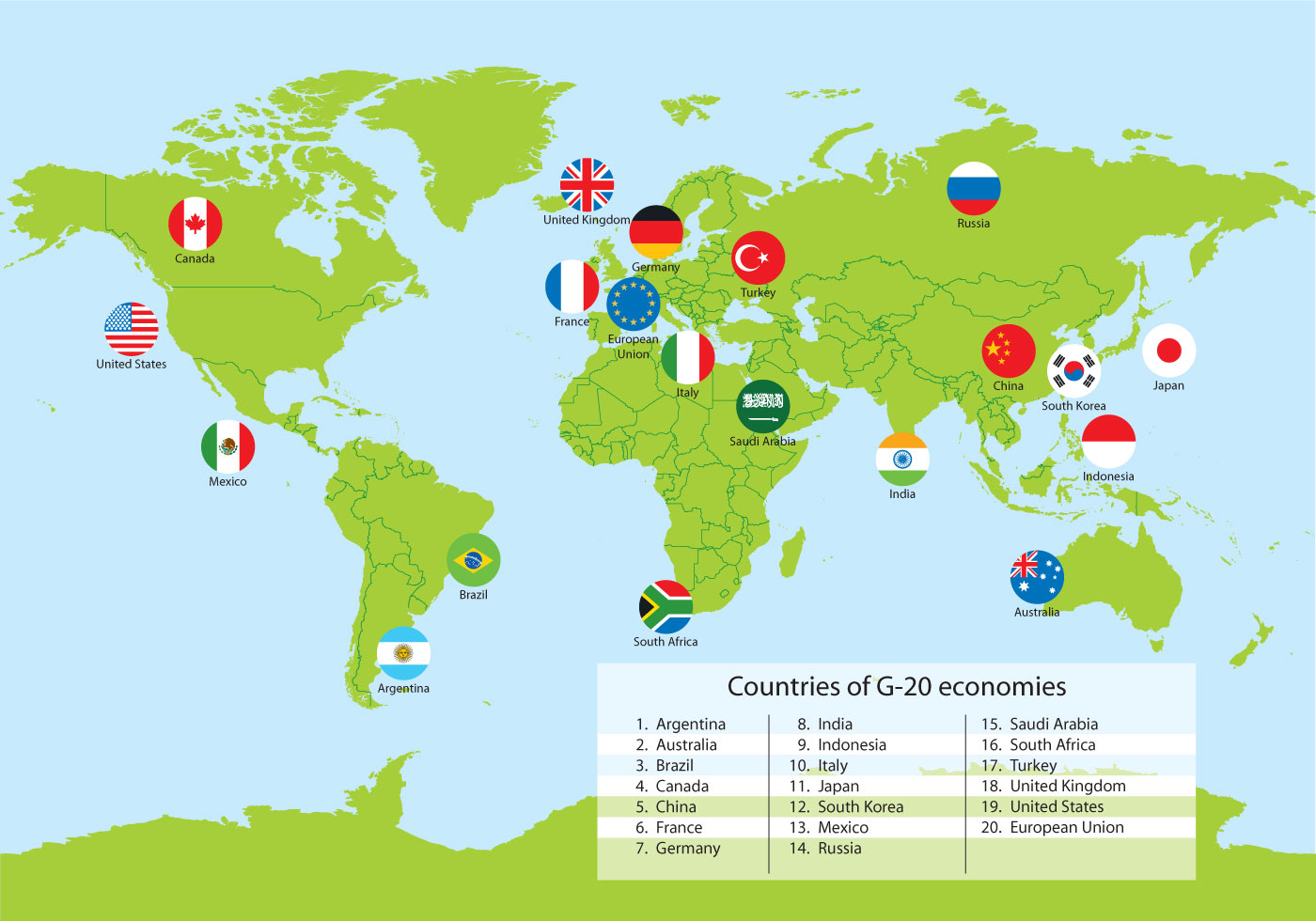
Die G20 (Abkürzung für Gruppe der zwanzig wichtigsten Industrie- und Schwellenländer) ist ein seit 1999 bestehender informeller Zusammenschluss aus 19 Staaten und der Europäischen Union. Sie soll als Forum für die Kooperation und Konsultation in Fragen des internationalen Finanzsystems dienen.
An den Treffen der G20 nehmen die Staats- und Regierungschefs der G20 Länder, die Finanzminister und Zentralbankchefs der G8 und elf weiterer Staaten, darunter die O-5, sowie die EU-Präsidentschaft (wenn diese zu diesem Zeitpunkt nicht von einem G8-Staat geführt wird), der Präsident der Europäischen Zentralbank, der Geschäftsführende Direktor (Managing Director) des Internationalen Währungsfonds, der Vorsitzende des Internationalen Währungs- und Finanzausschusses (IMFC), der Präsident der Weltbank und der Vorsitzende des Development Committees von Weltbank und Internationalem Währungsfonds teil.
20国集团(G20)是一个国际经济合作论坛,于1999年9月25日由八国集团的财长在华盛顿宣布成立,属于布雷顿森林体系框架内非正式对话的一种机制,由原八国集团以及其余十二个重要经济体组成。该组织的宗旨是为推动已工业化的发达国家和新兴市场国家之间就实质性问题进行开放及有建设性的讨论和研究,以寻求合作并促进国际金融稳定和经济的持续增长,按照以往惯例,国际货币基金组织与世界银行列席该组织的会议。20国集团成员涵盖面广,代表性强,该集团的GDP占全球经济的90%,贸易额占全球的80%,因此已取代G8成为全球经济合作的主要论坛。 二十国集团(英语:Group of Twenty,缩写:G20)是一个国际经济合作论坛,于1999年12月16日在德国柏林成立,属于布雷顿森林体系框架内对话的一种机制,由七国集团(加拿大、美国、英国、法国、德国、意大利、日本),金砖五国(巴西、俄罗斯、印度、中国、南非),七个重要经济体(墨西哥、阿根廷、土耳其、沙特阿拉伯、韩国、印度尼西亚、澳大利亚),以及欧洲联盟组成。按照惯例,国际货币基金组织与世界银行列席该组织的会议。
G20(ジートゥエンティ)は、"Group of Twenty"の略で、主要国首脳会議(G7)に参加する7か国、EU、ロシア、および新興国11か国の計20か国・地域からなるグループである。
構成国・地域は、アメリカ合衆国、イギリス、フランス、ドイツ、日本、イタリア、カナダ、EU、ロシア、中華人民共和国、インド、ブラジル、メキシコ、南アフリカ共和国、オーストラリア、大韓民国、インドネシア、サウジアラビア、トルコ、アルゼンチンである。20か国・地域首脳会合(G20首脳会合)および20か国・地域財務大臣・中央銀行総裁会議(G20財務相・中央銀行総裁会議)を開催している。主要20か国・地域[1][2]とも言い、日本の放送局であるNHKでは、先進国会合であるG7と区別して、先進国に新興国を加えた主要20か国[3]と表現している。
The G20 (or Group of Twenty) is an international forum for the governments and central bank governors from 19 countries and the European Union (EU). Founded in 1999 with the aim to discuss policy pertaining to the promotion of international financial stability,[3] the G20 has expanded its agenda since 2008 and heads of government or heads of state, as well as finance ministers, foreign ministers and think tanks[4], have periodically conferred at summits ever since. It seeks to address issues that go beyond the responsibilities of any one organization.[3]
Membership of the G20 consists of 19 individual countries plus the European Union. The EU is represented by the European Commission and by the European Central Bank. Collectively, the G20 economies account for around 90%[5] of the gross world product (GWP), 80% of world trade (or, if excluding EU intra-trade, 75%), two-thirds of the world population,[2] and approximately half of the world land area.
With the G20 growing in stature[6] after its inaugural leaders' summit in 2008, its leaders announced on 25 September 2009 that the group would replace the G8 as the main economic council of wealthy nations.[7] Since its inception, the G20's membership policies have been criticized by some intellectuals,[8][9] and its summits have been a focus for major protests.[10][11]
The heads of the G20 nations held summits twice in 2009 and twice in 2010. Since the November 2011 Cannes summit, G20 summits have been held annually.[12]
Le Groupe des vingt (G20) est un groupe composé de dix-neuf pays et de l'Union européenne dont les ministres, les chefs des banques centrales et les chefs d'État se réunissent annuellement. Il a été créé en 1999, après la succession de crises financières dans les années 19901. Il vise à favoriser la concertation internationale, en intégrant le principe d'un dialogue élargi tenant compte du poids économique croissant pris par un certain nombre de pays. Le G20 représente 85 % du commerce mondial, les deux tiers de la population mondiale et plus de 90 % du produit mondial brut (somme des PIB de tous les pays du monde)1. Le 15 novembre 2008, pour la première fois de son histoire, les chefs d'État ou de gouvernement se sont réunis. Le G20 se décline sous trois formes : les G20 regroupant des chefs d'État et de gouvernement, les G20 finance regroupant les ministres des finances et les gouverneurs des banques centrales et, depuis les 20-21 avril 2010, des G20 sociaux, réunissant les ministres de l'emploi.
Il Gruppo dei 20 (o G20) è un forum dei leader, dei ministri delle finanze e dei governatori delle banche centrali, creato nel 1999, dopo una successione di crisi finanziarie per favorire l'internazionalità economica e la concertazione tenendo conto delle nuove economie in sviluppo. Di esso fanno parte i 19 paesi più industrializzati (quelli del G8 in primis) con l'eccezione di Spagna e Paesi Bassi (sono presenti invece Argentina e Sudafrica). È presente, inoltre, l'Unione europea.
Il G20 rappresenta i due terzi del commercio e della popolazione mondiale, oltre all'80% del PIL mondiale. Sono presenti anche alcune tra le maggiori organizzazioni internazionali.
El Grupo de los 20 (numerónimo: G-20) es un foro cuyos miembros permanentes son 19 países de todos los continentes (Alemania, Arabia Saudita, Argentina, Australia, Brasil, Canadá, China, Corea del Sur, Estados Unidos, Francia, India, Indonesia, Italia, Japón, México, Reino Unido, Rusia, Sudáfrica, Turquía y la Unión Europea).1
Es el principal espacio de deliberación política y económica del mundo.1 En conjunto las entidades políticas representadas en el G20 reúnen el 66 % de la población mundial y el 85 % del producto bruto mundial.1.
El G-20 cuenta además con 14 organizaciones internacionales socias, cuyas presidencias también integran el foro:2
- Mundiales (7): Naciones Unidas (ONU), Fondo Monetario Internacional (FMI), Banco Mundial, Consejo de Estabilidad Financiera (FSB), Organización Internacional del Trabajo (OIT), Organización Mundial de Comercio (OMC) y Organización Mundial de la Salud (OMS)
- Regionales (7): Asociación de Naciones del Sudeste Asiático (ASEAN), Unión Africana, Nueva Alianza para el Desarrollo de África (NEPAD), Comunidad del Caribe (CARICOM), Banco Interamericano de Desarrollo (BID), Banco de Desarrollo de América Latina (CAF) y Organización para la Cooperación y el Desarrollo Económico (OCDE)
El G-20 surgió en dos etapas. Primero en 1999, como un grupo de segundo nivel de autoridades económicas y financieras, y luego como un grupo de primer nivel en 2008, como consecuencia de la crisis mundial que estalló ese año, al constituirse como Cumbre de Jefes de Estado, desplazando al G-8 y al G8+5 como foro de discusión de la economía mundial.3
La instancia más importante del G20 es la Cumbre de Jefes de Estado, denominada Cumbre de Líderes, que se reúne una vez por año.4 El G20 cuenta con dos instancias gubernamentales de segundo nivel, denominadas canales de trabajo: el Canal de Finanzas que reúne a los ministros de Finanzas y presidentes de bancos centrales y el Canal de Sherpas, para tratar los temas no económicos.4
Complementariamente el G-20 cuenta con grupos de participación de la sociedad civil, llamados grupos de afinidad: Business 20 (B20) para empresarios, Civil 20 (C20) para ONGs, Labour 20 (L20) para sindicatos, Science 20 (S20) para científicos, Think 20 (T20) para institutos de investigación, Women 20 (W20) para organizaciones feministas y Youth 20 (Y20) para organizaciones juveniles.4
En 2019 la cumbre se realizó en Osaka Japón, correspondiendo la presidencia del grupo a su primer ministro, Shinzō Abe.
Больша́я двадца́тка (также G20, G-20 , Группа двадцати; официально — англ. The Group of Twenty, major advanced and emerging economies[1]) — клуб правительств и глав центральных банков государств с наиболее развитой и развивающейся экономикой[2].
В совокупности, G20 представляет 85 % мирового валового национального продукта, 75 % мировой торговли (включая торговлю внутри ЕС) и две трети населения мира[2].
Европейский союз представлен председателем Европейской комиссии и председателем Европейского совета[3]. Кроме того, обычно на встречах G20 присутствуют представители различных международных организаций, среди которых Совет по финансовой стабильности, Международный валютный фонд, Всемирная торговая организация, Африканский Союз, АСЕАН, Организация Объединённых Наций и Всемирный банк[2].
Группа 20 была создана в ответ на азиатский финансовый кризис конца 1990-х[2] и растущее сознание того, что страны с развивающейся рыночной экономикой не были адекватно представлены в мировых экономических обсуждениях и принятии решений. Переход от «большой семёрки» к формату G20 был ускорен из опасения катастрофы глобальной экономики в общемировой экономический кризис 2008 года[4]. До 2008 года группа не проводила саммитов на высшем уровне, её основной формой деятельности были ежегодные встречи на уровне министров финансов и глав центробанков. На сегодняшний день саммиты G20 являются глобальным форумом для сотрудничества и консультаций по вопросам, относящимся к международной финансово-экономической систе.
 Unternehmen

 Architektur
 Geschichte
 Religion
 Weltkulturerbe
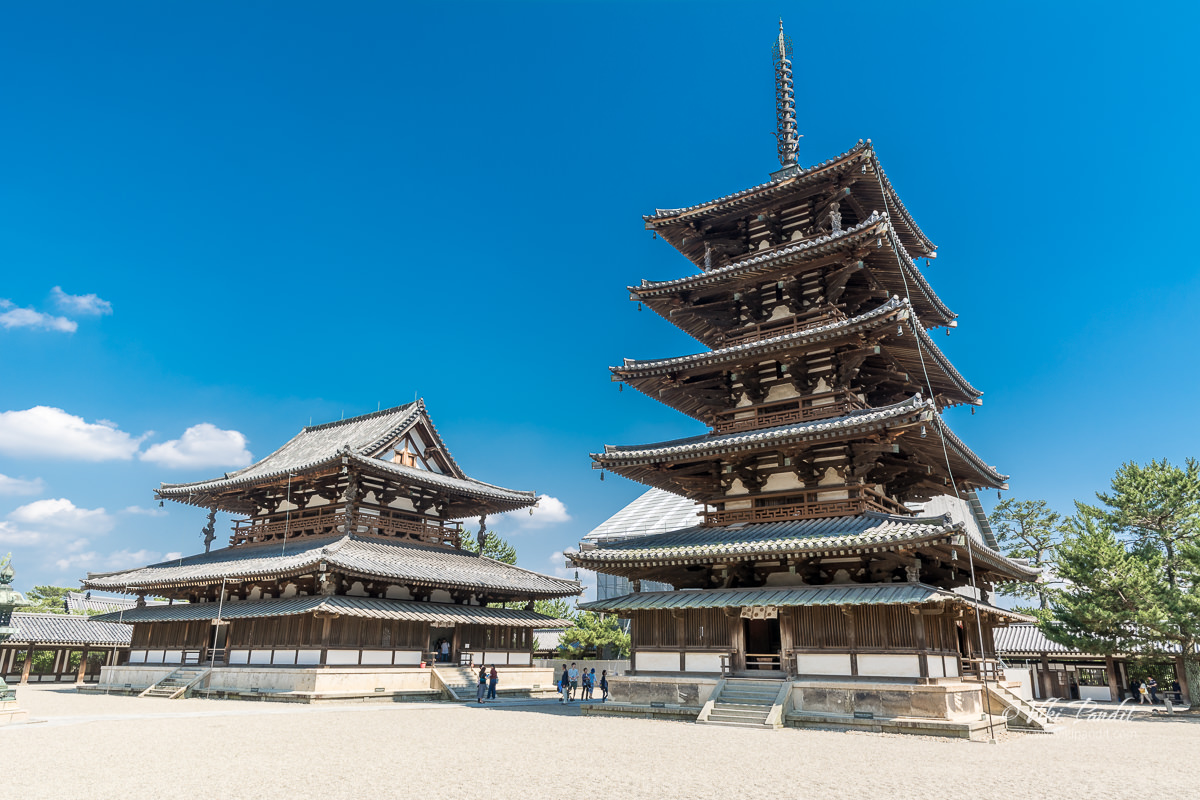
Der Hōryū-ji (jap. 法隆寺, dt. Tempel der Lehre Buddhas) ist ein buddhistischer Tempel in Nara in Japan. Auf seinem Gelände befinden sich die ältesten erhaltenen Holzgebäude der Welt und außerdem viele japanische Nationalschätze und Kulturgüter. Aufgrund dieser Tatsache wurde der gesamte Tempelbezirk vom UNESCO-Ausschuss für das Kulturerbe der Menschheit 1993 zum ersten japanischen Weltkulturerbe erklärt.
Die Geschichte des Hōryūji beginnt in der Asuka-Zeit etwa um 600 n. Chr., als der erkrankte Kaiser Yōmei das Gelübde ablegte, zum Dank für seine Gesundung einen Tempel und ein Buddhastandbild zu errichten. Dieses Gelübde konnte er aber nicht mehr einhalten, da er starb, kurz nachdem der genesen war. Sein Wunsch wurde so vom Kronprinz Shōtoku und der Kaiserin Suiko erfüllt, die im Jahre 607 den Tempel und die Statue errichteten. Der Tempel wurde Hōryūji oder auch Ikarugaji – nach seinem Standort auf dem Gelände des alten Ikaruga-Palastes – genannt. Bald darauf, im Jahre 670, wütete ein Feuer auf dem Tempelgelände, von dem das Nihonshoki berichtet, dass es „nicht ein einziges Gebäude“ verschont hätte. Diese Tatsache wird allerdings von Historikern sehr zweifelhaft beurteilt, da nachgewiesen werden kann, dass der Tempel nach seiner Errichtung über 400 Jahre eine Glanzzeit großer Traditionseinhaltung erlebte. Im Dezember 1993 schließlich wurde der gesamte Tempelbezirk als UNESCO-Weltkulturerbe deklariert und unter Denkmalschutz gestellt.(Quelle:http://www.kalkriese.de/H%C5%8Dry%C5%AB-ji.html)
Der Hōryū-ji (jap. 法隆寺, dt. „Tempel der Lehre Buddhas“) ist ein buddhistischer Tempel in der Stadt Ikaruga (Landkreis Ikoma) der japanischen Präfektur Nara. Er gehört zum UNESCO-Weltkulturerbe, und auf seinem Gelände befinden sich die ältesten erhaltenen Holzgebäude der Welt und außerdem viele japanische Nationalschätze und wichtige nationale Kulturgüter. Die Geschichte des Hōryū-ji beginnt in der Asuka-Zeit etwa um 600 n. Chr., als der erkrankte Kaiser Yōmei das Gelübde ablegte, zum Dank für seine Gesundung einen Tempel und ein Buddhastandbild zu errichten. Dieses Gelübde konnte er aber nicht mehr einhalten, da er starb, kurz nachdem er genesen war. Sein Wunsch wurde so von seinem Sohn, dem Kronprinzen Shōtoku, und der Kaiserin Suiko erfüllt, die im Jahre 607 den Tempel und die Statue errichteten. Der Tempel wurde Hōryū-ji oder auch Ikaruga-ji – nach seinem Standort auf dem Gelände des alten Ikaruga-Palastes – genannt. Bald darauf, im Jahre 670, wütete ein Feuer auf dem Tempelgelände, von dem das Nihonshoki berichtet, dass es „nicht ein einziges Gebäude“ verschont hätte. Diese Tatsache wird allerdings von Historikern als sehr zweifelhaft beurteilt, da nachgewiesen werden kann, dass der Tempel nach seiner Errichtung über 400 Jahre eine Glanzzeit großer Traditionseinhaltung erlebte.
法隆寺,又称斑鸠寺,位于日本奈良县生驹郡斑鸠町,是圣德太子于飞鸟时代建造的佛教木结构寺院,据传始建于607年,但精确年代无从考证。法隆寺占地面积约18万7千平方米,寺内保存有大量自飞鸟时代以来陆续累积,被日本政府指定为国宝、重要文化财产的建筑及文物珍宝。
法隆寺分为东西两院,西院保存了金堂、五重塔;东院建有梦殿等,西院伽蓝是现存最古的木构建筑群。法隆寺建筑物群和法起寺共同在1993年以“法隆寺地域的佛教建筑物”之名义列为世界遗产。1950年时法隆寺从法相宗独立,现在是圣德宗的本山。
法隆寺,又称为斑鸠寺,位于日本奈良生驹郡斑鸠町,是圣德太子于飞鸟时代建造的佛教木结构寺庙,据传始建于607年,但是已无从考证。法隆寺占地面积约187000平方米,寺内保存有自飞鸟时代以来的各种建筑及文物珍宝,被指定为国宝・重要文化财产的文物约190类合计2300余件。法隆寺分为东西两院,西院保存了金堂、五重塔;东院建有梦殿等,西院伽蓝是世界上最古老的木构建筑群。法隆寺建筑物群和法起寺共同在1993年以“法隆寺地区佛教建造物”之名义列为世界文化遗产。法隆寺1950年从法相宗独立,现在是圣德宗的本山。
法隆寺(ほうりゅうじ)は、奈良県生駒郡斑鳩町にある寺院。聖徳宗の総本山である。別名は斑鳩寺(いかるがでら、鵤寺とも)、法隆学問寺など[1]。
法隆寺は7世紀に創建され、古代寺院の姿を現在に伝える仏教施設であり、聖徳太子ゆかりの寺院である。創建は金堂薬師如来像光背銘、『上宮聖徳法王帝説』から推古15年(607年)とされる。金堂、五重塔を中心とする西院伽藍と、夢殿を中心とした東院伽藍に分けられる。境内の広さは約18万7千平方メートルで、西院伽藍は現存する世界最古の木造建築物群である。
法隆寺の建築物群は法起寺と共に、1993年に「法隆寺地域の仏教建造物」としてユネスコの世界遺産(文化遺産)に登録された。建造物以外にも、飛鳥・奈良時代の仏像、仏教工芸品など多数の文化財を有する。
Hōryū-ji (法隆寺, lit. Temple of the Flourishing Law) is a Buddhist temple that was once one of the powerful Seven Great Temples, in Ikaruga, Nara Prefecture, Japan. Its full name is Hōryū Gakumonji (法隆学問寺), or Learning Temple of the Flourishing Law, the complex serving as both a seminary and monastery.
The temple's pagoda is widely acknowledged to be the oldest wooden building existing in the world, underscoring Hōryū-ji's place as one of the most celebrated temples in Japan.[1][2] In 1993, Hōryū-ji was inscribed together with Hokki-ji as a UNESCO World Heritage site under the name Buddhist Monuments in the Hōryū-ji Area. The Japanese government lists several of its structures, sculptures and artifacts as National Treasures. A 2001 study of its shinbashira, the central wooden column almost suspended inside the Tō, concluded the building to be a century older than previously thought.
The temple was originally commissioned by Prince Shōtoku; at the time it was called Ikaruga-dera (斑鳩寺), a name that is still sometimes used. This first temple is believed to have been completed by 607. Hōryū-ji was dedicated to Yakushi Nyorai, the Buddha of healing and in honor of the prince's father.[2] Excavations done in 1939 confirmed that Prince Shotoku's palace, the Ikaruga-no-miya (斑鳩宮), occupied the eastern part of the current temple complex, where the Tō-in (東院) sits today.[3] Also discovered were the ruins of a temple complex which was southwest of the prince's palace and not completely within the present temple complex.[3] The original temple, named by modern historians and archaeologists Wakakusa-garan (若草伽藍), was lost, probably burned to the ground after being hit by lightning in 670. The temple was reconstructed but slightly reoriented in a northwest position, which is believed to have been completed by around 711.[4] The temple was repaired and reassembled in the early twelfth century, in 1374, and 1603.[5]
In 1950 the maintainers of the temple broke away from the Hossō sect. The owners currently call the temple the headquarters of the "Shōtoku" sect.[6]
After the long controversy ignited by architecture historian Sekino in 1905, the majority consensus view as of 2006 is that the current precinct is a reconstruction. The excavations in 1939 that uncovered the older temple site including architectural remains of a Kondō and a pagoda, are accepted as conclusive proof. The original complex, Wakakusa-garan, probably burned down, but there is still a debate as to whether a fire actually occurred in 670, as recorded in the Nihon Shoki, or whether there was another reason.[7]
Le Hōryū-ji (法隆寺?) est un temple bouddhique situé à Ikaruga, bourg de la préfecture de Nara au Japon.
Les bâtiments les plus anciens (le kondō, la pagode à cinq étages et la porte centrale) datent de la période Asuka (milieu du VIe siècle - 710) et sont considérés comme les plus anciennes constructions en bois du monde.
D'après les textes anciens, l'empereur Yōmei, en proie à la maladie, fit le vœu de bâtir un temple et d'y installer une statue de Bouddha afin d'obtenir la guérison. Il mourut peu après, mais l'impératrice et le prince héritier Shōtoku firent construire en 607 un temple nommé temple Ikagura (d'après le nom du lieu) ou Hōryū-ji (littéralement « Temple de la Loi Florissante »), conformément aux volontés de l'empereur1. Les premiers bâtiments formant le temple ont été construits par des artisans venus du royaume coréen de Baekje. Ils sont alignés suivant un axe nord-sud selon une tradition continentale2.
Même si un important incendie a peut-être détruit l'ensemble des bâtiments en 6701, le temple peut s'enorgueillir de quatorze siècles d'observance continue de la tradition.
Le 26 janvier 1949, des peintures murales, exemplaires de l'iconographie bouddhique japonaise et datant de la fin du VIIe siècle, prennent feu dans le bâtiment principal du temple, une œuvre architecturale classée trésor national depuis 18973,4. L'émoi suscité dans tout le pays, et même au-delà, par cette perte incite le législateur japonais à agir5,3. Le 30 mai 1950, le ministère de l'Éducation promulgue par ordonnance une loi sur la protection des biens culturels6,7.
Le temple est devenu en 1993 le premier site japonais inscrit sur la liste du patrimoine mondial1.
Hōryū-ji (法隆寺?) è un complesso templare buddista della città di Ikaruga-no-Sato, vicino a Nara, in Giappone.
Gli edifici più antichi (il Kondō, la pagoda a 5 piani e la porta centrale) risalgono al periodo Asuka e sono considerati le più antiche costruzioni in legno esistenti al mondo.
Secondo i testi antichi, l'imperatore Yōmei, molto malato, fece il voto di erigere un tempio, in cui avrebbe fatto mettere una statua di Buddha, per ottenere la guarigione. Poco dopo morì, senza aver potuto compiere il proprio voto, ma l'imperatrice Suiko ed il suo reggente, il principe Shōtoku fecero costruire, nel 607, il complesso templare chiamato Ikaruga (dal nome del luogo ove sorgeva) o Hōryū-ji (letteralmente «Tempio della Legge Fiorente»), secondo le intenzioni dell'imperatore.
Seppure un grave incendio, nel 670, avrebbe distrutto gran parte degli edifici, il complesso templare può vantare 14 secoli di ininterrotta osservanza della tradizione.
Nel 1993, è stato il primo sito giapponese ad essere riconosciuto patrimonio mondiale dell'umanità.
Hōryū-ji (法隆寺 lit. Templo de la Ley Floreciente?) es un templo budista localizado en Ikaruga, prefectura de Nara, Japón. Su nombre completo es Hōryū Gakumonji (法隆学問寺 lit. Templo de la Enseñanza de la Ley Floreciente?), debido a que este sitio sirve como un monasterio. El templo es muy conocido por poseer las edificaciones de madera más antiguas en el mundo.12 3 Debido a que tiene los templos más antiguos y más importantes, Hōryū-ji es el templo más venerado en Japón.4 En 1993, Hōryū-ji fue designado como Patrimonio de la Humanidad de la Unesco y el gobierno japonés lo ha nombrado como un Tesoro Nacional.
El templo fue originalmente comisionado por el príncipe Shotoku a la firma constructora Kongō Gumi; en aquella época se le llamaba "Ikaruga-dera"(斑鳩寺). El primer templo se completó en el año 607. El Hōryū-ji estaba dedicado a Yakushi, el Nyorai de la curación, y en honor al padre de Shotoku.[4]. Se ha confirmado, por medio de excavaciones en el sitio actual del templo, que el palacio del príncipe Shotoku ocupaba el extremo oriental de dicho sitio.[5]. También se descubrieron las ruinas de un complejo de templos al sur del palacio, y que no estaba comprendido dentro del complejo moderno. [6]. El templo fue alcanzado por un rayo y se incendió completamente en el año 670. Entre el 670 y el 700 el templo fue reconstruido siguiendo el estilo original pero reorientado en una posición al noroeste. [7]. El templo se reparó y reensambló a principios del siglo XII, en el año 1374 y en 1603. [8]. Se ha estimado que apenas 15 a 20 por ciento del Kondo contiene materiales de la reconstrucción original. [9].
El clan Shoga derrotó y exterminó sumariamente a la familia Shotoku en una rencilla por el poder. [10]. Como prueba del respeto que la familia rival tenía por el príncipe, se permitió la reconstrucción del templo, aún siendo propiedad de una familia rival y que había caído en desgracia. [11].
Posteriormente el templo se convirtió en un centro religioso importante del Budismo Hossō.
Aunque el punto de vista generalizado es que el templo actual fue reconstruido tras el incendio del 670, aún se debate si dicho incendio realmente tuvo lugar. Los detractores de la teoría del incendio apuntan a la ausencia de evidencia basándose en muestras del suelo del complejo, las medidas del templo que están basadas en el shaku Goguryeo en lugar del shaku Tang, y el estilo arcaico del templo, incongruente con los estilos arquitectónicos de inicios del siglo VIII. [12]. [13]. Por otro lado, quienes opinan que sí hubo tal incendio indican que el Nihon Shoki da cuenta de un gran incendio en el 670 en el que ni un solo edificio quedó en pie; la biografía del príncipe Shotoku habla de un incendio en el templo en el 610.[14]. [15]. Las excavaciones que descubrieron el sitio del templo más antiguo se aceptan como prueba definitiva de que existió un templo original que sufrió un incendio, y que el templo actual es una reconstrucción.[16].
Хорю-дзи (яп. 法隆寺 Храм процветающей дхармы) — буддийский храм в городе Икаруга, префектура Нара, Япония.
Полное название храма — Хорю Гакумон-дзи (法隆学問寺), то есть храм изучения процветающей дхармы, храм использовался не только как семинария, но и как монастырь. Храм считается древнейшей деревянной постройкой в мире.[1] Храм особенно почитается в Японии как самый старый храм.[2] Этот храм является одним из немногих храмов школы хоссо (соответствующей индийской философской школе йогачара, основатель школы — Досё). Храм входит в число семи крупнейших храмов юга.
Храм основал принц Сётоку, и он получил название Икаруга-дэра (斑鳩寺). Строительство, в котором принимали участие основатели компании Конго Гуми, было закончено в 607 году. Храм был посвящён Якуси, Будде Медицины, в честь отца принца[2]. Раскопки показывают, что принц Сётоку занимал часть дворца на современной храмовой территории[3]. Ранее комплекс находился к югу от дворца, а не на нынешнем месте[3]. Храм был поражён ударом молнии и полностью сгорел в 670 году. С 670 по 700 год храм был восстановлен, но переориентирован[4]. Несколько раз храм ремонтировали и пересобирали — в начале XII века, в 1374 и в 1603[5]. Считается, что только 15-20 % строений Кондо сохранили оригинальные материалы храма во время реконструкции[5].
Когда клан Сога победил род Сётоку, этот род был ликвидирован[6]. Однако Сога разрешил восстановить храм для мятежного и бессильного рода из уважения к принцу[6].
Позднее храм стал важнейшим центром школы хоссо. В 1950 году храм был передан Сётоку-сю, подшколе почитателей принца Сётоку в хоссо.

法务省(日语:法務省/ほうむしょう Hōmu shō */?,缩写:MOJ)是日本维持基本法制、制定法律、维护国民权利、统一处理与国家利害有关的诉讼的行政机关。前身为大日本帝国宪法时期的司法省。
司法制度、民事行政(国籍、户籍、登记、供托)、刑事民事法的立案、检察、矫正、更生保护、与国家利害有关的诉讼、维护人权、出入国管理、公安调查、司法书士等等都是法务省所管的事项。
1952年(昭和27年)8月之后,法务省成为省中之首,仅次于内阁总理大臣的总理府。2001年实施中央省厅再编之后,则仅次于总务省的位置。
Das japanische Justizministerium (jap. 法務省, hōmu-shō) ist eines der Ministerien der Zentralregierung. Es ist für Justiz und Strafvollzug verantwortlich, vertritt die Regierung vor Gericht und ist darüber hinaus für Meldeangelegenheiten, Staatsbürgerschaftsrecht und Einwanderung zuständig. Dem Ministerium zugeordnet sind außerdem die Staatsanwaltschaften (検察庁, kensatsu-chō), die Public Security Intelligence Agency (PSIA; 公安調査庁, kōanchōsa-chō) und die Untersuchungskommission für öffentliche Sicherheit (公安審査委員会, kōanshinsai-iinkai).
China

 IT-Times
Spätklassik, Romantik (Früh, Mittel, Spät)
Japan
Republik Korea
Shandong Sheng-SD
Shanghai Shi-SH
Taiwan Sheng-TW
Vereinigte Staaten
IT-Times
Spätklassik, Romantik (Früh, Mittel, Spät)
Japan
Republik Korea
Shandong Sheng-SD
Shanghai Shi-SH
Taiwan Sheng-TW
Vereinigte Staaten


Das japanische Verteidigungsministerium (jap. 防衛省, Bōei-shō) entstand am 9. Januar 2007 aus der Verteidigungsbehörde (防衛庁, Bōei-chō). Diese wurde 1954 geschaffen um die defensiv ausgerichtete Wiederbewaffnung Japans nach dem Zweiten Weltkrieg in Form der Selbstverteidigungsstreitkräfte durchzuführen.
防卫省(日语:防衛省/ぼうえいしょう Bōei shō */?)是日本政府部门之一,主要负责掌管自卫队,地位等同其他国家的国防部。前身为防卫厅,历史可追溯至1950年盟军占领时期的警察预备队本部,经过多次改制后,于2007年1月9日升格为省。首长为防卫大臣,由首相任命。
Australien
Belgien
Brasilien
Deutschland
Finnland
Frankreich
Iran
Israel
Italien
Japan
Kanada
Neuseeland
Norwegen
Österreich
Russland
Schweden
Vereinigte Staaten
Vereinigtes Königreich
Vietnam
 Wissenschaft und Technik

Die Fields-Medaille, offizieller Name International Medal for Outstanding Discoveries in Mathematics (deutsch: „Internationale Medaille für herausragende Entdeckungen in der Mathematik“), ist eine der höchsten Auszeichnungen, die ein Mathematiker erhalten kann. Sie ist benannt nach ihrem Stifter, dem kanadischen Mathematiker John Charles Fields (1864–1932), und wurde das erste Mal 1936 vergeben. Seit 1950 wird sie alle vier Jahre von der Internationalen Mathematischen Union (IMU) anlässlich des Internationalen Mathematikerkongresses (ICM) an zwei bis vier Mathematiker verliehen, die jünger als 40 Jahre sind und sich in besonderer Weise auf dem Gebiet der mathematischen Forschung hervorgetan haben (so formell definiert seit 1966). Mit der Verleihung ist ein Preisgeld von 15.000 kanadischen Dollar verbunden. Beim ICM werden gleichzeitig drei weitere Preise verliehen: der Carl-Friedrich-Gauß-Preis für Beiträge zur angewandten Mathematik, die IMU-Abakus-Medaille für Beiträge zur theoretischen Informatik und die Chern-Medaille für herausragendes Lebenswerk auf höchstem Niveau.
菲尔兹奖(英语:Fields Medal),正式名称为国际杰出数学发现奖(英语:International Medals for Outstanding Discoveries in Mathematics),是一个在国际数学联盟的国际数学家大会上颁发的奖项。每四年评选2-4名有卓越贡献且年龄不超过40岁的数学家。得奖者须在该年元旦前未满四十岁。
奖项以加拿大数学家约翰·查尔斯·菲尔兹的名字命名。菲尔兹筹备设立该奖,并在遗嘱中捐出47,000元给奖项基金。
菲尔兹奖被认为是年轻数学家的最高荣誉,和阿贝尔奖均被称为数学界的诺贝尔奖。奖金有15,000加拿大元,约合13,767美元。而阿贝尔奖的奖金有600万瑞典克朗,约合100万美元,更接近诺贝尔奖。


 Automobil