Deutsch-Chinesische Enzyklopädie, 德汉百科
 Monaco
 Internationale Städte
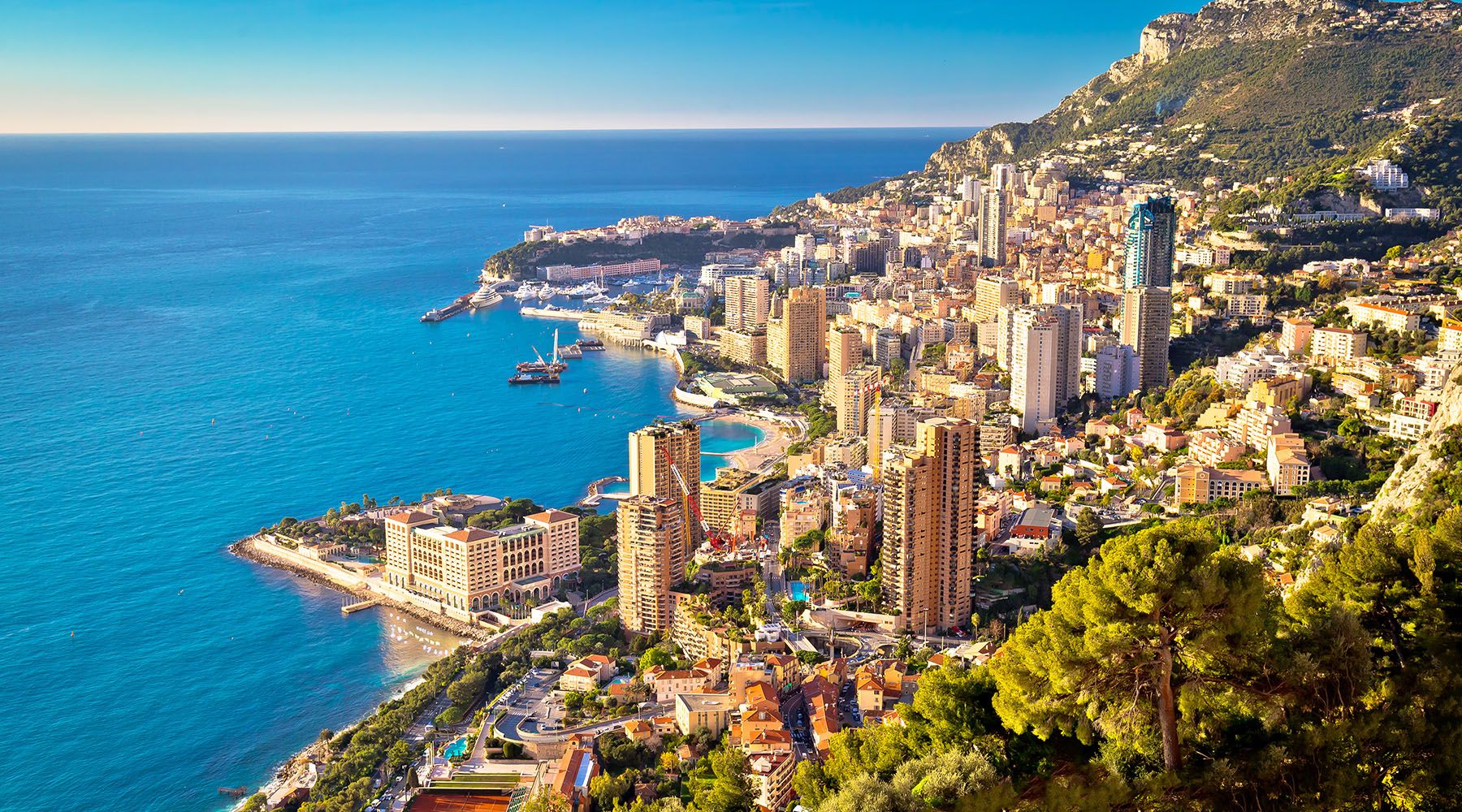
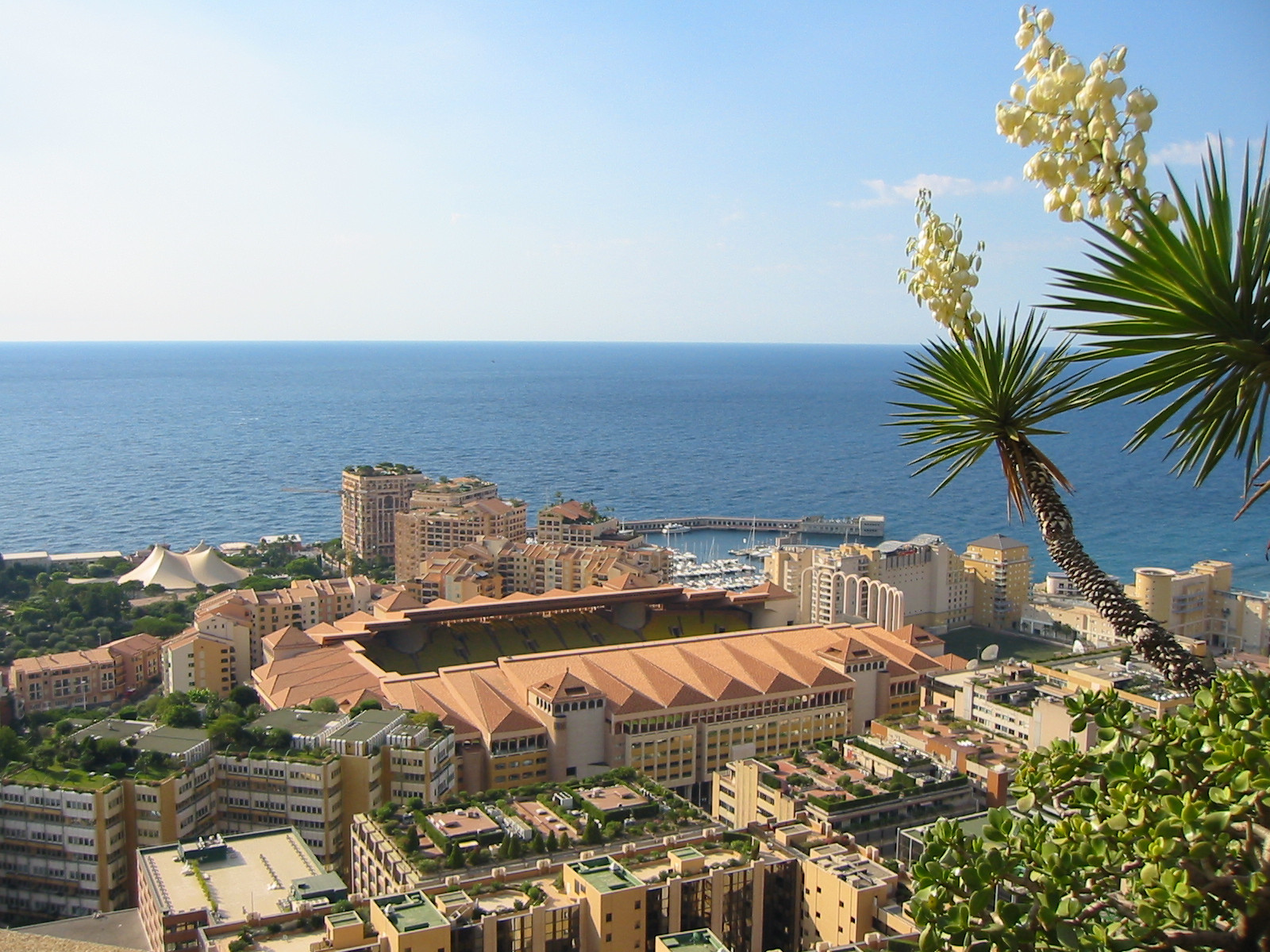
蒙特卡洛(法语:Monte-Carlo [mɔ̃te kaʁlo])是摩纳哥最著名的一区,以豪华的赌场闻名于世。ATP世界巡回赛1000大师赛之一的蒙地卡罗大师赛以该地命名,在其附近的法国罗克布吕讷-卡普马丹举办。
Monte-Carlo[1] (monegassisch Munte-Carlu) ist ein Stadtbezirk in Monaco und mit einer Fläche von 43,68 Hektar (0,44 Quadratkilometer)[2] größter der neun Verwaltungsbezirke des Fürstentums. Bekannt ist er für die gleichnamige Spielbank und die alljährlich stattfindende Rallye Monte Carlo. Auch der Circuit de Monaco, auf dem der Große Preis von Monaco ausgetragen wird, führt zum Teil durch Monte-Carlo.
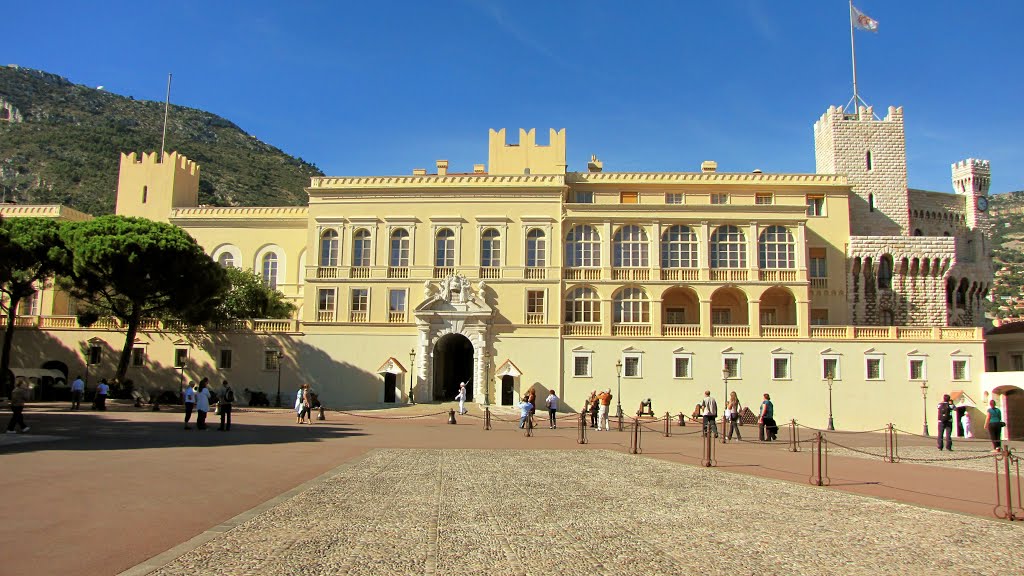
Oft wird Monte-Carlo fälschlicherweise als Hauptstadt des Stadtstaates bezeichnet. Dieser hat jedoch keine separate Hauptstadt – vielmehr liegt das monegassische Verwaltungszentrum im südlich gelegenen Stadtteil Monaco-Ville, wo sich zahlreiche Behörden, der Fürstenpalast und die Kathedrale Notre-Dame-Immaculée befinden. Monte-Carlo grenzt an die Stadtbezirke La Rousse, Larvotto, La Condamine und Ravin de Sainte-Dévote sowie an die französische Gemeinde Beausoleil.
Seinen Namen verdankt Monte-Carlo dem Fürsten Charles III. (ital. Carlo III.), der in den 1860er Jahren in dem damals unentwickelten Gebiet auf einem Felssporn im Meer (ital. monte = Berg) ein Casino ansiedelte. Der Name Quartier de Monte-Carlo wurde der Umgebung der Spielbank am 1. Juli 1866 verliehen (weitere Details auch zur Geschichte siehe Spielbank Monte-Carlo).
Monte Carlo (/ˈmɒnti ˈkɑːrloʊ/; Italian: [ˈmonte ˈkarlo]; French: Monte-Carlo [mɔ̃te kaʁlo], or colloquially Monte-Carl [mɔ̃te kaʁl]; Monégasque: Monte-Carlu) officially refers to an administrative area of the Principality of Monaco, specifically the ward of Monte Carlo/Spélugues, where the Monte Carlo Casino is located. Informally the name also refers to a larger district, the Monte Carlo Quarter (corresponding to the former municipality of Monte Carlo), which besides Monte Carlo/Spélugues also includes the wards of La Rousse/Saint Roman, Larvotto/Bas Moulins, and Saint Michel. The permanent population of the ward of Monte Carlo is about 3,500, while that of the quarter is about 15,000. Monaco has four traditional quarters. From west to east they are: Fontvieille (the newest), Monaco-Ville (the oldest), La Condamine, and Monte Carlo.
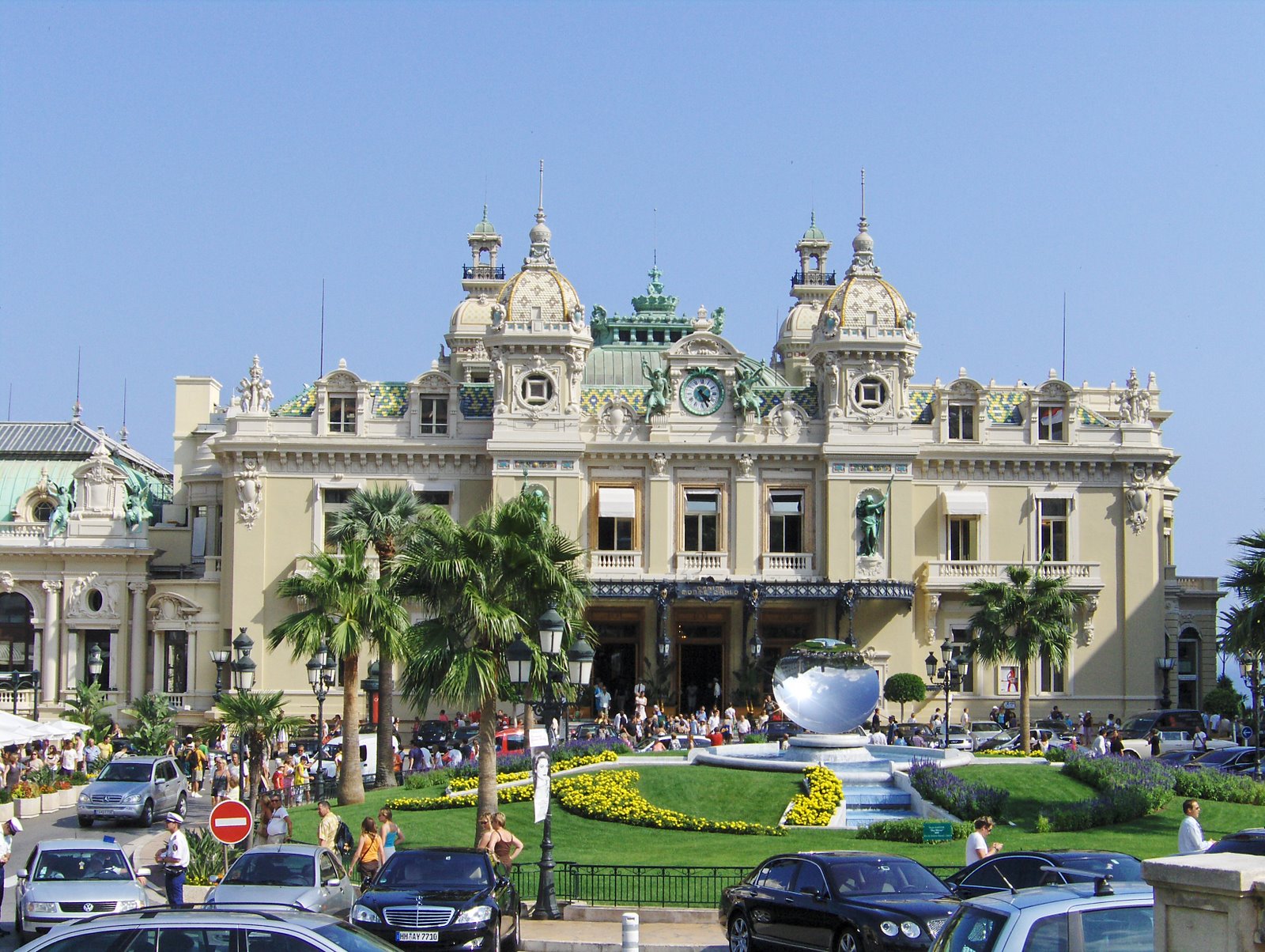
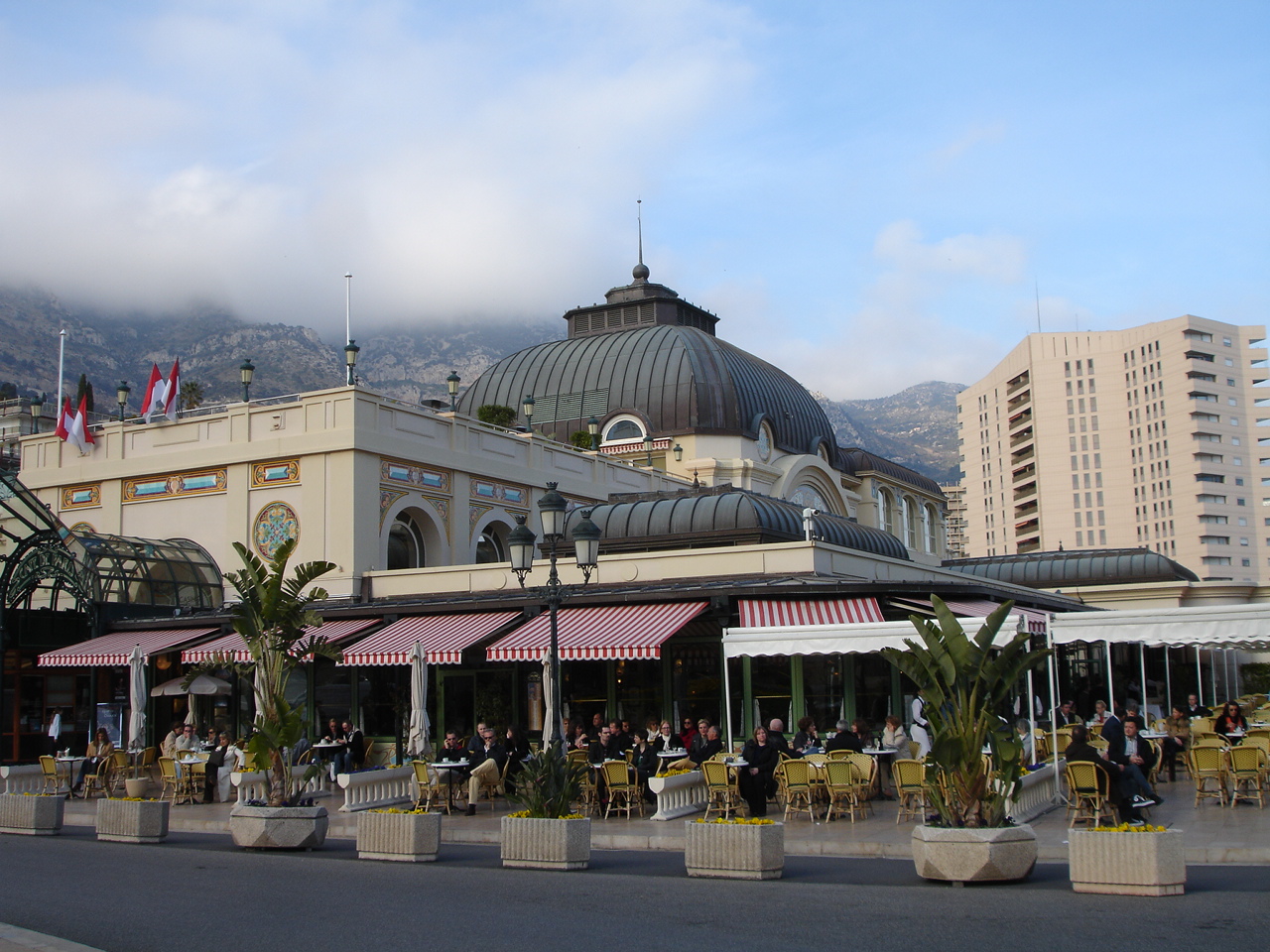
Monte Carlo (literally "Mount Charles") is situated on a prominent escarpment at the base of the Maritime Alps along the French Riviera. Near the quarter's western end is the world-famous Place du Casino, the gambling center which has made Monte Carlo "an international byword for the extravagant display and reckless dispersal of wealth".[1] It is also the location of the Hôtel de Paris, the Café de Paris, and the Salle Garnier (the casino theatre which is the home of the Opéra de Monte-Carlo).
The quarter's eastern part includes the community of Larvotto with Monaco's only public beach, as well as its new convention center (the Grimaldi Forum), and the Monte-Carlo Bay Hotel & Resort. At the quarter's eastern border, one crosses into the French town of Beausoleil (sometimes referred to as Monte-Carlo-Supérieur), and just 8 kilometres (5 mi) to its east is the western border of Italy.
Monte-Carlo (en monégasque Munte Carlu) est un quartier de Monaco. Il abrite le célèbre casino de Monte-Carlo.
Monte-Carlo est divisé en trois quartiers ordonnancés : Monte-Carlo, La Rousse et le Larvotto.
Monte Carlo (in francese Monte-Carlo[1], in monegasco Munte Carlu), talvolta riportata come Montecarlo[2], è la parte più centrale della città-Stato del Principato di Monaco, di cui costituisce uno dei quattro quartieri tradizionali.
È nota per il suo casinò, le spiagge, i grattacieli, la moda, il Gran Premio e il tunnel che si svolge fra le strade cittadine e per essere stata eletta come luogo di residenza da diversi personaggi famosi.
Il quartiere Monte Carlo confina a nord-est con i quartieri Larvotto e La Rousse / Saint Romain, a nord-ovest con i quartieri La Condamine e Saint Michel e a nord con la Francia, costituendo ormai un unico agglomerato urbano con il comune francese di Beausoleil.
Montecarlo1 (en francés, Monte-Carlo; en monegasco Munte Carlu) es un barrio del principado de Mónaco, célebre por el Casino de Montecarlo.
En muchas ocasiones se piensa que Montecarlo es la capital de Mónaco, pero puesto que la ciudad y el país tienen las mismas fronteras, Mónaco es su propia capital. Montecarlo acoge una parte del Circuito de Mónaco, en el que tiene lugar el Gran Premio de Mónaco de Fórmula Uno, generalmente después de Semana Santa, y una de las pruebas del Campeonato Mundial de Rally más importantes: el Rally de Montecarlo.
Montecarlo desde hace décadas es un lugar de reunión de miembros de la realeza, así como de grandes estrellas de cine.
モンテカルロ(Monte Carlo、フランス語:Monte-Carlo、モナコ語:Munte Carlu、オック語:Montcarles)は、モナコの4つの地区(カルティエ)の1つであり、同国の北東部、モナコ湾の北岸に位置する。モンテカルロ地区は行政上、同名の「モンテカルロ区」を含む4つの区にさらに分けられている。
モンテカルロとはイタリア語で「シャルル3世の山」という意味であり、彼の治世下で名づけられた。
Monte Carlo (/ˌmɒnti ˈkɑːrloʊ/, Italian: [ˈmonte ˈkarlo]; French: Monte-Carlo [mɔ̃te kaʁlo], or colloquially Monte-Carl [mɔ̃te kaʁl]; Monégasque: Munte Carlu; lit. '"Mount Charles"') is officially an administrative area of the Principality of Monaco, specifically the ward of Monte Carlo/Spélugues, where the Monte Carlo Casino is located. Informally, the name also refers to a larger district, the Monte Carlo Quarter (corresponding to the former municipality of Monte Carlo), which besides Monte Carlo/Spélugues also includes the wards of La Rousse/Saint Roman, Larvotto/Bas Moulins, and Saint Michel. The permanent population of the ward of Monte Carlo is about 3,500, while that of the quarter is about 15,000. Monaco has four traditional quarters. From west to east they are: Fontvieille (the newest), Monaco-Ville (the oldest), La Condamine, and Monte Carlo.
Monte Carlo is situated on a prominent escarpment at the base of the Maritime Alps along the French Riviera. Near the quarter's western end is the world-famous Place du Casino, the gambling center which has made Monte Carlo "an international byword for the extravagant display and reckless dispersal of wealth".[1] It is also the location of the Hôtel de Paris, Café de Paris and Salle Garnier (the casino theatre which is the home of the Opéra de Monte-Carlo). The quarter's eastern part includes the community of Larvotto with Monaco's only public beach, as well as its new convention center (the Grimaldi Forum), and the Monte-Carlo Bay Hotel & Resort. At the quarter's eastern border, one crosses into the French town of Beausoleil (sometimes referred to as Monte-Carlo-Supérieur), and just 8 kilometres (5 mi) to its east is the western border of Italy.
Monte-Carlo (en monégasque Munte Carlu) est un quartier de Monaco. Il abrite le célèbre casino de Monte-Carlo.Monaco est divisée en trois quartiers ordonnancés : Monte-Carlo, La Rousse et le Larvotto.
Monte Carlo (in francese Monte-Carlo[1], in monegasco Munte Carlu), talvolta riportata come Montecarlo[2], è la parte più centrale della città-Stato del Principato di Monaco, di cui costituisce uno dei quattro quartieri tradizionali.
Confina a nord-est di cingoli con i quartieri Larvotto e La Rousse / Saint Romain, a nord-ovest con i quartieri La Condamine e Saint Michel e a nord con la Francia, costituendo ormai un unico agglomerato urbano con il comune francese di Beausoleil. È nota per il suo casinò, i grattacieli, il Gran Premio di Formula 1 che si svolge fra le strade cittadine e per essere stata eletta come luogo di residenza da diversi personaggi famosi per il regime fiscale agevolato.
Montecarlo1 (en francés, Monte-Carlo; en monegasco Munte Carlu) es un barrio del principado de Mónaco, célebre por el Casino de Montecarlo.
En muchas ocasiones se piensa que Montecarlo es la capital de Mónaco, pero puesto que la ciudad y el país tienen las mismas fronteras, Mónaco es su propia capital. Montecarlo acoge una parte del Circuito de Mónaco, en el que tiene lugar el Gran Premio de Mónaco de Fórmula 1, generalmente después de Semana Santa, y una de las pruebas del Campeonato Mundial de Rally más importantes: el Rally de Montecarlo.
Montecarlo desde hace décadas es un lugar de reunión de miembros de la realeza, así como de grandes estrellas de cine.
Мо́нте-Ка́рло (фр. Monte-Carlo, монег. Munte Carlu) — административная территория княжества Монако, один из десяти районов государства, расположенный на территории одноимённой коммуны в Монако. Южнее этого района расположен Ла-Кондамин, а севернее — французский город Тенао.
 Architektur
 Essen und Trinken
 Musik
Musik

 Religion

 Geographie
*Mittelmeer
Ägypten
Albanien
Algerien
Bernsteinstraße
Bosnien-Herzegowina
Frankreich
Gibraltar
Griechenland
Israel
Italien
Kroatien
Libanon
Libyen
Malta
Marokko
Monaco
Montenegro
Palästina
Slowenien
Spanien
Syrien
Tunesien
Türkei
Zypern
Geographie
*Mittelmeer
Ägypten
Albanien
Algerien
Bernsteinstraße
Bosnien-Herzegowina
Frankreich
Gibraltar
Griechenland
Israel
Italien
Kroatien
Libanon
Libyen
Malta
Marokko
Monaco
Montenegro
Palästina
Slowenien
Spanien
Syrien
Tunesien
Türkei
Zypern
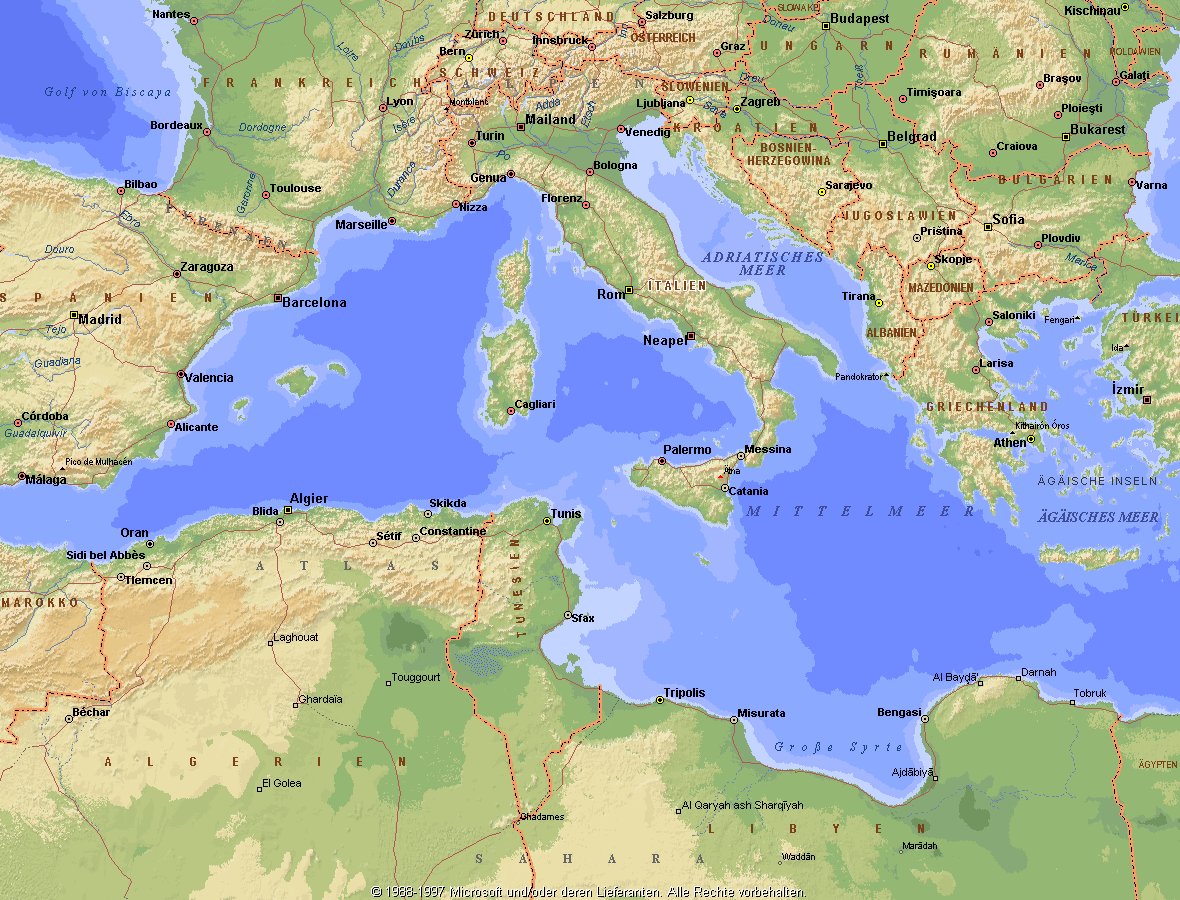
地中海,由北面的欧洲大陆,南面的非洲大陆以及东面的亚洲大陆包围着。东西长约4000千米,南北最宽处大约为1800千米,面积251.6万平方千米,是世界最大的陆间海。地中海的平均深度是1500米,最深处为5267米。
地中海西部通过直布罗陀海峡与大西洋相接,东部通过土耳其海峡(达达尼尔海峡和博斯普鲁斯海峡、马尔马拉海)和黑海相连。19世纪时开通了的苏伊士运河,接通了地中海与红海。 地中海是世界上最古老的海之一,[3] 而其附属的大西洋却是年轻的海洋。地中海处在欧亚板块和非洲板块交界处,是世界最强地震带之一。地中海地区有维苏威火山、埃特纳火山。
地中海作为陆间海,风浪较小,加之沿岸海岸线曲折、岛屿众多,拥有许多天然良好的港口,成为沟通三个大陆的交通要道。这样的条件,使地中海从古代开始海上贸易就很繁盛,促进了古代古埃及文明、古希腊文明、罗马帝国等的发展。现在也是世界海上交通的重要地区之一。其沿岸的腓尼基人、克里特人、希腊人,以及后来的葡萄牙人和西班牙人都是航海业发达的民族。著名的航海家如哥伦布、达·伽马、麦哲伦等,都出自地中海沿岸的国家。
地中海的沿岸夏季炎热干燥,冬季温暖湿润,被称作地中海性气候。植被,叶质坚硬,叶面有蜡质,根系深,有适应夏季干热气候的耐旱特征,属亚热带常绿硬叶林。这里光热充足,是欧洲主要的亚热带水果产区,盛产柑橘、无花果,和葡萄等,还有木本油料作物油橄榄。
Das Mittelmeer (lateinisch Mare Mediterraneum,[1] deshalb deutsch auch Mittelländisches Meer, präzisierend Europäisches Mittelmeer, im Römischen Reich Mare Nostrum) ist ein Mittelmeer zwischen Europa, Afrika und Asien, ein Nebenmeer des Atlantischen Ozeans und, da es mit der Straße von Gibraltar nur eine sehr schmale Verbindung zum Atlantik besitzt, auch ein Binnenmeer. Im Arabischen und Türkischen wird es auch als „Weißes Meer“ (البحر الأبيض/al-baḥr al-abyaḍ bzw. türk. Akdeniz) bezeichnet.
Zusammen mit den darin liegenden Inseln und den küstennahen Regionen Südeuropas, Vorderasiens und Nordafrikas bildet das Mittelmeer den Mittelmeerraum, der ein eigenes Klima (mediterranes Klima) hat und von einer eigenen Flora und Fauna geprägt ist.
地中海(ちちゅうかい、ラテン語: Mare Mediterraneum)は、北と東をユーラシア大陸、南をアフリカ大陸(両者で世界島)に囲まれた地中海盆地に位置する海である。面積は約3000平方キロメートル、平均水深は約1500メートル[2]。海洋学上の地中海の一つ。
地中海には、独立した呼称を持ついくつかの海域が含まれる(エーゲ海、アドリア海など)。地中海と接続する他の海としては、ジブラルタル海峡の西側に大西洋が、ダーダネルス海峡を経た北東にマルマラ海と黒海があり、南西はスエズ運河で紅海と結ばれている(「海域」「地理」で詳述)。
北岸の南ヨーロッパ、東岸の中近東、南岸の北アフリカは古代から往来が盛んで、「地中海世界」と総称されることもある[3]。
The Mediterranean Sea is a sea connected to the Atlantic Ocean, surrounded by the Mediterranean Basin and almost completely enclosed by land: on the north by Southern Europe and Anatolia, on the south by North Africa and on the east by the Levant. Although the sea is sometimes considered a part of the Atlantic Ocean, it is usually identified as a separate body of water. Geological evidence indicates that around 5.9 million years ago, the Mediterranean was cut off from the Atlantic and was partly or completely desiccated over a period of some 600,000 years, the Messinian salinity crisis, before being refilled by the Zanclean flood about 5.3 million years ago.
It covers an approximate area of 2.5 million km2 (965,000 sq mi), but its connection to the Atlantic (the Strait of Gibraltar) is only 14 km (8.7 mi) wide. The Strait of Gibraltar is a narrow strait that connects the Atlantic Ocean to the Mediterranean Sea and separates Gibraltar and Spain in Europe from Morocco in Africa. In oceanography, it is sometimes called the Eurafrican Mediterranean Sea or the European Mediterranean Sea to distinguish it from mediterranean seas elsewhere.[2][3]
The Mediterranean Sea has an average depth of 1,500 m (4,900 ft) and the deepest recorded point is 5,267 m (17,280 ft) in the Calypso Deep in the Ionian Sea. The sea is bordered on the north by Europe, the east by Asia, and in the south by Africa. It is located between latitudes 30° and 46° N and longitudes 6° W and 36° E. Its west-east length, from the Strait of Gibraltar to the Gulf of Iskenderun, on the southwestern coast of Turkey, is approximately 4,000 km (2,500 miles). The sea's average north-south length, from Croatia’s southern shore to Libya, is approximately 800 km (500 miles). The Mediterranean Sea, including the Sea of Marmara (connected by the Dardanelles to the Aegean Sea), has a surface area of approximately 2,510,000 square km (970,000 square miles).[4]
The sea was an important route for merchants and travellers of ancient times that allowed for trade and cultural exchange between emergent peoples of the region. The history of the Mediterranean region is crucial to understanding the origins and development of many modern societies.
The countries surrounding the Mediterranean in clockwise order are Spain, France, Monaco, Italy, Slovenia, Croatia, Bosnia and Herzegovina, Montenegro, Albania, Greece, Turkey, Syria, Lebanon, Israel, Egypt, Libya, Tunisia, Algeria, and Morocco; Malta and Cyprus are island countries in the sea. In addition, the Gaza Strip and the British Overseas Territories of Gibraltar and Akrotiri and Dhekelia have coastlines on the sea.
La mer Méditerranée (prononcé [me.di.tɛ.ʁa.ne]) est une mer intercontinentale presque entièrement fermée, bordée par les côtes d'Europe du sud, d’Afrique du Nord et d’Asie, depuis le détroit de Gibraltar à l'ouest aux entrées des Dardanelles et du canal de Suez à l'est. Elle s’étend sur une superficie d’environ 2,5 millions de kilomètres carrés. Son ouverture vers l’océan Atlantique par le détroit de Gibraltar est large de 14 kilomètres.
Elle doit son nom au fait qu’elle est littéralement une « mer au milieu des terres », en latin « mare medi terra »1.
Durant l’Antiquité, la Méditerranée était une importante voie de transports maritimes permettant l’échange commercial et culturel entre les peuples de la région — les cultures mésopotamiennes, égyptienne, perse, phénicienne, carthaginoise, berbère, grecque, arabe (conquête musulmane), ottomane, byzantine et romaine. L’histoire de la Méditerranée est importante dans l’origine et le développement de la civilisation occidentale.
Il mar Mediterraneo, detto brevemente Mediterraneo, è un mare intercontinentale situato tra Europa, Nordafrica e Asia occidentale connesso all'Oceano Atlantico. La sua superficie approssimativa è di 2,51 milioni di km² e ha uno sviluppo massimo lungo i paralleli di circa 3 700 km. La lunghezza totale delle sue coste è di 46 000 km, la profondità media si aggira sui 1 500 m, mentre quella massima è di 5 270 m presso le coste del Peloponneso. La salinità media si aggira dal 36,2 al 39 ‰.[2] La popolazione presente negli stati bagnati dalle sue acque ammonta a circa 450 milioni di persone.[2].
El mar Mediterráneo es uno de los mares del Atlántico. Está rodeado por la región mediterránea, comprendida entre Europa meridional, Asia Occidental y África septentrional. Fue testigo de la evolución de varias civilizaciones como los egipcios, los fenicios, hebreos, griegos, cartagineses, romanos, etc. Con aproximadamente 2,5 millones de km² y 3.860 km de longitud, es el segundo mar interior más grande del mundo, después del Caribe.1 Sus aguas, que bañan las tres penínsulas del sur de Europa (Ibérica, Itálica, Balcánica) y una de Asia (Anatolia), comunican con el océano Atlántico a través del estrecho de Gibraltar, con el mar Negro por los estrechos del Bósforo y de los Dardanelos y con el mar Rojo por el canal de Suez.2 Es el mar con las tasas más elevadas de hidrocarburos y contaminación del mundo.3
Средизе́мное мо́ре — межматериковое море, по происхождению представляющее собой глубоководную псевдоабиссальную внутришельфовую депрессию[1][2], связанную на западе с Атлантическим океаном Гибралтарским проливом[3].
В Средиземном море выделяют, как его составные части, моря: Адриатическое, Альборан, Балеарское, Ионическое, Кипрское, Критское, Левантийское, Ливийское, Лигурийское, Тирренское и Эгейское. В бассейн Средиземного моря также входят Мраморное, Чёрное и Азовское моря.
 Sport
Ligue 1
Ligue 1 2015/16
Ligue 1 2016/17
Ligue 1 2017/18
Ligue 1 2018/19
Monaco
UEFA Champions League 2016/17
Sport
Ligue 1
Ligue 1 2015/16
Ligue 1 2016/17
Ligue 1 2017/18
Ligue 1 2018/19
Monaco
UEFA Champions League 2016/17
 Gruppe E
UEFA Champions League 2017/18
Gruppe G
UEFA Champions League 2018/19
Gruppe A
UEFA Champions League 2025/26
Gruppe E
UEFA Champions League 2017/18
Gruppe G
UEFA Champions League 2018/19
Gruppe A
UEFA Champions League 2025/26

 Europäische Union
Belgien
Bulgarien
Dänemark
Deutschland
Estland
Finnland
Frankreich
Griechenland
Irland
Island
Israel
Italien
Kroatien
Lettland
Litauen
Luxemburg
Malta
Monaco
Montenegro
Niederlande
Nordmazedonien
Norwegen
Österreich
Polen
Portugal
Rumänien
Russland
San Marino
Schweden
Schweiz
Serbien
Slowakei
Slowenien
Spanien
Tschechien
Türkei
Ukraine
Ungarn
Vereinigtes Königreich
Europäische Union
Belgien
Bulgarien
Dänemark
Deutschland
Estland
Finnland
Frankreich
Griechenland
Irland
Island
Israel
Italien
Kroatien
Lettland
Litauen
Luxemburg
Malta
Monaco
Montenegro
Niederlande
Nordmazedonien
Norwegen
Österreich
Polen
Portugal
Rumänien
Russland
San Marino
Schweden
Schweiz
Serbien
Slowakei
Slowenien
Spanien
Tschechien
Türkei
Ukraine
Ungarn
Vereinigtes Königreich
 Wissenschaft und Technik
Zypern
Wissenschaft und Technik
Zypern
 Andorra
Belgien
Frankreich
Andorra
Belgien
Frankreich
 Hand in Hand
Institut für Kultur und Sprache
Kanada
Hand in Hand
Hand in Hand
Institut für Kultur und Sprache
Kanada
 Literatur
Luxemburg
Monaco
Schweiz
Literatur
Luxemburg
Monaco
Schweiz
 Vereinte Nationen
Amtssprachen
Vereinte Nationen
Amtssprachen

Französisch (Eigenbezeichnung: (le) français [(lə) fʁɑ̃ˈsɛ], (la) langue française [(la) lɑ̃ɡ fʁɑ̃ˈsεz]) gehört zu der romanischen Gruppe des italischen Zweigs der indogermanischen Sprachen. Damit ist diese Sprache unter anderem mit dem Italienischen, Spanischen, Okzitanischen, Katalanischen, Portugiesischen und Rumänischen näher verwandt.
Französisch wird von etwa 235 Millionen Menschen täglich verwendet[3] und gilt als Weltsprache, da es von rund 321 Millionen[4] Sprechern auf allen Kontinenten in über 50 Ländern gesprochen wird.[5]
Französisch ist unter anderem Amtssprache in Frankreich und seinen Überseegebieten, in Kanada, Belgien, der Schweiz, in Luxemburg, im Aostatal, in Monaco, zahlreichen Ländern West- und Zentralafrikas sowie in Haiti, während es im arabischsprachigen Nordafrika und in Südostasien als Nebensprache weit verbreitet ist. Zudem ist es Amtssprache der Afrikanischen Union und der Organisation Amerikanischer Staaten, eine der Amtssprachen der Europäischen Union[6] und eine der sechs Amtssprachen sowie neben Englisch Arbeitssprache der Vereinten Nationen,[7] weiterhin Amtssprache des Weltpostvereins.
Französisch ist die fünftmeistgesprochene Sprache der Welt, im Internet wird sie am vierthäufigsten verwendet,[8] außerdem wird sie weltweit am zweithäufigsten als Fremdsprache erlernt.[9] Im Jahr 2050 werden nach Angaben der OIF weltweit rund 700 Millionen Gesamtsprecher leben.[9]
Auf die französische Sprache wirken normierend ein die Académie française, die sogenannte Loi Toubon (ein Gesetz zum Schutz der französischen Sprache in Frankreich), das Office québécois de la langue française (eine Behörde in Québec), der Service de la langue française (eine belgische Institution zur Pflege der französischen Sprache) sowie die Délégation générale à la langue française et aux langues de France.
法语(法语:français,发音:[fʁɑ̃sɛ] (ⓘ)),属于印欧语系罗曼语族的高卢-罗曼语支。法语和所有罗曼语族语言一样,都是从罗马帝国的拉丁语衍生的,法语从高卢地区(特别是北高卢)的拉丁语口语所演进而来。法语是除英语之外最多国家使用的官方语言、联合国工作语言之一,也是联合国、欧盟、北约、奥运会、世贸和国际红十字会等众多国际组织的官方语言及正式行政语言,其影响力仅次于英语。由于法国和比利时建立的殖民帝国将法语引入美洲、非洲及亚洲等地区,非洲法语成为大部分国家的第二语言,特别是加蓬、阿尔及利亚、摩洛哥、突尼斯、毛里求斯、塞内加尔及科特迪瓦等国[2]。
现时全世界有1亿人将法语作为母语,另有2.8亿人使用法语(包括把它作为第二语言的人),这些数字目前仍在增长中,尤其是在非洲大陆。现今法国法语(français métropolitain)和魁北克法语(québécois)是世界上最主要的两大法语分支,两者在发音与口语词汇上有所区别,但书面形式则一致。