
漢德百科全書 | 汉德百科全书
 Schweiz

 Internationale Städte

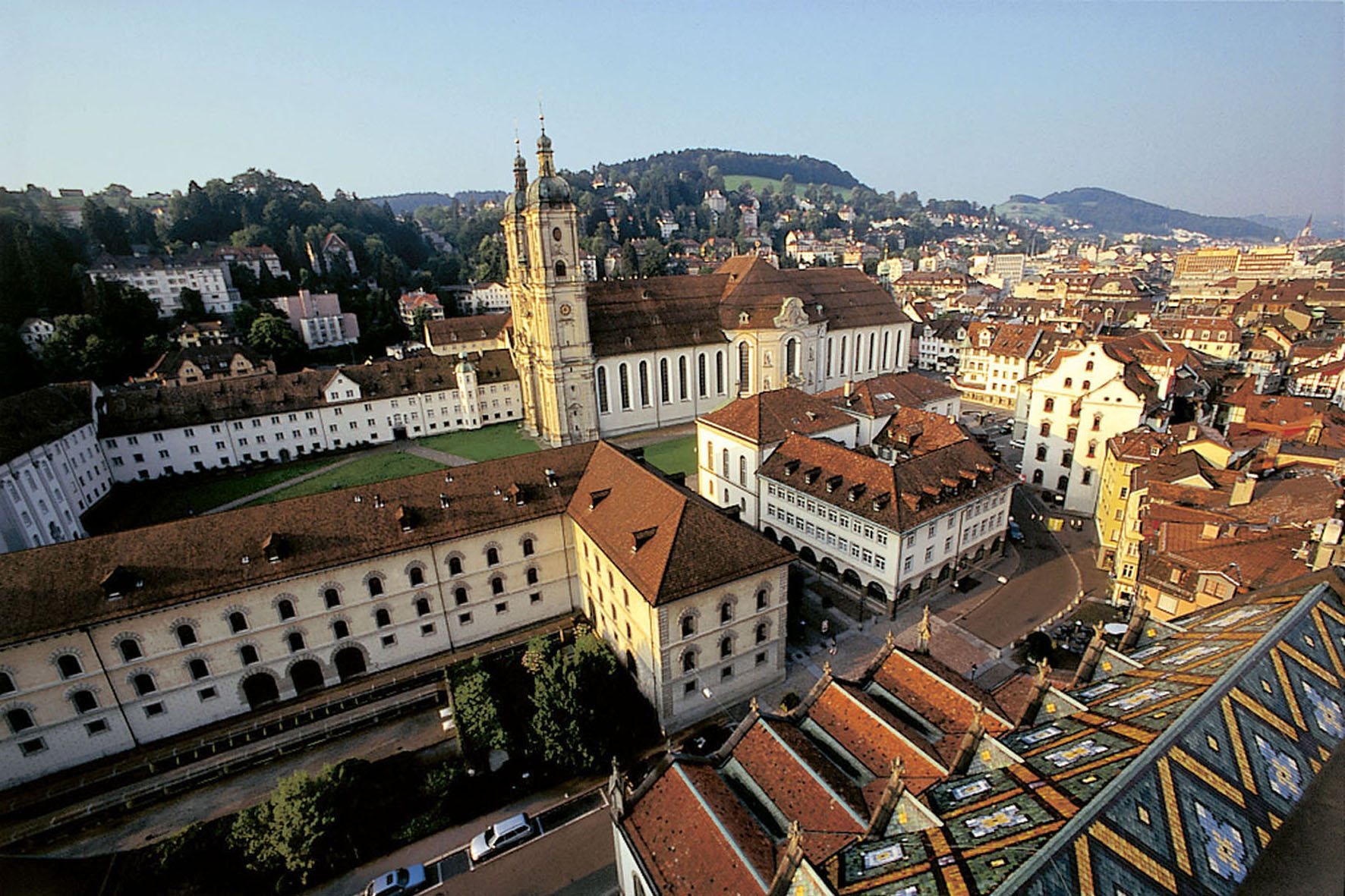
Die Stadt St. Gallen (schweizerdeutsch Sanggale, französisch Saint-Gall, italienisch San Gallo, rätoromanisch ) ist eine politische Gemeinde und der namensgebende Hauptort des Ostschweizer Kantons St. Gallen. St. Gallen zählt rund 80'000 Einwohner[3] und ist mit rund 700 m ü. M. eine der höher gelegenen Städte der Schweiz. St. Gallen liegt an der Steinach, einem Fluss, der in den Bodensee mündet.
Die Ursprünge der Stadt St. Gallen gehen bis ins 7. Jahrhundert zurück. Sie entstand als Siedlung um das etwa 720 auf dem Gebiet einer Einsiedelei gegründete Kloster St. Gallen und wuchs im 10. Jahrhundert langsam zu einer Stadt heran. Sie gilt heute als das kulturelle und wirtschaftliche Zentrum der Ostschweiz. Die Stadt liegt an den Hauptverkehrsachsen (München–)St. Margrethen–Rorschach–St. Gallen–Winterthur–Zürich und (Konstanz–)Romanshorn–St. Gallen–Rapperswil–Luzern und gilt als Tor ins Appenzellerland. Touristisch interessant ist die Stadt aufgrund der Stiftskirche und der Stiftsbibliothek, welche von der UNESCO in die Liste des Weltkulturerbes aufgenommen wurde. St. Gallen ist auch für seine Stickereien bekannt. Zu sehen sind diese heute im Textilmuseum St. Gallen, das sich der Geschichte der Ostschweizer Textilindustrie widmet. Ausser den höchsten kantonalen Behörden haben auch die Universität St. Gallen und das Bundesverwaltungsgericht (BVGer) ihren Sitz in der Stadt.
Den Namen hat St. Gallen vom Wandermönch Gallus, weswegen sie auch Gallusstadt genannt wird.
圣加仑是圣加仑州的首府,位于瑞士东部两座高山的山谷之中。这座城市被人们称为“千阶之城”,因为在城市两旁的山上建有很多台阶。
自15世纪以来,圣加仑的经济依靠亚麻工业迅速发展,到18世纪初期时达到最顶点。圣加仑的刺绣深受人们的喜爱。尽管国外竞争曾一度给圣加仑的纺织 工业带来困难,但在19世纪的机械化使纺织工业得以恢复。直至今天,圣加仑的纺织业在世界上一直享有盛名。现在,大多数企业都从事服务行业。其它非服务业 的重要工业部门主要进行机器、纸张、印刷和纺织的生产。
圣加仑不仅有直接通往苏黎世机场的火车,还有连接苏黎世、伯尔尼、日内瓦、日内瓦 机场、Reintal、Bodensee以及中部瑞士的火车线,因此圣加仑是东部瑞士重要的火车线枢纽。 圣加仑的附近,在与奥地利交界的Altenrhein,还有一个小型飞机厂,主要用于私人飞机的起飞降落。
加仑大学建立于1898年,今天被誉为是瑞士最好的经济高校,在欧洲经济类院校中也非常有名。此外,圣加仑的教会图书馆在德语区具有非同一般的意义,保存有中世纪古书原稿
1992年,圣加仑获得了瑞士家遗产保护协会颁发的的Wakker奖项。每年,只有将历史遗产和现代发展结合最好的地区才能获得这一奖项。
历史
公元7世纪时,爱尔兰传教士Gallus在今天圣加仑所在位置修建了一座修道院。 这座修道院在晚些时候发展成为欧洲最大的圣本笃修道院之一。之后的几百年内,这座修道院院长一直同时统治这座城市及周边地区。1415年,圣加仑从教会的 统治下独立出来。15世纪中期,圣加仑城市及教会同时加入了瑞士联盟。圣加仑州则于1803年才加入了瑞士联盟。
圣加仑(德语:St. Gallen,瑞士德语:Sanggale,法语:Saint-Gall,意大利语:San Gallo)位于瑞士东北部,是圣加仑州的首府,人口约7万4千人,海拔约700米,思泰纳赫河穿越其中,最后汇入博登湖。
圣加仑市始建于7世纪,如今作为一个拥有16万人口的都会区核心,已经成为瑞士东部的文化经济中心。主要产业为服务业。
圣加仑市的主要旅游景点是圣加仑修道院,于1983年入选联合国教科文组织世界遗产名录。其著名的图书馆中,最早的藏书可追溯到9世纪。
ザンクト・ガレン(標準独: Sankt Gallen、アレマン語:Sanggale、仏: Saint-Gall、伊: San Gallo)は、スイスのザンクト・ガレン州にある基礎自治体 ( ポリティッシェ・ゲマインデ ) で同州の州都。16万人の都市圏人口を抱えるスイス東部の中心都市である。
スイス北東部、アッペンツェル・アルプスとボーデン湖の間の谷に位置する。標高は700メートルほどで、スイスで最も標高が高い都市のひとつであり、冬にはかなりの積雪量がある。
612年頃にアイルランドの修道士である聖ガルスがシュタインナッハ川の川岸に建てた小屋に起源を持つ。聖ガルスの死から1世紀経った719年[2]に、聖オトマールはその小屋を修道院へと改め、街と修道院を聖ガルスにちなんで「ザンクト・ガレン」と名付けた。1803年ナポレオンによりザンクト・ガレン州が制定され同名の都市、ザンクト・ガレンがその州都となる。[3]ザンクト・ガレン修道院は1983年にユネスコの世界遺産へ登録されている。
ザンクト・ガレンをホームとするプロサッカークラブに、FCザンクト・ガレンがある。
St. Gallen or traditionally St Gall, in German sometimes Sankt Gallen ( Sankt Gallen (help·info); English: St Gall; French: Saint-Gall; Italian: San Gallo; Romansh: Son Gagl) is a Swiss town and the capital of the canton of St. Gallen. It evolved from the hermitage of Saint Gall, founded in the 7th century.[3] Today, it is a large urban agglomeration (with around 160,000 inhabitants) and represents the center of eastern Switzerland. Its economy consists mainly of the service sector. Internationally, the town is known as the home of the University of St. Gallen.
The main tourist attraction is the Abbey of Saint Gall, a UNESCO World Heritage Site. The Abbey's renowned library contains books from the 9th century.
The official language of St. Gallen is (the Swiss variety of Standard) German, but the main spoken language is the local variant of the Alemannic Swiss German dialect. The city has good transport links to the rest of the country and to neighbouring Germany and Austria. It also functions as the gate to the Appenzellerland.
Saint-Gall (en allemand Sankt Gallen) est la huitième ville de Suisse et le chef-lieu du canton de Saint-Gall. La commune de Saint-Gall compte 75 522 habitants fin 20171 et a été fondée sur l'ermitage du moine irlandais Gall au VIIe siècle.
San Gallo (Sankt Gallen in tedesco, Saint-Gall in francese, Son Gagl in romancio) è una città della Svizzera, la settima per numero di abitanti, capoluogo dell'omonimo cantone.
La città conta 75.481 abitanti ed è posta ad un'altezza di 700 m s.l.m.; tra le maggiori città svizzere è una di quelle situate alla maggiore altezza sul livello sul mare.
San Galo o San Gall (en alemán Sankt Gallen (?·i), en francés Saint-Gall, en italiano San Gallo y en romanche Sogn Gagl) es una ciudad y comuna suiza, capital del distrito y del cantón de San Galo.
La ciudad es el centro económico y cultural de la región este de Suiza. La abadía de San Galo es la mayor atracción turística de la ciudad y está inscrita en la lista del Patrimonio de la Humanidad de la Unesco.
Санкт-Га́ллен (нем. St. Gallen, алем. Sanggale [saŋ.ˈg̊ːalə], фр. Saint-Gall, итал. San Gallo) — город в восточной части Швейцарии, столица кантона Санкт-Галлен. Город расположен недалеко от Боденского озера на высоте примерно 700 метров над уровнем моря и является одним из самых высокогорных городов Швейцарии.
Назван в честь святого Галла. Возник вокруг бенедиктинского монастыря св. Галла. Монастырские строения с барочным залом библиотеки включены в перечень всемирного наследия ЮНЕСКО.
Город был основан в VII веке и является культурным и экономическим центром восточной Швейцарии. Современный город включает в свой состав старый городской квартал (до 1798 — имперский город и Республика Санкт-Галлен) и ряд окрестных деревень (Хафнерсберг, Ротмонтен, Бругген, Лахен, Санкт-Фиден и другие), ранее принадлежавших к коммунам Штраубенцель и Таблат и включённых в состав города в 1918 году.
Герб города Санкт-Галлен представляет собой стоящего на задних лапах медведя с золотым ожерельем. Император Фридрих III в 1475 году позволил городу украсить медведя на городском гербе золотым ожерельем в благодарность за поддержку в войнах с Бургундией[2].
 Sport
Sport

Heimspielbetrieb FC Basel (seit 1967) FC Concordia Basel (1955–1966) Veranstaltungen Fussball-Weltmeisterschaft 1954 Final Europacup der Cupsieger 1969 Final Europacup der Cupsieger 1975 Final Europacup der Cupsieger 1979 Final Europacup der Cupsieger 1983 U-21-Fussball-Europameisterschaft 2002 Fussball-Europameisterschaft 2008 Final UEFA Europa League 2016 Feldhandball-Weltmeisterschaft der Männer 1963
 Leben und Style
Schweiz
Leben und Style
Schweiz
 Unternehmen
Unternehmen
Unternehmen
 *Jahrhundertealte Unternehmen der Welt
Unternehmen
Deutschland, Österreich, Schweiz
*Jahrhundertealte Unternehmen der Welt
Unternehmen
Deutschland, Österreich, Schweiz

 Architektur
 des Barock/Rokoko
Architektur
Architektur des Barock/Rokoko
 Geschichte
L 1000 - 1500 nach Christus
Schweiz
Bern
Geschichte
L 1000 - 1500 nach Christus
Schweiz
Bern
 Weltkulturerbe
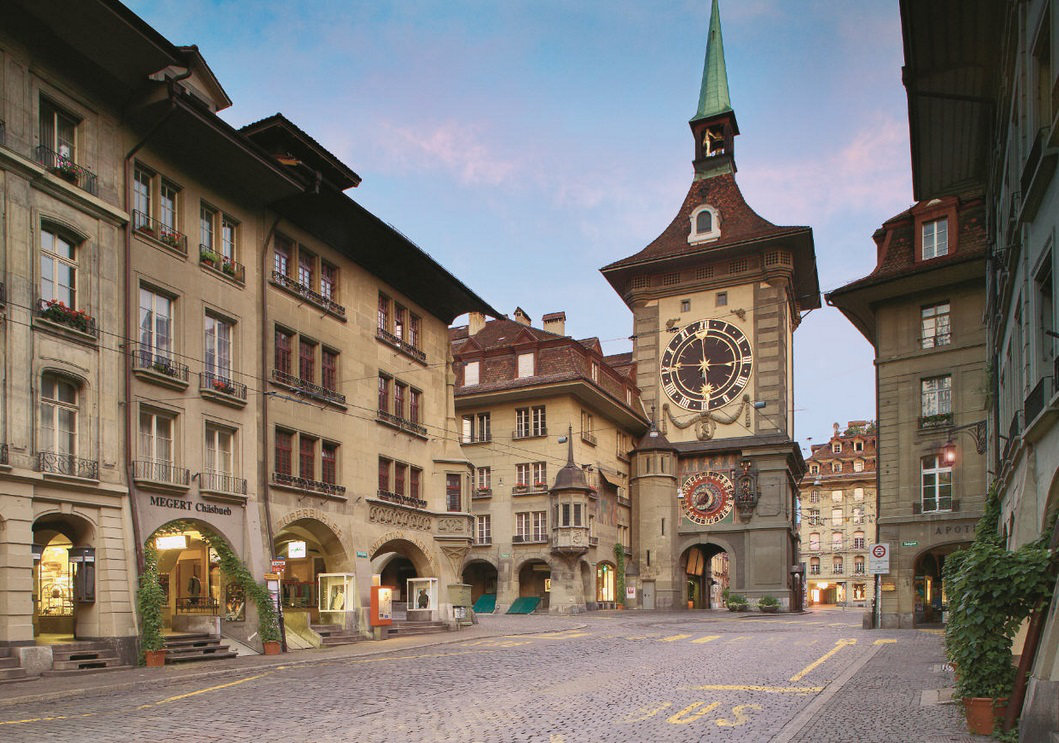
Die Zytglogge („Zeitglocke“; berndeutsche Aussprache [ˈtsi(t)ˌklɔkə]; auch Zeitglockenturm) ist ein aus dem Mittelalter stammender Uhrturm mit astronomischer Uhr und Glockenspiel in der Stadt Bern in der Schweiz.
Der mehrmals aufgestockte Wehrturm wurde als westlicher Abschluss der Hauptgasse der 1191 gegründeten Stadt Bern zwischen 1218 und 1220 erbaut.[1] Mit jeder Stadterweiterung, die wegen der Lage der Berner Altstadt in der Aareschlaufe nur nach Westen erfolgen konnte, rückte der Turm mehr ins Stadtzentrum, verlor seine Funktion als Wehrturm und wurde danach anders genutzt. Vor dem grossen Stadtbrand 1405 diente er als Gefängnis. Danach wurde er als Uhrturm – Zytgloggeturm oder kurz Zytglogge – aus Berner Sandstein neu errichtet.[1] Seine Turmuhr mit Schlagwerk gab die für die ganze Stadt verbindliche Zeit an. Vom Turm aus wurden die Wegstunden gemessen. 1530 erhielt der quaderförmige Turm seine hochragende Gestalt und eine neue Uhr.[2] Im Tordurchgang werden die Erlasse und Verordnungen angeschlagen und seit dem 18. Jahrhundert die Längenmasse zur öffentlichen Kontrolle angebracht. Mit den spätbarocken Umbauten von 1770/71 wurde er völlig in seine Umgebung integriert.
时钟塔(德语:Zytglogge)是瑞士首都伯尔尼的一座中世纪塔楼。它建于13世纪初,曾经先后作为城门守卫塔、监狱、钟楼, 城市生活和公民纪念中心。
时钟塔已经存在了800年,尽管经历了多次整修,钟塔及其15世纪天文钟,仍是伯尔尼最知名的象征,一个主要的旅游景点。它被列为瑞士国家财产[1],是世界遗产项目伯尔尼老城的一部分。
 Medizin, Pharma, Rehabilitation
Medizinische Ausrüstung/Medical Equipment
Medizin, Pharma, Rehabilitation
Medizinische Ausrüstung/Medical Equipment
 Medizinische Ausrüstung
Zahnärztliche Ausrüstung/Dental Equipment
Schweiz
Medizinische Ausrüstung
Zahnärztliche Ausrüstung/Dental Equipment
Schweiz


世界棒垒球总会(英语:World Baseball Softball Confederation;缩写:WBSC)是管理各国棒球、垒球及五人制棒球代表队间赛事的组织,于2013年4月14日由原国际棒球总会(IBAF)和国际垒球总会(ISF)合并成立,目前共有143个国家或地区加入。其举办的比赛有与美国职棒大联盟合作的世界棒球经典赛、与国际奥林匹克委员会合办的奥林匹克运动会棒球比赛及奥林匹克运动会垒球比赛,以及世界棒球12强赛、U-12世界杯棒球赛、U-15世界杯棒球赛、U-18世界杯棒球赛、U-23世界杯棒球赛等国际棒垒球赛事。
Die World Baseball Softball Confederation (WBSC) ist ein Zusammenschluss der International Baseball Federation und der International Softball Federation und vertritt nun als Weltverband beide Sportarten, Baseball und Softball.

Abe Shinzō
Alexis Tsipras
Angela Merkel
António Guterres
Christine Lagarde
David Cameron
Dilma Rousseff
Dmitri Anatoljewitsch Medwedew
Donald Trump
Emmanuel Macron
 Energieressource
Felipe Calderón
Felipe VI.
Energieressource
Felipe Calderón
Felipe VI.
 Finanz
 Hand in Hand
Hassan Rohani
Jair Bolsonaro
James Gordon Brown
Jean-Claude Juncker
Jim Yong Kim
Joachim Gauck
Joe Biden
José Luis Rodríguez Zapatero
Juan Manuel Santos
Li Keqiang
Liaoning Sheng-LN
Mario Monti
Mark Rutte
Mauricio Macri
Naoto Kan
Narendra Modi
Nelson Mandela
Hand in Hand
Hassan Rohani
Jair Bolsonaro
James Gordon Brown
Jean-Claude Juncker
Jim Yong Kim
Joachim Gauck
Joe Biden
José Luis Rodríguez Zapatero
Juan Manuel Santos
Li Keqiang
Liaoning Sheng-LN
Mario Monti
Mark Rutte
Mauricio Macri
Naoto Kan
Narendra Modi
Nelson Mandela
 Parteien und Regierung
*Denkfabrik
Paul Kagame
Petro Poroschenko
Recep Tayyip Erdoğan
Schweiz
Stephen Joseph Harper
Tarō Asō
Theresa May
Tianjin Shi-TJ
Ursula von der Leyen
Wen Jiabao
Parteien und Regierung
*Denkfabrik
Paul Kagame
Petro Poroschenko
Recep Tayyip Erdoğan
Schweiz
Stephen Joseph Harper
Tarō Asō
Theresa May
Tianjin Shi-TJ
Ursula von der Leyen
Wen Jiabao
 Wichtige internationale Organisationen
 Wirtschaft und Handel
Wirtschafts- und Politikforschung
Wladimir Wladimirowitsch Putin
World Economic Forum,WEF
Klaus Schwab
Xi Jingping
Yasuo Fukuda
Wirtschaft und Handel
Wirtschafts- und Politikforschung
Wladimir Wladimirowitsch Putin
World Economic Forum,WEF
Klaus Schwab
Xi Jingping
Yasuo Fukuda
| Year | Dates | Theme |
|---|---|---|
| 1988 | The new state of the world economy | |
| 1989 | Key developments in the 90s: implications for global business | |
| 1990 | Competitive cooperation in a decade of turbulence | |
| 1991 | The new direction for global leadership | |
| 1992 | Global cooperation and megacompetition | |
| 1993 | Rallying all the forces for global recovery | |
| 1994 | Redefining the basic assumptions of the world economy | |
| 1995 | Leadership for challenges beyond growth | |
| 1996 | Sustaining globalization | |
| 1997 | Building the network society | |
| 1998 | Managing volatility and priorities for the 21st century | |
| 1999 | Responsible globality: managing the impact of globalization | |
| 2000 | New beginnings: making a difference | |
| 2001 | 25–30 January | Sustaining growth and bridging the divides: a framework for our global future |
| 2002 | 31 January – 4 February | Leadership in fragile times (held in New York instead of Davos) |
| 2003 | 21–25 January | Building trust |
| 2004 | 21–25 January | Partnering for security and prosperity |
| 2005 | 26–30 January | Taking responsibility for tough choices |
| 2006 | 25–29 January | The creative imperative[61] |
| 2007 | 24–28 January | Shaping the global agenda, the shifting power equation |
| 2008 | 23–27 January | The power of collaborative innovation |
| 2009 | 28 January – 1 February | Shaping the post-crisis world |
| 2010 | 27–30 January | Improve the state of the world: rethink, redesign, rebuild |
| 2011 | 26–30 January | Shared norms for the new reality |
| 2012 | 25–29 January | The great transformation: shaping new models |
| 2013 | 23–27 January | Resilient dynamism[62] |
| 2014 | 22–25 January | The reshaping of the world: consequences for society, politics and business |
| 2015 | 21–24 January | New global context |
| 2016 | 20–23 January | Mastering the fourth industrial revolution |
| 2017 | 17–20 January | Responsive and responsible leadership |
| 2018 | 23–26 January | Creating a shared future in a fractured world |
| 2019 | 22–25 January | Globalization 4.0: shaping a global architecture in the age of the fourth industrial revolution |
| 2020 | 20–24 January | Stakeholders for a cohesive and sustainable world[citation needed] |
| 2021 | 17–20 August | canceled as a result of COVID-19 pandemic |
| 2022 | 22–26 May | History at a Turning Point: Government Policies and Business Strategies[63] |
| 2023 | 16-20 January | Cooperation in a Fragmented World [64] |
Das Weltwirtschaftsforum (World Economic Forum, kurz WEF) ist eine in Cologny im Schweizer Kanton Genf ansässige Stiftung, die in erster Linie für das von ihr veranstaltete Jahrestreffen gleichen Namens bekannt ist, das alljährlich in Davos im Kanton Graubünden stattfindet. Hierbei kommen international führende Wirtschaftsexperten, Politiker, Intellektuelle und Journalisten zusammen, um über aktuelle globale Fragen zu diskutieren. Diese umfassen neben der Wirtschafts- auch die Gesundheits- und Umweltpolitik.
世界经济论坛(英语:World Economic Forum,简称WEF)是一个以基金会形式成立的非营利组织,成立于1971年,总部设在瑞士日内瓦州科洛尼。其以每年冬季在瑞士滑雪胜地达沃斯举办的年会(俗称达沃斯论坛,英语:Davos Forum)闻名于世,历次论坛均聚集全球工商、政治、学术、媒体等领域的领袖人物,讨论世界所面临最紧迫问题。[1]
世界経済フォーラム(せかいけいざいフォーラム、World Economic Forum)は、経済、政治、学究、その他の社会におけるリーダーたちが連携することにより、世界・地域・産業の課題を形成し、世界情勢の改善に取り組む、独立した国際機関。ジュネーヴに本部を置きスイスの非営利財団の形態を有している。1971年にスイスの経済学者クラウス・シュワブにより設立された。
スイスのダボスで開催される年次総会が特によく知られており、約2500名の選ばれた知識人やジャーナリスト、多国籍企業経営者や国際的な政治指導者などのトップリーダーが一堂に会し、健康や環境等を含めた世界が直面する重大な問題について議論する場となっている。また、同機関は、東アジアやラテンアメリカなど6-8の地域会議を開催し、中国及びアラブ首長国連邦においても別途の年次総会を開催している。さらに、会議だけではなく、同機関はさまざまな研究報告書を発表したり、メンバーたちが各業界に関連したイニシアティブに関わるなどの活動を行っている。2011年のダボスにおける年次総会は1月26日-30日に開催された。2012年総会は1月25日-29日に"The Great Transformation: Shaping New Models"というテーマで開催された。2013年総会は1月23日-27日に、創設者クラウス・シュワブによる「地球規模の協力の必要性が今ほど重要な時代はない」との声明を受け、"Resilient Dynamism"というテーマで催された。2014年年次総会は1月22-25日に"The Reshaping of the World: Consequences for Society, Politics and Business"というテーマで催された。2015年年次総会は、"The New Global Context"というテーマで催された。
The World Economic Forum (WEF) is a Swiss nonprofit foundation, based in Cologny, Geneva, Switzerland. Recognised in 2015 by the Swiss authorities as an "other international body" under Switzerland's Host State Act 2007 (HSA, SR 192.12),[1] its mission is cited as "committed to improving the state of the world by engaging business, political, academic, and other leaders of society to shape global, regional, and industry agendas".
The WEF is best known for its annual meeting at the end of January in Davos, a mountain resort in Graubünden, in the eastern Alps region of Switzerland. The meeting brings together some 2,500 top business leaders, international political leaders, economists, celebrities and journalists for up to four days to discuss the most pressing issues facing the world. Often this location alone is used to identify meetings, participation, and participants, with such phrases as "a Davos panel" and "Davos man" being used.[2]
The organization also convenes some six to eight regional meetings each year in locations across Africa, East Asia, and Latin America, and holds two further annual meetings in China, India and the United Arab Emirates. Beside meetings, the foundation produces a series of research reports and engages its members in sector-specific initiatives.[3]
Le forum économique mondial (en anglais : World Economic Forum, abrégé WEF), souvent appelé forum de Davos1,2,3, est une fondation à but non lucratif dont le siège est à Genève. Ce forum est connu pour sa réunion annuelle à Davos, en Suisse, qui réunit des dirigeants d’entreprise, des responsables politiques du monde entier ainsi que des intellectuels et des journalistes, afin de débattre les problèmes les plus urgents de la planète, y compris dans les domaines de la santé et de l’environnement. Le forum organise également la « Réunion annuelle des nouveaux champions » en Chine et plusieurs réunions régionales qui se tiennent tout au long de l’année. Il a été créé en 1971 par Klaus M. Schwab, professeur d’économie en Suisse4. Parallèlement aux réunions, le forum publie un certain nombre de rapports économiques et implique ses membres dans différentes initiatives liées à des secteurs spécifiques5.
Il Forum economico mondiale (nome originale in inglese: World Economic Forum, conosciuto anche come Forum di Davos) è una fondazione senza fini di lucro con sede a Cologny, vicino a Ginevra, in Svizzera, nata nel 1971 per iniziativa dell'economista ed accademico Klaus Schwab.[1]
La fondazione organizza ogni inverno, presso la cittadina sciistica di Davos in Svizzera, un incontro tra esponenti di primo piano della politica e dell'economia internazionale con intellettuali e giornalisti selezionati, per discutere delle questioni più urgenti che il mondo si trova ad affrontare, anche in materia di salute e di ambiente. Oltre a questo celebre incontro annuale, il Forum economico mondiale organizza ogni anno un meeting in Cina e negli Emirati Arabi Uniti e diversi incontri a livello regionale. La Fondazione produce anche una serie di rapporti di ricerca e impegna i suoi membri in specifiche iniziative settoriali.[2]
El Foro Económico Mundial (World Economic Forum, WEF), también llamado Foro de Davos, es una fundación sin fines de lucro con sede en Ginebra, que se reúne anualmente en el Monte de Davos (Suiza), y que sobre todo es conocida por su asamblea anual en Davos, Suiza. Allí se reúnen los principales líderes empresariales, los líderes políticos internacionales, así como periodistas e intelectuales selectos, a efectos de analizar los problemas más apremiantes que afronta el mundo, y entre ellos, la salud y el medio ambiente desde 1991.
El Foro también organiza la “Asamblea Anual de Nuevos Campeones” en China y una serie de asambleas regionales durante el año. En 2008, dichas asambleas regionales incluyeron reuniones en Europa y Asia Central, Asia Oriental, la Mesa Redonda de Directores Ejecutivos de Rusia, África, Oriente Medio, así como el Foro Económico Mundial en Latinoamérica.
Durante el 2008, se lanzó la “Cumbre Inaugural sobre la Agenda Global" en Dubái, con la presencia de 700 expertos mundiales de cada sector que trataron 68 cambios globales identificados por el Foro.
El Foro Económico Mundial fue fundado en 1971 por Klaus M. Schwab, profesor de economía en Suiza.1 Además de asambleas, el Foro genera una serie de informes de investigación e involucra a sus miembros en iniciativas específicas de cada sector.2
Всемирный экономический форум (ВЭФ) — швейцарская неправительственная организация, наиболее известная организацией ежегодных встреч в Давосе. На встречи приглашаются ведущие руководители бизнеса, политические лидеры, видные мыслители и журналисты. Предметом обсуждения являются наиболее острые мировые проблемы, включая здравоохранение и охрану окружающей среды.
 Landwirtschaft, Forstwirtschaft, Viehzucht, Fischerei
Äthiopien
Bangladesh
Belgien
Brasilien
China
Cuba
Dänemark
Hunan Sheng-HN
Indien
Landwirtschaft, Forstwirtschaft, Viehzucht, Fischerei
Äthiopien
Bangladesh
Belgien
Brasilien
China
Cuba
Dänemark
Hunan Sheng-HN
Indien
 Iowa-IA
Israel
Mexiko
Schweiz
Sierra Leone
Vereinigte Staaten
Vereinigtes Königreich
Iowa-IA
Israel
Mexiko
Schweiz
Sierra Leone
Vereinigte Staaten
Vereinigtes Königreich
