Deutsch-Chinesische Enzyklopädie, 德汉百科
 Lazio
Lazio
 History
 Religion

 Architecture
 Review
 Science and technology
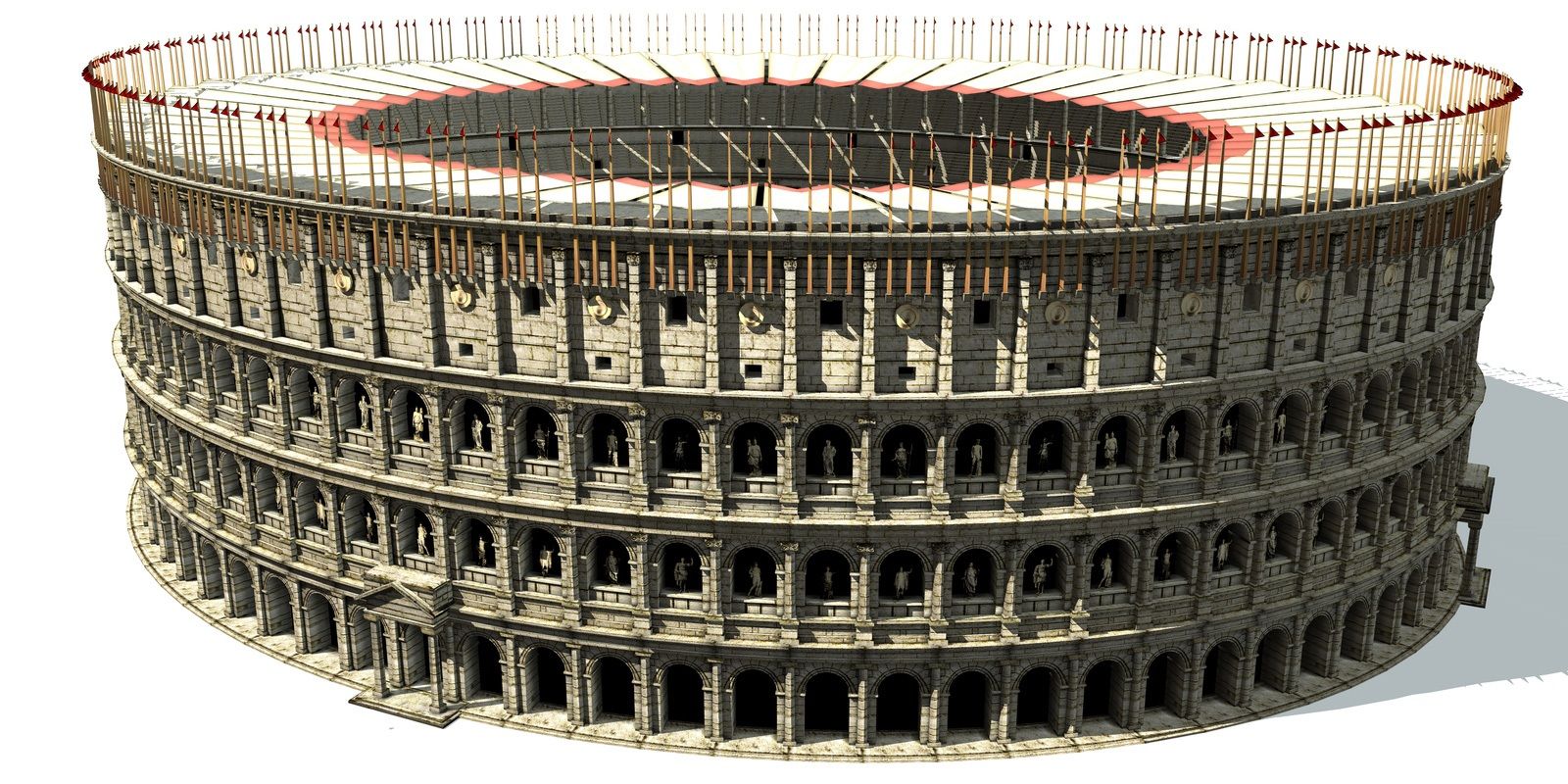
罗马斗兽场(意大利语:Colosseo,又译作罗马斗兽场、罗马大角斗场、科洛西姆或哥罗塞姆;原名弗莱文圆形剧场,拉丁语:Anfiteatro Flavio / Amphitheatrvm falvvm)是古罗马时期最大的圆形角斗场,建于公元72年-82年间,现仅存遗迹位于现今意大利罗马市的中心。[1]罗马斗兽场是卵形的圆形剧场,也是目前最大的圆形剧场,使用材料包括洞石、凝灰岩及砖饰面的混凝土[2]。
罗马斗兽场估计可以容纳五万至八万名观众[3][4],平均观众约六万五千人[5][6]。罗马斗兽场用来进行角斗士的比赛、海战表演(不过只有短暂的时间,后来斗兽场地下室就开始安装其他的设备了)、处决、重要战役的历史重演、以及演出以罗马神话为基础的戏剧。在中世纪前期已不再将罗马斗兽场用在娱乐用途,后来用作住宅、工作坊、圣职人员宿舍、防御工事、采石场以及基督教圣地等用途。
罗马斗兽场中有部分因为地震以及盗石贼的破坏而受损,不过仍然是罗马帝国的代表性建筑物。罗马斗兽场是罗马著名的旅游景点之一,也和天主教教会有关,教宗在每年圣周五带领的苦路游行都会从罗马斗兽场附近开始[7]。意大利版本的5欧分硬币上面就是以罗马斗兽场为主题。罗马斗兽场也列名在中古世界七大奇迹及世界新七大奇迹中。1980年,罗马竞技场以罗马历史中心,该城中享有治外法权的圣座房地产和城外圣保禄大殿之名被联合国教科文组织列入世界文化遗产[8]。
Das Kolosseum (antiker Name: Amphitheatrum Novum oder Amphitheatrum Flavium, italienisch: Colosseo, Anfiteatro Flavio) ist das größte der im antiken Rom erbauten Amphitheater, der größte geschlossene Bau der römischen Antike und weiterhin das größte je gebaute Amphitheater der Welt. Zwischen 72 und 80 n. Chr. errichtet, diente das Kolosseum als Austragungsort zumeist höchst grausamer und brutaler Veranstaltungen, die von Mitgliedern des Kaiserhauses zur Unterhaltung und Belustigung der freien Bewohner Roms und des römischen Reichs bei kostenlosem Eintritt ausgerichtet wurden. Heute ist die Ruine des Bauwerks eines der Wahrzeichen der Stadt und zugleich ein Zeugnis für die hochstehende Baukunst der Römer in der Antike.
 World Heritage

万神庙(Pantheon)是前27年的罗马共和国时期,屋大维的副手阿格里帕为了纪念打败安东尼和“埃及艳后”克利奥帕特拉而建造的。这座庙宇在80年被大火焚毁,直到公元125年由哈德良皇帝下令重建。609年拜占庭皇帝将万神庙献给罗马教宗卜尼法斯四世,后者将它更名为“圣母与诸殉道者教堂”(Santa Maria ad Martyres),这也是今天万神庙的正式名称。万神庙至今还是一个教堂,这里会定期举行弥撒以及婚礼庆典,同时也是世界各国观光客们竞相参观的地方。
Das Pantheon (altgriechisch Πάνθειον (ἱερόν) oder auch Πάνθεον, von πᾶν pān „all“, „gesamt“, und θεός theós „Gott“) ist ein zur Kirche umgeweihtes antikes Bauwerk in Rom. Als römisch-katholische Kirche lautet der offizielle italienische Name Santa Maria ad Martyres (lateinisch Sancta Maria ad Martyres). Nach einer seit dem Mittelalter gebräuchlichen Namensform Sancta Maria Rotunda wird das Bauwerk in Rom umgangssprachlich auch als La Rotonda bezeichnet. Das möglicherweise bereits unter Kaiser Trajan um 114 n. Chr. begonnene und unter Kaiser Hadrian zwischen 125 n. Chr. und 128 n. Chr. fertiggestellte Pantheon hatte mehr als 1700 Jahre lang, bezogen auf den Innendurchmesser, die größte Kuppel der Welt. Es gilt als eines der am besten erhaltenen Bauwerke der römischen Antike. Das Pantheon besteht aus zwei Hauptelementen: einem Pronaos mit rechteckigem Grundriss und Tempelfassade im Norden sowie einem kreisrunden, überkuppelten Zentralbau im Süden. Ein Übergangsbereich vermittelt zwischen beiden Gebäudeteilen, die sich ergebenden Zwickel der Schnittstellen wurden für Treppenhäuser genutzt. Erbaut auf dem Marsfeld, war das Pantheon vermutlich ein allen Göttern Roms geweihtes Heiligtum. Der Historiker Cassius Dio berichtet, dass dort Statuen des Mars und der Venus sowie weiterer Götter und eine Statue des als Divus Iulius unter die Götter aufgenommenen Gaius Iulius Caesar aufgestellt waren. Welche Götter insgesamt hier verehrt werden sollten, ist jedoch umstritten, zumal nicht restlos geklärt ist, ob das Pantheon seiner Urbestimmung nach ein Tempel oder ein imperialer Repräsentationsbau war, der trotz seiner der Sakralarchitektur entlehnten Elemente säkularen Zwecken diente.[1] Am 13. Mai vermutlich des Jahres 609 wurde das Pantheon in eine christliche Kirche umgewandelt, nachdem es Kaiser Phokas dem Papst Bonifatius IV. geschenkt hatte, und der heiligen Maria sowie allen christlichen Märtyrern geweiht. In ihr werden vor allem an hohen Feiertagen Messen gefeiert. Die Kirche wurde am 23. Juli 1725 von Papst Benedikt XIII. zur Titeldiakonie erhoben. Papst Pius XI. übertrug diese am 26. Mai 1929 an die 400 Meter entfernte Kirche Sant’Apollinare. Santa Maria ad Martyres trägt den Titel einer Basilica minor und ist der Pfarrgemeinde Santa Maria in Aquiro angeschlossen.[2] Das Gebäude gehört dem italienischen Staat und wird vom Kulturministerium unterhalten.[3] Der Einfluss des Pantheon auf die Architekturgeschichte vor allem der Neuzeit ist enorm. Der Begriff Pantheon wird heute auch allgemein auf ein Gebäude angewendet, in dem bedeutende Persönlichkeiten bestattet sind, was von der späteren Nutzung des römischen Pantheon herrührt. 万神庙(Pantheon)是前27年的罗马共和国时期,屋大维的副手阿格里帕为了纪念打败安东尼和“埃及艳后”克利奥帕特拉而建造的。这座庙宇在80年被大火焚毁,直到公元125年由哈德良皇帝下令重建。609年拜占庭皇帝将万神庙献给罗马教宗卜尼法斯四世,后者将它更名为“圣母与诸殉道者教堂”(Santa Maria ad Martyres),这也是今天万神庙的正式名称。万神庙至今还是一个教堂,这里会定期举行弥撒以及婚礼庆典,同时也是世界各国观光客们竞相参观的地方。 万神庙(意大利语:Pantheon,拉丁语:Pantheum),又译万神殿、潘提翁神殿,位于意大利罗马,是一座古罗马时期的宗教建筑,后改建成一座教堂。公元609年,东罗马帝国皇帝将万神庙献给教宗波尼法爵四世,后者将它更名为圣母与诸殉道者教堂(Santa Maria ad Martyres),这也是今天万神庙的正式名称。由于其完美的古典几何比例,万神庙被米开朗基罗誉为“天使的设计”。 奥古斯都统治时期(公元前27年-公元14年),马库斯·阿格里帕受委托修建了一座早期神庙。公元126年,由哈德良皇帝重建。它的建造日期不确定,因为哈德良选择不建造新的神庙,而是保留阿格里帕建造的旧神庙的雕刻,旧神庙已被烧毁。[1] 这座建筑总体呈圆柱形,在山墙下有一条由大型花岗岩科林斯柱组成的门廊(一级有8根,后面有两组四根)。一个长方形的前厅将门廊与圆形的大厅连接起来,圆形大厅位于一个带围堰的混凝土穹顶下,中央有一个寓意通向天堂的圆形开孔。万神殿的穹顶在建成近两千年后仍然是世界上最大的无钢筋混凝土穹顶。[2]半球体的高度和内圆的直径相同,有43米(142英尺)。[3] 万神庙是古罗马建筑中保存最完好的建筑之一,在很大程度上是因为它被持续使用。自7世纪以来,万神殿一直被用作一座教堂,专门供奉“圣玛丽和烈士” (拉丁语:Sancta Maria ad Martyres,但非正式地称为“Santa Maria Rotonda”)[4]。万神殿前的广场被称为罗通达广场。万神殿是国家财产,由意大利文化遗产及旅游部通过拉齐奥马球博物馆管理。2013年,参观万神庙的人数超过600万。 万神殿巨大的圆形穹顶单元,带有传统的神庙门廊,在古罗马建筑中是独一无二的。而且,在古典复兴时期,它成为了一个标准样板,并被后来的建筑师多次借鉴。
 Motorsport
 Abruzzo
 Marche
 Umbria


 Financial
 Companies
 Economy and trade


 Civilization

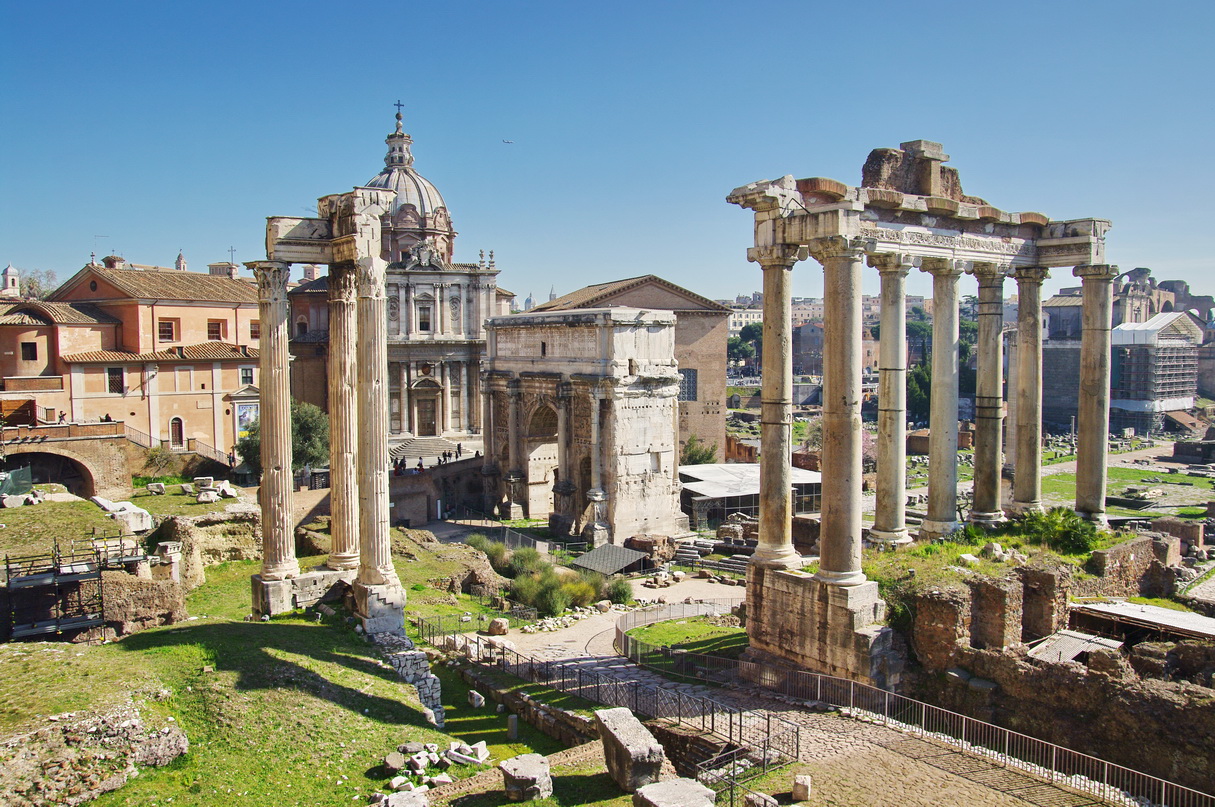
古罗马广场(Roman Forum)是古罗马时代的城市中心,其中还残留了些许的古罗马时期的重要建筑的废墟。屹立在此地的建筑物有提图斯凯旋门、奥古斯都凯旋门、塞维鲁凯旋门、凯撒神庙、灶神庙,维纳斯和罗马神庙。古罗马政治、宗教、商业、娱乐等建筑的聚集地又可以被称为“古罗马废墟”。
罗马市政府刻意保留了这块残垣断壁,为全人类留下了珍贵的文化遗产,这片古罗马废墟犹如大露天博物馆不仅吸引着全世界慕名而来的游客一探究竟,还吸引着众多考古工作者和历史学家前来探寻古罗马当时的生活百态,很具有考古价值。这片废墟其实最早是被破砖乱瓦覆盖,到十九世纪才被重见天日,古代劳动人民为我们留下了一片难得的建筑遗迹,让人联想到昔日的繁荣富裕的生活。公元前6世纪时开始建设,至西罗马帝国灭亡为止。广场上集中了大量宗教性和纪念性建筑物。广场的主要部分约长134米,宽63米。南北两侧各有一座巴西利卡(长方形会堂),供审判和集会用。广场东端是凯撒庙和奥古斯都凯旋门,西端是检阅台和另一座凯旋门。广场西北角的元老院和门前的集议场形成政治中心;凯撒庙和奥古斯都凯旋门以东的灶神庙和祭司长府是宗教中心。公元 4世纪建造君士坦丁巴西利卡之后,广场向东扩展,建造了第度凯旋门。西端在检阅台外还有两座公元初期的神庙。中世纪时,有几座古罗马时代建筑物被改成教堂。以后又不断拆取古建筑物的大理石,用于建筑或烧石灰,以致除少数建筑物外,广场建筑群仅存废墟。18世纪末开始发掘,并加以保护。罗马城旧广场的北面,从公元前1世纪到公元 2世纪初陆续建造了凯撒广场、奥古斯都广场、韦帕香广场、乃尔维广场和图拉真广场。它们各自按设计一次建成,平面为长方形,四周柱廊的一端建造神庙。凯撒广场有钱庄和演讲台,奥古斯都广场有演讲堂。这些广场都是为纪念个人功绩而建造的。
Das Forum Romanum in Rom ist das älteste römische Forum und war Mittelpunkt des politischen, wirtschaftlichen, kulturellen und religiösen Lebens. Es liegt in einer Senke zwischen den drei Stadthügeln Kapitol, Palatin und Esquilin und war der Ort vieler öffentlicher Gebäude und Denkmäler.
Ursprünglich ein von einem Bach durchzogenes, sumpfiges Tal, wurde es erst unter dem legendären etruskischen König Lucius Tarquinius Priscus zu Beginn des 7. Jahrhunderts v. Chr. in die Stadt einbezogen. Den Höhepunkt seines prachtvollen Ausbaus erlebte es in der Römischen Kaiserzeit.[1] Es ist heute eine der wichtigsten Ausgrabungsstätten des antiken Roms.
The Roman Forum, also known by its Latin name Forum Romanum (Italian: Foro Romano), is a rectangular forum (plaza) surrounded by the ruins of several important ancient government buildings at the center of the city of Rome. Citizens of the ancient city referred to this space, originally a marketplace, as the Forum Magnum, or simply the Forum.
For centuries the Forum was the center of day-to-day life in Rome: the site of triumphal processions and elections; the venue for public speeches, criminal trials, and gladiatorial matches; and the nucleus of commercial affairs. Here statues and monuments commemorated the city's great men. The teeming heart of ancient Rome, it has been called the most celebrated meeting place in the world, and in all history.[1] Located in the small valley between the Palatine and Capitoline Hills, the Forum today is a sprawling ruin of architectural fragments and intermittent archaeological excavations attracting 4.5 million or more sightseers yearly.[2]
Many of the oldest and most important structures of the ancient city were located on or near the Forum. The Roman Kingdom's earliest shrines and temples were located on the southeastern edge. These included the ancient former royal residence, the Regia (8th century BC), and the Temple of Vesta (7th century BC), as well as the surrounding complex of the Vestal Virgins, all of which were rebuilt after the rise of imperial Rome.
Other archaic shrines to the northwest, such as the Umbilicus Urbis and the Vulcanal (Shrine of Vulcan), developed into the Republic's formal Comitium (assembly area). This is where the Senate—as well as Republican government itself—began. The Senate House, government offices, tribunals, temples, memorials and statues gradually cluttered the area.
Over time the archaic Comitium was replaced by the larger adjacent Forum and the focus of judicial activity moved to the new Basilica Aemilia (179 BC). Some 130 years later, Julius Caesar built the Basilica Julia, along with the new Curia Julia, refocusing both the judicial offices and the Senate itself. This new Forum, in what proved to be its final form, then served as a revitalized city square where the people of Rome could gather for commercial, political, judicial and religious pursuits in ever greater numbers.
Eventually much economic and judicial business would transfer away from the Forum Romanum to the larger and more extravagant structures (Trajan's Forum and the Basilica Ulpia) to the north. The reign of Constantine the Great saw the construction of the last major expansion of the Forum complex—the Basilica of Maxentius (312 AD). This returned the political center to the Forum until the fall of the Western Roman Empire almost two centuries later.
Le Forum Romain ou Forum de Rome (Foro Romano en italien, Forum Romanum en latin), appelé aussi Forum Magnum (« Grand Forum ») ou Forum Vetus (« Vieux Forum »), est situé dans le site archéologique le plus important de Rome, entre les collines du Capitole et du Mont Palatin.
Le forum est la place principale de la Rome antique. Son importance historique, religieuse et politique en fait l'endroit autour duquel toute la vie de la ville s'articule : célébration de mariages, organisation de jeux, de combats de gladiateurs, de cérémonies et de fêtes religieuses, de défilés militaires (sur la Via Sacra), de proclamations politiques (par exemple lors de l'incinération de Jules César, en ce même lieu)..., il est le centre vivant de la ville, à l'image de l'agora, lieu de rassemblement politique et mercantile des cités grecques.
Il Foro Romano (in latino Forum Romanum, sebbene i Romani si riferissero ad esso più spesso come Forum Magnum o semplicemente Forum) è un'area archeologica di Roma racchiusa tra il Palatino, il Campidoglio, Via dei Fori Imperiali e il Colosseo, costituita dalla stratificazione dei resti di quegli edifici e monumenti di epoche eterogenee che per gran parte della storia antica di Roma rappresentarono il centro politico, giuridico, religioso ed economico della città di Roma, oltre che il centro nevralgico dell'intera civiltà romana.
Dall'età regia fino all'avvento dell'età medievale, la valle del Foro è stata teatro di eventi e sede di istituzioni di importanza tale da aver determinato a più riprese il corso storico della civiltà occidentale[1][2][3][4][5][6][7][8], e da aver influenzato in modo preponderante le basi politiche, giuridiche, culturali e filosofiche del pensiero occidentale.
Dopo una fase di declino iniziata nell'età tardoantica il Foro Romano è stato soggetto a frequenti spoliazioni e cambi di destinazione d'uso, fino a ritrovarsi, nel XVI secolo, quasi completamente interrato e stabilmente utilizzato come pascolo per i bovini, da cui il nomignolo di Campo Vaccino[9][10].
Grazie alle imponenti ristrutturazioni urbanistiche dell'Italia post-unitaria e del periodo fascista, l'area del Foro è stata gradualmente riportata alla luce, studiata, e musealizzata, diventando con il Colosseo e il Palatino uno dei siti archeologici più illustri e visitati al mondo[11].
El Foro Romano (en latín, Forum Romanum, aunque los romanos se referían a él comúnmente como Forum Magnum o simplemente Forum) era el foro de la ciudad de Roma, es decir, la zona central, semejante a las plazas centrales en las ciudades actuales, donde se encuentran las instituciones de gobierno, mercado y religión. Al igual que hoy en día era donde tenían lugar el comercio, los negocios, la prostitución, la religión y la administración de justicia. En él se situaba el hogar comunal. Series de restos de pavimento muestran que sedimentos erosionados desde las colinas circundantes ya estaban elevando el nivel del foro en la primera época de la República. Originalmente había sido un terreno pantanoso, que fue drenado por los Tarquinios mediante la Cloaca Máxima. Su pavimento de travertino definitivo, que aún puede verse, data del reinado de César Augusto.
Actualmente es famoso por sus restos, que muestran elocuentemente el uso de los espacios urbanos durante el Imperio Romano. El Foro Romano incluye los siguientes monumentos, edificios y demás ruinas antiguas importantes:
- Templo de Cástor y Pólux
- Templo de Rómulo
- Templo de Saturno
- Templo de Vesta
- Templo de Venus y Roma
- Basílica Emilia
- Basílica Julia
- Arco de Septimio Severo
- Arco de Tito
- Rostra (plural de rostrum), la tribuna desde donde los políticos daban sus discursos a los ciudadanos romanos.
- Curia Julia, sede del Senado.
- Basílica de Majencio y Constantino
- Tabulario
- Templo de Antonino y Faustina
- Regia
- Templo de Vespasiano y Tito
- Templo de la Concordia
- Templo de Jano
Un camino procesional, la Vía Sacra, cruza el Foro Romano conectándolo con el Coliseo. Al final del Imperio perdió su uso cotidiano quedando como lugar sagrado.
El último monumento construido en el Foro fue la Columna de Focas. Durante la Edad Media, aunque la memoria del Foro Romano persistió, los edificios fueron en su mayor parte enterrados bajo escombros y su localización, la zona entre el monte Capitolino y el Coliseo, fue designada Campo Vaccinio o ‘campo bovino’. El regreso del papa Urbano V desde Aviñón en 1367 despertó un creciente interés por los monumentos antiguos, en parte por su lección moral y en parte como cantera para construir nuevos edificios. Se extrajo gran cantidad de mármol para construcciones papales (en el Vaticano principalmente) y para cocer en hornos creados en el mismo foro para hacer cal. Miguel Ángel expresó en muchas ocasiones su oposición a la destrucción de los restos. Artistas de finales del siglo XV dibujaron las ruinas del Foro, los anticuarios copiaron inscripciones desde el siglo XVI y una excavación profesional fue comenzada a finales del siglo XVIII. Un cardenal tomó medidas para drenarlo de nuevo y construyó el barrio Alessadrine sobre él. No obstante, la excavación de Carlo Fea, quien empezó a retirar los escombros del Arco de Septimio Severo en 1803, y los arqueólogos del régimen napoleónico marcaron el comienzo de la limpieza del Foro, que no fue totalmente excavado hasta principios del siglo XX.
En su estado actual, se muestran juntos restos de varios siglos, debido a la práctica romana de construir sobre ruinas más antiguas.
Existieron foros en otras zonas de la ciudad, conservándose restos en ocasiones considerables de la mayoría de ellos. Los foros en la antigua ciudad de Roma eran los siguientes:
- Los más importantes son los grandes foros imperiales (o Fori Imperiali), que formaban un complejo con el Foro Romano. Estos eran el Foro de César (o Forum Iulium), el Foro de Augusto (o Forum Augustum), el Foro de Nerva (o Forum Transitorium) y el Foro de Trajano. Los planificadores del régimen de Mussolini retiraron la mayor parte de los estratos medievales y barrocos y construyeron una carretera entre los foros imperiales y el Foro.
- El Foro Boario (o Forum Boarium), entre el monte Palatino y el río Tíber, que estaba dedicado al comercio de ganado.
- El Foro Holitorio (o Forum Holitorium), entre el monte Capitolino y las murallas servianas, que estaba dedicado al comercio de hierbas y verduras.
- El Forum Piscarium, entre el monte Capitolino y el Tíber, en la zona del actual gueto de Roma, que estaba dedicado al comercio de pescado.
- El Forum Suarium, cerca de los barracones de las cohortes urbanae, en la parte norte del campo de Marte, que estaba dedicado al comercio del cerdo.
- El Forum Vinarium, en la zona del actual rione Testaccio, entre el monte Aventino y el Tíber, que estaba dedicado al comercio del vino.
- Existían otros mercados, pero no son correctamente identificables debido a la falta de información precisa o la pluralidad de ubicaciones. Entre éstos está el Forum cuppedinis, dedicado al comercio genérico de varias clases de bienes.
Ubicación geográfica:  41°53′33.12″N 12°29′8.5″E
 Campania
 Emilia-Romagna
Italy
Lazio
Emilia-Romagna
Italy
Lazio
 Lombardia
 Piemonte
 Puglia
 Sicilia
High speed train technology
Sicilia
High speed train technology
 Central drive
High speed train technology
Rad-Schiene-System
Central drive
High speed train technology
Rad-Schiene-System
 Toscana
 Transport and traffic
High speed traffic
Transport and traffic
High speed train technology
Transport and traffic
High speed traffic
Transport and traffic
High speed train technology
 Veneto
 Alberto Zaccheroni
La Serie A
La Serie A 2015/16
La Serie A 2016/17
La Serie A 2017/18
La Serie A 2018/19
Lazio
Alberto Zaccheroni
La Serie A
La Serie A 2015/16
La Serie A 2016/17
La Serie A 2017/18
La Serie A 2018/19
Lazio
 Sport
(F)UEFA Europa League
Sven-Göran Eriksson
UEFA Europa League 2017/18
Group K
UEFA Europa League 2018/19
Group H
UEFA Europa League 2019/20
Group E
Sport
(F)UEFA Europa League
Sven-Göran Eriksson
UEFA Europa League 2017/18
Group K
UEFA Europa League 2018/19
Group H
UEFA Europa League 2019/20
Group E

 Fabio Capello
La Serie A
La Serie A 2015/16
La Serie A 2016/17
La Serie A 2017/18
La Serie A 2018/19
Lazio
Luis Enrique
Sport
(F)UEFA Europa League
Sven-Göran Eriksson
UEFA Champions League 2015/16
UEFA Champions League 2017/18
Group C
UEFA Champions League 2018/19
Group G
UEFA Europa League 2019/20
Group J
Fabio Capello
La Serie A
La Serie A 2015/16
La Serie A 2016/17
La Serie A 2017/18
La Serie A 2018/19
Lazio
Luis Enrique
Sport
(F)UEFA Europa League
Sven-Göran Eriksson
UEFA Champions League 2015/16
UEFA Champions League 2017/18
Group C
UEFA Champions League 2018/19
Group G
UEFA Europa League 2019/20
Group J
 United Nations
Food and Agriculture Organization,FAO
José Graziano da Silva
Food and Agriculture Organization,FAO
Qu Dongyu
Italy
Lazio
United Nations
Food and Agriculture Organization,FAO
José Graziano da Silva
Food and Agriculture Organization,FAO
Qu Dongyu
Italy
Lazio
 Important International Organizations


 Aerospace