Deutsch-Chinesische Enzyklopädie, 德汉百科
 Vacation and Travel

 Architecture
 North Rhine-Westphalia

 History

 Rhineland-Palatinate

Die Burg Eltz ist eine Höhenburg aus dem 12. Jahrhundert und eine der bekanntesten ihrer Art in Deutschland. Sie liegt auf 129 m ü. NHN im Tal der Elz, einem linken Nebenfluss der Mosel, in der Gemarkung der Ortsgemeinde Wierschem in Rheinland-Pfalz. Seit mehr als 800 Jahren ist das Bauwerk im Besitz der Adelsfamilie Eltz und weitgehend erhalten. Es gehört wie das Schloss Bürresheim und die Burg Lissingen zu den Befestigungsanlagen in der Eifel, die nie gewaltsam erobert wurden. Die Burg ist öffentlich zugänglich und ein beliebtes Ausflugsziel.
埃尔茨城堡(德语:Burg Eltz)是德国的一座中世纪时期城堡。这座城堡是莱茵兰-普法尔茨中莱茵河左岸地区的城堡中唯一一座从未被破坏过的城堡。在1965年至1992年时,埃尔茨城堡曾出现在500德国马克钞票的反面图案上。
 Saxony-Anhalt

 Burgenland

 Hessen


 Tyrol
Tyrol
 Carinthia


 Baden-Wuerttemberg
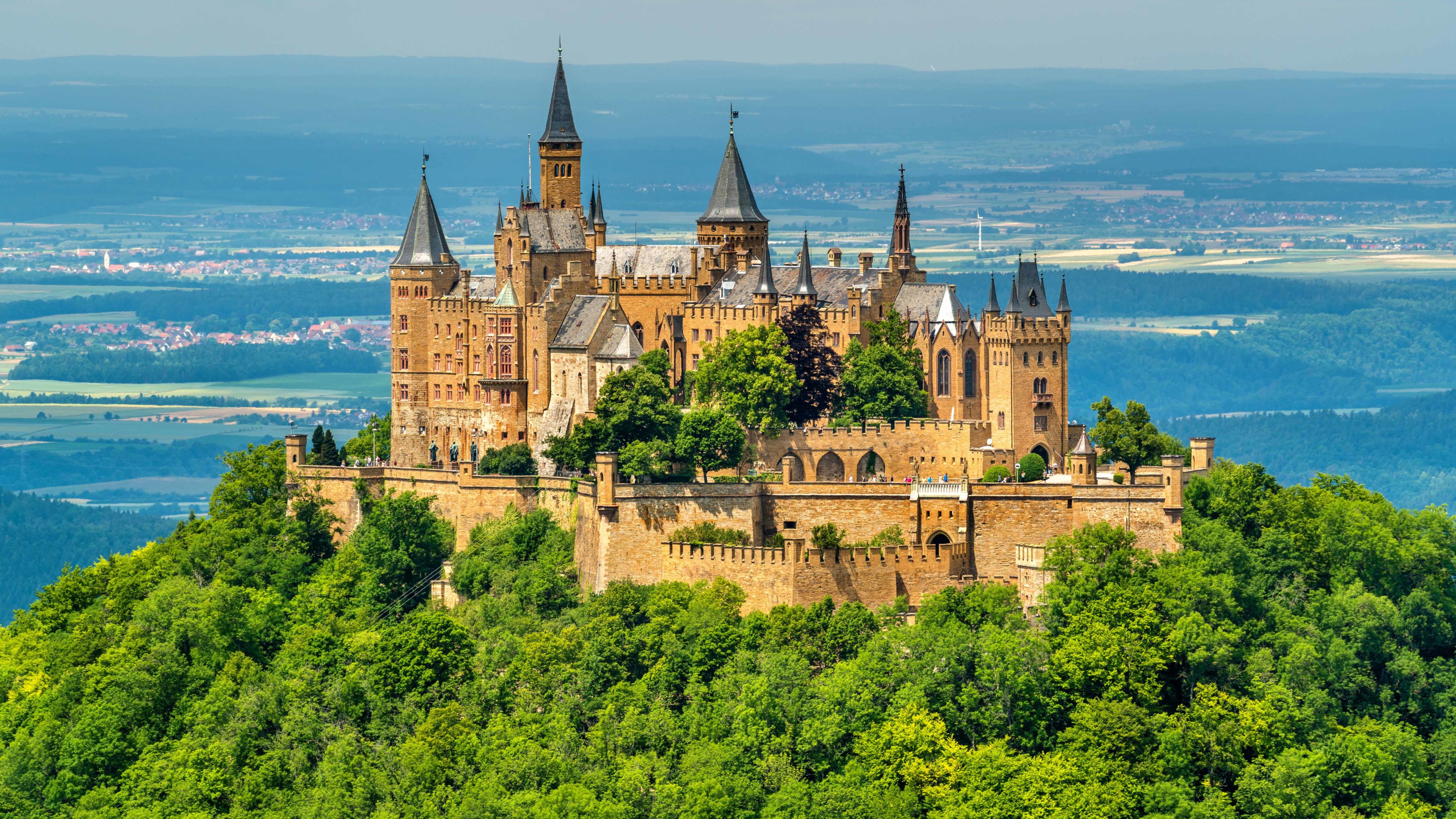
德国南部最著名的两大城堡之一(另一为新天鹅堡),位於图宾根南方20公里的丘陵上。古堡是霍亨索伦家族的发源地(霍亨索伦家族是勃兰登堡─普鲁士 1415~1918年及德意志帝国的主要统治家族)。霍亨索伦堡建於11世纪,现今的霍亨索伦堡是在1850年至1867年,由普鲁士建筑家von prittwitz和stuler共同改建的,与新天鹅堡的兴建大约是同一时期,但是与新天鹅堡宛如童话般的外貌相比,霍亨索伦堡就似充满英雄主义的阳刚 之气,这也正代表普鲁士王朝的辉煌历史。城堡内展示腓特烈大帝的遗物、普鲁士王的宝物及王冠等。城堡目前仍有普鲁士王朝末代皇帝威廉二世的子孙仍居此地,但城堡部分对外收费开放。(Quelle:http://www.chinabaike.com)
Die Burg Hohenzollern ist die Stammburg des Fürstengeschlechts und des ehemals regierenden preußischen Königs- und deutschen Kaiserhauses der Hohenzollern. Sie liegt in Baden-Württemberg auf der Gemarkung der Gemeinde Bisingen, zu deren Ortsteil Zimmern sie gehört.
Hohenzollern Castle (German:  Burg Hohenzollern (help·info)) is the ancestral seat of the imperial House of Hohenzollern.[a] The third of three hilltop castles on the site, it is located atop Mount Hohenzollern, above and south of Hechingen, on the edge of the Swabian Jura of central Baden-Württemberg, Germany.
ホーエンツォレルン城(ホーエンツォレルンじょう、ドイツ語: Burg Hohenzollern[ヘルプ/ファイル])は、ドイツ帝国(ドイツ第二帝国)の皇帝家ホーエンツォレルン家の発祥の地に建つ城である。
ドイツ連邦共和国シュヴァーベン地方のバーデン=ヴュルテンベルク州のテュービンゲン行政管区(県)ツォレルンアルプ郡ヘヒンゲン市の南、海抜855メートルのホーエンツォレルン山の頂に建てられた城である[1]。現在の城は三代目で、フリードリヒ・ヴィルヘルム4世がプロイセン王になる前の太子であった時に再建を決め、没後の1867年に完成したものである。
The first fortress on the mountain was constructed in the early 11th century. Over the years the House of Hohenzollern split several times, but the castle remained in the Swabian branch, the dynastic seniors of the Franconian-Brandenburgian cadet branch that later acquired its own imperial throne. This castle was completely destroyed in 1423 after a ten-month siege by the free imperial cities of Swabia. A larger and sturdier structure was constructed from 1454 to 1461, which served as a refuge for the Catholic Swabian Hohenzollerns, including during the Thirty Years' War. By the end of the 18th century it was thought to have lost its strategic importance and gradually fell into disrepair, leading to the demolition of several dilapidated buildings.
The final castle was built between 1846 and 1867 as a family memorial[citation needed] by Hohenzollern scion King Frederick William IV of Prussia. Architect Friedrich August Stüler based his design on English Gothic Revival architecture and the Châteaux of the Loire Valley.[1] No member of the Hohenzollern family was in permanent or regular residence when it was completed, and none of the three German Emperors of the late 19th and early 20th century German Empire ever occupied the castle; in 1945 it briefly became the home of the former Crown Prince Wilhelm of Germany, son of the last Hohenzollern monarch, Kaiser Wilhelm II.
Among the historical artifacts of Prussian history contained in the castle are the Crown of Wilhelm II, some of the personal effects of King Frederick the Great, and a letter from US President George Washington thanking Hohenzollern descendant Baron von Steuben for his service in the American Revolutionary War.[2]
Le château de Hohenzollern (en allemand : Burg Hohenzollern) est un château situé à environ cinquante kilomètres au sud de Stuttgart, en Allemagne. Il est considéré comme le fief ancestral de la famille royale et impériale des Hohenzollern.
Le château est situé au sommet du mont Hohenzollern à une altitude de 855 mètres, à proximité de Bisingen , au pied du Jura souabe. Il a été construit dans la première partie du XIe siècle.
Lorsque la famille se scinde en deux branches, le château est resté la propriété de la branche souabe. Il a été complètement détruit après un siège de dix mois en 1423 par les villes impériales de Souabe. Un deuxième, plus grand et plus robuste, a été construit de 1454 à 1461 et a servi de refuge pour les Hohenzollern souabes catholiques en temps de guerre, y compris pendant la guerre de Trente Ans. À la fin du XVIIIe siècle, cependant, le château a perdu son importance stratégique et est peu à peu tombé en ruine. On dut démolir plusieurs bâtiments délabrés. Aujourd'hui, seule subsiste la chapelle du château médiéval.
La troisième version du château, qu'on peut voir aujourd'hui, a été construite pour Frédéric-Guillaume IV de Prusse entre 1846 et 1867, sous la direction de Friedrich August Stüler, dont le style avait été inspiré par le néo-gothique anglais et les châteaux de la Loire1. Parce que le château a été construit comme un mémorial de la famille, aucun membre de la famille des Hohenzollern n'a habité ce troisième château jusqu'en 1945, quand il est devenu la résidence du dernier héritier Guillaume de Prusse. Il y est enterré avec son épouse Cécilie de Mecklembourg-Schwerin.
Parmi les objets historiques de l'histoire prussienne conservés dans le château actuel, il y a la couronne de Guillaume II, quelques effets personnels de Frédéric le Grand et une lettre du président américain George Washington pour remercier le baron von Steuben, un descendant de la Maison de Hohenzollern, pour son action dans la Guerre d'indépendance des États-Unis. Le château est aujourd'hui une destination touristique importante.
Il castello di Hohenzollern, in tedesco Burg Hohenzollern è un castello non lontano dalla città di Stoccarda, in Germania. Appartenne e fu fatto costruire dalla nobile famiglia prussiana degli Hohenzollern, che visse qui dall'Alto Medioevo alla prima guerra mondiale.
El castillo de Hohenzollern (en alemán: Burg Hohenzollern)? es un castillo situado 50 kilómetros al sur de Stuttgart vinculado a los orígenes de la Dinastía Hohenzollern, familia que llegó al poder durante la Edad Media y gobernó Prusia y Brandeburgo hasta el final de la Primera Guerra Mundial.
El castillo se encuentra en la cumbre del monte Hohenzollern a una altitud de 855 metros, cerca de Hechingen, en el Jura de Suabia. La primera parte del castillo se construyó durante el siglo XI y quedó completamente destruido en 1423 tras un asedio de 10 meses de una alianza de las ciudades imperiales de Suabia.
Entre 1454 y 1461, se erigió un segundo castillo mayor y más sólido que sirvió como refugio a la familia de la dinastía de Hohenzollern, de origen suabo, en tiempos de guerra, incluyendo la Guerra de los Treinta Años. A finales del siglo XVIII el castillo había perdido su importancia estratégica y cayó en el abandono, lo que condujo a que muchos de sus elementos fueran derribados. Actualmente el único resto del castillo medieval es la capilla de San Miguel.
Un tercer castillo, que es el actual, fue edificado por orden de Federico Guillermo IV de Prusia entre 1846 y 1867 bajo la dirección de Frederico Augusto Stüler, que se inspiró en la arquitectura neogótica inglesa, así como en los castillos del Loira. El castillo fue concebido como un homenaje a la dinastía Hohenzollern, de manera que ningún miembro de la familia residió en él hasta 1945, fecha en que se mudaron el príncipe Guillermo de Prusia y su esposa Cecilia de Mecklemburgo-Schwerin, que están enterrados en el castillo.
Entre los tesoros históricos que hoy alberga el castillo se encuentra la corona de Guillermo II, algunos efectos personales de Federico II de Prusia y una carta de George Washington en la que agradece al Barón von Steuben el servicio de la Casa de Hohenzollern en la Guerra de Independencia de Estados Unidos. El castillo es hoy un destino turístico muy popular.
Замок Гогенцоллерн (нем. Burg Hohenzollern) — старинный замок-крепость в Баден-Вюртемберге в 50 км южнее Штутгарта. Вотчина Гогенцоллернов — династии, возвысившейся на протяжении Средневековья и правившей в Пруссии и Бранденбурге до конца Первой мировой войны. Замок расположен на вершине горы Гогенцоллерн на высоте 855 метров и находится недалеко от населенных пунктов Хехинген и Бизинген.
Впервые средневековая замковая крепость упоминается в 1267 году, однако предполагается, что она была построена ранее, в XI веке. 15 мая 1423 года, после длительной осады войсками имперских городов Швабии, крепость была взята и полностью разрушена.
В 1454—1461 годах был возведен второй замок, который служил убежищем для швабской ветви дома Гогенцоллернов на протяжении Тридцатилетней войны. К концу XVIII столетия, однако, в связи с утратой крепостью стратегического значения, комплекс строений постепенно ветшает и некоторые полуразрушенные здания разбираются. До наших дней из всех построек второй крепости дошла лишь капелла св. Михаила.
Третье строение замка, которое дошло до наших дней, было возведено королём Пруссии Фридрихом Вильгельмом IV между 1850 и 1867 годами, под руководством известного архитектора тех дней Фридриха Августа Штюлера. Так как замок был выстроен как семейный памятник, ни один из представителей дома Гогенцоллернов не использовал это строение как свою резиденцию вплоть до 1945 года, когда замок стал домом для последнего прусского кронпринца Вильгельма. Здесь же он был и похоронен со своей женой кронпринцессой Цецилией.
Среди хранящихся сегодня в замке исторических артефактов прусской истории, стоит отметить корону Вильгельма II, некоторые из личных принадлежностей Фридриха Великого, а также письмо президента США Джорджа Вашингтона благодарящего барона фон Штойбена, потомка дома Гогенцоллернов, за его помощь в борьбе США за независимость. Сегодня замок — популярная туристическая достопримечательность.
 Saxony