
Deutsch-Chinesische Enzyklopädie, 德汉百科
 IT-Times


 California-CA
 Companies


克劳斯·茨奇拉和其他三位前IBM同事一起,于1972年创立了德国软件公司SAP。该公司已成长为全球最大的软件公司之一,2010年营收达162亿美 元。1998年,茨奇拉从该公司退休,2007年又辞去了其监事会成员之职,不过他仍然持有该公司大量股权。如今,他将许多时间投入了克劳斯·茨奇拉基金 会,这是德国最大的慈善组织之一,拥有24亿美元资产。该基金会支持多种科研与文化项目,比如一个青少年软件大赛,奖励通过聪明地使用软件而解决数学或科 学问题的学生。2010年,该基金会向多个项目投入了2,300万美元。茨奇拉业余时间热衷天文学,火星和木星之间有一颗小行星以他的名字命名。 (Quelle:http://www.forbeschina.com)
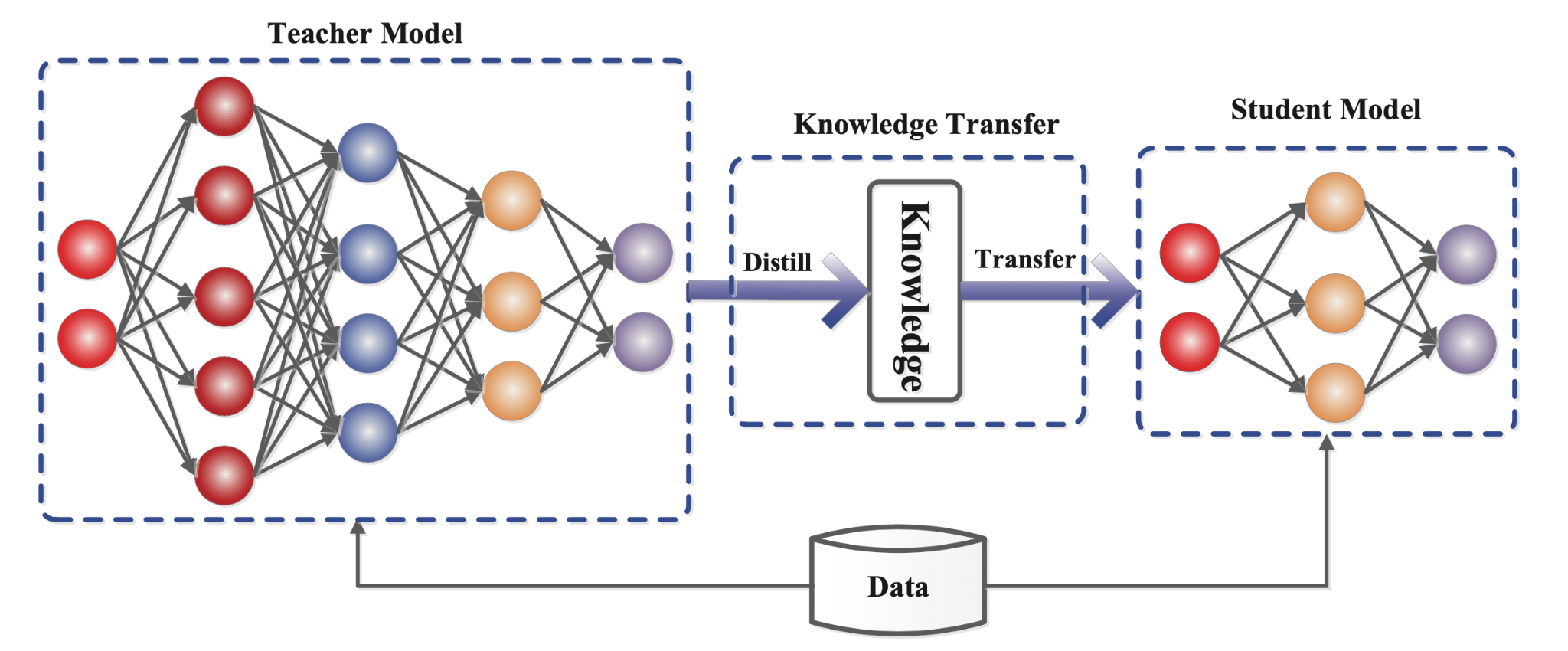
知识蒸馏(knowledge distillation)是人工智能领域的一项模型训练技术。该技术透过类似于教师—学生的方式,令规模较小、结构较为简单的人工智能模型从已经经过充足训练的大型、复杂模型身上学习其掌握的知识。该技术可以让小型简单模型快速有效学习到大型复杂模型透过漫长训练才能得到的结果,从而改善模型的效率、减少运算开销,因此亦被称为模型蒸馏(model distillation)。
In machine learning, knowledge distillation or model distillation is the process of transferring knowledge from a large model to a smaller one. While large models (such as very deep neural networks or ensembles of many models) have more knowledge capacity than small models, this capacity might not be fully utilized. It can be just as computationally expensive to evaluate a model even if it utilizes little of its knowledge capacity. Knowledge distillation transfers knowledge from a large model to a smaller one without loss of validity. As smaller models are less expensive to evaluate, they can be deployed on less powerful hardware (such as a mobile device).
Model distillation is not to be confused with model compression, which describes methods to decrease the size of a large model itself, without training a new model. Model compression generally preserves the architecture and the nominal parameter count of the model, while decreasing the bits-per-parameter.
Knowledge distillation has been successfully used in several applications of machine learning such as object detection, acoustic models, and natural language processing. Recently, it has also been introduced to graph neural networks applicable to non-grid data.

 Life and Style
 New York-NY


 Games
Games


 Science and technology

广义的组合数学(英语:Combinatorics)相当于离散数学,狭义的组合数学是组合计数、图论、代数结构、数理逻辑等的总称。但这只是不同学者在叫法上的区别。总之,组合数学是一门研究可数或离散对象的科学。随着计算机科学日益发展,组合数学的重要性也日渐凸显,因为计算机科学的核心内容是使用算法处理离散数据。
狭义的组合数学主要研究满足一定条件的组态(也称组合模型)的存在、计数以及构造等方面的问题。组合数学的主要内容有组合计数、组合设计(Combinatorial design)、组合矩阵(Combinatorial matrix theory)、组合最佳化(最佳组合)等。
Die Kombinatorik ist eine Teildisziplin der Mathematik, die sich mit endlichen oder abzählbar unendlichen diskreten Strukturen beschäftigt und deshalb auch dem Oberbegriff Diskrete Mathematik zugerechnet wird. Beispiele sind Graphen (Graphentheorie), teilgeordnete Mengen wie Verbände, Matroide, kombinatorische Designs, lateinische Quadrate, Parkettierungen, Permutationen von Objekten, Partitionen. Die Abgrenzung zu anderen Teilgebieten der Diskreten Mathematik ist fließend. Eine Definition von George Pólya bezeichnet die Kombinatorik als Untersuchung des Abzählens, der Existenz und Konstruktion von Konfigurationen.[1]
Je nach den verwendeten Methoden und Gegenständen unterscheidet man auch Teildisziplinen wie algebraische Kombinatorik, analytische Kombinatorik, geometrische und topologische Kombinatorik, probabilistische Kombinatorik, Kombinatorische Spieltheorie, Ramseytheorie. Speziell mit der Optimierung diskreter Strukturen beschäftigt sich die kombinatorische Optimierung.
 IT-Times
 Printer/Photocopier/Scanner
Japan
Kantō
Printer/Photocopier/Scanner
Japan
Kantō
 Medical, Pharmaceutical, Rehabilitation
Medical Equipment
Medical, Pharmaceutical, Rehabilitation
Medical Equipment
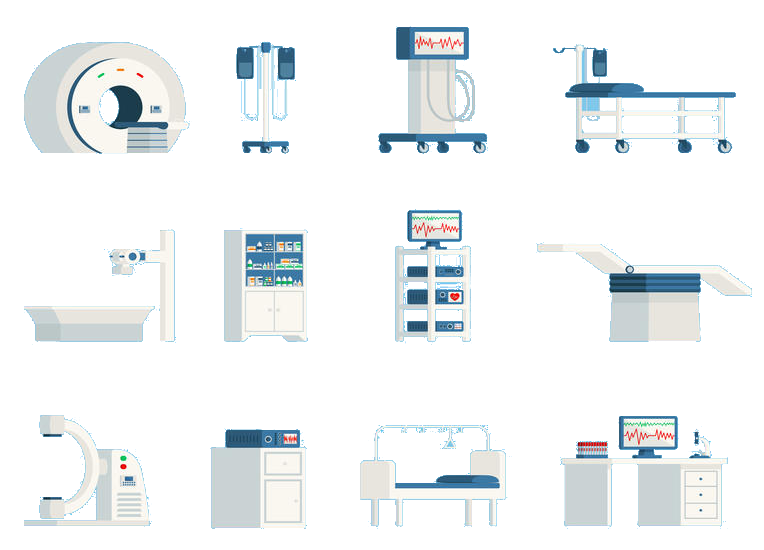 Medical equipment
Medizinische Bildgebung
Medical equipment
Medizinische Bildgebung
