
Deutsch-Chinesische Enzyklopädie, 德汉百科
 Art
Art

 Museum
 Architecture
 Bavaria
 Vacation and Travel
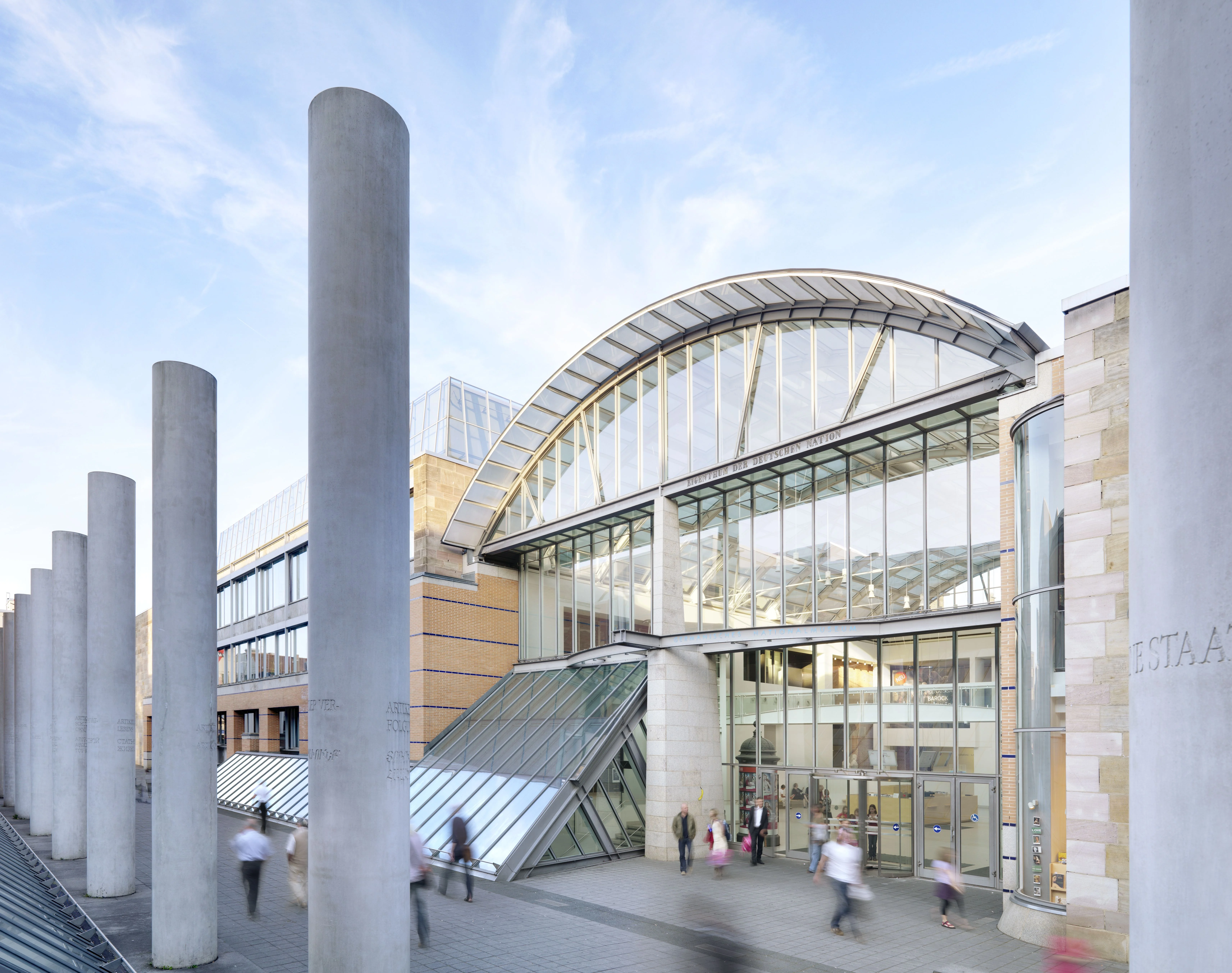
Das Germanische Nationalmuseum – Leibniz-Forschungsmuseum für Kulturgeschichte (GNM) in Nürnberg ist das größte kulturgeschichtliche Museum des deutschsprachigen Raums. Es beherbergt rund 1,3 Millionen Objekte, von denen 25.000 ausgestellt sind,[3] von der Frühzeit bis zur unmittelbaren Gegenwart.[4] Mit über 435.000 Besuchern pro Jahr zählt es zu den meistbesuchten Museen in Deutschland.
日耳曼国家博物馆(德语:Germanische NationalMuseum,GNM),位于德国纽伦堡,成立于1852年,是德国乃至全欧洲最大的博物馆之一,全馆共有120万件展品。 博物馆由一位弗兰肯男爵建立于1852年,它是在一座中世纪修道院的基础之上改建而来。成立之初的目标是包含所有可获得的德国文学、艺术和历史。1871年德意志帝国成立后,该博物馆很自然地成为了德国的国家博物馆。
日耳曼国家博物馆的展品非常丰富,包括了从石器时代到现代的文物和艺术品。实际上展馆内的内容不仅仅局限于德国国内,整个说德语的日耳曼地区内的文物都是博物馆收藏的对象。[3]它拥有17个固定展厅,一个由2万件展品组成的主题展向游客们展示了德国文化从石器时代的手斧发展到德国当代艺术家约瑟夫·博伊斯著名艺术品“毡毛外套”的历程。除固定展览外,该博物馆还会经常组织进行关于德意志文化的主题展览。实际上,日耳曼国家博物馆不仅仅担负着展览的功能,它更像是一个研究中心。除展厅外,它还包括了一个历史档案馆、一个艺术品档案馆、一个绘画与印刷品收藏室。它那向公众开放的图书室内拥有50万本关于欧洲艺术和文化历史的卷帙。它还拥有15个专门负责维护和修复艺术品的专门工作室,这些工作室除维护本馆自己的收藏品外,还负责为应用科学大学的实习生们提供文物保养方面的实践机会。博物馆还有两个艺术教育中心和一份与博物馆同名的出版物。
 History
Art
Art
History
Art
Art
 WD - Western art 15th century AD - 18th century AD
Metropolitan Museum of Art
Renaissance
WD - Western art 15th century AD - 18th century AD
Metropolitan Museum of Art
Renaissance
 Ships and Nautics
 Science and technology


哥伦布在寻找由西欧通往亚洲的西行之路时无意中发现了美洲大陆。这对世界历史的影响比他本人可能预料的还要大。他的这一发现是历史上一个重大转折点,开创 了在新大陆开发和殖民的新纪元。当时欧洲人口正在膨胀,有了这一发现,欧洲人就有了可以定居的两个新大陆,就有了能使欧洲经济发生改观的矿藏资源和原材 料。这一发现,导致了美国印地安人文明的毁灭。从长远的观点来看,还致使西半球上出现了一些新的国家。这些国家与曾在该地区定居的各个印地安部落截然不 同,它们极大地影响着旧大陆的各个国家。
哥伦布事迹的梗概是众所周知的。1451年他出生在意大利热耶亚。长大后当上了舰长,是一名技术娴熟的航海家。他终于确信西起大西洋是可以找到一条通往东 亚的切实可行的航海路线的。他坚决要把这种设想变成现实。他终于说服了伊莎贝拉一世女皇,女皇为他的探险航行提供了经费。
克里斯托弗·哥伦布(西班牙语:Cristóbal Colón;意大利语:Cristoforo Colombo;1451年10月31日—1506年5月20日)欧洲中世纪至近代的著名航海家、探险家与殖民者,其出生于中世纪的热内亚共和国(今意大利西北部)[3][4][5][6]。在西班牙君主伊莎贝拉一世及费尔南多二世的赞助下,哥伦布于1492年到1502年间四次出海横渡大西洋,并成功到达美洲大陆,他的一系列航行以及建立永久居民点的努力使得美洲大陆接入了近现代的人类文明,也为西方日后在美洲的拓殖奠定了基石。此后,西班牙开始殖民美洲,成为一系列欧洲国家殖民此地的先驱。哥伦布发现及开拓美洲的成就,使西班牙及美国等国家把他发现美洲大陆的日子赋予重要意义,其日期被定为法定假日,亦即哥伦布日。世界历史也将哥伦布的环球航行视作中世纪史与近代史的分界点。
在哥伦布启程前,西方社会(西欧国家为主)的资本主义和帝国主义抬头,各欧洲王国开始经济竞赛,纷纷通过在世界各地建立贸易航线和殖民地来扩充财富。哥伦布向西航行到达东印度群岛的冒险性计划得到西班牙王室的支持。西班牙王室看到了有可能在与对手有关亚洲的高利润的香料贸易的竞争中取得先手之遥远却美好的前景。在哥伦布1492年的第一次航行中,他在巴哈马群岛的一个他叫做“圣萨尔瓦多”的地方登陆,虽然不是计划中的日本,但他看见了当地人的虚实及丰富资源,回报给欧洲殖民手段的可行性—可传教控制、可占领掠夺、可奴役利用。在后来的三次航行中,哥伦布到达过大安的列斯群岛、小安的列斯群岛、加勒比海岸的委内瑞拉、以及中美洲,并宣布它们为西班牙帝国的领地。
尽管哥伦布不是第一个到达美洲的探险家(11世纪莱夫·埃里克松领导的诺尔斯人[7]的探险领先),但哥伦布的航海带来第一次欧洲与美洲的持续的接触,并且开辟了后来延续几个世纪的欧洲探险和殖民海外领地的大时代。这些对现代西方世界的历史发展有着无可估量的影响。哥伦布在现今大多数地方被当做一种无畏探索未知世界的精神象征。哥伦布自己认为他的成就主要在传播了基督的荣光[3]。但是对于美洲原住民而言,哥伦布的到来意味着对美洲原住民野蛮和残酷大掠杀的开始[8],近年哥伦布的成就日益受到左翼人权人士政治批判,部分美加的城市更把法定假日“哥伦布日”改为“美洲原住民日”,但亦有批评指有政治正确之嫌。
哥伦布从没承认他当时到达了一个以前欧洲人所不知的大陆,而是"到达"出发前的目标—东印度群岛。他将这个大陆上的居民叫做“印第安人(indios,西班牙语的印度人)”[9][10][11]。由于哥伦布和西班牙王室和它所指派的美洲殖民地管理者之间的紧张关系,使得他在1500年被逮捕并被解除对伊斯帕尼奥拉岛居民点的总督职位。后来还导致了关于哥伦布和他的继承者对西班牙王室许诺给他们的利益的法律诉讼。
Christoph Kolumbus (italienisch Cristoforo Colombo, spanisch Cristóbal Colón, portugiesisch Cristóvão Colombo, latinisiert Christophorus Columbus; * um 1451 in der Republik Genua; † 20. Mai 1506 in Valladolid, Königreich Kastilien) war ein italienischer Seefahrer in kastilischen Diensten, der im Jahr 1492 Amerika wiederentdeckte, als er eine Insel der Bahamas erreichte. Er wurde der erste Vizekönig der las Indias genannten Gebiete.
Im Wettlauf mit Portugal um den Seeweg nach Indien im Rahmen des Indienhandels wollte Kolumbus den Weg im Westen erschließen. Das Ziel seiner ersten Entdeckungsreise war die Hafenstadt Quinsay in China, das im damaligen Sprachgebrauch zu Indien gezählt wurde.
Auf seinen Entdeckungsreisen zwischen 1492 und 1504 steuerte Kolumbus vor allem die Großen Antillen an, darunter bei allen vier Reisen Hispaniola (heute Haiti und die Dominikanische Republik), wo er erste Kolonien gründete. Erst auf seiner vierten Reise betrat er im heutigen Honduras das amerikanische Festland. Kolumbus hat zeitlebens nicht erkannt, dass es sich um einen bis dahin unbekannten Kontinent handelte. Diese Auffassung vertrat erst Amerigo Vespucci, nach dem die Neue Welt schließlich Amerika genannt wurde.
Die ersten Entdecker Amerikas waren die Vorfahren der indigenen Bevölkerung Amerikas, die vor langer Zeit von Asien her in den zuvor menschenleeren Kontinent eindrangen (siehe Besiedlung Amerikas). Außerdem wurde Amerika schon rund 500 Jahre vor Kolumbus von Leif Eriksson oder anderen Isländern besucht. Wenn Kolumbus gleichwohl bis heute als maßgeblicher europäischer Entdecker Amerikas gilt, ist dies darauf zurückzuführen, dass erst seine Reisen zu dauerhafter Kolonisierung durch Menschen anderer Kontinente in geschichtlicher Zeit führten.
 Religion
 Literature
 World Heritage

犹太教(希伯来语:יהדות Yahadut),中文曾俗称挑筋教[注 1]或一赐乐业教,是在公元前西亚地区的游牧民族希伯来人中产生的,是犹太人的信仰、价值观和生活方式。犹太教是一神论的宗教,其主要经典是包括妥拉(摩西五经)在内的塔纳赫(即希伯来圣经,基督教称为旧约圣经),以及包括口传律法(密西拿)、口传律法注释(革马拉)以及圣经注释(米德拉什)在内的塔木德,对信奉犹太教的犹太人而言,犹太教是上帝和以色列人立约的关系[1]。
犹太人是一种宗教及种族结合的群体[2],包括生来就是犹太人,或是皈依犹太教的人。在2012年时,犹太人人口估计共1400万,约占世界总人口的0.2%[3]。其中42%住在以色列,其余42%住在美国和加拿大,剩下的大部分住在欧洲,其余的住在南美、亚洲、非洲及澳洲[4]。
犹太教崇拜独一的真神(一神信仰,希伯来语:יהוה),是希伯来人内部的民族宗教。犹太教认为《塔木德》是仅次于《希伯来圣经》的经籍。当亚历山大大帝征服希伯来人的犹太原居地后,希伯来人也易名为犹太人并散落到希腊帝国各处,公元前3世纪,希腊化的埃及托勒密王朝君主托勒密二世,召集70多位懂希腊语的犹太人,集中整理犹太教文献并译成希腊语,即目前基督教使用的希腊语圣经中的旧约全书部分,所谓七十士译本。后来犹太国被罗马帝国彻底摧毁,犹太教位于耶路撒冷的圣殿被拆毁,只留下一段残破的西墙(俗称哭墙),犹太人散落到欧亚各地。
历史上,犹太人在世界各地面对多次毁灭性的灾难和逼害。犹太人由于两千多年一直分散在世界各地,语言、文字已经分化,只是靠着统一的宗教及文化维系其单一的民族性。
基督宗教方面,由于新约圣经记载犹太人逼害基督徒,且杀害耶稣基督,尽管早年的基督徒也是犹太人,只是后来使徒保罗(圣保罗)等把基督教传至罗马帝国,信仰基督教的人远多于犹太人。
天主教会及正教会在逾千年历史一直迫害犹太人,教宗若望·保禄二世在1992年,承认天主教会对抗及歧视犹太人,造成了他们逾承受苦难昀历史。
部分犹太人向往自己民族的辉煌历史。19世纪,犹太复国主义(锡安主义)思潮兴起,各地犹太人以买地,驱赶,掠夺等手段陆续回到巴勒斯坦,建立以色列这个世界上唯一犹太国家。
由于在遵守方式和程度的差异,现今的犹太教主要有三大派系,分别是正统派、保守派及改革派。在三大派系之外,卡拉派也是犹太教的组成部分,可萨人信奉的就是卡拉派,目前卡拉派在以色列约有40000名信徒。
一些宗教学者将犹太教、基督教和伊斯兰教通称为亚伯拉罕诸教,因为三者均奉旧约中的亚伯拉罕为他们的先知。
Unter Judentum (von griechisch ἰουδαϊσμός ioudaismos, hebräisch יהדות Jahadut) versteht man einerseits die Religion, die Traditionen und Lebensweise, die Philosophie und meist auch die Kulturen der Juden (Judaismus) und andererseits die Gesamtheit der Juden.[1]
Die jüdische Religion, die als „ethischer Monotheismus“ umschrieben wird,[2] ist die älteste der monotheistischen abrahamitischen Religionen. Sie hat eine Geschichte von mehr als 3000 Jahren, in denen sie sich entwickelt hat.
Man unterscheidet zwischen aschkenasischem und sephardischem Judentum, seit dem Durchbruch der jüdischen Aufklärung gibt es zusätzlich religiöse Unterteilungen in Reformjudentum, konservatives und liberales Judentum sowie orthodoxes Judentum mit verschiedenen Strömungen.
Grundlage des Judentums ist die Torah (hier deutsch „Gesetz“),[3] das sind die fünf Bücher Moses, die den für das Judentum wichtigsten Teil der hebräischen Bibel (Tanach) bilden, sowie die die Torah erläuternden rabbinischen Schriften, die traditionellerweise als „mündliche Torah“ bezeichnet werden.
Im Jahr 2010 lebten weltweit etwa 13,5 bis 15 Millionen Juden, die meisten in Israel und in den Vereinigten Staaten von Amerika. 10 bis 15 Prozent davon werden der jüdischen Orthodoxie zugerechnet.
ユダヤ教(ユダヤきょう、ヘブライ語: יהדות[1])は、古代の中近東で始まった唯一神ヤハウェ(יהוה)を神とし、選民思想やメシア(救世主)信仰などを特色とするユダヤ人の民族宗教である。ただしメシア思想は、現在ではハバド・ルバヴィッチ派などを除いて中心的なものとなっていない。 『タナハ』(キリスト教の『旧約聖書』に当たる書物)が重要な聖典とされる。
『タナハ』 (ヘブライ語ラテン文字転記:tanakh)、『ミクラー』 (miqra') と呼ばれる書を聖典とする。これはキリスト教の『旧約聖書』に当たる書物である。ただし、成立状況が異なるので、キリスト教とは書物の配列が異なる。イスラム教でも『モーセ五書』は『コーラン』に次いで重要視される。ユダヤ教では、この他にタルムードをはじめとしたラビ文学も重視する
しかし、ユダヤ教は信仰、教義そのもの以上に、その前提としての行為・行動の実践と学究を重視し、キリスト教、特にルター主義とは違う[2]。例えば、ユダヤ教の観点からは、信仰を持っていたとしても、アミーダー・アーレーヌー・ムーサーフなどを含んだシャハリート・ミンハー・マアリーブを行わないこと、シェマア・イスラーエールを唱えないこと、ミクラーを読まないこと、食事の前とトイレの後の手洗いと祈りを行わないこと、戸口のメズーザーに手を当てて祈りを行わないこと、カシュルートを実行しないこと、タルムード・トーラー、ベート・ミドラーシュ、イェシーバー、コーレールなどミクラーとラビ文学の研究を行わないこと、シャッバートを行わないこと、パーラーシャーを読まないことなどは、ユダヤ教徒としてあるべき姿とは言えない。「信じるものは救われる」などという講義をするラビはとても考えられない。そのため改宗にも時間がかかり、単なる入信とは大きく異なる[3]。
Judaism (originally from Hebrew יהודה, Yehudah, "Judah";[1][2] via Latin and Greek) is the religion of the Jewish people. It is an ancient, monotheistic, Abrahamic religion with the Torah as its foundational text.[3] It encompasses the religion, philosophy, and culture of the Jewish people.[4] Judaism is considered by religious Jews to be the expression of the covenant that God established with the Children of Israel.[5] Judaism encompasses a wide body of texts, practices, theological positions, and forms of organization. The Torah is part of the larger text known as the Tanakh or the Hebrew Bible, and supplemental oral tradition represented by later texts such as the Midrash and the Talmud. With between 14.5 and 17.4 million adherents worldwide,[6] Judaism is the tenth largest religion in the world.
Within Judaism there are a variety of movements, most of which emerged from Rabbinic Judaism, which holds that God revealed his laws and commandments to Moses on Mount Sinai in the form of both the Written and Oral Torah.[7] Historically, this assertion was challenged by various groups such as the Sadducees and Hellenistic Judaism during the Second Temple period; the Karaites and Sabbateans during the early and later medieval period;[8] and among segments of the modern non-Orthodox denominations. Modern branches of Judaism such as Humanistic Judaism may be nontheistic.[9] Today, the largest Jewish religious movements are Orthodox Judaism (Haredi Judaism and Modern Orthodox Judaism), Conservative Judaism, and Reform Judaism. Major sources of difference between these groups are their approaches to Jewish law, the authority of the Rabbinic tradition, and the significance of the State of Israel.[10] Orthodox Judaism maintains that the Torah and Jewish law are divine in origin, eternal and unalterable, and that they should be strictly followed. Conservative and Reform Judaism are more liberal, with Conservative Judaism generally promoting a more traditionalist interpretation of Judaism's requirements than Reform Judaism. A typical Reform position is that Jewish law should be viewed as a set of general guidelines rather than as a set of restrictions and obligations whose observance is required of all Jews.[11][12] Historically, special courts enforced Jewish law; today, these courts still exist but the practice of Judaism is mostly voluntary.[13] Authority on theological and legal matters is not vested in any one person or organization, but in the sacred texts and the rabbis and scholars who interpret them.[14]
The history of Judaism spans more than 3,000 years.[15] Judaism has its roots as an organized religion in the Middle East during the Bronze Age.[16] Judaism is considered one of the oldest monotheistic religions.[17][18] The Hebrews and Israelites were already referred to as "Jews" in later books of the Tanakh such as the Book of Esther, with the term Jews replacing the title "Children of Israel".[19] Judaism's texts, traditions and values strongly influenced later Abrahamic religions, including Christianity, Islam and the Baha'i Faith.[20][21] Many aspects of Judaism have also directly or indirectly influenced secular Western ethics and civil law.[22][page needed] Hebraism was just as important a factor in the ancient era development of Western civilization as Hellenism, and Judaism, as the background of Christianity, has considerably shaped Western ideals and morality since Early Christianity.[23]
Jews are an ethnoreligious group[24] including those born Jewish, in addition to converts to Judaism. In 2015, the world Jewish population was estimated at about 14.3 million, or roughly 0.2% of the total world population.[25] About 43% of all Jews reside in Israel and another 43% reside in the United States and Canada, with most of the remainder living in Europe, and other minority groups spread throughout Latin America, Asia, Africa, and Australia.[25]
Le judaïsme (du grec Ιουδαϊσμός, yiddish : יידישקייט yiddishkeit, ladino : ג’ודאיסמו Djudaismo, allemand : Judentum, hébreu : יהדות yahadout) est variablement défini comme « une forme de vie religieuse dont la caractéristique essentielle est la croyance à un Être suprême, auteur — de quelque manière qu'on conçoive son action — de l'univers qu'il gouverne par sa providence »1, ou comme « la religion des Juifs, ainsi que la théologie, la loi et les traditions culturelles du peuple juif »2, ou comme « une religion […], une culture — résultat ou fondement de la religion, mais ayant un devenir propre, […] une sensibilité diffuse faite de quelques idées et souvenirs, de quelques coutumes et émotions, d’une solidarité avec les juifs persécutés en tant que juifs »3 ou comme « l'ensemble des rituels et des autres pratiques, des croyances et des valeurs, des loyautés historiques et politiques qui constituent l'allégeance au peuple d'Israël »4.
Cette pluralité est tributaire d’une part de l’évolution du terme au cours de l’histoire, celui-ci désignant originellement l’ensemble des traits caractérisant le peuple juif, constitué des descendants des Israélites provenant de l’antique terre d'Israël et de ceux qui les ont rejoints par la conversionnote 1, et d’autre part de la différence de perception selon l'appartenance ou non au judaïsme. Il a souvent été représenté comme une « religion juive » antithétique de la religion chrétienne, alors que des Juifs le définissent aussi au-delà ou en dehors du fait religieux5, certains philosophes, comme Daniel Boyarin ou Bernard-Henri Lévy, allant jusqu’à dire que la religion en tant que théologie édifiée par une croyance, des dogmes et une instance suprême, centrale et doctrinale « n’appartient pas à l’esprit du judaïsme »6.
Le judaïsme n’en possède pas moins ses textes fondamentaux, compilés dans le Tanakh (Torah, Nevi'im et Ketouvim), également appelé Bible hébraïque. Il y est dit que le monde a été créé par une entité une et unique, éternelle, omnipotente, omnisciente, omniprésente, juste et miséricordieuse dont le nom, considéré comme trop saint pour être prononcé, est devenu ineffable. Cet être a contracté une alliance avec les pères du peuple d’Israël, promettant de prendre ce peuple comme « trésor entre tous les peuples » pour autant que les enfants d’Israël respectent sa loi, qui comprend une composante cultuelle doublée d’une dimension éthique, ainsi que des aspects civils, matrimoniaux et législatifs. L’adhésion à cette loi induit une manière de se comporter, de se vêtir, de se nourrir, de se mouvoir propre à ceux qui y adhèrent. De plus, son interprétation qui n’a vraisemblablement jamais été unique ni unifiée engendre diverses écoles de traditions et de pensées, dont la plupart considèrent toutefois les textes comme le support écrit d’une parole divine éternelle et perpétuellement renouvelée à travers son étude au cours des générations. L’existence de cette tradition orale qui tend à affranchir la Bible des contingences historiques, permet au judaïsme, né en un lieu particulier dans un peuple particulier, de survivre à la dispersion géographique de ce peuple et à la perte de ses supports tangibles comme son autonomie politique ou le temple construit pour héberger la divinité.
Il marque l’histoire du monde avec l’émergence du monothéisme, croyance héritée par les christianismes et les différentes formes d’islam dont le développement historique a fini par marginaliser le judaïsme.
L'Ebraismo (in ebraico: יהדות?) indica sia una religione monoteista sia uno stile di vita sia una tradizione culturale diffusa all'interno del popolo ebraico, nelle varie comunità presenti in tutti i paesi del mondo.
Come religione l'odierno ebraismo, detto anche ebraismo rabbinico, è l'evoluzione maggioritaria della religione biblica, frutto secondo la tradizione, dell'alleanza (Briberit) tra Dio, indicato nella Torah con il nome di Yahweh, e il popolo ebraico. I suoi testi fondamentali sono la Torah, il Tanakh e la tradizione orale supplementare, rappresentata dai testi della Mishnah e del Talmud.
Al suo centro, il Tanakh è un resoconto del rapporto di Israele con Dio, dalla loro storia più antica fino alla costruzione del Secondo Tempio (ca. 535 a.C.). Abramo è ritenuto il primo "ebreo" e padre del popolo ebraico. Come ricompensa per il suo atto di fede in un solo Dio, gli fu promesso che Isacco, suo secondo figlio, avrebbe ereditato la Terra d'Israele (che allora si chiamava Canaan). Più tardi Giacobbe e i suoi figli furono ridotti in schiavitù in Egitto e Dio comandò Mosè di guidare l'Esodo fuori dall'Egitto. Sul Monte Sinai ricevette la Torah. Alla fine, Dio li portò alla Terra d'Israele dove il tabernacolo venne eretto nella città di Silo e per oltre 300 anni radunò la nazione compatta contro gli attacchi di nemici. Col passare del tempo, il livello spirituale della nazione declinò al punto che Dio permise che i Filistei catturassero il tabernacolo stesso. Il popolo di Israele poi disse al profeta Samuele che avevano bisogno di essere governati da un re permanente e Samuele nominò Saul come loro re. Quando il popolo convinse Saul ad andare contro un comando trasmessogli da Samuele, Dio disse a Samuele di nominare Davide in sua vece.[1]
Una volta che Davide salì al trono, disse al profeta Natan che voleva costruire un tempio permanente, e come ricompensa per le sue azioni, Dio promise a Davide che avrebbe permesso al figlio, Salomone, di costruire tale primo tempio permanente e che il trono non si sarebbe mai più discostato dai suoi figli.
La tradizione rabbinica sostiene che i dettagli e l'interpretazione della legge, chiamata Torah orale o Legge orale, erano in origine una tradizione non scritta basata su ciò che Dio aveva detto a Mosè sul Monte Sinai. Tuttavia, man mano che le persecuzioni degli ebrei aumentarono e i dettagli correvano il rischio di essere dimenticati, tali leggi orali furono registrate da Rabbi Yehudah HaNasi (Giuda il Principe) nella Mishnah, redatta verso il 200 d.C. Il Talmud è una compilazione sia della Mishnah che della Ghemara, commentari rabbinici redatti nel corso dei tre secoli successivi. La Ghemara ha origine da due importanti centri di studi ebraici, la Palestina e Babilonia. Di conseguenza, si sono sviluppati due corpi di analisi, con la relativa creazione di due opere talmudiche: la compilazione più antica si chiama Talmud di Gerusalemme (Yerushalmi), redatta durante il IV secolo in Israele. Il Talmud babilonese (Bavli) è composto dalle discussioni tenute nei centri di studio dai saggi Ravina I, Ravina II e Rav Ashi negli anni 500, pur continuando a essere modificato successivamente.[2]
Alcuni storici critici si oppongono all'idea che i testi sacri, compresa la Bibbia ebraica (Tanakh), siano stati ispirati divinamente. Molti di tali studiosi accettano i principi generali dell'ipotesi documentale e suggeriscono che la Torah consista di testi incongruenti editi insieme in un modo che enfatizza le narrazioni divergenti.[3][4][5] Molti asseriscono che durante il Primo Tempio il popolo di Israele credeva che ogni nazione avesse il proprio dio, ma che il loro fosse superiore agli altri dei.[6] Si afferma inoltre che il monoteismo stretto si sviluppò durante l'Esilio babilonese, forse come reazione al dualismo zoroastriano.[7] Secondo questa opinione, fu solo nel periodo ellenico che la maggioranza degli ebrei finirono per credere che il loro dio fosse l'unico dio, e che si formò la nozione di una nazione ebraica ben definita identica alla religione ebraica.[1][8]
L'accademico e biblista John Day asserisce che le origini dello Yahweh testamentario, El, Asherah e Baal, potrebbero essere radicate nella prima religione cananea, che si concentrava su un pantheon di dèi molto simili al pantheon greco.[9]
El término judaísmo se refiere a la religión, tradición y cultura del pueblo judío. Es la más antigua de las tres religiones monoteístas,4 junto con el cristianismo y el islam, originadas en Medio Oriente, llamadas «religiones del Libro» o «abrahámicas». Cuenta con el menor número de fieles entre ellas. Históricamente, del judaísmo derivan las religiones del cristianismo e islamismo.
Aunque no existe un cuerpo único que sistematice y fije el contenido dogmático del judaísmo, su práctica se basa en las enseñanzas de la Torá, también llamada Pentateuco, compuesto por cinco libros. A su vez, la Torá o el Pentateuco es uno de los tres libros que conforman el Tanaj (o Antiguo Testamento), a los que se atribuye inspiración divina.
En la práctica religiosa ortodoxa, la tradición oral también desempeña un papel importante. Según las creencias, fue entregada a Moisés junto con la Torá y conservada desde su época y la de los profetas. La tradición oral rige la interpretación del texto bíblico, la codificación y el comentario. Esta tradición oral fue transcrita, dando nacimiento a la Mishná, que posteriormente sería la base del Talmud y de un enorme cuerpo exegético, desarrollado hasta el día de hoy por los estudiosos. El compendio de las leyes extraídas de estos textos forma la ley judía o Halajá.
El rasgo principal de la fe judía es la creencia en un Dios omnisciente, omnipotente y providente, que habría creado el universo y elegido al pueblo judío para revelarle la ley contenida en los Diez Mandamientos y las prescripciones rituales de los libros tercero y cuarto de la Torá. Consecuentemente, las normas derivadas de tales textos y de la tradición oral constituyen la guía de vida de los judíos, aunque la observancia de las mismas varía mucho de unos grupos a otros.
Otra de las características del judaísmo, que lo diferencia de las otras religiones monoteístas, radica en que se considera no solo como una religión, sino también como una tradición, una cultura y una nación.56 Las otras religiones trascienden varias naciones y culturas, mientras que el judaísmo considera la religión y la cultura concebida para un pueblo específico. El judaísmo no exige de los no judíos unirse al pueblo judío ni adoptar su religión, aunque los conversos son reconocidos como judíos en todo el sentido de la palabra. Asimismo, el judío ha sido comisionado por sus escrituras a ser «luz a las naciones» y propagar el monoteísmo ético por todo el mundo. La religión, la cultura y el pueblo judío pueden considerarse conceptos separados, pero están estrechamente interrelacionados. La tradición y la cultura judía son muy diversas y heterogéneas, ya que se desarrollaron de modos distintos en diferentes comunidades y cada comunidad local incorporó elementos culturales de los distintos países a los que llegaron los judíos a partir de la dispersión.
Иудаи́зм, иуде́йство (др.-греч. Ἰουδαϊσμός), «иудейская религия» — религиозное, национальное и этическое[1] мировоззрение, сформировавшееся у еврейского народа, одна из древнейших монотеистических[K 1] религий человечества и самая древняя из существующих по настоящее время[3][4].
Иудеи — этнорелигиозная группа[5], включающая тех, кто был рождён евреем, и тех, кто обратился в иудаизм. В 2015 году численность иудеев во всём мире оценивалась в 14,3 миллиона, или около 0,2 % от всего населения Земли. Около 42 % всех иудеев проживает в Израиле и около 42 % проживает в США и Канаде, большинство остальных проживает в Европе[6].
Иудаизм заявляет об исторической преемственности, охватывающей более чем 3000 лет.
 Music
Music
 Review
 Toscana

文艺复兴是14~16世纪反映西欧各国正在形成中的资产阶级要求的思想、文化运动。其主要中心最初在意大利,16世纪扩及德意志、尼德兰、英国、法国和 西班牙等地。“文艺复兴”的概念在14~16世纪时己被意大利的人文主义作家和学者所使用。该词源自意大利文“Rinascita”,一般多写为法文 “Renaissance”。它概括了乔托以来的文艺活动的特点,被世界各国沿用至今。中国曾有人直译为“再生”或“再生运动”,但“文艺复兴”的译法己 被普遍接受。当时人们认为,文艺在希腊、罗马古典时代曾高度繁荣,但在中世纪“黑暗时代”却衰败湮没,直到14世纪以后才获得“再生”与“复兴”。因此, 文艺复兴着重表明了新文化以古典为师的一面,但它并非单纯的古典复兴,实际上是反封建的新文化的创造。文艺复兴主要表现在科学、文学和艺术的普遍高涨,但 因各国的社会经济和历史条件不同,在各国带有各自的特征。
意大利文艺复兴 13世纪末14世纪初,意大利在欧洲最早产生资本主义萌芽;但由于政治、经济发展不平衡,先进地区只限于少数几个城市,尤以佛罗伦萨、 威尼斯为最。地处意大利中部的佛罗伦萨出现了以毛织、银行、布匹加工业等为主的七大行会,它们不仅控制佛罗伦萨的经济,也直接掌握城市政权。佛罗伦萨的最 高权力机构——长老会议的成员只能由七大行会从其会员中遴选,贵族被剥夺参政权,广大工人处于无权地位。在这种政治、经济背景下的佛罗伦萨,成为意大利乃 至整个欧洲的文艺复兴发源地和最大中心。
文艺复兴运动是一场发生在14世纪至16世纪的欧洲的反封建、反神学的资产阶级思想文化运动。它起源于意大利,后扩展至欧洲各国。文艺复兴并不是复古,而是强调“人文主义”,以人为本。一般认为佛罗伦萨、威尼斯等城市是意大利文艺复兴的中心。“文艺复兴”一词的意大利语源由ri-(意为“重新”)和nascere(意为“出生”)构成[1]。文艺复兴时期的思想基础是人文浪漫主义,它源于罗马人文主义的概念和对普罗塔哥拉斯等古典希腊哲学的重新发现,后者说“人是万物的尺度”。
“文艺复兴”一词亦可粗略地指代这一历史时期,但由于欧洲各地因其引发的变化并非完全一致,故“文艺复兴”只是对这一时期的通称。这场文化运动基本上以复兴古罗马为名,动机大致上是要改变中世纪社会逐渐严重的腐败,却不是将古罗马原样重现,反而是加入新思考和检讨,所以做出实际上是一种彻底不同的新型态文化变革,其中虽囊括了对古典文献的重新学习和承接,却在绘画方面透过直线透视法的发展,以及逐步而广泛开展的中古时代教育变革,乃至于人体结构、化学、天文技术和科学知识的追求等等,这些极重要的近代科学发展,除了打破神权时代,也打破了希腊罗马的古文化。传统观点认为,这种知识上的转变让文艺复兴发挥了衔接中世纪和近代的作用。尽管文艺复兴在知识、文学、社会和政治各个方面都引发了巨大变革,但令其闻名于世的或许还在于这一时期的艺术成就,以及列奥纳多·达芬奇、米开朗基罗等博学家做出的创新贡献。[2][3]
一般认为,文艺复兴始于意大利,这与其北部兴盛的地中海贸易有关,商人除了将当时中东和希腊获得的古罗马文献汇集于此进行研究,富裕的风雅绅商更倾力支持着艺术创作。正式的发展是从14世纪托斯卡纳的佛罗伦萨开展的,但对此尚有质疑之声[4]。就这场运动的起源和特点而言,多种理论已经提出了各自的见解,但其关注的焦点不尽相同:其中包括有当时佛罗伦萨的社会和公民的特点;当地的政治结构;当地统治阶级美第奇家族的赞助[5];以及奥斯曼土耳其人攻陷君士坦丁堡后,大批流入意大利的希腊语学者及书籍[6][7][8]。史学上关于文艺复兴的内容很多且颇为复杂,而“文艺复兴”作为词汇的作用,及其作为历史过渡期的意义,都引发了史学家的诸多争论。[9]文艺复兴一词能否作为是中世纪后的文化“进步”,一些史学家对此是持怀疑态度的:他们认为,这个阶段只是对古典时代抱持悲观与缅怀的时期,社会早就不是单纯的捡拾古人的思想,反而是巨大创新的重塑了一个时代。[10]而另一些人则关注两个时代之间的连续性。[11]实际上,现在已有人提出不应继续使用这个词汇,因为他们认为“文艺复兴”一词只是现代主义的产物,是使用历史来验证和发扬当代理想的工具[12]。“文艺复兴”一词也被用于其他历史或文化运动,如卡洛林文艺复兴和12世纪的文艺复兴就是这样的例子。
Renaissance [rənɛˈsɑ̃s] (entlehnt aus französisch renaissance „Wiedergeburt“) beschreibt die europäische Kulturepoche in der Zeit des Umbruchs vom Mittelalter zur Neuzeit im 15. und 16. Jahrhundert. Sie war von dem Bemühen um eine Wiederbelebung der kulturellen Leistungen der griechischen und römischen Antike gekennzeichnet. Ausgehend von den Städten Norditaliens beeinflussten die Künstler und Gelehrten der Renaissance mit ihrer innovativen Malerei, Architektur, Skulptur, Literatur und Philosophie auch die Länder nördlich der Alpen, wenn auch in jeweils unterschiedlicher Ausprägung. Die Bezeichnung „Renaissance“ entstand selbst erst im 19. Jahrhundert.
Bereits im Mittelalter hatte Europa auf die Antike zurückgeschaut, doch erst im Spätmittelalter wurden wichtige antike Texte wiederentdeckt und zugänglich gemacht. Im Renaissance-Humanismus wurde das antike Staatswesen studiert. Als für die Renaissance charakteristisch gelten ferner die vielen damals gemachten Erfindungen und Entdeckungen, die man als Folge eines allgemeinen geistigen Erwachens beschreiben kann (siehe Technik in der Renaissance).
Als Kernzeitraum der Renaissance wird in der Kunstgeschichte das 15. (Quattrocento) und 16. Jahrhundert (Cinquecento) angesehen. Die Spätrenaissance wird auch als Manierismus bezeichnet. Das Ende der Epoche vollzieht sich im beginnenden 17. Jahrhundert in Italien durch den neu hervortretenden Stil des Barock. Außerhalb Italiens dominierten noch längere Zeit Formen der Gotik; die Übergänge sind hier fließend und ihre Einschätzung hängt davon ab, ob ein engerer Stilbegriff der Renaissance verwendet wird oder ein weiterer Epochenbegriff. Im protestantischen Nordeuropa wird der Epochenbegriff der Renaissance von dem der Reformation überlagert.
Als Künstler der Renaissance sind besonders Italiener wie Alberti, Donatello, Botticelli, Leonardo da Vinci, Bramante, Raffael, Michelangelo und Tizian sowie im deutschen Sprachraum Albrecht Dürer und die Donauschule bekannt. Zu dieser Epoche gehören aber auch bedeutende Schriftsteller von Dante Alighieri bis William Shakespeare. Der Staatsphilosoph Niccolò Machiavelli gilt als Analytiker und Vertreter einer selbstbewussten Machtpolitik. Erasmus von Rotterdam wiederum steht für Moral und Selbstreflexion. In der Musik verbindet man die Epoche vor allem mit verstärkter Mehrstimmigkeit und neuer Harmonie etwa bei Orlando di Lasso.
ルネサンス(仏: Renaissance[† 1][† 2])は「再生」「復活」を意味するフランス語であり、一義的には、古典古代(ギリシア、ローマ)の文化を復興しようとする文化運動である。14世紀にイタリアで始まり、やがて西欧各国に広まった(文化運動としてのルネサンス)。また、これらの時代(14世紀 - 16世紀)を指すこともある(時代区分としてのルネサンス)。
日本では長らく文芸復興と訳されており、ルネサンスの時代を「復興期」と呼ぶこともあったが[1]、文芸に限らず広義に使われるため、現在では訳語として文芸復興という言葉は余り使われない。ルネッサンスとも表記されるが[2]、現在の歴史学、美術史等ではルネサンスという表記が一般的である。
The Renaissance (UK: /rɪˈneɪsəns/ rin-AY-sənss, US: /ˈrɛnəsɑːns/ ( listen) REN-ə-sahnss)[2][a] was a period in European history marking the transition from the Middle Ages to modernity and covering the 15th and 16th centuries. It occurred after the Crisis of the Late Middle Ages and was associated with great social change. In addition to the standard periodization, proponents of a "long Renaissance" may put its beginning in the 14th century and its end in the 17th century.[4] The traditional view focuses more on the early modern aspects of the Renaissance and argues that it was a break from the past, but many historians today focus more on its medieval aspects and argue that it was an extension of the Middle Ages.[5][6]
The intellectual basis of the Renaissance was its version of humanism, derived from the concept of Roman humanitas and the rediscovery of classical Greek philosophy, such as that of Protagoras, who said that "man is the measure of all things." This new thinking became manifest in art, architecture, politics, science and literature. Early examples were the development of perspective in oil painting and the revived knowledge of how to make concrete. Although the invention of metal movable type sped the dissemination of ideas from the later 15th century, the changes of the Renaissance were not uniform across Europe: the first traces appear in Italy as early as the late 13th century, in particular with the writings of Dante and the paintings of Giotto.
As a cultural movement, the Renaissance encompassed innovative flowering of Latin and vernacular literatures, beginning with the 14th-century resurgence of learning based on classical sources, which contemporaries credited to Petrarch; the development of linear perspective and other techniques of rendering a more natural reality in painting; and gradual but widespread educational reform. In politics, the Renaissance contributed to the development of the customs and conventions of diplomacy, and in science to an increased reliance on observation and inductive reasoning. Although the Renaissance saw revolutions in many intellectual pursuits, as well as social and political upheaval, it is perhaps best known for its artistic developments and the contributions of such polymaths as Leonardo da Vinci and Michelangelo, who inspired the term "Renaissance man".[7][8]
The Renaissance began in the 14th century in Florence, Italy.[9] Various theories have been proposed to account for its origins and characteristics, focusing on a variety of factors including the social and civic peculiarities of Florence at the time: its political structure, the patronage of its dominant family, the Medici,[10][11] and the migration of Greek scholars and their texts to Italy following the Fall of Constantinople to the Ottoman Turks.[12][13][page needed][14] Other major centres were northern Italian city-states such as Venice, Genoa, Milan, Bologna, and Rome during the Renaissance Papacy or Belgian cities such as Bruges, Ghent, Brussels, Leuven or Antwerp.
La Renaissance est une période de l'époque moderne associée à la redécouverte de la littérature, de la philosophie et des sciences de l'Antiquité, qui a pour point de départ la Renaissance italienne. En effet, la Renaissance est l'œuvre, à Florence (Italie), des artistes qui peuvent y exprimer librement leur art : une Pré-Renaissance se produit dans plusieurs villes d'Italie dès les XIIIe et XIVe siècles (Duecento et Trecento). La Renaissance s'exprime au XVe siècle dans la plus grande partie de l'Italie, en Espagne, en Flandre et en Allemagne, sous la forme de ce que l'on appelle la Première Renaissance (Quattrocento) ; ainsi en Flandre, sur les quatre primitifs flamands (Jan Van Eyck, Hans Memling, Jheronimus Bosch, Brueghel Den Oude), les deux premiers vivent au XVe siècle. La Renaissance concerne l'ensemble de l'Europe au XVIe siècle (Cinquecento).
On parle de Renaissance artistique au sens où les œuvres de cette époque ne s'inspirent plus du Moyen Âge mais de l'art gréco-romain.
Il Rinascimento si sviluppò in Italia tra la fine del Medioevo e l'inizio dell'Età Moderna in un arco di tempo che va dall'inizio del quindicesimo secolo, fino alla fine del sedicesimo secolo.[1] I suoi limiti cronologici conoscono ampie differenze tra discipline ed aree geografiche.[2]
Vissuto dalla maggior parte dei suoi protagonisti come un'età di cambiamento, maturò un nuovo modo di concepire il mondo e se stessi, sviluppando le idee dell'umanesimo, nato in ambito letterario nel quattordicesimo secolo per il rinato interesse degli studi classici, per opera soprattutto di Francesco Petrarca[3], e portandolo a influenzare per la prima volta anche le arti figurative e la mentalità corrente.
Renacimiento es el nombre dado en el siglo XIX a un amplio movimiento cultural que se produjo en Europa Occidental durante los siglos XV y XVI. Fue un periodo de transición entre la Edad Media y los inicios de la Edad Moderna. Sus principales exponentes se hallan en el campo de las artes, aunque también se produjo una renovación en las ciencias, tanto naturales como humanas. La ciudad de Florencia, en Italia, fue el lugar de nacimiento y desarrollo de este movimiento, que se extendió después por toda Europa.
El Renacimiento fue fruto de la difusión de las ideas del humanismo, que determinaron una nueva concepción del hombre y del mundo. El término «renacimiento» se utilizó reivindicando ciertos elementos de la cultura clásica griega y romana, y se aplicó originariamente como una vuelta a los valores de la cultura grecolatina y a la contemplación libre de la naturaleza tras siglos de predominio de un tipo de mentalidad más rígida y dogmática establecida en la Europa medieval. En esta nueva etapa se planteó una nueva forma de ver el mundo y al ser humano, con nuevos enfoques en los campos de las artes, la política, la filosofía y las ciencias, sustituyendo el teocentrismo medieval por el antropocentrismo.
El historiador y artista Giorgio Vasari fue el primero que utilizó la palabra "renacimiento" (rinascita) para describir la ruptura con la tradición artística medieval, a la que calificaba como un estilo de bárbaros, que más tarde recibirá el calificativo de Gótico. Vasari opinaba que las artes habían entrado en decadencia al hundirse el Imperio Romano y solo habían sido rescatadas por los artistas de la Toscana a partir del siglo XIII.1
El concepto actual de Renacimiento (del francés Renaissance) fue formulado a mediados del siglo XIX por el historiador francés Jules Michelet, en su obra Renaissance et Réforme, publicada en 1855.2 Por primera vez, Michelet usó el término en el sentido de un periodo histórico, que abarcaría desde el descubrimiento de América hasta Galileo, y lo consideró más importante por sus desarrollos científicos que por el arte o la cultura. Michelet, que era nacionalista francés y republicano, le atribuyó al Renacimiento unos valores democráticos opuestos a los de la Edad Media precedente y un protagonismo francés.3
El otro historiador que tuvo gran influencia en dar forma al concepto de Renacimiento fue el suizo Jacob Burckhardt, quien lo definió como el periodo entre Giotto y Miguel Ángel, es decir, del siglo XIV a mediados del xvi. Buckhardt destacaba del Renacimiento el surgimiento del espíritu individualista moderno, que la Edad Media habría cohibido.4
Desde una perspectiva de la evolución artística general de Europa, el Renacimiento significó una «ruptura» con la unidad estilística que hasta ese momento había sido «supranacional». El Renacimiento no fue un fenómeno unitario desde los puntos de vista cronológico y geográfico: su ámbito se limitó a la cultura europea y a los territorios americanos recién descubiertos, a los que las novedades renacentistas llegaron tardíamente. Su desarrollo coincidió con el inicio de la Edad Moderna, marcada por la consolidación de los estados europeos, los viajes transoceánicos que pusieron en contacto a Europa y América, la descomposición del feudalismo, el ascenso de la burguesía y la afirmación del capitalismo. Sin embargo, muchos de estos fenómenos rebasan por su magnitud y mayor extensión en el tiempo el ámbito renacentista.5
Возрожде́ние, или Ренесса́нс (фр. Renaissance, итал. Rinascimento от лат. renasci «рождаться опять, возрождаться»[1]) — имеющая мировое значение эпоха в истории культуры Европы, пришедшая на смену Средним векам и предшествующая Просвещению и Новому времени. Приходится — в Италии — на начало XIV века (повсеместно в Европе — с XV—XVI веков) — последнюю четверть XVI века и в некоторых случаях — первые десятилетия XVII века. Отличительная черта эпохи Возрождения — светский характер культуры, её гуманизм и антропоцентризм (то есть интерес, в первую очередь, к человеку и его деятельности). Расцветает интерес к античной культуре, происходит её «возрождение» — так и появился термин.
Термин Возрождение встречается уже у итальянских гуманистов, например, у Джорджо Вазари. В современном значении термин был введён в обиход французским историком XIX века Жюлем Мишле[2]. В настоящее время термин Возрождение превратился в метафору культурного расцвета.
 Thuringia
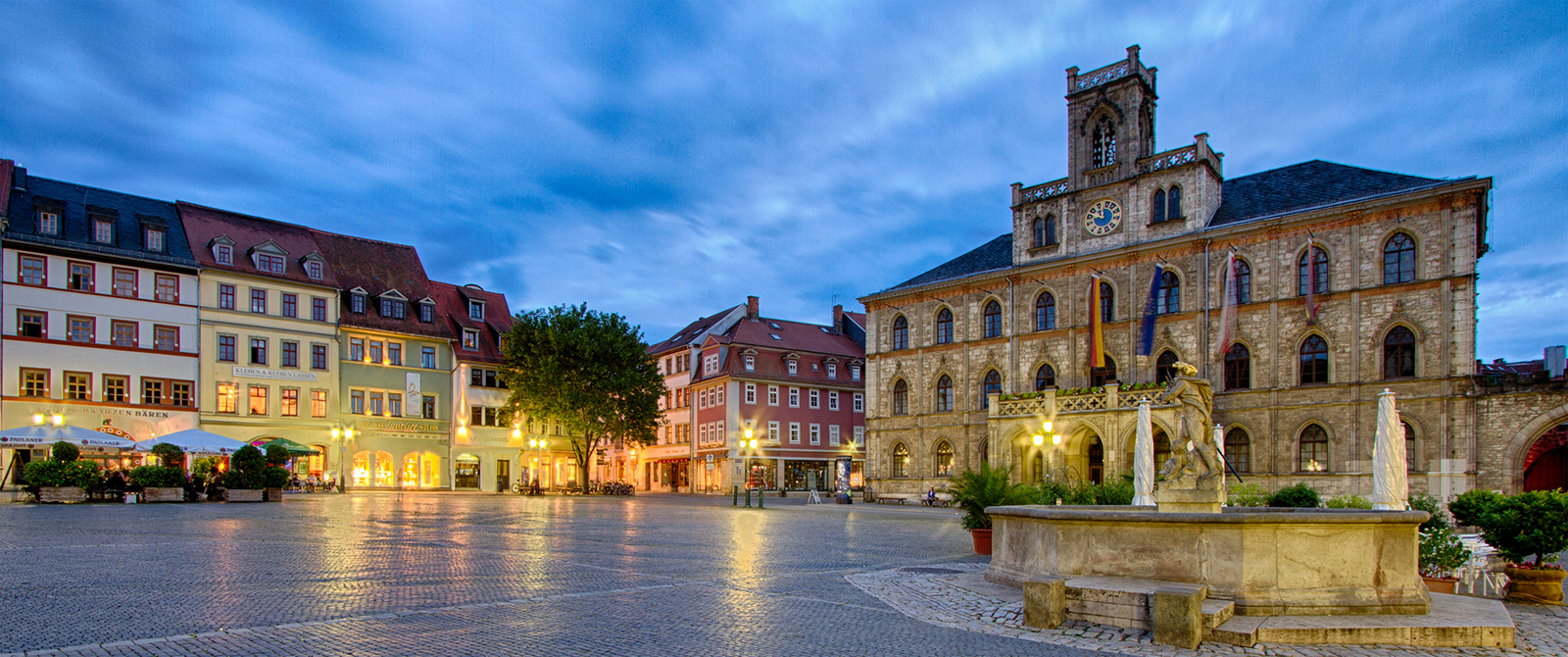
德国图林根州魏玛市是一个只有六万人口的小城 市,在世界上却很有名。魏玛的知名度高至少出于下述三个原因:1、德国从1919年到1933年希特勒上台前的历史时期被称为魏玛共和国时期,即以这个小 城的名字命名这一重要的时期——这样,全世界只要学过世界史的中学生,就都会知道魏玛共和国,知道魏玛。2、由于歌德在魏玛度过了他创作和生活的一个重要 时期,故而歌德的名字与魏玛密不可分地联系在了一起。3、魏玛是包豪斯的发祥地。魏玛,这个拥有10个教堂、21个博物馆、一座国家歌剧院、无数雕塑和纪 念碑的如画城市名声愈来愈响:1996年魏玛与德绍的包豪斯遗迹与建筑被列入联合国教科文组织的世界文化遗产名录,1998年整个魏玛作为“古典和现代之 城”又被列入名录,1999年魏玛更被欧盟定为欧洲文化名城。
现今的魏玛大学叫包豪斯魏玛大学,历 史上的包豪斯学校的原址就在该大学的范围内,在那里还有内容丰富的包豪斯艺术创作常设展览。行文至此还要谈谈“包豪斯”这个译名,它是德语中的专有名词 Bauhaus的音译,在德语中本来并没有这个词,是包豪斯的创始人瓦尔特·格罗皮乌斯( 1883―1969)自创:他把德语中已有的一个复合词Hausbau(房屋建造)颠倒了一下,把基本词变成了限定词,把限定词变成了基本词,故而 Bauhaus从字面上讲它的意思无非就是“造房子”,而作为一个专有名词它是指格罗皮乌斯1919年在魏玛创立的德国古典现代主义中最为著名的一个艺术 和设计流派,该派在1919—1933年产生的创作(建筑、工艺设计)对世界的建筑艺术和工艺设计的发展产生了非常重大的影响。继1996年魏玛和德绍的 包豪斯建筑被列入世界文化遗产名录之后,2004年教科文组织又将以色列特拉维夫市中心的约有4千多座包豪斯建筑的成片建筑列入名录。一个现代建筑设计流 派的建筑两次被列入名录,这种现象是极为罕见的。
(Quelle: www.arting365.com/vision/logic/2006-05-18/content.1147943451d126226.html)
浪漫主义(德语:Romantik;法语:Romantisme;英语:Romanticism)是开始于18世纪德国的艺术、文学及文化运动,发生于1790年工业革命开始的前后。浪漫主义注重以强烈的情感作为美学经验的来源,并且开始强调如不安及惊恐等情绪,以及人在遭遇到大自然的壮丽时所表现出的敬畏。浪漫主义是对于启蒙时代以来的贵族和专制政治文化的颠覆,以艺术和文学反抗对于自然的人为理性化。浪漫主义重视民间艺术、自然以及传统,主张一个根基于自然的知识论,以自然的环境来解释人类的活动,包括了语言、传统、习俗。浪漫主义受到了启蒙运动的理念影响,也吸收了中世纪文化复古的艺术成分。
法国大革命和工业革命里发生的事件和其背后的意识形态也影响了浪漫主义运动。浪漫主义致力于宣扬那些在他们看来被忽略了的英雄个人所达成的成就,它正当化了个人的艺术想像力,并将其作为最重要的美学权威之一,突破了对于艺术的传统定义。浪漫主义对于历史和自然题材的强烈诉诸,便是形成这种理念的基础。
Die Romantik ist eine kulturgeschichtliche Epoche, die vom Ende des 18. Jahrhunderts bis weit in das 19. Jahrhundert hinein dauerte und sich insbesondere auf den Gebieten der bildenden Kunst, der Literatur und der Musik äußerte, aber auch die Gebiete Geschichte, Theologie und Philosophie sowie Naturwissenschaften und Medizin umfasste. In der Literatur der Romantik (ca. 1795–1848) unterscheidet man Frühromantik (bis 1804), Hochromantik (bis 1815) und Spätromantik (bis 1835). In der Malerei dauert die Spätromantik bis Ende des 19. Jahrhunderts, in der Musik bis Anfang des 20. Jahrhunderts (Gustav Mahler, Richard Strauss).
ロマン主義(ロマンしゅぎ、英: Romanticism、仏: Romantisme、独: Romantik、伊: Romanticismo、西: Romanticismo、葡: Romantismo)は、主として18世紀末から19世紀前半にヨーロッパで、その後にヨーロッパの影響を受けた諸地域で起こった精神運動のひとつである。それまでの理性偏重、合理主義などに対し感受性や主観に重きをおいた一連の運動であり、古典主義と対をなす。恋愛賛美、民族意識の高揚、中世への憧憬といった特徴をもち、近代国民国家形成を促進した。その動きは文芸・美術・音楽・演劇などさまざまな芸術分野に及んだ。のちに、その反動として写実主義・自然主義などをもたらした。
Romanticism (also known as the Romantic era) was an artistic, literary, musical and intellectual movement that originated in Europe towards the end of the 18th century, and in most areas was at its peak in the approximate period from 1800 to 1850. Romanticism was characterized by its emphasis on emotion and individualism as well as glorification of all the past and nature, preferring the medieval rather than the classical. It was partly a reaction to the Industrial Revolution,[1] the aristocratic social and political norms of the Age of Enlightenment, and the scientific rationalization of nature—all components of modernity.[2] It was embodied most strongly in the visual arts, music, and literature, but had a major impact on historiography,[3] education,[4] chess, social sciences, and the natural sciences.[5][failed verification] It had a significant and complex effect on politics, with romantic thinkers influencing liberalism, radicalism, conservatism, and nationalism.[6]
The movement emphasized intense emotion as an authentic source of aesthetic experience, placing new emphasis on such emotions as apprehension, horror and terror, and awe—especially that experienced in confronting the new aesthetic categories of the sublimity and beauty of nature. It elevated folk art and ancient custom to something noble, but also spontaneity as a desirable characteristic (as in the musical impromptu). In contrast to the Rationalism and Classicism of the Enlightenment, Romanticism revived medievalism[7] and elements of art and narrative perceived as authentically medieval in an attempt to escape population growth, early urban sprawl, and industrialism.
Although the movement was rooted in the German Sturm und Drang movement, which preferred intuition and emotion to the rationalism of the Enlightenment, the events and ideologies of the French Revolution were also proximate factors. Romanticism assigned a high value to the achievements of "heroic" individualists and artists, whose examples, it maintained, would raise the quality of society. It also promoted the individual imagination as a critical authority allowed of freedom from classical notions of form in art. There was a strong recourse to historical and natural inevitability, a Zeitgeist, in the representation of its ideas. In the second half of the 19th century, Realism was offered as a polar opposite to Romanticism.[8] The decline of Romanticism during this time was associated with multiple processes, including social and political changes.[9]
Le romantisme est un mouvement culturel apparu à la fin du XVIIIe siècle en Allemagne et en Angleterre et se diffusant à toute l’Europe au cours du XIXe siècle, jusqu’aux années 1850. Il s’exprime dans la littérature, la peinture, la sculpture, la musique, la politique et la danse et se caractérise par une volonté de l'artiste d'explorer toutes les possibilités de l'art afin d'exprimer ses états d'âme : il est ainsi une réaction du sentiment contre la raison, exaltant le mystère et le fantastique et cherchant l'évasion et le ravissement dans le rêve, le morbide et le sublime, l'exotisme et le passé, l'idéal ou le cauchemar d'une sensibilité passionnée et mélancolique. Ses valeurs esthétiques et morales, ses idées et thématiques nouvelles ne tardent pas à influencer d'autres domaines, en particulier la peinture et la musique.
Il Romanticismo è stato un movimento artistico, musicale, culturale e letterario sviluppatosi al termine del XVIII secolo in Germania (Romantik). Preannunciato in alcuni dei suoi temi dal movimento preromantico dello Sturm und Drang,[2] si diffuse poi in tutta Europa nel XIX secolo.
El Romanticismo es un movimiento cultural que se originó en Alemania y en Reino Unido a finales del siglo xviii como una reacción revolucionaria contra la Ilustración y el Neoclasicismo, confiriendo prioridad a los sentimientos.1 Es considerado como el primer movimiento de cultura que cubrió el mapa completo de Europa. En la mayoría de las áreas estuvo en su apogeo en el período aproximado de 1800 a 1850.2
El Romanticismo es un movimiento cultural crucial para poder comprender la cultura occidental moderna. La filosofía, el arte, la literatura, la música y la política fueron influenciados por este movimiento, durante el turbulento periodo que se extendió entre el periodo que se conoce como revoluciones burguesas, que en su definición política se conocen como revoluciones liberales. En este período el mundo occidental se había sacudido por la Revolución de las Trece Colonias de Inglaterra en 1776, la Revolución Francesa en 1789 y por la Primera Revolución industrial que empezaba a cambiar la vida tradicionalmente agraria. Por lo tanto los nuevos modos de vida se debían reflejar en nuevos modos de pensar. El romanticismo pasó a significar esta nueva experiencia de mundo.3
Su característica fundamental es la ruptura con la tradición clasicista basada en un conjunto de reglas estereotipadas. La libertad auténtica es su búsqueda constante, por eso su rasgo revolucionario es incuestionable. Debido a que el Romanticismo es una manera de sentir y concebir la naturaleza, así como a la vida y al ser humano mismo, es que se presenta de manera distinta y particular en cada país donde se desarrolla, e incluso dentro de una misma nación, se manifiestan distintas tendencias, proyectándose ello también en todas las artes.
Se desarrolló en la primera mitad del siglo XIX, extendiéndose desde Inglaterra y Alemania hasta llegar a otros países europeos. Su vertiente literaria se fragmenta posteriormente en diversas corrientes, como el parnasianismo, el simbolismo, el decadentismo o el prerrafaelismo, reunidas en la denominación general de posromanticismo, del cual derivó el llamado modernismo hispanoamericano. Tuvo fundamentales aportes en los campos de la literatura, la pintura y la música. Posteriormente, una de las corrientes vanguardistas del siglo XX, el surrealismo, llevó al extremo los postulados románticos de la exaltación del yo.
Романти́зм (фр. romantisme) — идейное и художественное направление в европейской и американской культуре конца XVIII века — первой половины XIX века, характеризуется утверждением самоценности духовно-творческой жизни личности, изображением сильных (зачастую бунтарских) страстей и характеров, одухотворённой и целительной природы. Распространилось на различные сферы деятельности человека. В XVIII веке романтическим называли всё странное, живописное и существующее в книгах, а не в действительности. В начале XIX века романтизм стал обозначением нового направления, противоположного[1] классицизму и Просвещению.


公元前427年,柏拉圖出生於雅典,他自幼受到良好而完備的教育,少年時代勤奮好學、多才多藝且體格健壯。除了家庭的薰陶之外,給他影響最為深遠的莫過於正直善辯的哲學家蘇格拉底﹝Socrates﹞了,而蘇格拉底以不敬神和蠱惑青年的罪名被處死的悲劇給柏拉圖極大的刺激,隨著年歲的增長,他對當時的政客、法典和習俗愈來愈感到厭惡,從而決心繼承蘇格拉底的哲學思想,并從事於締造理想國家的理論研究。柏拉圖曾在非洲海岸昔蘭尼跟狄奧多魯斯﹝Theodorns﹞學數學,并成為著名的阿爾希塔斯的知心朋友。約公元前387年,他回到雅典創辦他的著名學園,這是一所為系統地研究哲學和科學而開設的高等院校,成為早期畢氏學派和後來長期活躍的亞歷山大里亞數學學派之間聯系的紐帶。公元前347年,柏拉圖以八十歲高齡死於雅典。
作為一位哲學家,柏拉圖對於歐洲的哲學乃至整個文化的發展,有著深遠的影響。特別是他的認識論,數學哲學和數學教育思想,在古希臘的社會條件下,對於科學的形成和數學的發展,起了不可磨滅的推進作用。
我們從柏拉圖的著作中,可以看到數學哲學領域的最初的探究。柏拉圖的數學哲學思想是同他的認識論,特別是理念論分不開的。他認為數學所研究的應是可知的理 念世界中的永恒不變的關係,而不是可感的物質世界中的變動無常的關係。因此,數學的研究對象應是抽象的數和理想的圖形。他在《理想國》中說:『我所說的意 思是算術有很偉大和很高尚的作用,它迫使靈魂就抽象的數進行推理,而反對在論證中引入可見的和可捉摸的對象。』他在另一處談到幾何時說:『你豈不知道,他 們雖然利用各種可見的圖形,并借此進行推理,但是他們實際思考的并不是這些圖形,而是類似於這些圖形的理想形象。……他們力求看到的是那些只有用心靈之日 才能看到的實在』。
柏拉图(古希腊语:Πλάτων,罗马化:Plátōn,国际音标:[plátɔːn],前429年—前347年),著名的古希腊哲学家,雅典人,他的著作大多以对话录形式纪录,并创办了著名的学院。柏拉图是苏格拉底的学生,是亚里士多德的老师,他们三人被广泛认为是西方哲学的奠基者,史称“西方三圣”或“希腊三哲”。
Platon (altgriechisch Πλάτων Plátōn, latinisiert Plato; * 428/427 v. Chr. in Athen oder Aigina; † 348/347 v. Chr. in Athen) war ein antiker griechischer Philosoph.
Er war Schüler des Sokrates, dessen Denken und Methode er in vielen seiner Werke schilderte. Die Vielseitigkeit seiner Begabungen und die Originalität seiner wegweisenden Leistungen als Denker und Schriftsteller machten Platon zu einer der bekanntesten und einflussreichsten Persönlichkeiten der Geistesgeschichte. In der Metaphysik und Erkenntnistheorie, in der Ethik, Anthropologie, Staatstheorie, Kosmologie, Kunsttheorie und Sprachphilosophie setzte er Maßstäbe auch für diejenigen, die ihm – wie sein bedeutendster Schüler Aristoteles – in zentralen Fragen widersprachen.
Im literarischen Dialog, der den Verlauf einer gemeinsamen Untersuchung nachvollziehen lässt, sah er die allein angemessene Form der schriftlichen Darbietung philosophischen Bemühens um Wahrheit. Aus dieser Überzeugung verhalf er der noch jungen Literaturgattung des Dialogs zum Durchbruch und schuf damit eine Alternative zur Lehrschrift und zur Rhetorik als bekannten Darstellungs- und Überzeugungsmitteln. Dabei bezog er dichterische und mythische Motive sowie handwerkliche Zusammenhänge ein, um seine Gedankengänge auf spielerische, anschauliche Weise zu vermitteln. Zugleich wich er mit dieser Art der Darbietung seiner Auffassungen dogmatischen Festlegungen aus und ließ viele Fragen, die sich daraus ergaben, offen bzw. überließ deren Klärung den Lesern, die er zu eigenen Anstrengungen anregen wollte.
Ein Kernthema ist für Platon die Frage, wie unzweifelhaft gesichertes Wissen erlangt und von bloßen Meinungen unterschieden werden kann. In den frühen Dialogen geht es ihm vor allem darum, anhand der sokratischen Methode aufzuzeigen, warum herkömmliche und gängige Vorstellungen über das Erstrebenswerte und das richtige Handeln unzulänglich oder unbrauchbar seien, wobei dem Leser ermöglicht werden soll, den Schritt vom vermeintlichen Wissen zum eingestandenen Nichtwissen nachzuvollziehen. In den Schriften seiner mittleren Schaffensperiode versucht er, mit seiner Ideenlehre eine zuverlässige Basis für echtes Wissen zu schaffen. Solches Wissen kann sich nach seiner Überzeugung nicht auf die stets wandelbaren Objekte der Sinneserfahrung beziehen, sondern nur auf unkörperliche, unveränderliche und ewige Gegebenheiten einer rein geistigen, der Sinneswahrnehmung unzugänglichen Welt, die „Ideen“, in denen er die Ur- und Vorbilder der Sinnendinge sieht. Der Seele, deren Unsterblichkeit er plausibel machen will, schreibt er Teilhabe an der Ideenwelt und damit einen Zugang zur dort existierenden absoluten Wahrheit zu. Wer sich durch philosophische Bemühungen dieser Wahrheit zuwendet und ein darauf ausgerichtetes Bildungsprogramm absolviert, kann seine wahre Bestimmung erkennen und damit Orientierung in zentralen Lebensfragen finden. Die Aufgabe des Staates sieht Platon darin, den Bürgern dafür optimale Voraussetzungen zu schaffen und Gerechtigkeit umzusetzen. Daher setzt er sich intensiv mit der Frage auseinander, wie die Verfassung eines Idealstaates diesem Ziel am besten dienen kann. In späteren Werken tritt die Ideenlehre teils in den Hintergrund, teils werden Probleme, die sich aus ihr ergeben, kritisch beleuchtet; im Bereich der Naturphilosophie und Kosmologie jedoch, dem sich Platon im Alter zuwendet, weist er den Ideen bei seiner Erklärung des Kosmos eine maßgebliche Rolle zu.
Platon gründete die Platonische Akademie, die älteste institutionelle Philosophenschule Griechenlands, von der aus sich der Platonismus über die antike Welt verbreitete. Das geistige Erbe Platons beeinflusste zahlreiche jüdische, christliche und islamische Philosophen auf vielfältige Weise. Die Lehre seines Schülers Aristoteles, der Aristotelismus, entstand aus der kritischen Auseinandersetzung mit dem Platonismus. In Spätantike, Mittelalter und Früher Neuzeit wurde der Aristotelismus zum Ausgangspunkt für Konzepte, die teils mit platonischen konkurrierten, teils mit ihnen verschmolzen wurden.
In der Moderne verwerteten insbesondere Denker der „Marburger Schule“ des Neukantianismus (Hermann Cohen, Paul Natorp) platonisches Gedankengut. Karl Popper griff Platons politische Philosophie an; sein Vorwurf, es handle sich um eine Form von Totalitarismus, löste im 20. Jahrhundert eine lang anhaltende Kontroverse aus.
Florenz Schule
Art
WC - Western art 5th century AD - 15th century AD
Leonardo da Vinci
Musée du Louvre
Renaissance
Science and technology
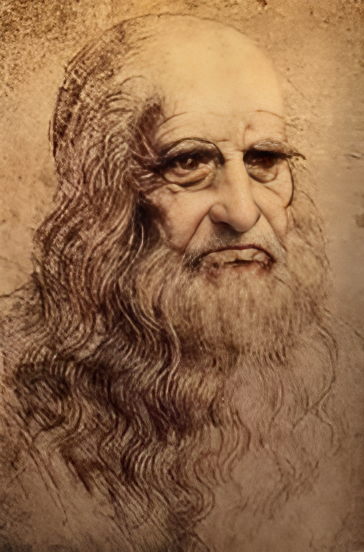
列 奥纳多.达.芬奇(1452-1519),意大利傑出的画家、哲学家、科学家、建筑家、工程师,欧洲文艺复兴运动最重要的代表人物、文艺复兴“三巨匠”之 一。他多才多艺,知识渊博,在艺术实践和科学实验中,研究探讨了人体解剖、透视、明暗、构图等科学法则,留下了近7000页文稿。他作品卓越,壁画《最後 的晚餐》、油画《蒙娜丽莎》、《岩间圣母》、《圣安娜》、《安加利之战》等闻名于世,他的作品和《绘画论》对世界绘画的发展影响很大。他重视人物性格和主 题情节的表现,素描构图精妙、刻画细緻,线条流畅。
提及达·芬奇的名字,一般人便会联想到他的人物的“妩媚”,有如波提切利一样。然而达·芬奇的作品给予观衆的印象,尤其是一种“销魂”的魔力。法国悲剧家高乃依有一句名诗:“一种莫名的爱娇,把我摄向着你。”
这 种自然的神秘的魔力,的确可以形容达·芬奇的”瑶公特“的神韵。这副脸庞,隻要见过一次,便永远离不开我们的记忆。然而最令人难忘的还是”瑶公特“神秘的 微笑,单纯地望两旁抿去的口唇便是指出这微笑还隻是将笑未笑的开端,而且是否是微笑,还成疑问,口唇的皱痕,是不是她本来面目上就有的?也许她的口唇原来 即有这微微地望两旁抿去的线条?这些问题是很难解答的。可是这微笑所引起的疑问还多着呢:假定她真的在微笑,那麽,微笑的意义是什麽时候?是不是一个和蔼 可亲的人的温婉的微笑,或是多愁善感的人的感伤的微笑?这微笑,是一种蕴藏着的快乐的标帜呢,还是处女的童真的表现?这是不容易且也不必解答的。这是一个 莫测高深的神秘。
达·芬奇于一四五二年生于翡冷翠附近的一个小城中,那个城的名字就是他的姓—芬奇(Vinci)。他的父亲是城中的画吏。莱 奥纳多最初进当时的名雕刻家委罗基奥的工作室。迄一四八三年他三十一岁时爲止,达·芬奇一直住在翡冷翠。以後他到米兰公府中服务,直到一四九九年方才他 去。这十六年是达·芬奇一生创作最丰富的时代。
从此以後他到处飘流。一五O七年又回米兰,一五一三年去罗马,依教皇利奥十世,一五一五年以後他离开意大利赴巴黎。法王弗朗西斯一世款以上宾之礼。一五一九年,芬奇即逝世于客地。据传说所雲,他临死时,法王亲自来向他告别。(Quelle:http://www.360doc.com)
列奥纳多·达·芬奇(意大利语:Leonardo da Vinci,意为“芬奇城的列奥纳多”;儒略历1452年4月15日—1519年5月2日)[注 1],又译达文西,全名列奥纳多·迪·塞尔·皮耶罗·达·芬奇(Leonardo di ser Piero da Vinci,意为“芬奇城皮耶罗先生之子列奥纳多”),是意大利文艺复兴时期佛罗伦萨共和国的博学者:在绘画、音乐、建筑、数学、几何学、解剖学、生理学、动物学、植物学、天文学、气象学、地质学、地理学、物理学、光学、力学、发明、土木工程等领域都有显著的成就。这使他成为文艺复兴时期人文主义的代表人物,也是历史上最著名的艺术家之一,与米开朗基罗和拉斐尔并称文艺复兴三杰。小行星3000为纪念达·芬奇而被命名为“列奥纳多”。
列奥纳多·达·芬奇常常被描述成一个博学者中的典型、一个有着“不可遏制的好奇心”和“极其活跃的创造性想象力”的人。[1]他被广泛地认同为迄今为止最伟大画家之一,或许他还是所有人中拥有最多不同类型的天赋的人[2]。按照艺术史学者海伦·加德纳的说法,他的兴趣到达了一个前所未有的范围和深度,而且“他的思想和人格似乎是超出常人的,而他本身却是神秘又疏远”[1]。Marco Rosci提出尽管现在已经有许多关于列奥纳多·达·芬奇的推测,他的世界观却是从本质上符合逻辑的而不是神秘的,他使用的经验主义的手法在那个时期也是不寻常的[3]。
达·芬奇是公证员瑟皮耶罗·达芬奇和农民妇女卡特琳娜的非婚生子女,他在意大利佛罗伦萨中一个叫做芬奇的地方出生成长。列奥纳多从小在著名的佛罗伦斯画家安德烈·德尔·委罗基奥的画室受教育。他的早期工作生涯都是为米兰的卢多维科·斯福尔扎服务。他后来在罗马、波隆那和威尼斯工作,在弗朗索瓦一世授予他的法国的家中度过了人生中最后一年。
达·芬奇过去与现在都主要以画家著称,并以其画作写实性和极具影响力闻名[2]。在他的作品中,《蒙娜丽莎》是最负盛名且最常被模仿的肖像[4]。《最后的晚餐》被认为是所有时期中最多被复制的宗教绘画,只有米开朗基罗的《创造亚当》[1]的声望能与之媲美。列奥纳多的绘画《维特鲁威人》也被认为是一个文化的象征[5],他被复制在各种各样的物品上,如欧元、教科书和T恤衫上。他的绘画中有15张遗留了下来,之所以数量这么少,是因为他持续不断地,频繁地用新技术进行灾难性的试验以及他作画时一贯的拖延[注 2]。不论如何,他的作品,连同他那包含了速写、科学图解和关于绘图本质思想的笔记手稿,使他成为了同时代中只有米开朗基罗才能与之相提并论的、对后世的艺术家有巨大影响的艺术家。
达·芬奇受到人们的尊崇是因为他[2]技术上的独创性。他具有超越当时的广泛构思,其中著名的概念性发明有:直升机、机关枪、机器人、坦克、太阳能聚焦使用、计算器[6]、双层壳,他还勾勒出了板块构造论的基本理论框架。但达·芬奇的作品中衹有极少数画作流传下来,加上散布在形形色色收藏中包括了绘画、科学示意图、笔记的手稿。达·芬奇的发明大多是超前的,在当时,只有少数设计在当时被建造出来,而多数设计在当时是不可实现的[注 3]。但达·芬奇的一些小发明,例如一个自动的绕轴机,一个用于测试金属线的张力的机器,这些发明第一次预示了一个有制造业的世界[注 4]。他在解剖学、土木工程、光学和流体力学方面都有过重要的探索。
Leonardo da Vinci [ˌleoˈnardo da ˈvːintʃi] (* 15. April 1452[1] in Anchiano (?) bei Vinci;[2] † 2. Mai 1519 auf Schloss Clos Lucé, Amboise; eigentlich Lionardo di ser Piero da Vinci[3] [Sohn des (Mes)ser Piero aus Vinci]) war ein italienischer Maler, Bildhauer, Architekt, Anatom, Mechaniker, Ingenieur und Naturphilosoph. Er gilt als einer der berühmtesten Universalgelehrten aller Zeiten.
Der Namenszusatz da Vinci ist kein Familien-, sondern ein Verweis auf den Geburtsort Vinci in der Nähe der Stadt Empoli in der heutigen Provinz Florenz. Der Künstler hat den Herkunftsnamen selber in Form der Unterschrift „di Leonardo de Vinci“ verwendet.

Datierung um 1545
Medium Öl auf Tafel
Maße Höhe: 88,3 cm (34,7 in) ; Breite: 64,1 cm (25,2 in)
Daniele da Volterra (1509-1566)
想努力创造完美的东西,必须具备心灵的纯洁,同时富于宗教精神。—米开朗琪罗
一件艺术作品只有作为一种重要并且永恒的成就,才能跻身于杰作之列。能够创造出这样一件优秀的作品,对于一位艺术家来说是其一生无上的荣耀。而 在雕塑、绘画、建筑、诗歌等众多艺术门类中能够取得这样辉煌成就的,在迄今为止的人类文明史上,可以说只有一个人。他,就是与达 芬奇和拉斐尔并称文艺复兴“三杰”的米开朗琪罗。他的才智是如此地杰出,以至于在他活着的时候,人们就尊称他为“神”。
幼年,与石相伴
米开朗琪罗于1475年3月6日诞生于文艺复兴胜地佛罗伦萨附近的小城卡普里斯。父亲罗多维柯·波纳洛蒂是小城的市长。米开朗琪罗出生后,体弱 多病的母亲弗朗西斯卡无力照料他,把他送到附近塞提雷诺小镇由一位奶妈喂养。塞提雷诺镇是一个林地茂盛、青石蓝天的地方,盛产大理石。奶妈的丈夫是当地采 石场的工人。米开朗琪罗在这个山区小镇度过了大部分的童年时光,整天与奶妈的石匠丈夫在一起,玩弄他的工具,观看他砸石头。艺术家日后回忆说:“如果我还 有些值得称道的东西,那是由于我出生在空气清新的山区;正是奶妈乳汁的哺育,使我学会了用凿子和锤头来制作雕像。”
米开朗基罗(意大利语:Michelangelo / 意大利语发音:[mikeˈlandʒelo],1475年3月6日—1564年2月18日),全名米开朗基罗·迪·洛多维科·博纳罗蒂·西蒙尼(Michelangelo di Lodovico Buonarroti Simoni)[1],又译米高安哲罗、米开兰基罗、麦开兰基罗、米高安哲奴、米开朗琪罗,是意大利文艺复兴时期杰出的通才、雕塑家、建筑师、画家、哲学家和诗人,与列奥纳多·达芬奇和拉斐尔·圣齐奥并称“文艺复兴艺术三杰”,以人物“健美”著称,即使女性的身体也描画的肌肉健壮。他的雕刻作品“大卫像”举世闻名,美第奇家族墓前的“昼”、“夜”、“晨”、“昏”四座雕像构思新奇,此外著名的雕塑作品还有“摩西像”、“大奴隶”等。他最著名的绘画作品是梵蒂冈西斯汀小堂的《创世纪》天顶画和壁画《最后的审判》。他还设计和初步建造了罗马圣伯多禄大殿,设计建造了教宗儒略二世的陵墓。米开朗基罗脾气暴躁,不合群,和达芬奇与拉斐尔都合不来,经常和他的恩主顶撞,但他一生追求艺术的完美,坚持自己的艺术思路。米开朗基罗1475年生于佛罗伦萨共和国卡普雷塞,1564年在罗马去世,时年88岁。他的风格影响了几乎三个世纪的艺术家。
小行星3001[2]、水星上位于45.0°S,109.1°W的陨石坑[3]以他的名字命名以示尊敬和纪念。
Michelangelo Buonarroti [mikeˈlanʤelo buonarˈrɔːti] (vollständiger Name Michelangelo di Lodovico Buonarroti Simoni; * 6. März 1475 in Caprese, Toskana; † 18. Februar 1564 in Rom), oft nur Michelangelo genannt, war ein italienischer Maler, Bildhauer, Baumeister (Architekt) und Dichter. Er gilt als einer der bedeutendsten Künstler der italienischen Hochrenaissance und weit darüber hinaus.
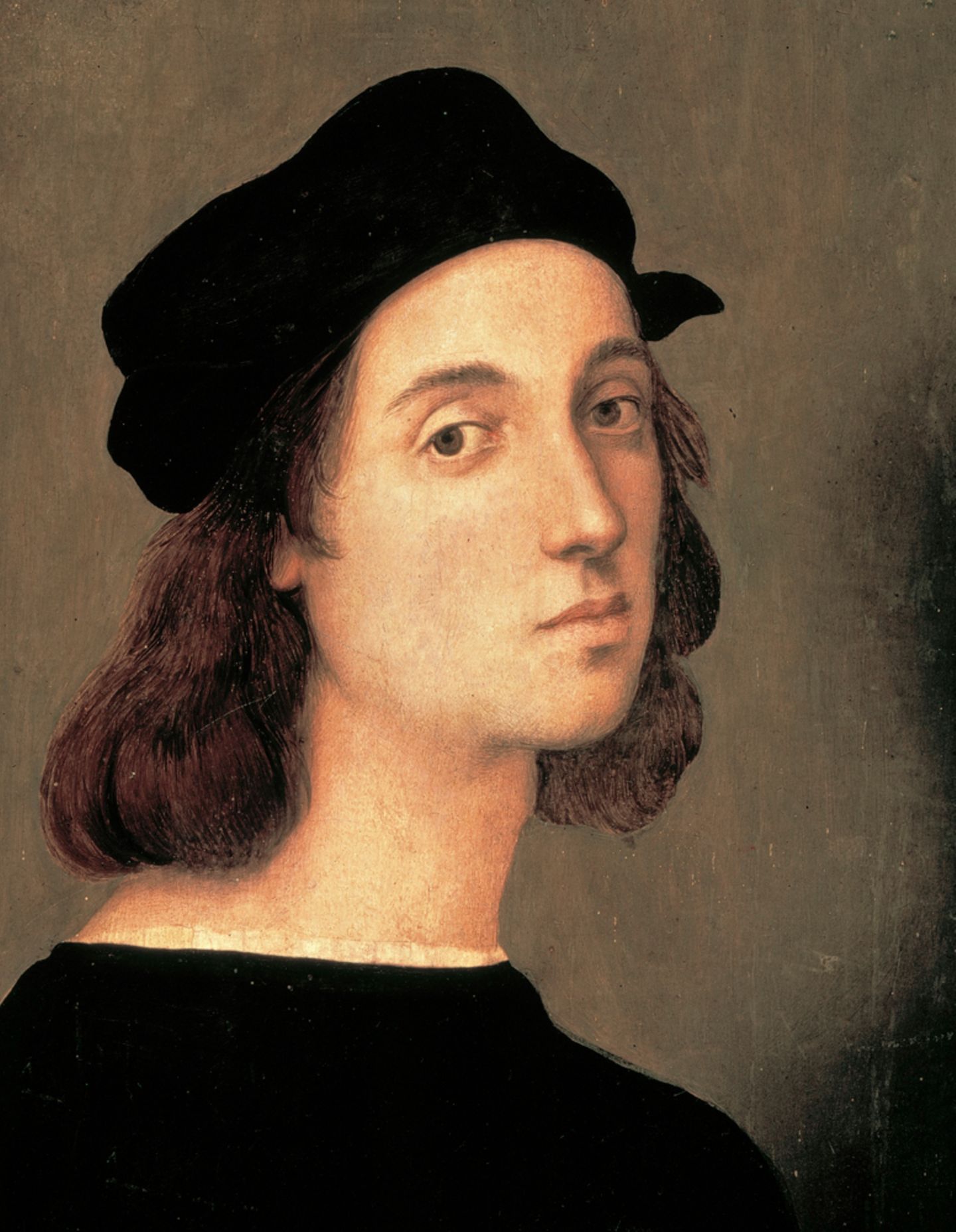
拉斐洛·桑齐奥·达·乌尔比诺(意大利语:Raffaello Sanzio da Urbino,1483年4月6日—1520年4月6日[1])[注 1],通常作拉斐尔(拉丁语:Raphael),意大利画家、建筑师。与列奥那多·达芬奇和米开朗基罗合称“文艺复兴三杰”[2]。拉斐尔画作向以“秀美”著称,其笔下人物清秀,场景优美。
Raffaello Sanzio da Urbino, auch Raffael da Urbino, Raffaello Santi [rafːaˈɛlːo ˈsanti], Raffaello Sanzio [ˈsantsi̯o] oder kurz Raffael (* 6. April oder 28. März 1483 in Urbino; † 6. April 1520 in Rom) war ein italienischer Maler und Architekt. Er gilt als einer der bedeutendsten Künstler der italienischen Hochrenaissance.
Raffael erlangte vor allem als Maler für seine harmonischen und ausgewogenen Kompositionen und lieblichen Madonnenbilder Berühmtheit. Zu Lebzeiten genoss er das Privileg, nur unter seinem Vornamen bekannt zu sein, und noch heute kennen die wenigsten seinen Nachnamen. Bis weit in das 19. Jahrhundert hinein galt er als der größte Maler aller Zeiten.[1] Neben seiner Laufbahn als Maler in Florenz und am päpstlichen Hof in Rom wurde er auch Bauleiter des Petersdoms und Aufseher über die römischen Antiken.
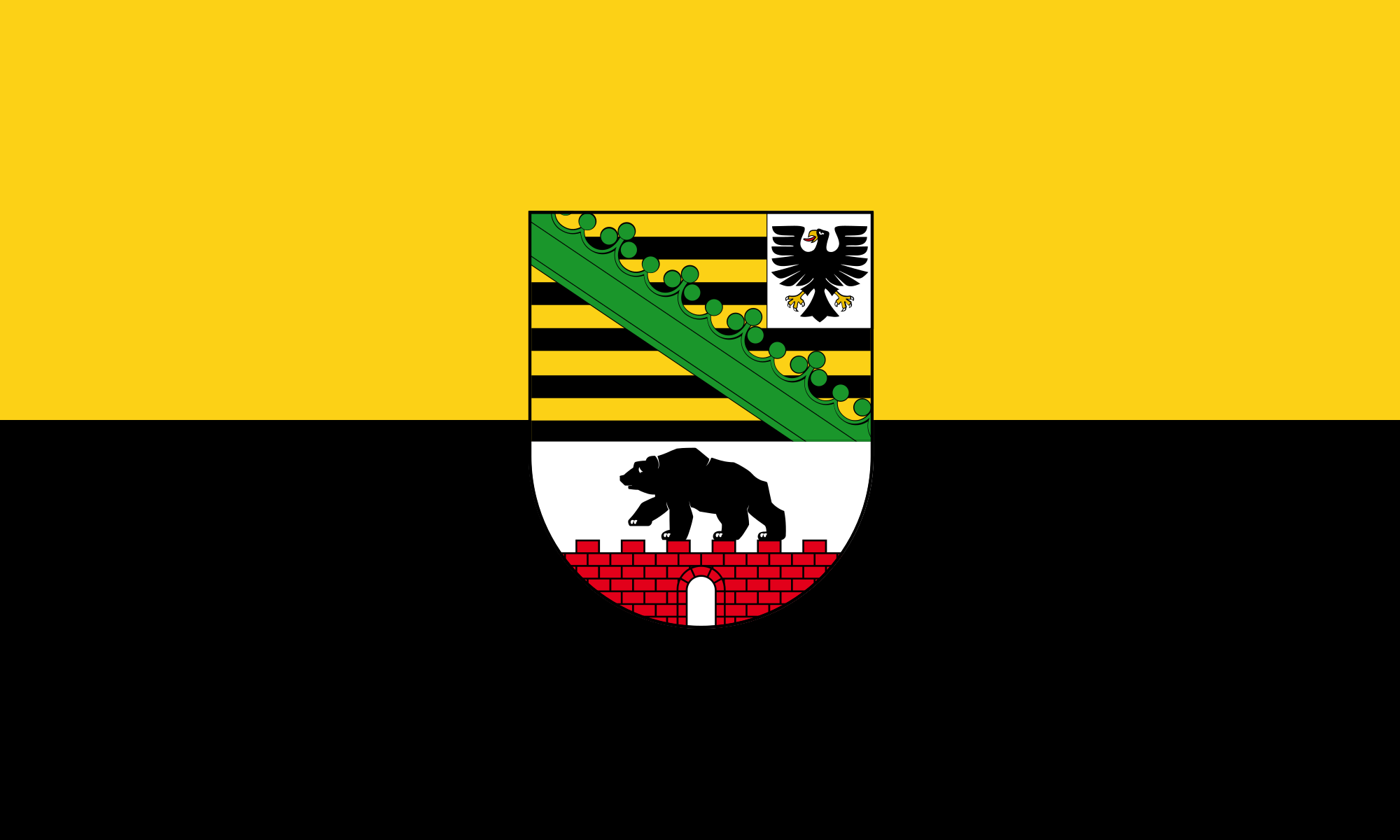 Saxony-Anhalt
奥托一世(Otto I,912年11月23日-973年5月7日),又译鄂图一世,东法兰克国王(936年—973年在位),罗马帝国皇帝(962年加冕)。史称奥托大帝(Otto der Große)。东法兰克国王亨利一世之子,母为Ringlheim的玛蒂尔达。先当选为萨克森公爵,936年由东法兰克部落公爵选为国王。936年7月31日,美因茨大主教希尔德贝特在亚琛为奥托一世加冕。
奥托一世坚持他对各部落公国均拥有最高权力,公爵们为此常常造反。938年奥托一世镇压了由法兰克尼亚公爵埃贝哈德和巴伐利亚公爵埃贝哈德联合发动的叛乱。929年—941年镇压其弟巴伐利亚公爵亨利一世的叛乱。944年奥托一世封自己的女婿康拉德(“红公爵”)为洛林公爵,此人后来与他反目。946年奥托一世率军干涉法国内战,先支持反对国王的法兰西公爵(卡佩家族的成员),后转为支持西法兰克国王路易四世。949年封次子鲁道夫为士瓦本公爵。
奥托一世是最早侵略斯拉夫人的条顿君主之一。950年,他迫使波希米亚公爵波列斯拉夫一世称臣。
951年奥托首次入侵意大利,征服伦巴第,自称意大利国王,并与意大利统治者洛泰尔的遗孀阿德莱德结婚。953年洛林公爵与士瓦本公爵发动叛乱,被奥托一世迅速镇压。955年,马扎尔人入侵巴伐利亚和士瓦本。奥托一世在奥格斯堡战役中击败长期侵扰德意志的马扎尔人,使之转向定居生活,建立起匈牙利国家。961年,地位虚弱的教皇约翰十二世请求奥托一世进入意大利称王。962年2月2日,约翰十二世为奥托加冕,称颂他为“神圣罗马帝国的皇帝”,是为神圣罗马帝国之始。奥托此后因意大利问题长期与拜占廷帝国冲突。奥托一世巧妙地利用教会力量来扼制德国诸侯,他授予教会著名的奥托特权(962年),确定了教皇的世俗权力。963年奥托废黜约翰十二世,立利奥八世为教皇。这也开了由皇帝决定教皇人选的先例,成为历史上皇帝与教皇长期斗争的序幕。965年利奥八世去世后,奥托一世又指定约翰十三世当教皇,不过终于受到了罗马人的反对。奥托一世于是进军意大利,以武力扶约翰十三世上台。966年至972年,奥托一世一直为意大利问题与拜占庭帝国处于战争状态。972年,拜占庭帝国皇帝约翰一世最终承认了奥托的西帝国皇帝头衔。奥托一世在王权无比强大的气氛中去世。
Otto I. der Große (* 23. November 912; † 7. Mai 973 in Memleben) aus dem Geschlecht der Liudolfinger war ab 936 Herzog von Sachsen und König des Ostfrankenreiches (regnum francorum orientalium), ab 951 König von Italien und ab 962 römisch-deutscher Kaiser.
Otto setzte während der ersten Hälfte seiner langen Herrschaftszeit die Unteilbarkeit des Königtums und seine Entscheidungsgewalt bei der Ämtervergabe durch. Damit griff er tief in das bestehende Herrschaftsgefüge des Adels ein. Die schwersten Aufstandsbewegungen gingen von den Mitgliedern der Königsfamilie selbst aus. Ottos Bruder Heinrich und sein Sohn Liudolf erhoben Anspruch auf Teilhabe an der Königsherrschaft. Aus den Aufständen ging Otto als Sieger hervor.
Durch seinen Sieg 955 über die Ungarn endeten nicht nur deren Invasionen, sondern auch die Erhebungen der Großen des Reiches gegen den König. Zudem erlangte er damit den Nimbus eines Retters der Christenheit, zumal ihm noch im selben Jahr ein Sieg über die Slawen gelang. In der Folge setzte eine kulturelle Blütezeit ein, die als Ottonische Renaissance bekannt wurde.
961 eroberte er das Königreich Italien und dehnte sein Reich nach Norden, Osten und bis nach Süditalien aus, wo er in Konflikt mit Byzanz geriet. Dennoch ließ er sich unter Rückgriff auf die Kaiseridee Karls des Großen 962 von Papst Johannes XII. in Rom zum Kaiser krönen, und schließlich gelang ihm sogar ein Ausgleich mit dem byzantinischen Kaiser und die Verehelichung seines Sohnes Otto II. mit dessen Nichte Theophanu.
Im Jahr 968 gründete er ein Erzbistum in Magdeburg, jener Stadt, die wie keine zweite mit seinem Nachleben verbunden ist. Das Erzbistum war für Otto die entscheidende Voraussetzung für die Christianisierung der Slawen.
Der Beiname „der Große“ gilt spätestens seit dem mittelalterlichen Geschichtsschreiber Otto von Freising als festes Namensattribut.[1] Schon Widukind von Corvey nannte ihn totius orbis caput, das „Haupt der ganzen Welt“.[2]
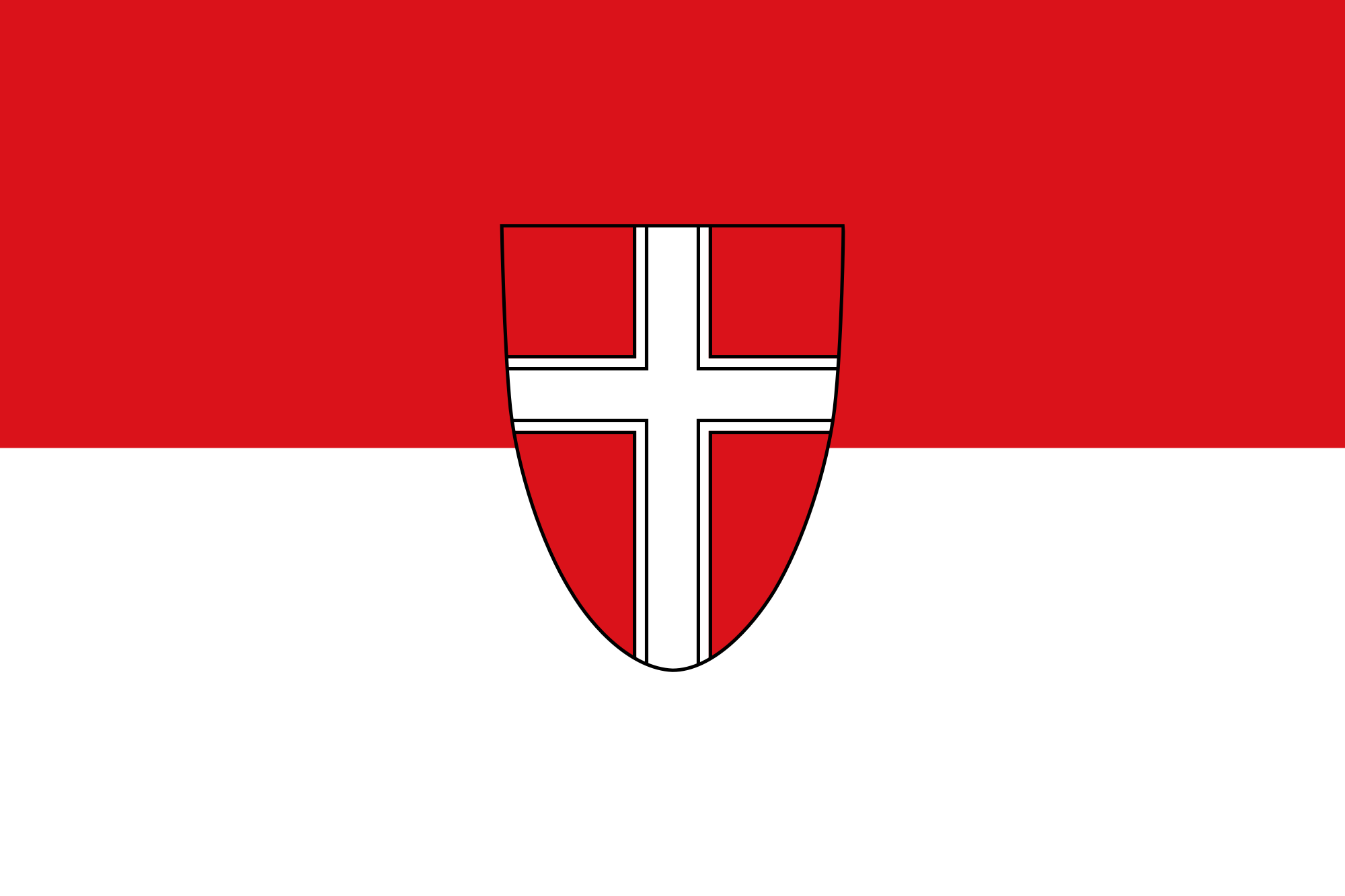 Vienna
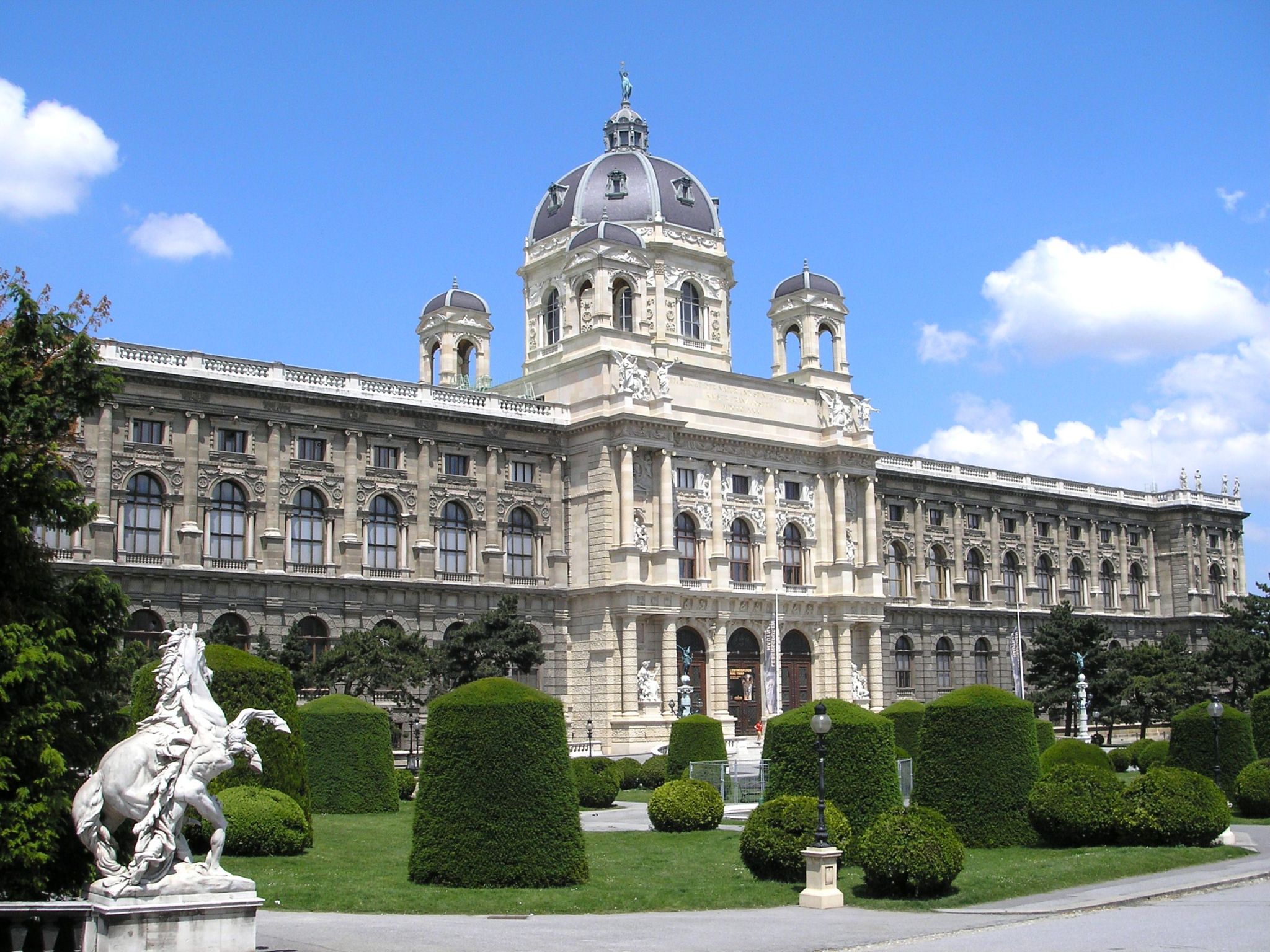
维也纳艺术史博物馆(Kunsthistorisches Museum)坐落在维也纳环城大街旁边,与霍夫堡皇宫相对。十九世纪下半叶,维也纳老城墙被拆除之後,就开始了博物馆得建造工作。1871-1891年 间,两座辉煌的博物馆建筑拔地而起,这就是维也纳艺术史博物馆和维也纳自然史博物馆。两座博物馆之间是为纪念奥地利唯一的女皇帝-玛丽亚特蕾西亚而建得广 场。如今,维也纳艺术史博物馆是全世界第四大艺术博物馆。这里珍藏著哈布斯堡王朝数百年来收集的欧洲珍品。卢本斯、伦勃朗、丢勒、拉菲尔、提香等著名画家 的作品使这座艺术博物馆的名声倍增。(Quelle: www.youer.com/)
艺术史博物馆(德语:Kunsthistorisches Museum)是奥地利维也纳的一座博物馆,设在戒指路旁富丽堂皇的大楼内,有一个圆满的八角形穹顶,是世界上藏品最丰富的美术和装饰艺术博物馆之一。
Das Kunsthistorische Museum (KHM) ist ein Kunstmuseum in der österreichischen Hauptstadt Wien. Es zählt zu den größten und bedeutendsten Museen der Welt. Es wurde im Jahr 1891 eröffnet und 2015 von ca. 1,4 Millionen Menschen besucht.[1]
Das Kunsthistorische Museum gehört mit seinem Schwestergebäude, dem gegenüber liegenden Naturhistorischen Museum, zu den bedeutendsten historistischen Großgebäuden der Ringstraßenzeit. Zusammen umstehen sie den Maria-Theresien-Platz (neben dem Burgring), auf dem das Maria-Theresien-Denkmal steht. Dieser Platz bedeckt einen Teil des ehemaligen Glacis zwischen heutiger Ringstraße und Zweierlinie und bildet ein Ensembledenkmal, das auch zum Weltkulturerbe Historisches Zentrum von Wien gehört.
美術史美術館(びじゅつしびじゅつかん、独: Kunsthistorisches Museum)は、オーストリア・ウィーンにある美術館。美術史博物館(びじゅつしはくぶつかん)とも呼ばれる。古代から19世紀に至るヨーロッパ各地の美術品を収蔵している。自然史博物館と対になる施設として建てられ[3]、1891年に開館。現在は組織上ウィーン大学の一部局である。
The Kunsthistorisches Museum (lit. "Museum of Art History", also often referred to as the "Museum of Fine Arts") is an art museum in Vienna, Austria. Housed in its festive palatial building on Ringstraße, it is crowned with an octagonal dome. The term Kunsthistorisches Museum applies to both the institution and the main building. It is the largest art museum in the country.
It was opened around 1891 at the same time as the Natural History Museum, Vienna, by Emperor Franz Joseph I of Austria-Hungary.[2] The two museums have similar exteriors and face each other across Maria-Theresien-Platz. Both buildings were built between 1871 and 1891 according to plans drawn up by Gottfried Semper and Karl Freiherr von Hasenauer.
The two Ringstraße museums were commissioned by the emperor in order to find a suitable shelter for the Habsburgs' formidable art collection and to make it accessible to the general public. The façade was built of sandstone. The building is rectangular in shape, and topped with a dome that is 60 meters high. The inside of the building is lavishly decorated with marble, stucco ornamentations, gold-leaf, and paintings.
Le musée d'Histoire de l'art de Vienne (en allemand : Kunsthistorisches Museum) de Vienne, en Autriche est un musée d'art considéré comme l'un des premiers musées d'art ancien du monde.
Il Kunsthistorisches Museum (in italiano "Museo della storia dell'arte"), che nel 2012 ha contato 1.351.940 visitatori[1], è uno dei principali musei di Vienna ed uno dei più antichi e ricchi al mondo. L'edificio principale, sormontato da una cupola ottagonale alta 60 metri, si trova in Maria-Theresien-Platz, lungo la Ringstraße che circonda il distretto di Innere Stadt.
Il Museo venne inaugurato ufficialmente il 17 ottobre 1891 alla presenza dell'imperatore Francesco Giuseppe I d'Asburgo dopo oltre trent'anni dalla prima commissione. Dal 22 ottobre venne aperto al pubblico. L'edificio si affaccia sulla Maria-Theresien-Platz, specularmente al Naturhistorisches Museum (Museo storico-naturalistico). I due musei vennero commissionati dall'imperatore nel 1858 per contenere l'immensa collezione di opere d'arte degli Asburgo e di rendere il loro patrimonio accessibile a tutti. Il concorso per la realizzazione degli edifici venne bandito nel 1867 e vinto dagli architetti Carl von Hasenauer e Gottfried Semper. La prima pietra venne posata, senza troppe cerimonie, il 27 novembre 1871. Le facciate richiamano lo stile rinascimentale italiano e gli interni sono decorati con marmo, ornamenti di stucco e d'oro e pitture.
Una delle più importanti sculture del museo, la Saliera di Benvenuto Cellini, è stata rubata l'11 maggio 2003 e recuperata il 21 gennaio 2006 in una scatola, sepolta sotto terra, in una foresta vicino alla città di Zwettl, in Austria. È stato il più grande furto d'arte nella storia austriaca.
El Museo de Historia del Arte de Viena (en alemán, Kunsthistorisches Museum) es uno de los primeros museos de bellas artes y artes decorativas del mundo. Tiene por sede un palacio de la Ringstraße, coronado con una cúpula octogonal. El término Kunsthistorisches Museum se aplica tanto a la institución como a su edificio principal.
Se inauguró en 1891 al mismo tiempo que el Museo de Historia Natural (Naturhistorisches Museum) por el emperador Francisco José I de Austria-Hungría. Los dos museos tienen exteriores idénticos y están uno frente a otro flanqueando la Plaza de María Teresa. Ambos edificios fueron erigidos entre 1872 y 1891 de acuerdo a los planos diseñados por Gottfried Semper y Karl Freiherr von Hasenauer.
Los dos museos de la Ringstraße fueron encargados por el Emperador para dar un alojamiento adecuado a la formidable colección de arte de los Habsburgo y hacerla accesible al gran público. La fachada se edificó de piedra arenisca. Tiene planta rectangular y acaba en una cúpula de 60 metros de alto. Está coronado por una estatua colosal de Palas Atenea. El interior del edificio está lujosamente decorado con mármol, ornamentación de estuco, pan de oro y pinturas, haciendo de él una obra de arte por sí mismo.
Este museo alberga la mejor colección mundial de Rubens y su círculo, junto con la del Museo del Prado, así como varios retratos esenciales de Velázquez, que fueron remitidos por Felipe IV de España debido a los lazos de parentesco que unían ambas cortes. El grupo de pinturas de Brueghel el Viejo supone alrededor de un tercio de toda su producción.
Музей истории искусств (Художественно-исторический музей, нем. Kunsthistorisches Museum, сокращенно KHM) — известный художественный музей в Вене. Он был открыт в 1891 году напротив идентичного по внешнему облику Музея естествознания на площади Марии Терезии во Внутреннем Городе. Приказ о строительстве был отдан императором Францем Иосифом I в рамках расширения города в 1858 году. Оба музея построены в стиле итальянского Ренессанса по проекту Готфрида Земпера и барона Карла фон Хазенауера.