漢德百科全書 | 汉德百科全书
 Puglia
 Militär,Verteidigung und Ausrüstung
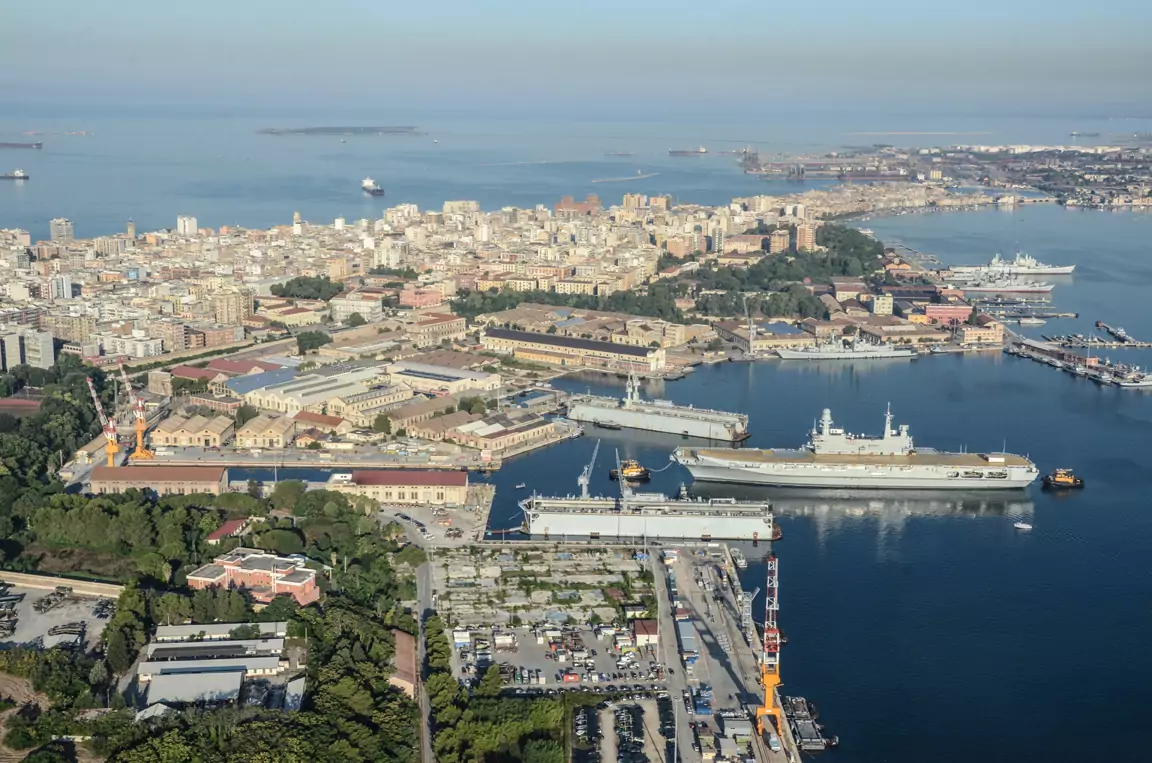
Die Marinebasis Tarent ist neben der Marinebasis La Spezia einer der beiden größeren Stützpunkte der italienischen Marine. Die im süditalienischen Apulien gelegene Basis umfasst verschiedene Anlagen, die sich sowohl im Stadtgebiet von Tarent als auch am gleichnamigen Golf befinden. Von der Marinebasis ist der Handels- und Industriehafen Tarent zu unterschieden.
塔兰托海军基地与拉斯佩齐亚海军基地是意大利海军两个较大的基地之一。基地位于意大利南部的阿普利亚大区,由塔兰托市和同名海湾的各种设施组成。塔兰托的商业和工业港口必须与海军基地区分开来。
 Geographie
 Abruzzo
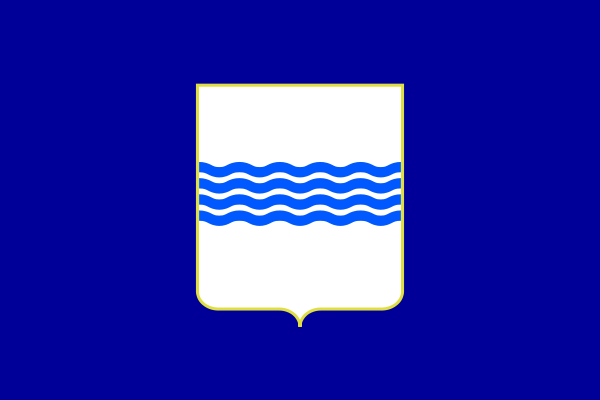 Basilicata
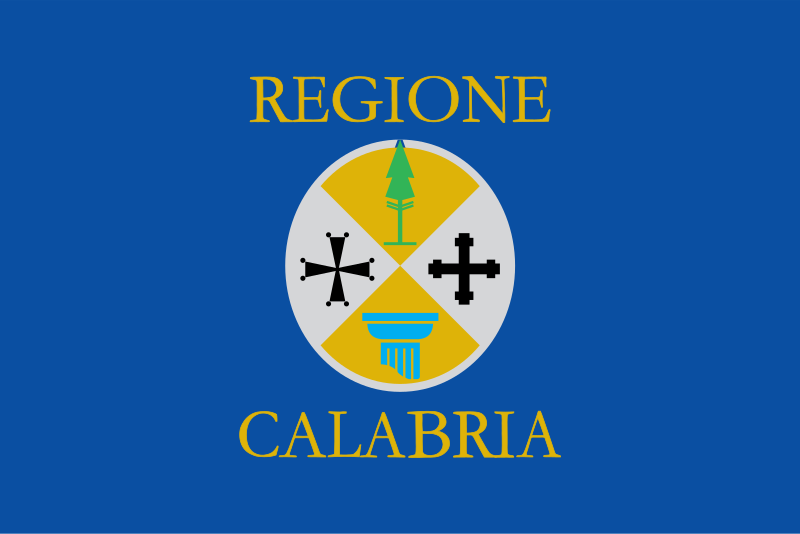 Calabria
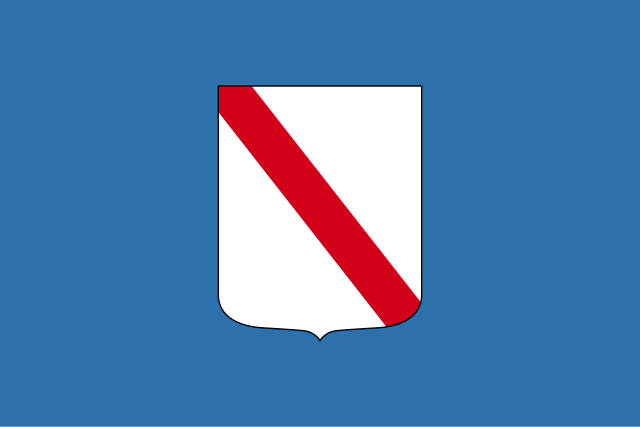 Campania
 Emilia-Romagna
Italien
Emilia-Romagna
Italien
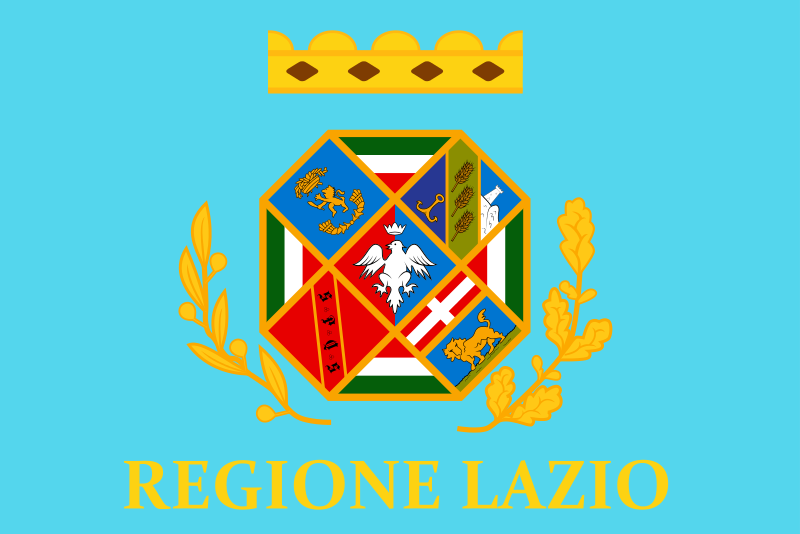 Lazio
Lazio
 Liguria
 Lombardia
 Marche
 Molise
 Piemonte
Puglia
Piemonte
Puglia
 Sicilia
 Toscana
 Umbria

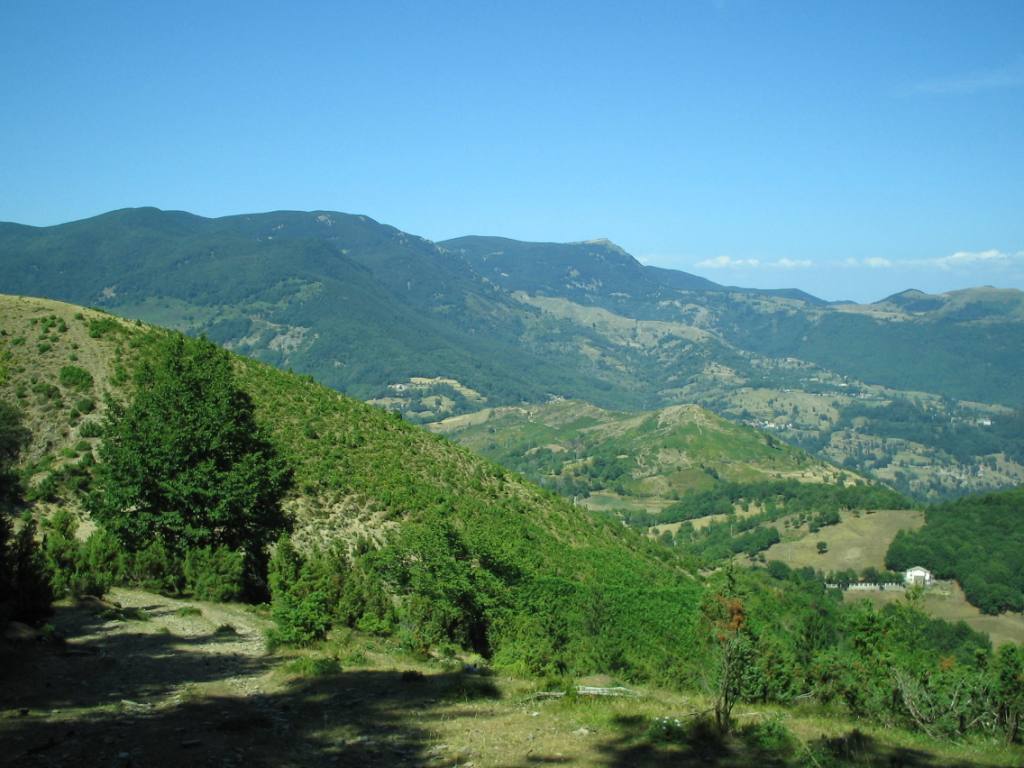
Der Apennin (auch im Plural die Apenninen; italienisch gli Appennini) ist ein rund 1500 km langer Gebirgszug in Italien (sowie zu sehr kleinen Teilen in San Marino), der einen großen Teil des Staatsgebiets durchzieht, überwiegend in Nordwest-Südost-Richtung. Über den Apennin verläuft die Hauptwasserscheide Italiens. Er ist Teil des Alpidischen Gebirgssystems. Der Großteil des Gebirges liegt auf der Apenninhalbinsel.
Der Apennin beginnt im Nordwesten Italiens und bildet im Ligurischen Apennin die Fortsetzung der Ligurischen Alpen. Die Grenze zwischen Alpen und Apennin bildet der Col di Cadibona (436 m). Von dort reicht der Apennin Richtung Osten über die Apuanischen Alpen bis zur Adriaküste, wo er sich nach Süden wendet und im Abruzzischen Apennin mit dem Massiv des Gran Sasso d’Italia (2912 m) seine größte Höhe erreicht.
Weiter südwärts teilt sich der Apennin in einzelne kleinere Gebirgsteile wie die Sila und den Aspromonte auf und findet seine Fortsetzung in den Gebirgen Nordsiziliens.
Im Apennin herrscht typisches Gebirgsklima mit niedrigen Temperaturen, jedoch starken Temperaturschwankungen und hohen Niederschlägen. Im Hügelland und den Vorgebirgen ist das Klima mediterran beeinflusst, mit Niederschlagsmengen von etwa 800 mm und einer deutlichen Sommertrockenheit. In den subalpinen Regionen steigt die Niederschlagsmenge auf über 1300 mm, wobei ein deutlicher West-Ost-Unterschied besteht.
亚平宁山脉(意大利语:Appennini[1]),位于亚平宁半岛东侧,是亚平宁半岛的主干山脉,北起阿尔卑斯山南麓,南至亚平宁半岛南端,全长超过1000公里。全境属意大利管辖。
*Mittelmeer
Abruzzo
Albanien
Bernsteinstraße
Bosnien-Herzegowina
Emilia-Romagna
 Friuli-Venezia Giulia
Italien
Kroatien
Marche
Molise
Montenegro
Puglia
Slowenien
Friuli-Venezia Giulia
Italien
Kroatien
Marche
Molise
Montenegro
Puglia
Slowenien
 Veneto
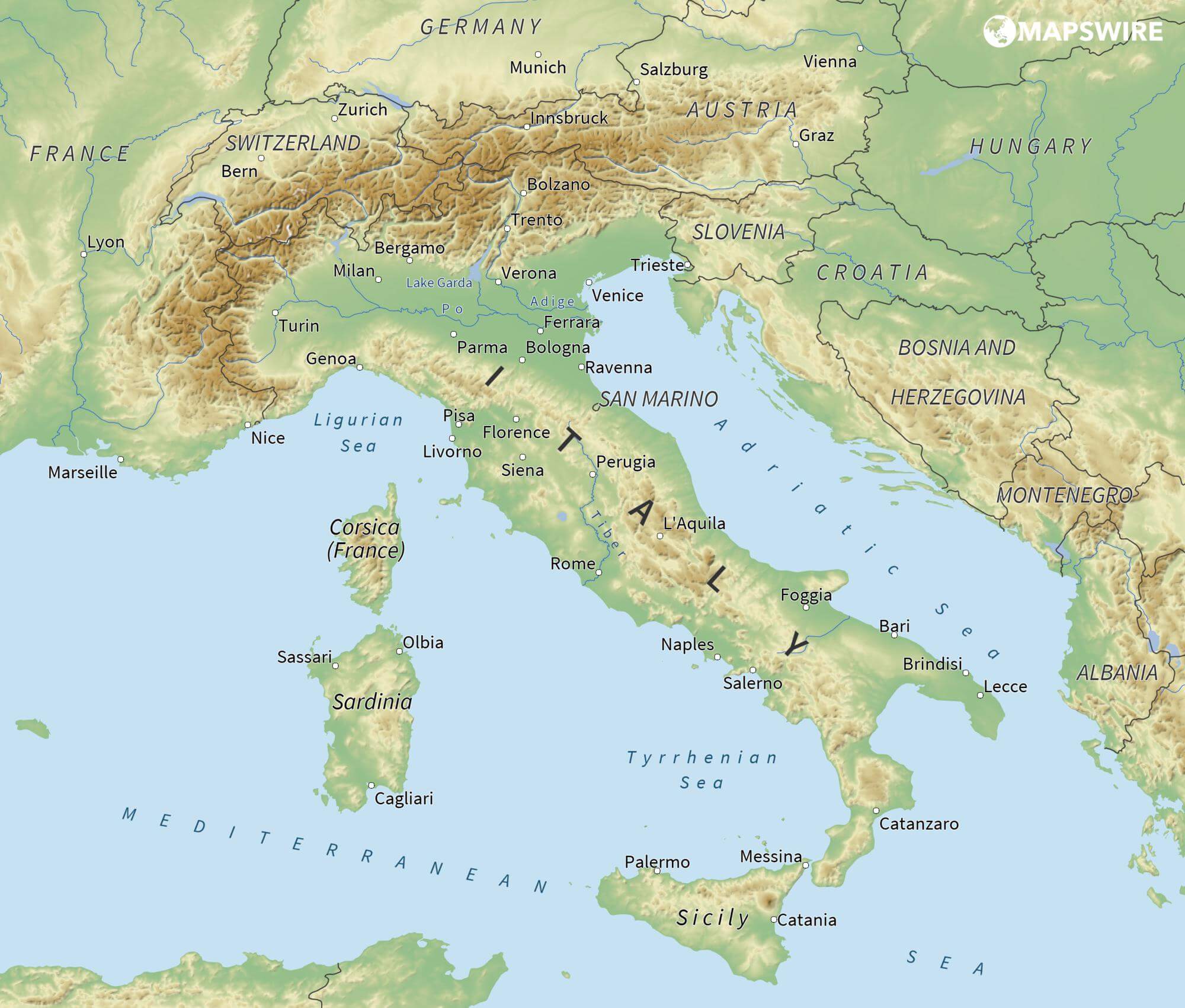
Das Adriatische Meer, kurz auch die Adria (lateinisch Mare Adriaticum; italienisch Mare Adriatico; bosnisch, kroatisch und serbisch Jadransko more oder kurz Jadran; slowenisch Jadransko morje; albanisch Deti Adriatik oder kurz Adriatiku), ist das lang gestreckte nördliche Seitenbecken des Mittelmeeres zwischen der Apenninhalbinsel und Balkanhalbinsel. Es ist nach der Stadt Adria in Italien (Provinz Rovigo) benannt. Zum Adriatischen Meer wird alles gerechnet, was nördlich der Straße von Otranto liegt.
亚得里亚海(意大利语:Mar Adriatico,斯洛文尼亚语:Jadransko morje,克罗地亚语:Jadransko more,阿尔巴尼亚语:Deti Adriatik),是地中海的一部分水域,分隔了意大利半岛(亚平宁半岛)和巴尔干半岛,也分隔了亚平宁山脉与狄那里克阿尔卑斯山脉及其临近地区。亚得里亚海西岸属于意大利,东岸则分别属于斯洛文尼亚、克罗地亚、波斯尼亚和黑塞哥维那、黑山和阿尔巴尼亚。亚得里亚海透过位于其南部的奥特朗托海峡与爱奥尼亚海相连。波河、阿迪杰河、奥凡托河等河流流入亚得里亚海;海中有近1200个岛屿,其中只有69个有人居住。
アドリア海(アドリアかい、英: Adriatic Sea ; イタリア語: Mar Adriatico ; クロアチア語: Jadransko more)は、地中海の海域の一つ。イタリア半島とバルカン半島に挟まれている。
The Adriatic Sea (/ˌeɪdriˈætɪk/) is a body of water separating the Italian Peninsula from the Balkans. The Adriatic is the northernmost arm of the Mediterranean Sea, extending from the Strait of Otranto (where it connects to the Ionian Sea) to the northwest and the Po Valley. The countries with coasts on the Adriatic are Albania, Bosnia and Herzegovina, Croatia, Italy, Montenegro and Slovenia. The Adriatic contains over 1,300 islands, mostly located along the Croatian part of its eastern coast. It is divided into three basins, the northern being the shallowest and the southern being the deepest, with a maximum depth of 1,233 metres (4,045 ft). The Otranto Sill, an underwater ridge, is located at the border between the Adriatic and Ionian Seas. The prevailing currents flow counterclockwise from the Strait of Otranto, along the eastern coast and back to the strait along the western (Italian) coast. Tidal movements in the Adriatic are slight, although larger amplitudes are known to occur occasionally. The Adriatic's salinity is lower than the Mediterranean's because the Adriatic collects a third of the fresh water flowing into the Mediterranean, acting as a dilution basin. The surface water temperatures generally range from 30 °C (86 °F) in summer to 12 °C (54 °F) in winter, significantly moderating the Adriatic Basin's climate.
The Adriatic Sea sits on the Apulian or Adriatic Microplate, which separated from the African Plate in the Mesozoic era. The plate's movement contributed to the formation of the surrounding mountain chains and Apennine tectonic uplift after its collision with the Eurasian plate. In the Late Oligocene, the Apennine Peninsula first formed, separating the Adriatic Basin from the rest of the Mediterranean. All types of sediment are found in the Adriatic, with the bulk of the material transported by the Po and other rivers on the western coast. The western coast is alluvial or terraced, while the eastern coast is highly indented with pronounced karstification. There are dozens of marine protected areas in the Adriatic, designed to protect the sea's karst habitats and biodiversity. The sea is abundant in flora and fauna—more than 7,000 species are identified as native to the Adriatic, many of them endemic, rare and threatened ones.
The Adriatic's shores are populated by more than 3.5 million people; the largest cities are Bari, Venice, Trieste and Split. The earliest settlements on the Adriatic shores were Etruscan, Illyrian, and Greek. By the 2nd century BC, the shores were under Rome's control. In the Middle Ages, the Adriatic shores and the sea itself were controlled, to a varying extent, by a series of states—most notably the Byzantine Empire, the Croatian Kingdom, the Republic of Venice, the Habsburg Monarchy and the Ottoman Empire. The Napoleonic Wars resulted in the First French Empire gaining coastal control and the British effort to counter the French in the area, ultimately securing most of the eastern Adriatic shore and the Po Valley for Austria. Following Italian unification, the Kingdom of Italy started an eastward expansion that lasted until the 20th century. Following World War I and the collapse of Austria-Hungary and the Ottoman Empire, the eastern coast's control passed to Yugoslavia and Albania. The former disintegrated during the 1990s, resulting in four new states on the Adriatic coast. Italy and Yugoslavia agreed on their maritime boundaries by 1975 and this boundary is recognised by Yugoslavia's successor states, but the maritime boundaries between Slovenia, Croatia, Bosnia-Herzegovina, and Montenegro are still disputed. Italy and Albania agreed on their maritime boundary in 1992.
Fisheries and tourism are significant sources of income all along the Adriatic coast. Adriatic Croatia's tourism industry has grown faster economically than the rest of the Adriatic Basin's. Maritime transport is also a significant branch of the area's economy—there are 19 seaports in the Adriatic that each handle more than a million tonnes of cargo per year. The largest Adriatic seaport by annual cargo turnover is the Port of Trieste, while the Port of Split is the largest Adriatic seaport by passengers served per year.
La mer Adriatique (du latin : Mare Hadriaticum ou Mare Adriaticum) est une mer séparant la péninsule italienne de la péninsule balkanique. L'Adriatique est le bras de la Méditerranée situé le plus au nord en s'étendant du canal d'Otrante (où elle rejoint la mer Ionienne) jusqu'aux villes de Venise et de Trieste et à l'embouchure du Pô. Les pays côtiers sont l'Italie, la Slovénie, la Croatie, la Bosnie-Herzégovine, le Monténégro et l'Albanie, ainsi que la Grèce par l'île de Corfou.
Il mare Adriatico è l'articolazione del mar Mediterraneo orientale situata tra la penisola italiana e la penisola balcanica; suddiviso in Alto Adriatico, Medio Adriatico e Basso Adriatico, bagna sei Paesi: Italia, Slovenia, Croazia, Bosnia ed Erzegovina, Montenegro e Albania, confinando a sud-est con il Mar Ionio.
El mar Adriático (del latín, Mare Hadriaticum) es un golfo estrecho y alargado que forma parte del mar Mediterráneo. Se encuentra situado entre la península Itálica, al oeste, y la península de los Balcanes, al este, con una anchura máxima de unos 200 km, y una longitud de unos 800 km. Su extremo meridional limita con el mar Jónico, del que lo separa el canal de Otranto. Su superficie total es de, aproximadamente, 160 000 km².
Las costas occidental, septentrional, y parte de la oriental corresponden a Italia (60% de la longitud de costa del Adriático), mientras que el resto de la costa oriental corresponde a Croacia, Eslovenia, Bosnia y Herzegovina, Montenegro y Albania. Algunos de los ríos que desembocan en el Adriático son el Reno, el Po, el Adigio, el Brenta, el Piave y el Neretva.
La costa del Adriático concentra un gran número de centros turísticos, como Venecia, que recibe el nombre de «Reina del Adriático». Tras la división de Yugoslavia, la costa croata se ha convertido también en un destino turístico muy popular.
Sus aguas sostienen industria pesquera, y se llevan a cabo prospecciones petrolíferas en este mar. Durante los años 1990, varias investigaciones revelaron que sus niveles de contaminación son muy altos.
En las últimas décadas el gobierno de Italia ha intentado hacer de él una barrera contra la inmigración ilegal, en su mayor parte proveniente de Albania.
Адриати́ческое мо́ре (итал. mare Adriatico, эмил.-ром. Mèr Adriâtic, вен. Mar Adriàtico, неап. Mar Adriateco, словен. Jadransko morje, сербохорв. Jadransko more/Јадранско море, алб. Deti Adriatik, лат. mare Hadriaticum), также Адриатика — полузамкнутое море, часть Средиземного моря между Апеннинским и Балканским полуостровами. Омывает берега Италии (более 1000 км), Словении (47 км), Хорватии (1777 км), Боснии и Герцеговины (20 км), Черногории (200 км), Албании (472 км).
 Musik
Musik

 Messe
Messe
 Landwirtschaft, Forstwirtschaft, Viehzucht, Fischerei

展品范围
粮食作物产业链: 土地耕作机械,播种机械,除草机,防虫机械,收割机,用于清洁、贮藏、碾磨的机械设备,面包生产设备
果蔬生产链: 土地耕作及移植机械,灌溉机械及设备,作物保护机械,收割机,用于处理果蔬产品的冷藏设备及系统,用于即食产品的机械和设备
非食用能源作物生产链: 收成切割机械和修剪残余物运输设备,烘干设备、碾碎设备、方块切割设备,用于燃烧有机物的专业锅炉,光电板以及用于农业企业和农工业的能源分配系统,用于非食用能源作物的风力发动机
葡萄园及葡萄酒酿造产业链: 用于经营葡萄园的机械和产品,葡萄采集及挤压设备,葡萄酒酿造机械和产品,酒窑、水槽、酒桶和橡木桶设备,酿酒实验室用的分析设备及产品,酿酒用品及辅助用品,装瓶及包装用材和机器
橄榄油产业链: 园圃、橄榄园装置、枝叶修剪,用于经营橄榄园的机械及产品,采摘机械及修剪残余碾碎机械,机械化收获、彩摘网、塑料箱,橄榄油萃取流水线,橄榄处理机械:枝叶去除机、清洗机、碾压机、去核机、搅拌机、细颈盛水瓶、分离器、固体运输机、泵和阀,段生产线的萃取设备,仓库和不锈钢容器、橄榄油渣子仓库、装瓶设备
农业机械: 农业机械和设备类,零配件类 园林机械: 拖拉机类、收获机类,各类农机具类、场上作业机械类、耕整种植机械类、植保机械类,发动机组类、发电机组类、节水灌溉设备类,园艺园林设备与用品类 农业灌溉: 农作物运输设备类,畜牧机械类,青饲料机械类,奶产品加工机械类,农副产品加工机械类,温室工程与设施类,植物保护和化肥类,杀虫剂类,除草剂机械设备与产品类;灌溉和排水系统类
Abruzzo
Basilicata
Calabria
Campania
Emilia-Romagna
Friuli-Venezia Giulia
Italien
Lazio
Liguria
Lombardia
Marche
Molise
Piemonte
Puglia
 Sardegna
Sicilia
Toscana
Sardegna
Sicilia
Toscana
 Trentino-Alto Adige
Veneto
Trentino-Alto Adige
Veneto
 Campania
Emilia-Romagna
Italien
Lazio
Lombardia
Piemonte
Puglia
Sicilia
Technologie des Hochgeschwindigkeitszugs
Campania
Emilia-Romagna
Italien
Lazio
Lombardia
Piemonte
Puglia
Sicilia
Technologie des Hochgeschwindigkeitszugs
 Zentralantrieb
Technologie des Hochgeschwindigkeitszugs
Rad-Schiene-System
Toscana
Zentralantrieb
Technologie des Hochgeschwindigkeitszugs
Rad-Schiene-System
Toscana
 Transport und Verkehr
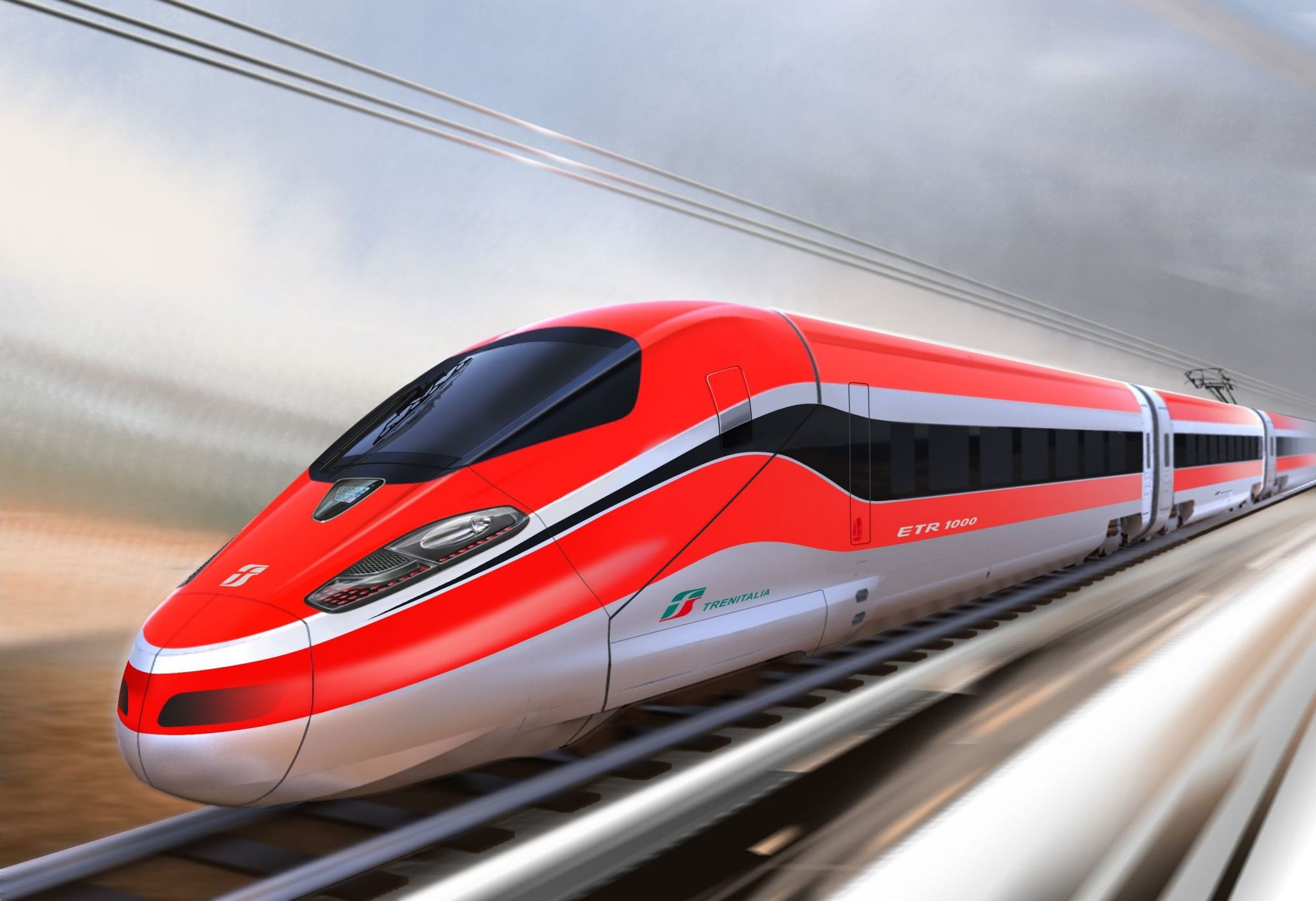
Hochgeschwindigkeitsverkehr
Transport und Verkehr
Technologie des Hochgeschwindigkeitszugs
Veneto
Transport und Verkehr
Hochgeschwindigkeitsverkehr
Transport und Verkehr
Technologie des Hochgeschwindigkeitszugs
Veneto
 Energieressource
Abruzzo
Basilicata
Calabria
Campania
Emilia-Romagna
Friuli-Venezia Giulia
Italien
Lazio
Liguria
Lombardia
Marche
Molise
Piemonte
Puglia
Sardegna
Sicilia
Toscana
Trentino-Alto Adige
Umbria
Energieressource
Abruzzo
Basilicata
Calabria
Campania
Emilia-Romagna
Friuli-Venezia Giulia
Italien
Lazio
Liguria
Lombardia
Marche
Molise
Piemonte
Puglia
Sardegna
Sicilia
Toscana
Trentino-Alto Adige
Umbria
 Unternehmen
*Größte Stromunternehmen
Unternehmen
*Größte Stromunternehmen
 Valle d´Aosta
Veneto
Valle d´Aosta
Veneto
 Wirtschaft und Handel

 Wissenschaft und Technik
Campania
Emilia-Romagna
International Council for Science,ICSU
Mitgliedstaaten
Italien
Lazio
Liguria
Lombardia
Piemonte
Puglia
Sicilia
Toscana
Umbria
Veneto
Wissenschaft und Technik
Campania
Emilia-Romagna
International Council for Science,ICSU
Mitgliedstaaten
Italien
Lazio
Liguria
Lombardia
Piemonte
Puglia
Sicilia
Toscana
Umbria
Veneto

CNR-Institute[
Sieben CNR-Abteilungen (departments) koordinieren die Aktivitäten nachstehender Institute (Stand 2021):[4]
- Istituto dei materiali per l’elettronica ed il magnetismo (IMEM), Parma
- Istituto dei sistemi complessi (ISC), Rom
- Istituto di analisi dei sistemi ed informatica “Antonio Ruberti” (IASI), Rom
- Istituto di biochimica e biologia cellulare (IBBC), Neapel
- Istituto di biofisica (IBF), Genua
- Istituto di bioimmagini e fisiologia molecolare (IBFM), Segrate
- Istituto di biologia e biotecnologia agraria (IBBA), Mailand
- Istituto di biologia e patologia molecolari (IBPM), Rom
- Istituto di biomembrane, bioenergetica e biotecnologie molecolari (IBIOM), Bari
- Istituto di bioscienze e biorisorse (IBBR), Bari
- Istituto di biostrutture e bioimmagini (IBB), Neapel
- Istituto di calcolo e reti ad alte prestazioni (ICAR), Rende
- Istituto di chimica biomolecolare (ICB), Pozzuoli
- Istituto di chimica dei composti organo metallici (ICCOM), Sesto Fiorentino
- Istituto di chimica della materia condensata e di tecnologie per l’energia (ICMATE), Padua
- Istituto di cristallografia (IC), Bari
- Istituto di elettronica e di ingegneria dell’informazione e delle telecomunicazioni (IEIIT), Turin
- Istituto di farmacologia traslazionale (IFT), Rom
- Istituto di fisica applicata “Nello Carrara” (IFAC), Sesto Fiorentino
- Istituto di fisiologia clinica (IFC), Pisa
- Istituto di fotonica e nanotecnologie (IFN), Mailand
- Istituto di genetica e biofisica “Adriano Buzzati Traverso” (IGB), Neapel
- Istituto di genetica molecolare “Luigi Luca Cavalli Sforza” (IGM), Pavia
- Istituto di geologia ambientale e geoingegneria (IGAG), Montelibretti
- Istituto di geoscienze e georisorse (IGG), Pisa
- Istituto di informatica e telematica (IIT), Pisa
- Istituto di informatica giuridica e sistemi giudiziari (IGSG), Florenz
- Istituto di ingegneria del mare (INM), Rom
- Istituto di linguistica computazionale “Antonio Zampolli” (ILC), Pisa
- Istituto di matematica applicata e tecnologie informatiche “Enrico Magenes” (IMATI), Pavia
- Istituto di metodologie per l’analisi ambientale (IMAA), Tito Scalo
- Istituto di nanotecnologia (NANOTEC), Lecce
- Istituto di neuroscienze (IN), Pisa
- Istituto di ricerca genetica e biomedica (IRGB), Monserrato
- Istituto di ricerca per la protezione idrogeologica (IRPI), Perugia
- Istituto di ricerca su innovazione e servizi per lo sviluppo (IRISS), Neapel
- Istituto di ricerca sugli ecosistemi terrestri (IRET), Porano
- Istituto di ricerca sulla crescita economica sostenibile (IRCRES), Moncalieri
- Istituto di ricerca sulle acque (IRSA), Monterotondo Stazione
- Istituto di ricerche sulla popolazione e le politiche sociali (IRPPS), Rom
- Istituto di scienza e tecnologia dei materiali ceramici (ISTEC), Faenza
- Istituto di scienza e tecnologie dell’informazione “Alessandro Faedo” (ISTI), Pisa
- Istituto di scienze applicate e sistemi intelligenti “Eduardo Caianiello” (ISASI), Pozzuoli
- Istituto di scienze del patrimonio culturale (ISPC), Neapel
- Istituto di scienze dell’alimentazione (ISA), Avellino
- Istituto di scienze dell’atmosfera e del clima (ISAC), Bologna
- Istituto di scienze delle produzioni alimentari (ISPA), Bari
- Istituto di scienze e tecnologie chimiche “Giulio Natta” (SCITEC), Mailand
- Istituto di scienze e tecnologie della cognizione (ISTC), Rom
- Istituto di scienze e tecnologie per l’energia e la mobilità sostenibili (STEMS), Neapel
- Istituto di scienze marine (ISMAR), Venedig
- Istituto di scienze polari (ISP), Mestre
- Istituto di sistemi e tecnologie industriali intelligenti per il manifatturiero avanzato (STIIMA), Mailand
- Istituto di storia dell’Europa mediterranea (ISEM), Cagliari
- Istituto di struttura della materia (ISM), Rom
- Istituto di studi giuridici internazionali (ISGI), Rom
- Istituto di studi sui sistemi regionali federali e sulle autonomie “Massimo Severo Giannini” (ISSIRFA), Rom
- Istituto di studi sul Mediterraneo (ISMed), Neapel
- Istituto di tecnologie avanzate per l’energia “Nicola Giordano” (ITAE), Messina
- Istituto di tecnologie biomediche (ITB), Segrate
- Istituto nanoscienze (NANO), Pisa
- Istituto nazionale di ottica (INO), Florenz
- Istituto officina dei materiali (IOM), Triest
- Istituto opera del vocabolario italiano (OVI), Florenz
- Istituto per la bioeconomia (IBE), Sesto Fiorentino
- Istituto per i polimeri, Ccmpositi e biomateriali (IPCB), Pozzuoli
- Istituto per i processi chimico-fisici (IPCF), Messina
- Istituto per i sistemi agricoli e forestali del mediterraneo (ISAFoM), Portici
- Istituto per i sistemi biologici (ISB), Monterotondo
- Istituto per il lessico intellettuale europeo e storia delle idee (ILIESI), Rom
- Istituto per il rilevamento elettromagnetico dell’ambiente (IREA), Neapel
- Istituto per il sistema produzione animale in ambiente Mediterraneo (ISPAAM), Neapel
- Istituto per l’endocrinologia e l’oncologia “Gaetano Salvatore” (IEOS), Neapel
- Istituto per la microelettronica e microsistemi (IMM), Catania
- Istituto per la protezione sostenibile delle piante (IPSP), Turin
- Istituto per la ricerca e l’innovazione biomedica (IRIB), Palermo
- Istituto per la scienza e tecnologia dei plasmi (ISTP), Mailand
- Istituto per la sintesi organica e la fotoreattività (ISOF), Bologna
- Istituto per la storia del pensiero filosofico e scientifico moderno (ISPF), Neapel
- Istituto per la tecnologia delle membrane (ITM), Rende
- Istituto per le applicazioni del calcolo “Mauro Picone” (IAC), Rom
- Istituto per le risorse biologiche e le biotecnologie marine (IRBIM), Messina
- Istituto per le tecnologie della costruzione (ITC), San Giuliano Milanese
- Istituto per le tecnologie didattiche (ITD), Genua
- Istituto per lo studio degli impatti antropici e sostenibilità in ambiente marino (IAS), Rom
- Istituto per lo studio dei materiali nanostrutturati (ISMN), Monterotondo Stazione
- Istituto sull’inquinamento atmosferico (IIA), Monterotondo
- Istituto superconduttori, materiali innovativi e dispositivi (SPIN), Genua
Abruzzo
Basilicata
Calabria
Campania
Emilia-Romagna
Friuli-Venezia Giulia
Lazio
Liguria
Lombardia
Marche
Molise
Piemonte
Puglia
Sardegna
Sicilia
Toscana
Trentino-Alto Adige
Umbria
 Abruzzo
Basilicata
Calabria
Campania
Emilia-Romagna
Friuli-Venezia Giulia
Italien
Lazio
Liguria
Lombardia
Marche
Molise
Piemonte
Puglia
Sardegna
Sicilia
Toscana
Trentino-Alto Adige
Umbria
Valle d´Aosta
Veneto
Abruzzo
Basilicata
Calabria
Campania
Emilia-Romagna
Friuli-Venezia Giulia
Italien
Lazio
Liguria
Lombardia
Marche
Molise
Piemonte
Puglia
Sardegna
Sicilia
Toscana
Trentino-Alto Adige
Umbria
Valle d´Aosta
Veneto

Abruzzo
Basilicata
Calabria
Campania
Emilia-Romagna
Friuli-Venezia Giulia
Italien
Lazio
Liguria
Lombardia
Marche
Molise
Piemonte
Puglia
Sardegna
Sicilia
Toscana
Trentino-Alto Adige
Umbria