
Deutsch-Chinesische Enzyklopädie, 德汉百科
 Religion


 History
 Architecture

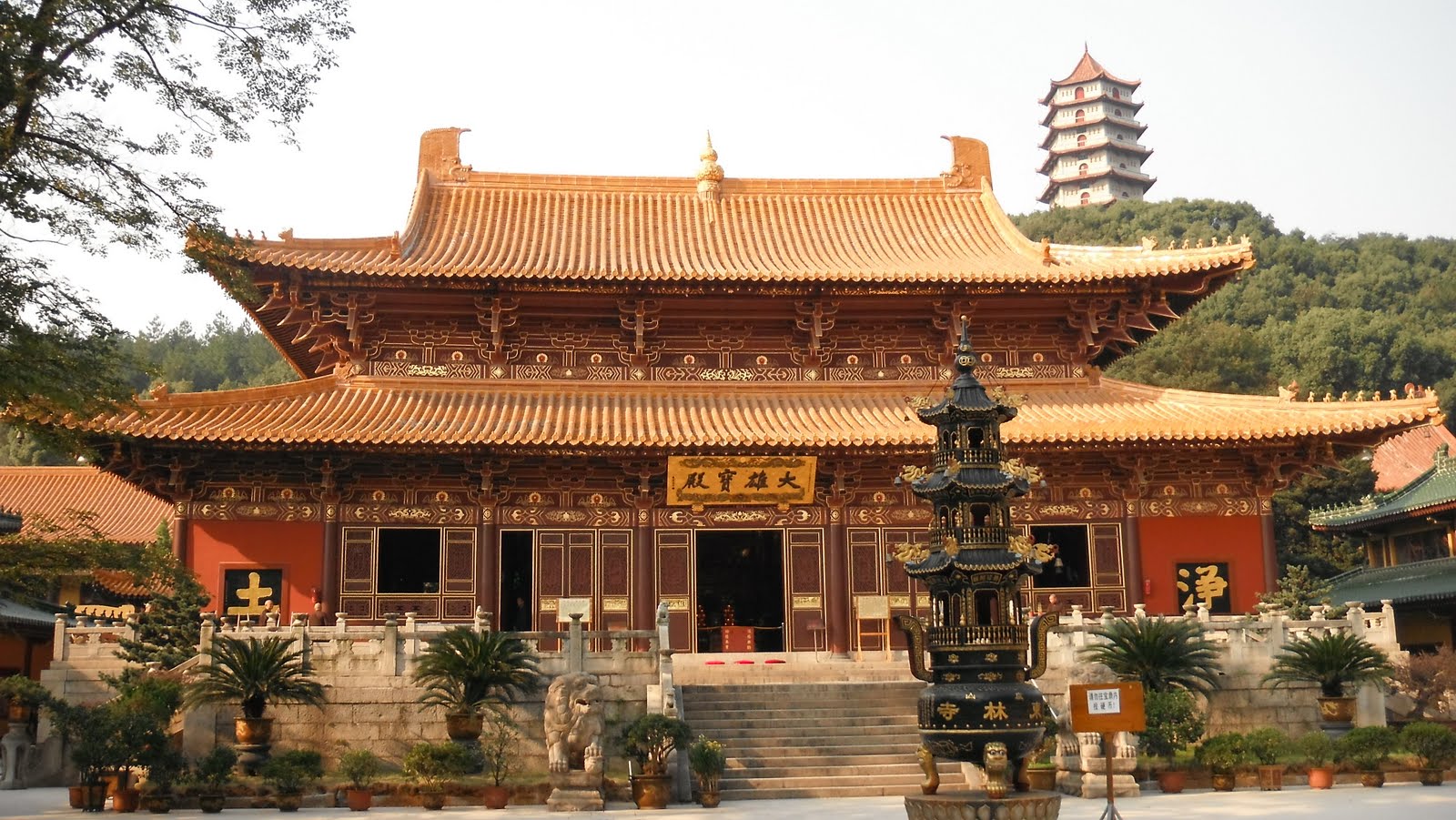
东林寺位于长江南岸,庐山西北麓,南面正对庐山香炉、天地诸峰,北倚分水岭及上方塔,西北有香谷,东南有乌龙潭,地势雄伟。寺前明堂开阔,香炉峰呈趋拜之势,千年紫烟不断,虎溪具眷恋之情,万载常流。唐大书法家柳公权曾写下流泉匝寺四字,盛赞此寺之妙。原寺内建筑恢弘,兼之布局合理,避阴抱阳,松竹密植,石径苔合。徜徉其中,莫不神清气爽,心旷而情怡,透出世外桃源,人间净土之神韵。东林寺建成于东晋太元十一年(386年),为中国佛教净土宗发祥地,南方佛教中心,隋朝以后为全国佛教八大道场之一。历史上,与东林寺结缘的名流高士不乏其人,如佛陀跋陀罗尊者、智者大师、鉴真大师、李世民、刘遗民、谢灵运、陶渊明、孟浩然、韩愈、白居易、柳公权、王安石、苏东坡、李白、陆游、杜甫、杜 牧、杜荀鹤、刘长卿、王昌龄、李邕、王阳明、黄庭坚、周敦颐、岳飞、范成大、朱熹、康有为等等。寺内文物甚多,从东晋远公与西域经师译经驻锡的译经台,到 清末康有为题刻的《柳公权残碑记》,时间跨度千余年,每一处古迹都寄寓着一段历史典故,其丰厚的文化底蕴,对中国传统文化也产生了至为深远的影响。东林寺自建造以来,迄今已有1600多年历史,沧桑历尽,屡废屡兴。
这里是中国净土宗的发祥地,是净土宗初祖祖庭之所在。寺当庐山之阴,南面香炉峰,北倚灵竹山。山不甚高,为庐山之外廓,寺前临溪,入门为虎溪桥。古木葱茏,梵音缭绕,人间净境,秀挹庐山。
東林寺(とうりんじ、donglinsi)は、中国の世界遺産である廬山にあり、江西省九江市に位置している。九江市の中心部から16キロのところにあり、廬山にあることから廬山東林寺とよく呼ばれている。建立は東晋時代の大元九年(384年)であり、廬山にある寺院の有名な一つになる[1]。東林寺はなんといっても浄土宗発祥の地とされ、日本の浄土宗や浄土真宗からも師が居た場所とされている。1983年に国務院に仏教全国重点寺院に指定された[2]。
東林寺の始まりは慧遠大師である。彼は南下して仏法を広めようとしていたその途中で、廬山に立ち寄った。それがいつの間にか三年にも及び、慕うものも増えた。江州の刺史であった桓伊が、この地に寺を建立するように提案し、それがきっかけとなり朝廷の許可と百姓の支援もあり、慧遠を中心にして寺院が建立された[3]。
慧遠は常に東林にいたとされ、大元十五年(390年)に中国でも初めてとなる仏教結社「白蓮社」を立ち上げた。浄土業を修行の中心にし、「阿弥陀仏の浄土法門」を唱えた。隋の時代、天台大師もこの地を訪れ、足を休めた。日本でも有名な鑑真大師は六度目の日本への渡航に挑戦する前に、この地を訪れ、日本の浄土宗への伝承の大きな役割を果たした。中国で有名な南宋時代の将軍、岳飛も母親のために、この地を訪れたことがある[4]。日中国交正常化20周年の際、日本の浄土宗団体が二度この地を訪れ,蓮と蓮の実を贈った。日本の浄土宗総長であった成田有恒氏と果公上人が手を携えて蓮の池に入り、友好と平和を象徴する青蓮華を共同で植えた[5]。
Donglin Monastery is the birthplace of the Pure Land School of Chinese Buddhism. It is located behind Mount Lu, facing Xianglu Peak to the South, at the foot of Donglin Hill, which is one of the outer ring hills of Mount Lu. The Tiger stream (Huxi) runs in front of the Monastery, and the bridge over the Tiger leads the way to the monastery gate. The area is clothed with old trees and luxuriant vegetation and with Buddhist chanting fills the air. It is the most graceful place in Mount Lu, the pure land in our Saha world.
Donglin Temple (simplified Chinese: 东林寺; traditional Chinese: 東林寺; pinyin: Dōnglín sì; lit. 'Eastern Forest Temple') is a Buddhist monastery approximately 20 kilometres (12 mi) from Jiujiang, in the north of Jiangxi province, China. Built in 386 CE at the foot of Lushan by Huiyuan, founder of the Pure Land Sect of Buddhism, it is well known for how long it has stood without collapsing.[1][2]
In the Tang dynasty, Jianzhen made several trips to Japan for the mission of preaching Buddhism. As a result, Huiyuan and the doctrine of Donglin Temple began to spread in Japan. Donglin Temple made contributions to improve cultural exchanges and friendly visits between China and Nepal, India, Japan.[3]
The monastery reached its peak of influence during the Tang Dynasty (618–907 CE), but was severely damaged during the Taiping Rebellion and was almost destroyed during the Republican period (1912–1949) of Chinese history.[2]


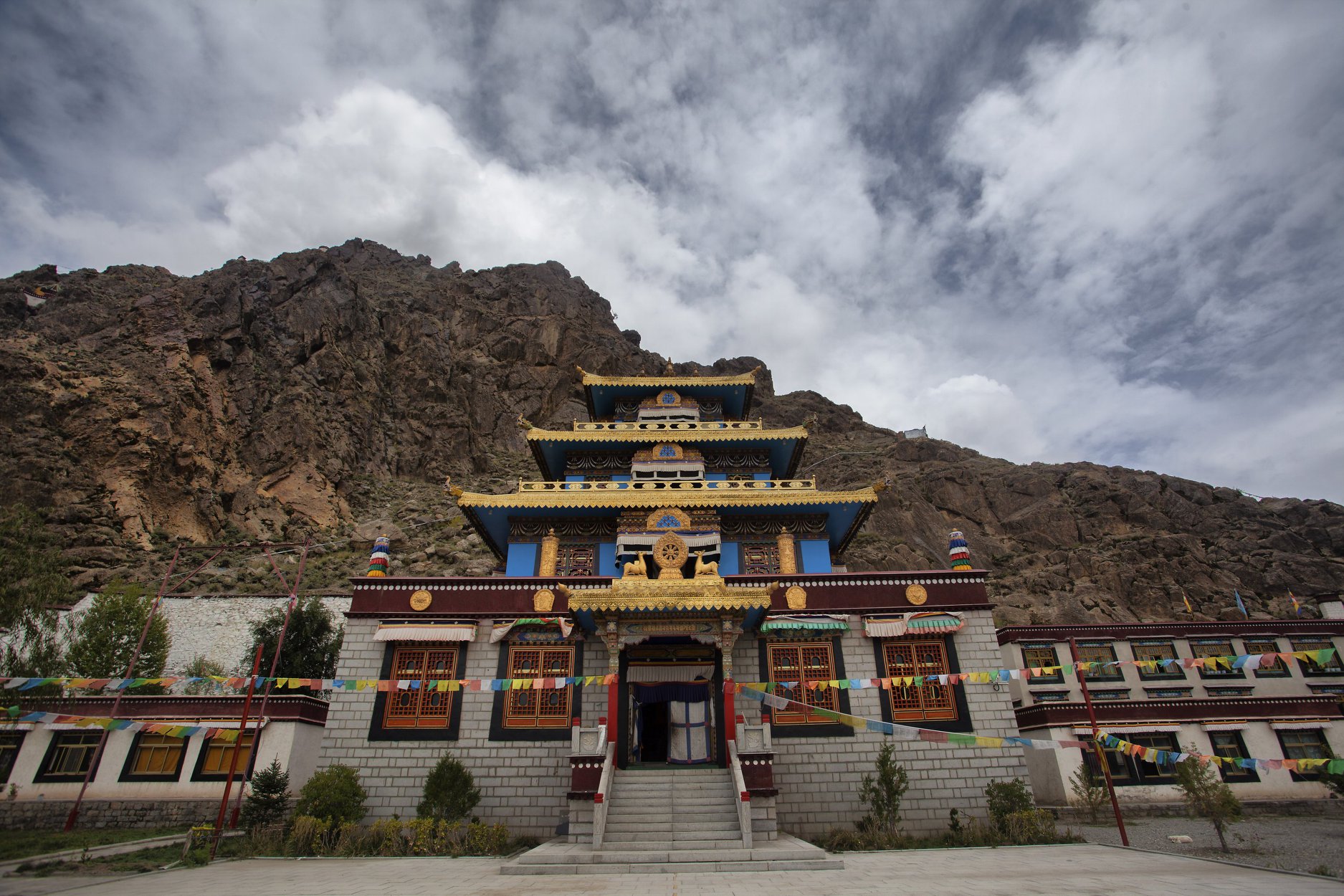
Dorje Drag ist ein Kloster der Nyingma-Schule des tibetischen Buddhismus am nördlichen Ufer des Yarlung Tsangpo im Kreis Gongkar des Regierungsbezirks Lhokha in Tibet. Das Kloster ist das Ursprungskloster der Lehrtradition der „Nördlichen Schätze“ (tib. byang gter) und eines der sechs wichtigsten Nyingma-Klöster Tibets. An anderer Stelle wurde ein Kloster gegen Ende des 16. Jhs. von Trashi Tobgyel (1550–1602)[1] erbaut (bzw. erweitert) und 1632 von Ngagi Wangpo[2] (1580–1639) an der jetzigen Stelle neugegründet. Im 57. Jahr der Kangxi-Ära (1718) bei der Invasion der mongolischen Dsungaren in Tibet wurde das Kloster schwer beschädigt, in der Zeit der Herrschaft von Pholhane (1728–1747) wurden die Schäden ausgebessert.多吉扎寺,也作多吉札寺,位于中华人民共和国西藏自治区山南市贡嘎县雅鲁藏布江北岸的一座藏传佛教宁玛派寺院,是宁玛派在在前藏的重要寺院,由扎西道杰于16世纪末创建,寺僧以传布“伏藏”中的“北藏”为主[1]。
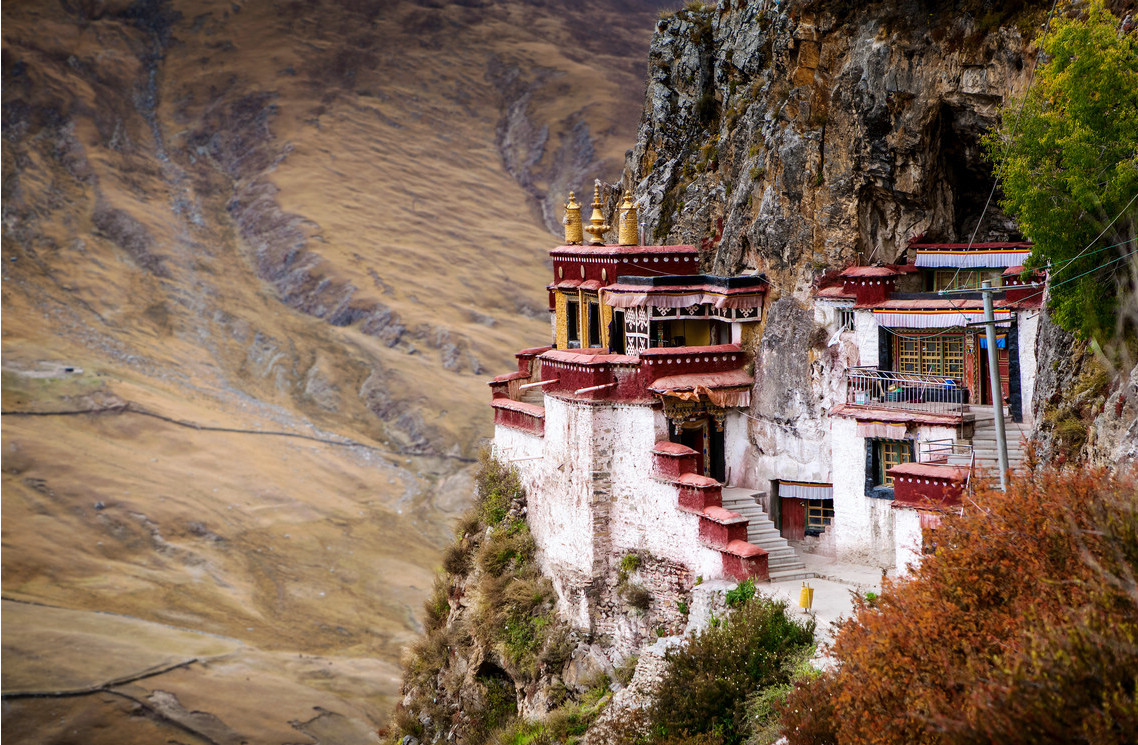
Drag Yerpa (tib.: brag yer pa; chinesisch 叶巴寺, Pinyin Yeba si oder 耶巴寺) ist ein bis auf das 7. Jahrhundert zurückgehendes Felsenkloster des tibetischen Buddhismus.
Die Höhlen des Klosters befinden sich in der Nähe des Dorfes Yerpa am Fuße des Berges Yerpa Lhari (tib.: yer pa lha ri; chin. 叶巴山 Yeba Shan), ca. 30 km nordöstlich von Lhasa im Kreis Tagtse Dzong. Es gilt als eine der heiligsten Höhlen dieser Region. Viele berühmte Persönlichkeiten haben hier verweilt – darunter Songtsen Gampo aus der Yarlung-Dynastie, Padmasambhava, Atisha, Vairocana sowie Gendün Gyatsho – und zur großen Heiligkeit des Ortes beigetragen.
 Art


 World Heritage


Drepung ist eines der bedeutendsten Klöster der Gelug-Schule und war eines der drei großen so genannten "Staatsklöster" des früheren Tibet, nicht ganz 10 km westlich von Lhasa gelegen.
哲蚌寺(藏语:འབྲས་སྤུངས་,威利转写:'Bras-spungs,THL:Drepung,藏语拼音:Zhäbung),藏传佛教格鲁派寺院,拉萨“三大寺”之一,全名吉祥米聚十方尊胜洲。哲蚌,藏语“米堆”之意。目前在拉萨和南印度各有一座同名寺院。