
Deutsch-Chinesische Enzyklopädie, 德汉百科
 Japan
Japan
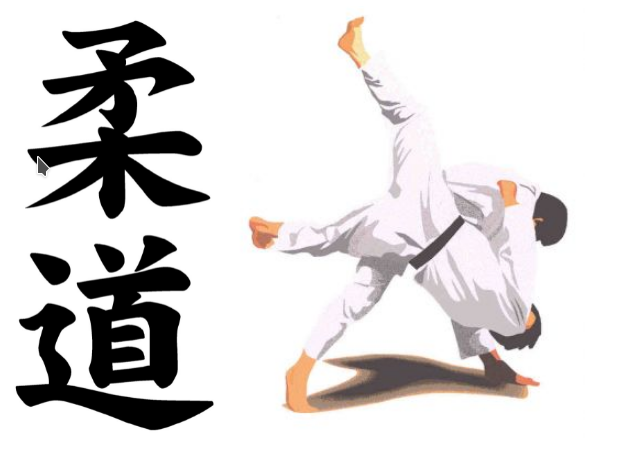
Judo (jap. 柔道 jūdō, lit. „sanfter Weg“) ist eine japanische Kampfsportart, deren Prinzip „Siegen durch Nachgeben“ beziehungsweise „maximale Wirkung bei einem Minimum an Aufwand“ ist. Entwickelt wurde dieser Kampfsport von Kanō Jigorō (1860–1938), als er eine Symbiose aus alten Jiu-Jitsu-Stilen (Koryū) schuf, die er seit seiner Jugend mit großem Fleiß trainiert hatte. Heute wird Judo in über 150 Ländern ausgeübt und ist damit die am weitesten verbreitete Kampfsportart der Welt.
Judo wird in Deutschland in einzelnen Vereinen bereits für Kinder ab drei Jahren angeboten. Der spielerische Übergang zu judospezifischen Formen ist dabei fließend. Wegen seines Facettenreichtums kann Judo bis ins hohe Alter aktiv praktiziert werden; so sind selbst Judoka mit über achtzig Jahren keine Seltenheit.
Die traditionellen Säulen des Judo sind der Formenlauf (jap. Kata) und der Übungskampf (jap. Randori) beziehungsweise der Wettkampf (jap. Shiai). Klassischerweise gehören daneben auch Kōgi (講義, Lehrvortrag) und Mondō (問答, Lehrgespräch) zu den Bestandteilen des Judo. Das heutige Judo ist von den Wettkampftechniken der letzten Jahre dominiert und wird entsprechend vom Techniktraining geprägt.
Judo ist nicht nur ein Sport, sondern darüber hinaus auch eine Philosophie zur Persönlichkeitsentwicklung. Ein Judo-Meister praktiziert in diesem Sinne auch dann Judo, wenn er nicht in der Trainingshalle (jap. Dōjō) ist. Zwei philosophische Prinzipien liegen dem Judo im Wesentlichen zugrunde: das gegenseitige Helfen und Verstehen zum beiderseitigen Fortschritt und Wohlergehen (jita kyōei, 自他共栄) und der bestmögliche Einsatz von Körper und Geist (seiryoku zenyō, 精力善用). Ziel ist es, diese Prinzipien als eine Haltung in sich zu tragen und auf der Judomatte (jap. Tatami) bewusst in jeder Bewegung zum Ausdruck zu bringen.
柔道是在1882年由日本人嘉纳治五郎创立的日本武术。它一般被归类于现代武术,后期慢慢演变为搏击运动及被纳入奥运会比赛项目之一。柔道最特殊的一点是其比赛的方式,目的是将对手摔掷出到地上或扭倒在地,再利用压制使对方无法移动,或是利用关节技或是勒颈等技术使对手屈服。直接手脚击打或武器防守亦是柔道的一部分,但只容许在形(Kata,形)的训练中使用,而在柔道比赛和乱取训练(Randori, 乱取り)中是被禁止的。柔道是当今全球最具国际竞争力的夹克摔跤形式。
 Motorsport
Azerbaijan
Australia
Bahrain
Belgium
Brazil
China
Germany
Motorsport
Azerbaijan
Australia
Bahrain
Belgium
Brazil
China
Germany
 Emilia-Romagna
England
Emilia-Romagna
England
 Florida-FL
Formel-1-Weltmeisterschaft 2017
Formel-1-Weltmeisterschaft 2018
Florida-FL
Formel-1-Weltmeisterschaft 2017
Formel-1-Weltmeisterschaft 2018
 Formula 1 World Championship 2025
France
India
Italy
Japan
Canada
Katar
Kinki
Formula 1 World Championship 2025
France
India
Italy
Japan
Canada
Katar
Kinki
 Lombardia
Mexico
Monaco
Lombardia
Mexico
Monaco
 Nevada-NV
Austria
Nevada-NV
Austria
 Quebec-QC
Russia
São Paulo
Saudi Arabia
Switzerland
Shanghai Shi-SH
Singapore
Spain
Quebec-QC
Russia
São Paulo
Saudi Arabia
Switzerland
Shanghai Shi-SH
Singapore
Spain
 Sport
Sport
 Styria
 Texas-TX
Hungary
United Arab Emirates
United States
United Kingdom
Texas-TX
Hungary
United Arab Emirates
United States
United Kingdom
 Victoria-VIC

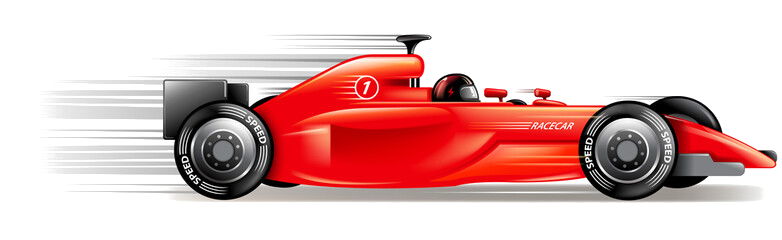
一级方程式赛车(英语:Formula One,也叫Formula 1或者F1)是由国际汽车联盟举办的最高等级的年度系列场地方程式赛车比赛,正式名称为“国际汽车联合会世界一级方程式锦标赛”。名称中“方程式”是指一组所有参赛车辆都必须遵守的规则[1]。F1赛季包括一系列的比赛,而这些所谓的“大奖赛”(Grand Prix,出自法语,本意Great Prizes)的场地是全封闭的专门赛道或者是临时封闭的普通公路。每场比赛的结果算入积分系统并以此确定两个年度世界冠军:一个给车手和另一个给制造商。F1的车手、制造商、组织者以及赛道都必须持有FIA超级驾驶执照,这是国际汽联颁发的最高级别执照。
一级方程式赛车通过产生大量的空气动力学下压力达到非常高的过弯速度,是风靡全球的赛车运动。发动机性能限制在每分钟最多15000转时,其比赛最高速度就可以超过360公里/小时。赛车过弯的横向加速度超过5个标准重力。F1赛车的性能非常依赖电子系统(牵引力控制系统和其他辅助驾驶装置自2008年已被禁止)、空气动力学、悬挂和轮胎。
Die Formel 1 ist eine vom Automobil-Dachverband Fédération Internationale de l’Automobile (FIA) festgelegte Formelserie. Hersteller konstruieren Autos, die den Formel-1-Regeln entsprechen. Diese Autos treten im Rahmen der Formel-1-Weltmeisterschaft zu Rennen in ungefähr 20 Orten pro Jahr an. Am Ende der Saison wird der Fahrer mit den meisten Punkten F1 Fahrerweltmeister und der Hersteller mit den meisten Punkten Konstrukteursweltmeister.
Die Formel 1 ist die höchstrangige von der FIA veranstaltete Rennserie des Formelsports. Sie wird als Königsklasse des Automobilsports bezeichnet, da sie den Anspruch erhebt, die höchsten technischen, fahrerischen, aber auch finanziellen Anforderungen aller Rennserien an Fahrer und Konstrukteure zu stellen. Sie wird auch kurz F1 genannt. Die F1 Weltmeisterschaft heißt offiziell FIA Formula One World Championship, bis 1980 hat sie Automobil-Weltmeisterschaft geheissen.
Formula One (also Formula 1 or F1) is the highest class of single-seater auto racing sanctioned by the Fédération Internationale de l'Automobile (FIA) and owned by the Formula One Group. The FIA Formula One World Championship has been one of the premier forms of racing around the world since its inaugural season in 1950. The "formula" in the name refers to the set of rules to which all participants' cars must conform.[2] A Formula One season consists of a series of races, known as Grands Prix (French for "grand prizes" or "great prizes"), which are held worldwide on purpose-built circuits and public roads.
The results of each race are evaluated using a points system to determine two annual World Championships: one for drivers, the other for constructors. Drivers must hold valid Super Licences, the highest class of racing licence issued by the FIA.[3] The races are required to be held on tracks graded "1" (formerly "A"), the highest grade rating issued by the FIA.[3] Most events are held in rural locations on purpose-built tracks, but there are several events in city centres throughout the world, with the Monaco Grand Prix being the most well-known.
Formula One cars are the fastest regulated road course racing cars in the world, owing to very high cornering speeds achieved through the generation of large amounts of aerodynamic downforce. The cars underwent major changes in 2017,[4] allowing wider front and rear wings, and wider tyres, resulting in cornering forces closing in on 8g and top speeds of up to approximately 375 km/h (230 mph).[5] The hybrid engines are currently limited in performance to a maximum of 15,000 rpm and the cars are very dependent on electronics—although traction control and other driving aids have been banned since 2008—and also on aerodynamics, suspension, and tyres.
While Europe is the sport's traditional base, the championship is truly global, with 11 of the 21 races in the 2018 season taking place outside Europe. With the annual cost of running a mid-tier team—designing, building, and maintaining cars, pay, transport—being US$120 million,[6] Formula One has a significant economic and job-creation effect, and its financial and political battles are widely reported. Its high profile and popularity have created a major merchandising environment, which has resulted in large investments from sponsors and budgets (in the hundreds of millions for the constructors). On 8 September 2016, it was announced that Liberty Media had agreed to buy Delta Topco, the company that controls Formula One, from private equity firm CVC Capital Partners for $4.4 billion in cash, stock, and convertible debt.[7] On 23 January 2017, it was confirmed that the acquisition had been completed, for $8 billion.[8]
La Formule 1, communément abrégée en F1, est une discipline de sport automobile considérée comme la catégorie reine de ce sport. Elle a pris au fil des ans une dimension mondiale et elle est, avec les Jeux olympiques et la Coupe du monde de football, l'un des événements sportifs les plus médiatisés.
Chaque année depuis 1950, un championnat mondial des pilotes est organisé, complété depuis 1958 par un championnat mondial des constructeurs automobiles. La compétition est basée sur des Grands Prix, courses à bord de voitures monoplaces disputées sur circuits routiers fermés permanents mais parfois tracés en ville et temporaires, comme à Monaco, Valence, Singapour, et Bakou.
Cette discipline sportive, régie par la Fédération internationale de l'automobile (FIA), est gérée par la Formula One Administration (FOA) et un ensemble de sociétés satellites contrôlées par Liberty Media. Après l'ère des artisans des années 1960 et 1970, elle a peu à peu attiré les grands constructeurs automobiles mondiaux qui y investissent des sommes élevées, en espérant tirer profit des retombées médiatiques d'éventuels succès. La Formule 1 est considérée comme la vitrine technologique de l'industrie automobile qui y expérimente des nouveautés techniques, parfois issues de la technologie spatiale et susceptibles d'être adaptées ensuite sur les voitures de série.
Outre la compétition, le terme Formule 1 désigne l'ensemble des règles techniques des voitures monoplaces qui sont mises à jour tous les ans par la FIA. Ces règles sont très strictes sur les dimensions des voitures, la cylindrée des moteurs, les technologies mises en œuvre ; elles définissent également les mesures de sécurité des voitures pour assurer la protection du pilote. Les monoplaces de course répondant aux caractéristiques de la réglementation de la Formule 1 sont généralement désignées sous le terme générique de Formules 1.
La Formula 1 o Formula Uno,[1] in sigla F1, è la massima categoria (in termini prestazionali) di vetture monoposto a ruote scoperte da corsa su circuito definita dalla Federazione Internazionale dell'Automobile (FIA).
La categoria è nata nel 1948 (in sostituzione della Formula A, a sua volta sorta solo qualche anno prima, nel 1946), diventando poi a carattere mondiale nella stagione 1950. Inizialmente definita dalla Commissione Sportiva Internazionale (CSI) dell'Associazione Internazionale degli Automobil Club Riconosciuti (AIACR), associazione antesignana della Federazione Internazionale dell'Automobile, oggi la Formula Uno è regolata dal Consiglio Mondiale degli Sport Motoristici (in inglese: World Motor Sport Council, WMSC) della Federazione Internazionale dell'Automobile.
Il termine "formula", presente nel nome, fa riferimento a un insieme di regole alle quali tutti i partecipanti, le macchine e i piloti, devono adeguarsi; esse introducono un numero di restrizioni e specifiche nelle auto, al fine di evitare le eccessive disparità tecniche tra le auto, di porre dei limiti al loro sviluppo e di ridurre i rischi di incidenti. La formula ha avuto molti cambiamenti durante la sua storia. Ad esempio, ci sono stati differenti tipi di motori, con schemi da quattro fino a sedici cilindri e con cilindrate da 1,5 a 4,5 l.
La Fórmula 1, abreviada como F1 y también denominada la «categoría reina del automovilismo»1 o «la máxima categoría del automovilismo»,23 es la competición de automovilismo internacional más popular y prestigiosa, superando a categorías de automovilismo como la NASCAR, el Campeonato Mundial de Rally, el Campeonato Mundial de Turismos o la Fórmula E, entre otras.4 A cada carrera se le denomina Gran Premio y el torneo que las agrupa se denomina Campeonato Mundial de Fórmula 1. La entidad que la dirige es la Federación Internacional del Automóvil (FIA). El Formula One Group es controlado por la empresa estadounidense Liberty Media desde septiembre de 2016.5
Los automóviles utilizados son monoplazas con la última tecnología disponible, siempre limitadas por un reglamento técnico; algunas mejoras que fueron desarrolladas en la Fórmula 1 terminaron siendo utilizadas en automóviles comerciales, como el freno de disco.6 La mayoría de los circuitos de carreras donde se celebran los Grandes Premios son autódromos, aunque también se utilizan circuitos callejeros y anteriormente se utilizaron circuitos ruteros.
El inicio de la Fórmula 1 moderna se remonta al año 1950, en el que participaron escuderías como Ferrari, Alfa Romeo y Maserati. Algunas fueron reemplazadas por otras nuevas como McLaren, Williams, Red Bull y Renault, que se han alzado varias veces con el Campeonato Mundial de Constructores. Las escuderías tienen que planear sus fichajes y renovación de contratos 2 o 3 carreras antes del fin de la temporada. Por su parte, los pilotos deben contar con la superlicencia de la FIA para competir, que se obtiene sobre la base de resultados en otros campeonatos.
America´s Cup 2017
Australia
 California-CA
China
California-CA
China
 Valencian Community
England
France
Greece
Valencian Community
England
France
Greece
 Illinois-IL
Italy
Japan
Canada
Kyūshū
New Zealand
Illinois-IL
Italy
Japan
Canada
Kyūshū
New Zealand
 New York-NY
Oman
Austria
New York-NY
Oman
Austria
 Provence-Alpes-Côte d´Azur
Republic of Korea
Provence-Alpes-Côte d´Azur
Republic of Korea
 Rhode Island-RI
Russia
Rhode Island-RI
Russia
 Ships and Nautics
Sweden
Spain
Sport
Ships and Nautics
Sweden
Spain
Sport
 America´s Cup
United States
United Kingdom
United Kingdom
America´s Cup
United States
United Kingdom
United Kingdom
 Western Australia-WA

美洲杯帆船赛(英语:America's Cup)是赛艇运动中保存的最著名也是最古老的一项体育比赛。
比赛奖杯是银质大口水罐,奖励给来自不同国家的两艘帆船之间举行的九局五胜制比赛的胜者。两艘帆船中,一艘代表卫冕冠军游艇俱乐部,另一艘则代表俱乐部挑战奖杯。
美洲杯帆船赛源于1851年8月22日,一艘由代表纽约游艇俱乐部(New York Yacht Club,NYYC)的财团拥有的30.86米长纵帆船“美洲号”(America),同15艘代表皇家快艇舰队(Royal Yacht Squadron)的帆船在英国南部的怀特岛附近比赛。“美洲号”最终以领先20分钟胜出。拥有“美洲号”的财团后来将奖杯通过馈赠契约捐献给纽约游艇俱乐部。由此,奖杯被托管成为一项鼓励各国之间友谊竞赛的“挑战”奖品。
在当时公认无敌的英国海上霸权遭受如此打击后,一系列英国财团试图赢回奖杯。但纽约游艇俱乐部在超过132年的25次挑战中保持不败,成为体育运动史上最长的连胜纪录。1930年以前,这项赛事一直在纽约港附近举行,余下的NYYC全盛时期内则改在罗德岛的纽波特(Newport,Rhode Island)举行。
Der America’s Cup ist die älteste noch heute ausgetragene Segelregatta. Der Preis ist ein Wanderpokal und hat seinen Ursprung in einer Regatta rund um die britische Insel Isle of Wight im Jahre 1851.[1] Er ist benannt nach seiner erstmaligen Gewinnerin, der Yacht America des New York Yacht Club (NYYC).
Um den America’s Cup treten die Boote zweier Yachtclubs – Verteidiger und Herausforderer – in mehreren Wettfahrten gegeneinander an. Die Yacht, die eine vorher festgelegte Anzahl von Wettfahrten gewinnt, gewinnt den Cup. Laut der Stiftungsurkunde bestimmt der Verteidiger das Segelrevier. Die Stiftungsurkunde sieht vor, dass Verteidiger und Herausforderer innerhalb gewisser Grenzen Vereinbarungen über die Regeln treffen können, z. B. was die Anzahl der Wettfahrten betrifft.[2]
Von der ersten Verteidigung 1870 bis zur 20. Regatta im Jahr 1967 gab es jeweils nur einen Herausforderer. Im Jahr 1970 gab es erstmals mehrere Herausforderer, so dass der veranstaltende New York Yacht Club sich einverstanden erklärte, den offiziellen Herausforderer durch eine Vorausscheidung zu ermitteln. Zwischen 1983 und 2007 bis zum zeitweiligen Rückzug des Sponsors Louis Vuitton und ab 2013 erneut wurde der Herausforderer durch den Louis Vuitton Cup ermittelt. Schon die Teilnahme am Louis Vuitton Cup setzte großes finanzielles Engagement voraus: die Budgets der High-Tech-Yachten betrugen teilweise über 100 Mio. Dollar. Die Yachten mussten im Land des angemeldeten Teams gebaut werden. Wesentliche Neuerungen ergaben sich bei den letzten beiden ACs. 2010 segelten das erste Mal sowohl Verteidiger wie Herausforderer mit Mehrrumpfbooten. 2013 waren Katamarane vereinbart und die teilnehmenden Teams konstruierten „Tragflügelkatamarane“ die über 40 Knoten (75 km/h) schnell segelten. Für 2017 wurden die Boote „AC50F Katamaran“ von ehemals 72 Fuß (fast 22 m) auf 50 ft (gut 15 m) verkürzt, blieben 24 m hoch und wurden im Training erstmals 50 kn (92 km/h) schnell.[3]
アメリカスカップあるいはアメリカズカップ[1](英: America's Cup)は、1851年より現在まで続く国際ヨットレース。また、その優勝杯の名。その成立は近代オリンピックより45年、サッカーのワールドカップより79年、全英オープンよりも9年早く、継続して使用されている世界最古のスポーツトロフィーとして広く一般に認知されている。[2][3]
名称の由来は最初の優勝艇の『アメリカ号』の名を冠した『アメリカ号のカップ』であり、決して『アメリカ合衆国のカップ』という意味ではない。しかし、その後132年に亘ってアメリカ合衆国のヨットクラブがカップを防衛してきたため、事実上『アメリカ合衆国のカップ』と同じ定義で称される。
競技の本質は、カップの寄贈者が記した贈与証書の規定に基づき、アメリカズカップを掛けてマッチレース(1対1)形式で争われるヨットクラブ間の国際親善レースである。しかし、使用されるヨットは出場国で建造しなければならないため、参加各国の造船工学・建築工学・材料工学・流体力学・航空力学・気象学などの最先端技術や軍事からの応用技術が投入される等、参加国の威信を賭けた国別対抗レースとしての一面も持ち合わせている。またこれら最新ヨットにはオリンピックメダリストら多数のトップセーラーが乗り組むことあり、一般にヨットレース全般、或いはインショア(沿海)レースの最高峰として位置づけられており、別名「海のF1」とも称される。
The America's Cup, affectionately known as the Auld Mug, is a trophy awarded to the winner of the America's Cup match races between two sailing yachts. One yacht, known as the defender, represents the yacht club that currently holds the America's Cup and the second yacht, known as the challenger, represents the yacht club that is challenging for the cup. The timing of each match is determined by an agreement between the defender and the challenger. The America's Cup is the oldest international sporting trophy.[1][2][3] It will next be raced for in the southern summer, in the early part of 2021.[4]
The cup was originally awarded in 1851 by the Royal Yacht Squadron for a race around the Isle of Wight in the United Kingdom, which was won by the schooner America. The trophy, originally named the '£100 Cup', was renamed the America's Cup after the yacht and was donated to the New York Yacht Club (NYYC) under the terms of the Deed of Gift, which made the cup available for perpetual international competition.
Any yacht club that meets the requirements specified in the deed of gift has the right to challenge the yacht club that holds the cup. If the challenging club wins the match, it gains stewardship of the cup.
The history and prestige associated with the America's Cup attracts not only the world's top sailors and yacht designers but also the involvement of wealthy entrepreneurs and sponsors. It is a test not only of sailing skill and boat and sail design, but also of fundraising and management skills.
The trophy was held by the NYYC from 1857 (when the syndicate that won the cup donated the trophy to the club) until 1983. The NYYC successfully defended the trophy twenty-four times in a row before being defeated by the Royal Perth Yacht Club, represented by the yacht Australia II. The NYYC's reign was the longest winning streak (in terms of date) in the history of all sports.[5]
From the first defence of the cup in 1870 through the twentieth defence in 1967, there was always only one challenger. In 1970, for the first time, there were multiple challengers, so the NYYC agreed that the challengers could run a selection series with the winner becoming the official challenger and competing against the defender in the America's Cup match. Since 1983, Louis Vuitton has sponsored the Louis Vuitton Cup as a prize for the winner of the challenger selection series.
Early matches for the cup were raced between yachts 65–90 ft (20–27 m) on the waterline owned by wealthy sportsmen. This culminated with the J-Class regattas of the 1930s. After World War II and almost twenty years without a challenge, the NYYC made changes to the deed of gift to allow smaller, less expensive 12-metre class yachts to compete; this class was used from 1958 until 1987. It was replaced in 1990 by the International America’s Cup Class which was used until 2007.
After a long legal battle, the 2010 America's Cup was raced in 90 ft (27 m) waterline multihull yachts in a best of three "deed of gift" match in Valencia, Spain. The victorious Golden Gate Yacht Club then elected to race the 2013 America's Cup in AC72 foiling, wing-sail catamarans. Golden Gate Yacht Club successfully defended the cup. The 35th America's Cup match was announced to be sailed in 50 ft foiling catamarans.[6]
The history of the America's Cup has included legal battles and disputes over rule changes including most recently over the rule changes for the 2017 America's Cup.[7]
The America's Cup is currently held by the Royal New Zealand Yacht Squadron,[8] who will stage the 36th defence of the Cup in 2021.
La Coupe de l'America (America's Cup) est une compétition nautique internationale à la voile, voulue par ses initiateurs comme un défi amical et perpétuel entre Yacht Clubs de différentes nations et définie sous cette dénomination en 1857 par les membres du New York Yacht Club (NYYC)2, vainqueurs, six ans plus tôt, en 1851, avec la goélette America, de la régate internationale originelle, organisée autour de l'île de Wight, par le Royal Yacht Squadron (RYS), en marge de l'exposition universelle de Londres.
Le trophée est une aiguière en argent, attribuée au Yacht Club vainqueur du défi jusqu'à sa remise en jeu. Fabriquée en 1848 pour le Royal Yacht Squadron par le bijoutier et orfèvre Robert Garrard de Londres comme trophée de la Coupe de Cent Souverains, elle est ramenée aux États-Unis, en septembre 1851 sous le nom de Coupe de Cent Guinées, pour prendre en juillet 1857 son nom actuel de Coupe de l'America, en hommage à la goélette victorieuse.
C'est une des plus anciennes compétitions sportives encore disputée de nos jours et se révèle être l'un des principaux théâtres de l'évolution de l'architecture navale en matière de voiliers de régates.
À la suite de la régate de 1851 et de la création de la course en 1857, la première édition de la coupe de l'America n'est disputée qu'après la guerre de Sécession, en août 1870. Après ces deux compétitions, lors desquelles un voilier challenger affronte une flotte de voiliers défendeurs, les adversaires se mesurent en duel (match-racing). La deuxième édition de 1871 se déroule en deux duels successifs avec deux défendeurs du NYYC contre l'unique challenger du Royal Thames Yacht Club.
C'est à partir de la troisième édition de 1876 que les régates opposent, le défender, tenant du titre, au challenger qui relève le défi. Ce dernier est désigné par des régates de sélection depuis la 21e édition de 1970, régates qui prennent le nom de Coupe Louis-Vuitton en 1983, lors de la 25e édition.
Chaque édition voit l'établissement d'un règlement particulier, appelé acte de donation, définissant entre autres les conditions de régates et le type de bateau utilisé basé sur une jauge de course, rédigé par le defender et le challenger de référence, c'est-à-dire le premier Yacht Club à défier le tenant du titre.
En 2002, une exposition intitulée L'America's Cup, 150 ans d'histoire racontée par Louis Vuitton est organisée au Musée national de la Marine à Paris.
Le trophée est détenu par Emirates Team New Zealand, représentant le Royal New Zealand Yacht Squadron qui s'impose sept à un face au défi Oracle Team USA lors de la 35e édition disputée aux Bermudes. Grant Dalton, patron du défi néo-zélandais, annonce que le nouveau Challenger of Records est Circolo della Vela Sicilia (en) avec Luna Rossa.
L'America's Cup (Coppa America in italiano) è il più famoso trofeo nello sport della vela, nonché il più antico trofeo sportivo del mondo per cui si compete tuttora.
Si tratta di una serie di regate di match race, ovvero tra soli due yacht che gareggiano uno contro l'altro. Le due imbarcazioni appartengono a due Yacht Club differenti, una rappresentante lo yacht club che detiene la coppa e l'altra uno yacht club sfidante.
Nelle edizioni 1995, 2000, 2003 e 2007, la coppa, una brocca d'argento, è stata assegnata al vincitore di un incontro al meglio di nove regate. L'edizione 2010 della competizione è stata vinta dall'imbarcazione statunitense BMW Oracle Racing che ha avuto la meglio sul defender svizzero Alinghi con un risultato di 2-0. Oracle ha mantenuto la Coppa anche durante l'edizione 2013, battendo Emirates Team New Zealand 9-8. Nell'edizione numero 35, svoltasi nel 2017 nelle Isole Bermuda, Emirates Team New Zealand si aggiudica il trofeo sconfiggendo 7-1 il defender Oracle Team USA[1].
La Copa América (America's Cup en inglés y oficialmente) de vela es la competición más importante de ese deporte y algunas fuentes sostienen que es el tercer evento deportivo con mayor impacto económico para el país de acogida después de los Juegos Olímpicos y el Mundial de fútbol.1234
El actual defensor es el Real Escuadrón de Yates de Nueva Zelanda, que venció al Club de Yates Golden Gate en la última edición, celebrada en Hamilton (Bermudas).
El Challenger of Record para la próxima edición es el Círculo de Vela Sicilia.5
Кубок «Америки» (англ. America's Cup) — одна из самых известных и самых престижных регат в мире. Является старейшим в мире международным соревнованием во всех видах спорта, будучи основанным на два десятилетия ранее Кубка Англии по футболу и на 45 лет раньше первых современных Олимпийских игр.
Кубок Америки получил своё название в честь яхты «Америка» , которая выиграла его в престижной английской регате в 1851 году. Трофей остался в Нью-Йоркском яхт-клубе.
Кубок был изготовлен в 1848 году компанией «Гаррард и Ко». Он представляет собой кувшин без дна, на котором выгравированы названия всех яхт — обладателей кубка. По легенде, дно в кубке отсутствует по желанию английской королевы Виктории, не желавшей, чтобы из него пили[1]. Материал кубка — это так называемый британский металл — сплав олова, меди и сурьмы, покрытый серебром. В 1958 и 2003 годах кубок был дополнен основаниями, для размещения названий очередных победителей. В 1997 году вандал, проникший в здание Новозеландского яхт-клуба, изуродовал Кубок кувалдой. Кубок был бесплатно восстановлен английскими мастерами.
Кубок разыгрывается в серии матчевых гонок между представителем страны, победившим в прошлом цикле, и претендентом. Претендентом является победитель предварительных отборочных соревнований. В настоящее время отборочными соревнованиями служит Кубок Луи Виттона. Место поединка выбирает обладатель кубка.
 Companies

 IT-Times


空手道(日语:空手道/からてどう Karate-dō */?),亦称“空手”(日语:空手ⓘ/からて Karate),是发源于琉球群岛(主要是冲绳本岛)民间的一种武术[1],在20世纪初期经过系统化和现代化发展成为日本武道之一。空手道主要以徒手技法为核心,运用拳、脚、肘、膝等身体部位进行攻防[2],包含踢、打、摔、拿、投、锁、绞、逆技、点穴等多种技术,但个别流派也练习武器术。"空手"一词意为"空的手",既指主要不使用器械,也暗示了佛教"空"的哲学内涵[3]。作为武道的一种,空手道不仅注重技击能力的培养,还强调礼仪、自律和精神修养[2]。现代空手道比赛大致分为“形”和“组手”两大类。型是以假设的对手为目标,单人进行空手道技术的预定动作表演练习;而自由组手即为对打比赛。在各种规则中,世界空手道联盟(WKF)采用先中即得分,后中不得分的规则,强调技术运用的速度和技巧。
Karate [kaɺate] anhörenⓘ/? (japanisch 空手, dt. „leere Hand“) ist eine Kampfkunst, deren Geschichte sich sicher bis ins Okinawa des 19. Jahrhunderts zurückverfolgen lässt, wo einheimische okinawanische Traditionen (okinawa Ti, 手) mit chinesischen Einflüssen (jap. Shorin Kempō / Kenpō; chin. Shàolín Quánfǎ) zum historischen Tōde (okin. Tōdi, 唐手) verschmolzen. Zu Beginn des 20. Jahrhunderts fand dieses seinen Weg nach Japan und wurde nach dem Zweiten Weltkrieg von dort als Karate über die ganze Welt verbreitet.
Inhaltlich wird Karate vor allem durch Schlag-, Stoß-, Tritt- und Blocktechniken sowie Fußfegetechniken als Kern des Trainings charakterisiert. Einige wenige Hebel und Würfe werden (nach ausreichender Beherrschung der Grundtechniken) ebenfalls gelehrt, im fortgeschrittenen Training werden auch Würgegriffe und Nervenpunkttechniken geübt. Manchmal wird die Anwendung von Techniken unter Zuhilfenahme von Kobudōwaffen geübt, wobei das Waffentraining kein integraler Bestandteil des Karate ist.
Recht hoher Wert wird meistens auf die körperliche Kondition gelegt, die heutzutage insbesondere Beweglichkeit, Schnellkraft und anaerobe Belastbarkeit zum Ziel hat. Die Abhärtung der Gliedmaßen u. a. mit dem Ziel des Bruchtests (jap. Tameshiwari, 試し割り), also des Zerschlagens von Brettern oder Ziegeln, ist heute weniger populär, wird aber von einzelnen Stilen (Beispielsweise: Okinawan Goju Ryu) immer noch betrieben.
Das moderne Karate-Training ist häufig eher sportlich orientiert. Das heißt, dass dem Wettkampf eine große Bedeutung zukommt. Diese Orientierung wird häufig kritisiert, da man glaubt, dass dadurch die Vermittlung effektiver Selbstverteidigungstechniken, die durchaus zum Karate gehören, eingeschränkt und das Karate verwässert wird.

Das Nippon Kaiji Kyōkai (jap. 財団法人日本海事協会, Zaidan Hōjin Nippon Kaiji Kyōkai, dt. „Rechtsfähige Stiftung Japanische Marinegesellschaft“, abgekürzt: ClassNK oder NK) mit Sitz in Chiyoda, Tokio ist eine weltweit arbeitende Klassifikationsgesellschaft.
日本海事协会(日语:日本海事協会,英语:Nippon Kaiji Kyokai,简称ClassNK 或NK),是一个制定船只分级的协会,总部设于日本东京都。该协会是非营利机构,成立的目的是为了保障海洋船只及其乘员的生命与财产安全,并防止海洋环境的污染。
日本海事协会(以下称海事协会)的主要业务,是制定确保船只安全的各种规则标准、检查正在建造或已启用的船只是否符合安全标准。海事协会制定的规则范围包括船只结构、电路、电子系统、动力装置、安全设施、起货设备等方面。海事协会的业务范围是全球性的,检查员办公室在全世界各地皆有分布。
截至2007年12月,海事协会已经检验了6,793艘船只,所有船只的总重量超过1.52亿吨。这个数据表示全世界有20%左右的船只皆受过日本海事协会的检验。
 International cities
 History
 Important port
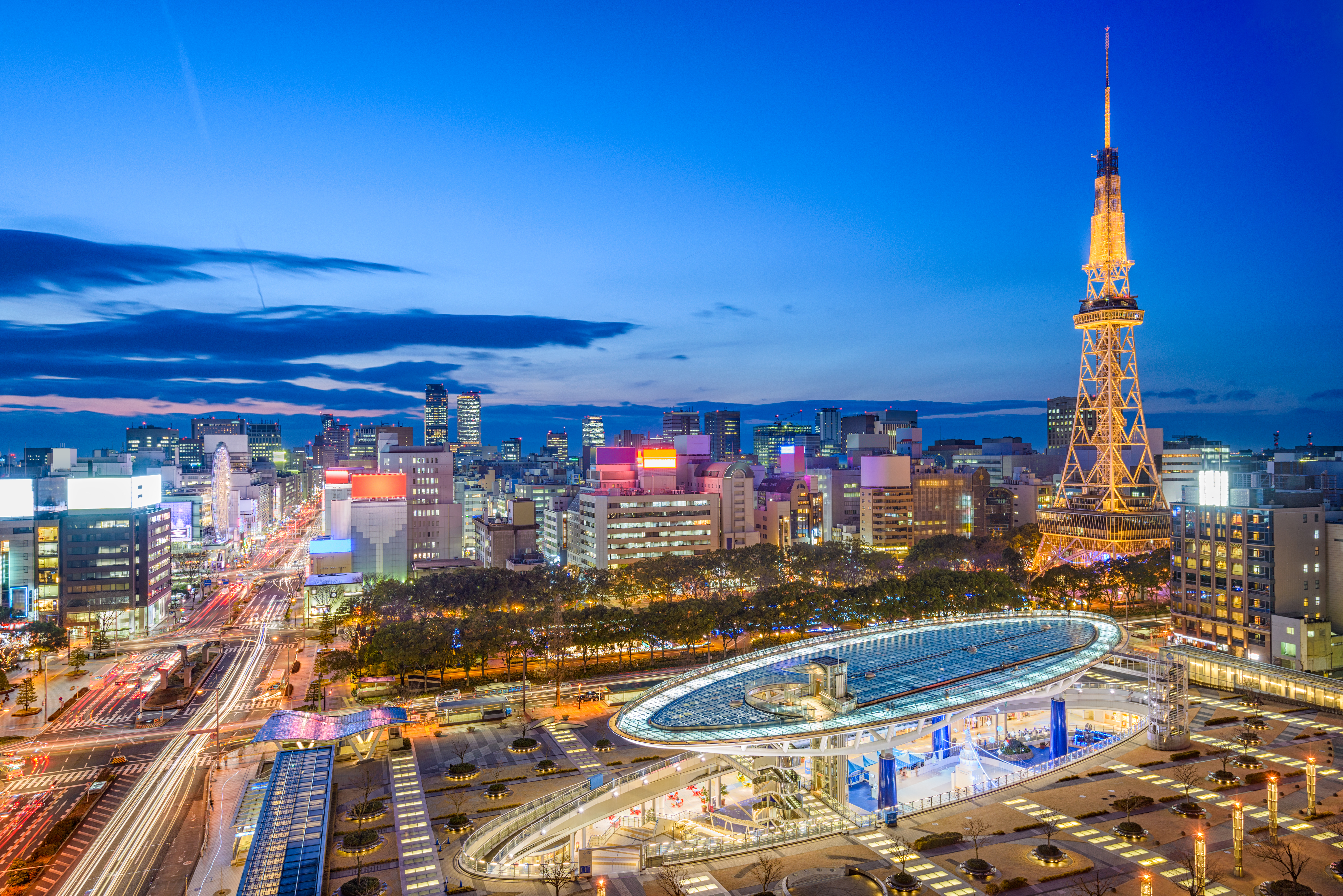
名古屋为爱知县首府,是仅次于东京、大阪和横滨的第四大城市。位于本州中南部浓尾平原,濒临伊势湾,为中部日本的政治、工业、经济、文化和交通中心。早在12世纪就见于史书记载,古称那古野、那古屋、名 护屋,1889年设市。二次世界大战期间,城区大部分被炸毁,战后按原来式样重建,形成一个半径达40公里的“大名古屋”。
名古屋面积为376平方公里,人口215万。是一个充满了活力的城市,它有众多的娱乐中心、购物中心、博物馆,也是著名的会展中心。
全市划分为14个行政区。中区、热田区及其毗邻地带是市中心,有宽100米的大街贯穿其间。市中心的名古屋城建于庆长15年(公元1610年),1959年重建,为名古屋市象征。其他古迹有:热 田刘宫、大须观音寺(即真福寺)。(Quelle: http://trip.sotrip.com/tour/newsotrip/sotrip_dest/destination_home/japan/riben/mingguwu/index.html )
名古屋市(日语:名古屋市/なごやし Nagoya shi */?)是位于日本爱知县西部(尾张地方)的都市,为爱知县首府,同时是中部地方与东海地方的中枢都市、以及爱知县唯一的政令指定都市,人口约230万,在日本各都市中排名第四,仅次于东京、横滨及大阪,也是日本三大都市圈之一中京圈的核心城市。由于位于东京与京都之间,因此又被称为“中京”[1]。全市划分为16个区。
名古屋是东海地方在政治、经济、文化、交通等领域的中枢,市中心的名驿(名古屋站商圈)、荣、锦三、大须、金山是全市主要的商业区,其中前两地拥有大规模的地下街廓。2008年,名古屋市和神户市一起被联合国教科文组织认可为“创意都市”[2]。2017年,名古屋的城区人口约有1,007万人,在世界排名第37位[3]。此外,在美国智库AT Kearney颁布的全球城市排名中,名古屋市被评为世界第69位的都市[4]。
名古屋的市徽由圆形中置一“八”字而成,取自江户时代在此当家的尾张德川家的印记“丸八印”[5]。
Nagoya ist mit 2,1 Mio Einwohnern nach Tokio, Yokohama und Osaka viertgrößtes japanisches Industriezentrum und sportlich hauptsächlich durch den Baseballverein Chūnichi Dragons und den Fußballverein Nagoya Grampus Eight bekannt. In der Agglomeration von Nagoya befindet sich der Hauptsitz des Automobilkonzerns Toyota.
Die Stadt war schon im Mittelalter als Handelszentrum und Hauptort der Provinz Owari bekannt. Oda Nobunaga wurde 1534 in der Burg Nagono, Vorgängerin der Burg Nagoya, geboren. 1555 zog er in die Burg von Kiyosu um und verlagerte damit das Machtzentrum in Zentraljapan nach Kiyosu. 1610 wurde die Burg von Nagoya von Tokugawa Ieyasu wieder aufgebaut. Anschließend wurde Nagoya wieder zum eindeutigen Zentrum Owaris. Nachdem die Familie Tokugawa ihre Macht als Shōgun gesichert hatte, gab der erste Shōgun Tokugawa Ieyasu die Stadt Nagoya an seinen Sohn weiter. Von den historischen Bauten überstanden nur wenige den Krieg. Die meisten wurden im Zweiten Weltkrieg am 14./17. Mai 1945 völlig zerstört. Die Burg wurde 1959 wieder aufgebaut. Der Kulturschatz der Tokugawa-Familie wird heute im Tokugawa-Museum ausgestellt.(Quelle: http://www.mexpedia-japan.de/Staedte.php)
Nagoya (jap. 名古屋市, -shi) ist eine Großstadt, Hafenstadt und Verwaltungssitz der japanischen Präfektur Aichi auf Honshū am Pazifik (Japan).
Nagoya ist mit 2,3 Mio. Einwohnern nach Tokio, Yokohama und Osaka viertgrößtes japanisches Industriezentrum und sportlich hauptsächlich durch den Baseballverein Chūnichi Dragons und den Fußballverein Nagoya Grampus Eight bekannt.
東京特別区部を除くと横浜市・大阪市に次ぐ全国第3位の人口を有する市[3]。中部地方における行政・経済・文化の中枢で、東日本と西日本を結ぶ交通の要所となっている。
古くは三種の神器のひとつである草薙剣(くさなぎのつるぎ)を祀る[4]熱田神宮がある鳥居前町であり、江戸時代は尾張徳川家の治める城下町として繁栄した歴史を持つ。また、タイ王国から寄贈された真舎利(釈迦の遺骨・お骨)を安置するために創建された日本唯一の寺[5]である覚王山日泰寺がある。
名古屋市を中心として中京圏を形成し、愛知県内や岐阜県南部、三重県北部に多くの衛星都市を持ち、日本の三大都市圏の1つに数えられる。2019年の都市的地域の人口は約1,024万人と推計される[6]。中京圏の域内総生産は約3,637億ドルであり、これは国内で3番目、世界で第22番目の規模である[7]。
アメリカ合衆国のシンクタンクが2019年に発表した総合的な世界都市ランキングにおいて、世界70位の都市であると評価された[8]。ユネスコの創造都市に認定されている[9]。市章は、尾張徳川家の合印に由来する「㊇」である[10]。
Nagoya (名古屋市, Nagoya-shi) is the largest city in the Chūbu region of Japan. It is Japan's fourth-largest incorporated city and the third most populous urban area. Located on the Pacific coast on central Honshu, it is the capital of Aichi Prefecture and is one of Japan's major ports along with those of Tokyo, Osaka, Kobe, Yokohama, and Chiba. It is also the center of Japan's third-largest metropolitan region, known as the Chūkyō metropolitan area. As of 1 October 2019, 2,327,557 people lived in the city, part of Chūkyō metropolitan Area's 10.11 million people,[4] making it one of the 50 largest urban areas in the world.
In 1610, the warlord Tokugawa Ieyasu, a retainer of Oda Nobunaga, moved the capital of Owari Province from Kiyosu to Nagoya. This period saw the renovation of Nagoya Castle. Nagoya was proclaimed a city in 1889, during the Meiji Restoration; it became a major industrial hub for Japan. The traditional manufactures of timepieces, bicycles, and sewing machines were followed by the production of special steels, chemicals, oil, and petrochemicals, as the area’s automobile, aviation, and shipbuilding industries flourished.[5] Nagoya was impacted by bombing from US air raids during World War II.
After the war, Nagoya developed into a major port and transport center. The Shinkansen high-speed line connecting Tokyo and Osaka converges on Nagoya. Nagoya is served by two airports: Chubu Centrair International Airport in nearby Tokoname, and Nagoya Airfield, home to Mitsubishi Aircraft Corporation. Nagoya remains an important center for the automotive, aviation, and ceramic industries, hosting the headquarters of Brother Industries, Ibanez, Lexus, and Toyota Tsusho, among others.
Nagoya is home to Nagoya University, the Nagoya Institute of Technology, and Nagoya City University. It is also the location of numerous cultural institutions, including the Tokugawa Art Museum, Atsuta Shrine, Higashiyama Zoo and Botanical Gardens, Aichi Arts Center, and Misono-za. Nagoya TV Tower is the oldest TV tower in Japan.
Nagoya (名古屋市, Nagoya-shi?) est la troisième ville du Japon par sa superficie et la quatrième par la population, derrière Tokyo, Yokohama et Osaka. Située sur la côte Pacifique, au bord de la baie d'Ise dans la région du Chūbu, au centre de Honshū, c'est la capitale de la préfecture d'Aichi. Le pachinko, né à Nagoya, y a son musée.
L'agglomération de Nagoya, qui compte environ neuf millions d'habitants, est la troisième du pays.
Nagoya è una città della regione di Chūbu nell'isola di Honshū in Giappone, con un porto sull'oceano Pacifico. È il capoluogo della prefettura di Aichi, la quarta maggiore città del Giappone e la terza città sul piano economico. Dispone di due aeroporti, tra cui il nuovo Aeroporto Internazionale di Chūbu-Centrair, aperto il 17 febbraio 2005.
Nagoya (名古屋市 Nagoya-shi?) es la cuarta ciudad más grande de Japón. Localizada en la costa del Pacífico en la región de Chūbu, en el centro de la isla de Honshū, es la capital de la prefectura de Aichi.
Наго́я (яп. 名古屋市 Нагоя-си, букв. «именной (фамильный) старый дом»[1]) — город, определённый указом правительства, четвёртый по количеству населения город в Японии. Один из крупнейших портов Японии и административный центр префектуры Айти. Ядро экономического района Токай
 Climate
 Energy resource

《联合国气候变化框架公约》
联合国在应对气候变化问题上扮演重要角色。但要联合国191个成员国达成共识和合作却绝不是一项简单的工作。“政府间气候变化专门委员会”(IPCC) 和《联合国气候变化框架公约》(UNFCCC)是两个直接处理气候变化的联合国机制。前者为决策人提供科学及技术的建议,后者则协调制定国际行动策略方针 以应对气候变化。(Quelle:http://www.greenpeace.org/china/zh/campaigns/stop-climate-change/governments/kyoto)
京都议定书(英語:Kyoto Protocol;日语:京都議定書/きょうとぎていしょ),又译《京都協議書》、《京都條約》;全称《联合国气候变化框架公约的京都议定书》是《联合国气候变化框架公约》(United Nations Framework Convention on Climate Change,UNFCCC)的补充条款。是1997年12月在日本京都府京都市的國立京都國際會館所召開联合国气候变化框架公约参加国三次会议制定的。其目标是“将大气中的温室气体含量稳定在一个适当的水平,以保证生态系统的平滑适应、食物的安全生产和经济的可持续发展”[6]。
IPCC(政府間氣候變化專門委員會,Intergovernmental Panel on Climate Change)已经预计从1990年到2100年[7]之間,全球气温将升高1.4℃至5.8℃。目前的评估显示,京都议定书如果能被彻底完全的执行,到2050年之前仅可以把气温的升幅减少0.02℃至0.28℃,正因如此,许多批评家和环保主义者质疑京都议定书的价值,认为其标准設定過低,根本不足以应对未来的严重危机。而支持者们指出京都议定书只是第一步[8],为了达到UNFCCC的目标,今后还要继续修改完善,直到达到UNFCCC 4.2(d)规定的要求为止[9]。
2012年12月8日,在卡塔尔召开的第18届联合国气候变化大会上,本应于2012年到期的京都议定书被同意延长至2020年。[10]
Das Kyoto-Protokoll (benannt nach dem Ort der Konferenz Kyoto in Japan) ist ein am 11. Dezember 1997 beschlossenes Zusatzprotokoll zur Ausgestaltung der Klimarahmenkonvention (UNFCCC) der Vereinten Nationen mit dem Ziel des Klimaschutzes. Das am 16. Februar 2005 in Kraft getretene und 2012 auslaufende Abkommen schreibt erstmals verbindliche Zielwerte für den Ausstoß von Treibhausgasen fest, welche die hauptsächliche Ursache der globalen Erwärmung sind.
Im Juni 1992 fand in Rio de Janeiro die Konferenz der Vereinten Nationen über Umwelt und Entwicklung (UNCED) statt. Zu der bis dahin weltgrößten internationalen Konferenz reisten sowohl Abgesandte fast aller Regierungen als auch Vertreter zahlreicher Nichtregierungsorganisationen nach Brasilien. In Rio wurde unter anderem die Klimarahmenkonvention (UNFCCC) unterzeichnet. Die Klimarahmenkonvention verankerte völkerrechtlich verbindlich das Ziel, den vom Menschen verursachten Eingriff in das Klimasystem der Erde zu verhindern.
Der 1. Weltklimagipfel 1995 in Berlin, das heißt die erste Vertragsstaatenkonferenz zur Klimarahmenkonvention (Conference of the Parties, COP), einigte sich auf das "Berliner Mandat", das den Weg zur Erarbeitung eines Zusatzprotokolls mit konkreten Verpflichtungen für die Industrieländer ebnete.
Das in Berlin in seinen Grundzügen beschlossene Protokoll wurde Ende 1997 in Kyoto auf der COP-3 verabschiedet.
(Quelle:http://www.lpb-bw.de/kyoto_protokoll.html)
Das Protokoll von Kyoto zum Rahmenübereinkommen der Vereinten Nationen über Klimaänderungen, kurz Kyoto-Protokoll oder Kioto-Protokoll (benannt nach dem Ort der Konferenz Kyōto in Japan), ist ein am 11. Dezember 1997 beschlossenes Zusatzprotokoll zur Ausgestaltung der Klimarahmenkonvention der Vereinten Nationen (UNFCCC) mit dem Ziel des Klimaschutzes. Das am 16. Februar 2005 in Kraft getretene Abkommen legte erstmals völkerrechtlich verbindliche Zielwerte für den Treibhausgas-Ausstoß – der Hauptursache der globalen Erwärmung – in den Industrieländern fest.[1][2] Bis Anfang Dezember 2011 hatten 191 Staaten sowie die Europäische Union[3] das Kyoto-Protokoll ratifiziert. Die USA lehnten 2001 die Ratifikation des Protokolls ab; Kanada gab am 13. Dezember 2011 seinen Ausstieg aus dem Abkommen bekannt.[4]
Teilnehmende Industrieländer verpflichteten sich, ihren jährlichen Treibhausgas-Ausstoß innerhalb der sogenannten ersten Verpflichtungsperiode (2008–2012) um durchschnittlich 5,2 Prozent gegenüber dem Stand von 1990 zu reduzieren. Diese Emissionsminderungen wurden erreicht. Für Schwellen- und Entwicklungsländer gab es keine festgelegten Reduktionsmengen.
Nach fünf Jahre währenden Verhandlungen – von der UN-Klimakonferenz auf Bali 2007 bis zur UN-Klimakonferenz in Doha 2012 – einigten sich die Vertragsstaaten auf eine zweite Verpflichtungsperiode („Kyoto II“) von 2013 bis 2020. Strittig waren vor allem der Umfang und die Verteilung der künftigen Treibhausgas-Reduktionen, die Einbindung von Schwellen- und Entwicklungsländern in die Reduktionsverpflichtungen sowie die Höhe der Finanztransfers. Die zweite Verpflichtungsperiode tritt in Kraft 90 Tage nachdem sie von 144 Vertragsparteien des Kyoto-Protokolls akzeptiert worden ist.[5] Mit der Akzeptanz durch Nigeria am 2. Oktober 2020 wird sie Ende 2020 wenige Stunden lang in Kraft sein.[6][7][8] Für die Zeit nach 2020 vereinbarten die Vertragsparteien der Klimarahmenkonvention das Übereinkommen von Paris.[9]
Die Zunahme der Treibhausgaskonzentrationen in der Atmosphäre ist vor allem auf menschliche Aktivitäten zurückzuführen, insbesondere auf das Verbrennen fossiler Brennstoffe, Viehhaltung und Rodung von Wäldern.[10] Die im Kyoto-Protokoll reglementierten Treibhausgase sind: Kohlenstoffdioxid (CO2, dient als Referenzwert), Methan (CH4), Distickstoffmonoxid (Lachgas, N2O), teilhalogenierte Fluorkohlenwasserstoffe (H-FKW/HFCs), perfluorierte Kohlenwasserstoffe (FKW/PFCs) und Schwefelhexafluorid (SF6); explizit ausgeschlossen sind diejenigen Treibhausgase, die bereits durch das Montreal-Protokoll reguliert sind. Das Abkommen konnte nur wenig am allgemeinen Wachstumstrend dieser wichtigsten Treibhausgase ändern. Die Emissionen von Kohlenstoffdioxid und Lachgas steigen weiter an; so war der CO2-Ausstoß 2019 der höchste bisher bestimmte.[11] Der Ausstoß von verschiedenen Kohlenwasserstoffen hat sich aus anderen Gründen stabilisiert, so etwa durch den Schutz der Ozonschicht infolge des Montreal-Protokolls.
 Religion
 Architecture
 Art
Art
 World Heritage
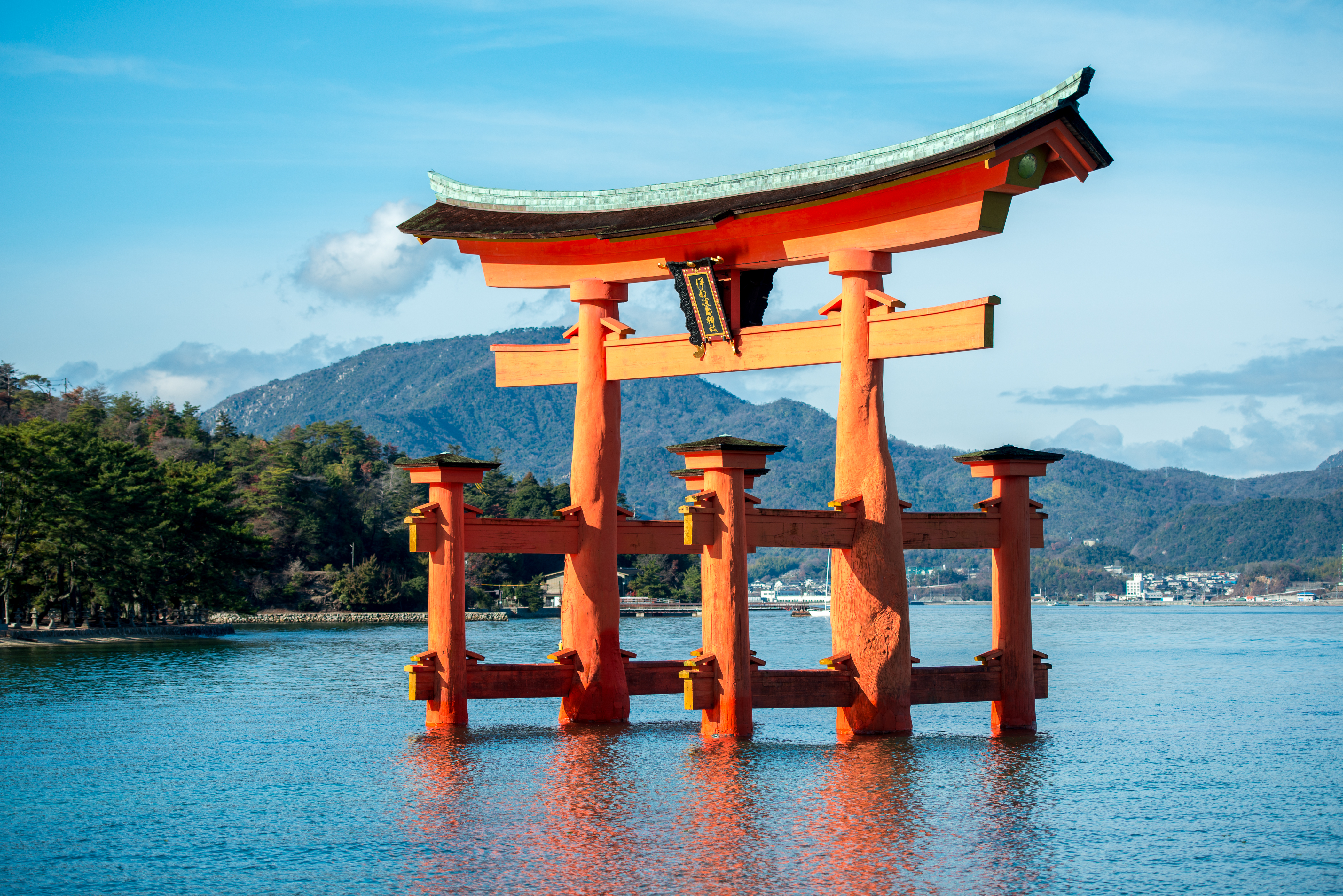
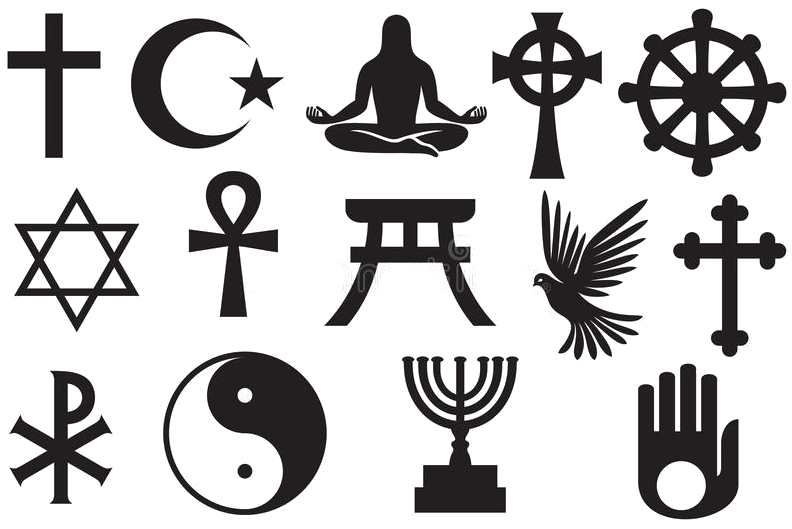
Shintō (jap. 神道, wird im Deutschen meist übersetzt mit „Weg der Götter“) – auch als Shintoismus bezeichnet – ist die ethnische Religion der Japaner (siehe auch Religion in Japan). Shintō und Buddhismus, die beiden in Japan bedeutendsten Religionen, sind aufgrund ihrer langen gemeinsamen Geschichte nicht immer leicht zu unterscheiden. Als wichtigstes Merkmal, das die beiden religiösen Systeme trennt, wird oft die Diesseitsbezogenheit des Shintō angeführt. Darüber hinaus kennt das klassische Shintō keine heiligen Schriften im Sinne eines religiösen Kanons, sondern wird weitgehend mündlich überliefert. Die beiden Schriften Kojiki und Nihonshoki, die von einigen shintoistisch geprägten Neureligionen Japans als heilig angesehen werden, sind eher historisch-mythologische Zeugnisse.[1]
神道(しんとう、しんどう[4])は、日本の宗教。惟神道(かんながらのみち)ともいう。教典や具体的な教えはなく、開祖もおらず、神話、八百万の神、自然や自然現象などにもとづくアニミズム的・祖霊崇拝的な民族宗教である[5]。
自然と神とは一体として認識され、神と人間を結ぶ具体的作法が祭祀であり、その祭祀を行う場所が神社であり、聖域とされた[6]。明治維新より第二次世界大戦終結まで政府によって事実上の国家宗教となった。この時期の神道を指して国家神道と呼ぶ。[7]。
Shinto,[a] also known as kami-no-michi,[b] is a religion originating in Japan. Classified as an East Asian religion by scholars of religion, its practitioners often regard it as Japan's indigenous religion and as a nature religion. Scholars sometimes call its practitioners Shintoists, although adherents rarely use that term themselves. There is no central authority in control of the movement and much diversity exists among practitioners.
Shinto is polytheistic and revolves around the kami ("gods" or "spirits"), supernatural entities believed to inhabit all things. The link between the kami and the natural world has led to Shinto being considered animistic and pantheistic. The kami are worshiped at kamidana household shrines, family shrines, and public shrines. The latter are staffed by priests who oversee offerings to the kami and the provision of religious paraphernalia such as amulets to the religion's adherents. Other common rituals include the kagura ritual dances, age specific celebrations, and seasonal festivals. These festivals and rituals are collectively called matsuri. A major conceptual focus in Shinto is ensuring purity by cleansing practices of various types including ritual washing or bathing. Shinto does not emphasize specific moral codes other than ritual purity, reverence for kami, and regular communion following seasonal practices. Shinto has no single creator or specific doctrinal text, but exists in a diverse range of localised and regionalised forms.
Belief in kami can be traced to the Yayoi period (300 BCE – 300 CE), although similar concepts existed during the late Jōmon period. At the end of the Kofun period (300 to 538 CE), Buddhism entered Japan and influenced kami veneration. Through Buddhist influence, kami came to be depicted anthropomorphically and were situated within Buddhist cosmology. Religious syncretisation made kami worship and Buddhism functionally inseparable, a process called shinbutsu-shūgō. The earliest written tradition regarding kami worship was recorded in the eighth-century Kojiki and Nihon Shoki. In ensuing centuries, shinbutsu-shūgō was adopted by Japan's Imperial household. During the Meiji era (1868 – 1912 CE), Japan's leadership expelled Buddhist influence from Shinto and formed State Shinto, which they utilized as a method for fomenting nationalism and imperial worship. Shrines came under growing government influence, and the Emperor of Japan was elevated to a particularly high position as a kami. With the formation of the Japanese Empire in the early 20th century, Shinto was exported to other areas of East Asia. Following Japan's defeat in World War II, Shinto was formally separated from the state.
Shinto is primarily found in Japan, where there are around 80,000 public shrines. Shinto is also practiced elsewhere, in smaller numbers. Only a minority of Japanese people identify as religious, although most of the population take part in Shinto matsuri and Buddhist activities, especially festivals, and seasonal events. This reflects a common view in Japanese culture that the beliefs and practices of different religions need not be exclusive. Aspects of Shinto have also been incorporated into various Japanese new religious movements.
Le shinto (神道, shintō, litt. « la voie des dieux » ou « la voie du divin ») ou shintoïsme (/ʃin.to.ism/) est un ensemble de croyances datant de l'histoire ancienne du Japon, parfois reconnues comme religion. Elle mélange des éléments polythéistes et animistes. Il s'agit de la plus ancienne religion connue du Japon ; elle est particulièrement liée à sa mythologie. Le terme « shintō », lecture sino-japonaise, ou kami no michi, est apparu pour différencier cette vieille religion du bouddhisme « importé » [Comment ?] de Chine au Japon au VIe siècle. Ses pratiquants seraient aujourd'hui plus de 90 millions au Japon.
Lo shintō, scintoismo o shintoismo[1] è una religione di natura politeista e animista nativa del Giappone.
Prevede l'adorazione dei "kami", cioè divinità, spiriti naturali o semplicemente presenze spirituali[1]. Alcuni kami sono locali e possono essere considerati come gli spiriti guardiani di un luogo particolare, ma altri possono rappresentare uno specifico oggetto o un evento naturale, come per esempio Amaterasu, la dea del Sole. Il Dio delle religioni monoteiste occidentali in giapponese viene tradotto come kami-sama (神様?). Talvolta anche le persone illustri, gli eroi e gli antenati divengono oggetto di venerazione post mortem e vengono deificati e annoverati tra i kami.
La parola Shinto ha origine nel VI secolo, quando divenne necessario distinguere la religione nativa del Giappone da quella buddista di recente importazione, prima di quell'epoca non pare esserci stato un nome specifico per riferirsi ad esso.[1][2] Shinto è formato dall'unione dei due kanji: 神 shin che significa "divinità", "spirito" (il carattere può essere anche letto come kami in giapponese ed è a sua volta formato dall'unione di altri due caratteri, 示 "altare" e 申 "parlare, riferire"; letteralmente ciò che parla, si manifesta dall'altare. 申 ne determina anche la lettura) e 道 tō in cinese Tao ("via", "sentiero" e per estensione; in senso filosofico rende il significato di pratica o disciplina come in Judo o Karatedo o ancora Aikidō). Quindi, Shinto significa letteralmente "via del divino".[1][3] In alternativa a Shinto, l'espressione puramente giapponese — con il medesimo significato — per indicare lo Shintoismo è Kami no michi.[4] Il termine "shintō" viene adoperato anche per indicare il corpo del nume, ovvero la reliquia presso cui il kami partecipa materialmente (per esempio una spada sacra).
Nella seconda metà del XIX secolo, nel contesto del Rinnovamento Meiji fu elaborato lo Shinto di Stato (国家神道 Kokka Shintō?), che mirava a dare un supporto ideologico e uno strumento di controllo sociale alla classe dirigente giapponese, e poneva al centro la figura dell'imperatore e della dea Amaterasu, progenitrice della stirpe imperiale. Lo Shinto di Stato fu smantellato alla fine della seconda guerra mondiale, con l'occupazione del Giappone. Alcune pratiche ed insegnamenti shintoisti che durante la guerra erano considerati di grande preminenza ora non sono più insegnati o praticati mentre altri rimangono grandemente diffusi come pratiche quotidiane senza però assumere particolari connotazioni religiose, come l'Omikuji (una forma di divinazione).
El sintoísmo1 (神道 Shintō?), a veces llamado shintoísmo,2 es el nombre de la religión nativa en Japón. Se basa en la veneración de los kami o espíritus de la naturaleza. Algunos kami son locales y son conocidos como espíritus o genios de un lugar en particular, pero otros representan objetos naturales mayores y procesos, por ejemplo, Amaterasu, la diosa del Sol.
Actualmente el sintoísmo constituye la segunda religión con mayor número de fieles de Japón, solo superada ligeramente por el budismo japonés. El número de practicantes varía desde los 108 millones (80 % de la población en 2003) que tienen prácticas y/o influencias sintoístas hasta los 4 millones (3,3 %) que lo practican regularmente y se identifican con la forma oficial de la religión.
Синтоизм, синто (яп. 神道 синто:, «путь богов») — традиционная религия в Японии. Основана на анимистических верованиях древних японцев, объектами поклонения являются многочисленные божества и духи умерших. Испытала в своём развитии значительное влияние буддизма.

相扑(日语:相撲/すもう sumō)是日本传统的神道仪式与体术,由两名力士裸露上身,互相角力。由神道的占卜神事发展而成,作为专业竞技项目,则称为大相扑。相扑是日本的国技和国际性的武术、格斗和体育运动。
中相扑源于中国春秋时代,从春秋到秦汉时期时名为“角抵”,带有武术性质。《汉书·刑法志》有记载:“ 春秋之后,灭弱吞小,并为战国 ,稍增讲武之礼,以为戏乐,用相夸视。而秦更名角抵,先王之礼没于淫乐中矣。”。南北朝到南宋时期叫“相扑”,关于西晋历史的《晋书》有记载:“襄城太守责功曹刘子笃日:‘卿郡人不如颖川人相扑。’笃曰:‘相扑下技,不足以别两国优劣。’”相扑一开始跟武术是未严格分开的,但到了宋代,相扑从武术中分化出来,只扑不打,更不许踢脚,以将对方扳倒为胜。现代相扑的规则也跟这差不多。相扑于唐朝传入日本后,成为一种流行的体育运动。日本的相扑(日式摔跤),古称素舞,由两名大力士裸露上身,互相角力。日本有关相扑比较确切的文字记载,是八世纪初编纂成的《日本书纪》,书内记述第三十五代天皇(六四一~六四五年)为了接待古代朝鲜百济国使者,召集了宫廷卫士举行相扑竞赛。现成为日本的国技,日本的国际性的格斗术和体育运动。作为专业竞技项目,在日本国内称作大相扑。
Sumō [sɯmoː] (japanisch 相撲, Sumō bzw. 大相撲, Ōzumō) ist eine aus Japan stammende Form des Ringkampfs. Einen Sumō-Kämpfer bezeichnet man als Sumōtori oder Rikishi.
Ziel des Kampfes ist es, den Gegner aus einem sandbedeckten, mit einem Strohseil abgesteckten Kreis zu drängen oder ihn so aus dem Gleichgewicht zu bringen, dass er den Boden mit einem anderen Körperteil als den Fußsohlen berührt. Ein einzelner Kampf dauert meist nur einige Sekunden; während eines regulären Turniers finden mehrere hundert Kämpfe statt.
相撲(すもう)は、土俵の上で力士が組合って戦う形を取る日本古来の神事や祭であり、同時に武芸でもあり武道でもあり(由来は弓取式)、娯楽でもある。古くから祝儀(懸賞)を得るための興行として、大相撲が行われている。日本由来の武道・格闘技・スポーツとして国際的にも行われている。
相撲は古代以前(伝承としては神話の時代)に始まったとされ、江戸時代には庶民の娯楽として隆盛を極め[2]、現代の日本においては、日本相撲協会が主催するスポーツの興行としての大相撲が有名で、相撲は大相撲とほぼ同義に語られることがあるが、元々は日本固有の宗教である神道に基づいた神事であり、日本国内各地で「祭り」として奉納相撲が行われている。そのため、大相撲も他のプロスポーツと比べて礼儀作法などが重視されており、生活様式や風貌なども旧来の風俗が比較的維持されるなど、文化的な側面もある。
日本国内外で同じような形態の格闘技としては、沖縄本島の沖縄角力(シマ)、モンゴルのブフ、中国のシュアイジャオ、朝鮮半島のシルム、トルコのヤールギュレシ、セネガルのランブなどがある。それぞれ独自の名前を持つが、日本国内で紹介される場合には何々相撲(沖縄相撲(琉角力)、モンゴル相撲、トルコ相撲など)、といった名で呼ばれることが多い。
Sumo (Japanese: 相撲, Hepburn: sumō, [sɯmoː], lit. "striking one another")[1] is a form of competitive full-contact wrestling where a rikishi (wrestler) attempts to force his opponent out of a circular ring (dohyō) or into touching the ground with any body part other than the soles of his feet (usually by throwing, shoving or pushing him down).
Sumo originated in Japan, the only country where it is practiced professionally, where it is considered the national sport.[2] It is considered a gendai budō, which refers to modern Japanese martial arts, but the sport has a history spanning many centuries. Many ancient traditions have been preserved in sumo, and even today the sport includes many ritual elements, such as the use of salt purification, from Shinto.
Life as a wrestler is highly regimented, with rules regulated by the Japan Sumo Association. Most sumo wrestlers are required to live in communal sumo training stables, known in Japanese as heya, where all aspects of their daily lives—from meals to their manner of dress—are dictated by strict tradition.
From 2008 to 2016, a number of high-profile controversies and scandals rocked the sumo world, with an associated effect on its reputation and ticket sales. These have also affected the sport's ability to attract recruits.[3] Despite this setback, sumo's popularity and general attendance has rebounded due to having multiple yokozuna (or grand champions) for the first time in a number of years and other high-profile wrestlers such as Endō and Ichinojō grabbing the public's attention.[4]
Le sumo (相撲, sumō, littéralement « se frapper mutuellement ») est un sport de lutte japonais. Le combat sumo se caractérise par le gabarit des lutteurs ainsi que par les nombreux rites traditionnels qui entourent les combats, et consiste en deux règles simples : les lutteurs ne doivent pas sortir du cercle (dohyō), ni toucher le sol avec une autre partie du corps que la plante des pieds. Ce sport reste populaire au Japon, même si le baseball et le football le détrônent désormais, notamment chez les jeunes.
Il sumo[1] (相撲 sumō?, lett. "strattonarsi", pron. /sɯmoː/) è una forma di lotta corpo a corpo nella quale due sfidanti si affrontano con lo scopo di atterrare o estromettere l'avversario dalla zona di combattimento detta dohyō.Il sumo è lo sport nazionale del Giappone.[2]
El sumo (相撲 sumō?) o lucha sumo es un tipo de lucha libre donde dos luchadores contrincantes o rikishi se enfrentan en un área circular. Es de origen japonés, es considerado un arte en su país y mantiene gran parte de la tradición sintoísta antigua. Es el deporte nacional del Japón.
A pesar de la gran cantidad de rituales sintoístas previos y posteriores a los combates, las reglas en sí son pocas y no son complejas:
- El primer luchador en tocar el suelo con alguna parte de su cuerpo a excepción de la planta de sus pies queda eliminado.
- El primer luchador en hacer contacto con el exterior del círculo de lucha (ya sea con sus pies o cualquier otra parte de su cuerpo) queda eliminado.
- Un luchador que utiliza una técnica ilegal o kinjite, como golpear en los ojos, estrangulaciones, tirar del pelo, puñetazos, luxaciones articulares u otras, queda eliminado.
- Si un luchador pierde el mawashi (única vestimenta utilizada durante un combate de sumo), queda eliminado.
Los encuentros de los sumo suelen durar pocos segundos ya que uno de los luchadores suele ser empujado inmediatamente fuera del círculo. Cada encuentro es precedido por un ritual ceremonial elaborado. Los deportistas que practican sumo son reconocidos por su gran tamaño, ya que la masa corporal es un factor decisivo en el sumo, por lo que la dieta que llevan sus practicantes está diseñada específicamente para ganar y mantener peso.1
Los rings o cuadriláteros de sumo son conocidos como dohyō. El dohyō está hecho de arcilla con arena esparcida sobre su superficie. Mide entre 34 y 60 cm de altura. El círculo es de aproximadamente 4,55 m de diámetro y está delimitado por una gran soga de arroz llamada tawara, que es enterrada en la arcilla. En el centro se encuentran dibujadas dos líneas, las shikiri-sen, donde los rikishi deben posicionarse antes de comenzar el enfrentamiento.
Es el único deporte en general que solo puede ser practicado de manera profesional por los hombres; y que está completamente prohibido a las mujeres, debido a que por tradición estas no pueden tocar el recinto de práctica o dohyō, ya que su presencia impura puede contaminarlo. Lo cual significa que ni siquiera pueden subir a entregar premios al campeón.2345 Sin embargo, las mujeres sólo pueden subir en casos de emergencia.6
Las mujeres solo pueden practicar al sumo en torneos amateur en los que también pueden participar hombres.5 Los torneos amateur de sumo son organizados por la Federación Internacional de Sumo. Sin embargo, los torneos amateur de sumo no son reconocidos como oficiales por la Asociación de Sumo del Japón, quien se encarga del sumo profesional.
Сумо́ (яп. 相撲) — вид единоборств, в котором два борца выявляют сильнейшего на круглой площадке (дохё). Родина этого вида спорта — Япония. Японцы относят сумо к боевым искусствам. Традиция сумо ведётся с древних времён, поэтому каждый поединок сопровождается многочисленными ритуалами.
Япония является признанным центром сумо и единственной страной, где проводятся соревнования профессиональных рикиси. В остальном мире существует только любительское сумо.
Современное профессиональное сумо сочетает в себе элементы спорта, единоборства, шоу, традиций и бизнеса.
 Financial
*China economic data
Financial
*Brazil economic data
Financial
*Germany economic data
Financial
*European Union economic data
Financial
*France economic data
Financial
*India economic data
Financial
*Indonesia economic data
Financial
*Italy economic data
Financial
*Canada economic data
Financial
*Russia economic data
Financial
*United States economic data
Financial
*United Kingdom economic data
Japan
Kantō
Financial
*China economic data
Financial
*Brazil economic data
Financial
*Germany economic data
Financial
*European Union economic data
Financial
*France economic data
Financial
*India economic data
Financial
*Indonesia economic data
Financial
*Italy economic data
Financial
*Canada economic data
Financial
*Russia economic data
Financial
*United States economic data
Financial
*United Kingdom economic data
Japan
Kantō
