
漢德百科全書 | 汉德百科全书
 Musik
Musik

 Architektur
 Darstellende Künste
 Ile-de-France

Die Königliche Oper (fr.: Opéra royal du château de Versailles) des Schlosses von Versailles in Frankreich wurde 1770 unter Ange-Jacques Gabriel in der Regierungszeit Ludwig XV. vollendet. Die Errichtung des heutigen Opernhauses war eines der letzten großen Bauprojekte des Ancien Régimes in Versailles. Es ist bis in die Gegenwart weitgehend unverändert erhalten geblieben und wird noch heute regelmäßig bespielt.
 Texas-TX


Fanny Hensel (* 14. November 1805 in Hamburg als Fanny Zippora Mendelssohn, getauft Fanny Cäcilie Mendelssohn Bartholdy; † 14. Mai 1847 in Berlin) war eine deutsche Komponistin der Romantik sowie Pianistin, Dirigentin und Konzertorganisatorin.
范妮·门德尔松(德語:Fanny Mendelssohn,1805年11月14日—1847年5月14日),出生时名范妮·齐波拉·门德尔松(Fanny Zippora Mendelssohn),受洗时名范妮·采齐莉·门德尔松·巴托尔迪(Fanny Cäcilie Mendelssohn Bartholdy),夫姓亨塞尔(Hensel),德国早期浪漫主义作曲家、钢琴家。她创作了一部钢琴三重奏、一部钢琴四重奏、一首管弦序曲、四部康塔塔、至少125首钢琴作品和至少250首藝術歌曲。她的作品大多都没在生前出版;除了家庭圈中也极少公开演奏钢琴,即使她的钢琴技巧备受称赞。

 Pennsylvania-PA
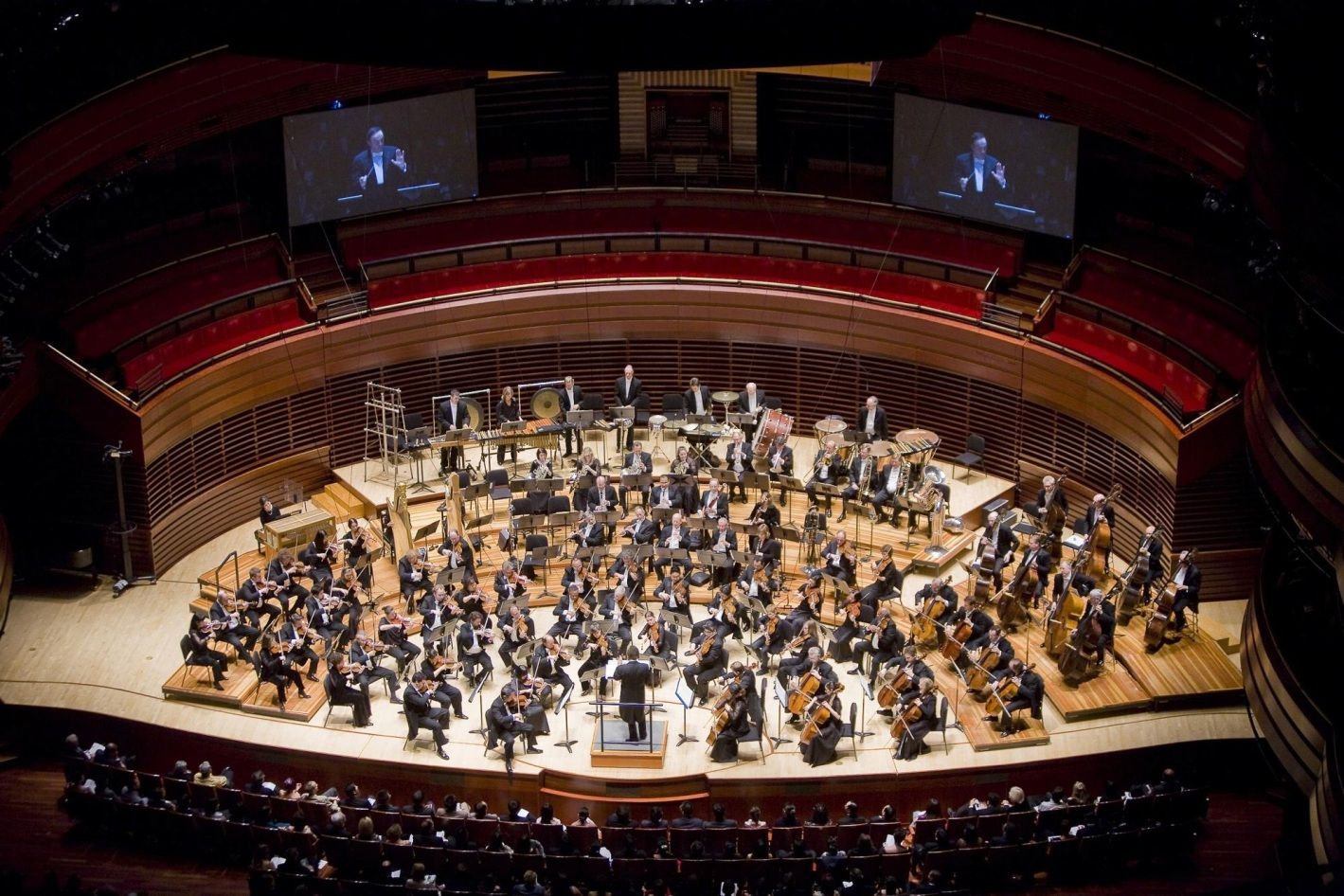
Das Philadelphia Orchestra ist ein Orchester aus Pennsylvania in den USA und gehört zu den sogenannten Big Five.
Es wurde 1900 von Fritz Scheel gegründet, der auch der erste Dirigent war. Ihm folgte 1907 Karl Pohlig. Leopold Stokowski, der seit 1912 Chefdirigent war, machte das Orchester berühmt.
1938 wurde Eugene Ormandy Chefdirigent des Philadelphia Orchestra. Er blieb dem Orchester über 40 Jahre bis 1980 verbunden und nahm mit ihm viele der bekanntesten Einspielungen auf Schallplatte vor.
Auf Ormandy folgten Riccardo Muti (1981–1992) und Wolfgang Sawallisch (1993–2003), der davor viele Jahre lang Generalmusikdirektor der bayerischen Staatsoper München war. Von 2003 bis 2008 war Christoph Eschenbach Chefdirigent des Orchesters. Seit 2008 wird das Philadelphia Orchestra von Charles Dutoit geleitet.
Auf Schallplatten (insbesondere von RCA) trat das Orchester aufgrund anderer Aufnahmeverträge in den 1940er bis 60er Jahren teilweise als Robin Hood Dell Orchestra auf.
In der Saison 2009/2010 konnten nur 74 Prozent der Tickets verkauft werden; dadurch stand das Orchester kurz vor dem Konkurs. 13 Millionen von 15 Millionen zur Rettung des Orchesters benötigten Dollar wurden gespendet; im September 2010 spendete die 'William Penn Foundation' 4,5 Millionen Dollar. Im April 2011 beantragte die Orchesterleitung auf Grund von Zahlungsunfähigkeit Gläubigerschutz nach Chapter 11 des US-amerikanischen Insolvenzrechts. Das strukturelle Defizit war nach eigenen Angaben auf ca. 14.5 Mio. US $ angewachsen.
Ab der Spielzeit 2012/2013 soll der kanadische Dirigent Yannick Nézet-Séguin die Leitung des Orchesters übernehmen.
Der Sitz des Orchesters befindet sich im Kimmel Center for the Performing Arts, 260 South Broad Street, Philadelphia, PA.
费城交响乐团是一个美国交响乐团,总部设在费城。该乐团是美国 "五大 "交响乐团之一,总部设在金梅尔表演艺术中心(Kimmel Center for the Performing Arts),每年在威瑞森大厅(Verizon Hall)举办 130 多场收费音乐会。
 Emilia-Romagna



 Weihnachtsmarkt

Feliz Navidad („Frohe Weihnachten“) ist ein modernes spanisches Weihnachtslied im Latin-Rhythmus, das im Jahr 1970 von dem puerto-ricanischen Sänger und Gitarristen José Feliciano geschrieben wurde. Nach eigener Aussage hat Feliciano das Lied in fünf Minuten komponiert.[1] Wegen seiner einfachen Struktur (vier Akkorde, 21 Mal Feliz Navidad und 18 Mal I wanna wish you a Merry Christmas) und einem Gemisch einfacher spanischer und englischer Verse hat es sich in vielen Ländern zu einem beliebten Weihnachtslied entwickelt. Es gibt zahlreiche Bearbeitungen und Einspielungen des Liedes.
Frédéric François Chopin
Musik
Musik
 Spätklassik, Romantik (Früh, Mittel, Spät)
Musik
*Entwicklung der Musik
Spätklassik, Romantik (Früh, Mittel, Spät)
Musik
*Entwicklung der Musik

Fryderyk Franciszek Chopin (französisch Frédéric François Chopin, polnisch Fryderyk Chopin, seltener Szopen; * 22. Februar oder 1. März 1810[1] in Żelazowa Wola, im damaligen polnischen Herzogtum Warschau; † 17. Oktober 1849 in Paris) war ein polnischer Komponist, Pianist und Klavierpädagoge. Er besaß ab 1835 die französische Staatsbürgerschaft.
Chopins Vater war Franzose, seine Mutter Polin. Er wuchs in liebevoller, anregender[2] häuslicher Atmosphäre auf. Seine lebenslange enge Bindung an Familie und Heimat war bestimmend für seine Persönlichkeit. Der als Wunderkind geltende Chopin erhielt seine musikalische Ausbildung in Warschau, wo er auch seine ersten Stücke komponierte. Die ersten 20 Jahre seines Lebens verbrachte er in Polen, das er am 2. November 1830 aus beruflichen und politischen Gründen verließ. Ab Oktober 1831 bis zu seinem Tod (1849) lebte Chopin überwiegend in Frankreich. Sein Leben war geprägt von Krankheit. Zuletzt war er mittellos und auf die Hilfe von Freunden angewiesen. Er starb im Alter von 39 Jahren, höchstwahrscheinlich an einer Perikarditis (Herzbeutelentzündung) als Folge einer Tuberkulose.
Chopin ist wie Robert Schumann, Franz Liszt, Felix Mendelssohn Bartholdy u. a. ein Repräsentant der Romantik, die in Chopins Wahlheimat Frankreich ihre Blütezeit zwischen 1815 und 1848 hatte. Als Komponist schuf er fast nur Werke für Klavier. Chopins Kompositionsstil ist beeinflusst von der polnischen Volksmusik, der klassischen Tradition Bachs, Mozarts, Webers, Hummels und Schuberts, besonders aber vom Stil des Belcanto der zeitgenössischen italienischen Oper und ihrem Vertreter Vincenzo Bellini. Von prägendem Einfluss war die Atmosphäre der Pariser Salons, in denen Chopin häufig verkehrte. Hier entfaltete er seine Fähigkeiten in freien Improvisationen am Klavier, die oft zur Grundlage seiner Kompositionen wurden. Seine Neuerungen in allen Elementen der Komposition (Melodik, Rhythmik, Harmonik und Formen) und das Einbeziehen der polnischen Musiktradition mit ihrer Betonung des nationalen Charakters waren für die Entwicklung der europäischen Musik wichtig.
Schon zu Lebzeiten galt Chopin als einer der führenden Musiker seiner Zeit. Sein Klavierspiel und sein Wirken als Lehrer wurden wegen der Erweiterung und Ausnutzung der technischen und klanglichen Möglichkeiten des Instrumentes, der Sensibilität des Anschlages, der Neuerungen im Gebrauch der Pedale und im Fingersatz als außergewöhnlich angesehen. Seine Ideen über das Klavierspiel (facilité „Leichtigkeit“, Ablehnung des perkussiven „klopfenden“ Anschlages, Vorbild des Gesanges, des sogenannten Belcanto in Agogik und Artikulation, Ablehnung des mechanischen Übens ohne musikalisches Engagement, Einsatz und Ausbildung der Finger nach ihren natürlichen physiologischen Gegebenheiten anstatt gleichmacherischem Fingerdrill) gelten bis heute in der Klavierpädagogik als grundlegend, beziehungsweise werden in ihrer Bedeutung erst heute richtig erkannt (z. B. in der Prävention von Spielschäden).
弗雷德里克·弗朗索瓦·肖邦(法语:Frédéric François Chopin,法语发音:[ʃɔpɛ̃],1810年3月1日-1849年10月17日),原名弗里德里克·弗朗齐歇克·肖邦(波兰语:Fryderyk Franciszek Chopin,亦称Szopen),波兰作曲家和钢琴家,他是历史上最具影响力和最受欢迎的钢琴作曲家之一,波兰音乐史上最重要的人物之一,也是欧洲19世纪浪漫主义音乐的代表人物。
肖邦父亲法国人,母亲是波兰人,真实出生日期目前仍有争议,其拉丁文出生文献(出生证明和教堂受洗纪录)上记载为1810年2月22日,但其父母与家人均以3月1日作为肖邦生日,目前音乐史学界的考证,倾向3月1日为其正确出生日期,而2月22日则为其父亲在报户口时,误算了出生周数所致(比实际出生日期提早整整一星期)。肖邦自幼喜爱波兰民族音乐,7岁时就创作了波兰舞曲,8岁登台演出,不足20岁已出名。肖邦39岁时因病英年早逝,后半生主要生活在法国,创作了大量钢琴作品,如4部叙事曲、十余部波兰舞曲包括《军队》、《英雄》,26首钢琴前奏曲包括《雨滴》,27首钢琴练习曲包括《离别》、《革命》,4部谐谑曲、4部即兴曲、3部钢琴奏鸣曲,至少21首多夜曲,59首马祖卡,两首钢琴协奏曲、幻想曲、大提琴奏鸣曲和摇篮曲等。肖邦一生的创作大多是钢琴曲,被誉为“钢琴诗人”。
フレデリック・フランソワ・ショパン(フランス語: Frédéric François Chopin 、ポーランド語:Fryderyk Franciszek Chopin[注 1] (フルィデールィク・フランチーシェク・ショペーン)[注 2] 、1810年3月1日(2月22日(出生証明の日付)、1809年3月1日説もあり[注 3]) - 1849年10月17日)は、ポーランドの前期ロマン派音楽を代表する作曲家。当時のヨーロッパにおいてもピアニストとして、また作曲家として有名だった。その作曲のほとんどをピアノ独奏曲が占め、ピアノの詩人[注 4]とも呼ばれるように、様々な形式・美しい旋律・半音階的和声法などによってピアノの表現様式を拡大し、ピアノ音楽の新しい地平を切り開いた。夜想曲やワルツなど、今日でも彼の作曲したピアノ曲はクラシック音楽ファン以外にもよく知られており、ピアノの演奏会において取り上げられることが多い作曲家の一人である。また、強いポーランドへの愛国心からフランスの作曲家としての側面が強調されることは少ないが、父の出身地で主要な活躍地だった同国の音楽史に占める重要性も無視できない。
1988年からポーランドで発行されていた5000ズウォティ紙幣に肖像が使用されていた。また、2010年にもショパンの肖像を使用した20ズウォティの記念紙幣が発行されている。2001年、ポーランド最大の空港「オケンチェ空港(Port lotniczy Warszawa-Okęcie)」が「ワルシャワ・ショパン空港」に改名された。
Frédéric François Chopin,[n 1] born Fryderyk Franciszek Chopin (1 March 1810 – 17 October 1849), was a Polish composer and virtuoso pianist of the Romantic period who wrote primarily for solo piano. He has maintained worldwide renown as a leading musician of his era, one whose "poetic genius was based on a professional technique that was without equal in his generation."[2]
Chopin was born in Żelazowa Wola in the Duchy of Warsaw and grew up in Warsaw, which in 1815 became part of Congress Poland. A child prodigy, he completed his musical education and composed his earlier works in Warsaw before leaving Poland at the age of 20, less than a month before the outbreak of the November 1830 Uprising. At 21, he settled in Paris. Thereafter – in the last 18 years of his life – he gave only 30 public performances, preferring the more intimate atmosphere of the salon. He supported himself by selling his compositions and by giving piano lessons, for which he was in high demand. Chopin formed a friendship with Franz Liszt and was admired by many of his other musical contemporaries, including Robert Schumann.
After a failed engagement to Maria Wodzińska from 1836 to 1837, he maintained an often troubled relationship with the French writer Amantine Dupin (known by her pen name, George Sand). A brief and unhappy visit to Mallorca with Sand in 1838–39 would prove one of his most productive periods of composition. In his final years, he was supported financially by his admirer Jane Stirling, who also arranged for him to visit Scotland in 1848. For most of his life, Chopin was in poor health. He died in Paris in 1849 at the age of 39, probably of pericarditis aggravated by tuberculosis.
All of Chopin's compositions include the piano. Most are for solo piano, though he also wrote two piano concertos, a few chamber pieces, and some 19 songs set to Polish lyrics. His piano writing was technically demanding and expanded the limits of the instrument, his own performances noted for their nuance and sensitivity. His major piano works also include mazurkas, waltzes, nocturnes, polonaises, the instrumental ballade (which Chopin created as an instrumental genre), études, impromptus, scherzos, preludes and sonatas, some published only posthumously. Among the influences on his style of composition were Polish folk music, the classical tradition of J. S. Bach, Mozart, and Schubert, and the atmosphere of the Paris salons of which he was a frequent guest. His innovations in style, harmony, and musical form, and his association of music with nationalism, were influential throughout and after the late Romantic period.
Chopin's music, his status as one of music's earliest celebrities, his indirect association with political insurrection, his high-profile love-life, and his early death have made him a leading symbol of the Romantic era. His works remain popular, and he has been the subject of numerous films and biographies of varying historical fidelity. Among his many memorials is the Fryderyk Chopin Institute, which was created by the Parliament of Poland to research and promote his life and works. It hosts the International Chopin Piano Competition, a prestigious competition devoted entirely to his works.
Frédéric François Chopin (né sous le nom polonais : Fryderyk Franciszek Chopin2, parfois polonisé Szopen3 ; au xixe siècle, la graphie Szopę a été utilisée en Pologne en concurrence avec la graphie Chopin4) est un compositeur et pianiste virtuose d'ascendance franco-polonaise, né en 1810 à Żelazowa Wola, sur le territoire du duché de Varsovie (actuellement en Pologne), et mort en 1849 à Paris5.
Après sa formation au Conservatoire de Varsovie et un début de carrière en Pologne et à Vienne, il choisit d'émigrer en France (il est issu du côté de son père d'une famille lorraine originaire de Marainville-sur-Madon), où il développe son inspiration dans l'effervescence du monde pianistique parisien et dans le souvenir de sa patrie meurtrie. Il y rencontre George Sand, qui sera sa compagne pendant neuf ans.
Reconnu comme l'un des plus grands compositeurs de musique de la période romantique, Frédéric Chopin est aussi l'un des plus célèbres pianistes du xixe siècle. Sa musique est encore aujourd'hui l'une des plus jouées et demeure un passage indispensable à la compréhension du répertoire pianistique universel. Avec Franz Liszt, il est le père de la technique moderne de son instrument et influence toute une lignée de compositeurs tels que Gabriel Fauré, Claude Debussy, Maurice Ravel, Alexandre Scriabine, Sergueï Rachmaninov, ou Olivier Messiaen.
Fryderyk Franciszek Chopin, anche noto con il nome francesizzato di Frédéric François[1] Chopin[2] (Żelazowa Wola, 22 febbraio 1810[3] – Parigi, 17 ottobre 1849), è stato un compositore e pianista polacco.
Bambino prodigio, crebbe in quello che fu l'allora Ducato di Varsavia, dove ebbe modo di completare la sua formazione musicale. A seguito della repressione russa della Rivolta di Novembre (1830), all'età di 20 anni si trasferì a Parigi nel contesto della cosiddetta Grande Emigrazione polacca.Fu uno dei più importanti compositori del periodo romantico, talvolta definito «poeta del pianoforte»,[4] il cui "genio poetico" è basato su una tecnica professionale che è "senza eguali nella sua generazione."[5]
Durante gli ultimi diciotto anni della sua vita si esibì pubblicamente solo trenta volte, preferendo l'atmosfera più intima dei salotti. Visse e si mantenne grazie alla vendita delle sue composizioni e con l'insegnamento del pianoforte, per il quale la domanda era consistente. Chopin fu in amicizia con Franz Liszt e fu ammirato da molti dei suoi contemporanei, tra cui Robert Schumann. Nel 1835 ottenne la cittadinanza francese. Dopo il fallimento della relazione con Maria Wodzińska, che durò tra il 1835 e il 1837, intraprese un rapporto spesso controverso con la scrittrice francese George Sand. Un breve ed infelice soggiorno a Maiorca con la Sand, avvenuto tra il 1838 e il 1839, coincise con uno dei suoi periodi più produttivi per quanto riguarda la composizione. Nei suoi ultimi anni, fu sostenuto finanziariamente dalla sua mecenate Jane Stirling, che gli organizzò anche un viaggio in Scozia nel 1848. Per la maggior parte della sua vita, Chopin soffrì di una cattiva salute. Morì a Parigi nel 1849, di tubercolosi.
Gran parte delle composizioni di Chopin vennero scritte per pianoforte solista; le uniche significative eccezioni sono i due concerti, quattro ulteriori composizioni per pianoforte e orchestra, e la Sonata op. 65 per pianoforte e violoncello. Scrisse anche alcune composizioni di musica da camera e alcune canzoni su testi polacchi. Il suo stile pianistico fu altamente individuale e spesso tecnicamente impegnativo, ma mantenendo sempre le giuste sfumature e una profondità espressiva. Egli inventò la forma musicale nota come ballata strumentale e addusse innovazioni ragguardevoli alla sonata per pianoforte, alla mazurca, al valzer, al notturno, alla polonaise, allo studio, all'improvviso, allo scherzo e al preludio. Le influenze sul suo stile compositivo includono la musica popolare polacca, la tradizione classica di Johann Sebastian Bach, Domenico Scarlatti, Wolfgang Amadeus Mozart, Ludwig van Beethoven e Franz Schubert, come quella dei salotti parigini ove era ospite frequente. Le sue innovazioni nello stile, nella forma musicale e nell'armonia e la sua associazione della musica con il nazionalismo, sono stati influenti in tutto il periodo romantico e anche successivamente.
Il suo successo universale come compositore, la sua associazione (anche se solo indiretta) con l'insurrezione politica, la sua vita sentimentale e la morte precoce hanno fatto diventare Chopin un mito del romanticismo. È stato soggetto di numerosi film e biografie con diversi livelli di accuratezza storica.
Frédéric François Chopinnota 1 (en polaco Fryderyk Franciszek Chopin;nota 2 Żelazowa Wola, Gran Ducado de Varsovia, 1 de marzo12nota 3 de 1810-París, 17 de octubre de 1849) fue un profesor, compositor y virtuoso pianista polaco, considerado uno de los más importantes de la historia y uno de los mayores representantes del Romanticismo musical.3456 Su maravillosa técnica, su refinamiento estilístico y su elaboración armónica se han comparado históricamente, por su influencia en la música posterior, con las de Wolfgang Amadeus Mozart, Ludwig van Beethoven, Johannes Brahms, Franz Liszt o Serguéi Rajmáninov.
La descendencia pedagógica de Chopin llegó hasta pianistas como Maurizio Pollini y Alfred Cortot, por medio de Georges Mathias y Emile Descombes, respectivamente.
Фридери́к Шопе́н[2]