
Deutsch-Chinesische Enzyklopädie, 德汉百科
 China
 History
Bangladesh
China
Guangdong Sheng-GD
India
Indonesia
Iran
Malaysia
Nepal
Netherlands
Pakistan
Portugal
Spain
Sri Lanka
Turkey
 Veneto
United Kingdom
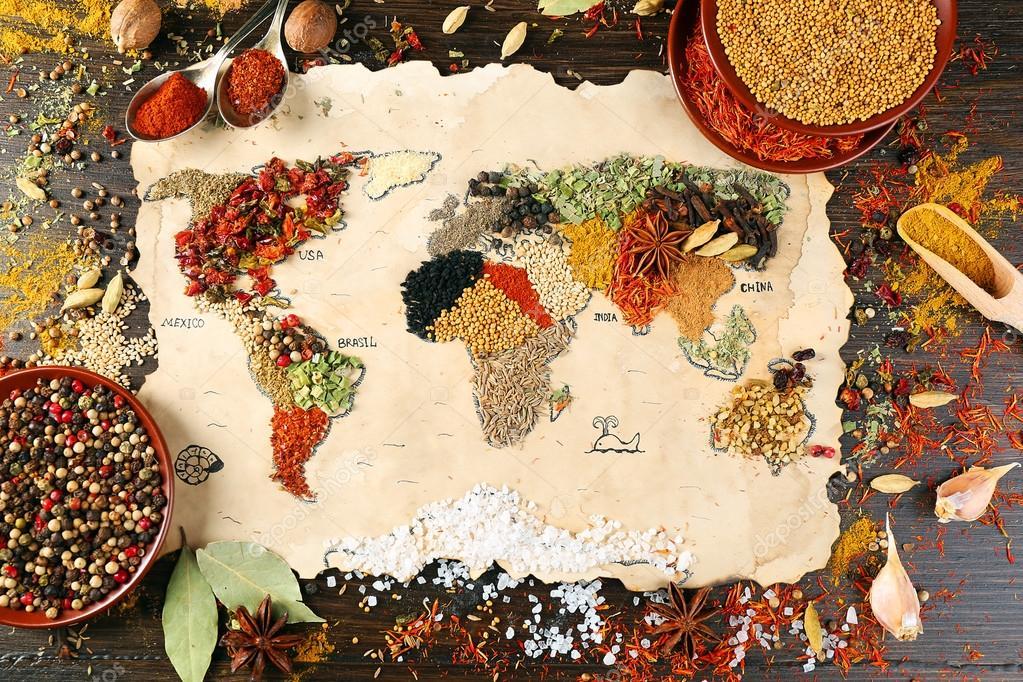
香料贸易在人类历史上有着举足轻重的作用,尤其是中世纪的欧洲,对香料的渴望直接催生了地理大发现。从遥远的东方运送香辛料到欧洲的贸易线路被称为香料之路。香料作为当时最贵重的商品之一,其价值几与黄金相当。英语中“Spice”(香辛料)这个词来源于拉丁语“species”,常用来指代贵重但量小的物品。
在16世纪,葡萄牙统治了东印度的香料贸易,17世纪的霸主是荷兰,而18世纪则是英国。而在16~19世纪初,中国大陆是世界上最大的香料市场,东南亚大部分香料都销往这里;而荷兰、英国、美国等国商人,就由广州运载中国香料返国,广州成为早期东南亚香料的集散中心[1]。
Der Gewürzhandel umfasste historische Zivilisationen in Asien, Nordostafrika und Europa. Gewürze wie Zimt, Kassia, Kardamom, Ingwer, Pfeffer, Muskatnuss, Sternanis, Nelken und Kurkuma waren bereits in der Antike bekannt und wurden in der östlichen Welt gehandelt. Diese Gewürze fanden ihren Weg in den Nahen Osten noch vor Beginn der christlichen Zeitrechnung, wobei fantastische Geschichten ihre wahre Herkunft verschleierten.
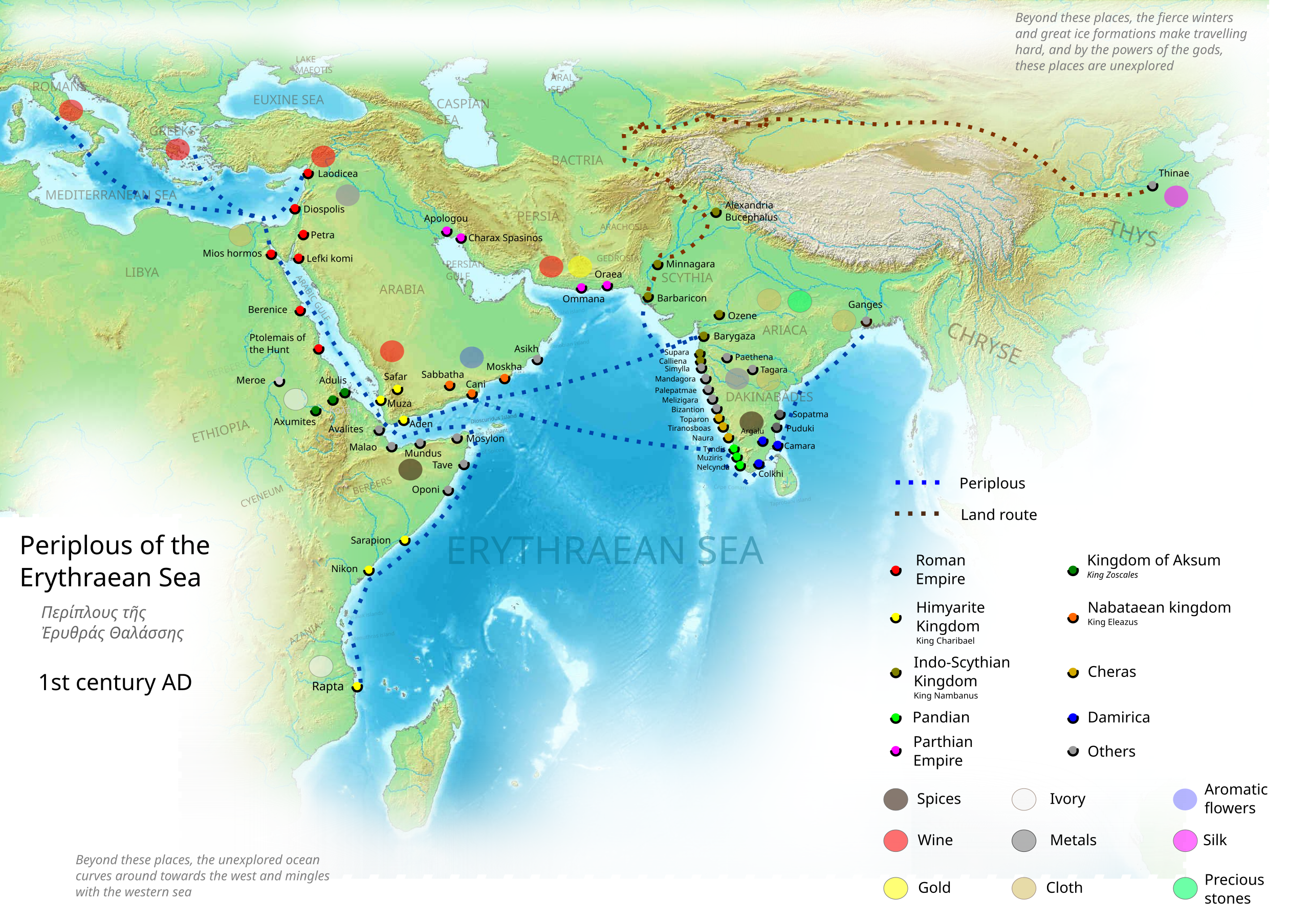
Der maritime Aspekt des Handels wurde von den austronesischen Völkern in Südostasien dominiert, nämlich den alten indonesischen Seefahrern, die bis 1500 v. Chr. Routen von Südostasien nach Sri Lanka und Indien (und später nach China) etablierten. [2] Diese Waren wurden dann von indischen und persischen Händlern über die Weihrauchroute und die römisch-indischen Routen auf dem Landweg zum Mittelmeer und in die griechisch-römische Welt transportiert. Die maritimen Handelswege der Austronesier dehnten sich später bis ins 1. Jahrtausend n. Chr. auf den Nahen Osten und Ostafrika aus, was zur austronesischen Kolonisierung Madagaskars führte.
The spice trade involved historical civilizations in Asia, Northeast Africa and Europe. Spices, such as cinnamon, cassia, cardamom, ginger, pepper, nutmeg, star anise, clove, and turmeric, were known and used in antiquity and traded in the Eastern World.[1] These spices found their way into the Near East before the beginning of the Christian era, with fantastic tales hiding their true sources.[1]
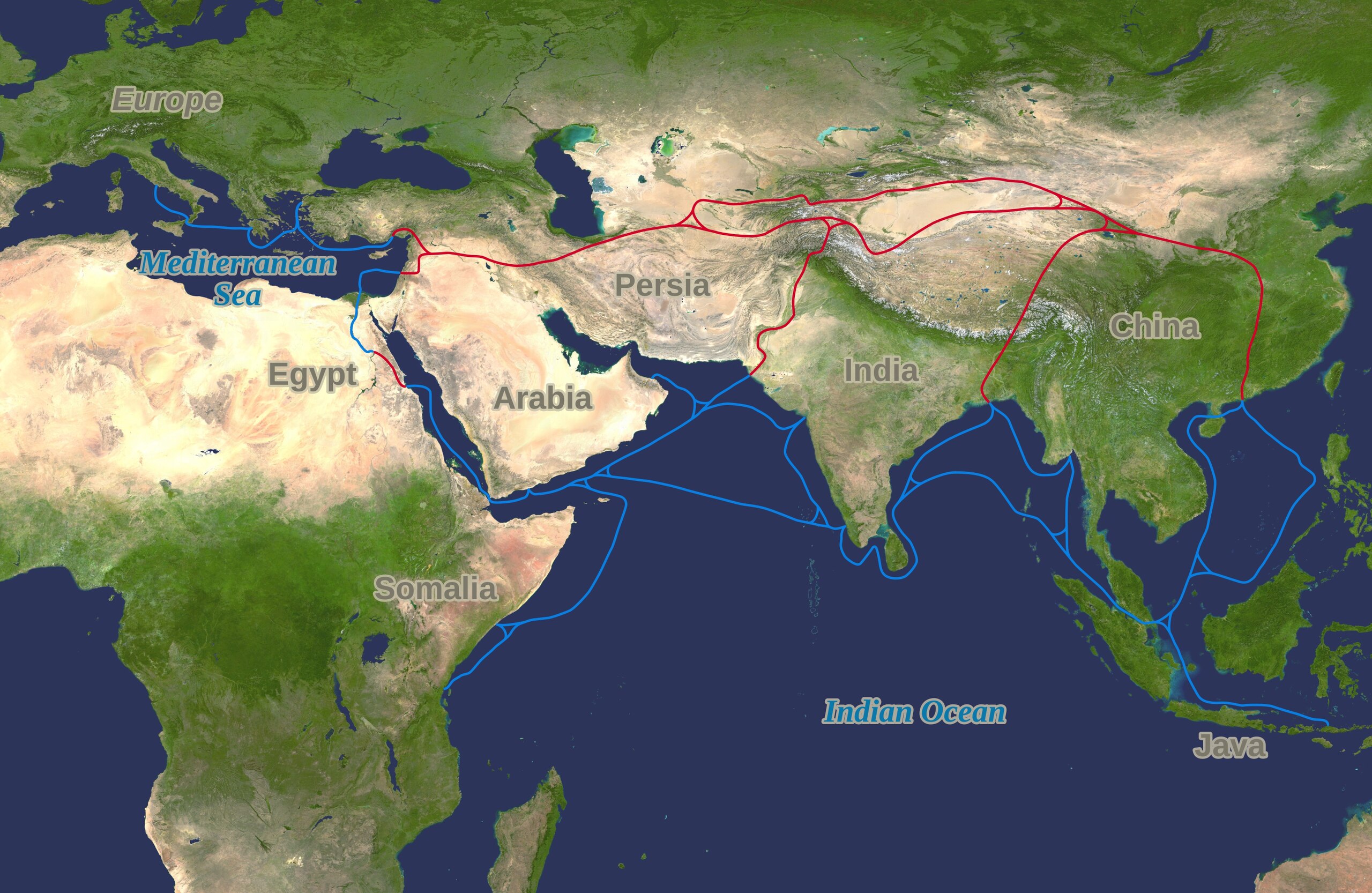
The maritime aspect of the trade was dominated by the Austronesian peoples in Southeast Asia, namely the ancient Indonesian sailors who established routes from Southeast Asia to Sri Lanka and India (and later China) by 1500 BC.[2] These goods were then transported by land toward the Mediterranean and the Greco-Roman world via the incense route and the Roman–India routes by Indian and Persian traders.[3] The Austronesian maritime trade lanes later expanded into the Middle East and eastern Africa by the 1st millennium AD, resulting in the Austronesian colonization of Madagascar.
Within specific regions, the Kingdom of Axum (5th century BC – 11th century AD) had pioneered the Red Sea route before the 1st century AD. During the first millennium AD, Ethiopians became the maritime trading power of the Red Sea. By this period, trade routes existed from Sri Lanka (the Roman Taprobane) and India, which had acquired maritime technology from early Austronesian contact. By the mid-7th century AD, after the rise of Islam, Arab traders started plying these maritime routes and dominated the western Indian Ocean maritime routes.[citation needed]
Arab traders eventually took over conveying goods via the Levant and Venetian merchants to Europe until the rise of the Seljuk Turks in 1090. Later the Ottoman Turks held the route again by 1453 respectively. Overland routes helped the spice trade initially, but maritime trade routes led to tremendous growth in commercial activities to Europe. [citation needed]
The trade was changed by the Crusades and later the European Age of Discovery,[4] during which the spice trade, particularly in black pepper, became an influential activity for European traders.[5] From the 11th to the 15th centuries, the Italian maritime republics of Venice and Genoa monopolized the trade between Europe and Asia.[6] The Cape Route from Europe to the Indian Ocean via the Cape of Good Hope was pioneered by the Portuguese explorer navigator Vasco da Gama in 1498, resulting in new maritime routes for trade.[7]
This trade, which drove world trade from the end of the Middle Ages well into the Renaissance,[5] ushered in an age of European domination in the East.[7] Channels such as the Bay of Bengal served as bridges for cultural and commercial exchanges between diverse cultures[4] as nations struggled to gain control of the trade along the many spice routes.[1] In 1571 the Spanish opened the first trans-Pacific route between its territories of the Philippines and Mexico, served by the Manila Galleon. This trade route lasted until 1815. The Portuguese trade routes were mainly restricted and limited by the use of ancient routes, ports, and nations that were difficult to dominate. The Dutch were later able to bypass many of these problems by pioneering a direct ocean route from the Cape of Good Hope to the Sunda Strait in Indonesia.

 Botany

 Sport
 Games

Go (chinesisch 圍棋 / 围棋, Pinyin wéiqí; japanisch 囲碁 igo; koreanisch 바둑 baduk; wörtlich Umzingelungsspiel) ist ein strategisches Brettspiel für zwei Spieler. Das Spiel stammt ursprünglich aus dem antiken China und hat im Lauf der Geschichte eine besondere Prägung in Japan, Korea und Taiwan erhalten. Erst seit dem 20. Jahrhundert fand Go auch Verbreitung außerhalb Ostasiens. Laut Angaben von Mind Sports Online lag die Zahl der Go-Spieler im Jahr 2000 weltweit bei rund 27 Millionen Menschen, wovon allein 22 Millionen in Ostasien lebten. Deutschland lag nach dieser Berechnung auf Platz eins der westeuropäischen Länder.[1] Die International Go Federation (IGF) bezifferte im Jahr 2011 die Zahl der Go-Spieler weltweit auf rund 40 Millionen.[2] Die British Go Association (BGA) gab 2013 die Zahl der weltweiten Spieler mit 60 Millionen an.[3]
围棋是一种策略性棋类,使用格状棋盘及黑白二色棋子进行对弈。起源于中国,中国古时有“弈”、“碁”[1]、“手谈”等多种称谓,属琴棋书画四艺之一。西方称之为“Go”,是源自日语“碁”的发音。
对弈双方在棋盘网格的交叉点上交替放置黑色和白色的棋子。[2]落子完毕后,棋子不能移动。对弈过程中围地吃子,以所围“地”的大小决定胜负。
围棋规则简洁而优雅,但玩法却千变万化,欲精通其内涵需要大量的练习与钻研。国际象棋大师伊曼纽·拉斯克称赞说:“如果在宇宙中的其他地方存在智能生命形式,他们几乎肯定会下围棋。”[3]与此同时,围棋被认为是当前世界上最复杂的棋盘游戏之一,其复杂度已于1978年被Robertson与Munro证明为PSPACE-hard[4]。
截至2008年年中,全世界有超过四千万玩家,其中绝大多数在东亚。[5]截至2015年7月,国际围棋联盟共拥有75个成员国和5个协会会员。[6]
起源于中国
围棋起源于中国,是世界上最古老的棋类运动之一。推测起源时间为大约公元前23世纪。传说尧的儿子丹朱顽劣,尧发明围棋以教育丹朱,陶冶其性情。[7] 当前围棋的最早可靠记载见于春秋时期的《左传》[8],战国时期的弈秋是见于史籍的第一位棋手,最早的围棋文物可以追溯到战国时期[9]。汉朝时棋盘为17路,南北朝时候,棋盘定型为现在的19道棋盘,传入朝鲜半岛[10],并且出现了评定棋手水平的围棋九品制。围棋逐渐成为中国知识阶层修身养性的一项必修课目,为“琴棋书画”文人四艺之一。
中国古代对围棋尚有“弈”、“碁”、“手谈”、“坐隐”、“烂柯”、“方圆”、“黑白”、“乌鹭”、“大棋”、“木野狐”等雅称,下围棋又称对弈、博弈、奕棋。弈局指棋局,弈枰、弈楸、楸枰、河洛指棋盘,奕具泛指棋盘、棋子等棋具,弈谱、弈选、吴图指棋谱;观弈指看棋;弈林指围棋圈。其中“碁”为棋之异体字,在古籍中专指围棋,如《隋书‧经籍志》所载棋谱目录,均作碁。
古代围棋并未发现完整明文的规则,但规则在逻辑关系上极其简单,《敦煌棋经》中略有所述。中国古代唐宋使用数路法,日本比目法即由此改变来。但是明朝以后,改为子空合并计算,不需保留死子,扣除眼位的过程以还棋头实现,所以近代中国的围棋规则被称为数子法。由于终局还棋头步骤的存在,可见古棋与现代规则体系下的围棋有着本质不同。[注 1] 而围棋最迟在唐朝初期传到了西藏,相传松赞干布的大臣琼波·邦色是一位围棋高手。后来围棋由藏族人改为西藏围棋。[12]
唐朝出现了棋待诏官职。著名棋手王积薪作“围棋十诀”大多在现代围棋中依旧适用。北宋沈括《梦溪笔谈》中有“四人分曹围棋”即四人围棋的记载。明朝王世贞写了一篇《弈问》[13],回答围棋的种种疑问。
清朝初年,出现了中国古代围棋发展的一个高峰期。大批著名棋手涌现,留下大量名局棋谱,如黄龙士与徐星友的“血泪篇”,施襄夏与范西屏的“当湖十局”。同时,围棋理论的研究亦达到一个高峰,代表作有徐星友的《兼山堂弈谱》和施襄夏的《弈理指归》等。但随后,中国围棋渐渐衰微,至20世纪上半叶竞技水平完全无法与日本围棋相抗,规则也根据日本围棋规则作出了本质的调整。
盛行于日本
围棋在公元7世纪传入日本[14],很快就流行于宫廷和贵族之中。战国末期,权臣丰臣秀吉设立碁所。[15]德川幕府时代,出现了在天皇或征夷大将军面前对弈的“御城棋”,日本围棋逐渐兴盛,出现了本因坊、安井、井上、林等围棋世家。其中坊门尤其人才辈出,先后出现了道策、丈和、秀和、秀策、秀甫、秀荣等杰出棋手。日本围棋由于废除了中国古代围棋的座子制(古代中国围棋是放四个座子,就是两黑两白放在对角星的位置上,双方在这个基础上开始布局),布局理论得以极大发展。
同时由于日本棋手对唐代围棋数路法的胜负判定规则(以围地多少还是活子多少为目的——或者是否以其它目的行棋,还可继续考证)产生了直观上的的误解,从而产生对唐宋数路法扣除眼位和公气、明清数子法终局还棋头(其本质是子多为胜、眼位不计的胜负计算方法)的疑惑,将其废除,从而产生了与中国古棋大为不同的地多为胜的日式围棋,并演变为现代围棋。
囲碁(いご)とは、2人で行うボードゲームの一種。交互に盤上に石を置いていき、自分の石で囲んだ領域の広さを争う。単に碁(ご)とも呼ばれる。
2人のプレイヤーが、碁石と呼ばれる白黒の石を、通常19×19の格子が描かれた碁盤と呼ばれる板へ交互に配置する。一度置かれた石は、相手の石に全周を取り囲まれない限り、取り除いたり移動することはできない。ゲームの目的は、自分の色の石によって盤面のより広い領域(地)を確保する(囲う)ことである。
アブストラクトゲーム、ボードゲームの一種で、ゲーム理論の言葉で言えば二人零和有限確定完全情報ゲームである[1]。勝敗は、より大きな地を確保することで決定される(#勝敗に関するルール)。ゲームの終了は、将棋やチェスと同じように、一方が負けを認めること(投了という)もしくは双方の「もう打つべきところがない」という合意によって行われる。他のボードゲームと比較した場合の特異な特徴は、ルール上の制約が極めて少ないこと、パスが認められていることが挙げられる。
発祥は中国と考えられ、少なくとも2000年以上前から東アジアを中心に親しまれてきた。そうした文化・歴史の中で爛柯(らんか)をはじめとしたさまざまな別称を持つ(#囲碁の別称とその意味)。日本でも平安時代から広く親しまれ、枕草子や源氏物語といった古典作品にも数多く登場する。戦国期には武将のたしなみでもあり、庶民にも広く普及した。江戸時代には家元四家を中心としたプロ組織もでき、興隆の時期を迎えた。明治以降も引き続き広く親しまれ、近年ではインターネットを経由して対戦するネット碁も盛んである。
西洋的な価値観からはチェスなどと同様マインドスポーツ(つまり競技)でもあり、国際囲碁連盟は国際オリンピック委員会が承認する国際スポーツ団体総連合に加盟し、五輪競技としての採用を目指している。中国・広州で開催される2010年アジア競技大会では競技種目として採用された。
日本では古くから親しまれ、駄目、布石、捨て石、定石など、数多くの囲碁用語は、そのまま日本語の慣用句としても定着している(#囲碁に由来する慣用表現)。
Go is an abstract strategy board game for two players, in which the aim is to surround more territory than the opponent. The game was invented in China more than 2,500 years ago and is believed to be the oldest board game continuously played to the present day.[1][2] A 2016 survey by the International Go Federation's 75 member nations found that there are over 46 million people worldwide who know how to play Go and over 20 million current players, the majority of whom live in East Asia.[3]
The playing pieces are called "stones". One player uses the white stones and the other, black. The players take turns placing the stones on the vacant intersections ("points") of a board. Once placed on the board, stones may not be moved, but stones are removed from the board if "captured". Capture happens when a stone or group of stones is surrounded by opposing stones on all orthogonally-adjacent points.[4] The game proceeds until neither player wishes to make another move. When a game concludes, the winner is determined by counting each player's surrounded territory along with captured stones and komi (points added to the score of the player with the white stones as compensation for playing second).[5] Games may also be terminated by resignation. A teacher might simplify the explanation by saying to a student "you may place your stone on any point on the board, but if I surround that stone, I will remove it."
The standard Go board has a 19×19 grid of lines, containing 361 points. Beginners often play on smaller 9×9 and 13×13 boards,[6] and archaeological evidence shows that the game was played in earlier centuries on a board with a 17×17 grid. However, boards with a 19×19 grid had become standard by the time the game had reached Korea in the 5th century CE and later Japan in the 7th century CE.[7]
Go was considered one of the four essential arts of the cultured aristocratic Chinese scholars in antiquity. The earliest written reference to the game is generally recognized as the historical annal Zuo Zhuan[8][9] (c. 4th century BC).[10]
Despite its relatively simple rules, Go is very complex. Compared to chess, Go has both a larger board with more scope for play and longer games, and, on average, many more alternatives to consider per move. The lower bound on the number of legal board positions in Go has been estimated to be 2 x 10170.[11][12]
Le go est un jeu de plateau originaire de Chine. Il oppose deux adversaires qui placent à tour de rôle des pierres, respectivement noires et blanches, sur les intersections d'un tablier quadrillé appelé goban. Le but est de contrôler le plan de jeu en y construisant des « territoires ». Les pierres encerclées deviennent des « prisonniers », le gagnant étant le joueur ayant totalisé le plus de territoires et de prisonniers.
Il s'agit du plus ancien jeu de stratégie combinatoire abstrait connu, probablement créé en Chine pendant la période des Printemps et Automnes. Malgré son ancienneté, le go continue à jouir d'une grande popularité en Chine, en Corée et au Japon. Dans le reste du monde, où sa découverte est récente, sa notoriété est croissante. Son succès tient autant à la simplicité de ses règles qu'à sa grande richesse combinatoire et sa profondeur stratégique.
Le go sous sa forme actuelle a vu le jour au XVe siècle au Japon, puis cette forme a été réintroduite en Chine et en Corée. En conséquence, la terminologie du jeu utilisée en Occident est principalement japonaise plutôt que chinoise. Le nom vient d'ailleurs du japonais igo (囲碁?) ou simplement go (碁?), le nom chinois étant wéiqí (围棋 / 圍棋) et le nom coréen baduk (바둑).
Il go[1] è un gioco da tavolo strategico per due giocatori.
Il go ebbe origine in Cina, dove è giocato da almeno 2500 anni; è molto popolare in Asia orientale, ma si è diffuso nel resto del mondo negli anni recenti. È un gioco molto complesso strategicamente malgrado le sue regole semplici; un proverbio coreano dice che nessuna partita di go è mai stata giocata due volte, il che è verosimile se si pensa che ci sono 2,08 × 10170 [2] diverse posizioni possibili.
Il go è giocato da due giocatori che collocano alternativamente pedine (dette pietre) nere e bianche sulle intersezioni vuote di una "scacchiera" (detta goban) dotata di una griglia 19 × 19. Lo scopo del gioco è il controllo di una zona del goban maggiore di quella controllata dall'avversario; a questo scopo i giocatori cercano di disporre le proprie pietre in modo che non possano essere catturate, ritagliandosi allo stesso tempo dei territori che l'avversario non possa invadere senza essere catturato.
A parte la dimensione del goban e delle posizioni di partenza, le regole sono state mantenute nei secoli, cosicché può essere considerato il gioco più antico ancora praticato.
El go (chino simplificado: 围棋, chino tradicional: 圍棋, pinyin: wéiqí; japonés: 囲碁 igo, coreano: 바둑 baduk) es un juego de tablero de estrategia para dos personas. Se originó en China hace más de 2500 años. Fue considerado una de las cuatro artes esenciales de la antigüedad China. Los textos más antiguos que hacen referencia al go son las analectas de Confucio.
El objetivo del juego, cuya traducción aproximada es juego de rodear, es controlar una cantidad de territorio mayor a la del oponente. Para controlar un área, debe rodearse con las piedras.1 Gana el jugador que controla la mayor cantidad de territorio al finalizar la partida.
El juego consiste en colocar las piedras en las intersecciones del tablero. Antes de comenzar se asigna un color a cada jugador. Las negras inician la partida y una vez colocada una piedra, no se puede volver a mover. Se puede capturar una piedra o un conjunto de piedras y eliminarlas del tablero si están completamente rodeadas por piedras de otro color. Existen diferentes conjuntos de reglas, pero todas coinciden en los aspectos generales y las diferencias no afectan significativamente la estrategia ni el desarrollo del juego salvo en situaciones excepcionales.
A pesar de la aparente simplicidad de las reglas, requiere de una estrategia bastante compleja.
Los tableros pueden ser de 7×7, 9×9, 13×13 y 19×19. Cuantas más intersecciones, mayor la dificultad. Lo más normal es de 19×19. Se sabe que originalmente se jugaba en tableros de 17×17 pero para cuando el juego llegó a Corea y Japón en los siglos V y VII d.C., los tableros de 19×19 ya se habían vuelto la norma.2
El go es muy popular en Asia Oriental, pero también ha ganado cierta popularidad en otras partes del mundo. Llegó a Europa a través de Japón, por lo cual se conoce principalmente como go, del japonés igo. A mediados de 2008, había más de 40 millones de jugadores de go en el mundo, la gran mayoría en Asia.3 La Federación Internacional de Go cuenta con 74 países miembros.4
Го (яп. 碁; также кит. 围棋 вэйци, кор. 바둑 падук) — логическая настольная игра с глубоким стратегическим содержанием, возникшая в Древнем Китае, по разным оценкам, от 2 до 5 тысяч лет назад[1]. До XIX века культивировалась исключительно в Восточной Азии, в XX веке распространилась по всему миру. По общему числу игроков — одна из самых распространённых настольных игр в мире. Входит в число пяти базовых дисциплин Всемирных интеллектуальных игр.
 World Heritage

 Energy resource
Beijing Shi-BJ
China
 Renewable Energy
 Windenergie
 Companies
Mainland China,Hong Kong,Macau,Taiwan

金风科技股份有限公司(简称“金风科技”),是一家以风力发电机系统设计与制造为主的可再生能源公司,并从事风力发电厂投资、开发,以及风力发电相关服务。根据全球风能协会(GWEC)统计,2018年金风科技为中华人民共和国最大风力发电机制造商。
Goldwind Science & Technology Co., Ltd. (kurz: Goldwind) ist ein Entwickler, Hersteller und Betreiber von Windkraftanlagen sowie Anlagen, die der kommunalen/industriellen Wasserversorgung und Wasseraufbereitung dienen. Das 1998 gegründete Unternehmen mit Sitz in Peking gehört zu den größten Windkraftanlagenherstellern weltweit.
 Geography

 Civilization


Der erste Qin-Kaiser, der mächtigste Mann jener versunkenen Welt, ist im Jahr 210 v. Chr. im Alter von 49 Jahren gestorben. Es wird berichtet, dass ihn der Tod auf einer langen Reise zur Insel der Seeligen im östlichen Meer überraschte. Er hoffte, sie zu finden und dort Unsterblichkeit zu erlangen. Als seine Leiche zu riechen begann, nahm man einen Fischkarren mit in den Zug, um den Geruch rechtfertigen zu können. Man hielt seinen Tod zunächst geheim.
An seinem Grabareal arbeiteten von 247 bis 208 über siebenhunderttausend Menschen. Viele kamen dabei um. Es umfasste 56 Quadratkilometer und wurde in Anlehnung an seine Hauptstadt entworfen. Der eigentliche Grabpalast misst 160x120 Meter und ist an der höchsten Stelle 10 Meter hoch. Er wird durch einem 80 Meter hohen, flachen Hügel bedeckt. Eine 4 Meter hohe und 4 Meter breite Mauer mit Toren an den vier Seiten umgab das gesamte Areal. Zwei weitere Mauern, die jeweils etwa 8 Meter dick waren, umgaben den Grabhügel. Auch sie hatten breite Tore und Wachtürme. Hunderte Seitengräber und Opfergräben umgaben den Hügel. Es werden weiterhin laufend Strukturen, etwas Nebenpaläste, Gärten und Tempel, ausgegraben. Sima Qian (145-86) beschrieb das Mausoleum, das bisher nicht ausgegraben wurde, detailliert (s. unten).
Das Mausoleum Qín Shǐhuángdìs ist eine frühchinesische Grabanlage, errichtet für den ersten chinesischen Kaiser Qín Shǐhuángdì. Mit dem Bau wurde im Jahr 221 v. Chr. begonnen, und der Kaiser wurde im Jahre 210 v. Chr. darin beigesetzt. Es ist einer der weltweit größten Grabbauten und vor allem bekannt für seine großen Soldatenfiguren, die sogenannte „Terrakotta-Armee“.
Seit 1987 ist die Mausoleumsanlage auf der Liste des Weltkulturerbes der UNESCO verzeichnet.[1]
Das Mausoleum befindet sich in Zentralchina, etwa 36 Kilometer nordöstlich von Xi’an, der Hauptstadt des ehemaligen Königreiches Qin, an der Linma-Straße. Es liegt zugleich nahe der Hauptstadt Chinas zur Qin-Zeit, Xianyang, und gleichsam am Fuß des Berges Lishan. Zirka 1,3 Kilometer östlich der Anlage fließt der Sha, ein 84 Kilometer langer, rechter Nebenfluss des Wei-Flusses (Wèi Hé). Die urbane Siedlung in der Nähe ist der Stadtteil von Xi’an Lintong, dessen Zentrum – in leicht südwestlicher Richtung – knapp fünfeinhalb Kilometer entfernt liegt. Das Siedlungsgebiet erstreckt sich heute bis in das ehemalige Mausoleumsgelände hinein.[2]
Von der ehemaligen Reichshauptstadt Xi’an aus haben 13 Kaiserdynastien – von 221 v. Chr. bis 907 n. Chr. – das Chinesische Imperium regiert. In der Flussebene des Wei-Flusstals und entlang der Berghänge befinden sich daher zahlreiche kaiserliche Grabstätten aus dieser Epoche.[3] Der Berg Li war reich an Gold- und Jadevorkommen, welche im chinesischen Altertum abgebaut wurden.[4]
秦始皇帝陵是中国第一位皇帝,即始皇帝的陵墓,位于中国陕西省西安以东31公里临潼区的骊山,本称骊山园。建于公元前247年至公元前208年,历时39年。现存陵冢高76米,陵园布置仿秦都咸阳,分内外两城,内城周长2.5公里,外城周长6.3公里。陵冢位于内城西南,坐西面东,放置棺椁和陪葬器物的地方,为秦始皇陵建筑群的核心,目前尚未发掘。[1][2]
据目前的考证,已发现的秦始皇兵马俑被普遍认为位于秦始皇陵的外围,有戍卫陵寝的含义,是秦始皇陵的有机组成部分。
秦始皇帝陵及び兵馬俑(しんしこうていりょうおよびへいばよう)は、中国陝西省西安北東30kmの驪山北側(臨潼区)にある、秦始皇帝の陵(墓)とその周辺にある兵馬俑坑のユネスコの世界遺産(文化遺産)としての総称である。
秦の始皇帝は中国史初の皇帝であったが、その強大な力を利用し大きな陵墓を建てた(人形を作り埋葬したのは二代皇帝胡亥という説もある)。これが秦始皇帝陵である。1974年に中華人民共和国で地元の住民により発見された。また兵馬俑坑は、この陵を取り巻くように配置されており、その規模は2万m2余におよぶ、きわめて大きなもので、3つの俑坑には戦車が100余台、陶馬が600体、武士俑は成人男性の等身大で8000体ちかくあり、みな東を向いている。
この兵馬俑の発見は特に、中国史の研究上、当時の衣服や武器・馬具等の様相や構成、また、始皇帝の思想などを知る上できわめて貴重なものである。兵馬俑坑は、現在発掘調査がなされ公開されている箇所だけでなく、その周囲にも広大な未発掘箇所をともなうが、発掘と同時に兵馬俑の表面に塗られた色彩が消える可能性があることなどの理由から、調査がなされていない。
史記は始皇帝の遺体安置場所近くに「水銀の川や海が作られた」と述べる。この記述は長い間、誇張された伝説と考えられていたが、1981年に行われた調査によるとこの周囲から水銀の蒸発が確認され、真実である可能性が高くなった。
The Mausoleum of the First Qin Emperor (Qin Shi Huang) (Chinese: 秦始皇陵; pinyin: Qínshǐhuáng Líng) is located in Lintong District, Xi'an, Shaanxi province of China. This mausoleum was constructed over 38 years, from 246 to 208 BC, and is situated underneath a 76-meter-tall tomb mound shaped like a truncated pyramid.[1] The layout of the mausoleum is modeled on the Qin capital Xianyang, divided into inner and outer cities. The circumference of the inner city is 2.5 km (1.55 miles) and the outer is 6.3 km (3.9 miles). The tomb is located in the southwest of the inner city and faces east. The main tomb chamber housing the coffin and burial artifacts is the core of the architectural complex of the mausoleum.
The tomb itself has not yet been excavated. Archaeological explorations currently concentrate on various sites of the extensive necropolis surrounding the tomb, including the Terracotta Army to the east of the tomb mound.[2] The Terracotta Army served as a garrison to the mausoleum and has yet to be completely excavated.[3][4]
Le mausolée de l'empereur Qin (chinois : 秦始皇陵 ; pinyin : ) se trouve à proximité de la ville de Xi'an, dans le Shaanxi. Il comprend d'une part le tombeau de l'empereur Qin Shi Huangdi (IIIe siècle av. J.-C.), non encore fouillé, d'autre part les fosses où l'on a trouvé, à partir de 1974, les vestiges ensevelis de milliers de soldats de terre cuite formant ce qu'on a appelé l’armée de terre cuite ou armée d'argile. L'ensemble s'étend sur environ 56,25 km21.
La tombe est recouverte par un tumulus haut de 51,3 mètres2. On en connaît le contenu légendaire grâce au récit de Sima Qian. En 1914, à l'occasion d'une expédition archéologique, Victor Segalen avait livré une description détaillée de l'aspect extérieur du tombeau.
À environ 1 500 mètres se trouvent les fosses contenant quelque huit mille statuesN 1 de soldats, statues qui ont quasiment toutes un visage différencié, et de chevaux en terre cuite datant de 210 av. J.-C. C'est « l'armée enterrée », destinée à garder l'empereur défunt. Ces statues furent cuites dans des fours à une chaleur d’environ 900 °C. Des couleurs minérales étaient appliquées après cuisson sur les statues, ce qui, tout en les individualisant davantage, permettait de distinguer par la couleur dominante les différentes unités de cette armée3.
Le site a été ouvert au public à l'occasion de la fête nationale chinoise en 19794.
L'armée de terre cuite a été inscrite le 11 décembre 1987 sur la liste du patrimoine mondial établie par l'UNESCO5 à la suite de l'avis favorable de l'ICOMOS6.
Il mausoleo del primo imperatore Qin (秦始皇陵S, Qín ShǐhuánglíngP) è il più importante sito archeologico della Cina. Si trova vicino a Xi'an, nella provincia Shaanxi, e consta di un esteso complesso funerario progettato a guisa della capitale imperiale di Xianyang, con una "città interna", occupante un'area di 2,5 km, ed una "città esterna", occupante un'area di 6,3 km. I lavori per la sua realizzazione durarono dal 246 a.C. al 208 a.C.
La camera funeraria di Qin Shi Huang (260 a.C.-210 a.C.), non ancora portata alla luce, sarebbe così profonda da attraversare tre livelli di falde acquifere, con pareti in bronzo e circondata da fiumi di cinabro, cioè solfuro di mercurio che, per la filosofia taoista, sarebbe un attivatore energetico per l'immortalità. Ad oggi, gli scavi archeologici hanno portato alla luce diversi complessi secondari tra cui quello ospitante il famoso esercito di terracotta che l'imperatore volle come armata da portare con sé nell'Aldilà.
El mausoleo de Qin Shi Huang es el gigantesco recinto funerario que alberga la tumba de Qin Shi Huang (noviembre o diciembre de 260 a. C. - 10 de septiembre de 210 a. C.), primer emperador de la China unificada (del 221 a. C. al 10 de septiembre de 210 a. C.), perteneciente a la dinastía Qin, así como unas 400 tumbas más y los conocidos Guerreros de terracota de Xian, que él mismo mandó construir durante su mandato.1
 Architecture



 Automobile
Haval
Automobile
China
Chinesiches Automobil
Neue Energiefahrzeuge/New Energy Vehicles
Hebei Sheng-HE
privat betriebene Unternehmen
Companies


