漢德百科全書 | 汉德百科全书
 China
China
China
China
 Energieressource
Energieressource
Energieressource
 *Elektrische Energie
 Europäische Union
Frankreich
Japan
Europäische Union
Frankreich
Japan
 Provence-Alpes-Côte d´Azur
Republik Korea
Russland
Vereinigte Staaten
Provence-Alpes-Côte d´Azur
Republik Korea
Russland
Vereinigte Staaten
 Wichtige internationale Organisationen
 Wissenschaft und Technik
Technologiekonzepte
Wissenschaft und Technik
Wissenschaft und Technik
Technologiekonzepte
 Hand in Hand
International Silk Union (ISU) is an international and specialized non-profit social organization in which enterprises and related organizations from the silk producing and consuming countries participate voluntarily. The secretariat is located in Hangzhou, China. Since its foundation in October 2015, there have been more than 140 enterprises and organizations from 27 countries and regions joining ISU, including China, Italy, France, Switzerland, Brazil, Poland, Japan, Turkiye, Thailand, India, Vietnam, Cambodia, Myanmar, Indonesia, Singapore, the United States, Australia, Uzbekistan, Bangladesh, Laos, Iran, Pakistan, Romania, Spain, the Philippines, Uganda and Hong Kong(China), among which there are 46 executive member units and 11 vice chairman units. Especially China Textile Engineering Society, Ufficio Italiano Seta, INTERSOIE France, Brazilian Silk Association, Vietnam Sericulture Association, Cambodia Silk Sector Promotion and Development Commission, and Iran Silk Research Center have joined as countries or regions, and their influence radiates to the world's major silk enterprises and research institutions. In 2020, ISU was included in the “Yearbook of International Organizations”, Union of International Associations(UIA), becoming the first silk international organization in the UIA with the secretariat being located in China. In 2021, ISU signed a strategic cooperation agreement to establish a dialogue partnership with International Sericulture Commission (ISC), an intergovernmental international organization.
Adhering to the purpose of “Communication & Cooperation, Development with Concerted Efforts”, ISU actively docks international exchanges and cooperation, holds international conferences, organizes international inspections, and establishes the professional committees in silk field including History Culture, Education Research, Technical Innovation, Fashion Design, etc. In order to smooth information exchanges, ISU establishes the official website of “World Silk Website” and Self-Media Matrix, hosts the proceeding of ISU News, co-hosts the professional journal of Journal of Silk, which integrates the journals, official bilingual websites, WeChat, Toutiao, Sohu, Baijia and Tencent, etc., promoting the international integration and development of silk culture and industry. The chairman of ISU is Zhang Guoqiang, chairman of the board of Cathaya group. The secretary-general of ISU is Li Qizheng, director of Hangzhou Oriental Silk Culture and Brand Research Center, and president of Periodicals Agency of Zhejiang Sci-Tech University.

 IT-Times
 Bildung und Forschung

 Museum
 Architektur
China
Architektur
China
 Kunst
Nationales Palastmuseum Taipeh
Palastmuseum
Taiwan Sheng-TW
Kunst
Nationales Palastmuseum Taipeh
Palastmuseum
Taiwan Sheng-TW
 Urlaub und Reisen


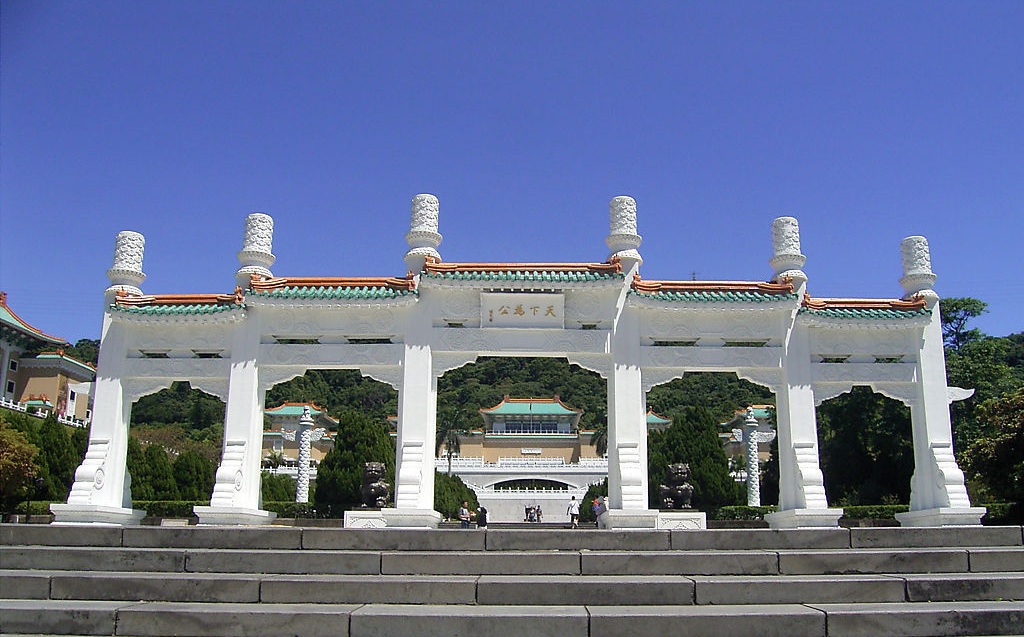
Es beherbergt seit 1925 die weltweit größte Sammlung chinesischer Kunstwerke von unschätzbarem Wert, die die 8.000-jährige Geschichte Kontinentalostasiens umspannt. Die meisten der 697.490 Objekte waren ursprünglich Teil der kaiserlichen Kunstsammlung,[1] welche von Qing-Kaiser Qianlong zusammengetragen wurde. Die Exponate stammten aus der Verbotenen Stadt und wurden durch Chiang Kai-shek nach Taiwan gebracht, als dieser im Jahr 1949 vom Festland floh.[2] Nur die besten Stücke aus der kaiserlichen Sammlung werden hier bewahrt. Selbst so ist dieser Schatz noch bei weitem zu umfangreich, um auf einmal ausgestellt werden zu können. Viele der besonders geschätzten Stücke werden permanent gezeigt. Der Großteil der Sammlung von Jade, Porzellanwaren, Gemälden und Bronzen wird jedoch regelmäßig ausgetauscht.
Zu den bekanntesten Stücken aus der Sammlung des Palastmuseums zählen der Jadekohl (chinesisch 《翠玉白菜》, Pinyin Cuìyù Báicài) und der Fleischstein (chinesisch 《肉形石》, Pinyin Ròuxíngshí), beides detailgetreue Darstellungen von Nahrungsmitteln.[3]
国立故宫博物院,简称故宫(博物院),俗称台湾故宫(博物院)或台北故宫(博物院)[i],别名中山博物院[j],为中华民国最具规模的博物馆以及台湾八景之一[13],也是古代中国艺术史与汉学研究机构。[12][14][15][16]馆舍坐落在台北市士林区至善路2段221号和台湾省嘉义县太保市故宫大道888号[6],一年可接待超过614万人次参访旅客,曾位列2015年全球参观人数第六多的艺术博物馆。[d]
国立故宫博物院是隶属于行政院的中央二级机关,故宫院长为特任官,视同部会首长。[1][4]它的前身是成立于京兆地方(今北京)紫禁城外廷的古物陈列所[17],1925年10月10日在紫禁城内廷另外组织了故宫博物院[7][18],后来因第二次中日战争爆发辗转迁移至南京和四川等地,古物陈列所则于第二次世界大战后裁撤并入国立中央博物院筹备处[k]。随后第二次国共内战的爆发再度导致时局动荡,1948年11月10日包括国立北平故宫博物院在内的六个机构于是决定携文物迁往台湾,几经改组易名,最终由国立北平故宫博物院和国立中央博物院合并为国立故宫博物院,1965年11月12日在台北现址复院开幕。[19][20]此后,博物馆历经多次馆舍扩建和修缮,并致力打造成为文化创意产业加值应用的虚拟博物馆,位于嘉义的南部院区也在2015年12月28日启用。[21]
国立故宫博物院物典藏近70万件册的艺术品和文物[9],大部分是原先国立北平故宫博物院、国立中央博物院筹备处和国立北平图书馆等机构所藏来自紫禁城、盛京行宫、避暑山庄、颐和园、静宜园和国子监等处皇家旧藏;另有部分是编列预算购置,接收自第二次世界大战结束日本归还文物,以及透过各界捐赠和征集而来。藏品时间跨度涵盖新石器时代至今长达8,000年[22],各类藏品分别交由器物处、书画处、图书文献处和南院处等4个策展部门管理,当中以长篇铭文的青铜器、古代早期的名家书画、善本古籍和官窑瓷器等搜藏最具影响力。[15][23][24][25][26]展厅内是按照文物类别以编年方式系统性地陈设4,000余件展品,器物类展件相隔半年至2年轮换一次,书画和图书文献类展件则每3个月定期更换[l]。[28][29]
国立故宮博物院(こくりつこきゅうはくぶついん)は、中華民国の台北市にある博物館である。この博物館は、中華民国の国立博物館のうちの1つであり、最大のもので、697,000個以上の古代の中国の人工品および美術品を所蔵している
故宮博物院は、1924年に北洋軍閥の一人である馮玉祥が溥儀を紫禁城から退去させ、1925年10月10日に宮殿内で清朝が持っていた美術品などを一般公開したのが始まりである。1925年当時の所蔵品点検レポートによると所蔵品総数は117万件を超えており、博物院は古物館、図書館、文献館を設けて各種文物の整理をする一方で、宮殿内に展示室を開設して多様な陳列を行っていた。
その後、満州に駐留していた日本軍が華北地方に軍を派遣してきたため、蒋介石の国民政府(1948年からは中華民国政府)は博物院の所蔵品を戦火や日本軍から守るべく重要文物を南方へ疎開させ、1933年2月から5月までの間に1万3,427箱と64包に及ぶ所蔵品がまず上海に運ばれ、その後1936年12月には南京市に故宮博物院南京分院保存庫に移動させた。その後1937年に日本軍が南京に向けて進軍してきたために、所蔵品は再び運び出されて80箱が四川省の巴県に、9,331箱が楽山に、約7,287箱が峨嵋の計3カ所に避難させられた[1]。
第二次世界大戦後、運び出された所蔵品は重慶を経て再び南京・北京に戻されたが、国共内戦が激化するにつれて中華民国政府の形勢が不利になったため、1948年の秋より中華民国政府は故宮博物院から第一級の所蔵品を精選し、第1陣として772箱の文物が、1949年1月には第2陣として3,502箱の文物が、同月に第3陣として1,251箱の文物が台湾に運び出された[1]。したがって故宮博物院の所蔵品は北京と台北の2カ所に別れて展示されている。これとは別に所蔵品の一部は、国共内戦後の中華人民共和国建国後の混乱のため北京に戻すことができず、現在も南京博物院の管轄下で南京に保管されている。
Le musée national du Palais (chinois : 國立故宮博物院 ; hanyu pinyin : Gúolì Gùgōng Bówùyùan), est un musée de Taipei, République de Chine (Taïwan), qui a recueilli les collections du palais impérial de la Cité interdite de Pékin.
Le musée national du Palais abrite quelque 697 490 pièces d'art chinois (fin décembre 2017), dont la plus grande collection d'objets artisanaux chinois du monde. Les collections comprennent des calligraphies, des peintures chinoises, des ouvrages anciens, des archives de la dynastie Qing, des bronzes, des jades, des céramiques et divers objets de collection. Il est considéré par la dimension de ses collections comme l'une des plus grandes institutions muséales du monde spécialisées dans l'art asiatique. Le musée national du Palais est distinct du musée du Palais qui se trouve dans la Cité interdite à Pékin. Ces deux établissements ont pourtant une origine commune car ils se partagent un même fonds de collections séparées par les aléas de la guerre civile chinoise.
Il National Palace Museum (cinese tradizionale: 國立故宮博物院; cinese semplificato: 国立故宫博物院; pinyin: Guólì Gùgōng Bówùyuàn) è un museo d'arte a Taipei, Taiwan. È il museo nazionale della Repubblica di Cina, e ha una collezione permanente di oltre 697.490 pezzi di antichi manufatti e opere d'arte cinese, che lo rende uno dei più grandi al mondo.
La collezione comprende oltre 8000 anni di storia cinese dall'età neolitica alla tarda dinastia Qing. Per la maggior parte è composta da pezzi di alta qualità raccolti da antichi imperatori della Cina. Nel 2008 è stato uno dei musei più visitati al mondo.
El Museo Nacional del Palacio es un museo de arte ubicado en la ciudad de Taipéi en Taiwán. Es el museo nacional de la República de China y alberga una colección permanente de más de 697.490 piezas y artesanías antiguas chinas, una de las más grandes del mundo.2 La mayor parte de su colección está compuesta por piezas de alta calidad reunidas por distintos emperadores chinos.
El Museo Nacional del Palacio no debe ser confundido con el Museo del Palacio (nótese la ausencia del término "nacional"), localizado en el interior de la Ciudad Prohibida en Pekín, capital de la República Popular de China. Ambas instituciones comparten las mismas raíces, que fueron divididas en dos como resultado de la Guerra civil china.3
Музей императорского дворца (кит. трад. 國立故宮博物院, упр. 国立故宫博物院, пиньинь: Guólì Gùgōng Bówùyùan, палл.: Голи Гугун Боуюань, буквально: «Национальный музей „Бывший императорский дворец“»; англ. National Palace Museum) — художественно-исторический музей в столице Китайской Республики (Тайваня), Тайбэе. В 2015 году находился на 6 месте в мире по посещаемости[1]. В литературе часто упоминается как музей «Гугун» (англ. Gugong), хотя это название применимо и к одноимённому музею в Пекине.
 Fest- und Feiertage
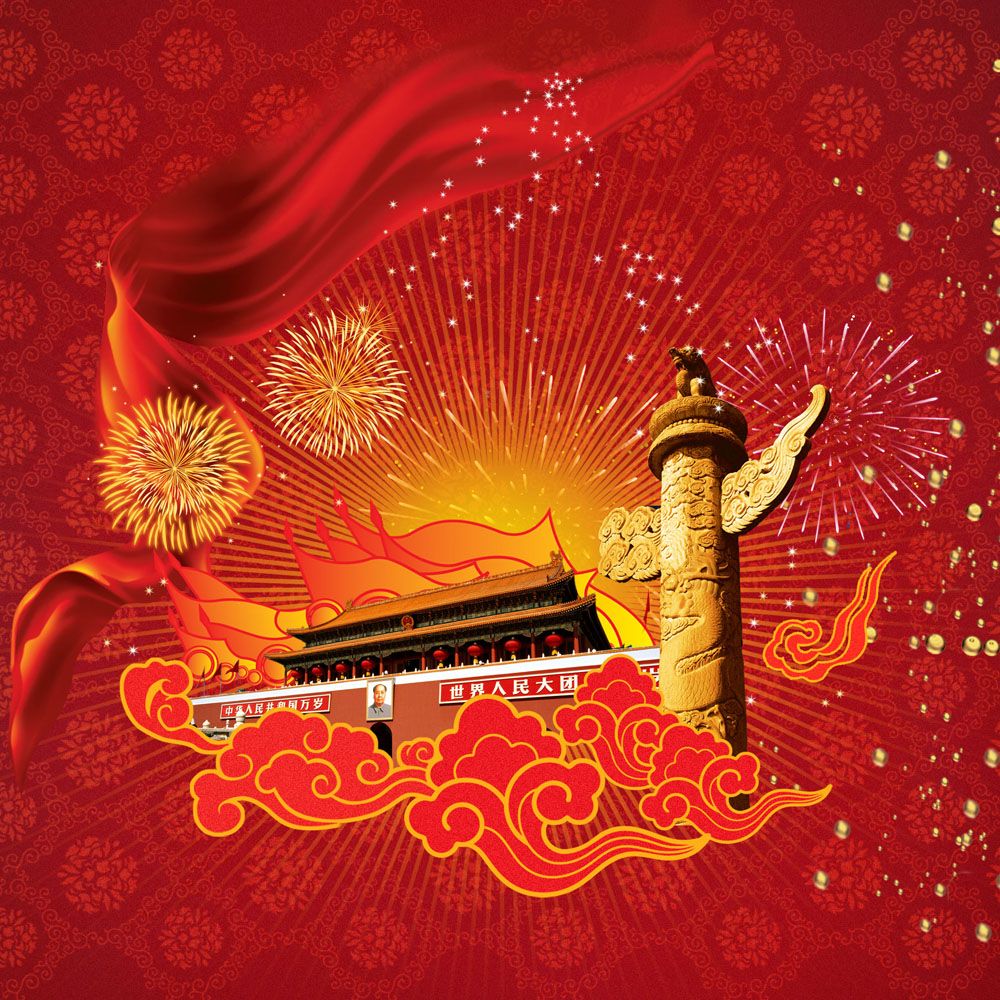
中华人民共和国国庆节,有时也简称作国庆节、国庆,是为纪念中华人民共和国成立而设立的节日,庆祝日期被定为每年的10月1日[注 1][1]。1949年10月1日,中华人民共和国的开国大典在北京天安门广场举行,中华人民共和国中央人民政府正式成立。该节日在中国内地及其领土港澳被订为法定假日或者公众假期,法定的国庆假日在中国大陆为10月1日至10月3日共3天,但根据当年国庆节是星期几进行调休。一般会通过将其他周的周末休息调整到3天法定假的前后,来和该周的周末相连,从而形成7天的小长假。如遇中秋节等其他法定节假日则用连休8天假;在香港,法定假日在1997年和1998年时曾为2天,后改为1天;在澳门为2天。
中国人民政治协商会议第一届全国委员会第一次会议于1949年10月9日在中南海勤政殿举行,全国政协委员马叙伦因病委托委员许广平向会议提出“请政府明定10月1日为中华人民共和国国庆日,以代替10月10日的旧国庆日”的建议案,会议决定送请中央人民政府采择施行[注 2]。
国庆节期间会举行各种纪念活动,纪念中华人民共和国的革命先烈。自2008年起,每逢国庆节,党和国家领导人都会向位于天安门广场的人民英雄纪念碑敬献花篮。世界多地华侨社区,也会举办庆典、巡游或升旗仪式等活动庆祝。
National Day (Chinese: 国庆节; pinyin: guóqìng jié; lit. 'national celebration day'), officially the National Day of the People's Republic of China (中华人民共和国国庆节), is a public holiday in China celebrated annually on 1 October as the national day of the People's Republic of China, commemorating the formal proclamation of the establishment of the People's Republic of China on 1 October 1949. The Chinese Communist Party victory in the Chinese Civil War resulted in the Kuomintang retreat to Taiwan and the Chinese Communist Revolution whereby the People's Republic of China replaced the Republic of China.[2][3]Although it is observed on 1 October, another six days are added to the official holiday, normally in lieu of the two weekend breaks around 1 October, making it a de facto public holiday comprising seven consecutive days also known as Golden Week (黄金周; huángjīn zhōu) with specifics regulated by the State Council.[4] Festivities and concerts are usually held nationwide on this day, with a grand military parade and mass pageant event held on select years.[A] The parade held on 1 October 2019 marked the 70th anniversary of the People's Republic of China.
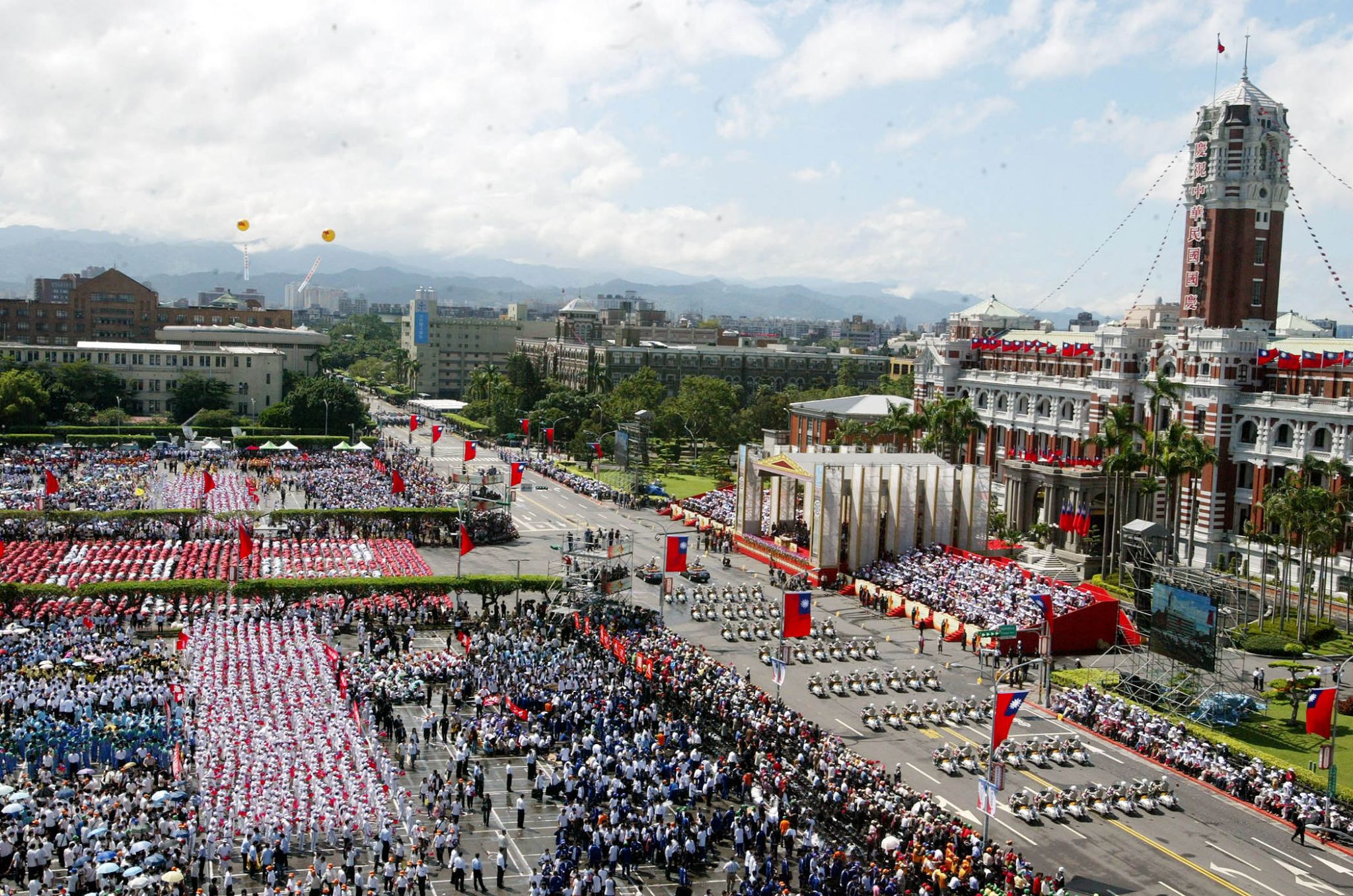
中华民国的国庆日[1][2],定为1911年武昌起义的发动日——10月10日。亦称双十节、双十国庆、双十庆典。武昌起义是辛亥革命的开端,起事后两个月内中国各地革命行动陆续成功,最终成功推翻清朝,并于1912年1月1日成立中华民国(中华民国开国纪念日),成为东亚第一个获普遍承认的民主国家。该日亦为中华民国的国定纪念日之一。
自从1949年中华民国政府迁台以来,每年皆举行庆典,在台北总统府前广场会举办升旗典礼以及国庆庆祝大会(全称“中华民国中枢暨各界庆祝国庆大会”),并有各式游行及表演队伍,在前中华民国总统蒋中正任内更是每年举行国庆阅兵;晚间则有中华民国国庆烟火施放表演。
The National Day of the Republic of China, also referred to as Double Ten Day or Double Tenth Day, is a public holiday on 10th of October, now held annually in Taiwan (officially the Republic of China, ROC). It was also celebrated during the ROC rule in mainland China before 1949, the date continues to be observed by the subsequent People's Republic of China (PRC) as the Anniversary of the Xinhai Revolution but not as a public holiday. It commemorates the start of the Wuchang Uprising on 10 October 1911 which ultimately led to the collapse of the imperial Qing dynasty and establishment of the Republic of China on 1 January 1912.[3]
Following the outcome of the Chinese Civil War, the ROC government lost control of mainland China to the Chinese Communist Party and retreated to the island of Taiwan in December 1949. The National Day is mainly celebrated in all ROC-controlled territories, but it is also celebrated by many overseas Chinese communities.
 Transport und Verkehr
Airbus A330
A330-300
Airbus A350
A350-1000
Airbus A350
A350-900
Boeing 747
747-400ERF
Boeing 747
747-8F
Boeing 777
777-200
Boeing 777
777-300
Boeing 777
777-300ER
Boeing 777
777-9
Cathay Pacific
China
Hongkong Tebiexingzhengqu-HK
Transport und Verkehr
Airbus A330
A330-300
Airbus A350
A350-1000
Airbus A350
A350-900
Boeing 747
747-400ERF
Boeing 747
747-8F
Boeing 777
777-200
Boeing 777
777-300
Boeing 777
777-300ER
Boeing 777
777-9
Cathay Pacific
China
Hongkong Tebiexingzhengqu-HK


 Luft- und Raumfahrt
Oneworld
Luft- und Raumfahrt
Oneworld
 Unternehmen
Festlandchina,Hongkong,Macau,Taiwan
Unternehmen
Festlandchina,Hongkong,Macau,Taiwan

Beijing Shi-BJ
China
 Finanz
*China-Konjunkturdaten
Finanz
***Wichtige Aufsichtsbehörden
Finanz
*China-Konjunkturdaten
Finanz
***Wichtige Aufsichtsbehörden
 Parteien und Regierung
*Regulierungsbehörde
Parteien und Regierung
Parteien und Regierung
*Regulierungsbehörde

机构职责
根据《国务院关于机构设置的通知》(国发〔2008〕11 号),设立国务院国有资产监督管理委员会(正部级),为国务院直属特设机构。国务院国有资产监督管理委员会党委履行党中央规定的职责。
(一)根据国务院授权,依照《中华人民共和国公司法》等法律和行政法规履行出资人职责,监管中央所属企业(不含金融类企业)的国有资产,加强国有资产的管理工作。
(二)承担监督所监管企业国有资产保值增值的责任。建立和完善国有资产保值增值指标体系,制订考核标准,通过统计、稽核对所监管企业国有资产的保值增值情况进行监管,负责所监管企业工资分配管理工作,制定所监管企业负责人收入分配政策并组织实施。
(三)指导推进国有企业改革和重组,推进国有企业的现代企业制度建设,完善公司治理结构,推动国有经济布局和结构的战略性调整。
(四)通过法定程序对所监管企业负责人进行任免、考核并根据其经营业绩进行奖惩,建立符合社会主义市场经济体制和现代企业制度要求的选人、用人机制,完善经营者激励和约束制度。
(五)负责组织所监管企业上交国有资本收益,参与制定国有资本经营预算有关管理制度和办法,按照有关规定负责国有资本经营预决算编制和执行等工作。
(六)按照出资人职责,负责督促检查所监管企业贯彻落实国家安全生产方针政策及有关法律法规、标准等工作。
(七)负责企业国有资产基础管理,起草国有资产管理的法律法规草案,制定有关规章、制度,依法对地方国有资产管理工作进行指导和监督。
(八)承办国务院交办的其他事项 。
内设机构
一、办公厅(党委办公厅)
负责委机关文电、会议、机要、督办、保密、信息、档案、信访、信息化、政务公开等工作;联系所监管企业维护稳定工作。
二、政策法规局
起草国有资产监督管理的法律法规草案,承担规章、规范性文件和政策性文稿的组织起草、审核协调工作;研究提出国有资产监管体制和制度改革完善的政策建议;承担委机关重大决策合法性审查工作;研究国有企业改革发展中的有关法律问题,指导推动所监管企业法治建设和法律顾问工作;负责政府间有关国有企业议题的对话和谈判等涉外政策法律工作;承办机关法律事务。
三、规划发展局
研究提出国有经济布局和结构战略性调整的政策建议;指导所监管企业布局和结构调整;审核所监管企业的发展战略和规划,对所监管企业重大投资进行监管;负责所监管企业国际化经营战略的牵头组织及境外投资管理工作。
四、财务监管局
承办所监管企业财务预决算工作;综合研究国有经济和所监管企业的运行状况;组织开展所监管企业负责人离任和任期经济责任审计工作;承担所监管企业清产核资和资产损失核销工作;指导所监管企业风险管控;督促委派总会计师报告企业重要经营事项和重大风险,研究提出处理意见建议;承担企业国有资产统计分析工作。
五、产权管理局
研究提出完善国有产权管理的意见,拟订企业国有产权管理的规章制度和管理办法;承担所监管企业产权登记、转让、划转、处置等工作;承担所监管企业资产评估项目的核准和备案工作;审核所监管企业的资本金变动、股权管理及发债方案;监督、规范企业国有产权交易。
六、企业改革局
研究提出国有企业改革的政策建议;指导国有企业的现代企业制度建设和董事会建设工作;拟订所监管企业合并、股份制改造、上市、合资等重组方案;承办所出资的国有独资公司章程的审核工作;指导推进国有企业剥离办社会职能和解决历史遗留问题,配合有关部门做好下岗职工的安置工作。
七、考核分配局
健全企业国际对标、行业对标体系,分类完善所监管企业负责人经营业绩考核制度;对所监管企业负责人进行年度和任期考核;根据考核结果,调控所监管企业工资分配总体水平,提出企业负责人薪酬制度和激励办法并组织实施;规范所监管企业负责人履职待遇、业务支出和职工福利保障;提出国有企业收入分配制度改革的指导意见。
八、资本运营与收益管理局
研究建立国有资本运作制度,组织指导国有资本投资、运营公司开展国有资本运营,推动国有资本保值增值;指导所监管企业对所从事的金融业务加强管理与服务;组织指导有关投资基金的设立和运作;归口管理国资委履行多元投资主体企业股东职责有关工作;组织所监管企业上交国有资本收益;承担拟订国有资本经营预算有关制度的工作;承办国有资本预决算编制、执行的有关工作。
九、综合局
综合归口指导监督地方国有资产监管工作,指导协调所监管企业与地方加强合作;研究提出推动所监管企业实施科技创新战略的政策建议,指导所监管企业科技创新和信息化建设;指导所监管企业做好安全生产、节能减排、环境保护、履行社会责任以及援疆援藏援青等工作。
十、监督二局
十一、监督三局
以上两局的职能为:负责有关监督成果在委内厅局和所监管企业的利用工作,分类处置、督办和深入核查监督检查发现移交的问题,对共性问题组织开展专项核查,组织开展国有资产重大损失调查,提出有关责任追究的意见建议。
十二、企业领导人员管理一局
十三、企业领导人员管理二局
以上两局的职能为:研究制定加强国有企业领导班子建设的有关政策;按照管理权限,负责所监管企业领导班子建设和领导人员管理工作;负责指导所监管企业人才工作和教育培训工作。
十四、党建工作局(党委组织部、党委统战部)
指导所监管企业党的建设工作,研究提出加强和改进企业党建工作的意见和建议;负责所监管企业党的组织建设和党员教育、管理工作;负责指导所监管企业的党风廉政建设和反腐败工作;协调所监管企业的工会、青年、妇女工作,承担中央企业团工委的日常工作;指导所监管企业的统战和党外知识分子工作。
十五、宣传工作局(党委宣传部)
负责所监管企业党的思想建设、精神文明建设和宣传工作;指导和推进所监管企业思想政治工作和企业文化建设工作;负责国资委对外宣传和新闻工作。
十六、研究局
组织开展国有企业改革发展、国有资产监管重大理论问题的研究工作;起草重要文件和报告。
十七、国际合作局
承担委机关和直属单位的外事工作,开展国际交流与合作;负责所监管企业国际化经营的外事事务,配合做好境外突发事件和危机处理工作。
十八、人事局
按照管理权限,负责委机关和直属单位的人事管理工作。
十九、行业协会商会党建工作局(行业协会商会工作局)
指导行业协会商会党建工作,研究制定有关规划、制度和措施;审核行业协会商会负责人人选;指导行业协会商会党组织做好外事相关工作;承担向行业协会商会委派和管理监事工作。
二十、机关服务管理局(离退休干部管理局)
负责所属离退休干部工作机构、机关服务中心的各项管理工作;负责委机关和所属单位的国有资产、财务等行政管理工作;负责指导、监管所联系协会的国有资产和财务工作。
二十一、机关党委
负责委机关和在京直属单位的党群工作。
二十二、党委巡视工作办公室
负责组织开展对国资委党委任免主要负责人的中央企业、国资委直属单位、具有党组织隶属关系的行业协会开展巡视监督;加强对中央企业开展内部巡视的领导和指导 。
二十三、科技创新局
二十四、社会责任局
 Wirtschaft und Handel
 China
Gansu Sheng-GS
China
Gansu Sheng-GS
 Mongolei
Nei Mongol Zizhiqu-NM
Qinghai Sheng-QH
Sichuan Sheng-SC
Yunnan Sheng-YN
Mongolei
Nei Mongol Zizhiqu-NM
Qinghai Sheng-QH
Sichuan Sheng-SC
Yunnan Sheng-YN

Die Khata, auch Khatag, Katakh, Khatak, Khadag, Haddak oder chinesisch Hada (哈达) ist ein traditioneller Begrüßungsschal, der in Tibet meist aus weißer Seide[1] – als Symbol für das reine Herz des Überreichenden – und in der Mongolei in hellem Blau – das den Himmel symbolisiert – angefertigt wird.
Er steht für Glück, Wohlwollen und Mitgefühl.
 Musik
Musik