漢德百科全書 | 汉德百科全书
 FIFA Fussball-Weltmeisterschaft 2026
 Alex Ferguson
FIFA Fussball-Weltmeisterschaft 2026
FIFA Fussball-Weltmeisterschaft 2026
Alex Ferguson
FIFA Fussball-Weltmeisterschaft 2026
FIFA Fussball-Weltmeisterschaft 2026
 Group C
UEFA European Championship 2020
Group I
Group C
UEFA European Championship 2020
Group I
 UEFA European Championship 2024
Schottland
UEFA European Championship 2024
Schottland
 Sport
(F)UEFA Nations League
UEFA Nations League
UEFA Nations League C - Group 1
United Kingdom
Sport
(F)UEFA Nations League
UEFA Nations League
UEFA Nations League C - Group 1
United Kingdom

 FIFA Fussball-Weltmeisterschaft 2018
Group G
FIFA Fussball-Weltmeisterschaft 2018
Group G
 FIFA Fussball-Weltmeisterschaft 2022
Group D
FIFA Fussball-Weltmeisterschaft 2026
FIFA Fussball-Weltmeisterschaft 2026
Group F
Sport
(F)African Cup of Nations
Tunisia
FIFA Fussball-Weltmeisterschaft 2022
FIFA Fussball-Weltmeisterschaft 2022
Group D
FIFA Fussball-Weltmeisterschaft 2026
FIFA Fussball-Weltmeisterschaft 2026
Group F
Sport
(F)African Cup of Nations
Tunisia

 British Columbia-BC
FIFA Fussball-Weltmeisterschaft 2026
Women's Soccer World Cup 2015
British Columbia-BC
FIFA Fussball-Weltmeisterschaft 2026
Women's Soccer World Cup 2015
 Geography
*World's Most Livable Cities
ITU World Championship Series
Canada
Winter Olympics
Geography
Geography
*World's Most Livable Cities
ITU World Championship Series
Canada
Winter Olympics
 Ski vacation
Sport
Triathlon
Ski vacation
Sport
Triathlon
 Important port
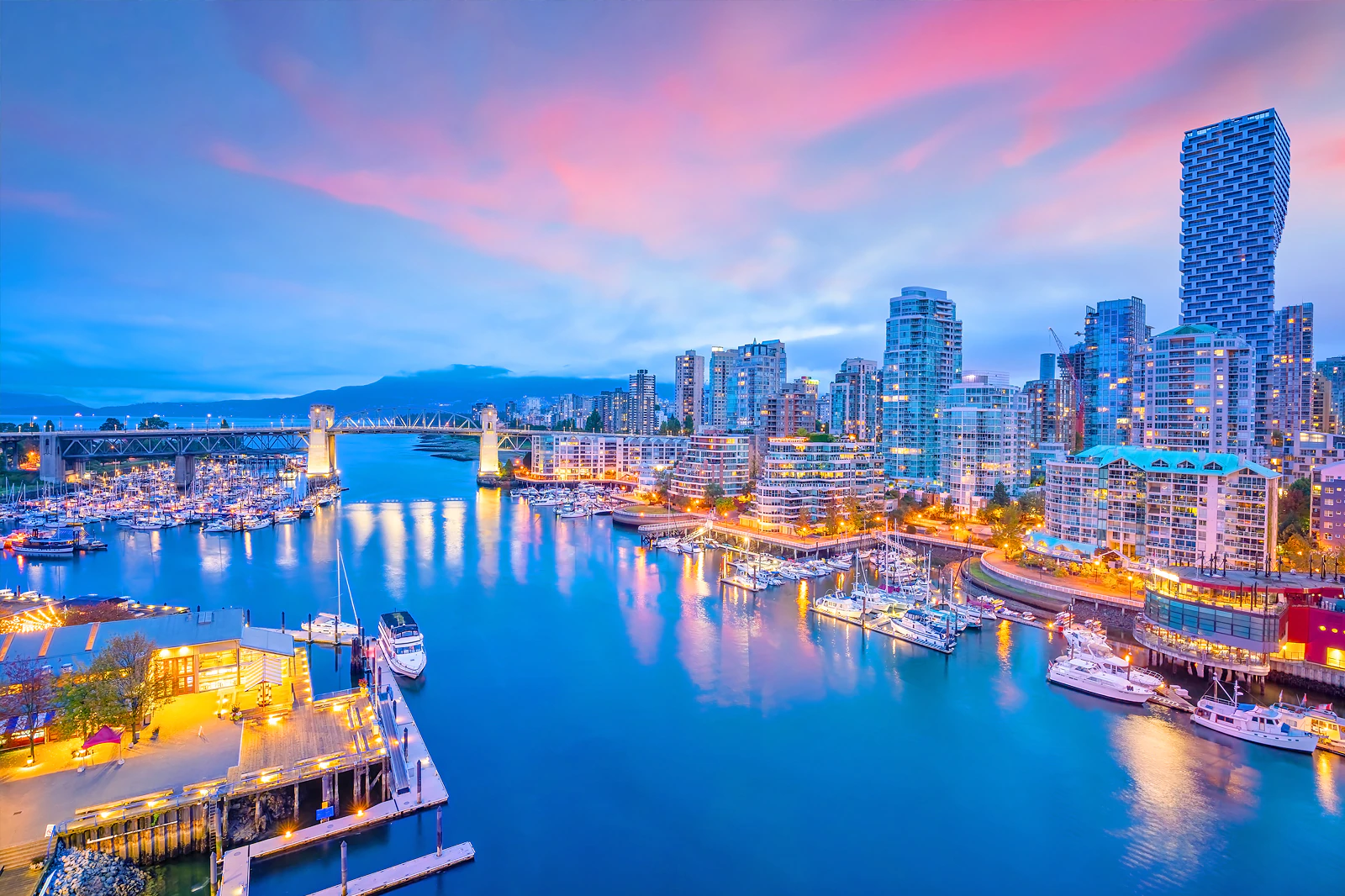
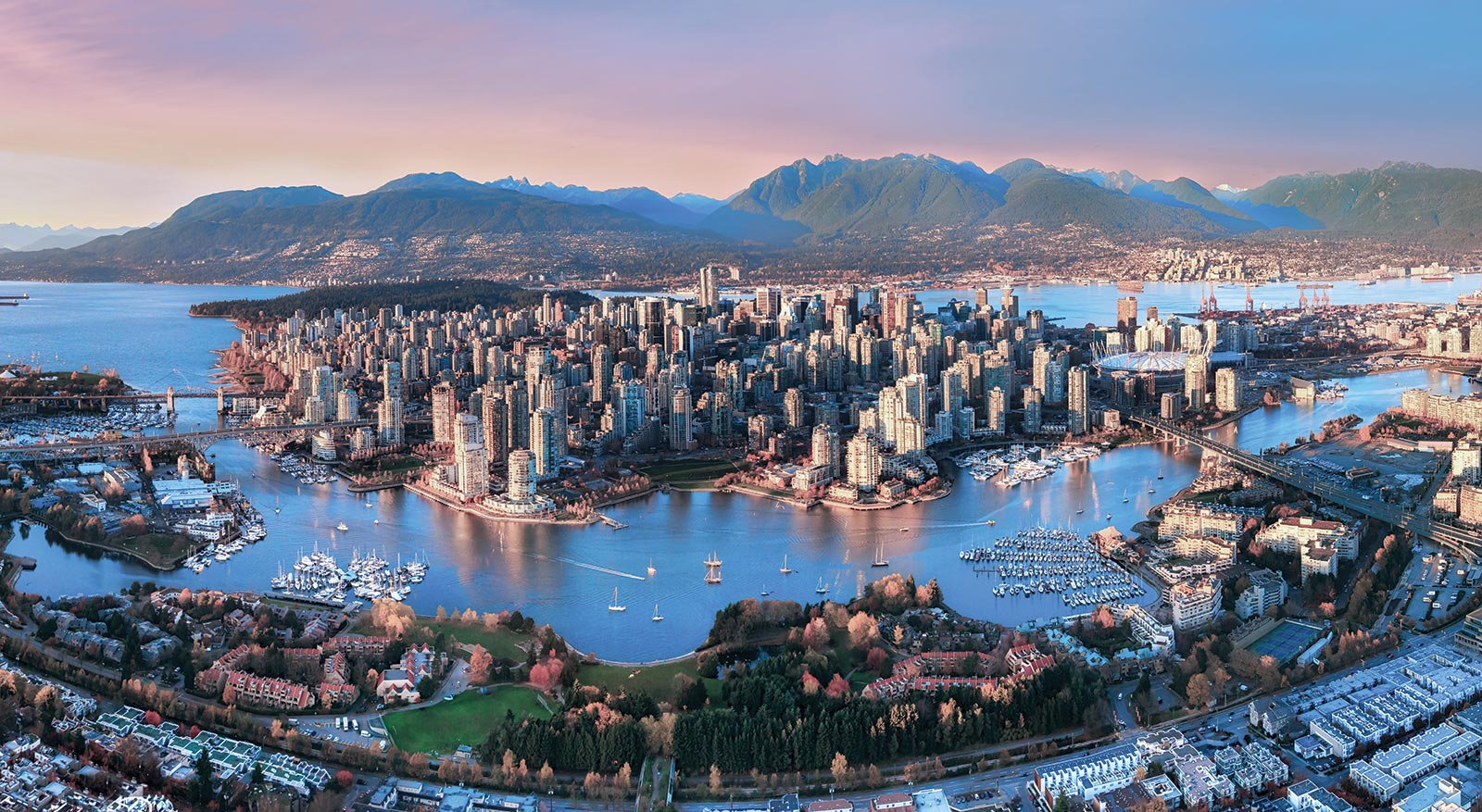
Vancouver (englische Aussprache [væŋˈkuːvɚ] oder [vænˈkuːvɚ]) ist eine Stadt im Südwesten von British Columbia an der Westküste Kanadas. Sie liegt zwischen der Straße von Georgia und den Coast Mountains, rund 45 Kilometer nordwestlich der Grenze zu den USA. Die Stadt gehört zum Regionaldistrikt Metro Vancouver, der mit 2.463.431 Einwohnern[1] die größte Metropolregion Westkanadas und nach Toronto und Montreal die drittgrößte des Landes bildet. Die Bevölkerungszahl der eigentlichen Stadt Vancouver beträgt 631.486.[2] Benannt ist die Stadt nach dem britischen Kapitän George Vancouver, der die Region Ende des 18. Jahrhunderts erforschte und vermaß. Der Name Vancouver selbst stammt vom niederländischen „van Coevorden“, abgeleitet von der Stadt Coevorden.
Die Stadt entstand in den 1860er Jahren als Folge der Einwanderungswelle während des Fraser-Canyon-Goldrauschs und entwickelte sich nach der Eröffnung der transkontinentalen Eisenbahn im Jahr 1887 innerhalb weniger Jahrzehnte von einer kleinen Sägewerkssiedlung zu einer Metropole. Die Wirtschaft basierte zu Beginn auf der Ausbeutung der natürlichen Ressourcen von British Columbia: Forstwirtschaft, Bergbau, Fischerei und Landwirtschaft. Der Hafen Vancouver erlangte nach der Eröffnung des Panamakanals internationale Bedeutung. Er ist heute der größte in Kanada und exportiert mehr Güter als jeder andere Hafen in Nordamerika.
Vancouver wandelte sich mit der Zeit zu einem Dienstleistungszentrum und (insbesondere nach der Weltausstellung Expo 86) zu einem Reiseziel für Touristen. Die Stadt ist darüber hinaus hinter Los Angeles und New York der drittwichtigste Standort der nordamerikanischen Filmindustrie und wird daher auch als „Hollywood North“ bezeichnet. Die Finanzwirtschaft spielt ebenfalls eine bedeutende Rolle. In einer Rangliste der wichtigsten Finanzzentren weltweit belegt Vancouver den 15. Platz (Stand: 2018).[3]
Vancouver veranstaltete vom 12. bis 28. Februar 2010 die XXI. Olympischen Winterspiele. Einige Wettbewerbe der Spiele fanden im 125 Kilometer von Vancouver entfernten Whistler statt. Nach Montreal im Jahr 1976 und Calgary im Jahr 1988 war Vancouver die dritte kanadische Stadt, die Olympische Spiele veranstaltet hat.
一般所说的”温哥华”泛指”大温地区”(请参考温哥华概况介绍)。温哥华市中心位于一个半岛上,主要分成几块区域:西尾区与水滨(West End & Waterfront)、耶鲁镇(Yaletown)、盖士镇与华埠(Gastown & Chinatown)。市中心往南的温哥华市以Carrall街与Ontario街分成温西(West Side)与温东(East Side)。外地人常把温西与西温哥华(West Vancouver)搞混,后者是温哥华北岸的一个城市,从温哥华市中心向北跨越狮门大桥(Lions Gate Bridge)即可抵达。
西尾区(West End)在市中心西端,北与史丹利公园、南与市中心商业区紧邻,是由整片新兴的高级住宅大楼与罗布森街(Robson Street)购物区、各国风味餐厅、海滩、游艇码头等所组成的热闹区域。到温哥华旅游如果不自行开车,在西尾区住宿是明智选择。
耶鲁镇(Yaletown)是位于市中心东缘的新兴小区,这里有许多杂错的红砖仓库改建成精致典雅的新购物娱乐区与艺术家工作室。一栋栋平房红砖墙的建筑 及巷道上的石板路,将素有“Funky Town"之称的耶鲁镇特色表露无遗。耶鲁镇有电影制片公司、美发沙龙、室内设计工作室、小型设计师家具店、古董店、精品服饰店,加上各种特色美食与露天 咖啡座、小酒馆,让耶鲁镇的雅痞色彩十足,成为温哥华时尚一族抢着进驻的地区。
盖士镇(Gastown)是温哥华的发源地,是个以2条横街和3条直街组成的三角地带。卑诗省政府将盖士镇规划程成为独特的观光区与历史维护区。如今这里 保存完好的19世纪初维多利亚式建筑、铺满圆石的悠长街道、别致的露天咖啡屋,复古的路灯及一座座低矮的历史建筑,行走其间宛如时空错置。也是游客来温哥 华必至之处。(Quelle:http://www.usatrip.cn/jdjs/jdjs_Vancouver.asp)
温哥华市(City of Vancouver)是加拿大不列颠哥伦比亚省低陆平原地区一沿岸城市。根据2016年加拿大统计局人口普查,温哥华市人口有631,486人,而大温哥华地区的人口为246万,[1]是不列颠哥伦比亚省以至加拿大西部最大的都会区,以及全国第三大都会区;市内人口则在全国排行第八。[2][3]
温哥华以英国航海家乔治·温哥华命名,欧洲人抵达温哥华一带后,区内经济早期主要依赖于林木业。加拿大太平洋铁路于1887年延至温哥华后,温哥华成为北美西岸水陆路交通的主要枢纽之一,更构成远东地区、加拿大东部和英国之间贸易往来的重要一环。[4][5]温哥华港现时是加拿大最大和最繁忙的港口,以货物总吨数计也是北美第四大港口。[6]此外,温哥华的自然环境深受游客欢迎,令旅游业成为市内第二大经济支柱。[7]温哥华也是北美第三大制片中心,有“北方好莱坞”之称。[8][9]也是20世纪后,与美国旧金山同为华人在北美最集中的地区。
温哥华近年经常在各项世界最佳居住城市的调查中名列前茅。[10][11]温哥华亦曾于2010年与125公里以外的惠斯勒联手举办冬季奥运会和冬季残奥会。[12]此外温哥华还曾举办2015年女子世界杯足球赛,决赛场地即设在不列颠哥伦比亚体育馆。
バンクーバー(英語: Vancouver)は、カナダ連邦ブリティッシュコロンビア州南西部にある都市。同州最大の都市である。ヴァンクーヴァーと表記されることもある[3]。
バンクーバーを中心とする都市圏人口は210万人とカナダ国内第3位の都市圏を形成している[4]。バンクーバー市のみの人口では同国内で第8位の約64万人[5]である。民族や言語が多様で、人口のおよそ52%は第一言語が同州の公用語にあたる英語ではない[6]。北米有数の世界都市であり、2016年に発表された「世界の都市総合力ランキング」では、世界28位と評価された[7]。
1867年に製材所ができ、これらを中心とする入植地であったギャスタウンは発展を続け、グランビルとして町は拡大した。東カナダから続く鉄道の終着駅が町まで敷かれることになった1886年に町はバンクーバーとして改名され市政となる。
林業が同市最大の産業で、都市部ながら自然に囲まれた都市として知られていることから、観光業が発達しており、同市第2の産業となっている[8]。同市にあるメトロバンクーバー港は同国最大の港であり、北米においても積載量で第4位の規模を持つ[9]。同市および隣のバーナビー市には、主要な各映画製作会社が拠点を置いており、ロサンゼルス、ニューヨークに続く北米第3位の規模となる映画製作拠点となっている。このため、通称ハリウッドノースとも呼ばれる[10][11]。国際会議や国際競技が数多く開催されており、2010年には第21回冬季オリンピック(バンクーバーオリンピック)が開催された。
Vancouver (/vænˈkuːvər/ ( listen)) is a coastal seaport city in western Canada, located in the Lower Mainland region of British Columbia. As the most populous city in the province, the 2016 census recorded 631,486 people in the city, up from 603,502 in 2011. The Greater Vancouver area had a population of 2,463,431 in 2016, making it the third-largest metropolitan area in Canada. Vancouver has the highest population density in Canada with over 5,400 people per square kilometre,[5][6] which makes it the fifth-most densely populated city with over 250,000 residents in North America behind New York City, Guadalajara, San Francisco,[7] and Mexico City according to the 2011 census. Vancouver is one of the most ethnically and linguistically diverse cities in Canada according to that census; 52% of its residents have a first language other than English.[8][9] Roughly 30% of the city's inhabitants are of Chinese heritage.[10] Vancouver is classed as a Beta global city.
Vancouver is consistently named as one of the top five worldwide cities for livability and quality of life,[11][12] and the Economist Intelligence Unit acknowledged it as the first city ranked among the top-ten of the world's most well-living cities[13] for five consecutive years.[14] Vancouver has hosted many international conferences and events, including the 1954 British Empire and Commonwealth Games, UN Habitat I, Expo 86, the World Police and Fire Games in 1989 and 2009; and the 2010 Winter Olympics and Paralympics which were held in Vancouver and Whistler, a resort community 125 km (78 mi) north of the city.[15] In 2014, following thirty years in California, the TED conference made Vancouver its indefinite home. Several matches of the 2015 FIFA Women's World Cup were played in Vancouver, including the final at BC Place.[16]
The original settlement, named Gastown, grew up on clearcuts on the west edge of the Hastings Mill logging sawmill's property, where a makeshift tavern had been set up on a plank between two stumps and the proprietor, Gassy Jack, persuaded the curious millworkers to build him a tavern, on July 1, 1867. From that first enterprise, other stores and some hotels quickly appeared along the waterfront to the west. Gastown became formally laid out as a registered townsite dubbed Granville, B.I. ("B.I" standing for "Burrard Inlet"). As part of the land and political deal whereby the area of the townsite was made the railhead of the Canadian Pacific Railway (CPR), it was renamed "Vancouver" and incorporated shortly thereafter as a city, in 1886. By 1887, the Canadian Pacific transcontinental railway was extended westward to the city to take advantage of its large natural seaport to the Pacific Ocean, which soon became a vital link in a trade route between the Orient / East Asia, Eastern Canada, and Europe.[17][18] As of 2014, Port Metro Vancouver is the third-largest port by tonnage in the Americas (recently displacing New York City), 27th in the world,[19] the busiest and largest in Canada, and the most diversified port in North America.[20] While forestry remains its largest industry, Vancouver is well known as an urban centre surrounded by nature, making tourism its second-largest industry.[21]
Major film production studios in Vancouver and nearby Burnaby have turned Greater Vancouver and nearby areas into one of the largest film production centres in North America,[22][23] earning it the nickname "Hollywood North".[24][25][26]
Vancouver /vãkuvaɛ̯ʁ/a Écouter ou /vɑ̃kuvɛʁ/b (en anglais : /væŋˈkuvɚ/c Écouter) est une cité1 portuaire du pourtour du Pacifique située dans les basses-terres continentales de la province de Colombie-Britannique, au Canada. Avec 631 486 habitants selon le recensement du Canada de 2016, elle est la huitième plus grande municipalité canadienne3. Son agglomération de 2 463 431 est la troisième aire urbaine du pays, et la plus peuplée de l'Ouest canadien. Vancouver est une des villes les plus cosmopolites du Canada, 52 % des résidents ont une autre langue maternelle que l'anglais4. Vancouver est considérée comme une ville mondiale de classe beta. La superficie de Vancouver est de 114,97 km2, donnant une densité de population de 5 493 au kilomètre carré, faisant d'elle la municipalité canadienne la plus densément peuplée et la quatrième en Amérique du Nord, après New York, San Francisco et Mexico5. Elle est la vingt-troisième ville la plus peuplée d'Amérique du Nord6.
Le premier établissement, nommé Gastown, s'est développé autour d'une scierie appelé Hastings Mills, en 1867. Le site fut renommé Vancouver et incorporé comme cité en 1886. En 1887, le chemin de fer transcontinental a été étendu jusqu'à elle pour profiter de son grand port naturel, qui est rapidement devenu un maillon essentiel d'une route commerciale entre la côte est du Canada, l'Orient et l'Europe7,8. En 2009, Port Metro Vancouver est le port le plus grand et le plus achalandé du Canada, et le plus diversifié d'Amérique du Nord9. Même si l'exploitation forestière demeure sa plus grande industrie, Vancouver est réputée pour être un centre urbain entouré par la nature, faisant du tourisme sa deuxième industrie10. Les studios de production cinématographique de Vancouver et de Burnaby ont fait de la métropole l'un des plus grands centres cinématographiques en Amérique du Nord11,12, ce qui lui a valu le surnom de Hollywood North13,14,15.
Vancouver est régulièrement citée comme l'une des cinq meilleures villes au monde pour sa qualité de vie16,17, et l'Economist Intelligence Unit l'a classée parmi les dix villes les plus agréables durant cinq années consécutives18,19. Vancouver fut l'hôte de nombreux évènements internationaux, comme les Jeux de l'Empire britannique et du Commonwealth de 1954, la conférence Habitat I par l'Organisation des Nations unies en 1976, l'Exposition internationale de 1986 et les Jeux olympiques d'hiver de 201020. En 2015, elle a accueilli la finale de la Coupe du monde féminine de football21. La ville accueillera en 2018 le Congrès ornithologique international.
Vancouver (AFI: [vanˈkuver][1]) è una città canadese, sulla costa Pacifica della provincia canadese della Columbia Britannica (British Columbia). È situata nella parte meridionale della provincia e rappresenta uno dei maggiori porti dell'Oceano Pacifico. È delimitata dallo Stretto di Georgia (Georgia Strait), dal fiume Fraser, e dalla catena montuosa delle Montagne Costiere. Il nome è in onore del capitano George Vancouver, esploratore britannico.
La popolazione della città è di 603 502 abitanti, mentre l'area urbana ne conta 2 135 201. Vancouver fa parte della regione metropolitana, conosciuta come la "Greater Vancouver Regional District" (GVRD) o Metro Vancouver, nella quale vivono 2 463 700 (stima del 2012)[2]. Questo la rende la più grande area metropolitana nel Canada occidentale, e la terza più grande nel paese. Come in buona parte del Canada, anche Vancouver etnicamente è molto diversificata, basti pensare che il 52% dei residenti[3][4] della città e il 43% dell'area metropolitana hanno come prima lingua un idioma diverso dall'inglese[5].
La popolazione metropolitana è proiettata a raggiungere i 3 milioni di abitanti entro il 2021[6]. La densità di popolazione è tra le più alte del Nord America, e la pone al quarto posto dopo New York, San Francisco e Città del Messico. Il trend porta a stimare che possa raggiungere il secondo posto entro il 2021[7].
L'economia di Vancouver ha tradizionalmente fatto leva sulle risorse della Columbia Britannica: forestali, minerarie, pesca e agricoltura. Ma tuttavia è andata diversificandosi nel tempo, ed oggi Vancouver ha un'importante e vitale industria nel settore dei servizi e del turismo. La città è diventata il terzo più grande polo di produzione cinematografico del Nord America dopo Los Angeles e New York, tanto da guadagnarsi il soprannome di Hollywood del Nord[8][9][10]. Vancouver ha avuto un'espansione nell'industria dell'high-tech, in particolare nello sviluppo dei videogiochi.
Vancouver è costantemente classificata fra le prime tre città più vivibili del mondo[11][12][13]. Secondo il rapporto 2010 della Mercer Human Resource Consulting, ad esempio, Vancouver è considerata la prima città al mondo per qualità della vita. Nel 2007 Vancouver era la seconda città più cara del Canada dopo Toronto e la 89ª a livello globale.
Nel 2010 Vancouver, insieme a Whistler, situata 125 km a nord della città, ha ospitato i Giochi olimpici invernali e i Giochi Paralimpici invernali.
Vancouver (en inglés: /væŋ'ku:vɚ/ (?·i), en español /baŋ'kuβ̞eɾ/) es una ciudad de la costa pacífica de Canadá, ubicada en el suroeste de la provincia de Columbia Británica, entre el estrecho de Georgia y las Montañas Costeras. La ciudad fue llamada así en honor del capitán George Vancouver, un explorador inglés.
Es parte del área metropolitana del Distrito Regional del Gran Vancouver, el cual, con una población de 2 313 328 habitantes (2011),1 constituye el área metropolitana más grande del oeste canadiense y la tercera en el país después de Toronto y Montreal.2 Vancouver en sí mismo cuenta con 603 502 habitantes.1 El gentilicio utilizado para referirse a los residentes de Vancouver es vancuverita o vancouverense,3 (en inglés Vancouverite).
Vancouver, en los últimos años, siempre ha sido considerada como una de las cinco ciudades con mejor calidad de vida en el mundo.4567 En 2013, obtuvo el puesto 21º entre las ciudades en que es más caro vivir y resultó ser la más cara de Norteamérica. 8 También es una de las ciudades más seguras del mundo, debido a sus bajísimas tasas de criminalidad.
Los Juegos Olímpicos y Paralímpicos de invierno de 2010 se llevaron a cabo en Vancouver y en la cercana localidad de Whistler.91011
Ванку́вер (англ. Vancouver) — город на западе Канады, крупнейший населённый пункт провинции Британская Колумбия и третий по величине в Канаде. В 2010 году в Ванкувере проводились XXI зимние Олимпийские игры. Исследовательская группа Economist Intelligence Unit (EIU) британского издания The Economist трижды — в 2005, 2007, 2009 годах — присваивала Ванкуверу звание «лучшего города Земли»[2][3][4].
Население самого города — 631 486 чел. (на 2016 год). В агломерации Большой Ванкувер (англ.)русск. проживает свыше 2 463 431 чел. (на 2016 год) — это третья по величине агломерация в Канаде. Ванкувер является наиболее этнически и лингвистически разнообразным городом страны — 52 % его жителей считают своим родным языком не английский[5].

 FIFA Fussball-Weltmeisterschaft 2014
FIFA Fussball-Weltmeisterschaft 2018
Group A
FIFA Fussball-Weltmeisterschaft 2022
FIFA Fussball-Weltmeisterschaft 2022
Group H
FIFA Fussball-Weltmeisterschaft 2026
FIFA Fussball-Weltmeisterschaft 2026
Group H
FIFA-Konföderationen-Pokal 2013
Sport
(F)Copa América
Sport
(F)FIFA Confederations Cup
Sport
(F)Soccer at the Olympic Games
Uruguay
FIFA Fussball-Weltmeisterschaft 2014
FIFA Fussball-Weltmeisterschaft 2018
Group A
FIFA Fussball-Weltmeisterschaft 2022
FIFA Fussball-Weltmeisterschaft 2022
Group H
FIFA Fussball-Weltmeisterschaft 2026
FIFA Fussball-Weltmeisterschaft 2026
Group H
FIFA-Konföderationen-Pokal 2013
Sport
(F)Copa América
Sport
(F)FIFA Confederations Cup
Sport
(F)Soccer at the Olympic Games
Uruguay


FIFA Fussball-Weltmeisterschaft 2014
FIFA Fussball-Weltmeisterschaft 2018
Group B
FIFA Fussball-Weltmeisterschaft 2022
FIFA Fussball-Weltmeisterschaft 2022
Group E
FIFA Fussball-Weltmeisterschaft 2026
FIFA Fussball-Weltmeisterschaft 2026
Group H
FIFA Weltmeister Favoriten Teams *
FIFA-Konföderationen-Pokal 2013
UEFA European Championship 2016
UEFA European Championship 2020
Group F
UEFA European Championship 2024
Luis Aragonés
Pep Guardiola
Spain
Sport
(F)European football championship
Sport
(F)FIFA Confederations Cup
Sport
(F)UEFA Nations League
Sport
(F)Soccer at the Olympic Games
UEFA Nations League
UEFA Nations League A - Group 4
Vicente del Bosque



FIFA Fussball-Weltmeisterschaft 2026
FIFA Club World Cup 2025
United States
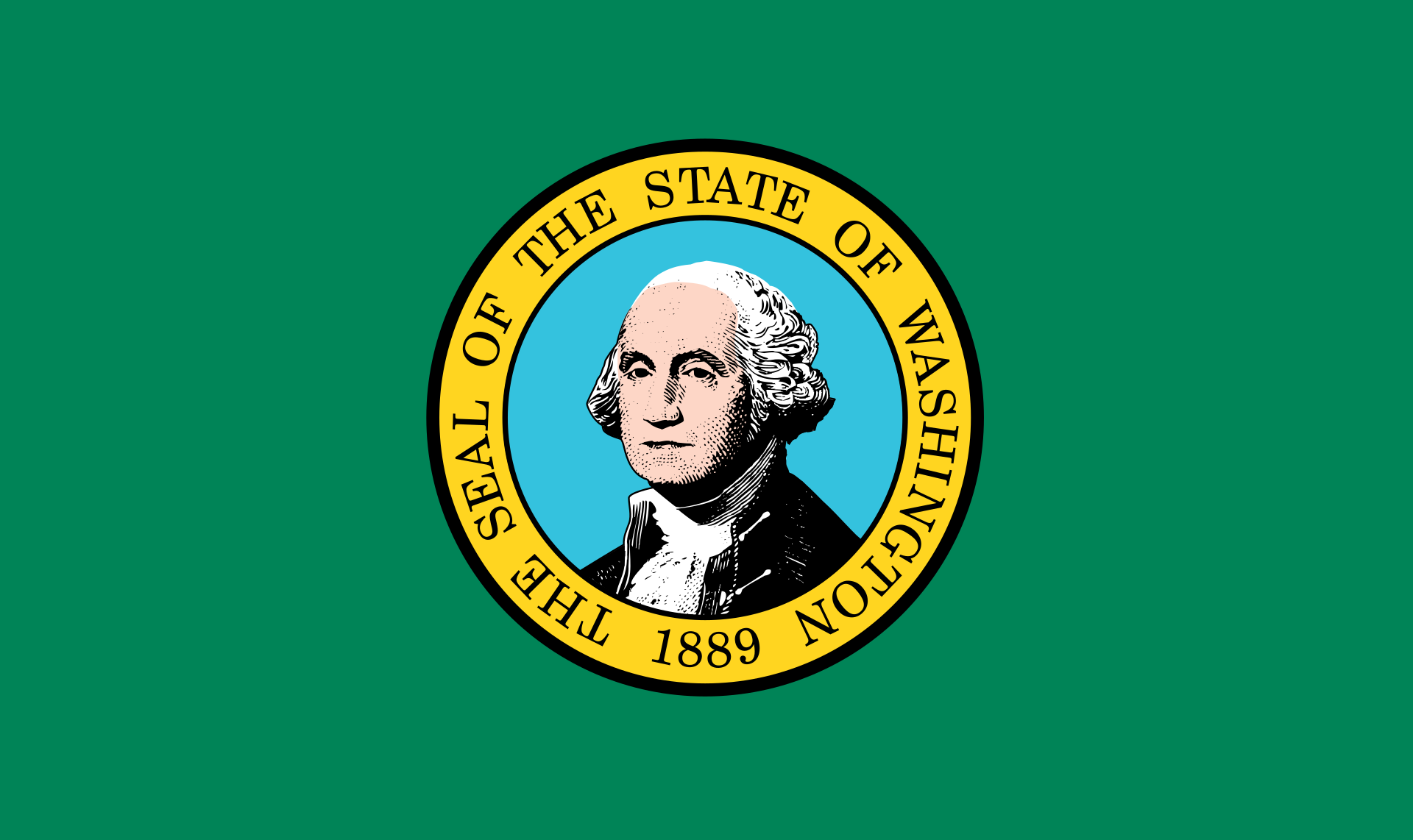 Washington-WA
Important port
Washington-WA
Important port
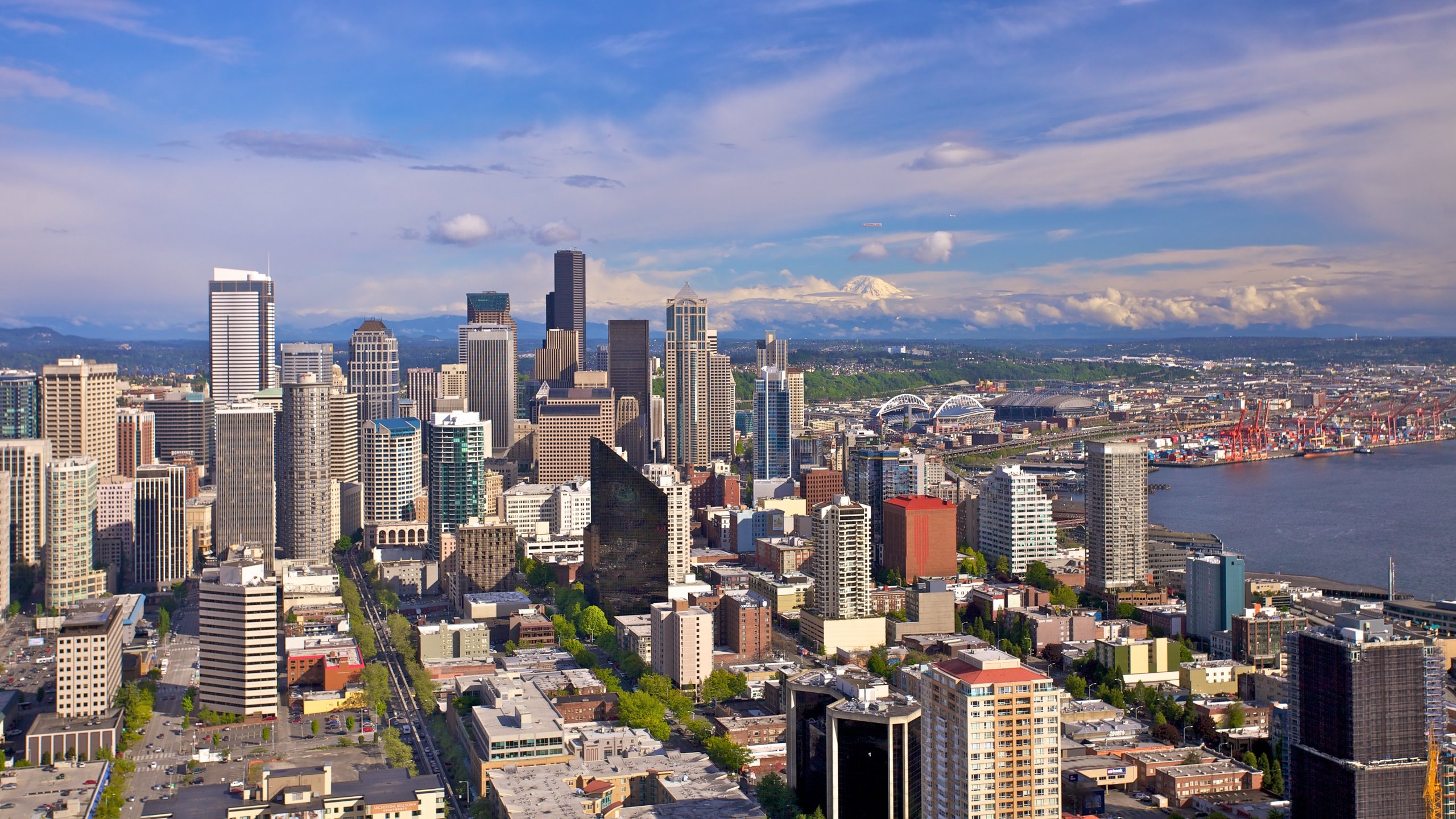
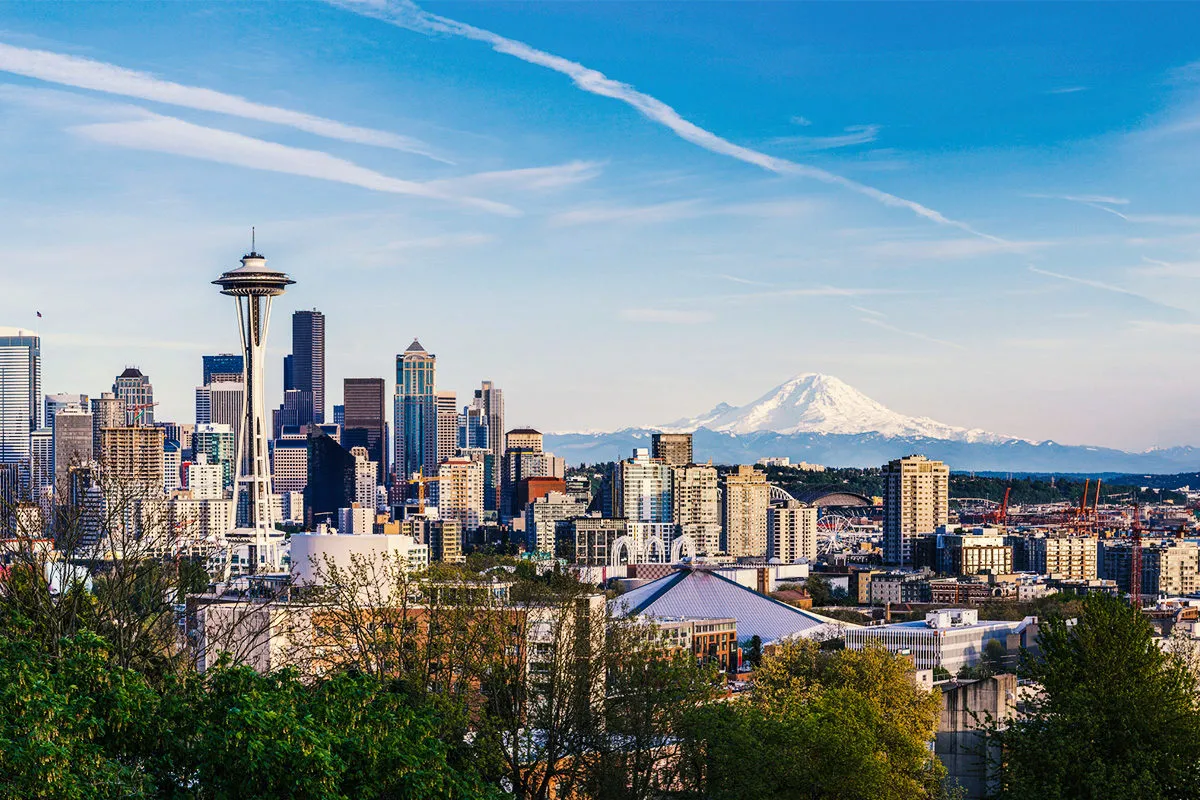
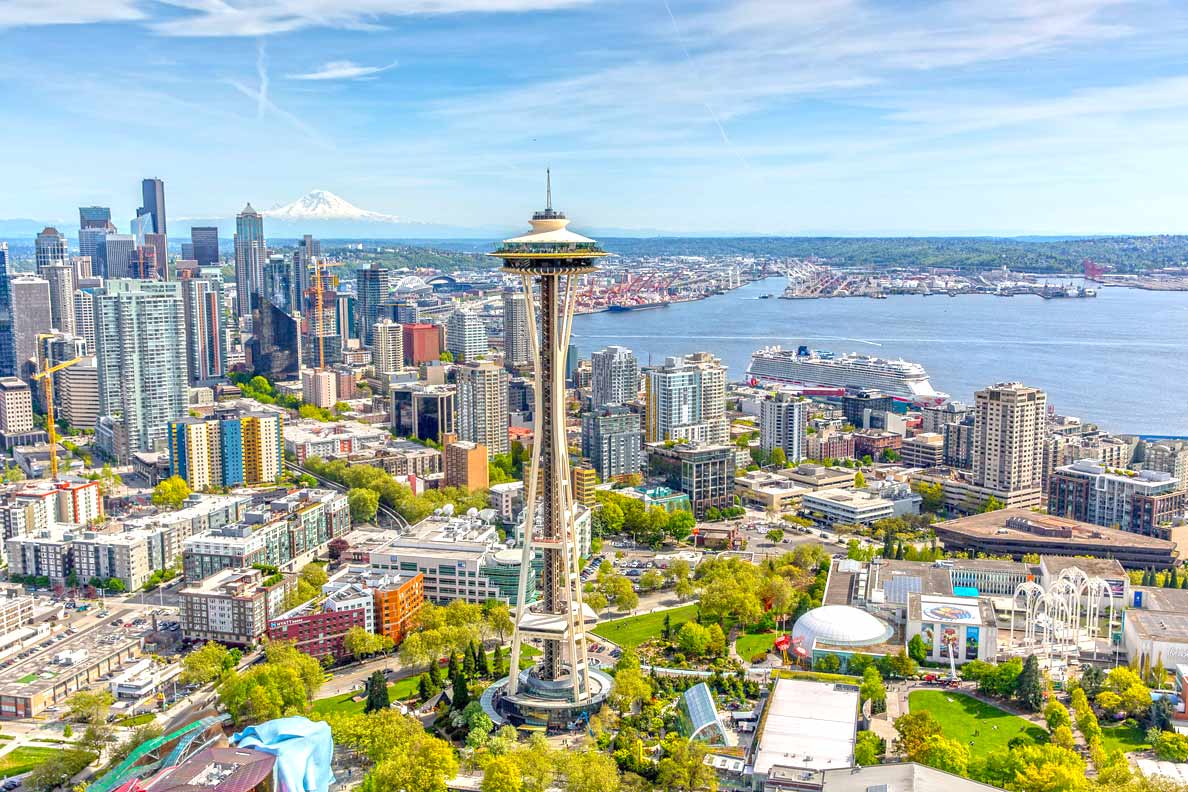
Seattle (englisch: 
 [sɪˈætəl]; deutsch: [siˈɛtl̩]) ist die größte Stadt im Nordwesten der Vereinigten Staaten. Sie ist der Verwaltungssitz des King County im US-Bundesstaat Washington und liegt zwischen dem Puget Sound und dem Lake Washington, etwa 155 Kilometer südlich der Grenze zu Kanada. Neben Vancouver und Portland ist Seattle der Verkehrsknotenpunkt und das wirtschaftliche, wissenschaftliche und kulturelle Zentrum in der Region des Pazifischen Nordwestens.
Die Stadt trägt die Beinamen The Emerald City („Die Smaragdstadt“), was eine Anspielung auf das viele Grün im Stadtgebiet und die großen Wälder ist (sie wird von den Einheimischen allerdings fast nie so bezeichnet), und Rain City – obwohl der Niederschlag geringer ist als in vielen anderen amerikanischen Städten. Der Spitzname kommt von den vielen wolkenreichen und regnerischen Tagen im Jahr. Von den Einheimischen wird sie auch als Jet City bezeichnet, was eine Anspielung auf die nahe gelegenen Boeingwerke ist.
Der Hafen von Seattle ist ein bedeutender Handelsknotenpunkt für den Handel mit Asien, Alaska und Hawaii. Die wichtigsten ansässigen Industrien sind die Luft- und Raumfahrt (Boeing), Eisen- und Stahlindustrie sowie die Holzverarbeitung. Als bauliches Wahrzeichen von Seattle gilt der für die Weltausstellung 1962 errichtete Turm Space Needle. Die Stadt ist Sitz der University of Washington.
Die Stadt wurde benannt nach Noah Sealth, Häuptling der Duwamish und Suquamish, besser bekannt unter dem Namen Häuptling Seattle.
西雅图(英语:Seattle),华文早期译作舍路,是美国华盛顿州的一座港口城市。西雅图是华盛顿州金郡首府,位于普吉特海湾和华盛顿湖之间,距离美加边境约174千米,是该州最大的城市,也是美国太平洋西北区最大的城市。据2020年人口普查数据,全市人口737,015人[5],都会区人口400万左右,为美国第15大都会区[6]。2010至2020年间,西雅图的人口增长率为21.1%,是全美人口增长最快的大城市之一。[7]
距今约4000年前,就已经有美洲原住民在今天的西雅图地区居住[8]。1851年11月13日,阿瑟·阿姆斯特朗·丹尼及其探险队从伊利诺伊州出发,在俄勒冈州的波特兰乘坐帆船出海,抵达现今西雅图地区的阿尔凯角并建立了第一个定居点[9],这个定居点于1853年被迁移到现在的位置并被命名为“西雅图”(得名于西雅图酋长)。
伐木业是西雅图第一个主要产业,但在19世纪后期的克朗代克淘金热中,该市成为位于通往阿拉斯加途中的一个商业和造船业中心。到1910年,西雅图已成为美国25大城市之一[10]。但在大萧条时期,其经济发展受到严重影响,于第二次世界大战期间及以后逐渐恢复,这部分得益于当地的波音公司将其制造中心定于此地。上世纪80年代起,西雅图发展为一个科技中心,不少像微软这样的公司在西雅图地区创立。杰夫·贝索斯也于1994年在西雅图创立了网络零售商亚马逊。软件,生物技术和互联网公司的发展使该市经济得以复兴,人口也在1990至2000间增加了超过5万人。2010年起,西雅图又成为了一个绿色工业和可持续发展模式的中心,并被认为是2010至2020年间美国发展速度最快的主要城市之一[11][12]。
西雅图的官方别名为“翡翠之城(the Emerald City)”,其他别名还有“雨城(the Rainy City)”、“常绿之城(Evergreen City)”、“阿拉斯加门户(the Gateway to Alaska)”、“女王之城(Queen City)”和“喷气机之城(Jet City)”。西雅图是摇滚音乐家吉米·亨德里克斯的出生地,也被认为是另类摇滚风格垃圾音乐的诞生之地[13]。涅槃乐队,珍珠果酱乐队,爱丽丝囚徒,喷火战机乐队都在西雅图出道。西雅图的咖啡消费量极大,是品牌星巴克诞生之地,第一家门市就在此。
Côte d´Ivoire
FIFA Fussball-Weltmeisterschaft 2014
FIFA Fussball-Weltmeisterschaft 2026
FIFA Fussball-Weltmeisterschaft 2026
Group E
Sport
(F)African Cup of Nations
Sven-Göran Eriksson
 FIFA Fussball-Weltmeisterschaft 2026
Group G
FIFA-Konföderationen-Pokal 2017
New Zealand
Sport
(F)FIFA Confederations Cup
Sport
(F)OFC Nations Cup
FIFA Fussball-Weltmeisterschaft 2026
FIFA Fussball-Weltmeisterschaft 2026
Group G
FIFA-Konföderationen-Pokal 2017
New Zealand
Sport
(F)FIFA Confederations Cup
Sport
(F)OFC Nations Cup

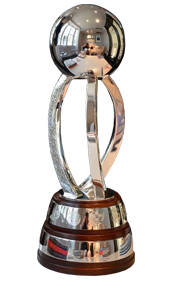 FIFA Fussball-Weltmeisterschaft 2026
 International cities
***Global Urban Economic Competitiveness
International cities
***Global Urban Economic Competitiveness
 Texas-TX
United States
Texas-TX
United States
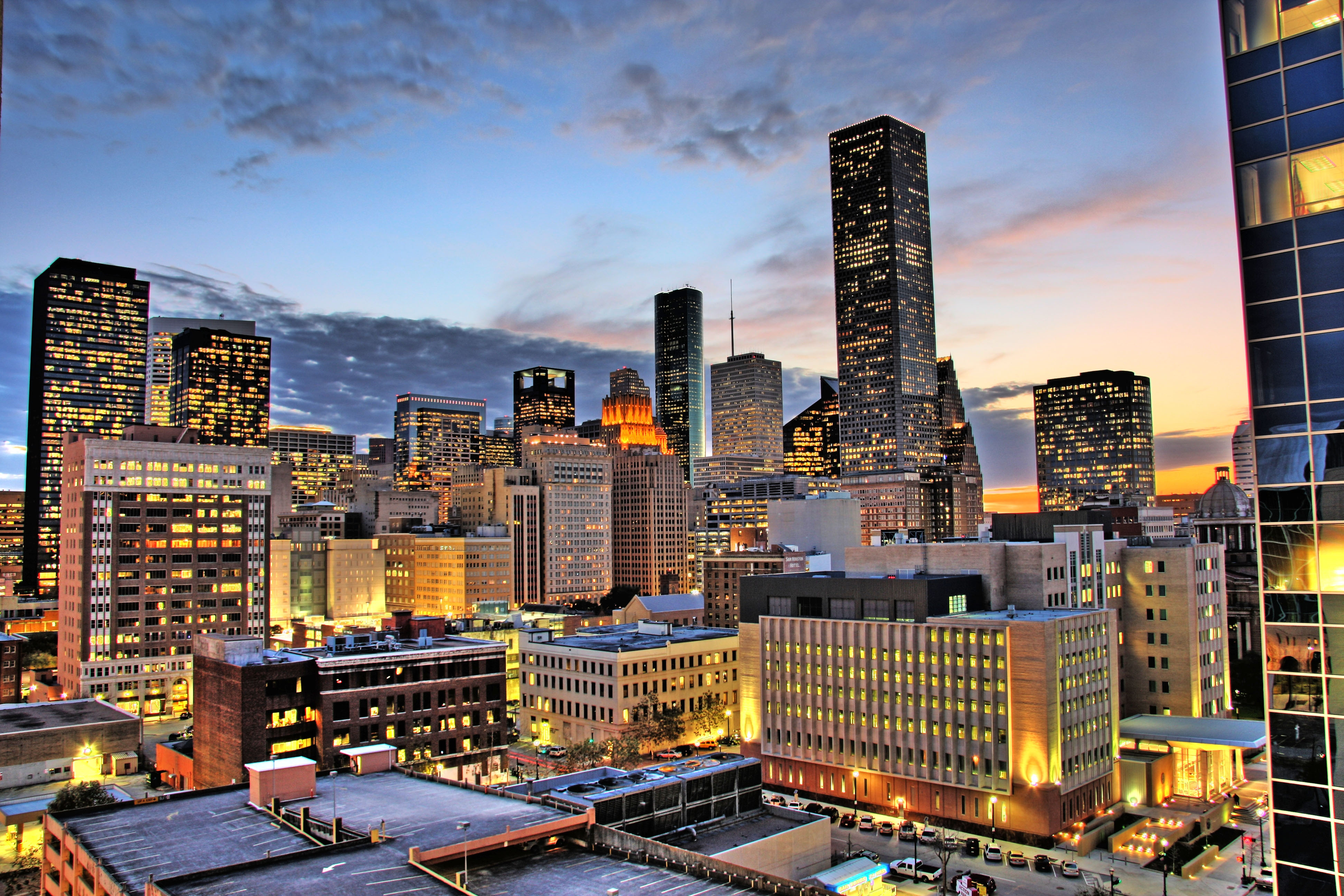
休斯敦(英语:Houston,中国大陆通译休斯敦/休斯顿,港澳通译侯斯顿,台湾通译休士顿)是美国得克萨斯州的第一大城,全美国第四大城,墨西哥湾沿岸最大的经济中心。面积达1,440平方千米,市名是以当年得克萨斯共和国总统山姆·休斯敦(Sam Houston)命名的。
休斯敦是哈里斯县(全国第三大县)的县城。休斯敦在密苏里市的东面,西南部分伸入本德堡县,东北一小部分伸入蒙哥马利县。
休斯敦创建于1836年,合并于1837年,是美国成长最迅速的大城市之一,也是全美最大的一个没有规划法的大城市。
1900年,休斯敦有45,000人口,排名美国第85位。2000年美国人口统计指出,城市人口总数达到190万人(2004年已超过2百万人)。大休斯敦都会区是美国第七大都会区(10个县,5,180,443人)。
休斯敦以其能源(特别是石油)、航空工业和运河闻名世界。休斯敦港是世界第六大港口,美国最繁忙的港口,外轮吨位第一,不分国籍则居第二位。财富500强总部仅次于纽约市。休斯敦是得克萨斯医疗中心的所在地,世界最大和最重要的研究和治疗机构的集中地。休斯敦还是美国27个超过170万人口的重要大都会地区中生活消费和房价最低的。休斯敦被全球化和世界城市研究小组和网络(GaWC)称为“全球城市”。
休斯敦的官方绰号为“太空城(Space City)”,因为它是林顿·约翰逊太空中心的所在地,任务监控中心也设在这里(因此,“休斯敦”是在月球上说的第一个词)。许多当地人喜爱称作“牛沼城”。其他绰号还有“H镇”、“脚爪城”或“蒙古城”。
休斯敦是一个拥有多重文化的城市,许多外来移民的社区在此发展。其美术馆区是许多文化机构和展览的天堂,每年吸引将进七百万的游客,在休斯敦常能看见活跃的视觉表演艺术。
Houston [ˈ(h)juːstən] ist die größte Stadt in Texas und die viertgrößte der USA, hinter New York City, Los Angeles und Chicago.
Im August 1836 kauften John Kirby Allen und Augustus Chapman Allen, zwei Immobilienunternehmer aus New York, 27 km2 Land am Buffalo Bayou mit der Absicht, eine Stadt zu gründen. Die Brüder entschieden sich dazu, die Stadt nach Sam Houston, dem berühmten texanischen General aus der Schlacht von San Jacinto, zu benennen. Am 5. Juni 1837 wurde sie ins Register eingetragen[2] und James S. Holman zum ersten Bürgermeister der Stadt gewählt. Noch im selben Jahr wurde Houston Sitz des Harrisburg County (jetziges Harris County) und die vorübergehende Hauptstadt der Republik Texas.
1901 wurde in Spindletop nahe Beaumont Öl gefunden. Zusammen mit anderen Ölfeldern trieb es die Entwicklung der amerikanischen Ölindustrie an. 1902 gab Präsident Theodore Roosevelt eine Million Dollar für den Bau des Houston Ship Channel frei. Er beginnt am Rand des die Stadt durchziehenden Wasserlaufs Buffalo Bayou. Präsident Woodrow Wilson eröffnete 1914 den etwa 60 km von der Küste entfernten neuen Hafen Houstons. Bis 1930 wuchs Houston dann zur bevölkerungsreichsten Stadt von Texas.
Ende Mai 2015 kam es zu den schwersten Niederschlägen in Texas seit Beginn der Wetteraufzeichnungen und auch Houston war durch seine niedrige Lage stark betroffen; ein nicht unerheblicher Teil der Stadt wurde überschwemmt.[3] Am 26. August 2017 und in den Folgetagen traf der Hurrikan „Harvey“ (eingeordnet in Stufe 4 – der zweithöchsten Stufe) bei Houston auf das Festland mit Regenmengen von mehr als 60–80 Liter pro m² innerhalb von wenigen Stunden. Als Folge davon wurden große Teile des Stadtgebietes überschwemmt, viele Hauptstraßen unpassierbar und Teile der Infrastruktur brachen zusammen. Der Bürgermeister der Stadt sah jedoch von einer Evakuierung ab, da „niemand mit derart heftigen Regenfällen gerechnet hatte“ und „man einen Albtraum geschaffen hätte, würde man 6,5 Millionen Menschen auf die Straße schicken“.[4][5]
ヒューストン(Houston)は、アメリカ合衆国テキサス州南東部に位置する都市。2,099,451人(2010年国勢調査)の人口を抱えるテキサス州最大、全米第4の都市である[1]。ハリス郡を中心に9郡にまたがるヒューストン都市圏の人口は5,920,416人(2010年国勢調査)にのぼる[1]。市域面積は1,500km2におよび、市郡一体の自治体を除くとオクラホマシティに次ぐ全米第2の広さである。
ヒューストンは1836年8月30日にオーガストゥス・チャップマン、ジョン・カービーのアレン兄弟によってバッファロー・バイユーの河岸に創設された。市名は当時のテキサス共和国大統領で、サンジャシントの戦いで指揮を執った将軍、サミュエル・ヒューストンから名を取って付けられた。翌1837年6月5日、ヒューストンは正式に市制施行された。19世紀後半には海港や鉄道交通の中心として、また綿花の集散地として栄えた。やがて1901年に油田が見つかると、市は石油精製・石油化学産業の中心地として成長を遂げた。20世紀中盤に入ると、ヒューストンには世界最大の医療研究機関の集積地テキサス医療センターやアメリカ航空宇宙局(NASA)のジョンソン宇宙センターが設置され、先端医療の研究や航空宇宙産業の発展が進んだ。古くからこうした様々な産業を持ち、フォーチュン500に入る企業の本社数がニューヨークに次いで多いヒューストンは、テキサス州のみならず、成長著しいサンベルトの中心都市の1つであり、アメリカ合衆国南部のメキシコ湾岸地域における経済・産業の中枢である。また、全米最大級の貿易港であるヒューストン港[2]を前面に抱え、ユナイテッド航空(旧・コンチネンタル航空)のハブ空港であるジョージ・ブッシュ・インターコンチネンタル空港を空の玄関口とする、交通の要衝でもある。また、日本を含む世界86ヶ国が領事館を置く世界都市でもある[3][4]。
このようにヒューストンは工業都市・ビジネス都市としてのイメージが強い都市であるが、文化水準の高い都市でもある。ダウンタウンの南側には10以上の博物館・美術館が建ち並び、年間700万人の訪問者を呼び寄せるミュージアム・ディストリクトがある。ミュージアム・ディストリクトに隣接するエリアには、全米の総合大学の中で常にトップ25位以内の高評価を受けている名門私立大学、ライス大学のキャンパスが広がっている。一方、ダウンタウンの中心部に位置するシアター・ディストリクトはヒューストンにおける演技芸術の中心地で、演劇のみならず、オペラ、オーケストラ、バレエなど多彩な演技芸術の公演が行われている[5]。
ジョンソン宇宙センターの存在から、ヒューストンには1967年にSpace City(宇宙の街)という公式な別名がつけられた[6]。地元住民はこのほか、Bayou City(バイユーの街)、Magnolia City(マグノリアの街)、H-Townなどと呼ぶこともある。
Houston (/ˈhjuːstən/ ( listen) HEW-stən) is the most populous city in the U.S. state of Texas and the fourth most populous city in the United States, with a census-estimated population of 2.312 million in 2017.[7] It is the most populous city in the Southern United States[8] and on the Gulf Coast of the United States. Located in Southeast Texas near Galveston Bay and the Gulf of Mexico, it is the seat of Harris County and the principal city of the Greater Houston metropolitan area, which is the fifth most populous MSA in the United States and the second most populous in Texas after the Dallas–Fort Worth metroplex. With a land area of 599.59 square miles (1,552.9 km2),[7] Houston is the ninth most expansive city in the United States.
Houston was founded by land speculators on August 30, 1836,[9] at the confluence of Buffalo Bayou and White Oak Bayou (a point now known as Allen's Landing)[10] and incorporated as a city on June 5, 1837.[11] The city is named after former General Sam Houston, who was president of the Republic of Texas and had won Texas' independence from Mexico at the Battle of San Jacinto 25 miles (40 km) east of Allen's Landing.[11] After briefly serving as the capital of the Republic in the late 1830s, Houston grew steadily into a regional trading center for the remainder of the 19th century.[9]
The arrival of the 20th century saw a convergence of economic factors which fueled rapid growth in Houston, including a burgeoning port and railroad industry, the decline of Galveston as Texas' primary port following a devastating 1900 hurricane, the subsequent construction of the Houston Ship Channel, and the Texas oil boom.[9] In the mid-20th century, Houston's economy diversified as it became home to the Texas Medical Center—the world's largest concentration of healthcare and research institutions—and NASA's Johnson Space Center, where the Mission Control Center is located.
Houston's economy has a broad industrial base in energy, manufacturing, aeronautics, and transportation. Leading in health care sectors and building oilfield equipment, Houston has the second most Fortune 500 headquarters of any U.S. municipality within its city limits (after New York City).[12][13] The Port of Houston ranks first in the United States in international waterborne tonnage handled and second in total cargo tonnage handled.[14] Nicknamed the "Space City", Houston is a global city, with strengths in culture, medicine, and research. The city has a population from various ethnic and religious backgrounds and a large and growing international community. Houston is the most diverse metropolitan area in Texas and has been described as the most racially and ethnically diverse major metropolis in the U.S.[15] It is home to many cultural institutions and exhibits, which attract more than 7 million visitors a year to the Museum District. Houston has an active visual and performing arts scene in the Theater District and offers year-round resident companies in all major performing arts.[16]
Houston (en anglais ['hjuːstən]) est une ville de l'État du Texas dans le sud des États-Unis. Avec une population de 2 303 482 habitants dans la municipalité et 6 313 158 dans l'agglomération (estimations du Bureau du recensement des États-Unis, 20161), c'est la plus grande ville du Sud des États-Unis et, après Dallas, la deuxième aire urbaine de la région. Ses habitants s'appellent les Houstoniens. La ville s'étale sur trois comtés dont le principal est le comté de Harris. C'est la quatrième ville des États-Unis après New York, Los Angeles et Chicago.
Houston a une grande industrie pétrochimique ainsi qu'un port maritime ouvert sur le golfe du Mexique. La NASA y a installé l'un de ses centres destiné aux astronautes. L'agglomération est dotée de la plus forte concentration de laboratoires de recherche sur la santé (Texas Medical Center).
Houston est une ville dont la croissance démographique est la seconde des États-Unis après Las Vegas. En 1900, sa population était d'environ 45 000 habitants. Selon les dernières estimations en 2016, l'agglomération comprend plus de 6,3 millions de personnes sur neuf comtés, ce qui en fait la 5e du pays.
Houston (/ˈhjuːstən/ Ascolta[?·info]) è una città (city) degli Stati Uniti d'America e capoluogo della contea di Harris nello Stato del Texas. Una piccola parte della città si estende nelle contee di Fort Bend e Montgomery. La popolazione era di 2.099.451 abitanti al censimento del 2010, il che la rende la città più popolosa dello stato e la quarta città più popolosa della nazione. È la principale città dell'area metropolitana nota come Greater Houston.
Houston venne fondata il 28 agosto 1836, vicino alle sponde del Buffalo Bayou (ora noto come Allen's Landing)[1][2] e incorporata come città il 5 giugno 1837. La città prende il nome dall'ex generale e politico statunitense Sam Houston.
Houston è famosa nel mondo per la sua industria energetica (in particolare petrolifera), e aeronautica, nonché per il suo porto, uno dei più affollati degli Stati Uniti. Molti residenti si sono trasferiti qui da altri stati americani, o da altri paesi del mondo, per motivi di affari.
Houston è sede di numerose università. La più importante è l'Università di Houston, la prima università del Texas per la ricerca; importante è anche l'Università Rice, una università privata che vanta uno dei più alti finanziamenti al mondo. Ci sono inoltre l'Università di Saint Thomas, la Houston Baptist University, l'Università di Houston-Clear Lake, l'Università di Houston-Downtown, e la Texas Southern University.
Houston è soprannominata Space City: infatti qui ha sede la NASA e proprio "Houston" fu la prima parola pronunciata dall'astronauta Neil Armstrong appena il LEM si fu posato sulla superficie lunare. Un altro soprannome è Bayou City, per la fitta rete di piccoli corsi d'acqua (i bayou) che l'attraversano.
Da Houston verso levante si estende la regione Cajun che include il vicino Stato della Louisiana.
Nel 2005 la rivista Men's Fitness ha definito la città come simbolo dell'obesità negli Stati Uniti, poiché dalle statistiche risulta che il 23% dei residenti è clinicamente obeso. Houston ha anche il doppio dei negozi di frittelle dolci rispetto alla media degli Stati Uniti.
La città texana vanta una tra le più folte comunità vietnamite negli Stati Uniti.
Houston (pronunciado en inglés /ˈhjuːstən/, español /'xjus.ton/) es la ciudad más poblada en el estado de Texas y la cuarta ciudad más poblada de Estados Unidos. Houston está ubicada en el sureste de Texas, cerca del golfo de México. Con una población estimada en 2,24 millones de personas en 2014 en un área de 1553 kilómetros cuadrados (599,6 mi²),23 Houston también es la ciudad más grande en el sur de Estados Unidos,4 además de ser la sede del Condado de Harris. Es la principal ciudad en el área de Houston–Sugar Land–Baytown y es la quinta área metropolitan más poblada del país.
Fue fundada el 30 de agosto de 1836 por los hermanos Augustus Chapman Allen y John Kirby Allen en una tierra cercana a las orillas del Buffalo Bayou.5 La ciudad se incorporó el 5 de junio de 1837 y recibió su nombre del entonces presidente de la República de Texas, el antiguo general Sam Houston, quien comandó la batalla de San Jacinto. Dicha contienda tuvo lugar a 40 km al este de donde la ciudad fue establecida. El creciente puerto y la industria del ferrocarril, combinada con el descubrimiento de petróleo en 1901, ha provocado continuos incrementos repentinos de población en la ciudad. A mediados del siglo XX, Houston se convirtió en la base del Texas Medical Center, la mayor concentración de instituciones de investigación y de salud del mundo, y del Centro Espacial Lyndon B. Johnson de la NASA, donde se sitúa el centro de control de misión.
Considerada como una ciudad global beta,6 la economía de Houston posee una amplia base industrial en la energía, manufacturación, aeronáutica, transporte, salud y un importante centro para la creación de equipos petrolíferos; solo Nueva York posee más sedes de empresas Fortune 500 en los límites de su ciudad.7 El puerto de Houston se sitúa el primero de los Estados Unidos en tonelaje manejado en aguas internacionales y el segundo en tonelaje total de carga manejada.8 La ciudad tiene una población multicultural con una gran y creciente comunidad internacional. Es hogar de muchas instituciones culturales y atrae a más de siete millones de visitantes anuales al Houston Museum District. La ciudad cuenta con una escena activa en cuanto a las artes visuales y escénicas en el Teatro del Distrito y es una de las pocas ciudades estadounidenses que ofertan compañías residentes en todas las artes escénicas principales.9
Хью́стон (англ. Houston, МФА: [ˈhjuːstən]) — четвёртый по количеству жителей город в Соединённых Штатах Америки и крупнейший город в штате Техас с населением 2 319 603 человека на 2017 год[1]. Хьюстон является административным центром округа Харрис, а также главным экономическим центром агломерации Большого Хьюстона с общим населением 6 772 470 человек на 2016 год[2]. Город располагается в 50 километрах от Мексиканского залива на прибрежной равнине.
Хьюстон был основан 30 августа 1836 года и включён в состав республики Техас 5 июня 1837 года, получив своё имя в честь Сэмюэла Хьюстона — главнокомандующего армией Техаса во время Техасской революции и президента Республики Техас. Быстрое развитие порта и железных дорог в XIX веке, а также начало добычи нефти и последовавшее развитие нефтяной промышленности в XX веке привели к быстрому росту населения. В 1960-е годы количество жителей превысило один миллион человек, а в 2000-е — два миллиона.
Город является ведущим мировым центром энергетической промышленности, а экономика города также представлена предприятиями в области аэронавтики, транспорта и здравоохранения. Важнейшими объектами для экономики и инфраструктуры города являются космический центр имени Линдона Джонсона, крупнейший американский по международным грузоперевозкам порт, хьюстонский судоходный канал, крупнейший в мире Техасский медицинский центр.
FIFA Fussball-Weltmeisterschaft 2026
FIFA Club World Cup 2025
 Georgia-GA
League of Legends
League of Legends
League of Legends World Championship
Olympic Summer Games
United States
Georgia-GA
League of Legends
League of Legends
League of Legends World Championship
Olympic Summer Games
United States
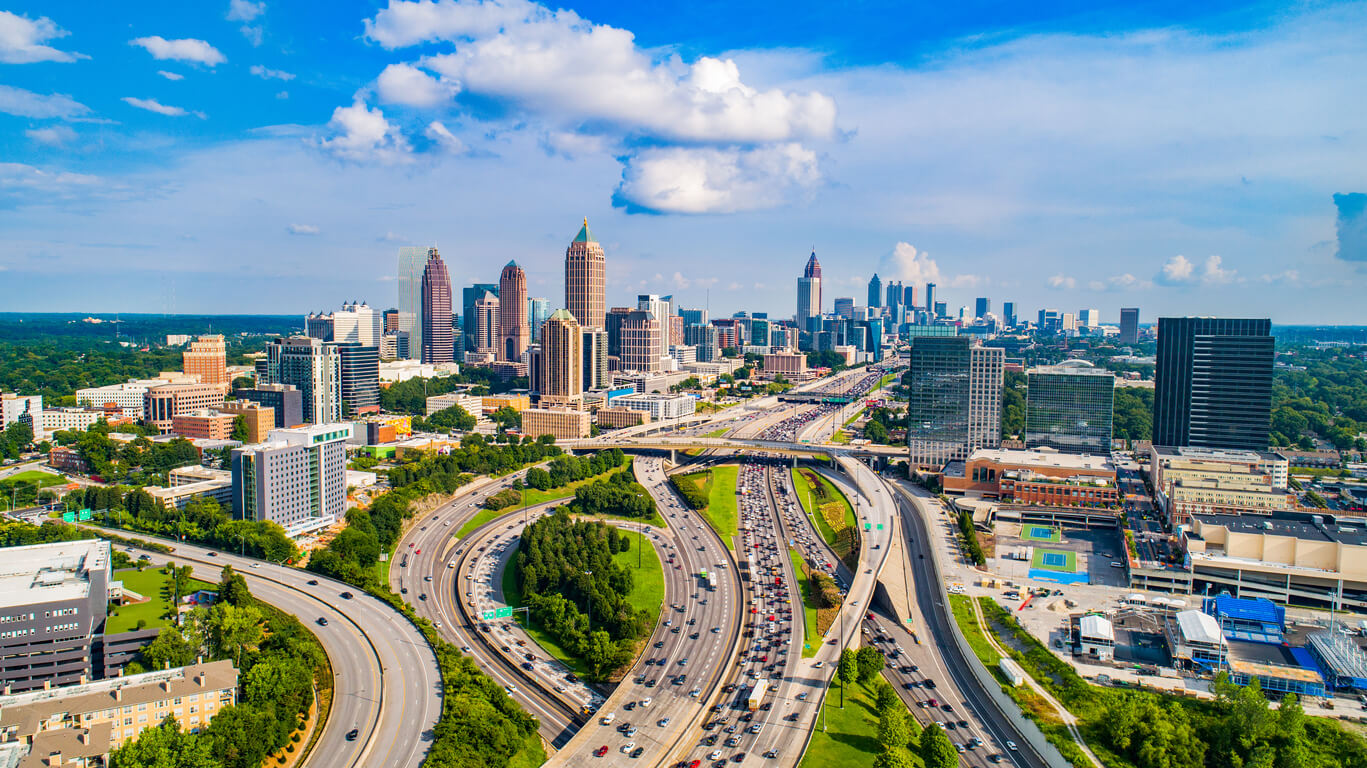
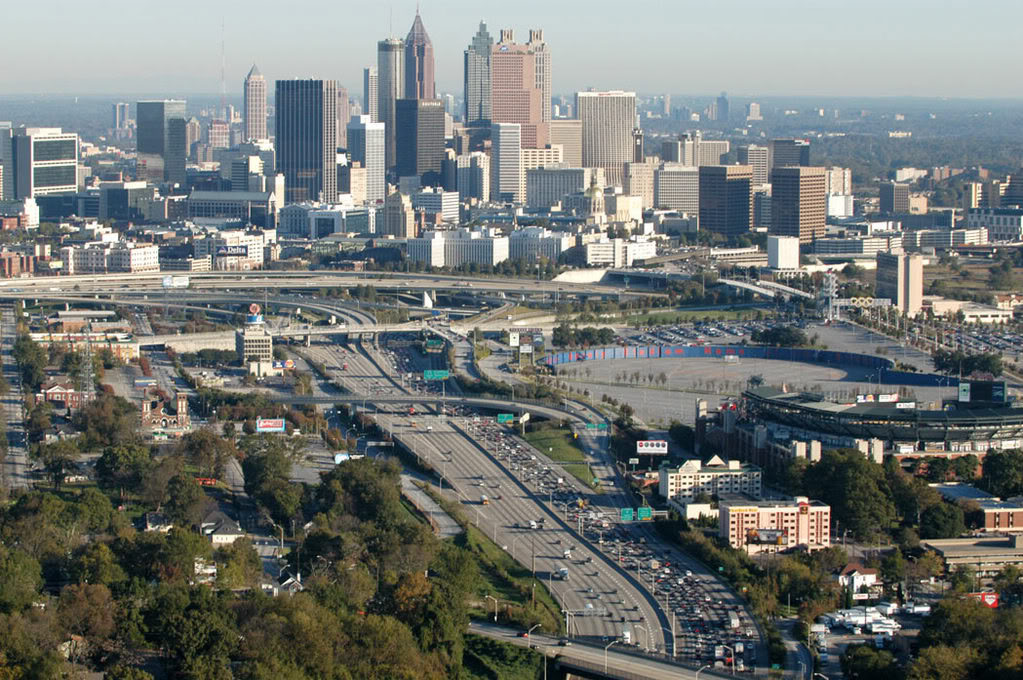
Atlanta ist die Hauptstadt sowie die größte Stadt des US-Bundesstaates Georgia[1] und liegt zum größten Teil im Fulton County und zu einem kleineren Teil im DeKalb County.
Ursprünglich war das Gebiet, auf dem die heutige Stadt liegt, von den Cherokee- und Muskogee-Indianern besiedelt, die den Ort Standing Peachtree (etwa: aufrechtstehender Pfirsichbaum) nannten, 1823 begann die erste Besiedlung durch Weiße. 1836 wurde der Ort von der Western and Atlantic Railroad als Endpunkt der Bahnstrecke von Rossville/Chattanooga (Tennessee) nach Georgia bestimmt und erhielt deswegen 1837 zunächst den Namen „Terminus“ (etwa: Endstation). 1843 wurde sie nach Martha Lumpkin, der Tochter des damaligen Gouverneurs von Georgia, „Marthasville“ getauft, bevor sie 1845 ihren heutigen Namen Atlanta erhielt. Die Herkunft des Namens ist nicht zweifelsfrei geklärt; die Gouverneurstochter könnte mit Mittelnamen „Atlanta“ geheißen haben oder es handelt sich um die weibliche Form von „Atlantik“, die die Western & Atlantic Railroad auswählte.
Atlanta ist die Hauptstadt sowie die größte Stadt des US-Bundesstaates Georgia[1] und liegt zum größten Teil im Fulton County und zu einem kleineren Teil im DeKalb County. Sie ist der Mittelpunkt der Metropolregion Atlanta.
亚特兰大(英语:Atlanta)是美国佐治亚州首府及最大城市,是富尔顿县的县政府驻地。人口有420,003人(2010年),而正在快速发展的亚特兰大都会区拥有人口5,268,860人,是美国第9大都市区。
作为一个铁路枢纽,亚特兰大的发展始于19世纪早期,在南北战争时被摧毁,但在被选为州府后迅速重建。20世纪,它是美国民权运动的中心,并举办了1996年夏季奥林匹克运动会。
アトランタ (Atlanta 英語発音: [ætˈlæntə] ( 音声ファイル)、現地発音: [ætˈlænə] ( 音声ファイル)) は、アメリカ合衆国ジョージア州北西部に位置する都市。同州の州都・最大都市であり、またフルトン郡の郡庁所在地である。市域の大部分はフルトン郡内にあり、一部東隣のディカーブ郡にかかっている。人口はアトランタ市域内で420,003人、フルトン郡を中心に29郡にまたがる都市圏では5,286,728人、アセンズやゲインズビル等をあわせた広域都市圏では5,910,296人を数える(すべて2010年国勢調査)[1]。
古くは鉄道交通のハブとして、また綿花産業の中心地として栄えた。やがてコカ・コーラ、デルタ航空、CNNなど多数の大企業が本社を置くようになり、ジョージア州のみならずアメリカ合衆国南部の商業・経済の中心地としての役割を担うようになった。1990年代に入ると、アトランタはアメリカ合衆国南部にとどまらず、国際的にも影響力を持つまでになり、先進国の都市の中では最も高い成長を遂げている都市の1つに数えられるようになった[2]。経済面での国際的な影響力に加え、「世界で最も忙しい空港」と呼ばれるハーツフィールド・ジャクソン・アトランタ国際空港[3]を前面に抱え、1996年の夏季オリンピック開催地としても世界的な知名度を有するアトランタは、2014年、アメリカのシンクタンクが公表したビジネス・人材・文化・政治などを対象とした総合的な世界都市ランキングにおいて、世界第36位の都市と評価された[4]。
アトランタは南部特有の夏の蒸し暑さと冬の温暖さから、「ホットランタ」(Hotlanta) という異名をつけられている。アトランタの南、メーコンを拠点として活動しているバンド、オールマン・ブラザーズ・バンドは、1971年にこの異名を取った「ホットランタ」(Hot 'Lanta) という楽曲を発表した。アトランタの住民は「アトランタンズ」(Atlantans) と呼ばれている。
Atlanta (/ætˈlæntə/) is the capital of, and the most populous city in, the U.S. state of Georgia. With an estimated 2017 population of 486,290,[13] it is also the 39th most-populous city in the United States. The city serves as the cultural and economic center of the Atlanta metropolitan area, home to 5.8 million people and the ninth-largest metropolitan area in the nation.[7] Atlanta is the seat of Fulton County, the most populous county in Georgia. A small portion of the city extends eastward into neighboring DeKalb County.
Atlanta was founded as a transportation hub at the intersection of two railroad lines in 1837. After being mostly burned to the ground during the American Civil War, the city rose from its ashes to become a national center of commerce and the unofficial capital of the "New South". During the 1950s and 1960s, Atlanta became a major organizing center of the civil rights movement, with Dr. Martin Luther King Jr., Ralph David Abernathy, and many other locals playing major roles in the movement's leadership. In the decades following, the city earned a reputation as "too busy to hate" for the relatively progressive views of its citizens and leaders compared to other cities in the "Deep South".[14] During the modern era, Atlanta has attained international prominence as a major air transportation hub, with Hartsfield–Jackson Atlanta International Airport being the world's busiest airport by passenger traffic since 1998.[15][16][17][18]
Atlanta is rated as a "beta(+)" world city that exerts a moderate impact on global commerce, finance, research, technology, education, media, art, and entertainment.[19] It ranks in the top twenty among world cities and 10th in the nation with a gross domestic product (GDP) of $385 billion.[20][21] Atlanta's economy is considered diverse, with dominant sectors that include transportation, logistics, professional and business services, media operations, medical services, and information technology.[22] Atlanta has topographic features that include rolling hills and dense tree coverage, earning it the nickname of "the city in a forest."[23] Revitalization of Atlanta's neighborhoods, initially spurred by the 1996 Summer Olympics, has intensified in the 21st century, altering the city's demographics, politics, and culture.[24][25]
Atlanta ([ætˈlæntə] en anglais) est la capitale et la ville la plus peuplée de l'État de Géorgie, aux États-Unis. Selon le recensement de 2010, la municipalité a une population de 420 003 habitants2 ; son aire urbaine est peuplée de 5 268 860 habitants, ce qui en fait la neuvième métropole du pays (après Miami et devant Boston). Ces dernières années, Atlanta est passée du rang de ville d'importance régionale à celui de métropole internationale3. Son agglomération, qui a augmenté de 24 % entre 2000 et 2010, est une des aires urbaines des États-Unis dont la croissance est la plus rapide4.
Atlanta (in inglese ascolta[?·info], /ætˈlæntʌ/) è una città degli Stati Uniti d'America, capitale dello Stato della Georgia. Nel 2011 la popolazione era stimata in 432.427 abitanti[2], mentre l'area metropolitana con 5.457.831 persone era la nona di tutti gli Stati Uniti d'America[3]. Atlanta è divisa amministrativamente in due contee, la contea di Fulton e quella, meno estesa, di DeKalb.
La città è suddivisa in 242 quartieri che si sviluppano attorno ai tre distretti principali di Downtown, Midtown e Buckhead, (riconoscibili per i loro grattacieli) che rappresentano i centri commerciale e finanziario di Atlanta essendo sede delle principali banche e aziende. Atlanta rappresenta anche un polo d'eccellenza per l'insegnamento universitario essendo la sede del politecnico Georgia Tech, dell'università Georgia State University nonché della prestigiosa università privata Emory University. La città è anche conosciuta per essere la sede di numerose università storicamente afroamericane quali la Clark University e il Morehouse College, quest'ultimo frequentato anche da Martin Luther King, Jr.[4].
Il primo insediamento di quella che sarà conosciuta come Atlanta fu fondata nel 1837, all'intersezione di due linee ferroviarie. Quasi totalmente rasa al suolo durante la guerra di secessione americana, la città conobbe uno sviluppo senza precedenti negli anni seguenti diventando in breve tempo un centro economico di importanza nazionale. Questo risultato fu possibile grazie alla sua posizione di principale hub degli Stati Uniti sud-orientali grazie allo sviluppo di una fitta rete di autostrade, ferrovie e lo sviluppo dell'Aeroporto Internazionale Hartsfield-Jackson, il più trafficato dal 1998 al 2012[5]. La città ha ricevuto visibilità internazionale nel 1996 per avere ospitato i XXVI Giochi olimpici dell'era moderna.
L'area metropolitana di Atlanta ha generato un prodotto interno lordo di 270 miliardi di dollari nel 2010, piazzandola al quindicesimo posto al mondo in questa speciale classifica[6]. L'economia della città risulta piuttosto differenziata, ciononostante le industrie dominanti afferiscono ai settori della logistica, dei servizi di consulenza commerciale, dei media e dell'Information Technology[7]. La città è meglio conosciuta come sede della multinazionale produttrice di bevande analcoliche The Coca-Cola Company, ma ospita i quartieri generali di altre grandi aziende inserite nella prestigiosa lista Fortune 100 tra le quali Delta Airlines, United Parcel Service (UPS), Turner Broadcasting System, AT&T Mobility e Home Depot tra le altre. Si stima che Atlanta sia la terza città degli Stati Uniti d'America per numero di aziende con quartier generale all'interno della propria area metropolitana[8].
Atlanta è la città natale di Martin Luther King Jr.
Atlanta es la capital y ciudad más extensa y poblada del estado de Georgia y la trigésimo tercera en Estados Unidos en cantidad de habitantes en 2008. Tiene una población estimada de 537 958 habitantes. Su área metropolitana, cuyo nombre oficial es Atlanta-Sandy Springs-Marietta, GA MSA (conocida comúnmente como Atlanta Metropolitana), es la novena área metropolitana con mayor población del país, con aproximadamente 5,5 millones de habitantes. Como en la mayor parte del Cinturón del Sol, la región de Atlanta experimentó un importante crecimiento en los años 2000, ya que añadió más de un millón de habitantes entre 2000 y 2008. Este fue el mayor crecimiento de cualquier área estadounidense por detrás del Dallas-Fort Worth metroplex.7 Con un ingreso bruto de US$ 270 000 millones, la economía de Atlanta está clasificada en el puesto número 15 entre las ciudades del mundo y en el sexto puesto en los Estados Unidos.8
Considerada como una ciudad de negocios y centro de transporte,910 Atlanta es la sede mundial de The Coca-Cola Company, AT&T Mobility, Delta Air Lines y la CNN. Además, la ciudad tiene la tercera mayor concentración de empresas de la Fortune 500 y más del 75 % de las compañías de Fortune 1000 tienen sede en esta área metropolitana.1112 El Aeropuerto Internacional Hartsfield-Jackson, situado a once kilómetros al sur del centro de Atlanta, es el aeropuerto más transitado del mundo y el único que cubre los servicios de la ciudad.1314
Atlanta es, también, la sede del condado de Fulton y la quinta ubicación de la sede del gobierno del estado de Georgia. Una pequeña parte de los límites de la ciudad de Atlanta limitan con el condado de DeKalb.
Атла́нта[2][3] (англ. Atlanta) — город в США, столица и крупнейший город штата Джорджия, административный центр округа Фултон[4] (хотя отдельные части города расположены в других округах штата).
Население (по состоянию на 2013) — в пределах городской черты 447 841 человек (34-й в США), в пределах агломерации Атланты, по оценке на 1 июля 2007 года, — 5 522 942 человек (9-й в США).
В последние годы Атланта приобрела статус одного из международных деловых центров, что дало мощный толчок экономическому и социальному развитию города. С 2000 по 2006 рост агломерации Атланты (на 20,5 %) стал самым крупным в США.
FIFA Fussball-Weltmeisterschaft 2014
FIFA Fussball-Weltmeisterschaft 2018
Group B
FIFA Fussball-Weltmeisterschaft 2022
FIFA Fussball-Weltmeisterschaft 2022
Group B
FIFA Fussball-Weltmeisterschaft 2026
FIFA Fussball-Weltmeisterschaft 2026
Group G
Iran