Deutsch-Chinesische Enzyklopädie, 德汉百科
 Religion
 Kunst
Kunst
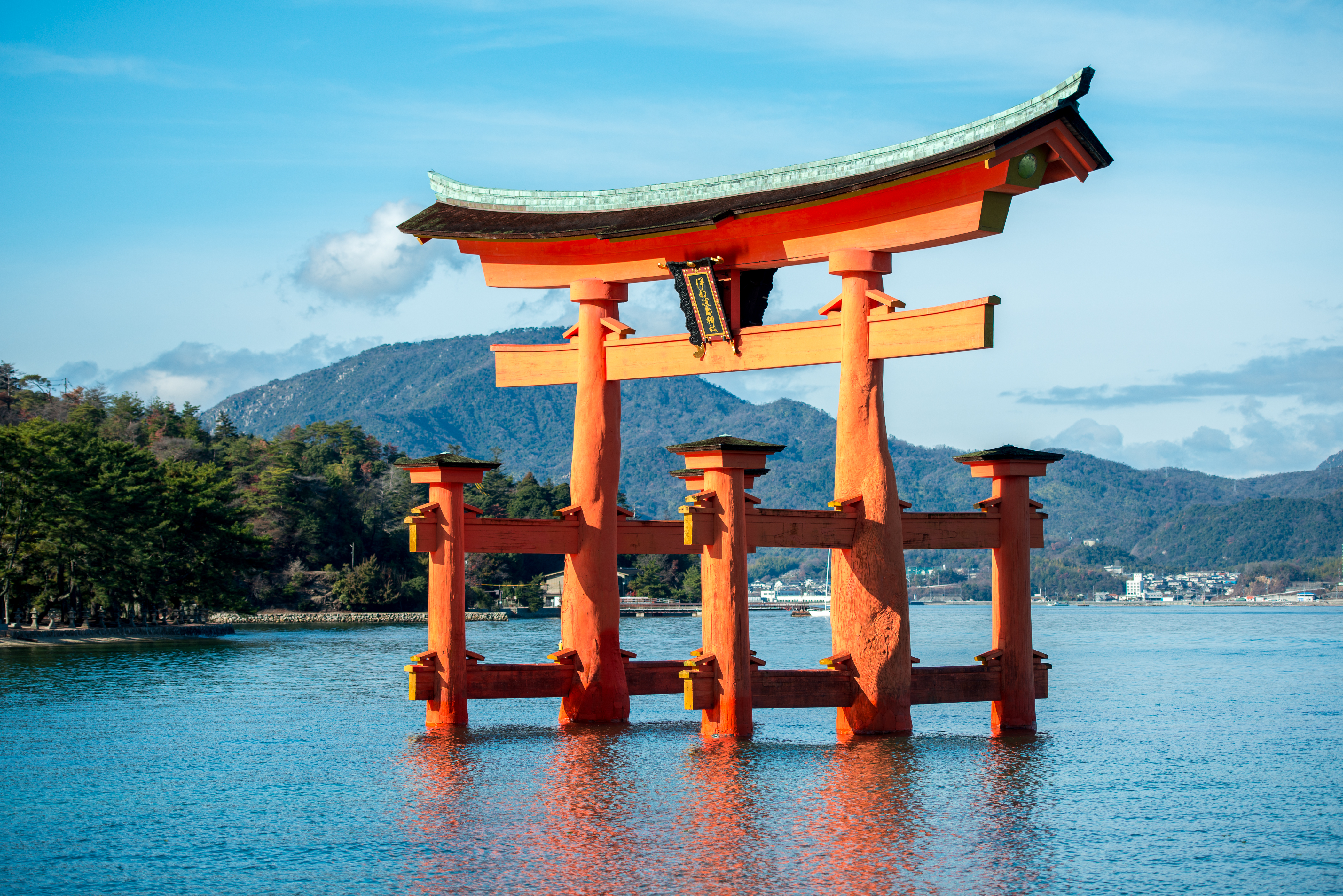
Shintō (jap. 神道, wird im Deutschen meist übersetzt mit „Weg der Götter“) – auch als Shintoismus bezeichnet – ist die ethnische Religion der Japaner (siehe auch Religion in Japan). Shintō und Buddhismus, die beiden in Japan bedeutendsten Religionen, sind aufgrund ihrer langen gemeinsamen Geschichte nicht immer leicht zu unterscheiden. Als wichtigstes Merkmal, das die beiden religiösen Systeme trennt, wird oft die Diesseitsbezogenheit des Shintō angeführt. Darüber hinaus kennt das klassische Shintō keine heiligen Schriften im Sinne eines religiösen Kanons, sondern wird weitgehend mündlich überliefert. Die beiden Schriften Kojiki und Nihonshoki, die von einigen shintoistisch geprägten Neureligionen Japans als heilig angesehen werden, sind eher historisch-mythologische Zeugnisse.[1]
神道(しんとう、しんどう[4])は、日本の宗教。惟神道(かんながらのみち)ともいう。教典や具体的な教えはなく、開祖もおらず、神話、八百万の神、自然や自然現象などにもとづくアニミズム的・祖霊崇拝的な民族宗教である[5]。
自然と神とは一体として認識され、神と人間を結ぶ具体的作法が祭祀であり、その祭祀を行う場所が神社であり、聖域とされた[6]。明治維新より第二次世界大戦終結まで政府によって事実上の国家宗教となった。この時期の神道を指して国家神道と呼ぶ。[7]。
Shinto,[a] also known as kami-no-michi,[b] is a religion originating in Japan. Classified as an East Asian religion by scholars of religion, its practitioners often regard it as Japan's indigenous religion and as a nature religion. Scholars sometimes call its practitioners Shintoists, although adherents rarely use that term themselves. There is no central authority in control of the movement and much diversity exists among practitioners.
Shinto is polytheistic and revolves around the kami ("gods" or "spirits"), supernatural entities believed to inhabit all things. The link between the kami and the natural world has led to Shinto being considered animistic and pantheistic. The kami are worshiped at kamidana household shrines, family shrines, and public shrines. The latter are staffed by priests who oversee offerings to the kami and the provision of religious paraphernalia such as amulets to the religion's adherents. Other common rituals include the kagura ritual dances, age specific celebrations, and seasonal festivals. These festivals and rituals are collectively called matsuri. A major conceptual focus in Shinto is ensuring purity by cleansing practices of various types including ritual washing or bathing. Shinto does not emphasize specific moral codes other than ritual purity, reverence for kami, and regular communion following seasonal practices. Shinto has no single creator or specific doctrinal text, but exists in a diverse range of localised and regionalised forms.
Belief in kami can be traced to the Yayoi period (300 BCE – 300 CE), although similar concepts existed during the late Jōmon period. At the end of the Kofun period (300 to 538 CE), Buddhism entered Japan and influenced kami veneration. Through Buddhist influence, kami came to be depicted anthropomorphically and were situated within Buddhist cosmology. Religious syncretisation made kami worship and Buddhism functionally inseparable, a process called shinbutsu-shūgō. The earliest written tradition regarding kami worship was recorded in the eighth-century Kojiki and Nihon Shoki. In ensuing centuries, shinbutsu-shūgō was adopted by Japan's Imperial household. During the Meiji era (1868 – 1912 CE), Japan's leadership expelled Buddhist influence from Shinto and formed State Shinto, which they utilized as a method for fomenting nationalism and imperial worship. Shrines came under growing government influence, and the Emperor of Japan was elevated to a particularly high position as a kami. With the formation of the Japanese Empire in the early 20th century, Shinto was exported to other areas of East Asia. Following Japan's defeat in World War II, Shinto was formally separated from the state.
Shinto is primarily found in Japan, where there are around 80,000 public shrines. Shinto is also practiced elsewhere, in smaller numbers. Only a minority of Japanese people identify as religious, although most of the population take part in Shinto matsuri and Buddhist activities, especially festivals, and seasonal events. This reflects a common view in Japanese culture that the beliefs and practices of different religions need not be exclusive. Aspects of Shinto have also been incorporated into various Japanese new religious movements.
Le shinto (神道, shintō, litt. « la voie des dieux » ou « la voie du divin ») ou shintoïsme (/ʃin.to.ism/) est un ensemble de croyances datant de l'histoire ancienne du Japon, parfois reconnues comme religion. Elle mélange des éléments polythéistes et animistes. Il s'agit de la plus ancienne religion connue du Japon ; elle est particulièrement liée à sa mythologie. Le terme « shintō », lecture sino-japonaise, ou kami no michi, est apparu pour différencier cette vieille religion du bouddhisme « importé » [Comment ?] de Chine au Japon au VIe siècle. Ses pratiquants seraient aujourd'hui plus de 90 millions au Japon.
Lo shintō, scintoismo o shintoismo[1] è una religione di natura politeista e animista nativa del Giappone.
Prevede l'adorazione dei "kami", cioè divinità, spiriti naturali o semplicemente presenze spirituali[1]. Alcuni kami sono locali e possono essere considerati come gli spiriti guardiani di un luogo particolare, ma altri possono rappresentare uno specifico oggetto o un evento naturale, come per esempio Amaterasu, la dea del Sole. Il Dio delle religioni monoteiste occidentali in giapponese viene tradotto come kami-sama (神様?). Talvolta anche le persone illustri, gli eroi e gli antenati divengono oggetto di venerazione post mortem e vengono deificati e annoverati tra i kami.
La parola Shinto ha origine nel VI secolo, quando divenne necessario distinguere la religione nativa del Giappone da quella buddista di recente importazione, prima di quell'epoca non pare esserci stato un nome specifico per riferirsi ad esso.[1][2] Shinto è formato dall'unione dei due kanji: 神 shin che significa "divinità", "spirito" (il carattere può essere anche letto come kami in giapponese ed è a sua volta formato dall'unione di altri due caratteri, 示 "altare" e 申 "parlare, riferire"; letteralmente ciò che parla, si manifesta dall'altare. 申 ne determina anche la lettura) e 道 tō in cinese Tao ("via", "sentiero" e per estensione; in senso filosofico rende il significato di pratica o disciplina come in Judo o Karatedo o ancora Aikidō). Quindi, Shinto significa letteralmente "via del divino".[1][3] In alternativa a Shinto, l'espressione puramente giapponese — con il medesimo significato — per indicare lo Shintoismo è Kami no michi.[4] Il termine "shintō" viene adoperato anche per indicare il corpo del nume, ovvero la reliquia presso cui il kami partecipa materialmente (per esempio una spada sacra).
Nella seconda metà del XIX secolo, nel contesto del Rinnovamento Meiji fu elaborato lo Shinto di Stato (国家神道 Kokka Shintō?), che mirava a dare un supporto ideologico e uno strumento di controllo sociale alla classe dirigente giapponese, e poneva al centro la figura dell'imperatore e della dea Amaterasu, progenitrice della stirpe imperiale. Lo Shinto di Stato fu smantellato alla fine della seconda guerra mondiale, con l'occupazione del Giappone. Alcune pratiche ed insegnamenti shintoisti che durante la guerra erano considerati di grande preminenza ora non sono più insegnati o praticati mentre altri rimangono grandemente diffusi come pratiche quotidiane senza però assumere particolari connotazioni religiose, come l'Omikuji (una forma di divinazione).
El sintoísmo1 (神道 Shintō?), a veces llamado shintoísmo,2 es el nombre de la religión nativa en Japón. Se basa en la veneración de los kami o espíritus de la naturaleza. Algunos kami son locales y son conocidos como espíritus o genios de un lugar en particular, pero otros representan objetos naturales mayores y procesos, por ejemplo, Amaterasu, la diosa del Sol.
Actualmente el sintoísmo constituye la segunda religión con mayor número de fieles de Japón, solo superada ligeramente por el budismo japonés. El número de practicantes varía desde los 108 millones (80 % de la población en 2003) que tienen prácticas y/o influencias sintoístas hasta los 4 millones (3,3 %) que lo practican regularmente y se identifican con la forma oficial de la religión.
Синтоизм, синто (яп. 神道 синто:, «путь богов») — традиционная религия в Японии. Основана на анимистических верованиях древних японцев, объектами поклонения являются многочисленные божества и духи умерших. Испытала в своём развитии значительное влияние буддизма.

 Architektur
 Architektur der Backsteingotik
Architektur
Architektur der Gotik
Deutschland
Architektur der Backsteingotik
Architektur
Architektur der Gotik
Deutschland
 Geschichte
L 1000 - 1500 nach Christus
Religion
Geschichte
L 1000 - 1500 nach Christus
Religion
 Schleswig-Holstein
 Urlaub und Reisen
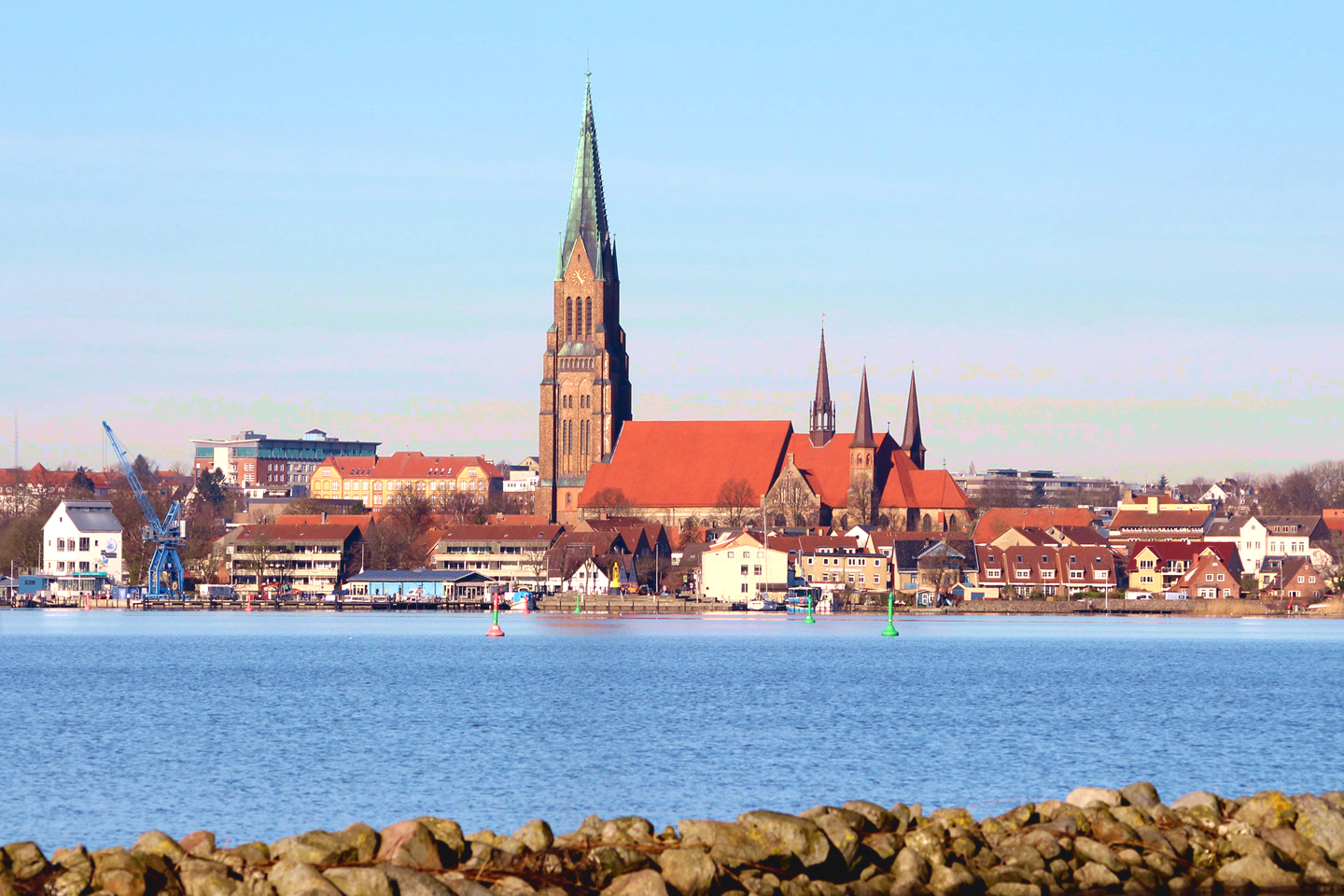
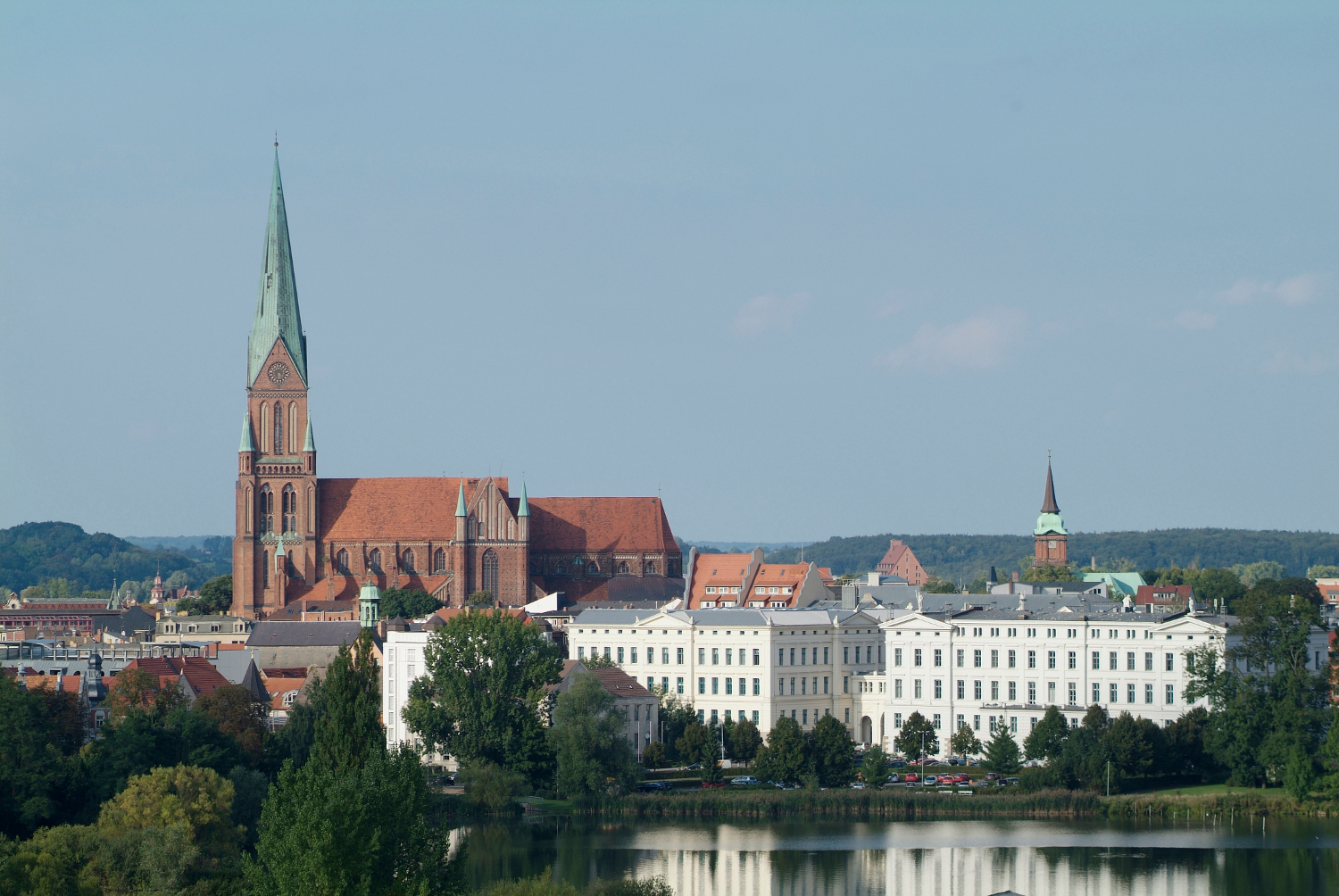
La cathédrale de Schleswig est une cathédrale situé à Schleswig en Allemagne.
La cathédrale Saint-Pétri du Schleswig est l'église de prédication de l'évêque du district de Schleswig et Holstein de l' Église évangélique luthérienne du nord de l'Allemagne . C'est l'un des monuments architecturaux les plus importants du Schleswig-Holstei.
La catedral de Schleswig (en alemán, Schleswiger Dom; en danés, Slesvig Domkirke), oficialmente catedral de San Pedro en Schleswig (en alemán, St. Petri-Dom zu Schleswig), es la iglesia principal de la ciudad de Schleswig y fue la antigua catedral católica del obispado de Schleswig hasta que esa diócesis fue disuelta en 1624. Ahora es una iglesia de la Iglesia evangélica luterana del norte del Elba, sede de uno de sus obispos, y se encuentra entre los monumentos arquitectónicos más importantes del estado de Schleswig-Holstein.
Шлезвигский собор (нем. Schleswiger Dom, дат. Slesvig Domkirke), официальное название Собор Святого Петра в Шлезвиге (нем. St. Petri-Dom zu Schleswig) — главная евангелическо-лютеранская церковь города Шлезвиг. Кафедральный собор Шлезвига до 1624 года (когда епархия была упразднена). Входит в число важнейших архитектурных памятников Шлезвиг-Гольштейна.
 Sachsen
Architektur
Architektur der Gotik
Deutschland
Religion
 Rheinland-Pfalz
Urlaub und Reisen
Rheinland-Pfalz
Urlaub und Reisen
 Weltkulturerbe



Die Schriftrollen vom Toten Meer (englisch Dead Sea Scrolls) oder Qumran-Handschriften sind eine Gruppe von antiken jüdischen Texten, die elf Höhlen nahe der archäologischen Stätte Khirbet Qumran im Westjordanland zugeordnet werden. Von 1947 bis 1956 wurden die Höhlen entdeckt, meist von Beduinen. Die Handschriften wurden teils aus dem Antikenhandel erworben, teils bei der archäologischen Untersuchung der Höhlen gefunden. Etwa 15 Buchrollen sind noch als solche erkennbar. Der Rest, geschätzt 900 bis 1000 Rollen, ist in mehr als 15.000 Fragmente zerfallen. Die Handschriften werden aufgrund der Buchstabenformen (paläografisch) in die Zeit vom 3. Jahrhundert v. Chr. bis ins 1. Jahrhundert n. Chr. datiert. Mit der Radiokarbonmethode wurde diese Datierung in einigen Fällen überprüft und bestätigt. Die meisten Texte sind in hebräischer Sprache verfasst; fast alle sind literarisch und haben einen religiösen Inhalt. Alltagstexte wie zum Beispiel Briefe gibt es kaum. Der literarische Charakter unterscheidet die Qumranhandschriften von anderen antiken Textfunden in der Region (mit Ausnahme von Masada) und lässt sie, trotz der Vielfalt des Inhalts, für viele Fachleute als zusammengehörig erscheinen.
死海古卷(Dead Sea Scrolls,又称为死海文书、死海经卷、死海书卷),是目前最古老的希伯来文圣经抄本(旧约)。除了《圣经·以斯帖记》以外的《旧约全书》全部内容都能在死海古卷中找到,还含有一些虽然已经得到天主教承认、但仍被新教视作外典(包括次经及伪经)的经卷。此外也包括一些不属于《圣经》的文献。
该古卷于1947年的死海附近的库姆兰出土,故名为死海古卷。古卷主要是羊皮纸,部分是莎草纸。抄写的文字以希伯来文为主,当中也有少数由希腊文、阿拉姆文、纳巴泰文和拉丁文书写。
Architektur
Architektur der Backsteingotik
Architektur
Architektur der Gotik
Geschichte
L 1000 - 1500 nach Christus
 Mecklenburg-Vorpommern
Religion
Urlaub und Reisen
Mecklenburg-Vorpommern
Religion
Urlaub und Reisen