漢德百科全書 | 汉德百科全书
 Religion
 History


Thomas von Aquin (* um 1225 auf Schloss Roccasecca bei Aquino in Italien; † 7. März 1274 in Fossanova; auch Thomas Aquinas oder der Aquinat; italienisch Tommaso d’Aquino) war Dominikaner und einer der einflussreichsten Philosophen und Theologen der Geschichte. Er gehört zu den bedeutendsten der 35 katholischen Kirchenlehrer und ist als solcher unter verschiedenen Beinamen wie etwa Doctor Angelicus[1] bekannt. Seiner Wirkungsgeschichte in der Philosophie des hohen Mittelalters nach zählt er zu den Hauptvertretern der Scholastik. Er hinterließ ein sehr umfangreiches Werk, das etwa im Neuthomismus und der Neuscholastik bis in die heutige Zeit nachwirkt. In der römisch-katholischen Kirche wird er als Heiliger verehrt.
圣托马斯·阿奎那(St. Thomas Aquinas,约1225年-1274年3月7日)是欧洲中世纪经院派哲学家和神学家。他是自然神学最早的提倡者之一,也是托马斯学派的创立者,成为天主教长期以来研究哲学的重要根据。他所撰写的最知名著作是《神学大全》(Summa Theologica)。天主教会认为他是史上最伟大的神学家,将其评为三十五位教会圣师之一,也被称作天使博士(天使圣师)或全能博士。
 Architecture
 Mecklenburg-Vorpommern

 Vacation and Travel

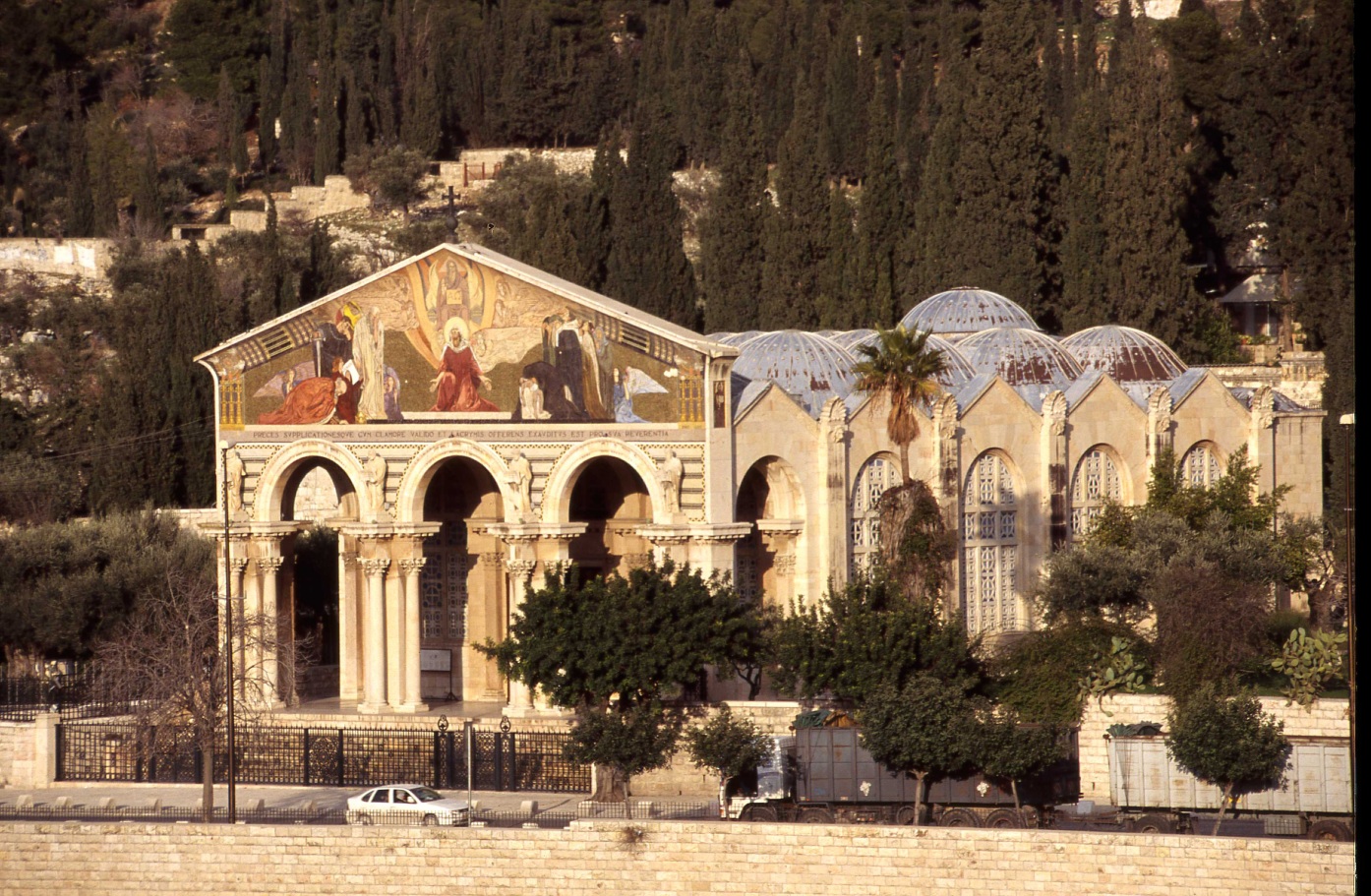
Die Kirche aller Nationen (lat. Basilica Agoniae Domini; auch Kirche der Nationen oder Todesangstbasilika) ist ein römisch-katholischer Sakralbau im Garten Getsemani am Fuße des Ölbergs in Jerusalem und gehört zum Lateinischen Patriarchat von Jerusalem.
Nach Matthäus 26,36–46 EU und Markus 14,25–42 EU hat Jesus von Nazareth an dieser Stelle im Bewusstsein des Bevorstehenden gebetet, bevor er von Judas Iskariot verraten wurde. Besonders bezieht sich die Kirche auf die nur bei dem Evangelisten Lukas 22,44 EU überlieferte Stelle: „Und er betete in seiner Angst noch inständiger und sein Schweiß war wie Blut, das auf die Erde tropfte.“ Dieses Blutschwitzen wird als Hinweis auf die Todesangst Jesu und sein auch menschliches Wesen angesehen.
Die Kirche wurde zwischen 1919 und 1924 mit Geldern aus zwölf Ländern erbaut. Daher rührt auch der Name Kirche der Nationen.[2] Das Wappen jedes der beteiligten Länder ist in einer eigenen Sektion an der Decke der Kirche zu finden. Die dreischiffige Kirche hat die klassische Basilika-Form ohne Turm, aber zwölf Kuppeln, die für die zwölf Apostel stehen, die von sechs rotbraunen Säulen als Symbol für die Ölbäume getragen werden.[3] Der Innenraum ist passend zum Thema Todesangst verhältnismäßig düster. Der Altar steht vor dem Felsen, auf dem Jesus gebetet haben soll, und ist mit einem Gitter umgeben, das an die Dornenkrone erinnert.
Die heutige Kirche steht auf den Fundamenten einer byzantinischen Basilika aus dem 4. Jahrhundert, erbaut durch Kaiser Theodosius I., die im Jahre 746 bei einem Erdbeben zerstört wurde, und einer Kreuzfahrerkirche aus dem 12. Jahrhundert, die 1345 zerstört wurde. Teile des ursprünglichen Fußbodens sind noch heute in der Kirche sichtbar.
万国教堂(Church of All Nations),又名Agony教堂,位于耶路撒冷城东部的橄榄山,毗邻客西马尼园。 耶稣在被捕前晚间祷告的地方,万国教堂是世界上四大著名教堂之一。耶稣在被捕前晚间在此祷告,听到神告诉他只能活七天的地方,而内部也有供奉当初耶稣祷告时所坐的石头。 教堂外观上方的马赛克镶嵌画中间红衣服的是耶稣,而他张开双臂代表着在最后七天的生命努力作好上方的主交办他的事项,而主身上的记号则代表起源或结束都来自于主,两旁的信众一边是相信耶稣会带给他希望,另一边则是怀疑他的人民,但最终、两边都会相信他的。 教堂本身在建筑的同时,有发现基底有拜占庭时代遗留下来的遗迹,所以当初建筑教堂的设计师保留原遗迹的马赛克拼贴花式,将教堂完成。 这座教堂建于1919年到1924年,得到许多不同国家的资助(因而得名)。每个国家的标志放置于天花板的玻璃上,每一个都放在一个小dome. 教堂的前面有一排列柱,教堂为拜占庭风格建筑,有圆顶、粗大的列柱和镶嵌图案。该教堂的建筑师是Antonio Barluzzi。
现存教堂时间在两座古代教堂的基础上-12世纪十字军教堂(1345年废弃)和4世纪的拜占庭教堂(毁于746年地震)。
The Church of All Nations, also known as the Church or Basilica of the Agony, is a Roman Catholic church located on the Mount of Olives in Jerusalem, next to the Garden of Gethsemane. It enshrines a section of bedrock where Jesus is said to have prayed before his arrest. (Mark 14:32-42) The current church rests on the foundations of two earlier ones, that of a small 12th century Crusader chapel abandoned in 1345, and a 4th-century Byzantine basilica, destroyed by an earthquake in 746. In 1920, during work on the foundations, a column was found two meters beneath the floor of the medieval crusader chapel. Fragments of a magnificent mosaic were also found. Following this discovery the architect immediately removed the new foundations and began excavations of the earlier church. After the remains of the Byzantine era church were fully excavated plans for the new church were altered and work continued on the current basilica from April 19, 1922 until June 1924 when it was consecrated.
L’église de Toutes-les-Nations (également appelée basilique de l’Agonie, Basilica Agoniæ Domini) est une église catholique située au pied du mont des Oliviers à Jérusalem, au lieu-dit « Gethsémani ». Construite de 1922 à 1924, elle renferme le rocher au pied duquel, selon la tradition, Jésus pria durant son agonie, avant son arrestation (Luc 22 :41)
La chiesa di tutte le Nazioni è una chiesa di Gerusalemme, posta sul monte degli Ulivi, in quello che la tradizione riconosce come il Getsemani.
Essa è costruita sul luogo dove, a partire dal IV secolo, esisteva un luogo di culto bizantino, trasformato poi dai crociati in basilica, andata in rovina con la definitiva occupazione islamica.
Il nome della chiesa ricorda il contributo di numerosi paesi alla sua costruzione, avvenuta tra il 1919 ed il 1924 ad opera dell'architetto italiano Antonio Barluzzi. La chiesa è conosciuta anche come chiesa dell'agonia in riferimento alla notte che Gesù vi trascorse alla vigilia del suo arresto. In essa sono armoniosamente fusi assieme elementi architettonici tipici delle basiliche cristiane (per esempio la facciata) con tratti tipici degli edifici islamici (per esempio la copertura caratterizzata da numerose piccole cupole).
La Basílica de Getsemaní, también conocida como Basílica de las Naciones o de la Agonía, es un templo católico situado en el Monte de los Olivos de Jerusalén, junto al jardín de Getsemaní. En su interior se encuentra la porción de roca en la que, según la tradición, Jesús oró la noche de su arresto, después de celebrar la Última Cena.1
La basílica descansa sobre los cimientos de dos templos anteriores, una basílica bizantina del siglo IV, destruida por un terremoto en el año 746 y una capilla cruzada del siglo XII, abandonada en 1345.23 Las obras del edificio actual, diseñado por el arquitecto Antonio Barluzzi,1 se llevaron a cabo entre 1919 y 19244 empleando fondos provenientes de distintos países (de ahí su apelativo de las naciones), cuyos símbolos aparecen en los mosaicos del techo en recuerdo de su contribución en la construcción.1El frontal de la iglesia es una fachada de estilo neobizantino, con una serie de pilares. Como remate, un mosaico mostrando simbólicamente a Jesucristo como enlace entre Dios y la humanidad. El techo en forma de burbujas, los pilares anchos y el mosaico refuerzan la apariencia arquitectónica bizantina de la iglesia.
La basílica se encuentra regida por la Custodia de Tierra Santa de la Orden Franciscana, que en un gesto de ecumenismo, también permite a la comunidad anglicana utilizar un altar en el huerto de Getsemaní para celebrar sus servicios de Jueves Santo.2
Церковь Всех Наций или Бази́ли́ка Аго́нии Госпо́дней (лат. Basilica Agoniae Domini) — францисканский католический храм в Гефсиманском саду, построенный на том месте, где, согласно преданию, Иисус Христос совершил Моление о чаше (Мк. 14:32-42) в последнюю ночь перед арестом. Церковь освящена в честь Страстей (Страданий) Господних.
Расположена у подножия Елеонской горы в Восточном Иерусалиме.
Церковь сооружена в 1924 году на месте более ранних церквей по проекту итальянского архитектора Антонио Барлуцци на деньги католиков 12 стран мира (Аргентина, Бельгия, Бразилия, Канада, Чили, Великобритания, Франция, Германия, Италия, Мексика, Испания и США), в честь чего и получила своё популярное название — церковь Всех наций[1]. В честь этих стран церковь имеет 12 куполов[2].
Камень, на котором, по преданию, Иисус Христос совершил Моление о чаше расположен в алтаре церкви и окружен железной кованной оградой в виде терновых венцов (подарок Австралии).
Снаружи к церкви примыкает камень, на котором находится вырезанное из камня изображение молящегося Христа[3].
Поскольку церковь принадлежит католикам, то прочие христианские конфессии для служб в Гефсиманском саду используют открытый алтарь, расположенный около храма.