
Deutsch-Chinesische Enzyklopädie, 德汉百科
 Ontario-ON
 Film & TV Produktion
 Companies

 International cities
 FIFA Fussball-Weltmeisterschaft 2026
 Important port


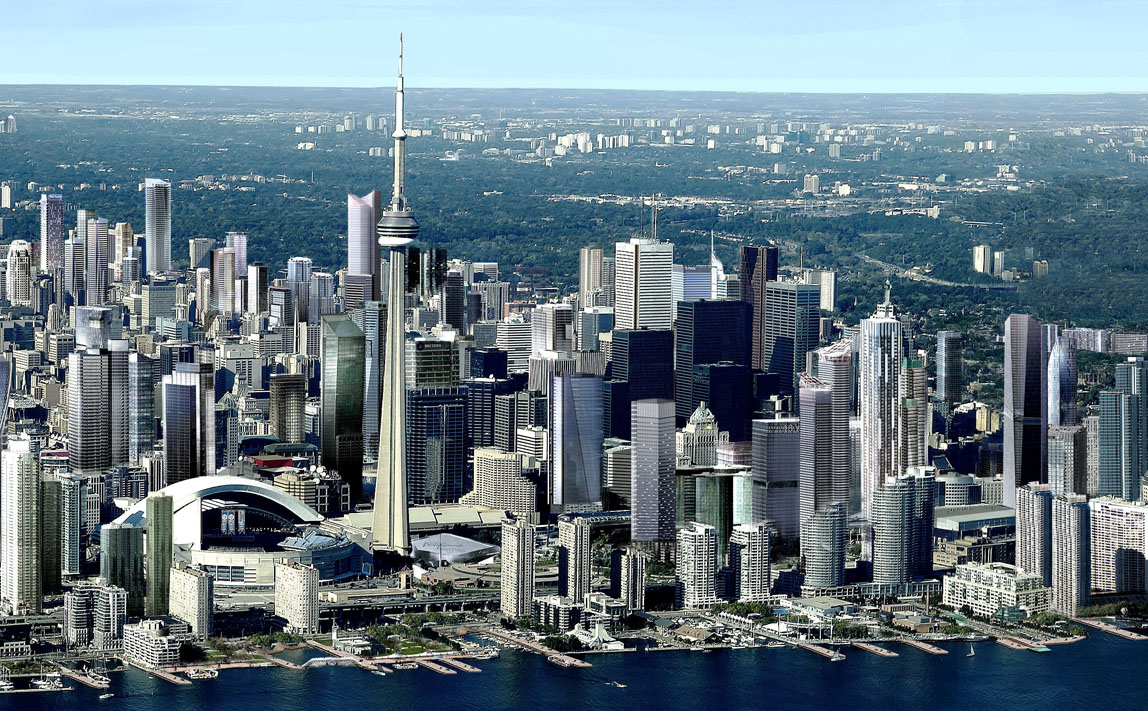
多伦多[注 1](英语:Toronto)是加拿大安大略省首府,也是加拿大最大的城市,坐落在安大略湖西北岸的南安大略地区。根据2021年的加拿大人口普查,多伦多市人口达2,794,356人,为加拿大最大城市。多伦多市是大多伦多地区的核心地区,也是安大略省南部人口稠密区(称作“金马蹄地区”)的一部分。[9][10][11]都会区有6,202,225名居民,[12]而覆盖范围较广的大多伦多地区则有9,765,188名居民。[10]作为加拿大的经济中心,多伦多是一个世界级城市,[13]也是世界上最大的金融中心之一。[14][15]多伦多在经济上的领先地位在于金融、商业服务、电信、航太、交通运输、媒体、艺术、电影、电视制作、出版、软件、医药研究、教育、旅游、体育等产业。[16][17]多伦多证券交易所是世界第七大交易所,总部设于市内,有多数加拿大公司在这里上市。
多伦多的国际性人口[18]体现出它是前往加拿大移民的重要落脚点。[19]而市内49%的人口是在加拿大以外诞生[20],也造就多伦多成为世上种族最多样化的城市之一。目前多伦多的低犯罪率、洁净的环境、高生活水准、以及对多样文化的包容性,令该市被多个经济学智囊团列为世界上最宜居的城市之一。[21][22]另一方面,多伦多于2006年被列为加拿大生活成本最高的城市。
多伦多(英语/法语:Toronto),是北美洲国家加拿大安大略省首府,加拿大的最大城市。
多伦多坐落在安大略湖西北岸的南安大略地区。根据2012年七月的加拿大人口普查,多伦市人口达2,790,060,为加拿大最大城市。多伦多市是大多伦多地区的心脏地区,也是安大略省南部人口稠密区(称作“金马蹄地区”)的一部分。[1][2][3]城市区有5,132,794名居民。[4]在2011年人口普查中,多伦多人口普查区有5,583,064名居民,而覆盖范围较广的大多伦多地区则有6,054,191名居民。[2]
作为加拿大的经济中心,多伦多是一个世界级城市,[5]也是世界上最大的金融中心之一。[6][7] 多伦多在经济上的领先地位在于金融、商业服务、电信、航太、交通运输、媒体、艺术、电影、电视制作、出版、软件、医药研究、教育、旅游、体育等产业。[8][9]多伦多证券交易所是世界第七大交易所,总部设于市内,有多数加拿大公司在这里上市。
多伦多的国际性人口[10] 体现出它是前往加拿大移民的重要落脚点。[11]而市内49%的人口是在加拿大以外诞生[12],也造就多伦多成为世上种族最多样化的城市之一。目前多伦多的低犯罪率、洁净的环境、高生活水准、以及对多样文化的包容性,令该市被多个经济学智囊团列为世界上最宜居的城市之一。[13][14]另一方面,多伦多于2006年被列为加拿大生活成本最高的城市。[15]
大约1/3的加拿大人居住在距多伦多两小时车程的郊区。加拿大大约1/6的就业机会在该市。
多伦多当地的华侨及华裔人口多达四十万,相当于加拿大全国约百分之一的人口,该城市也是加拿大华人最多的城市。除此之外也有大量世界各地的移民,加拿大安大略省多伦多市的人口统计资料使多伦多成为世界上最多元文化和多种族的城市之一。2016年,该市居民的51.5%属于明显的少数族裔,而2011年这一比例为49.1%,和1981年为13.6%。多伦多还建立了多个社区,例如唐人街,意大利的Corso,小意大利,小印度,希腊城,韩国城,小牙买加,小葡萄牙和朗塞瓦勒,以庆祝该市的多元文化主义的成功。
Toronto (englische Aussprache [təˈɹɒn(t)oʊ̯]; regional auch  [təˈɹɒnə] oder [ˈtɹɒnoʊ̯]) ist mit 2,6 Millionen Einwohnern[2] die größte Stadt Kanadas und die Hauptstadt der Provinz Ontario. Sie liegt im Golden Horseshoe (Goldenes Hufeisen), einer Region mit über 8,1 Millionen Einwohnern, die sich halbkreisförmig um das westliche Ende des Ontariosees bis zu den Niagarafällen erstreckt. Rund ein Drittel der Bevölkerungszunahme des ganzen Landes lebte in den letzten Jahren in diesem Großraum. Die Einwohnerzahl der Metropolregion (Census Metropolitan Area) stieg von 4,1 Millionen im Jahr 1992 auf 5,6 Millionen im Jahr 2011.[3] Die Greater Toronto Area hatte 2010 über 6,2 Millionen Einwohner.[4]
Die Stadt liegt am nordwestlichen Ufer des Ontariosees, dem mit 18.960 km² Fläche[5] kleinsten der fünf Großen Seen. Durch die Eingemeindung einer Reihe von Vorstädten, die bereits mit Toronto verschmolzen waren (Etobicoke, Scarborough, York, East York und North York), wurde Toronto Ende der 1990er Jahre mehrfach vergrößert. Das Zentrum mit dem Einkaufs- und Bankendistrikt befindet sich in der Nähe des Sees. Die Haupteinkaufsstraße ist die Yonge Street. Toronto ist seit ungefähr den 1970er Jahren, nachdem Montreal über Jahrzehnte hinweg diese Rolle zugefallen war, Kanadas Wirtschaftszentrum und weltweit einer der führenden Finanzplätze.
トロント(英語: Toronto、標準音:[təˈɹɒntoʊ]、現地音:[ˈtɹɒnoʊ, təˈɹɒnoʊ])は、カナダのオンタリオ州の州都であり、同国最大の都市である。オンタリオ湖岸の北西に位置し、2016年の統計で人口273万人[1]。
国際影響力の強い世界都市であり、2016年の都市圏人口は624万人[2]。またヒューロン語で「集まる場所」という意味がある。
オンタリオ湖西岸を囲むゴールデン・ホースシュー(Golden Horseshoe)と呼ばれる都市化された地域の人口はおよそ924万人とされ、カナダ随一の金融センターとしてその中心を成している。1834年までの旧名はヨーク(Town of York)。
Toronto is the provincial capital of Ontario and the most populous city in Canada, with an estimated population of 2,956,024 (2018) and an estimated population of 6,341,935 in the Toronto Region (2018.)[14] Located on the shores of the western end of Lake Ontario, Toronto is also the anchor of the Golden Horseshoe, an urban agglomeration of 9,245,438 (2016)[15] that accounts for a significant portion of Canada's economic activity and more than 20% of Canada's population. Toronto is an international centre of business, finance, arts, and culture. Its large population of immigrants from around the globe has also made Toronto one of the most multicultural and cosmopolitan cities in the world.[16][17][18]
People have travelled through and inhabited the Toronto area, located on a broad sloping plateau interspersed with rivers, deep ravines, and urban forest, for more than 10,000 years.[19] After the broadly disputed Toronto Purchase, when the Mississauga surrendered the area to the British Crown,[20] the British established the town of York in 1793 and later designated it as the capital of Upper Canada.[21] During the War of 1812, the town was the site of the Battle of York and suffered heavy damage by American troops.[22] York was renamed and incorporated in 1834 as the city of Toronto. It was designated as the capital of the province of Ontario in 1867 during Canadian Confederation.[23] The city proper has since expanded past its original borders through both annexation and amalgamation to its current area of 630.2 km2 (243.3 sq mi).
The diverse population of Toronto reflects its current and historical role as an important destination for immigrants to Canada.[24][25] More than 50 percent of residents belong to a visible minority population group,[26] and over 200 distinct ethnic origins are represented among its inhabitants.[27] While the majority of Torontonians speak English as their primary language, over 160 languages are spoken in the city.[28]
Toronto is a prominent centre for music,[29] theatre,[30] motion picture production,[31] and television production,[32] and is home to the headquarters of Canada's major national broadcast networks and media outlets.[33] Its varied cultural institutions,[34] which include numerous museums and galleries, festivals and public events, entertainment districts, national historic sites, and sports activities,[35] attract over 43 million tourists each year.[36][37] Toronto is known for its many skyscrapers and high-rise buildings,[38] in particular the tallest free-standing structure in the Western Hemisphere, the CN Tower.[39]
The city is home to the Toronto Stock Exchange, the headquarters of Canada's five largest banks,[40] and the headquarters of many large Canadian and multinational corporations.[41] Its economy is highly diversified with strengths in technology, design, financial services, life sciences, education, arts, fashion, aerospace, environmental innovation, food services, and tourism.[42][43][44]
Toronto (/tɔ.ʁɔ̃.to/1 ; en anglais : /təˈɹɒntoʊ̯/2 Écouter voire localement /təˈɹɒnə/ ou /ˈtɹɒnoʊ̯/ Écouter) est la plus peuplée des villes du Canada et la capitale de la province de l'Ontario. Elle se situe dans le Sud-Est du Canada, sur la rive nord-ouest du lac Ontario. Selon le recensement de 2016, Toronto compte plus de 2,7 millions d'habitants, faisant d'elle la quatrième ville la plus peuplée en Amérique du Nord. Son aire métropolitaine compte 5,9 millions d'habitants, et la mégalopole du Golden Horseshoe, dont elle est le cœur, plus de 8,7 millions d'habitants en 2011, soit le quart de la population canadienne. Ville mondiale, Toronto est le centre bancaire, financier, commercial et artistique du Canada anglophone, et l'une des villes les plus multiculturelles et cosmopolites au monde.
La région de Toronto, située sur un vaste plateau en pente jalonné de rivières, de ravins et de forêts, est habitée depuis plus de 10 000 ans. Après la brève installation d'un fort par les Français puis l’achat contesté de la région au peuple Mississauga par la Couronne britannique, les colons anglais fondent en 1793 la ville d'York, qui devient la capitale du Haut-Canada. Pendant la guerre de 1812, la ville est le théâtre de la bataille d'York et subit de lourds dégâts par les troupes américaines. York est renommée Toronto en 1834. Elle est désignée capitale de la province de l'Ontario en 1867 par la Confédération canadienne. La ville s'est depuis étendue au-delà de ses frontières d'origine, à la suite de plusieurs fusions, jusqu'à atteindre la superficie actuelle de 630,2 km2.
La population particulièrement cosmopolite de Toronto reflète son rôle historique de destination des immigrants au Canada. Plus de 50 % des résidents appartiennent à un groupe de minorités visibles et plus de 200 origines ethniques distinctes sont représentées parmi ses habitants. Bien que la majorité des Torontois parlent l'anglais principalement, plus de 160 langues sont parlées dans la ville.
Toronto est devenu un important centre de musique, théâtre, de production cinématographique et télévisuelle. Elle abrite le siège des principaux réseaux de diffusion et des médias nationaux du Canada. Ses institutions culturelles variées, qui comprennent de nombreux musées et galeries d'art, des festivals et événements publics, des quartiers de divertissement, des lieux historiques nationaux et des activités sportives, attirent plus de 25 millions de touristes chaque année. Toronto est connue pour ses nombreux gratte-ciel, en particulier la plus haute structure autoportante de l' hémisphère occidental, la tour CN.
La ville abrite la Bourse de Toronto, le siège des cinq plus grandes banques du Canada et de nombreuses autres grandes sociétés canadiennes et multinationales, de tous les secteurs économiques. Elle abrite aussi de nombreux établissements d'enseignement supérieur réputés, dont l'université de Toronto qui figure parmi les plus réputées au monde.
Toronto apparaît régulièrement dans les classements des meilleures villes en termes de qualité de vie, malgré un coût de la vie important. Ses habitants s'appellent les Torontois.
Toronto (IPA: [təˈɹɒntoʊ̯]; pronuncia locale: [ˈtrɒnoʊ] oppure [təˈɹɒnə], ascolta[?·info]) è una città dell'estremo Sud-Est del Canada, capoluogo della provincia dell'Ontario e centro più popoloso del Canada con i suoi 3 120 668 abitanti[1] (5 928 040 nell'area metropolitana[2]).
Motore economico del Canada, Toronto è, assieme a Montréal, la città del paese nordamericano più conosciuta nel mondo, seguita da Ottawa. Caratteristica della città è quella di essere una delle più multiculturali nel mondo, con circa il 36% degli abitanti di origine non canadese. Per dare un'idea di ciò basti pensare che il 911 (numero telefonico di emergenza) di Toronto è attrezzato per rispondere in oltre 150 lingue[3]. La seconda più grande comunità, superata da qualche anno da quella cinese, è costituita dagli italiani che hanno dato un enorme contributo allo sviluppo di questo paese. Si stima che le persone di origine italiana residenti a Toronto siano superiori a 500 000. Il primo quartiere dove si insediarono gli italiani fu quello di College, successivamente si spostarono a Saint Clair denominata col nome aggiuntivo di Corso Italia[4] dal 1988.
Toronto è suddivisa in 240 quartieri all'interno dei suoi confini, raggruppati in sei distretti (Old Toronto, East York, Etobicoke, Scarborough, North York e York (dove si trova anche il quartiere di Weston). Nella parte centrale di Toronto (Downtown Toronto) c'è una città sotterranea, chiamata PATH (in inglese: il sentiero o il percorso), costituita da una rete di collegamenti che mettono in collegamento i grattacieli della città. Il percorso è lungo più di 30 km. Secondo il Guinness dei primati, con i suoi 371600 m² di estensione, il PATH è più esteso centro commerciale sotterraneo del mondo.[5]
I residenti considerano questi 27 km di strade sotterranee come parte della città stessa, come se la città iniziasse non dal suolo, ma dal piano -3. Venne creata agli inizi degli anni sessanta perché in inverno, spazzata da venti nordici, Toronto è molto fredda in rapporto alla latitudine, mentre sotto ci si può muovere in abiti primaverili, sulle strade superiori, durante straordinarie irruzioni gelide ci possono essere temperature di −25/−30 °C al primo mattino o di sera. Di notte si può scendere un po' più in basso ed in tali casi le massime rimangono spesso a -20 sotto lo zero. Ovviamente il traffico automobilistico convenzionale è bandito nella città sotterranea, gli spostamenti sono previsti a piedi o con mezzi per disabili, ma il path ha numerosi punti di contatto con la viabilità esterna (parcheggi) o, molto più frequentemente, con una fitta rete di stazioni del trasporto pubblico di superficie o sotterraneo (subway).
Per muoversi nella parte sotterranea è molto importante fare riferimento a elementi di identificazione degli incroci (come elementi architettonici, facciate di banche, negozi tipici, ecc.), dato che non sempre il percorso sotterraneo (pedonale) corrisponde a quello (stradale) di superficie; o meglio, se non si è pratici, bisogna usare la mappa. La città sotterranea è completamente attrezzata come una città comune: ci sono banche, uffici postali, locali pubblici, ristoranti, uffici e supermercati. Le maggiori istituzioni (stazioni ferroviarie, aziende pubbliche, aziende commerciali, ecc.) hanno accesso multiplo: di superficie e sotterraneo.
Toronto (pronunciación en inglés: /tʲəˈɹɑntʲoʊ/ ( escuchar), localmente /tʲəˈɹɑnoʊ/, /ˈtʲɹɑnoʊ/) es la capital de la provincia de Ontario3 y, con una población de 2 615 060 habs.4 es la ciudad más grande de Canadá,5 además del centro financiero de dicho país.
Localizada en la orilla noroeste del lago Ontario,6 es la quinta ciudad más grande de Norteamérica.7 Toronto se encuentra en el corazón del Área Metropolitana de Toronto (Greater Toronto Area en inglés y abreviado como GTA), la mayor área metropolitana de Canadá, y es parte de una región densamente poblada en el centro-sur de Ontario conocida como Golden Horseshoe (Herradura Dorada), donde residen ocho millones de habitantes.8910
Al ser la capital económica de Canadá, Toronto es considerada una ciudad global y una de las principales ciudades financieras del mundo.11 Lidera los sectores económicos de finanzas, servicios empresariales, telecomunicaciones, transporte, medios de comunicación, arte, cine, investigación médica, educación, y turismo de Canadá.1213 El Toronto Stock Exchange es la mayor bolsa de valores del país y la séptima del mundo.12
Toronto es famosa por la Torre CN, con 553 metros de altura. La ciudad se considera el centro de la cultura canadiense anglófona y es la anfitriona de muchas celebraciones nacionales.
La población de Toronto es cosmopolita,1415 y es un importante destino para muchos inmigrantes a Canadá.16 Toronto es la mayor ciudad del mundo en porcentaje de residentes no nacidos en el propio país; sobre un 49 % de los habitantes de la ciudad no ha nacido en Canadá.141516 Debido al bajo índice de criminalidad,17 el cuidado medio ambiente y el alto nivel de vida, Toronto, es considerada con asiduidad una de las ciudades mejor habitables del mundo.1819 Además, en 2006 fue clasificada como la ciudad más cara de Canadá.20 Los nacidos en Toronto reciben el gentilicio de torontonianos.21
En enero de 2005, Toronto fue escogida por el gobierno canadiense como una de las capitales culturales de Canadá. Toronto posee una de las mejores calidades de vida de América del Norte, y es considerada por muchos como una de las mejores metrópolis del mundo para vivir.22 Es una de las ciudades más seguras de América —su tasa de criminalidad es menor que la de cualquier gran ciudad del continente, y una de las menores de Canadá.23
En la ciudad vecina de Mississauga está el Aeropuerto Internacional Toronto Pearson. Además, en 'las islas de Toronto' dentro de la ciudad está el Billy Bishop Toronto City Airport, que es más pequeño.
Торо́нто (англ. Toronto [təˈrɒntoʊ], местн. [təˈrɒnoʊ], [ˈtrɒnoʊ], [-nə]) — крупнейший город Канады, административный центр провинции Онтарио. Население — 2 731 571 чел. (2016); вместе с городами Миссиссога, Брамптон, Маркем и другими образует агломерацию Большой Торонто с населением 5928 тыс. жителей.
Торонто является частью «золотой подковы» — густонаселённого региона вокруг западной части озера Онтарио с населением около 7 млн человек. Приблизительно одна треть всего населения Канады живёт в радиусе 500 км от Торонто. Около шестой части всех рабочих мест Канады находятся в пределах городской черты.
Город Торонто известен также как «экономический двигатель» Канады, считается одним из ведущих мегаполисов мира и имеет большой вес как в регионе, так и на государственном и международном уровне. В ежегодном рейтинге Global Liveability Ranking журнала The Economist, оценивающем совокупное качество жизни, Торонто занимает четвёртое место в мире среди 140 городов — участников рейтинга[1].
В Торонто располагается главный офис Всемирного конгресса украинцев. В июне 2010 года в Торонто прошла встреча глав государств и правительств «Большой двадцатки».
К северо-востоку от Торонто в городе Пикеринг находится атомная электростанция АЭС Пикеринг с восемью ядерными реакторами.
 Financial
 Economy and trade

 Transport and traffic


 Exhibition
 Aerospace

 Military, defense and equipment
 Music
Music
 Performing Arts

 History

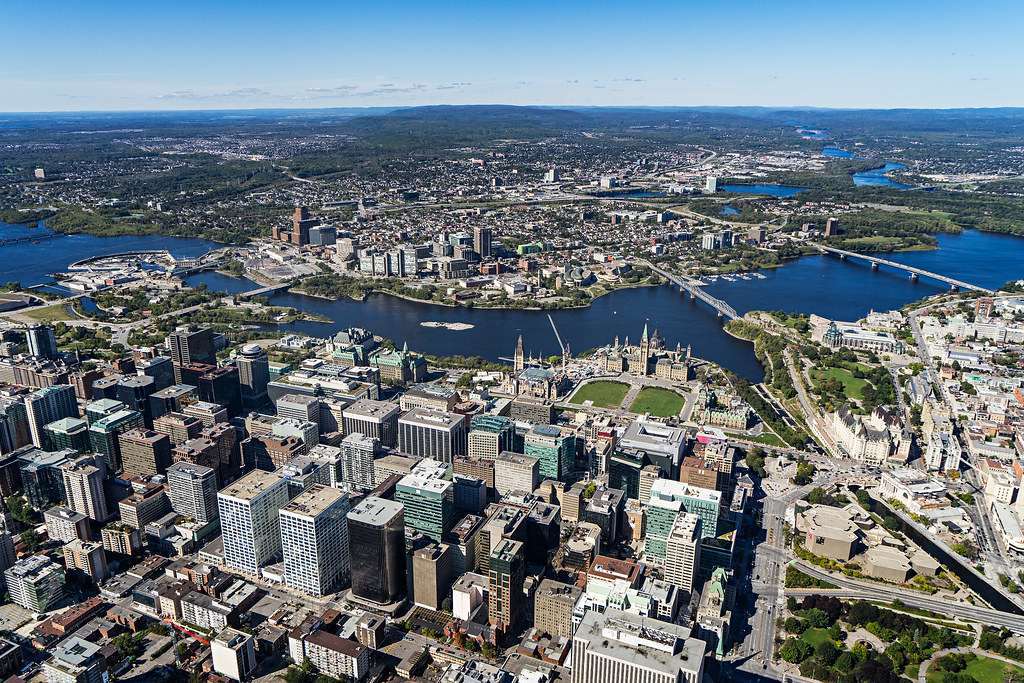
渥太华(Ottawa)是加拿大的首都,全国第四大城市,面积2,779平方公里,位于安大略省东南部,渥太华河南岸,多伦多以东400公里,蒙特利尔以西190公里。在2011年人口统计中,渥太华城市有883,391人,市区有1,236,324人,使其成为人口普查都会区域(CMA)第四的城市。
在1826年9月26日以“Bytown”之名建立,1850年1月1日合并为一个城镇,[8]并于1855年1月1日以“渥太华”之名合并取代。并不断发展成为加拿大的政治和工业技术中心。城市的原有边界由后来经过多次的小规模兼并而扩大的。“渥太华”这个名称是来自亚冈昆语(Algonquin language)adawe,意思为“贸易”。[9]渥太华常被华人简称为渥京。
加拿大与美国、澳大利亚等国不同,没有将首都城市设为联邦直辖的行政区,但是渥太华的土地管理和城市规划是由国家首都委员会(National Capital Commission)负责。
渥太华最初为爱尔兰和法国的基督教乡镇,现在已成为一个具有多元文化、高水准生活水平,低失业率的大城市。
艾蒂安·布鲁尔(Étienne Brûlé)是第一位来到渥太华河的欧洲人,并于1610年去五大湖的途中经过了渥太华。[10]三年后,萨缪尔·德·尚普兰描述了在这个地区的瀑布和见到的阿尔衮琴人。阿尔衮琴人以使用渥太华河一词达百年了。[10]渥太华原是属于亚冈昆部落(Algonquian peoples)的加拿大原住民的家园。亚冈昆人将渥太华河称作“Kichi Sibi”或:Kichissippi“,意思是“大河”。[11]这些早期的探险家来到之后,许多传教士也陆续来到渥太华。[12][13][14]
1800年3月7日,企业家菲利门·怀特(Philemon Wright)在渥太华河北侧,位于渥太华对面的魁北克加蒂诺赫尔区域建立了第一个欧洲人定居点。[15][16]他与5名农民和25位劳工,[11]着手开始在此殖民地建立一个名叫“怀特城镇”(Wrightsville)的农业社区。[17]怀特发现这条河是介于渥太华河谷(Ottawa Valley)与蒙特利尔之间的绝佳木材运输通道,木材加工和贸易使渥太华地区很快繁荣起来。1812年战争之后,大量军人家庭在此定居,政府亦致力推动贫困的爱尔兰人向渥太华移民,在此后的几十年爱尔兰移民蜂拥而至。同时,法裔加拿大人也从魁北克南下,大部分人参与丽都运河修建工程或从事木材贸易。
1832年,约翰·拜(John By)上校主导的丽都运河工程竣工,将渥太华与金斯敦和安大略湖连为一体,使之成为地区重镇。运河西部是国会山所在地,称为“上城”;而东部介于运河与丽都河之间的地区称为“下城”。嘈杂拥挤的“下城”容易爆发传染病,著名的有1832年的霍乱和1847年的红热病。
1857年12月31日,维多利亚女王选择渥太华为加拿大省的首都(包括现在的安大略和魁北克)。虽然现代的渥太华是加拿大第四大城市,但在当年,她仅仅是一个木材贸易通道中的内陆小镇,并且距离殖民地的几个主要城市(东部的蒙特利尔和魁北克城;西部的多伦多和金斯敦)路途遥远。女王的顾问们建议渥太华成为首都之选有两大重要理由:首先,渥太华是唯一具有一定规模、并且位于加拿大省东西部边界地(现安大略与魁北克边界)的城市,定都于此是平衡两个殖民地及其英裔、法裔居民的聪明妥协之举;其次,1812年战争表明,其他主要城市容易受到美国人的攻击,因为过于靠近美加边界。渥太华位于腹地,易于防守,渥太华河及丽都运河使之与加拿大东西部之间交通极为便利。另外两个方面的考虑是:渥太华正好介于多伦多和魁北克城之间(距离这两个城市都是500公里),并且城市规模较小,因而不容易受到大规模的暴徒袭击,因为政治动机,以往的首都城市都受到过这种攻击。2001年,渥太华与郊区和周边地区小城镇合并,成为规模较大的地区都市。
Ottawa (englisch [ˈɒtəwə], französisch [ɔtaˈwa]) ist die Bundeshauptstadt Kanadas. Sie liegt im östlichen Teil der Provinz Ontario am Fluss Ottawa, unmittelbar an der Grenze zur Provinz Québec. Ottawa bedeutet „Händler“ in der Sprache der Algonkin, eines Volkes, das zur Zeit der Besiedlung am Fluss Handel trieb. Am anderen Ufer des Flusses liegt die Zwillingsstadt Gatineau. Ottawa selbst zählt 883.391 Einwohner und ist damit die sechstgrößte Stadt Kanadas, der Großraum Ottawa-Gatineau ist mit 1.236.324 Einwohnern (Volkszählung 2011) der viertgrößte Ballungsraum Kanadas.
Die Bevölkerung ist zu 63 % englisch- und zu 15 % französischsprachig. Ottawa ist in der Region die einzige offiziell zweisprachige Stadt. In der Stadt selbst überwiegt die englische Sprache, im Gegensatz zu dem auf der anderen Seite des Ottawa-Flusses gelegenen Gatineau, in dem die französische Sprache überwiegt. Durch eine große Einwandererzahl sind auch zahlreiche weitere Sprachen geläufig.
Die Wirtschaft der Hauptstadt wird hauptsächlich von zwei Sektoren getragen: zum einen durch die Arbeitsplätze der Bundesbehörden und der Bundesregierung, zum anderen von denen der Hochtechnologieindustrie. Ottawa belegt beim Bruttoinlandsprodukt und dem Nettoeinkommen der Angestellten vordere Plätze im landesweiten Vergleich und belegt den ersten Platz bei der Pro-Kopf-Zahl von Einwohnern mit akademischem Grad.
オタワ(英語: フランス語: Ottawa 英語発音: [ˈɒtəwə] 聞く[ヘルプ/ファイル])は、カナダの首都。オンタリオ州東部に位置する地方行政区の一つでもある。オタワ川を挟んで隣接するガティノーを含め連邦政府の行政機関が集中する行政都市である。
カナダにはアメリカの首都ワシントンD.C.とは違い、連邦政府の特別地区(Capital District)が存在せず、オタワはオンタリオ州内の一都市となっている。行政レベルはトロントなどと同じ単一層自治体に位置づけられる。
オタワはケベック州の都市ガティノーを含めた周辺都市とでオタワ首都圏(NCR、National Capital Region)を形成している。
2006年の市域人口はおよそ81万人でカナダ国内ではトロント・モントリオール・カルガリーに次ぐ4番目。広域圏の人口は113万人を数えるが、カナダの中ではトロント等のような大都会というわけではない。
1826年~1831年に軍事的目的でオタワ川とオンタリオ湖を結ぶリドー運河が建設されたが、この時測量を担当した軍人の名にちなんでバイタウン(Bytown)の小村が生まれ、これが今日のオタワの母体となった。
1854年に市街再編、川の名からオタワに改名された。当時首都の決定を巡ってケベック、モントリオール、キングストン、トロントの4都市が激しく競い合ったが、1858年、ビクトリア女王の独断で英仏両勢力のほぼ境界に位置するオタワ(当時人口は約2万人)が選定された。
第二次世界大戦中、オランダのユリアナ王女はカナダへ亡命し、オタワに身をよせていた。ユリアナ王女はオタワ滞在中に出産を迎えたが、カナダは出生地主義であり、カナダ領内で生まれた子供には自動的にカナダ国籍が与えられるため、二重国籍を認めていないオランダの法律下では生まれた子供がオランダ国籍を喪失する恐れがあった。そのため、カナダ政府は病室を一時的にカナダ領から外す特別措置をとった。この時に生まれたのが、ユリアナ王女の三女(ベアトリクス前女王の妹)マルフリート王女である。オランダ王室はこの恩義の返礼と感謝の意を込めて、毎年チューリップの球根を贈っている。オランダとの友好をも意味するチューリップが毎年5月にチューリップ・フェスティバルの会場いっぱいに咲くことから、オタワは「チューリップ・シティ」とも呼ばれる。その数は10万本以上で世界最大規模のチューリップ・フェスティバルとなっている。同会場のインターナショナルパビリオンには、日本のパビリオンもあり、地元の日系人関係者が日本パビリオンを主催している。
Ottawa (/ˈɒtəwə/ ( listen), /-wɑː/; French pronunciation: [ɔtawa]) is the capital city of Canada. It stands on the south bank of the Ottawa River in the eastern portion of southern Ontario. Ottawa borders Gatineau, Quebec; the two form the core of the Ottawa–Gatineau census metropolitan area (CMA) and the National Capital Region (NCR).[12] As of 2016, Ottawa had a city population of 964,743 and a metropolitan population of 1,323,783 making it the fourth-largest city and the fifth-largest CMA in Canada.
Founded in 1826 as Bytown, and incorporated as Ottawa in 1855, the city has evolved into the political centre of Canada. Its original boundaries were expanded through numerous annexations and were ultimately replaced by a new city incorporation and amalgamation in 2001 which significantly increased its land area. The city name "Ottawa" was chosen in reference to the Ottawa River, the name of which is derived from the Algonquin Odawa, meaning "to trade".[13]
Ottawa has the most educated population among Canadian cities[14] and is home to a number of post-secondary, research, and cultural institutions, including the National Arts Centre, the National Gallery, and numerous national museums. Ottawa has the highest standard of living in the nation and low unemployment.
Ottawa2 (prononciation en français : /ɔ.ta.wa/, en anglais /ˈɒ.tə.wə/ ou /ˈɒ.tə.wɑː/) est la capitale du Canada. La ville est située dans l'est de l'Ontario, sur la rive sud de la rivière des Outaouais, face à la ville québécoise de Gatineau.
La ville est fondée en 1826 lors de la construction du canal Rideau3 et porte d'abord le nom de Bytown. Le 31 décembre 1857, l'emplacement est choisi pour accueillir la nouvelle capitale de la province du Canada. Devenue capitale de la Confédération canadienne, Ottawa accueille aujourd'hui les institutions fédérales du pays, tels que le Parlement et les résidences du gouverneur général et du Premier ministre.
En 2016, Ottawa comptait 934 243 habitants, ce qui en fait la quatrième ville la plus peuplée du Canada. Elle appartient à la région de la capitale nationale4 qui abrite 1,2 million d'habitants.
Ottawa compte un grand nombre de francophones5. Dans la capitale canadienne, 63,7 % de ses habitants déclarent avoir l'anglais comme langue maternelle et 15 % le français avec 34,1 % des habitants parlant les deux langues en 20116.
Ottawa (/ˈɔttawa/[1]; in inglese /ˈɑːtəwə/, in francese: /ɔtawa/) è la capitale federale del Canada, situata sulla sponda meridionale del fiume Ottawa, nell'omonima valle nella provincia dell'Ontario, al confine orientale con la provincia del Québec. Per popolazione è la quarta città nazionale dopo Toronto, Montréal e Calgary, se si esclude la popolazione della "Grande Vancouver", ed è anche quarta come area metropolitana, insieme alla città di Gatineau in Québec, situata sulla sponda settentrionale del fiume Ottawa. La città è il risultato della fusione nel 2000 della vecchia città di Ottawa con dieci municipalità limitrofe. Nel 2006 Ottawa contava 812.129 abitanti[2][3] (1.146.790 nell'area metropolitana cittadina).
In Canada non esiste un distretto federale della capitale; Ottawa è pertanto solo una municipalità all'interno della sua provincia. Ma, sebbene non rappresenti un separato distretto amministrativo, è parte della National Capital Region, che include al suo interno oltre alla città anche la municipalità di Gatineau. Ottawa è gestita da un consiglio cittadino formato da 24 membri: 23 rappresentanti delle circoscrizioni più un sindaco. L'attuale sindaco di Ottawa è Jim Watson, che è succeduto a Larry O'Brien il 25 ottobre 2010.
Ottawa è distante 400 km da Toronto e 200 km da Montréal[4].
La città basa la sua economia sulle attività dei ministeri, del governo federale e del Parlamento del Canada, ma un consistente segmento della forza lavoro è occupata nel settore dell'alta tecnologia e del turismo.
Ottawa3 (ing. [ˈɒtəwə], fr. [ɔtaˈwa]) es la capital de Canadá y la cuarta ciudad más grande del país. Se ubica en el extremo sureste de la provincia de Ontario, a orillas del río Ottawa, que conforma la frontera entre las provincias de Ontario y Quebec. Se localiza aproximadamente a 400 kilómetros al este de Toronto y 200 al oeste de Montreal.4
Según el censo del año 2011, la ciudad tiene 1.083.391 habitantes, aunque sumando la población de los suburbios la cifra se eleva a 2.148.785.1 Aunque en ella predomina la población anglófona, hay una significativa población francófona (32,6%). Además, todos los servicios municipales de la ciudad son bilingües (inglés y francés).5
El 31 de diciembre de 1857 la ciudad fue escogida por la Reina Victoria del Reino Unido para ser la capital de Canadá,6 por ser un territorio neutral a la vista de las comunidades de habla inglesa y francesa. Asimismo, tiene una distancia importante con la frontera de los Estados Unidos de América, que en ese entonces pensaba en invadir las colonias británicas al norte.
Cabe destacar que pese a que Canadá es un Estado federal, su división administrativa no posee ningún distrito federal que albergue a la Capital Federal, a semejanza de otros países como Alemania (Berlín), Brasil (Brasilia), Austria (Viena), Bélgica (Bruselas), Argentina (Capital Federal), Estados Unidos (Distrito de Columbia), México (Ciudad de México) o Australia (Territorio Capital)— sino que Ottawa pertenece a la provincia de Ontario como una municipalidad erigida en la Región de la Capital Nacional, que contiene a la región de Ottawa. Su área metropolitana incluye no sólo los pueblos cercanos de Ontario, sino también la ciudad de Gatineau y la región de Outaouais que se encuentran en el lado quebequés del río Ottawa.
A pesar de la falta de distrito federal, existe la Comisión de la Capital Nacional (en inglés National Capital Commission, en francés Commission de la capitale nationale), un departamento del gobierno federal cuya responsabilidad es embellecer la Región de la Capital Nacional y mantener sus parques y atracciones históricas.7
Отта́ва[1] (англ. Ottawa [ˈɒtəwɑː] слушать, фр. Ottawa) — столица Канады. Расположена в восточной части провинции Онтарио на берегу реки Оттавы, по которой проходит граница между провинциями Онтарио и Квебек. Оттава — четвёртый по величине город страны и второй по величине город Онтарио. Вместе с расположенным с квебекской стороны реки городом Гатино и рядом других муниципалитетов Оттава входит в Национальную столичную область.
Население Оттавы — 934 тысячи жителей, вместе с Гатино — 1 миллион 324 тысячи (по данным переписи населения 2016 года). Городское управление осуществляет муниципальный совет во главе с мэром. Пост мэра с 1 декабря 2010 года занимает Джим Уотсон.
Город был основан в 1820-е годы как лагерь солдат и ремесленников, строивших канал Ридо, а в 1850 году получил официальный статус города лесорубов и лесосплавщиков. До 1855 года город носил название Байтаун в честь подполковника Джона Бая, который руководил работами по постройке канала Ридо. С 31 декабря 1857 года Оттава — столица объединённой провинции Канада, с 1867 года — столица государства Канада. В дальнейшем город развивался как транспортный и промышленный центр, а во второй половине XX века пережил масштабную перестройку, направленную на улучшение городской экологии.
В конце XX и начале XXI века Оттава, ставшая центром развития высоких технологий, иногда удостаивается титула «северной Кремниевой долины». В качестве столицы Канады Оттава — место пребывания федеральных властных структур и крупнейших культурных центров, включая ведущие канадские музеи и Национальную картинную галерею.

 Animal world
 Geography
 New York-NY


 Automobile
 ***Technology
Automobile
*Self-driving car
Automobile
*Automotive supplier
***Technology
Automobile
*Self-driving car
Automobile
*Automotive supplier

 IT-Times
Driver assistance systems
Canada
Magna International
Ontario-ON
IT-Times
Driver assistance systems
Canada
Magna International
Ontario-ON

Magna International Inc. ist ein kanadisch-österreichischer Automobilzulieferer mit Hauptsitz in Aurora, Kanada. Der europäische Zweig wird von Wien aus gesteuert. Das Unternehmen ist an der New York Stock Exchange und an der Toronto Stock Exchange gelistet. Magna International ist Kanadas größter Hersteller von Automobil-Teilen und eines der größten Unternehmen des Landes.
麦格纳国际股份公司是加拿大的国际性汽车零配件制造商。2014年是北美最大的汽车零配件制造商。[2]麦格纳在29个国家的321个制造以及102个研发、销售地点雇佣159,000名员工。[3]麦格纳的客户包括通用汽车、福特汽车、克莱斯勒、特斯拉汽车、福斯汽车、BMW、丰田汽车等。
 Alberta-AB
 British Columbia-BC
FIFA
Women's Soccer World Cup 2015
Canada
British Columbia-BC
FIFA
Women's Soccer World Cup 2015
Canada
 Manitoba-MB
 New Brunswick-NB
Ontario-ON
New Brunswick-NB
Ontario-ON
 Quebec-QC
 Sport
(F)Football World Cup
Sport
(F)Football World Cup
