
Deutsch-Chinesische Enzyklopädie, 德汉百科
 Armenien
 Internationale Städte


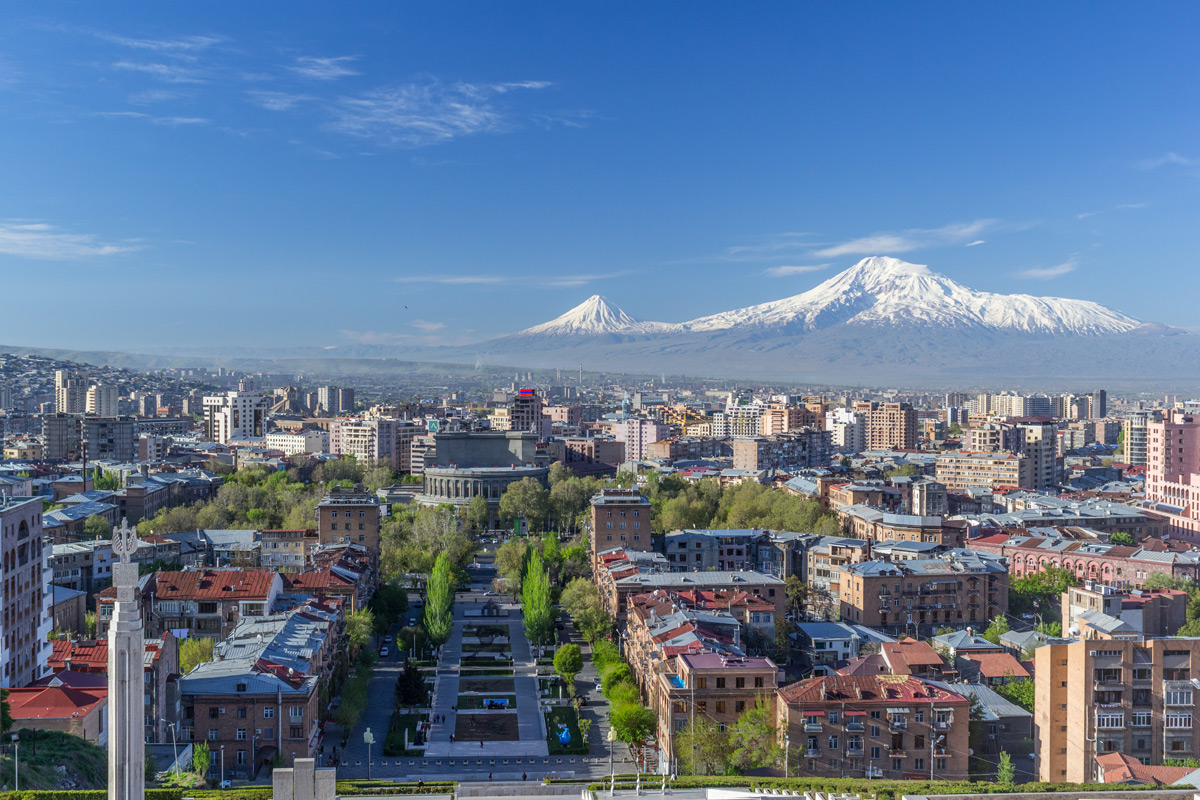
埃里温人口约106万人(2004年统计)。主要产业为机械制造及金属工业、红葡萄酒及白兰地酿造、烟草制造等。赫拉兹丹河(Hrazdan River)流经市内,北望著名的亚拉拉特山。若以文献记载为准,该城是现存世界最古老的都市之一。
埃里温的兹瓦尔特诺茨国际机场是亚美尼亚共和国的主要机场。埃里温无轨电车系统于1949年开始运行,有轨电车则因为高昂的运营成本而被关闭。埃里温地铁共有一条线路,负责着全城的地铁交通。铁路方面,只有一条国际线路通往邻国格鲁吉亚的第比利斯,将亚美尼亚和伊朗直接连接的新铁路仍在建设中。当地的公共交通高度私有化,小巴的市场份额是最大的。
埃里温共有250余所学校,其中公立学校200余所,私有学校50所左右。此外,埃里温在苏维埃的统治下成为了科学研究的主要中心。医疗方面,埃里温的数家医院通过现代技术改善了自己并开始提供医疗保健和医学研究服务,利克沃尔(Liqvor)制药厂是亚美尼亚最大的药品生产商。能源方面,赫拉兹丹河附近建立了数座水力发电厂,当地还建有一些火力发电厂。互联网方面,亚美尼亚的3家移动电话服务商均位于埃尔温,许多中小企业也参与了互联网服务。
Jerewan, auch Eriwan – IPA: jɛɾɛˈvɑn, armenisch Երևան (amtlich, ostarmenisch) oder Երեւան (traditionell, westarmenisch) – ist die Hauptstadt und mit 1.201.322 Einwohnern (Stand 2009) die größte Stadt Armeniens. Jerewan, eine der ältesten Städte der Welt,[1] ist auch das wirtschaftliche, kulturelle und wissenschaftliche Zentrum des Landes und wegen der Größe der Stadt eine eigene Provinz.

エレバン(Երևան、Yerevan [jɛɾɛˈvɑn] ( 音声ファイル))は、アルメニア共和国の首都である[1]。イェレヴァン、エリバン(Erivan)、エレブニ(Erebuni)、エレウン(Ereun)と呼ばれていたこともある。「Erewan」、「Ayrivan」、「Erevan」などの表記も見られる。ロシア語ではかつて"Эривань"(エリヴァニ)と表記されていたが、1930年代頃から原音に近い"Ереван"(イェレヴァン)と綴られるようになった[2]。
人口約106万人(2004年)。機械製造や金属業、ワイン、ブランデー製造、たばこ製造業が盛ん。フラズダン川が市内を流れる。南にアララト山を臨む。現存する世界最古の都市の一つとされており、また創世記に語られている「エデンの園」が存在していたという伝承のある地でもある。
Yerevan (/ˌjɛrəˈvɑːn/, YE-rə-VAHN; Armenian: Երևան[a] [jɛɾɛˈvɑn] ( listen), sometimes spelled Erevan)[b] is the capital and largest city of Armenia as well as one of the world's oldest continuously inhabited cities.[15] Situated along the Hrazdan River, Yerevan is the administrative, cultural, and industrial center of the country. It has been the capital since 1918, the thirteenth in the history of Armenia, and the seventh located in or around the Ararat plain. The city also serves as the seat of the Araratian Pontifical Diocese; the largest diocese of the Armenian Apostolic Church and one of the oldest dioceses in the world.[16]
The history of Yerevan dates back to the 8th century BC, with the founding of the fortress of Erebuni in 782 BC by king Argishti I at the western extreme of the Ararat plain.[17] Erebuni was "designed as a great administrative and religious centre, a fully royal capital."[18] By the late ancient Armenian Kingdom, new capital cities were established and Yerevan declined in importance. Under Iranian and Russian rule, it was the center of the Erivan Khanate from 1736 to 1828 and the Erivan Governorate from 1850 to 1917, respectively. After World War I, Yerevan became the capital of the First Republic of Armenia as thousands of survivors of the Armenian Genocide in the Ottoman Empire arrived in the area.[19] The city expanded rapidly during the 20th century as Armenia became part of the Soviet Union. In a few decades, Yerevan was transformed from a provincial town within the Russian Empire to Armenia's principal cultural, artistic, and industrial center, as well as becoming the seat of national government.
With the growth of the Armenian economy, Yerevan has undergone major transformation. Much construction has been done throughout the city since the early 2000s, and retail outlets such as restaurants, shops, and street cafés, which were rare during Soviet times, have multiplied. As of 2011, the population of Yerevan was 1,060,138, just over 35% of the Republic of Armenia's total population. According to the official estimate of 2016, the current population of the city is 1,073,700.[20] Yerevan was named the 2012 World Book Capital by UNESCO.[21] Yerevan is an associate member of Eurocities.[22]
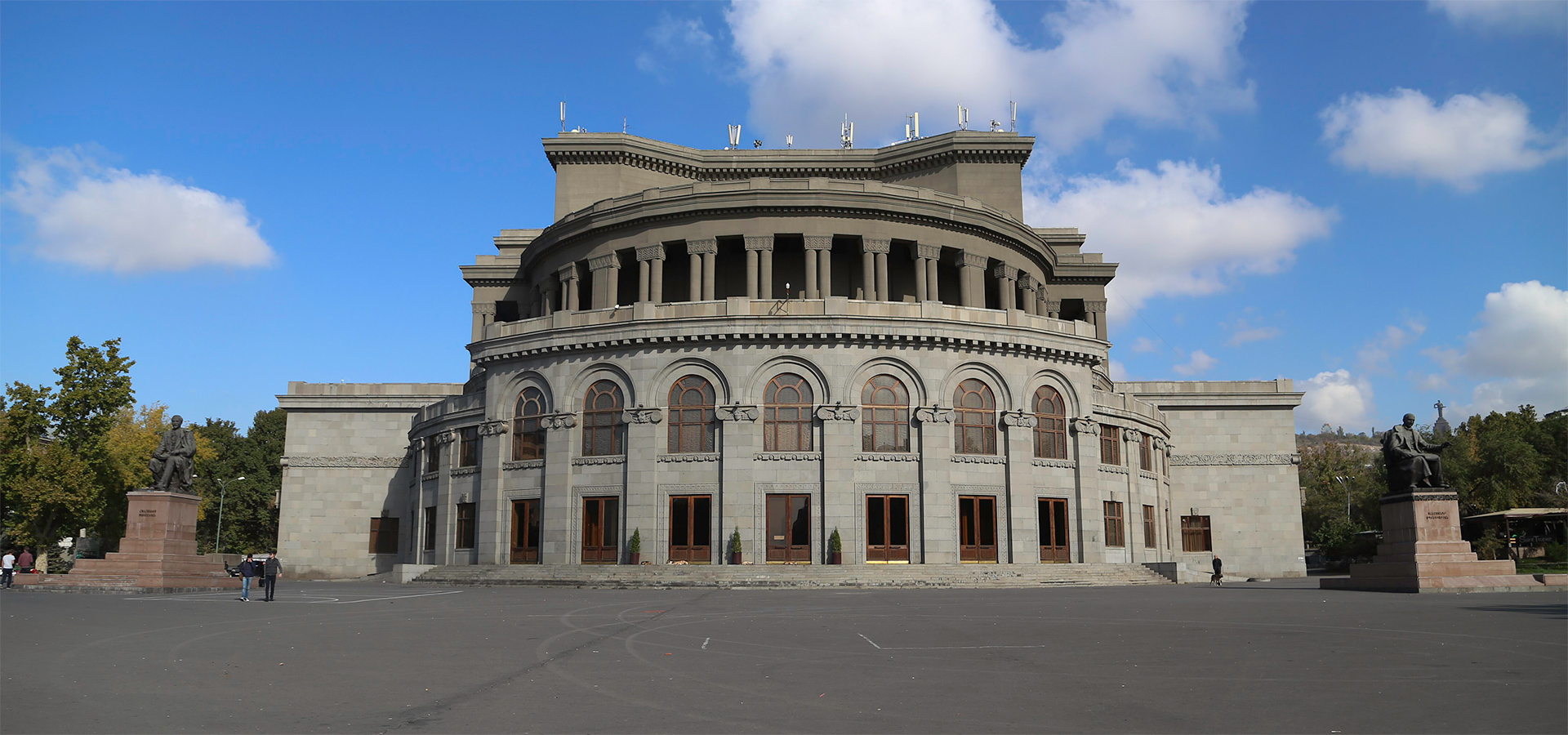
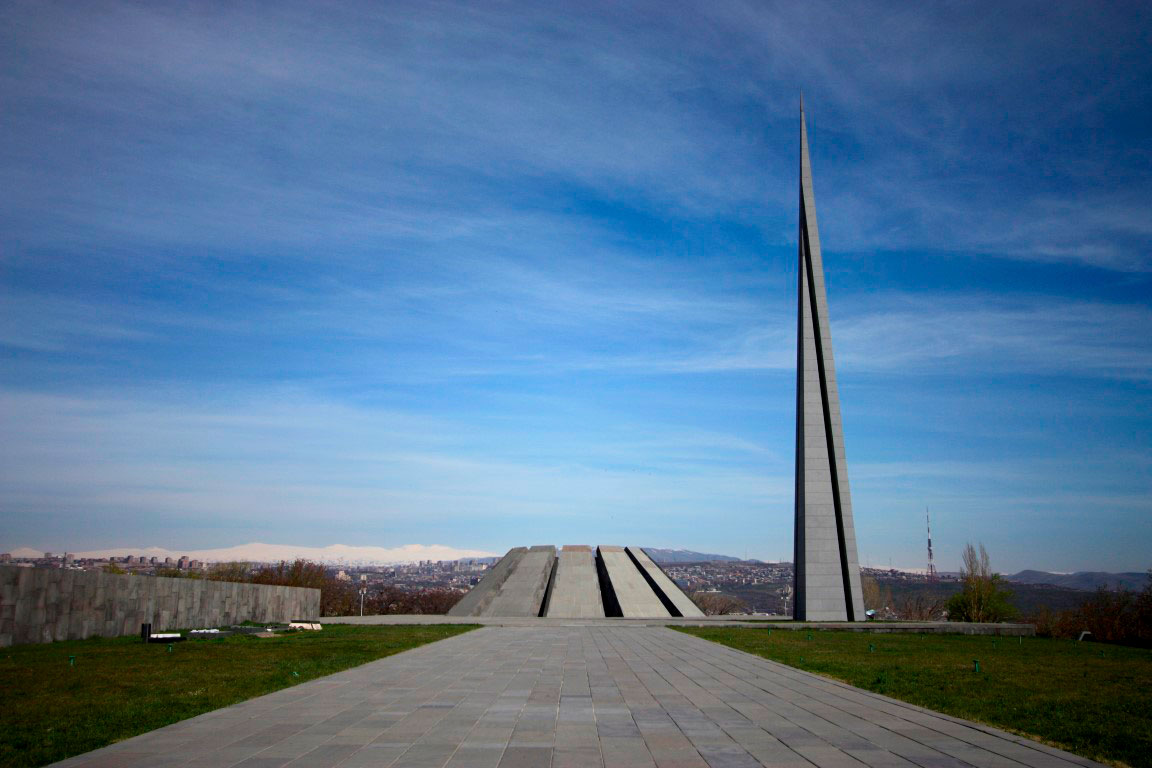
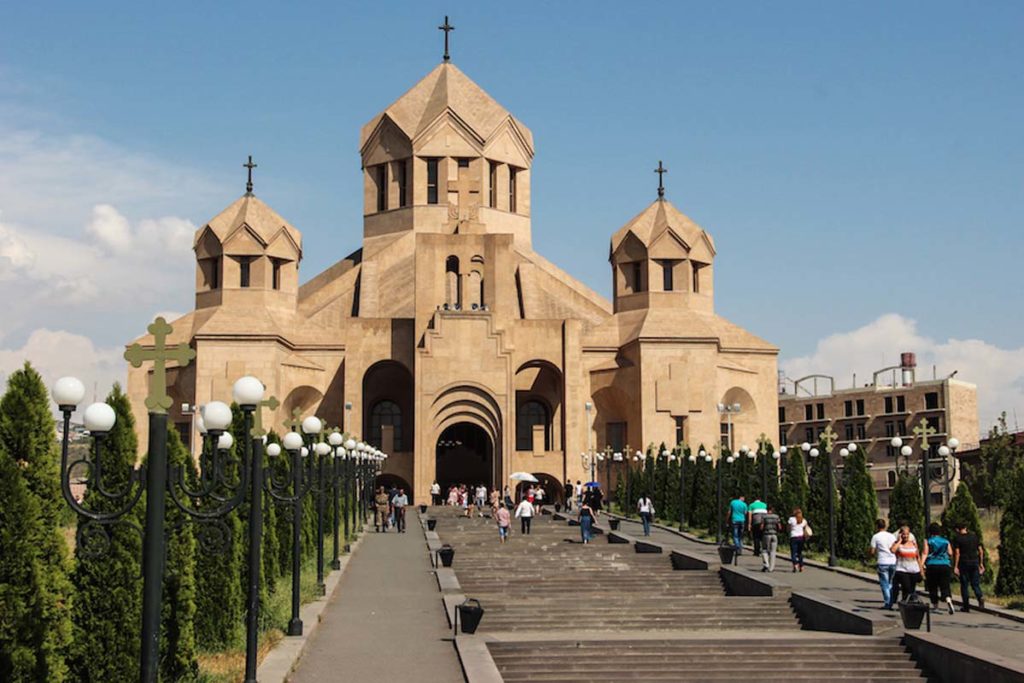
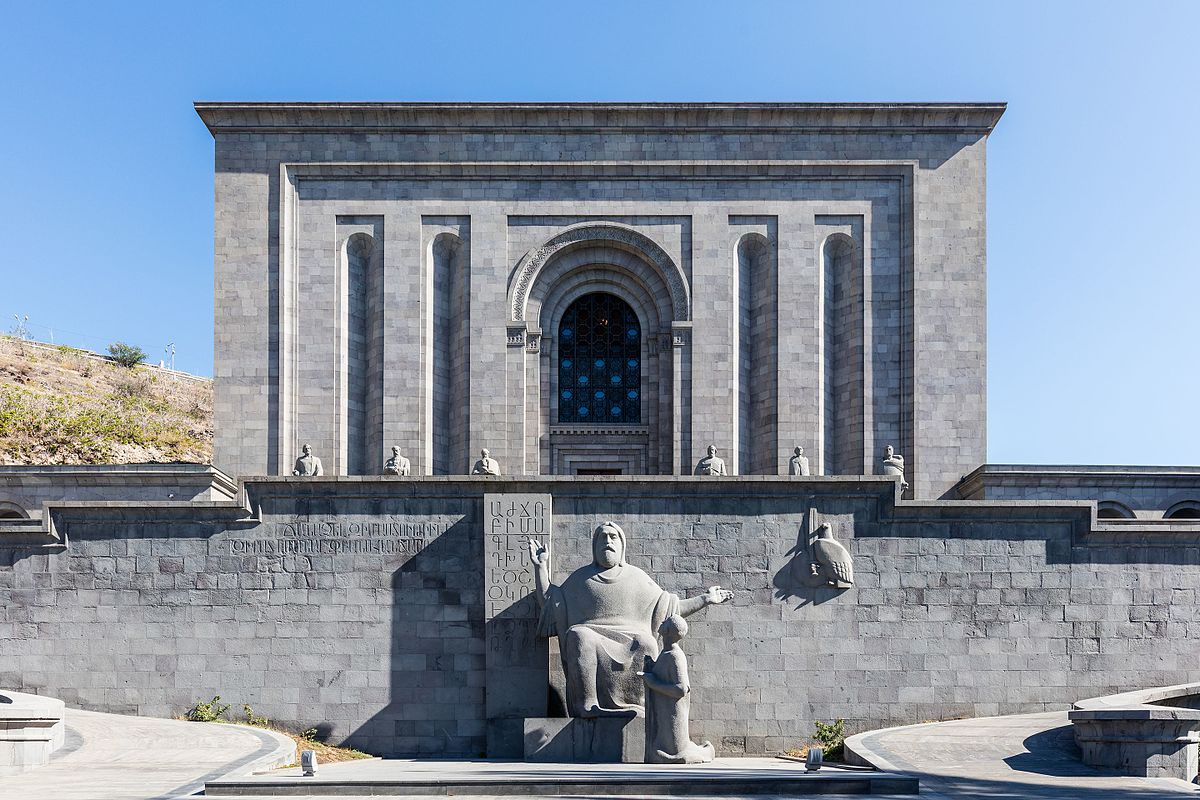
Of the notable landmarks of Yerevan, Erebuni Fortress is considered to be the birthplace of the city, the Katoghike Tsiranavor church is the oldest surviving church of Yerevan and Saint Gregory Cathedral is the largest Armenian cathedral in the world, Tsitsernakaberd is the official memorial to the victims of the Armenian Genocide, and several opera houses, theatres, museums, libraries, and other cultural institutions. Yerevan Opera Theatre is the main spectacle hall of the Armenian capital, the National Gallery of Armenia is the largest art museum in the Republic of Armenia and shares a building with the History Museum of Armenia, and the Matenadaran repository contains one of the largest depositories of ancient books and manuscripts in the world.
Erevan4 ou Yerevan5 (en arménien : Երևան, Yerevan) est la plus grande des villes d’Arménie et sa capitale6 depuis 19187, la douzième8 depuis les origines de l’Arménie. La ville actuelle est en partie fondée sur l'ancienne cité urartéenne d'Erebouni. Elle est située à l'ouest du pays, à l'extrémité orientale de la plaine de l'Ararat, au-dessus des gorges de la rivière Hrazdan.
Elle connaît une histoire mouvementée faite de batailles, de pillages, d'incendies et de séismes pendant plus de 2 500 ans, devient la capitale de l'éphémère première République d'Arménie après la Première Guerre mondiale et recueille une partie des rescapés du génocide arménien. La ville s'étend rapidement au XXe siècle lorsque l'Arménie devient une des quinze républiques de l'URSS. D'une petite bourgade de quelques milliers d'habitants sous la première République, elle devient en moins de cinquante ans le principal centre culturel, artistique et industriel du pays, ainsi que le siège de ses institutions politiques.
En 2007, la population d’Erevan est estimée à 1 107 800 habitants9 et son agglomération très peu étendue autour de la ville regroupe avec ses 1 245 700 habitants (estimation officielle actuelle10), plus de 42 % de la population arménienne. Ses habitants sont appelés les Erevanais et les Erevanaises2.
Erevan a été nommé capitale mondiale du livre 2012 par l'UNESCO. Erevan est membre associé de Eurocities.
Erevan[1] (in armeno: Երևան?, , anche scritta Yerevan[2] e Jerevan) è la capitale e la più popolosa città dell'Armenia (1 201 539 abitanti nel 1989; circa 1 127 300 nel 2012).[3] La città, fino al 2008 equiparata ad una provincia (marz), è ora un comune con un consiglio comunale elettivo che nomina il sindaco[4].
Ereván1 (en armenio: Երևան /jɛɾɛˈvɑn/ o Երեւան /jɛɾɛˈvɑn/; en ruso: Ереван, tr.: Yereván) es la capital de Armenia,2 así como la mayor ciudad del país. Su superficie es de 227 km², siendo una división administrativa especial, diferente a los marzes (մարզեր) en que se divide el país.3 Se trata de una ciudad fundada en el año 782 a.C. al oeste de lo que hoy es Armenia, en el extremo oriental de la llanura del monte Ararat y a la orilla del río Hrazdan. Después de la Primera Guerra Mundial se convirtió en la capital de la República Democrática de Armenia y aumentó su población con la llegada de miles de supervivientes del genocidio armenio, expandiéndose aún más en el siglo XX al convertirse en capital de una de las quince Repúblicas de la URSS, la RSS de Armenia. De esta manera, la pequeña ciudad se transformó en una de las más importantes de la región, sede de las más importantes asociaciones culturales, artísticas e industriales del país, además de las políticas, y base de una extensa red de vías férreas, así como el nudo de comercio de productos agrícolas.
En 2003, la población de la ciudad se estimaba en 1.091.235 habitantes,45 para un total de 1.245.700 habitantes añadiendo las poblaciones aledañas;46 conformando el 42% de la población armenia, seguida por Gyumri, con una población de 150.917 habitantes.4
La historia de Ereván se remonta al siglo VIII a. C. , con la fundación de la fortaleza urartiana de Erebuni en el año siglo VIII a. C..7 Progresivamente, el nombre Erebuni evolucionó en el idioma armenio entre el s. V o el siglo IV a. C., modificando la letra "b" en el nombre, hasta convertirse en "v".8
Cuenta con universidad propia, Academia de Ciencias, la Galería Nacional de Armenia, el Museo de Historia de Armenia y diversas bibliotecas públicas. En la ciudad existen las ruinas de una fortaleza urartiana de unos 3000 años de antigüedad. Entre los edificios importantes destacan la Catedral, el Mercado y la Ópera. Su aeropuerto está situado en Zvartnots.
Ereván fue la Capital Mundial del Libro del 2012, declarada por la UNESCO.
Ерева́н (арм. Երևան, МФА (арм.): [jɛɾɛˈvɑn]) — столица и крупнейший по численности населения и площади город Армении, один из древнейших городов мира. В русской транскрипции до 1936 года известен как Эривань. Расположен на левобережной (по реке Аракс) части Араратской долины. Население составляет 1075,1 тыс. человек (на 1 июля 2017 года)[4]. Площадь города — 223 км². Ереван — политический, экономический, культурный и научный центр, а также важнейший транспортный узел страны. Город обслуживают два аэропорта, метрополитен, железнодорожный вокзал.
Высота над уровнем моря — от 900 до 1300 м, часть города расположена на вулканическом плато к северу от Араратской долины.
За годы советской власти облик Еревана полностью изменился в результате огромных градостроительных работ (первый генеральный план 1924, архитектор А. И. Таманян; также — 1970, архитекторы М. Д. Мазманян, Э. А. Папян и др.); своеобразный колорит городу придал широко используемый в строительстве местный камень различных оттенков (розовый, кремовый, белый туф)[8].
 Architektur
 Musik
Musik
 Religion
 Geschichte
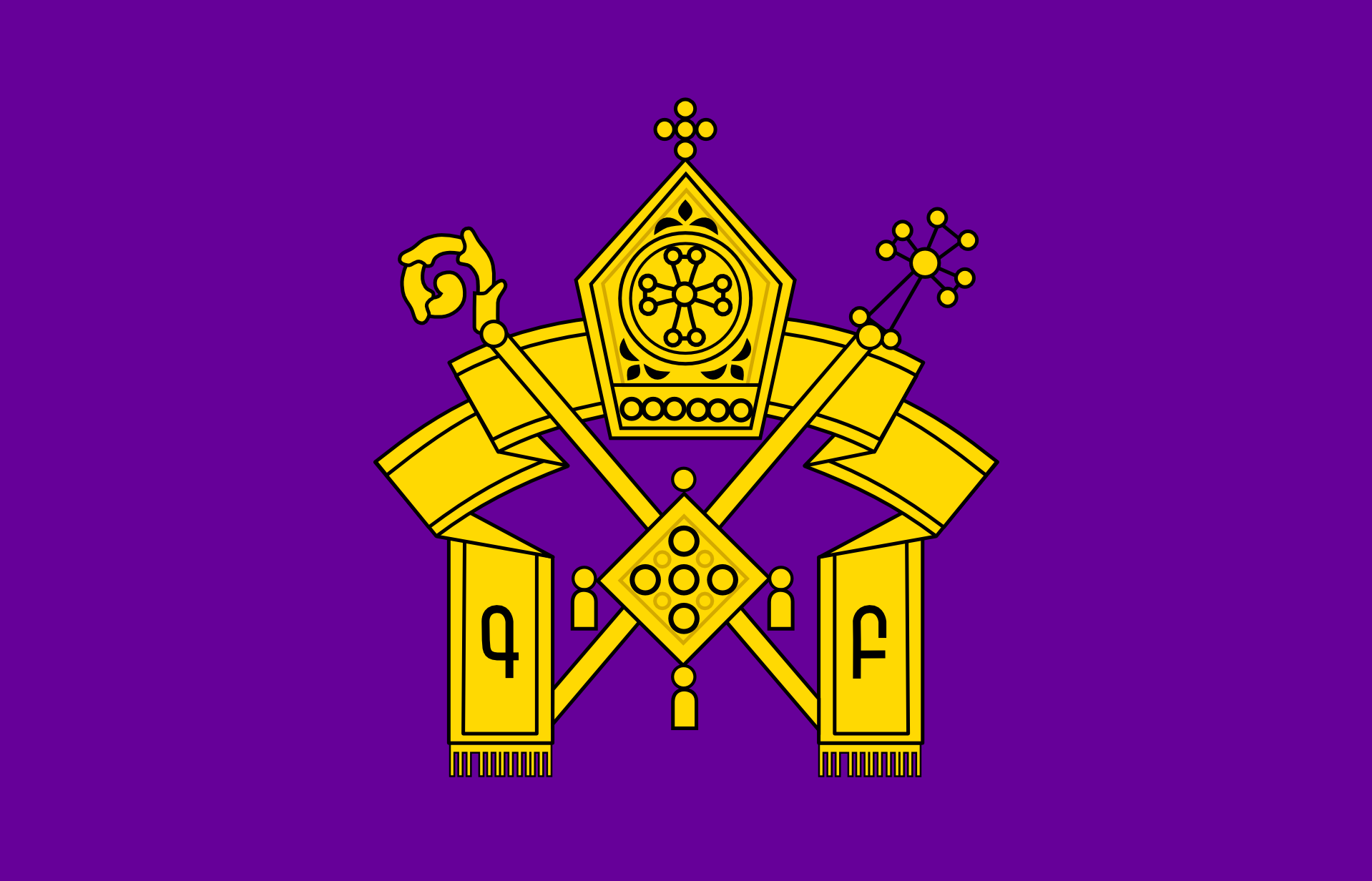
亚美尼亚使徒教会(亚美尼亚语:Հայ Առաքելական Եկեղեցի,转写:Hay Arakelagan Yegeghetzi)是世界上最古老的国教会[1][2]以及最早被合法化的基督徒群体[3]。
Die Armenische Apostolische Kirche (armenisch Հայ Առաքելական Եկեղեցի, Transkription ostarmenisch: Haj Arakelakan Jekeghezi; offizielle Bezeichnung auch: armenisch Հայաստանյայց Առաքելական Սուրբ Եկեղեցի, Transkription ostarmenisch: Hajastanjajz Arakelakan Surb Jekeghezi, Heilige Apostolische Kirche der Armenier) ist eine altorientalische Kirche mit heute neun[1] Millionen armenischen und türkischen Christen in zwei Katholikaten (Etschmiadsin, Sis), zwei Patriarchaten (Jerusalem, Konstantinopel) und rund 30 Diözesen, davon neun in Armenien.
アルメニア使徒教会(アルメニア語: Հայ Առաքելական Եկեղեցի, ラテン文字転写: Hay Arakelagan Yegeghetzi, 英語: Armenian Apostolic Church)は、アルメニア、ならびに世界各地にあるアルメニア人コミュニティで信仰されているキリスト教・非カルケドン派の教会。約500万人の信者を擁する。使徒教会の名は、伝承に十二使徒がアルメニアにキリスト教を伝えたとあることに由来する。アルメニア正教会(Armenian Orthodox Church)とも呼ばれる。なお、東方典礼カトリック教会であるアルメニア・カトリック教会 (Armenian Catholic Church) とは別組織である。
The Armenian Apostolic Church (Armenian: Հայ Առաքելական Եկեղեցի, romanized: Hay Aṙak'elakan Yekeghetsi)[note 1] is the national church of the Armenian people. Part of Oriental Orthodoxy, it is one of the most ancient Christian communities.[4] The Kingdom of Armenia was the first state to adopt Christianity as its official religion under the rule of King Tiridates in the early 4th century.[5][6] According to tradition, the church originated in the missions of Apostles Bartholomew and Thaddeus in the 1st century.
It is sometimes referred to as the Armenian Orthodox Church or Gregorian Church. The latter is not preferred by the church itself, as it views the Apostles Bartholomew and Thaddeus as its founders, and St. Gregory the Illuminator as merely the first official governor of the church. It is also known simply as the Armenian Church.
L'Église apostolique arménienne (en arménien Հայաստանեայց Առաքելական Եկեղեցի, Hayastaneayc’ Aṙak’elakan Ekeġec’i) est une Église chrétienne autocéphale3. C'est une des Églises des trois conciles dites aussi « Églises antéchalcédoniennes »2.
Elle revendique son titre d'« apostolique » en faisant remonter ses origines aux apôtres Jude Thaddée et Barthélemy. Devenue religion officielle du royaume d'Arménie avec la conversion du roi Tiridate IV par saint Grégoire l'Illuminateur, elle développe son particularisme du VIe au début du VIIIe siècle, qui voit sa christologie se stabiliser selon la doctrine miaphysite.
Le « Patriarche suprême et Catholicos de tous les Arméniens » qui réside à Etchmiadzin près d'Erevan bénéficie d'une primauté d'honneur parmi les différents hiérarques ; le titulaire actuel est Sa Sainteté Garéguine II depuis le 27 octobre 1999.
La Chiesa apostolica armena (in lingua armena: Հայ Առաքելական Եկեղեցի), a volte indicata come Chiesa ortodossa armena o Chiesa gregoriana o Chiesa Cattolica Ortodossa Gregoriana è tra le chiese più antiche della cristianità e una delle prime comunità cristiane nel mondo. È guidata da un cathólicos, in lingua armena կաթոլիքոս ("patriarca", plurale cathólicoi). Attualmente il Catholicos di tutti gli Armeni è Karekin II, che ha la sua sede a Echmiadzin, in Armenia.
La Chiesa apostolica armena è una delle Chiese ortodosse orientali.
Iglesia apostólica armenia, oficialmente Iglesia gregoriana apostólica armenia (en armenio, Հայ Առաքելական Եկեղեցի), o también conocida como Iglesia ortodoxa armenia, es la Iglesia nacional más antigua del mundo;1234 no debe confundirse con la Iglesia católica armenia, que está en comunión con la Santa Sede.
Армя́нская апо́стольская це́рковь[1] (арм. Հայ Առաքելական Եկեղեցի); традиционное, историческое название — Апостольская церковь Армении (арм. Հայաստանեայց Առաքելական Եկեղեցի) — одна из древнейших христианских церквей, имеющая ряд особенностей в догматике и обряде, отличающих её как от византийского православия, так и римского католицизма.
Относится к группе дохалкидонских Древневосточных православных церквей[2]. В богослужении используется армянский обряд.
Первыми проповедниками христианства в Армении и основателями церкви Армении считаются апостолы Фаддей и Варфоломей. Первым епископом в Армении, поставленным непосредственно апостолами, признан Закария (68—72). Традиционно считается, что крещение Армении произошло в 301 году. Некоторые современные исследователи склоняются к тому, что это, скорее, произошло позже, вероятно, в 314 году. Армения — первая страна, принявшая христианство в качестве государственной религии[3].

 Geographie
Armenien
Benin
Burkina Faso
Demokratische Republik Kongo
Frankreich
Geographie
Armenien
Benin
Burkina Faso
Demokratische Republik Kongo
Frankreich
 Ile-de-France
Kanada
Libanon
Madagaskar
Mauritius
Ile-de-France
Kanada
Libanon
Madagaskar
Mauritius
 New Brunswick-NB
 Quebec-QC
Rumänien
Schweiz
Senegal
Tunesien
Vietnam
Quebec-QC
Rumänien
Schweiz
Senegal
Tunesien
Vietnam
 Wichtige internationale Organisationen

法语国家国际组织(OIF,有时简称 "法语国家组织",法语: 法语国家国际组织是一个国际组织,代表以法语为通用语言或习惯用语、法语使用者(讲法语者)占人口很大比例或与法国文化有显著联系的国家和地区。
该组织由 88 个成员国和政府组成;其中 54 个国家和政府为正式成员,7 个为准成员,27 个为观察员。法语国家(francophonie,小写 "f")或法语圈(francosphere,英语中通常大写)也指全球法语国家人民的共同体,[5] 由私人和公共组织网络组成,旨在促进法语或比利时人民或法国或比利时在文化、军事或政治上发挥过重要历史作用的国家之间的平等联系。
这个现代组织成立于 1970 年。该组织的座右铭是 "平等、互补、团结"(égalité, complémentarité, solidarité),意在暗指法国的座右铭 "自由、平等、博爱"(liberté, égalité, fraternité)。法语国家组织最初只是一个法语国家的小团体,后来发展成为一个全球性组织,其众多分支机构与成员国在文化、科学、经济、正义与和平领域开展合作。
Die Organisation internationale de la Francophonie (OIF; manchmal abgekürzt als Francophonie, franz: La Francophonie [la fʁɑ̃kɔfɔni], im Englischen manchmal auch International Organisation of La Francophonie genannt) ist eine internationale Organisation, die Länder und Regionen vertritt, in denen Französisch Lingua franca oder Verkehrssprache ist, in denen ein bedeutender Anteil der Bevölkerung frankophon (französischsprachig) ist oder in denen es eine bemerkenswerte Zugehörigkeit zur französischen Kultur gibt.
Der Organisation gehören 88 Staaten und Regierungen an; davon sind 54 Staaten und Regierungen Vollmitglieder, 7 sind assoziierte Mitglieder und 27 haben Beobachterstatus. Der Begriff Frankophonie (mit kleinem "f") oder Frankosphäre (im Englischen oft großgeschrieben) bezieht sich auch auf die globale Gemeinschaft französischsprachiger Völker,[5] die ein Netzwerk privater und öffentlicher Organisationen umfasst, die gleichberechtigte Beziehungen zwischen Ländern fördern, in denen Franzosen oder Belgier leben oder Frankreich oder Belgien eine bedeutende historische Rolle in kultureller, militärischer oder politischer Hinsicht gespielt haben.
Die heutige Organisation wurde 1970 gegründet. Ihr Motto lautet égalité, complémentarité, solidarité ("Gleichheit, Komplementarität und Solidarität"), eine bewusste Anspielung auf Frankreichs Motto liberté, égalité, fraternité. Aus einer kleinen Gruppe französischsprachiger Länder hat sich die Frankophonie zu einer weltweiten Organisation entwickelt, deren zahlreiche Zweigstellen mit ihren Mitgliedstaaten in den Bereichen Kultur, Wissenschaft, Wirtschaft, Justiz und Frieden zusammenarbeiten.
 Sport
Sport

 Parteien und Regierung


 Weltkulturerbe

 Hand in Hand
