
Deutsch-Chinesische Enzyklopädie, 德汉百科
 Italy
Italy

 European Union
 History of the European Union
European Union
*Founding states
History of the European Union
European Union
*Founding states
 Geography
***IMF Developed countries
Italy
IMF Developed countries
IMF Developed countries
TOP3
Geography
Geography
***IMF Developed countries
Italy
IMF Developed countries
IMF Developed countries
TOP3
 Mitglieder der NATO
 Party and government
Group of the twenty most important industrial and emerging countries
Party and government
Group of Seven,G7
Party and government
Group of the twenty most important industrial and emerging countries
Party and government
Group of Seven,G7
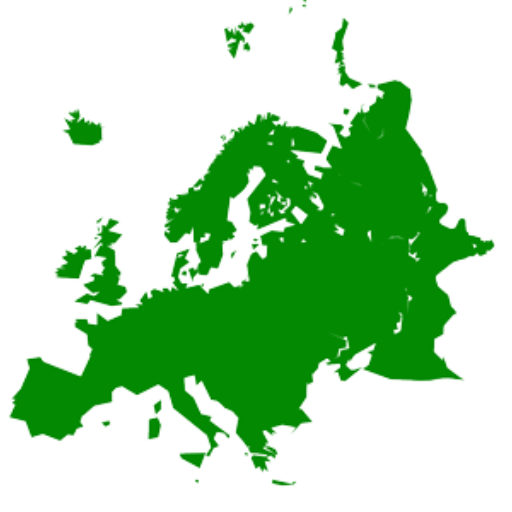 States of Europe

意大利共和国(意大利语:Repubblica Italiana[注 1]),通称意大利(Italia),是欧洲主权国家,主要由位于南欧的靴型意大利半岛及两个地中海岛屿西西里岛和撒丁岛所组成。意大利北方的阿尔派恩山地区与法国、瑞士、奥地利以及斯洛文尼亚接壤,其领土包围着两个微型国家——圣马力诺和梵蒂冈及一个主权实体 ——马耳他骑士团,而在瑞士拥有座落于卢加诺湖湖畔的意大利坎波内这个境外领土。全国行政上划分为20个区域(其中5个为自治区)、110个省与8,100个城市。首都为罗马,意大利王国在1870年将首都设置在此,而都灵(1861年-1865年)及佛罗伦萨(1865年-1870年)也曾是意大利王国的首都。根据2017年统计,意大利人口为6,059万,领土面积为301,338平方公里,人口密度约每平方公里201.1人,属于温带地中海型气候。意大利是欧洲人口第5多的国家,人口在世界上排名第23位。意大利因其拥有美丽的自然风光和为数众多的人类文化遗产而被称为美丽的国度(Belpaese)。
现今的意大利地区是以前欧洲民族及文化的摇篮,曾孕育出罗马文化及伊特拉斯坎文明,而意大利的首都罗马,几个世纪以来都是西方世界的政治中心,也曾经是罗马帝国的首都。当罗马帝国在西部的统治瓦解后,意大利遭受了多次外族入侵,包括伦巴第人、东哥德人等日耳曼民族,之后还有诺曼人等。拜占庭帝国曾一度重新占领意大利地区。在14世纪后,意大利转而成为文艺复兴的发源地[7],而文艺复兴对欧洲影响深远,让欧洲思想前进了一大步。意大利过去分裂为许多王国与城邦,但最终在1871年成为统一的意大利王国(除了圣马力诺)[8]。意大利殖民帝国巅峰是在1942年第二次世界大战时期,首相墨索里尼统治下的意大利王国变成一个地中海帝国,把势力范围延伸到北非(利比亚 、突尼斯)、东非(厄立特里亚、索马里兰、埃塞俄比亚)、巴尔干(阿尔巴尼亚、达尔马提亚、黑山、克罗地亚独立国西部、希腊、罗得岛与十二群岛)和法国南部(隆河以东的领土、科西嘉岛、摩纳哥),而且拥有中国天津的租界[9]。1945年,墨索里尼建立的意大利社会共和国被盟军击垮,意大利在二战后,废除了君主制,意大利王国灭亡,建立了现在的意大利共和国。战后根据1947年巴黎和平条约,意大利殖民帝国终结。
意大利也在政治、文化、科学、医疗卫生、教育、体育、艺术、时尚、宗教、料理、电影、建筑、经济及音乐等方面具有重要的影响力。米兰是意大利的经济及工业中心,根据2009年全球语言监察组织(Global Language Monitor)的资料[10],它也是世界时尚之都。在2007年造访意大利的游客人数位居世界第5位,总共超过4,370万人次的国际游客造访[11],而罗马则是欧盟国家中第3多游客造访的城市[12],也被认为世界上最美丽的十大古城之一[13]。威尼斯则被认为是世界上最美丽的城市,《纽约时报》形容它“无疑是世界上最美丽的人造城市”[14]。
意大利共和国是一个议会制民主共和国,是一个发达国家,世界七大工业国之一,最佳出生地指数则在世界排名第8名[15]。意大利在2017年人类发展指数列表中则名列第28位[16],并拥有高度人均国内生产总额[17][18]。根据国内生产总额与购买力平价国内生产总值的数据,意大利分别是世界第8大与第10大经济体[19]。意大利的政府预算金额则是位居世界第5位[20]。意大利是北大西洋公约和欧盟的创始会员国,也是七大工业国集团、20国集团和成员之一。意大利也参与经济合作暨发展组织、世界贸易组织、欧洲议会、西欧联盟及欧洲创新中心(Central European Initiative)。意大利也参加申根协议,也是世界世界国防预算金额第9高的国家且分享北约的核武器。
意大利在欧洲及全球的军事、文化和外交事务扮演重要的角色,首都罗马则是世界上对于政治及文化具有重要影响力的城市,世界上许多著名的机构,例如国际农业发展基金会(International Fund for Agricultural Development)[21]、全球在地论坛(Glocal Forum)[22]、世界粮食计划署及联合国粮食及农业组织的总部都设在罗马。意大利也拥有较高的教育指数、劳动力人口[23]及慈善捐助金额[24]。人均预期寿命排名世界第11位[25]。医疗保健系统在2000年被世界卫生组织评比为世界第2。意大利也是一个全球化的国家[26]。意大利的国家品牌价值在2009年名列世界第6位[27]。意大利在艺术、科学和技术上拥有悠久的传统,且至2017年共有53处世界遗产,是拥有最多世界遗产的西方国家[28][29]。
Italien (italienisch Italia [iˈtaːlja], amtlich Italienische Republik, italienisch Repubblica Italiana [reˈpubblika itaˈljaːna]) ist ein Staat in Südeuropa; seine Hauptstadt ist Rom.
Das italienische Staatsgebiet liegt zum größten Teil auf der vom Mittelmeer umschlossenen Apenninhalbinsel und der Po-Ebene sowie im südlichen Gebirgsteil der Alpen. Der Staat grenzt an Frankreich, die Schweiz, Österreich und Slowenien. Die Kleinstaaten Vatikanstadt und San Marino sind vollständig vom italienischen Staatsgebiet umschlossen. Neben den großen Inseln Sizilien und Sardinien sind mehrere Inselgruppen vorgelagert.
Als Kreuzweg der Zivilisationen des Mittelmeerraumes ist der italienische Beitrag zum kulturellen und historischen Erbe Europas und der Welt beachtenswert, das Gebiet des heutigen Italien war in der Antike die Kernregion des Römischen Reiches, die oberitalienische Toskana war das Kernland der Renaissance, ihr folgte von Rom ausgehend die Epoche des Barock.
Mit dem Risorgimento entstand der moderne italienische Nationalstaat: Von 1861 bis 1946 bestand unter dem Haus Savoyen das Königreich Italien, das rapide industrialisiert wurde, zu einer europäischen Großmacht aufstieg und ab den 1880er Jahren ein Kolonialreich in Nord- und Ostafrika errichtete. Die kostspielige und verlustreiche Teilnahme am Ersten Weltkrieg von 1915 bis 1918 führte zwar zur Vergrößerung des Staatsgebietes, aber auch zu schweren sozialen Unruhen und ebnete den italienischen Faschisten unter Benito Mussolini den Weg zur Macht. Das faschistische Regime herrschte von 1922 bis 1943/45 über Italien und führte das Land 1940 auf der Seite der Achsenmächte in den Zweiten Weltkrieg. Die Kriegsniederlage führte zum Verlust der Kolonien und zu vergleichsweise geringfügigen Gebietsabtretungen an den Nachbarstaat Jugoslawien. Im Juni 1946 beendete eine Volksabstimmung die Monarchie; die heutige Republik wurde ausgerufen.
Italien ist Mitinitiator der Europäischen Integration und Gründungsmitglied der Europäischen Union, des Europarates und der Lateinischen Union. Das Land ist Mitglied der G7, der G20, der NATO, der Vereinten Nationen (UNO), der Organisation für wirtschaftliche Zusammenarbeit und Entwicklung (OECD) und der Welthandelsorganisation (WTO).
Italien zählt laut Index der menschlichen Entwicklung als Industriestaat zu den höchstentwickelten Ländern der Erde[4] und ist gemessen am nominalen Bruttoinlandsprodukt die achtgrößte Volkswirtschaft der Welt.[5] Das Land genießt einen hohen Lebensstandard sowie Bildungsgrad und besitzt eine der höchsten Lebenserwartungen.[6] Italien ist das Land mit den meisten Welterbestätten der UNESCO (58)[7] und mit rund 65 Millionen Touristen jährlich eines der meistbesuchten Länder der Welt.[8]
イタリア共和国(イタリアきょうわこく、イタリア語: Repubblica Italiana)、通称イタリア(イタリア語: Italia、IPA: [iˈtaːlja] ( 音声ファイル) イターリャ)は、南ヨーロッパに位置する共和制国家。首都はローマ。 北をスイスとオーストリア、西がフランス、 東はスロベニアと国境を接している。南は地中海が位置しており、アルバニア、アルジェリア、クロアチア、ギリシャ、リビア、マルタ、モンテネグロ、スペイン、チュニジアと海上境界線を共有している。また、国土には独立国として小規模であるバチカンとサンマリノが存在している。
イタリアはヨーロッパにおける古代文化の発祥地の一つとして知られ、同時に世界的な文化大国の一国に数えられている。文化・学問・宗教で歴史的に影響力を発揮しており、バチカン市国を首都ローマの領域内に事実上保護し、レオナルド・ダ・ヴィンチやガリレオ、ミケランジェロ、コロンブス、マキャヴェリといった偉人たちの故国でもある。かつてのローマ帝国の中枢となる地域であり、またルネサンスやリソルジメントなどの幾つかの世界史的事象の主要な舞台となった。
また、高い人間開発指数を持つイタリアは文化・経済ともに先進国であり[1]、名目GDPでは世界第8位かつ購買力平価では世界第12位、ユーロ圏ではドイツとフランスに次ぐ第3位の経済規模を持つ経済大国である[2]。
国際連合、北大西洋条約機構、G7、G20、OECD、欧州評議会、地中海連合、パリクラブの一員であり、ヨーロッパにおける四大国「ビッグ4」や、文化的・経済的・政治的に大きな影響を及ぼす列強の一角に数えられる[3][4]。また、コンセンサス連合の参加国であると同時に主導国である。軍事面では、世界第8位の軍事力を有している[5]。
総面積は30万1,338km2で、ロ・スティヴァレ(lo Stivale)と称される地中海に突き出たブーツ状のイタリア半島を中心に、地中海に浮かぶシチリア島とサルディーニャ島を主要な領土としており、いくつかの小島も領有している。北部にはアルプス山脈が、半島に沿ってアペニン山脈が走っており、平野はその間にあるポー平原などに限られ、国土の40%が山岳地帯である[6]。気候は各地ともに温暖で、北部を除き国土の大部分は温帯の地中海性気候に属し、これは農業と歴史に大きな影響を与えてきた[7]。西に港へ適したリグリア海、東には大陸棚が海の幸を豊富にもたらすアドリア海、南東部にはバルカン半島へと繋がるイオニア海があり、地理的に恵まれている。南にはティレニア海があり周辺にはストロンボリ火山やヴェスヴィオ山、エトナ山などの火山が集まっていて、世界有数の地震地帯である[6]。
Italy (Italian: Italia [iˈtaːlja] ( listen)), officially the Italian Republic (Italian: Repubblica Italiana [reˈpubblika itaˈljaːna]),[13][14] is a country consisting of a peninsula delimited by the Alps and several islands surrounding it,[15] whose territory largely coincides with the homonymous geographical region.[16] Italy is located in the centre of the Mediterranean Sea, in Southern Europe,[17][18][19] and is also considered part of Western Europe.[20][21] A unitary parliamentary republic with Rome as its capital and largest city, the country covers a total area of 301,340 km2 (116,350 sq mi) and shares land borders with France, Switzerland, Austria, Slovenia, and the enclaved microstates of Vatican City and San Marino. Italy has a territorial exclave in Switzerland (Campione) and a maritime exclave in Tunisian waters (Lampedusa). With around 60 million inhabitants, Italy is the third-most populous member state of the European Union.
Due to its central geographic location in Southern Europe and the Mediterranean, Italy has historically been home to myriad peoples and cultures. In addition to the various ancient peoples dispersed throughout what is now modern-day Italy, the most predominant being the Indo-European Italic peoples who gave the peninsula its name, beginning from the classical era, Phoenicians and Carthaginians founded colonies mostly in insular Italy,[22] Greeks established settlements in the so-called Magna Graecia of Southern Italy, while Etruscans and Celts inhabited central and northern Italy respectively. An Italic tribe known as the Latins formed the Roman Kingdom in the 8th century BC, which eventually became a republic with a government of the Senate and the People. The Roman Republic initially conquered and assimilated its neighbours on the Italian peninsula, eventually expanding and conquering parts of Europe, North Africa and Asia. By the first century BC, the Roman Empire emerged as the dominant power in the Mediterranean Basin and became a leading cultural, political and religious centre, inaugurating the Pax Romana, a period of more than 200 years during which Italy's law, technology, economy, art, and literature developed.[23][24]
During the Early Middle Ages, Italy endured the fall of the Western Roman Empire and barbarian invasions, but by the 11th century numerous rival city-states and maritime republics, mainly in the northern and central regions of Italy, became prosperous through trade, commerce, and banking, laying the groundwork for modern capitalism.[25] These mostly independent statelets served as Europe's main trading hubs with Asia and the Near East, often enjoying a greater degree of democracy than the larger feudal monarchies that were consolidating throughout Europe; however, part of central Italy was under the control of the theocratic Papal States, while Southern Italy remained largely feudal until the 19th century, partially as a result of a succession of Byzantine, Arab, Norman, Angevin, Aragonese, and other foreign conquests of the region.[26] The Renaissance began in Italy and spread to the rest of Europe, bringing a renewed interest in humanism, science, exploration, and art. Italian culture flourished, producing famous scholars, artists, and polymaths. During the Middle Ages, Italian explorers discovered new routes to the Far East and the New World, helping to usher in the European Age of Discovery. Nevertheless, Italy's commercial and political power significantly waned with the opening of trade routes that bypassed the Mediterranean.[27] Centuries of foreign meddling and conquest, and the rivalry and infighting between the Italian city-states, such as the Italian Wars of the 15th and 16th centuries, left Italy politically fragmented, and it was further conquered and divided among multiple foreign European powers over the centuries.
By the mid-19th century, rising Italian nationalism and calls for independence from foreign control led to a period of revolutionary political upheaval. After centuries of foreign domination and political division, Italy was almost entirely unified in 1861 following a war of independence, establishing the Kingdom of Italy.[28] From the late 19th century to the early 20th century, Italy rapidly industrialised, mainly in the north, and acquired a colonial empire,[29] while the south remained largely impoverished and excluded from industrialisation, fuelling a large and influential diaspora.[30] Despite being one of the victorious allied powers in World War I, Italy entered a period of economic crisis and social turmoil, leading to the rise of the Italian fascist dictatorship in 1922. Participation in World War II on the Axis side ended in military defeat, economic destruction, and the Italian Civil War. Following the rise of the Italian Resistance and the liberation of Italy, the country abolished its monarchy, established a democratic Republic, enjoyed a prolonged economic boom, and became a highly developed country.[31]
L'Italie (/itali/11 Écouter ; en italien : Italia /iˈtaːlja/12 Écouter), en forme longue la République italienne (en italien : Repubblica Italiana /reˈpubblika itaˈljaːna/12 Écouter), est un pays d'Europe du Sud correspondant physiquement à une partie continentale, une péninsule située au centre de la mer Méditerranée et une partie insulaire constituée par les deux plus grandes îles de cette mer, la Sicile et la Sardaigne, et beaucoup d'autres îles plus petites (hormis la Corse, française depuis 1768). Elle est rattachée au reste du continent par le massif des Alpes. Le territoire italien correspond approximativement à la région géographique homonyme.
L'Italie apporte une contribution très importante à la civilisation occidentale : elle est notamment le berceau de la civilisation étrusque, de la Grande-Grèce, de l'Empire romain, du Saint-Siège, des républiques maritimes, de l'humanisme et de la Renaissance. Existant en tant qu'État unitaire depuis 1861 à la suite du Risorgimento (Renaissance ou Résurrection) mené par le royaume de Sardaigne, l'Italie est une république depuis l'abolition par référendum de la monarchie italienne en 1946. Elle est membre fondateur de l'Union européenne et de la zone euro.
L'Italie est, en ce début de XXIe siècle, une puissance moyenne13, forte de ses soixante millions d'habitants, de sa position en 2017 de huitième puissance économique mondiale et de troisième économie de la Zone Euro, et de son rôle au sein de nombreuses organisations internationales comme l'Union européenne, l'Organisation du traité de l'Atlantique nord, le G7 et l'Organisation de coopération et de développement économiques.
L'Italia (/iˈtalja/,[8] ), ufficialmente Repubblica Italiana,[9] è uno Stato situato nell'Europa centro-meridionale, il cui territorio coincide in gran parte con l'omonima regione geografica. L'Italia è una repubblica parlamentare unitaria e conta una popolazione di circa 59,3 milioni di abitanti, che ne fanno il terzo Stato dell'Unione europea per numero di abitanti. La capitale è Roma.
La parte continentale, delimitata dall'arco alpino, confina a nord, da ovest a est, con Francia, Svizzera, Austria e Slovenia; il resto del territorio, circondato dai mari Ligure, Tirreno, Ionio e Adriatico, si protende nel mar Mediterraneo, occupando la penisola italiana e numerose isole (le maggiori sono Sicilia e Sardegna), per un totale di 302068,26 km².[10] Gli Stati della Città del Vaticano e di San Marino sono enclavi della Repubblica, mentre Campione d'Italia è un'exclave italiana.
Crocevia di numerose culture preistoriche, l'Italia antica fu unificata dalla civiltà romana diventando il centro amministrativo, economico, culturale e politico dell'Impero romano. Dopo la caduta dell'Impero romano d'Occidente, l'Italia medievale fu soggetta a invasioni e dominazioni di popolazioni barbariche, perdendo la propria unità politica. Tra XV secolo e XVI secolo, con la diffusione dell'umanesimo e del Rinascimento, divenne nuovamente il centro culturale del mondo occidentale e anche il campo di battaglia delle maggiori potenze europee durante le guerre d'Italia. La penisola conobbe poi la controriforma, il barocco, e il neoclassicismo.
Dopo la parentesi napoleonica, gli italiani lottarono per l'unificazione e l'indipendenza nazionale durante il Risorgimento, finché, dopo la seconda guerra d'indipendenza e la spedizione dei Mille, nel 1861 nacque il Regno d'Italia, che ottenne la vittoria nella prima guerra mondiale (1918), completando il processo di unificazione nazionale. Nel 1946, dopo il ventennio fascista (1922-1943), la sconfitta nella seconda guerra mondiale, e la definitiva guerra di liberazione, a seguito di un referendum istituzionale, lo Stato italiano divenne una repubblica.
Nel 2020 l'Italia, ottava potenza economica mondiale e terza nell'Unione europea, è un paese con un alto livello di vita: l'indice di sviluppo umano è molto alto, 0.883, e la speranza di vita è di 83,4 anni.[11] È membro fondatore dell'Unione europea, della NATO, del Consiglio d'Europa e dell'OCSE; aderisce all'ONU e alla Convenzione di Schengen. L'Italia è inoltre membro del G7 e del G20, partecipa al progetto di condivisione nucleare della NATO, si colloca in nona posizione nel mondo per spesa militare, ed è sia una potenza regionale che una grande potenza globale.[12][13] È il quarto paese più visitato del mondo e vanta il maggior numero di siti dichiarati patrimonio dell'umanità dall'UNESCO (58).[14]
Italia (en italiano, Italia, pronunciado /i'talja/ ( escuchar)), oficialmente la República Italiana (en italiano, Repubblica Italiana pronunciado /re'pub:lika ita'ljana/), es un país soberano transcontinental, miembro y fundador de la Unión Europea, constituido en una república parlamentaria compuesta por veinte regiones, formadas estas, a su vez, por 110 provincias.8
Italia se ubica en el centro del mar Mediterráneo, en Europa meridional. Ocupa la península itálica, así como la llanura Padana, la islas de Sicilia y Cerdeña y alrededor de ochocientas islas menores, entre las que se destacan las islas Tremiti en el mar Adriático, los archipiélagos Campano y Toscano en el mar Tirreno, o las islas Pelagias en África septentrional, entre otras. En el norte, está rodeada por los Alpes y tiene frontera con Francia, Suiza, Austria y Eslovenia. Los micro-Estados de San Marino y Ciudad del Vaticano son enclaves dentro del territorio italiano. A su vez, Campione d'Italia, es un municipio que forma un pequeño exclave italiano en territorio suizo.9
Debido a su localización central en el Mar Mediterráneo, Italia recibió, durante la Antigüedad,1011 diversas influencias de civilizaciones mediterráneas exteriores, como la de los fenicios y cartagineses en sus islas mayores1213 y de los antiguos griegos en la llamada Magna Grecia,1415 así como también fue el hogar de muchas culturas propias distintas, como la civilización nurágica, los etruscos y los latinos, siendo estos últimos quienes dieron vida a la civilización romana,1617 y asistió al nacimiento de la República y del posterior Imperio romano.1819 Tras la caída del Imperio romano de Occidente, bizantinos, lombardos y musulmanes se disputaron el control sobre el territorio itálico,2021 quebrando así su anterior unidad política.2223 A partir de la Plena Edad Media, Italia fue la cuna de repúblicas marítimas como Venecia, Génova, Pisa y Amalfi, de los Estados Pontificios y también del humanismo, del Renacimiento y del movimiento barroco, entre otros Estados y movimientos culturales.2425 En el curso del siglo XIX, mediante el proceso histórico conocido como Risorgimento, los varios territorios italianos lograron unificarse bajo un mismo Estado: el Reino de Italia.2627
La capital de Italia, Roma, ha sido durante siglos el centro político y cultural de la civilización occidental. Además, es la ciudad santa para la Iglesia católica, siendo el papa el obispo de Roma y encontrándose dentro de la ciudad el micro-Estado del Vaticano. El significado cultural del país se refleja en todos sus Patrimonios de la Humanidad, ya que tiene 58,28 el país con mayor número del mundo.29
Es el tercer país de Europa que más turistas recibe por año,30 siendo Roma la tercera ciudad más visitada del continente.31 Otras ciudades importantes son: Milán, centro de finanzas y de industria, y, según el Global Language Monitor, la capital de la Moda;32 Nápoles, importante puerto en el Mediterráneo, capital histórica y ciudad más poblada del Mezzogiorno;33 Turín, centro de industria automovilística y de diseño industrial. Italia es una república democrática, forma parte del G7 o grupo de las siete más grandes naciones avanzadas del mundo y es un país desarrollado con una calidad de vida muy alta,34 encontrándose en 2005 entre las siete primeras del mundo.35
Es el país número 28 (informe 2017) en materia de alto índice de desarrollo humano.36 Es una potencia regional y mundial,37383940 miembro fundador de la Unión Europea, firmante del Tratado de Roma en 1957. También es miembro fundador de la Organización del Tratado del Atlántico Norte (OTAN) y miembro del OTAN Quint, de la Organización para la Cooperación y el Desarrollo Económico, de la Organización Mundial del Comercio, del Consejo de Europa, del G-4, del G-12 y del G20. El país, y especialmente su capital, tiene una fuerte repercusión en temas de política y cultura, en organizaciones mundiales como la Organización para la Agricultura y la Alimentación (FAO),41 el Fondo Internacional de Desarrollo Agrícola (IFAD), el Glocal Forum42 o el Programa Mundial de Alimentos (WFP).
Ита́лия (итал. Italia [iˈtaːlja]), официальное название — Италья́нская Респу́блика (итал. Repubblica Italiana [reˈpubːlika itaˈljaːna]) — государство в Южной Европе, в центре Средиземноморья. Входит в Европейский союз и НАТО с момента их создания, является третьей по величине экономикой еврозоны.
Граничит с Францией на северо-западе (протяжённость границы — 488 км), Швейцарией (740 км) и Австрией (430 км) — на севере, Словенией — на северо-востоке (232 км).
Внутри территории Италии находятся два государства-анклава: государство Сан-Марино и расположенное внутри территории Рима ассоциированное с Италией государство Ватикан, с каждым из которых Италия имеет внутреннюю границу протяжённостью соответственно 39 км и 3,2 км.
Занимает Апеннинский полуостров, крайний северо-запад Балканского полуострова, Паданскую равнину, южные склоны Альп, острова Сицилия, Сардиния и ряд мелких островов[7].
На территории Италии находится 55 памятников всемирного наследия ЮНЕСКО — Италия разделяет с Китаем первое место по их количеству.
 Music
Music

 Literature
 Hand in Hand
Institute of Culture and Language
Italy
San Marino
Switzerland
Vatican city
Hand in Hand
Hand in Hand
Institute of Culture and Language
Italy
San Marino
Switzerland
Vatican city
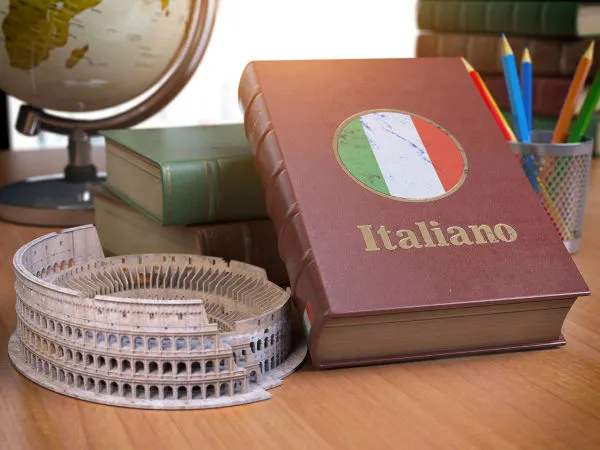
意大利语(Italiano),中文也简称为意语,隶属于印欧语系的罗曼语族。现有7千万人日常用意大利语,大多是意大利居民。另有28个国家使用意大利语,其中4个立它为官方语言。标准意大利语源自于托斯卡纳语中的佛罗伦萨方言,发音处于意大利中北部方言之间。标准音近来稍微加进了经济较为发达的米兰地区口音。在作曲领域中,亦使用为数不少的意大利文字词。意大利语和拉丁语一样,有长辅音。其他的罗曼语族语言如西班牙语、法语已无长辅音。
Italienisch (Italienisch lingua italiana, italiano [itaˈli̯aːno]) ist eine Sprache aus dem romanischen Zweig der indogermanischen Sprachen. Innerhalb dieses Sprachzweiges gehört das Italienische zur Gruppe der italoromanischen Sprachen.
イタリア語(イタリアご、Italiano [itaˈljaːno] ( 音声ファイル), Lingua italiana)は、インド・ヨーロッパ語族イタリック語派に属する言語の1つで、おおよそ6千万人ほどが日常的に使用しており、そのほとんどがイタリアに住んでいる。後置修飾で、基本語順はSVO。イタリアは漢字で「伊太利亜」と表記することから、「伊太利亜語」を略記し伊語と称される。
Italian (italiano [itaˈljaːno] (listen) or lingua italiana [ˈliŋɡwa itaˈljaːna]) is a Romance language of the Indo-European language family. Italian is, by most measures and together with Sardinian, the closest language to Latin, from which it descends via Vulgar Latin.[6] Italian is an official language in Italy, Switzerland (where it is the main language of Ticino and southern Grisons[note 1]), San Marino and Vatican City. It has an official minority status in western Istria (Croatia and Slovenia). It formerly had official status in Albania, Malta, Monaco, Montenegro (Kotor), Greece (Ionian Islands and Dodecanese) and is generally understood in Corsica (due to its close relation with the Tuscan-influenced local language) and Savoie. It also used to be an official language in the former Italian East Africa and Italian North Africa, where it still plays a significant role in various sectors. Italian is also spoken by large expatriate communities in the Americas and Australia.[7] Italian is included under the languages covered by the European Charter for Regional or Minority languages in Bosnia and Herzegovina and in Romania, although Italian is neither a co-official nor a protected language in these countries.[8][9] Many speakers of Italian are native bilinguals of both Italian (either in its standard form or regional varieties) and other regional languages.[10]
Italian is a major European language, being one of the official languages of the Organization for Security and Co-operation in Europe and one of the working languages of the Council of Europe. It is the second most widely spoken native language in the European Union with 67 million speakers (15% of the EU population) and it is spoken as a second language by 13.4 million EU citizens (3%).[1][2] Including Italian speakers in non-EU European countries (such as Switzerland, Albania and the United Kingdom) and on other continents, the total number of speakers is approximately 85 million.[11] Italian is the main working language of the Holy See, serving as the lingua franca (common language) in the Roman Catholic hierarchy as well as the official language of the Sovereign Military Order of Malta. Italian is known as the language of music because of its use in musical terminology and opera; numerous Italian words referring to music have become international terms taken into various languages worldwide.[12] Its influence is also widespread in the arts and in the food and luxury goods markets.
Italian was adopted by the state after the Unification of Italy, having previously been a literary language based on Tuscan as spoken mostly by the upper class of Florentine society.[13] Its development was also influenced by other Italian languages and, to some minor extent, by the Germanic languages of the post-Roman invaders. The incorporation into Italian of learned words from its own ancestor language, Latin, is another form of lexical borrowing through the influence of written language, scientific terminology and the liturgical language of the Church. Throughout the Middle Ages and into the early modern period, most literate Italians were also literate in Latin and thus they easily adopted Latin words into their writing—and eventually speech—in Italian. Unlike most other Romance languages, Italian retains Latin's contrast between short and long consonants. Almost all native Italian words end with vowels, a factor that makes Italian words extremely easy to use in rhyming. Italian has a 7 vowel sound system ('e' and 'o' have mid-low and mid-high sounds); Classical Latin had 10, 5 with short and 5 with long sounds.
L'italien (en italien : italiano) est une langue appartenant au groupe des langues romanes de la famille indo-européenne. Il existe un très grand nombre de dialectes italo-romans.
Comme beaucoup de langues nationales, l'italien moderne est un dialecte qui a « réussi » en s'imposant comme langue propre à une région beaucoup plus vaste que sa région dialectale originelle. En l'occurrence, c'est le dialecte toscan, de Florence, Pise et Sienne, qui s'est imposé, quoique dans sa forme illustre (koinè littéraire à base florentine enrichie par des apports siciliens, latins et d'autres régions italiennes), non pas pour des raisons politiques comme c'est souvent le cas, mais en raison du prestige culturel qu'il véhiculait. Le toscan est en effet la langue dans laquelle ont écrit Dante Alighieri, Pétrarque et Boccace, considérés comme les trois plus grands écrivains italiens de la fin du Moyen Âge. C'est aussi la langue de la ville de Florence, réputée pour sa beauté architecturale et son histoire prospère. C'est donc sans surprise que l'italien fut pendant longtemps la langue internationale de la culture et des arts, et que le vocabulaire de toutes les langues européennes conserve jusqu'à nos jours un grand nombre de termes italiens (notamment en musique, lesquels sont même repris dans d'autres langues comme le japonais).
Les normes générales de grammaire italienne ne furent pourtant fixées qu'à la Renaissance, avec la réforme linguistique de Pietro Bembo, érudit vénitien collaborateur d'Alde Manuce, qui en exposa les idées fondamentales dans Gli Asolani.
L'italiano ([itaˈljaːno][Nota 1] ) è una lingua romanza parlata principalmente in Italia.
È classificato al 27º posto tra le lingue per numero di parlanti nel mondo e, in Italia, è utilizzato da circa 58 milioni di residenti.[2] Nel 2015 era la lingua materna del 90,4% dei residenti in Italia,[3] che spesso lo acquisiscono e lo usano insieme alle varianti regionali dell'italiano, alle lingue regionali e ai dialetti. In Italia viene ampiamente usato per tutti i tipi di comunicazione della vita quotidiana ed è largamente prevalente nei mezzi di comunicazione nazionali, nell'amministrazione pubblica dello Stato italiano e nell'editoria.
Oltre ad essere la lingua ufficiale dell'Italia, è anche una delle lingue ufficiali dell'Unione europea,[Nota 2] di San Marino,[4] della Svizzera,[5] della Città del Vaticano e del Sovrano militare ordine di Malta. È inoltre riconosciuto e tutelato come "lingua della minoranza nazionale italiana" dalla Costituzione slovena e croata nei territori in cui vivono popolazioni di dialetto istriano.
È diffuso nelle comunità di emigrazione italiana, è ampiamente noto anche per ragioni pratiche in diverse aree geografiche ed è una delle lingue straniere più studiate nel mondo.[4]
Dal punto di vista storico l'italiano è una lingua basata sul fiorentino letterario usato nel Trecento.[6]
El italiano ( italiano (?·i) o lingua italiana) es una lengua romance procedente del latín hablado, especialmente de la variante toscana arcaica,3 y pertenece al grupo itálico de la familia italorromance, integrante a su vez las lenguas indoeuropeas. Es el idioma oficial de Italia, San Marino, Ciudad del Vaticano y uno de los cuatro idiomas nacionales helvéticos (con el alemán, el francés y el romanche). Es, además, lengua cooficial, con el croata, en el condado de Istria (Croacia), y con el esloveno en los municipios costeros del Litoral esloveno. En Somalia el uso del italiano como segunda lengua, junto al inglés, está regulado por la constitución transitoria de 2004 (art.6).4 El italiano es usado también, como primera o segunda lengua, por varios millones de inmigrantes italianos y sus descendientes esparcidos por el mundo, sobre todo en Europa. Se calcula que en el año 2006, unos 64 millones de ciudadanos comunitarios hablaban el italiano como lengua materna y 14,7 millones como segunda o tercera lengua.5 Núcleos consistentes de italófonos se encuentran también en América y, en menor medida, en África y Oceanía (escasa la presencia en Asia).6
Италья́нский язы́к (italiano, lingua italiana) — официальный язык Италии, Ватикана (наряду с латинским), Сан-Марино и Швейцарии (наряду с немецким, французским и ретороманским). Признан вторым официальным языком в нескольких округах Хорватии и Словении.
Итальянский язык непосредственно восходит к народной латыни, распространённой на территории Италии. В Средние века, когда Италия была политически разъединена, общего литературного языка не существовало, хотя сохранились письменные памятники различных диалектов. Начиная с эпохи Ренессанса, наиболее престижным становится диалект Тосканы, а точнее — Флоренции, на котором писали Данте, Петрарка и Боккаччо. Тем не менее, высокообразованные люди продолжали называть итальянский язык «простонародным» — volgare, по контрасту с классической чистой латынью. С XVIII—XIX веков формируется единый итальянский литературный язык на основе тосканского диалекта, являющегося переходным между северными и южными идиомами. В то же время на территории Италии распространено множество диалектов, взаимопонимание между которыми может быть затруднено: североитальянские диалекты с исторической точки зрения являются галло-романскими, а южноитальянские — итало-романскими. Помимо диалектов, существует несколько региональных разновидностей итальянского литературного языка[4], а также ряд идиомов, считающихся отдельными языками, а не диалектами итальянского языка (в первую очередь сардинский и фриульский).
Строй итальянского языка достаточно типичен для романской семьи[5]. В фонологии сохраняется формальное противопоставление открытых и закрытых гласных, что обычно для новых романских языков (французский, португальский, каталонский), хотя его роль в фонематическом смыслоразличении невелика. В лексике помимо исконного латинского фонда присутствует множество поздних, «книжных» заимствований из латыни.
 Eat and Drink
*Mediterranean Sea
Italy
Eat and Drink
*Mediterranean Sea
Italy
 Agriculture, forestry, livestock, fishing
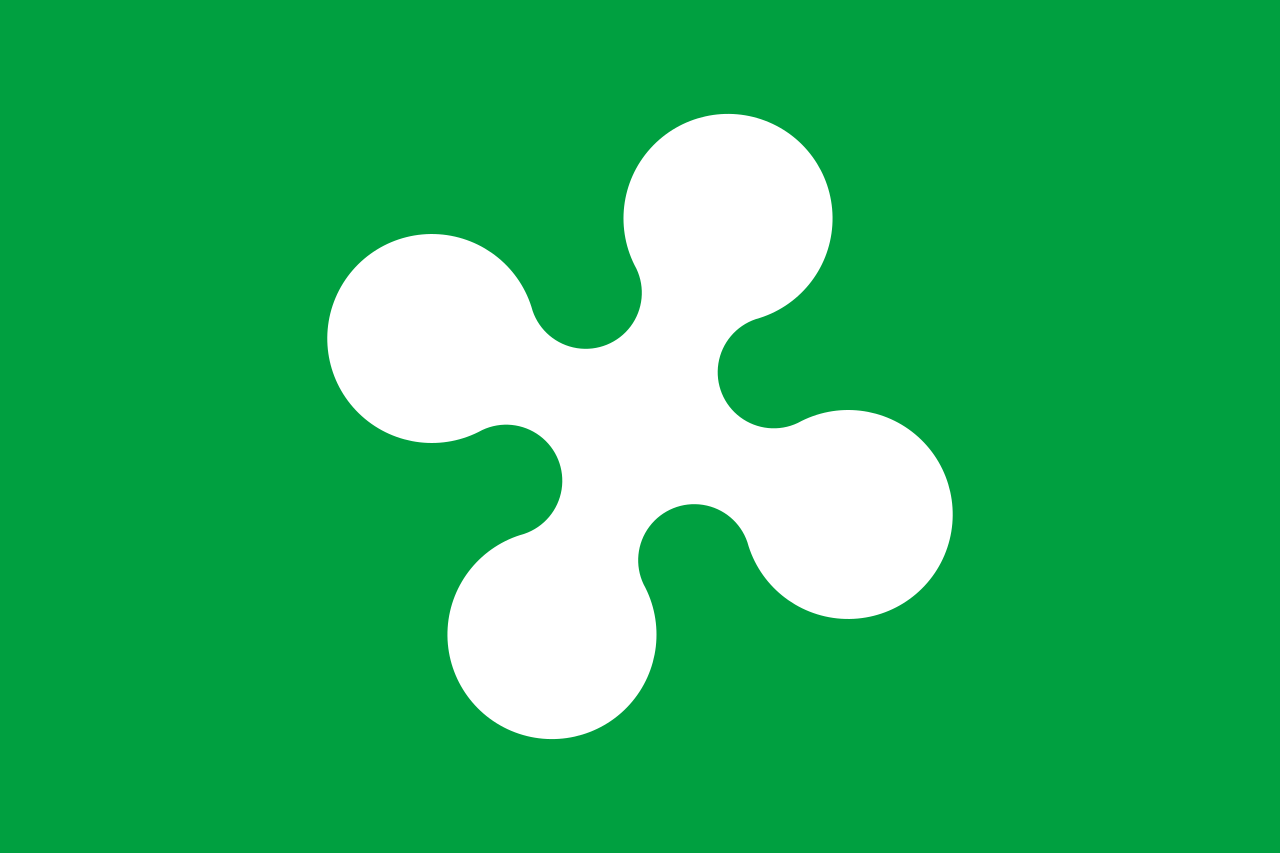 Lombardia
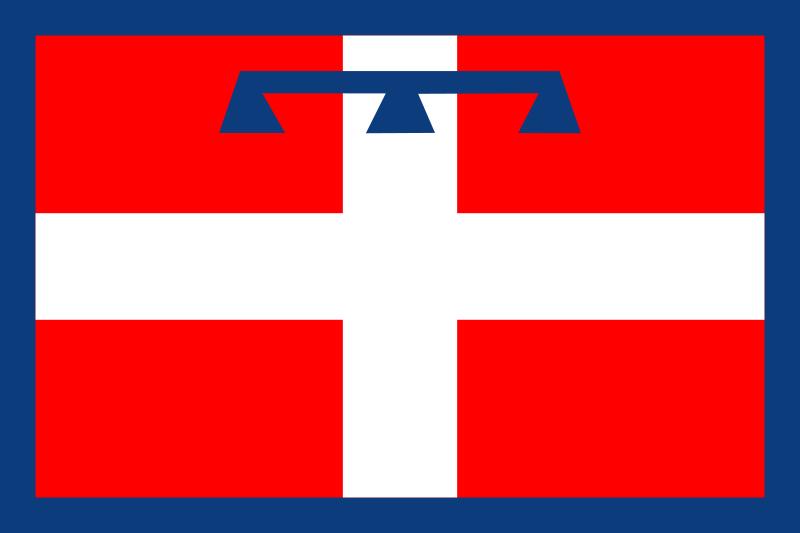 Piemonte
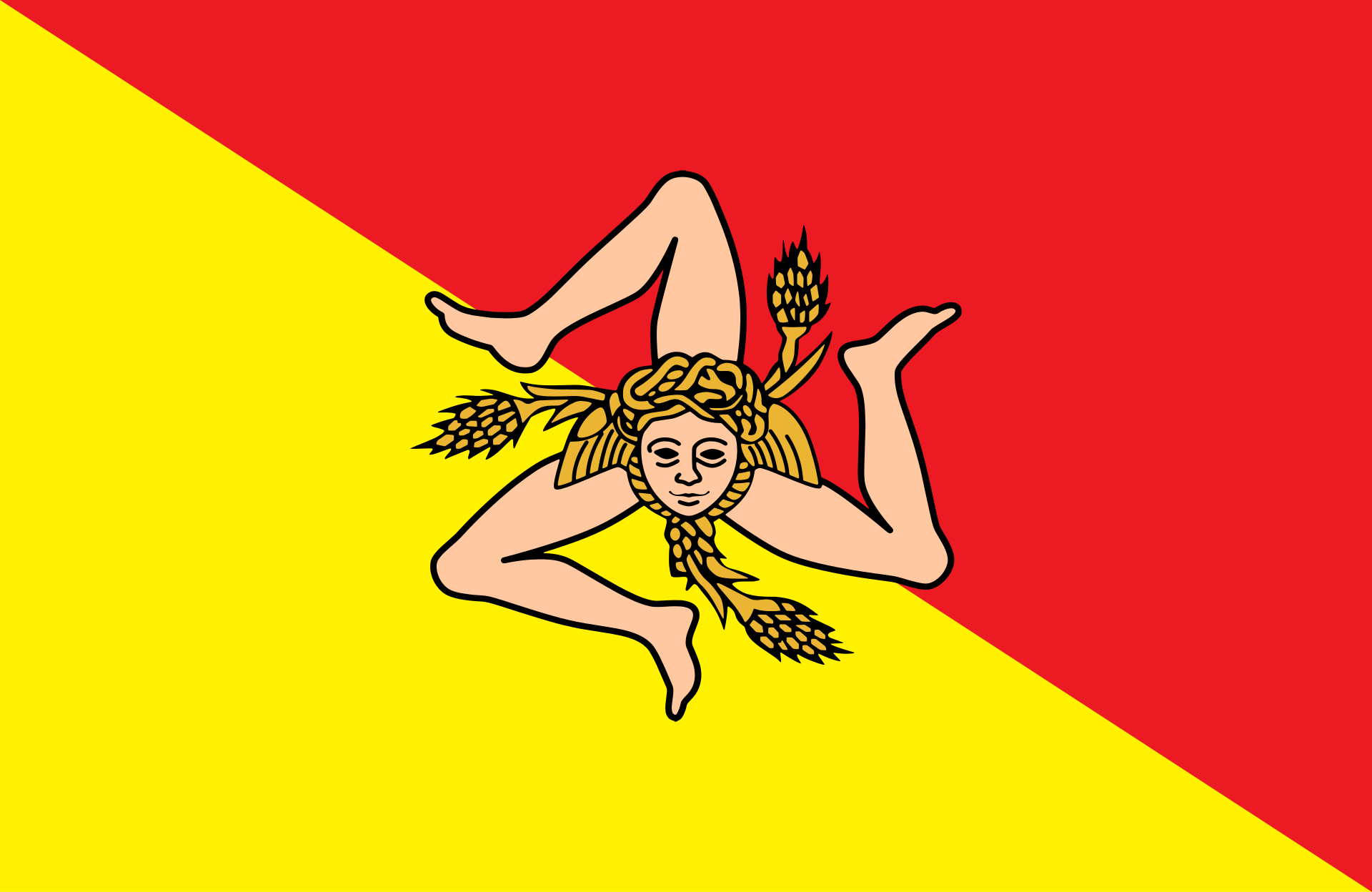 Sicilia
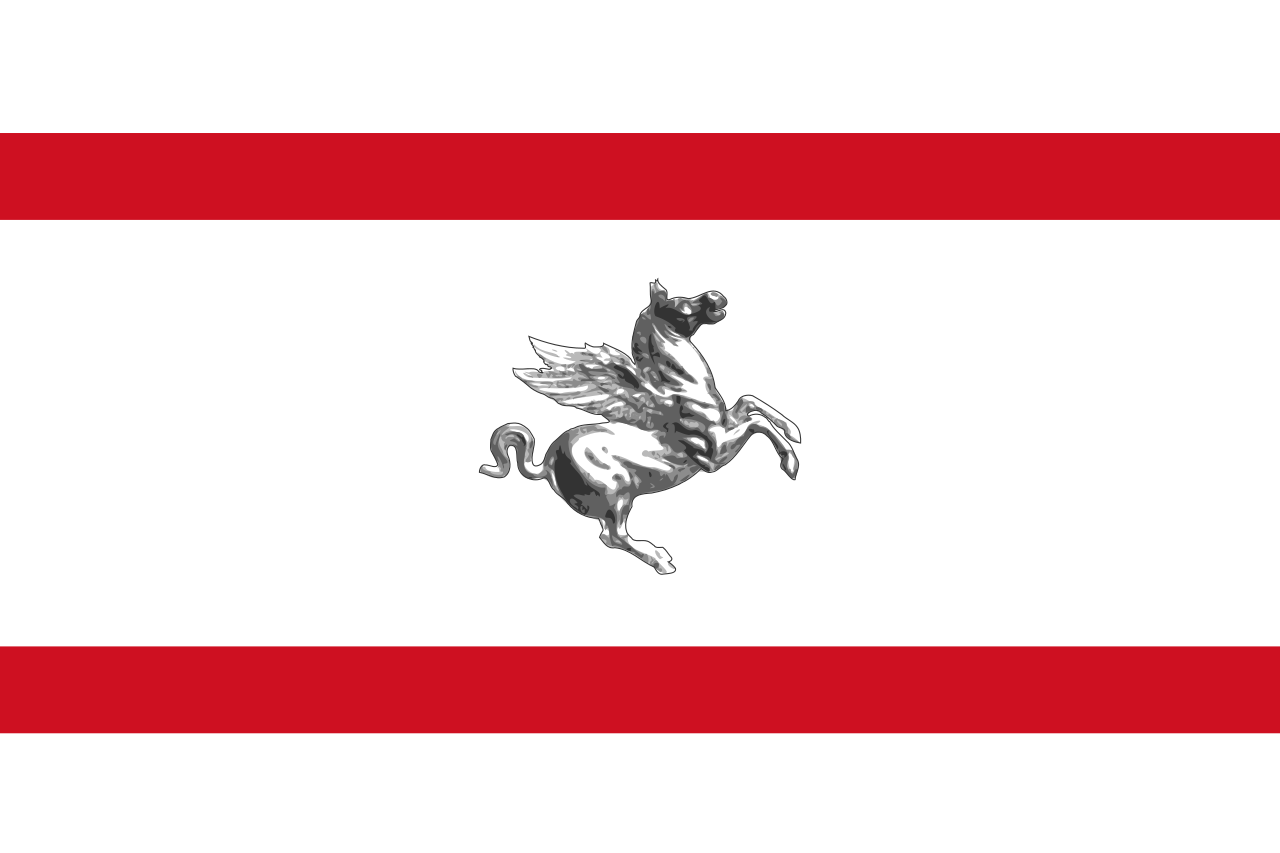 Toscana
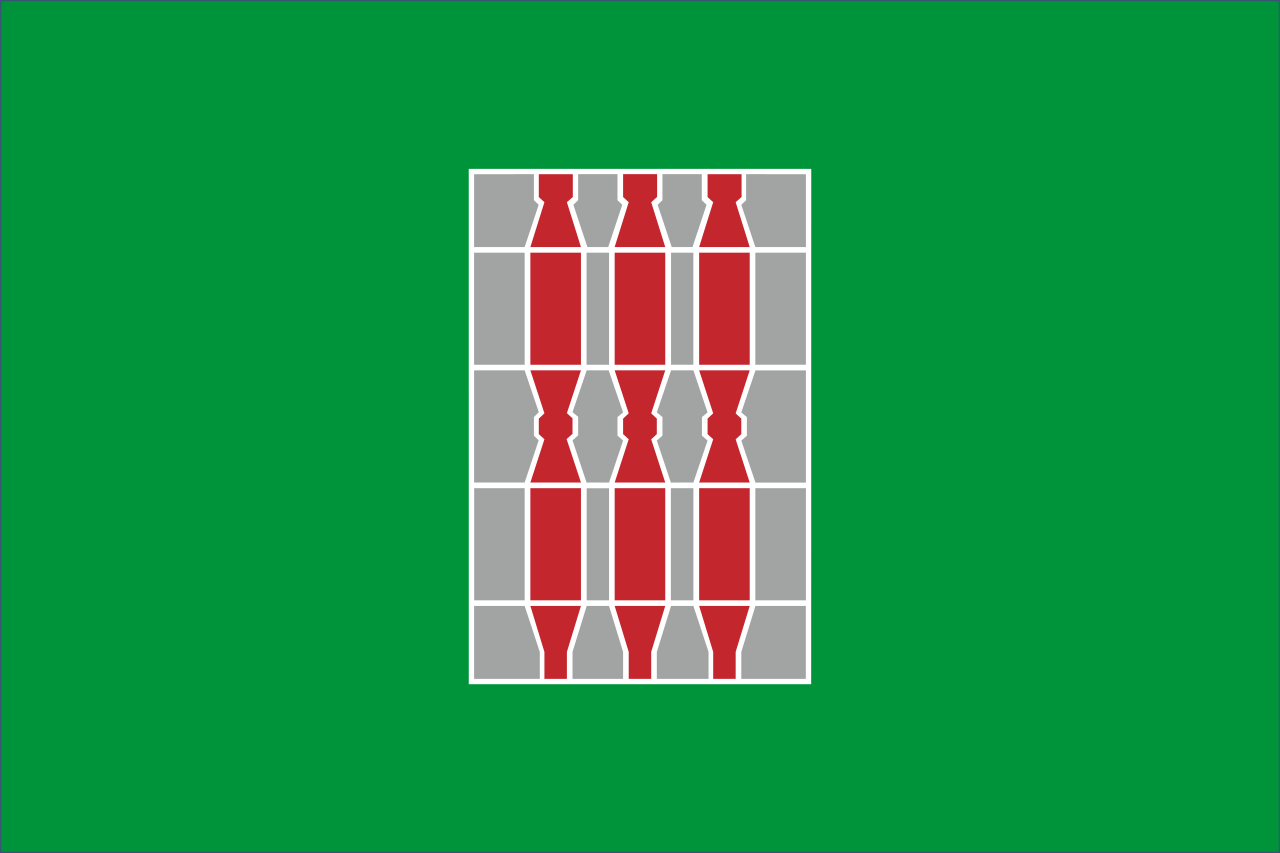 Umbria
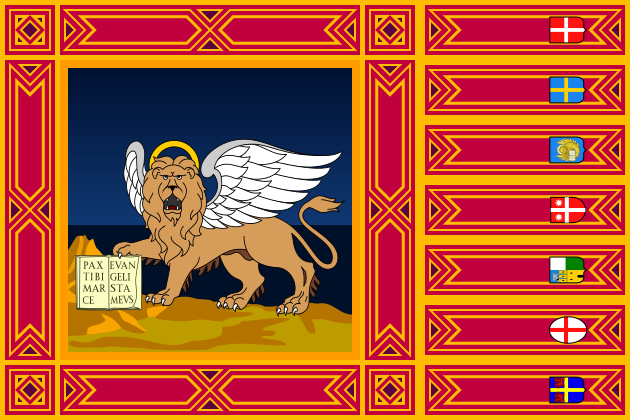 Veneto
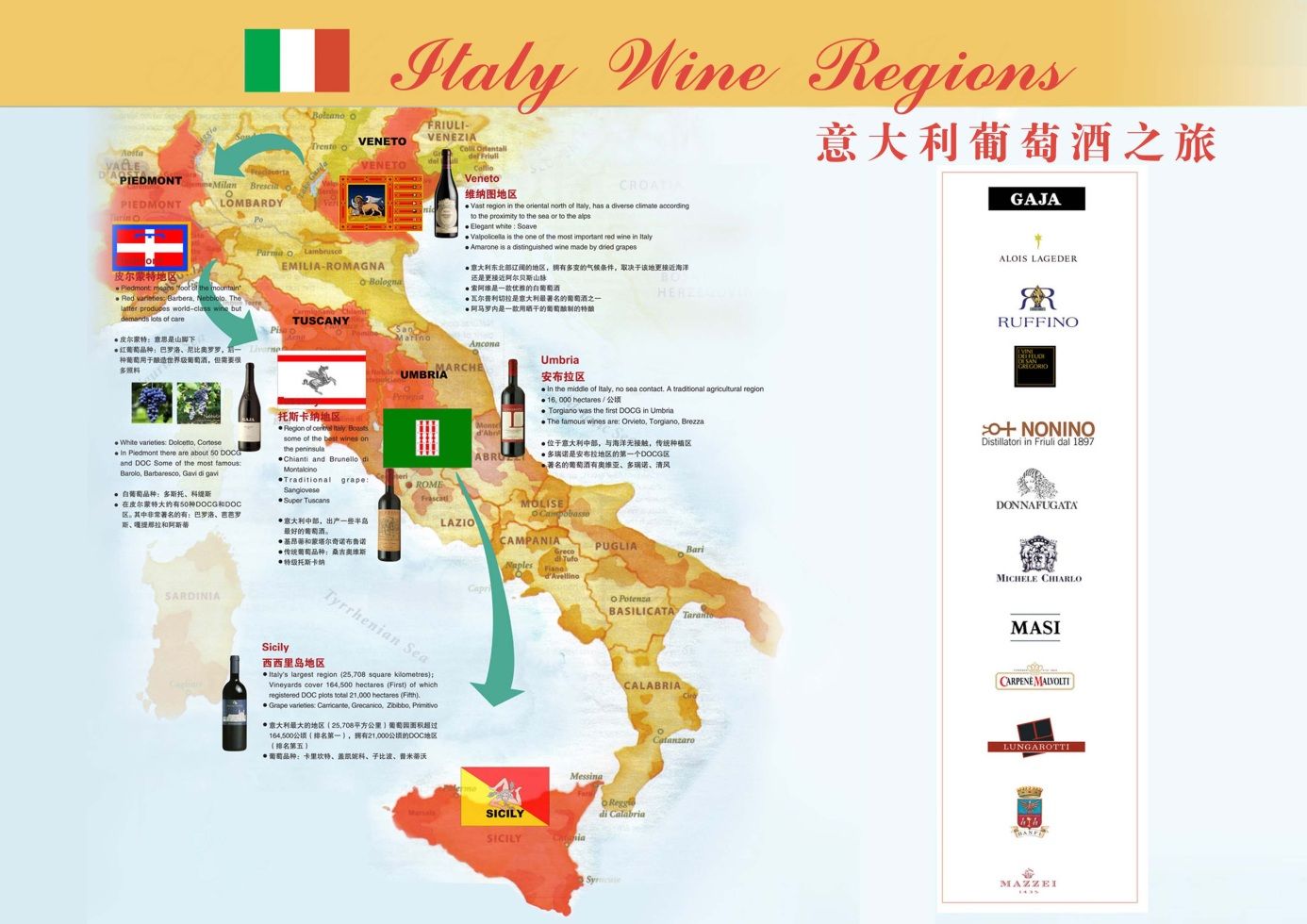
一概而论地评价意大利葡萄酒好于或差于其他国家的葡萄酒是不负责任的。因为,这个国家有着庞大的葡萄酒产量、惊人的风格多样性,当然也存在不同品质 的差异。在意大利很多地方依然保留着传统甚至显得过时的酿酒方法,可这并不妨碍他们酿造出最出色的酒。新式的酿酒方法也被广泛采用,而且对于普通情况来 说,这是提升意大利葡萄酒品质的重要手段。无论是传统亦或是创新,这些酿造技术被深谙酿酒之道的人采用都会获得经典佳酿。那些意大利传统的维护者和创新者 之间,或许有些小的争论,但是他们都最终获得国际市场的认可。
意大利和法国每年都在争夺世界上最大的葡萄酒生产国、出口国还有消费国的头衔。这两个国家每年大约生产6百万吨的葡萄酒,年出口量约占其总产量的四 分之一,意大利和法国的年人均消费葡萄酒量几乎一样,大约是50升(25年前为90升)。意大利酿酒葡萄种植面积约为922,000公顷,法国与其相当, 有917,000公顷(从这个数据上看,相比于西班牙的1,166,000公顷就略显失色)。很明显,从产量、出口量、消费量以及葡萄园面积来看,意大利 和法国几乎没有太大差别。
意大利的最大出口市场,按照出口额统计为美国。意大利出口的葡萄酒差不多有三分之二被大批散装地运到其他国家进行调配,尤其是德国(占总出口量的 38%)和法国(占总出口量的25%),许多葡萄酒被蒸馏成工业酒精中——大约占整体葡萄酒产量的15% ——相当于整个北美葡萄酒产量的一半。 所以尽管意大利的葡萄酒产量惊人,其中被装瓶且带有商标的酒款大约只占总产量的30-40%,这些远不及意大利被评为DOC级酒的一半数量,(详情请见关 于意大利葡萄酒法律部分),这也意味着等级分类的葡萄酒总量大约是整体产量的14%。(Quelle:http://www.italiawinealliance.com.cn)
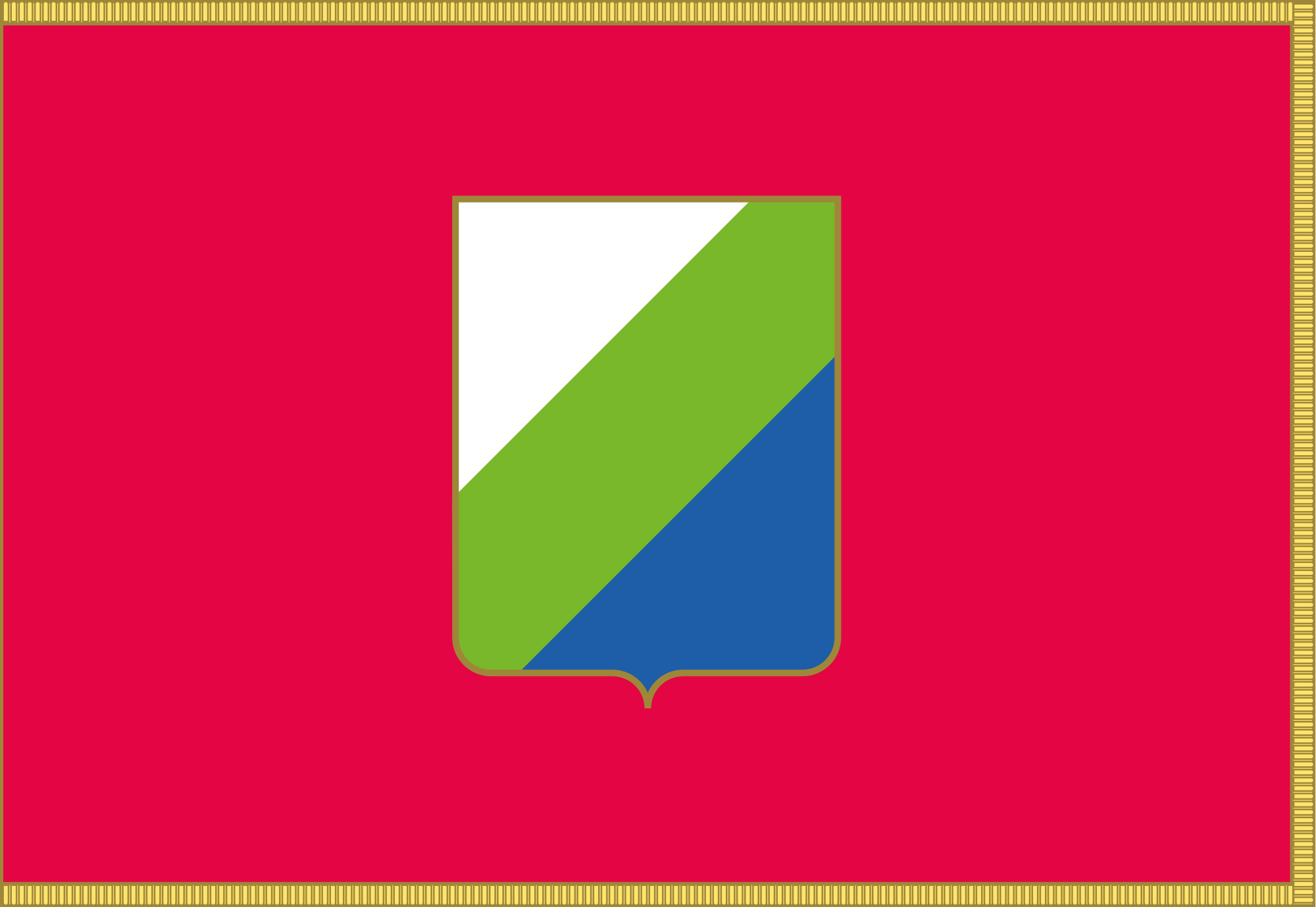 Abruzzo
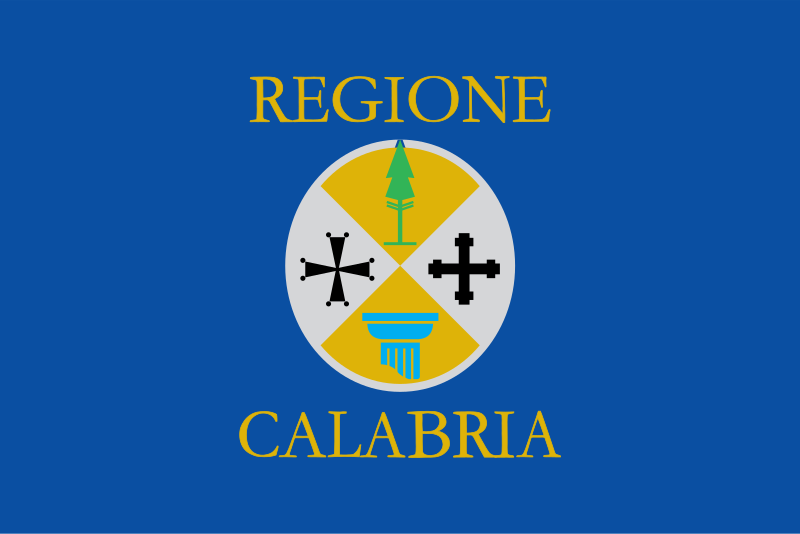 Calabria
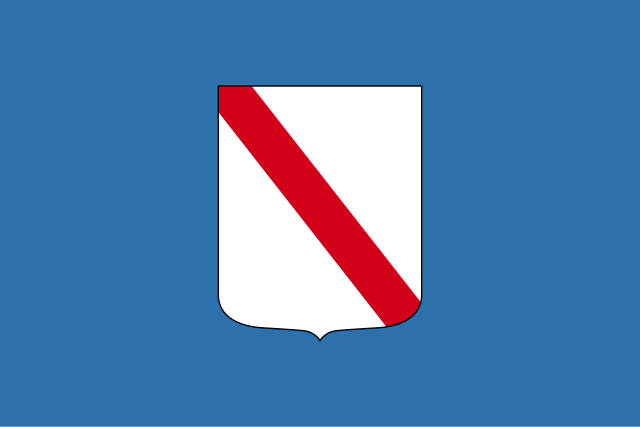 Campania
Italy
Campania
Italy
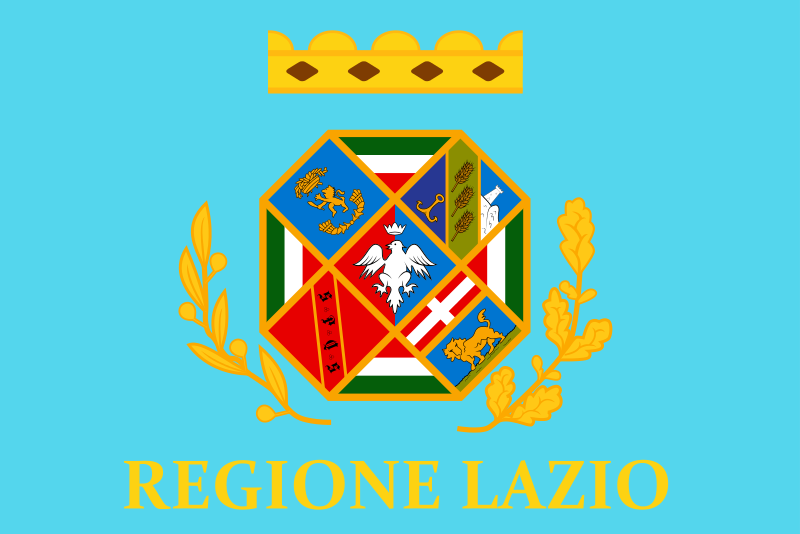 Lazio
Lazio
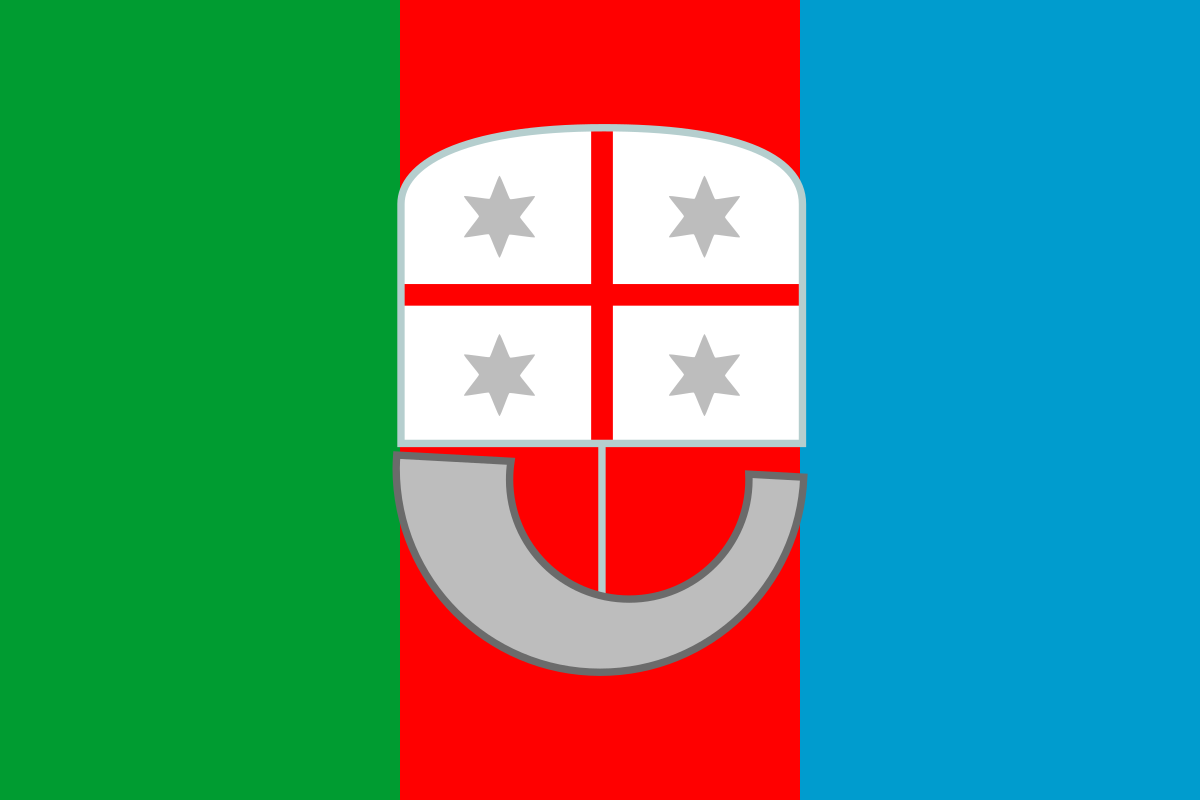 Liguria
Lombardia
Liguria
Lombardia
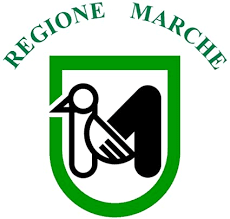 Marche
 Puglia
 Sardegna
Sicilia
Toscana
Umbria
Sardegna
Sicilia
Toscana
Umbria
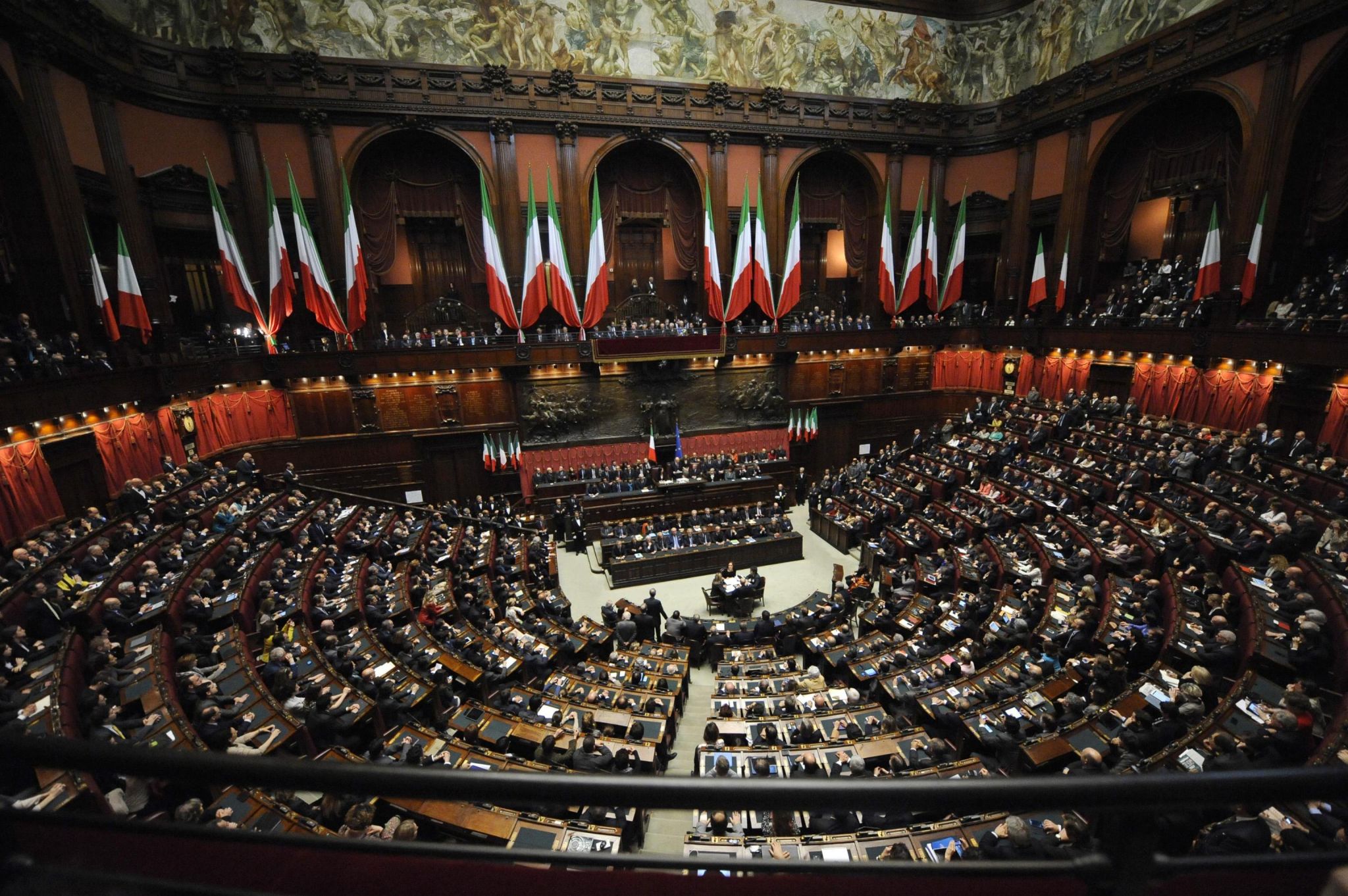
 Architecture

 Climate

Italy for Climate ist eine Initiative der Stiftung für nachhaltige Entwicklung, die von einer Gruppe von Unternehmen und Wirtschaftsverbänden gefördert wird, die besonders sensibel auf das Thema Klimawandel reagieren. Ziel der Initiative ist es, die Umsetzung eines Klimafahrplans für Italien zu fördern, der mit den europäischen Vorgaben des Green Deal und den Zielen des Pariser Abkommens übereinstimmt.
Sie schlägt vor, alle Akteure zusammenzubringen, die besonders sensibel für das Klimaproblem sind und die daran interessiert sind, eine Rolle im Dekarbonisierungsprozess des Landes zu spielen, der jetzt unausweichlich ist, um ein gemeinsames Handeln zu stärken und größere Klimaambitionen zu fördern.
 Exhibition
Belgium
Exhibition
Belgium
 Cataluña
Germany
France
Cataluña
Germany
France
 Hessen
 Ile-de-France
Italy
Lombardia
Netherlands
Sweden
Switzerland
Spain
United Kingdom
Ile-de-France
Italy
Lombardia
Netherlands
Sweden
Switzerland
Spain
United Kingdom

Auf der weltweit größten Textilmaschinenmesse ITMA trifft sich die globale Textil. und Bekleidungsindustrie alle vier Jahre an einem wechselnden Standort in Europa. Neben innovativen technischen Lösungen für die textile Wertschöpfung bieten Veranstaltungen und Konferenzen die Möglichkeit zum Know-how-Austausch.
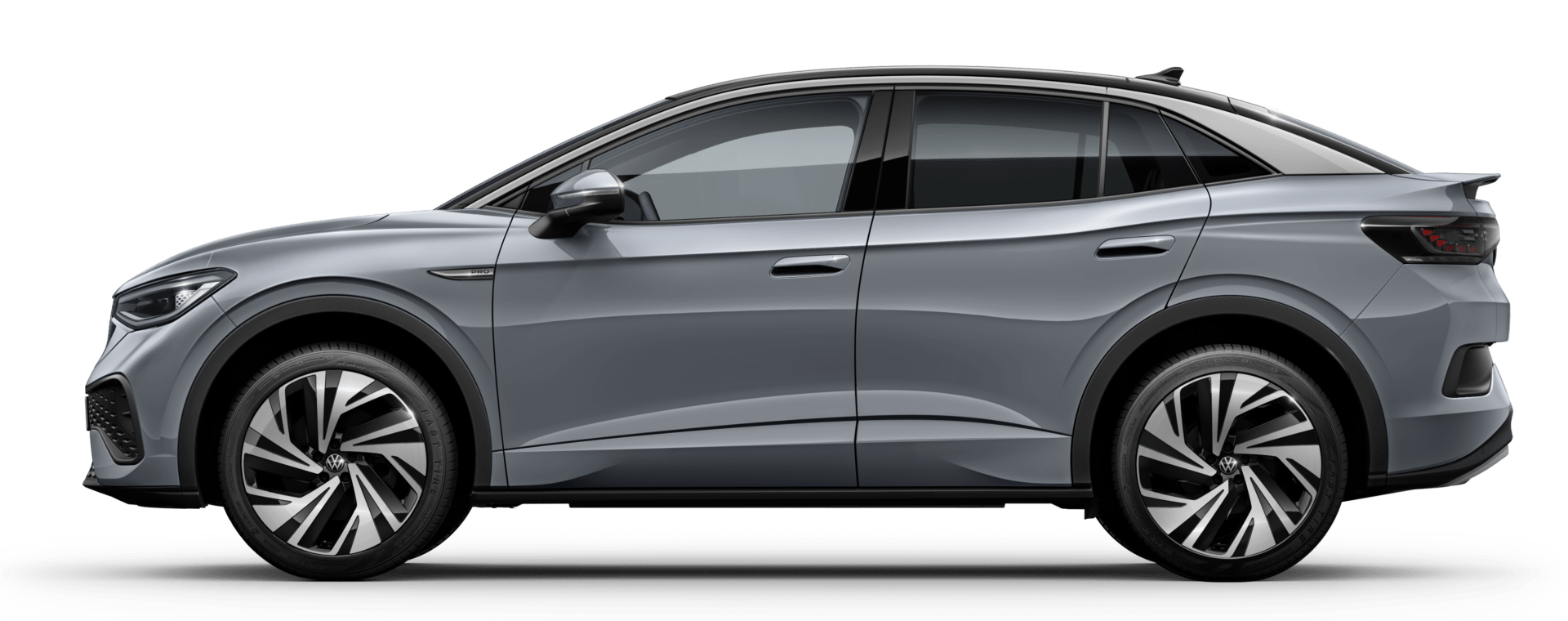
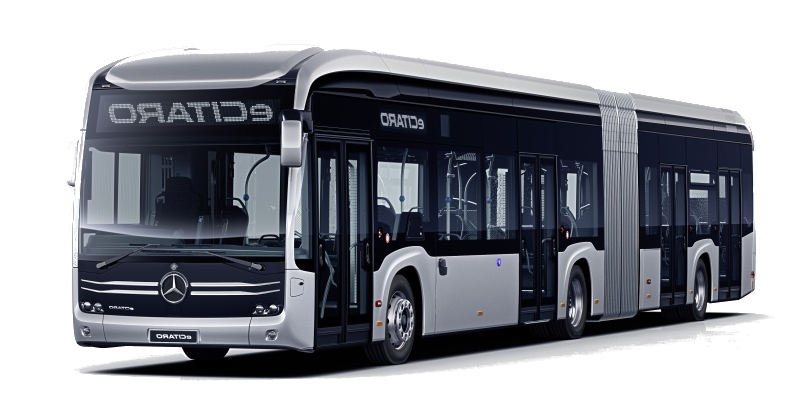
 Automobile
IVECO
Automobile
*Commercial vehicles
Automobile
*Caravan/Camper
Automobile
*Engine
Automobile
*Coach and bus
Automobile
Astra
Automobile
Magirus
Automobile
***Technology
Italy
Automobile
IVECO
Automobile
*Commercial vehicles
Automobile
*Caravan/Camper
Automobile
*Engine
Automobile
*Coach and bus
Automobile
Astra
Automobile
Magirus
Automobile
***Technology
Italy
 Military, defense and equipment
Piemonte
Military, defense and equipment
Piemonte


 World Heritage
Belgium
Germany
France
Italy
Luxembourg
Netherlands
Austria
Poland
Portugal
World Heritage
Belgium
Germany
France
Italy
Luxembourg
Netherlands
Austria
Poland
Portugal
 Religion
Switzerland
Spain
Czech Republic
Religion
Switzerland
Spain
Czech Republic
 Vacation and Travel
United Kingdom
Vacation and Travel
United Kingdom
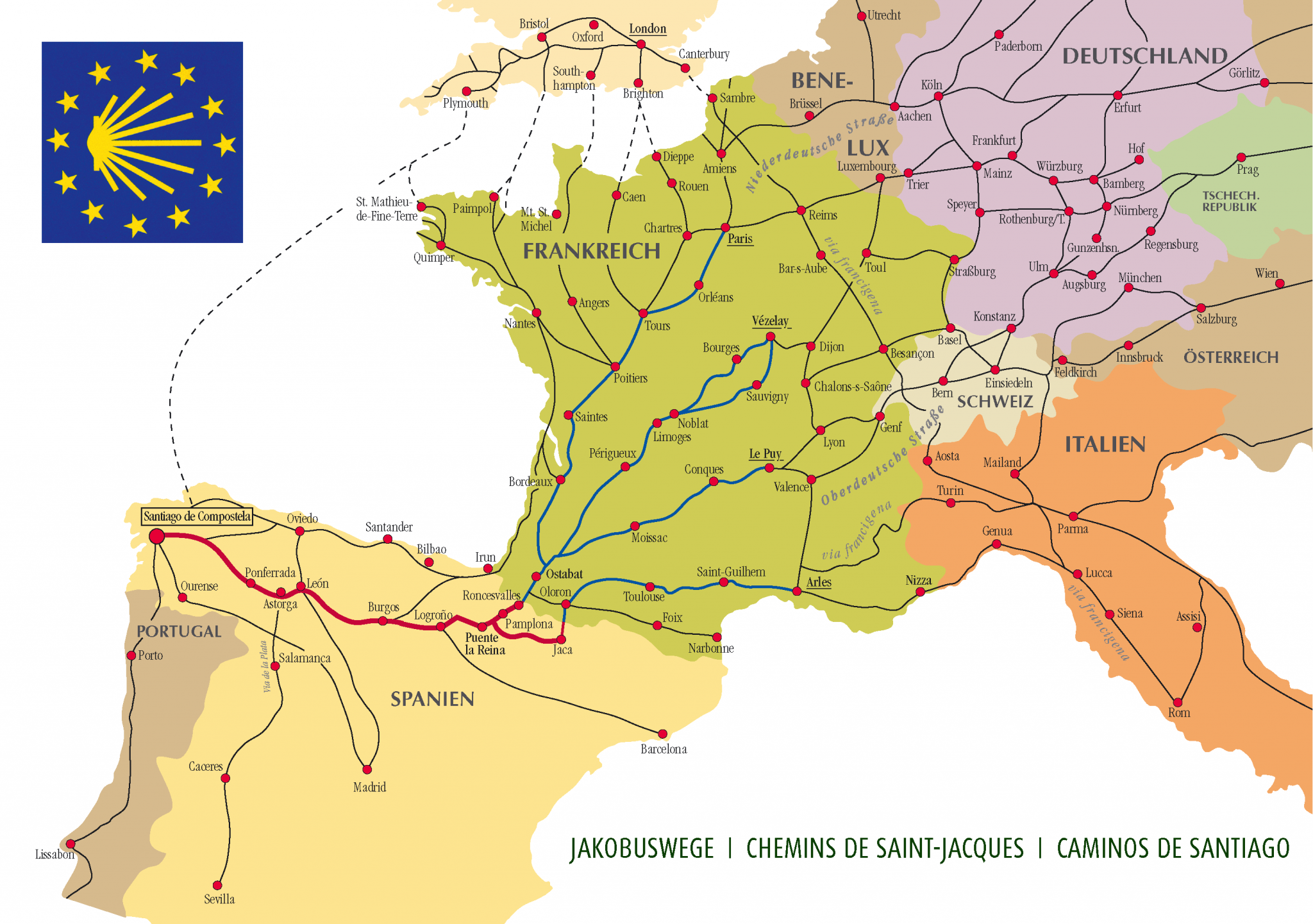
圣雅各之路或圣地牙哥朝圣之路(西班牙语:El Camino de Santiago)是前往基督教的圣地之一西班牙加利西亚圣地牙哥康波斯特拉的朝圣之路。主要指从法国各地经由比利牛斯山通往西班牙北部之道路,是联合国教科文组织所登录的世界遗产。
Als Jakobsweg (spanisch Camino de Santiago, galicisch: Camiño de Santiago) wird eine Anzahl von Pilgerwegen durch ganz Europa bezeichnet, die alle das angebliche Grab des Apostels Jakobus in Santiago de Compostela in Galicien (Spanien) zum Ziel haben. In erster Linie wird darunter der Camino Francés verstanden, jene hochmittelalterliche Hauptverkehrsachse Nordspaniens, die von den Pyrenäen zum Jakobsgrab führt und die Königsstädte Jaca, Pamplona, Estella, Burgos und León miteinander verbindet. Diese Route, so wie sie heute noch begangen wird, entstand in der ersten Hälfte des 11. Jahrhunderts.
Ein Pilgerführer des 12. Jahrhunderts, der im Jakobsbuch (lateinisch Liber Sancti Jacobi), der Hauptquelle zur Jakobusverehrung im Hochmittelalter, enthalten ist, nannte für den französischen Raum vier weitere Wege, die sich im Umfeld der Pyrenäen zu einem Strang vereinigen. Nach der Wiederbelebung der Pilgerfahrt nach Santiago de Compostela in den 1970er und 1980er Jahren wurde der spanische Hauptweg 1993 in das UNESCO-Welterbe aufgenommen. 1998 erhielten auch die vier im Liber Sancti Jacobi beschriebenen französischen Wege diesen Titel. Zuvor schon hatte der Europarat im Jahre 1987 die Wege der Jakobspilger in ganz Europa zur europäischen Kulturroute erhoben und ihre Identifizierung empfohlen.
サンティアゴ・デ・コンポステーラの巡礼路(サンティアゴ・デ・コンポステーラのじゅんれいろ)は、キリスト教の聖地であるスペイン、ガリシア州のサンティアゴ・デ・コンポステーラへの巡礼路。おもにフランス各地からピレネー山脈を経由しスペイン北部を通る道を指す。
The Camino de Santiago (Latin: Peregrinatio Compostellana, "Pilgrimage of Compostela"; Galician: O Camiño de Santiago),[1] known in English as the Way of Saint James among other names,[2][3][4] is a network of pilgrims' ways or pilgrimages leading to the shrine of the apostle Saint James the Great in the cathedral of Santiago de Compostela in Galicia in northwestern Spain, where tradition has it that the remains of the saint are buried. Many follow its routes as a form of spiritual path or retreat for their spiritual growth. It is also popular with hiking and cycling enthusiasts and organized tour groups.
The French Way (Camino Francés) and the Routes of Northern Spain are the courses which are listed in the World Heritage List by UNESCO.
Le pèlerinage de Saint-Jacques-de-Compostelle ou pèlerinage de Compostelle est un pèlerinage catholique dont le but est d'atteindre le tombeau attribué à l'apôtre saint Jacques le Majeur, situé dans la crypte de la cathédrale de Saint-Jacques-de-Compostelle en Galice (Espagne). C'est un « Chemin semé de nombreuses démonstrations de ferveur, de pénitence, d'hospitalité, d'art et de culture, qui nous parle de manière éloquente des racines spirituelles du Vieux Continent »1.
Créé et instauré après l'invention des reliques de Jacques de Zébédée au début du IXe siècle, le pèlerinage de Compostelle devient à partir du XIe siècle un grand pèlerinage de la Chrétienté médiévale. Mais c'est seulement après la prise de Grenade en 1492, sous le règne de Ferdinand d'Aragon et d'Isabelle la Catholique, que le pape Alexandre VI déclare officiellement Saint-Jacques-de-Compostelle lieu d'un des « trois grands pèlerinages de la Chrétienté », avec ceux de Jérusalem et de Rome.
Récemment, l'interprétation du sanctuaire catholique subit une évolution doctrinale : le mot « tombeau » a disparu des discours des derniers papes depuis Jean-Paul II. Jean-Paul II parlant du « mémorial de saint Jacques », sans utiliser le mot « reliques » et Benoît XVI disant simplement que la cathédrale Saint-Jacques-de-Compostelle « est liée à la mémoire de saint Jacques ».
Les chemins de Compostelle, qui correspondent à plusieurs itinéraires en Espagne et en France, ont été déclarés en 1987 « Premier itinéraire culturel » par le Conseil de l'Europe. Depuis 2013, les chemins de Compostelle attirent plus de 200 000 pèlerins chaque année, avec un taux de croissance de plus de 10 % par an. Les pèlerins viennent essentiellement à pied, et souvent de villes proches (demandant peu de jours de marche pour atteindre Santiago). Le Camino francés rassemble les 2/3 des marcheurs, mais les autres chemins « mineurs » connaissent une croissance de leur fréquentation supérieure au chemin traditionnel. Les mois d'été sont les plus fréquentés par les pèlerins, et les pèlerins espagnols y sont majoritaires (les pèlerins d'origine étrangère dominent le reste de l'année).
Il Cammino di Santiago di Compostela è il lungo percorso che i pellegrini fin dal Medioevo intraprendono, attraverso la Francia e la Spagna, per giungere al santuario di Santiago di Compostela, presso cui ci sarebbe la tomba dell'Apostolo Giacomo il Maggiore.
Le strade francesi e spagnole che compongono l'itinerario sono state dichiarate Patrimonio dell'umanità dall'UNESCO. Si tratta grossomodo (a seconda del sentiero e dell'allenamento) di un percorso di 800 km per la durata di 1 mese.
El Camino de Santiago o peregrinación de Santiago de Compostela es una peregrinación católica de origen medieval cuyo propósito es llegar a la tumba atribuida al apóstol Santiago el Mayor, situada en la cripta de la catedral de Santiago de Compostela en Galicia (España). Ha sido, y sigue siendo, la ruta más antigua, más concurrida y más celebrada del viejo continente. Se trata de un «camino sembrado de numerosas manifestaciones de fervor, de arrepentimiento, de hospitalidad, de arte y de cultura, que nos habla de manera elocuente de las raíces espirituales del Viejo Continente».1
Creado e instaurado después del descubrimiento de las reliquias de Santiago el Zebedeo a principios del siglo IX, la peregrinación a Compostela se convirtió desde el siglo XI en una de las grandes peregrinación de la cristiandad medieval. Aunque hasta después de la caída de Granada en 1492, durante el reinado de Fernando de Aragón e Isabel la Católica, Santiago de Compostela no será declarada oficialmente por el papa Alejandro VI como lugar de una de las «tres grandes peregrinaciones en la cristiandad», con Jerusalén y Roma con sus vías romeas. Después el Camino fue un tanto olvidado y en la actualidad ha vuelto a tomar un gran auge, siendo recorrido por caminantes y andadores de todo el mundo que a pie, corriendo, en bicicleta o a caballo, emprenden una experiencia que entremezcla la antigua devoción religiosa con la aventura, el encuentro y el conocimiento personal, el deporte y disfrute de la naturaleza y la cultura. Es parte del sendero de larga distancia GR-65.
Recientemente, la interpretación del santuario católico ha sufrido una evolución doctrinal: la palabra tumba ha desaparecido del discurso de los últimos papas desde Juan Pablo II, que habló del «memorial del santo Santiago», sin usar la palabra «reliquias», y de Benedicto XVI que dijo simplemente que la catedral de Santiago de Compostela «está vinculada a la memoria de Santiago».
Los Caminos de Santiago, que corresponden a varios itinerarios en España y en Francia, fueron declarados en 1987 el primer «Itinerario Cultural Europeo» por el Consejo de Europa.
El Camino de Santiago Francés y las rutas francesas del Camino fueron declarados por la Unesco Patrimonio de la Humanidad en 1993 y 1998 respectivamente.23 La declaración española fue ampliada en 2015 incluyendo el Camino Primitivo, el Camino Costero, el Camino vasco-riojano y el Camino de Liébana.4
En 2004 la Fundación Príncipe de Asturias le concedió el Premio Príncipe de Asturias de la Concordia «como lugar de peregrinación y de encuentro entre personas y pueblos que, a través de los siglos, se ha convertido en símbolo de fraternidad y vertebrador de una conciencia europea».5 Además, ha recibido el título honorífico de «Calle mayor de Europa».6
Desde 2013, atrae a más de 200 000 peregrinos cada año, con una tasa de crecimiento de más del 10 % anual. Los peregrinos llegan principalmente a pie, y a menudo de las ciudades cercanas (necesitando unos pocos días para llegar a Santiago). El Camino francés recoge 2/3 de los caminantes, pero otros caminos menores están experimentando un crecimiento incluso mayor que el camino tradicional. Los meses de verano son los más frecuentados por los peregrinos, especialmente por los peregrinos españoles, siendo en su mayoría peregrinos procedentes del extranjero los que dominan el resto del año.
Путь Свято́го Иа́кова, Эль Ками́но де Сантья́го (исп. El Camino de Santiago) — паломническая дорога к предполагаемой могиле апостола Иакова в испанском городе Сантьяго-де-Компостела, главная часть которой пролегает в Северной Испании. Благодаря своей популярности и разветвлённости этот маршрут оказал большое влияние на распространение культурных достижений в эпоху Средневековья. C 1993 года входит в число памятников всемирного наследия ЮНЕСКО.
Во второй половине XX века значительный вклад в дело восстановления паломнического маршрута внёс Элиас Валинья Сампедро, благодаря стараниям которого, начиная с 1980-х годов, популярность маршрута вновь начала возрастать: так, если в 1978 году по нему прошли всего 13 человек[1], то в 2009 — более 145 тысяч[2]. Определённую роль в популяризации Пути Святого Иакова сыграл роман Пауло Коэльо «Дневник мага», изданный в 1987 году[3].