Deutsch-Chinesische Enzyklopädie, 德汉百科
 Sweden
 Music charts
 Music
Music

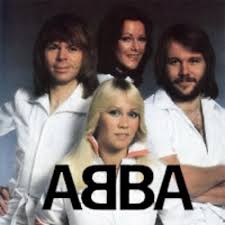
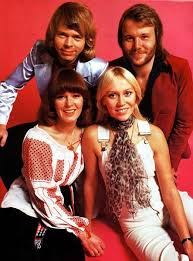
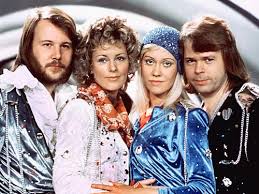
ABBA(乐队标志:ᗅᗺᗷᗅ,中文:阿巴)是瑞典流行乐队。字母缩写(ABBA)源自于乐队成员姓名的首字母(字母的排列顺序并无规定)。少数时候被记为Abba。在1976年以前的乐队宣传材料中,乐队标志中的第一个“B”字母就已经被反转过来了。[1]乐队在1970年前后重组,乐队成员是昂内塔·费尔特斯科格(Agnetha Fältskog)、比约恩·奥瓦尔斯(Björn Ulvaeus)、班尼·安德森(Benny Andersson),及安妮-弗瑞德·林斯塔德(Anni-Frid Lyngstad;绰号"Frida")。他们凭借歌曲《滑铁卢》在1974年欧洲歌唱大赛中获胜,他们从此广泛地为人所知。[2]ABBA于1982年解散。经典名曲包括《妈妈咪呀》(Mamma Mia)和《舞后》(Dancing Queen)。
ABBA ist eine schwedische Popgruppe, die aus den ehemaligen Paaren Agnetha Fältskog und Björn Ulvaeus sowie Benny Andersson und Anni-Frid Lyngstad besteht und sich 1972 in Stockholm formierte. Sie gehört mit rund 400 Millionen verkauften Tonträgern zu den erfolgreichsten Bands der Musikgeschichte.[1]
Die Gruppe hat die Geschichte der Popmusik mitgeprägt. Bis in die 1970er Jahre hatte es keine anderen Skandinavier mit vergleichbaren Erfolgen gegeben. Trotz US-amerikanischer und britischer Dominanz im Musikgeschäft gelang ABBA der internationale Durchbruch.[2] Nach ihrem Sieg beim Eurovision Song Contest 1974 mit Waterloo war man besonders in Europa und Australien sowie später auch in Lateinamerika und Japan erfolgreich. Vor allem in der zweiten Hälfte der 1970er Jahre galt ABBA wegen der aufwendigen und ausgefeilten Musikproduktionen als Mitbegründer einer neuen internationalen Popmusik.
Zu ihren bekanntesten Songs zählen SOS, Mamma Mia, Fernando, Dancing Queen, Money, Money, Money, Take a Chance on Me, The Winner Takes It All und Super Trouper. Charakteristisch für die Gruppe waren außerdem ihre für die damalige Zeit ausgefallenen bunt-poppigen Kostüme, die das Quartett bei Auftritten und in Musikvideos trug. Während Ulvaeus und Andersson hauptsächlich für Kompositionen und Texte verantwortlich waren, agierten Fältskog und Lyngstad vorwiegend als Leadsängerinnen.
Das 1992 veröffentlichte Best-of-Album ABBA Gold zählt mit 31 Millionen verkauften Exemplaren zu den weltweit erfolgreichsten Alben und hat maßgeblich zum ABBA-Revival in den 1990ern beigetragen.[3] 1999 hatte das auf ABBA-Songs basierende Musical Mamma Mia! in London Premiere, das mit über 60 Millionen Zuschauern eines der erfolgreichsten Musicals der Welt ist.[3][4] Die Verfilmung von Mamma Mia! aus dem Jahr 2008 gehört darüber hinaus zu den erfolgreichsten Musicalverfilmungen.
1982 beendeten die Gruppenmitglieder aufgrund privater Differenzen vorläufig ihre musikalische Zusammenarbeit und gaben erst 2018 bekannt, dass sie wieder zusammen an neuem Material arbeiten.[5] Obwohl es über einen Zeitraum von fast 40 Jahren weder Bandauftritte noch neue Musik gab, waren ihre Lieder nach wie vor populär.[6] So werden ihre Stücke weiterhin in unterschiedlichsten Interpretationen und Coverversionen produziert und meistens sehr erfolgreich vermarktet; seit 2013 gibt es in Stockholm ein ABBA-Museum. 2021 gab die Band ihr Comeback im Rahmen einer virtuellen Konzertshow bekannt und veröffentlichte drei neue Singles sowie ihr neuntes Studioalbum Voyage.
ABBA(アバ、スウェーデン語発音: [²abːa])は、アイネッタ・フェルツクグ、ビョルン・ウルヴァース、ベニー・アンダーソン、アンニ=フリッド・リングスタッドによってストックホルムで結成されたスウェーデンのポップ・グループである。彼らは1974年から1982年まで世界中の音楽チャートを席巻し、ポピュラー音楽界で商業的に成功したグループの1つになった。ABBAはイギリスのザ・ドーム(英語版)で行われたユーロビジョン・ソング・コンテスト1974に出場し、スウェーデン代表として初めて優勝した。
ABBA (/ˈæbə/ AB-ə, Swedish: [ˈâbːa]) are a Swedish pop group formed in Stockholm in 1972 by Agnetha Fältskog, Björn Ulvaeus, Benny Andersson, and Anni-Frid Lyngstad. The group's name is an acronym of the first letters of their first names arranged as a palindrome. Widely considered one of the greatest musical groups of all time,[2] they became one of the most commercially successful acts in the history of popular music, topping the charts worldwide from 1974 to 1983, and have achieved 48 hit singles.
In 1974, ABBA were Sweden's first winner of the Eurovision Song Contest with the song "Waterloo", which in 2005 was chosen as the best song in the competition's history as part of the 50th anniversary celebration of the contest.[3] During the band's main active years, it consisted of two married couples: Fältskog and Ulvaeus, and Lyngstad and Andersson. With the increase of their popularity, their personal lives suffered, which eventually resulted in the collapse of both marriages. The relationship changes were reflected in the group's music, with latter compositions featuring darker and more introspective lyrics.[4] After ABBA separated in December 1982, Andersson and Ulvaeus continued their success writing music for multiple audiences including stage, musicals and movies,[5][6] while Fältskog and Lyngstad pursued solo careers.[7][8]
Ten years after the group broke up, a compilation, ABBA Gold, was released, becoming a worldwide best-seller. In 1999, ABBA's music was adapted into Mamma Mia!, a successful musical that toured worldwide and, as of November 2021, is still in the top-ten longest running productions on both Broadway (closed in 2015) and the West End (still running). A film of the same name, released in 2008, became the highest-grossing film in the United Kingdom that year. A sequel, Mamma Mia! Here We Go Again, was released in 2018.
In 2016, the group reunited and started working on a digital avatar concert tour.[9] Newly recorded songs were announced in 2018.[10] Voyage, their first new album in 40 years, was released on November 5, 2021.[11] ABBA Voyage, a concert residency featuring ABBA as virtual avatars – dubbed 'ABBAtars' – is due to take place in London from May to December 2022.[12]
ABBA is one of the best-selling music artists of all time, with record sales estimated to be between 150 million and 385 million sold worldwide[13][14] and the group was ranked 3rd best-selling singles artists in the United Kingdom with a total of 11.3 million singles sold by 3 November 2012.[15] ABBA was the first group from a non-English-speaking country to achieve consistent success in the charts of English-speaking countries, including the United States, United Kingdom, Republic of Ireland, Canada, Australia, New Zealand and South Africa.[16] They are the best-selling Swedish band of all time[17] and the best-selling band originating in continental Europe. ABBA had eight consecutive number-one albums in the UK. The group also enjoyed significant success in Latin America and recorded a collection of their hit songs in Spanish. The group was inducted into the Rock and Roll Hall of Fame in 2010.[18] In 2015, their song "Dancing Queen" was inducted into the Recording Academy's Grammy Hall of Fame.[19]
ABBA est un groupe de pop suédois fondé à Stockholm en novembre 1972. Le groupe est originellement composé d'Agnetha Fältskog, Anni-Frid Lyngstad, dite « Frida », Benny Andersson et Björn Ulvaeus. Lors de leur formation, ils sont deux couples mariés, Agnetha et Björn, Frida et Benny.
L'acronyme et palindrome ABBA est composé des quatre initiales des prénoms des membres (Agnetha, Björn, Benny, Anni-Frid). Ce n'est qu'à partir de 1976 que le désormais célèbre ambigramme, avec un B inversé, est utilisé comme logo.
Vainqueur du Concours Eurovision de la chanson 1974 avec Waterloo, ABBA connaît un immense succès mondial durant la période disco du milieu des années 1970 et devient l'un des groupes ayant vendu le plus de disques, ses ventes étant estimées à 380 millions (180 millions ventes certifiées). Séparés depuis 1982, ABBA annonce fin avril 2018 que ses membres se sont retrouvés au cours de l'été 2017 pour l'enregistrement de deux nouvelles chansons qui feront partie de leur prochain album. Ce dernier, leur neuvième, intitulé Voyage, sort le 5 novembre 2021.
Gli ABBA sono un gruppo musicale pop svedese, e, in generale, il gruppo scandinavo di maggiore successo. Hanno venduto più di 400 milioni di dischi in tutto il mondo, con una costante vendita ogni anno.[4] Gli ABBA hanno raggiunto un successo mondiale e sono considerati tra i più celebri esponenti della musica pop internazionale.
Il nome del gruppo deriva da un acronimo formato dalle lettere iniziali dei nomi dei membri (Agnetha, Benny, Björn e Anni-Frid) e lo si trova scritto anche come Abba. La prima 'B' nella seconda versione del logo del nome del gruppo appare rovesciata a partire dal 1976 (ᗅᗺᗷᗅ) in tutte le copertine dei loro dischi e del materiale promozionale.
Il gruppo si costituì intorno al 1970 con la formazione che avrebbe sempre mantenuto: Björn Ulvaeus, Benny Andersson, Agnetha Fältskog e Anni-Frid Lyngstad (meglio conosciuta come "Frida"). Quattro anni dopo erano già all'apice della loro carriera musicale dopo aver vinto l'edizione dell'Eurovision Song Contest nel 1974 con Waterloo; da allora raggiunsero grande successo e popolarità mondiali. Al massimo della loro celebrità, entrambi i matrimoni dei componenti del gruppo (Björn con Agnetha e Benny con Frida) fallirono. Il gruppo si sciolse nel 1982 e, per più di trent'anni, nessuna riunione venne più progettata dai quattro; nel 2000 fu proposto agli ABBA di riunirsi per un tour di 100 concerti in cambio di un compenso pari a un miliardo di dollari[5], ma rifiutarono "per non deludere i fan"[6]. Il 15 marzo 2010 sono stati inseriti nella Rock and Roll Hall of Fame[7].
Nel 2018 annunciano il ritorno all'attività, riprendendo ad incidere due nuovi brani, di cui uno intitolato I Still Have Faith In You[8]. Il ritorno si fa attendere, anche a causa della pandemia di coronavirus, fino al 2 settembre 2021, quando finalmente vengono pubblicati due nuovi singoli (I Still Have Faith In You / Don't Shut Me Down) come anteprima di un intero nuovo album (Voyage), la cui uscita è prevista il 5 novembre 2021, e viene annunciata una serie di concerti a Londra nel maggio 2022.
Gli ABBA sono stati il primo gruppo non anglofono d'Europa a raggiungere un successo così ampio nei paesi anglofoni del mondo, come il Regno Unito, l'Irlanda, gli Stati Uniti, il Canada, l'Australia, la Nuova Zelanda e il Sudafrica. Tra i loro maggiori meriti c'è la legittimazione dell'industria musicale scandinava come fonte di successo internazionale, che ha spianato la via ad altri gruppi svedesi dei più diversi sottogeneri pop e rock come Ace of Base, Rednex, Roxette, The Cardigans, Alcazar, The Ark.
ABBA es un grupo sueco de música pop, integrado por Agnetha Fältskog, Björn Ulvaeus, Benny Andersson y Anni-Frid «Frida» Lyngstad. El nombre «ABBA» es un acrónimo formado por las primeras letras del nombre de cada miembro (Agnetha, Björn, Benny, Anni-Frid).1
El cuarteto se formó en Estocolmo en 1972, logrando fama internacional al triunfar en el Festival de la Canción de Eurovisión 1974.2 Desde entonces, ABBA ha ganado popularidad empleando melodías pegadizas, letras simples y su sonido propio, caracterizado por las armonías de las voces femeninas y el wall of sound, un efecto musical creado por el productor Phil Spector.
Björn y Agnetha contrajeron matrimonio meses antes de la formación del cuarteto, mientras que Benny y Frida lo hicieron en 1978; los cuatro lidiaron con sus obligaciones artísticas al mismo tiempo que se ocupaban de sus nuevas familias.
Sus grabaciones tuvieron un impacto comercial que los llevó a convertirse en los artistas más exitosos de su compañía discográfica —Universal Music Group— y a ser la banda con más ventas en los años 1970.34
Fue el primer grupo pop europeo en experimentar el éxito en países de habla inglesa fuera de Europa, principalmente Australia, Nueva Zelanda, Sudáfrica, Canadá y en menor medida Estados Unidos. Sin embargo, en la cima de su popularidad, ambos matrimonios se disolvieron y estos cambios se reflejaron en su música, al escribir letras más profundas con un estilo musical diferente. La agrupación experimentó un declive comercial y finalmente decidieron separarse, de modo que en diciembre de 1982 realizaron su última aparición como ABBA.5
Después de un tiempo fuera del interés público, en la década de 1990 el lanzamiento de varios álbumes recopilatorios hicieron posible su regreso a la cima de las listas de popularidad, y ABBA es ahora uno de los grupos más exitosos, con ventas estimadas de entre 380 y 400 millones de sus producciones musicales en todo el mundo.678910
Su música ha sido interpretada por varios artistas reconocidos, y también es la base del musical Mamma Mia!. La agrupación es un ícono de su país de origen, además de una figura importante en la expansión del europop. Así, su popularidad abrió las puertas a otros artistas europeos, una de las razones por las que ingresaron al Salón de la Fama del Rock.1112
En septiembre de 2021 y tras casi cuarenta años de su separación, el grupo anunció su regreso con dos canciones nuevas tituladas «I still have faith in you» y «Don't shut me down», que forman parte del disco Voyage. El grupo realizará una gira de conciertos virtuales en 2022.131415
ABBA (рус. — «А́ББА»[2][3]) — шведская поп-группа, созданная в 1972 году, названная по первым буквам имён исполнителей: Агнета Фельтског, Бьорн Ульвеус, Бенни Андерссон, Анни-Фрид Лингстад. Является одним из наиболее успешных коллективов за всю историю популярной музыки и самым успешным из числа созданных в Скандинавии: записи группы по всему миру были проданы тиражом более 350 миллионов экземпляров[4][5].
Синглы квартета занимали первые места в чартах с середины 1970-х («Waterloo») до начала 1980-х («One of Us»), а сборники возглавляли мировые хит-парады и в 2000-х[6]. Музыка группы остаётся в плей-листах радиостанций, и их альбомы продолжают продаваться по сей день.
Они были первыми представителями континентальной Европы, завоевавшими первые места в чартах всех ведущих англоговорящих стран (США, Великобритания, Канада, Ирландия, Австралия и Новая Зеландия).
Eurovision Song Contest,ESC
 History
 Hanseatic City
 International cities
 *European Capital of Culture
Olympic Summer Games
Sweden
Umwelthauptstadt Europas
*European Capital of Culture
Olympic Summer Games
Sweden
Umwelthauptstadt Europas
 World Heritage
 Important port
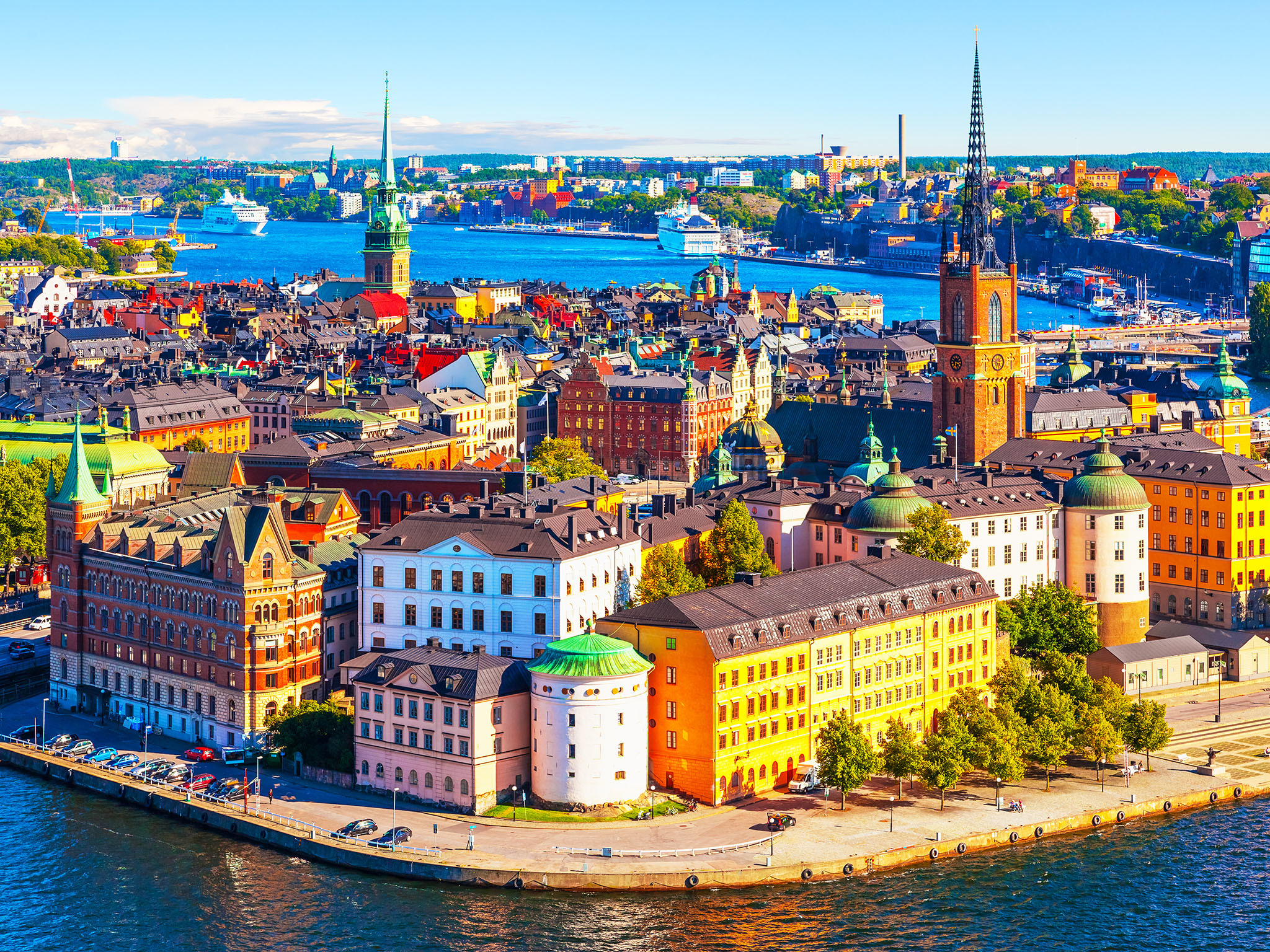
斯德哥尔摩(瑞典语:Stockholm, 发音 帮助·信息,当地华人有时称其为斯京),瑞典首都及最大城市,亦是斯德哥尔摩省首府。瑞典王国政府、国会以及瑞典王室的官方宫殿都设在斯德哥尔摩。它位于瑞典的东海岸,濒波罗的海,梅拉伦湖入海处,风景秀丽,是著名的旅游胜地。市区分布在14座岛屿和一个半岛上,70余座桥梁将这些岛屿联为一体,因此享有“北方威尼斯”的美誉。斯德哥尔摩市区为大斯德哥尔摩的一部分。
从13世纪起,斯德哥尔摩就已经成为瑞典的政治、文化、经济和交通中心。斯德哥尔摩由于免受战争的破坏而保存良好,现在共有100多座博物馆和名胜,包括历史、民族、自然、美术等各个方面。斯德哥尔摩也是一个高科技的城市,拥有众多大学,工业发达。
斯德哥尔摩是阿尔弗雷德·诺贝尔的故乡。从1901年开始,每年12月10日诺贝尔逝世纪念日,斯德哥尔摩音乐厅举行隆重仪式,瑞典国王亲自给获诺贝尔奖者授奖,并在市政厅举行晚宴。
斯德哥尔摩(Stockholm),是瑞典的首都和第一大城市,瑞典政治、经济、文化、交通中心和主要港口,也是瑞典国家政府、国会以及皇室的官方宫殿都所在地,世界著名的国际大都市。
斯德哥尔摩位于瑞典的东海岸,濒波罗的海,梅拉伦湖入海处,风景秀丽,是著名的旅游胜地。市区分布在14座岛屿和一个半岛上,70余座桥梁将这些岛屿联为一体,因此享有“北方威尼斯”的美誉。斯德哥尔摩市区为大斯德哥尔摩的一部分。
斯德哥尔摩城市名称直译过来为木头岛,建于13世纪,1436年起斯德哥尔摩就已经成为瑞典的政治、文化、经济和交通中心。
斯德哥尔摩由于免受战争的破坏而保存良好,现在共有100多座博物馆和名胜,包括历史、民族、自然、美术等各个方面。斯德哥尔摩也是一个高科技的城市,拥有众多大学,工业发达。斯德哥尔摩也是瑞典的金融中心,瑞典主要的银行的总部都在这里。
斯德哥尔摩是阿尔弗雷德·诺贝尔的故乡。从1901年开始,每年12月10日诺贝尔逝世纪念日,斯德哥尔摩音乐厅举行隆重仪式,瑞典国王亲自给获诺贝尔奖者授奖,并在市政厅举行晚宴。
Stockholm  [stɔkːɔlm]?/i (vom altschwedischen stokker, entsprechend schwedisch stock „Baumstamm, Warenbestand“ und holmber, schwedisch holme „kleine Insel“) ist die Hauptstadt Schwedens und mit 935.619 (Gemeinde Stockholm), 1,4 Millionen (tätort[2] Stockholm) beziehungsweise 2,1 Millionen Einwohnern (Groß-Stockholm) die größte Stadt in Skandinavien.[1][3] Sie hat eine mehr als sieben Jahrhunderte zurückreichende Besiedlungsgeschichte und ist seit 1643 die Residenz des Königs.
Die Stadt ist sowohl Sitz des schwedischen Parlamentes als auch der schwedischen Regierung. Sie ist ebenso das kulturelle Zentrum des Landes und Bischofssitz.
Stockholm[a] is the capital of Sweden and the most populous city in the Nordic countries;[9][b] 952,058 people live in the municipality,[10] approximately 1.5 million in the urban area,[5] and 2.3 million in the metropolitan area.[11] The city stretches across fourteen islands where Lake Mälaren flows into the Baltic Sea. Just outside the city and along the coast is the island chain of the Stockholm archipelago. The area has been settled since the Stone Age, in the 6th millennium BC, and was founded as a city in 1252 by Swedish statesman Birger Jarl. It is also the capital of Stockholm County. Stockholm is the only capital in the world with a national urban park.[12]
Stockholm is the cultural, media, political, and economic centre of Sweden. The Stockholm region alone accounts for over a third of the country's GDP,[13] and is among the top 10 regions in Europe by GDP per capita.[14] It is an important global city,[15][16] and the main centre for corporate headquarters in the Nordic region.[17] The city is home to some of Europe's top ranking universities, such as the Stockholm School of Economics, Karolinska Institute and Royal Institute of Technology (KTH).[18][19] It hosts the annual Nobel Prize ceremonies and banquet at the Stockholm Concert Hall and Stockholm City Hall. One of the city's most prized museums, the Vasa Museum, is the most visited non-art museum in Scandinavia.[20][21] The Stockholm metro, opened in 1950, is well known for the decor of its stations; it has been called the longest art gallery in the world.[22][23][24] Sweden's national football arena is located north of the city centre, in Solna. Ericsson Globe, the national indoor arena, is in the southern part of the city. The city was the host of the 1912 Summer Olympics, and hosted the equestrian portion of the 1956 Summer Olympics otherwise held in Melbourne, Victoria, Australia.
Stockholm is the seat of the Swedish government and most of its agencies,[25] including the highest courts in the judiciary,[26][27] and the official residencies of the Swedish monarch and the Prime Minister. The government has its seat in the Rosenbad building, the Riksdag (Swedish parliament) is seated in the Parliament House, and the Prime Minister's residence is adjacent at the Sager House.[28][29][30] The Stockholm Palace is the official residence and principal workplace of the Swedish monarch, while the Drottningholm Palace, a World Heritage Site on the outskirts of Stockholm, serves as the Royal Family's private residence.[31][32]
Stockholm (prononcé en suédois [²stɔkː(h)ɔlm] Écouter) est la capitale et la plus grande ville de Suède. Elle est le siège du gouvernement et du parlement suédois ainsi que le lieu de résidence officielle du roi Carl XVI Gustav.
La ville de Stockholm (Stockholms stad) ou, plus officiellement, la commune de Stockholm (Stockholms kommun) est, avec ses 1 538 517 habitants1, la plus grande des 290 municipalités suédoises. Le Grand Stockholm, qui couvre la majeure partie du Comté de Stockholm, a, lui, une population de 2 063 945 habitants1 sur une superficie de près de 6 600 km2.
Située au bord de la mer Baltique, la ville est construite en partie sur plusieurs îles, à l'embouchure du lac Mälar, ce qui lui a valu, à l'instar d'autres cités européennes, son surnom de Venise du Nord (par ailleurs aussi donné à Bruges (Belgique), à Saint-Pétersbourg (Russie), et à Amsterdam (Pays-Bas).
Stoccolma (AFI: /stokˈkolma/[2]; in svedese Stockholm, pronunciato ascolta[?·info] [ˈstɔkːˈhɔlm, ˈstɔkːˈɔlm, ˈstɔkːɔlm];[3] 952.058 ab.)[4] è la capitale della Svezia, capoluogo della contea di Stoccolma. Posta nella parte orientale del paese, sul mar Baltico, è sede di governo e parlamento, oltre che luogo di residenza del capo dello stato, il re Carlo Gustavo XVI. Maggiore città della Svezia e della Scandinavia, è il centro di riferimento economico e culturale della Svezia.
Anche l'area metropolitana (Storstockholm) è la più grande della nazione, contando 2.213.528 abitanti.[4][5] Amministrativamente la città è divisa in 26 comuni. Il centro e la gran parte dei sobborghi ad esso più vicini sono compresi nel comune di Stoccolma.
Estocolmo ( [stɔkːɔlm] (?·i) en sueco, Stockholm) es la capital y ciudad más grande de Suecia.
La ciudad de Estocolmo es administrativamente un municipio de la provincia homónima, incluye el área metropolitana. Estocolmo ha sido nombrada por la GaWC como una ciudad global de «clase alfa»1 en el índice global de las ciudades 2008, ocupa el puesto 24 en el mundo, el número 8 en Europa y el número 1 de toda Escandinavia.
Estocolmo es a menudo conocida por su belleza, sus edificios y arquitectura, su agua limpia y abierta y sus numerosos parques, jardines y canales. Forma parte del grupo de ciudades conocidas vulgarmente como las «Venecias del Norte». Como capital del Estado, Estocolmo es la sede del Gobierno, el Parlamento (Riksdag), el Tribunal Supremo de Justicia (Hōgsta Domstolen). Alberga también el Palacio de Drottningholm, residencia oficial y despacho del jefe de Estado, el rey Carlos XVI Gustavo de Suecia. La ciudad fue premiada con el título Capital Verde Europea 2010.
 Sport
Badminton World Federation
BWF World Championships
China
Denmark
England
France
India
Indonesia
Canada
Malaysia
Schottland
Sweden
Switzerland
Spain
United States
Sport
Badminton World Federation
BWF World Championships
China
Denmark
England
France
India
Indonesia
Canada
Malaysia
Schottland
Sweden
Switzerland
Spain
United States

国际羽联世界锦标赛,通常称世界羽毛球锦标赛,是一项由国际羽毛球联合会组织的羽毛球单项锦标赛事,以之为世界顶尖的羽毛球选手加冕。
该赛由1977年开始举办,1983年以前每三年举办一次。然而,在头两届比赛时国际羽联遇到过麻烦:世界羽毛球联合会(后来与国际羽毛球联合会合并)在国际羽联世界锦标赛后一年以相同的目的举办相同性质的比赛。1981年两组织合并后,该问题也随之解决。
从1985年起,该项赛事改为两年举办一次,直到2005年止。2006年起,锦标赛成为了国际羽联日程表上一年一次的赛事,目的在于给与运动员们更多机会去赢得官方的“世界冠军”称号。但每到奥运会举办的年份,锦标赛不举办,以便为奧運會羽毛球比賽让路。(Quelle:Wikipedia)
 Automobile
*Engine
Automobile
***Technology
Automobile
Geely
Automobile
*Coach and bus
Automobile
*Trucks
Automobile
*Commercial vehicles
Automobile
Polestar
Automobile
*Electric car
Geely Holding Group
Sweden
Automobile
*Engine
Automobile
***Technology
Automobile
Geely
Automobile
*Coach and bus
Automobile
*Trucks
Automobile
*Commercial vehicles
Automobile
Polestar
Automobile
*Electric car
Geely Holding Group
Sweden
 Companies

 Grand Est
Albania
Andorra
Armenia
Azerbaijan
Belgium
Bosnia Herzegovina
Bulgaria
Denmark
Germany
Estonia
Finland
France
Georgia
Greece
Ireland
Iceland
Italy
Croatia
Latvia
Liechtenstein
Lithuania
Luxembourg
Malta
Moldawien
Monaco
Montenegro
Netherlands
Nordmazedonien
Norwegen
Austria
Poland
Portugal
Romania
Russia
San Marino
Sweden
Switzerland
Serbia
Slovakia
Slovenia
Spain
Czech Republic
Turkey
Ukraine
Hungary
United Kingdom
Cyprus
Grand Est
Albania
Andorra
Armenia
Azerbaijan
Belgium
Bosnia Herzegovina
Bulgaria
Denmark
Germany
Estonia
Finland
France
Georgia
Greece
Ireland
Iceland
Italy
Croatia
Latvia
Liechtenstein
Lithuania
Luxembourg
Malta
Moldawien
Monaco
Montenegro
Netherlands
Nordmazedonien
Norwegen
Austria
Poland
Portugal
Romania
Russia
San Marino
Sweden
Switzerland
Serbia
Slovakia
Slovenia
Spain
Czech Republic
Turkey
Ukraine
Hungary
United Kingdom
Cyprus
 *United States Political System
*UK political system
*French political system
Albania
Belgium
Bulgaria
Denmark
Germany
Estonia
Finland
France
Generalsekretäre der Nordatlantikpakt-Organisation
Jens Stoltenberg
Generalsekretäre der Nordatlantikpakt-Organisation
Anders Fogh Rasmussen
Generalsekretäre der Nordatlantikpakt-Organisation
Jaap de Hoop Scheffer
Generalsekretäre der Nordatlantikpakt-Organisation
George Robertson
Generalsekretäre der Nordatlantikpakt-Organisation
Javier Solana
Generalsekretäre der Nordatlantikpakt-Organisation
Sergio Balanzino
Generalsekretäre der Nordatlantikpakt-Organisation
Willy Claes
Generalsekretäre der Nordatlantikpakt-Organisation
Manfred Wörner
Generalsekretäre der Nordatlantikpakt-Organisation
Peter Carington, 6. Baron Carrington
Generalsekretäre der Nordatlantikpakt-Organisation
Joseph Luns
Generalsekretäre der Nordatlantikpakt-Organisation
Manlio Giovanni Brosio
Generalsekretäre der Nordatlantikpakt-Organisation
Dirk Stikker
Generalsekretäre der Nordatlantikpakt-Organisation
Paul-Henri Spaak
Generalsekretäre der Nordatlantikpakt-Organisation
Hastings Ismay, 1. Baron Ismay
History
Greece
Greenland
Iceland
Italy
Canada
Croatia
Latvia
Lithuania
Luxembourg
*United States Political System
*UK political system
*French political system
Albania
Belgium
Bulgaria
Denmark
Germany
Estonia
Finland
France
Generalsekretäre der Nordatlantikpakt-Organisation
Jens Stoltenberg
Generalsekretäre der Nordatlantikpakt-Organisation
Anders Fogh Rasmussen
Generalsekretäre der Nordatlantikpakt-Organisation
Jaap de Hoop Scheffer
Generalsekretäre der Nordatlantikpakt-Organisation
George Robertson
Generalsekretäre der Nordatlantikpakt-Organisation
Javier Solana
Generalsekretäre der Nordatlantikpakt-Organisation
Sergio Balanzino
Generalsekretäre der Nordatlantikpakt-Organisation
Willy Claes
Generalsekretäre der Nordatlantikpakt-Organisation
Manfred Wörner
Generalsekretäre der Nordatlantikpakt-Organisation
Peter Carington, 6. Baron Carrington
Generalsekretäre der Nordatlantikpakt-Organisation
Joseph Luns
Generalsekretäre der Nordatlantikpakt-Organisation
Manlio Giovanni Brosio
Generalsekretäre der Nordatlantikpakt-Organisation
Dirk Stikker
Generalsekretäre der Nordatlantikpakt-Organisation
Paul-Henri Spaak
Generalsekretäre der Nordatlantikpakt-Organisation
Hastings Ismay, 1. Baron Ismay
History
Greece
Greenland
Iceland
Italy
Canada
Croatia
Latvia
Lithuania
Luxembourg
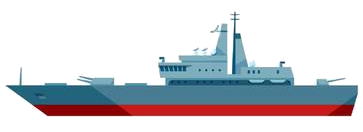
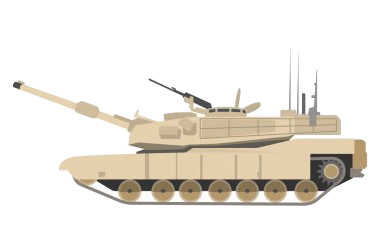
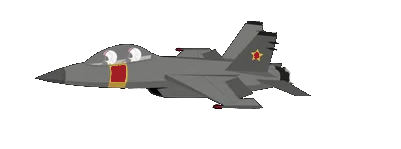
 Military, defense and equipment
 NATO members
NavyKlicken, um Alternative zu verwenden
NATO members
Air Force
NATO members
Army
Montenegro
NATO members
NATO members
NavyKlicken, um Alternative zu verwenden
NATO members
Air Force
NATO members
Army
Montenegro
 NATO summit
Netherlands
Nordmazedonien
Norwegen
NATO summit
Netherlands
Nordmazedonien
Norwegen
 Party and government
Poland
Portugal
Romania
Sweden
Slovakia
Slovenia
Spain
Czech Republic
Turkey
Hungary
United States
United Kingdom
Party and government
Poland
Portugal
Romania
Sweden
Slovakia
Slovenia
Spain
Czech Republic
Turkey
Hungary
United States
United Kingdom
 Important International Organizations

北大西洋公约组织(英语:North Atlantic Treaty Organization,缩写为NATO;法语:Organisation du Traité de l'Atlantique Nord,缩写为OTAN),简称北约组织或北约,是欧洲及北美洲国家为实现防卫合作而建立的国际组织。1949年3月18日,美国、英国及法国公开建立北大西洋公约组织,于同年4月4日在美国华盛顿签署《北大西洋公约》后正式成立。为与以前苏联为首的东欧集团国成员相抗衡。及至苏联解体,华沙条约组织宣告解散,北约就成为一个地区性防卫协作组织。北约的最高决策机构是北约理事会。理事会由成员国国家元首及政府高层、外长、国防部长组成。总部设在比利时的布鲁塞尔。最新成员黑山于2017年6月5日加入,至此北约总共有跨域欧洲和北美的29个国家组成。北约军事开支占世界国防开支的70%[4],成员国国防开支占该国GDP的2%左右[5]。
公约第5条规定成员国受到的攻击一旦被确认,其他成员国将作出即时反应。该条款被理解为各国部队将自动参战,并不再次需要各国政府的参战授权。但这一条条款在九一一事件之前,一直都未有动用过[6] 。北约曾协助反海盗行动(counter-piracy operations),在联合国要求下打击亚丁湾、非洲之角和印度洋的海盗[7],并在2011年根据联合国安理会1973号决议将利比亚上空设为禁飞区。
Die NATO (englisch North Atlantic Treaty Organization „Organisation des Nordatlantikvertrags“ bzw. Nordatlantikpakt-Organisation), im Deutschen häufig als Atlantisches Bündnis oder als Nordatlantikpakt bezeichnet (französisch OTAN – Organisation du Traité de l’Atlantique Nord), ist eine Internationale Organisation ohne Hoheitsrechte. Ihre Mitgliedstaaten behalten ihre volle Souveränität und Unabhängigkeit. Basis der NATO ist der Nordatlantikvertrag nach Artikel 51 der UN-Charta. Ihre Organisation versteht sich nicht nur als Verteidigungsbündnis, sondern auch als militärisch-politische Organisation von 29 europäischen und nordamerikanischen Mitgliedstaaten mit dem Ziel eigener Sicherheit und weltweiter Stabilität.
Das NATO-Hauptquartier beherbergt den Nordatlantikrat (das Hauptorgan der NATO) und seine unmittelbar nachgeordneten Einrichtungen, den International Staff (IS) und den International Military Staff (IMS); diese Institution hat seit 1967 ihren Sitz in Brüssel. Nach der Unterzeichnung des Nordatlantikpakts am 4. April 1949 – vorerst auf 20 Jahre – war das Hauptquartier zunächst in London ansässig und anschließend von 16. April 1952 bis 1967 in Paris angesiedelt worden.
Die beiden wichtigsten militärischen Hauptquartiere sind das ACO (aus historischen und juristischen Gründen auch als Supreme Headquarters Allied Powers Europe / SHAPE bezeichnet) im belgischen Casteau bei Mons und das Allied Command Transformation (ACT) in der US-Stadt Norfolk (Virginia).
北大西洋条約機構(きたたいせいようじょうやくきこう)は、北大西洋条約に基づき、アメリカ合衆国を中心とした北アメリカ(=アメリカとカナダ)およびヨーロッパ諸国によって結成された軍事同盟である。29カ国が加盟し、日本など非加盟国とも協力関係にある[1]。前身はブリュッセル条約 (1948年)。ベルギー首都ブリュッセルに本部を置く[2]。
略称は頭字語が用いられ、英語圏では、North Atlantic Treaty Organization を略した NATO(ネイトー)と呼ばれ、日本やドイツ語圏では NATO(ナトー)、フランス語圏・スペイン語圏・ポルトガル語圏等では OTAN(オタン)と呼ばれる。
The North Atlantic Treaty Organization (NATO /ˈneɪtoʊ/; French: Organisation du Traité de l'Atlantique Nord; OTAN), also called the North Atlantic Alliance, is an intergovernmental military alliance between 29 North American and European countries. The organization implements the North Atlantic Treaty that was signed on 4 April 1949.[3][4] NATO constitutes a system of collective defence whereby its independent member states agree to mutual defence in response to an attack by any external party. NATO’s Headquarters are located in Haren, Brussels, Belgium, while the headquarters of Allied Command Operations is near Mons, Belgium.
Since its founding, the admission of new member states has increased the alliance from the original 12 countries to 29. The most recent member state to be added to NATO is Montenegro on 5 June 2017. NATO currently recognizes Bosnia and Herzegovina, Georgia, Macedonia and Ukraine as aspiring members.[5] An additional 21 countries participate in NATO's Partnership for Peace program, with 15 other countries involved in institutionalized dialogue programs. The combined military spending of all NATO members constitutes over 70% of the global total.[6] Members have committed to reach or maintain defense spending of at least 2% of GDP by 2024.[7][8]
L’Organisation du traité de l'Atlantique norda (en anglais : North Atlantic Treaty Organization) est l'organisation politico-militaire mise en place par les pays signataires du traité de l'Atlantique nord afin de pouvoir remplir leurs obligations de sécurité et de défense collectives. Elle est le plus souvent désignée par son acronyme OTAN (en anglais NATO) mais aussi fréquemment nommée l’Alliance atlantique, plus rarement l’Alliance euro-atlantique ou l’Alliance transatlantique5, ou parfois, encore plus brièvement, simplement l’Alliance.
Le texte de ce traité, signé le 4 avril 1949, établit le Conseil de l'Atlantique nord (CAN), et lui donne mission de mettre en place l'organisation nécessaire à son application. Le choc provoqué par le déclenchement de la guerre de Corée conduit le CAN à décider fin 1950 la création d'une organisation militaire intégrée permanente, qui constitue encore actuellement la marque distinctive de l'OTAN et lui assure des capacités militaires qu'aucune autre alliance de défense ne possède. Sous le vocable OTAN, l'usage a prévalu d'englober l'alliance juridiquement conclue par les pays signataires du traité de l'Atlantique nord, et l'organisation civile et militaire mise en place pour en rendre opérants les objectifs. La France toutefois a fait exception en décidant en 1966, tout en restant membre de l'Alliance atlantique, de quitter l'organisation militaire intégrée, dont elle est redevenue membre à part entière en 2009.
L'Alliance voit le jour dans le contexte général des débuts de la guerre froide et plus spécifiquement pendant le blocus de Berlin exercé par les Soviétiques. Elle a pour vocation initiale d'assurer la sécurité de l'Europe occidentale en instaurant un couplage fort avec les États-Unis, seul moyen aux yeux des Européens après la Seconde Guerre mondiale de se prémunir contre toute tentative expansionniste de l'Union soviétique. Selon le mot de son premier secrétaire général, Lord Ismay, le rôle de l'OTAN consiste à « garder les Russes à l'extérieur, les Américains à l'intérieur et les Allemands sous tutelle »b. L'OTAN constitue le noyau dur du bloc de l'Ouest. Entre 1955 et 1991, l'adversaire désigné de l'OTAN est le pacte de Varsovie formé par les Soviétiques à la suite de l'adhésion de la RFA à l'Alliance atlantique et à son réarmement. L'OTAN s'organise donc pour faire face à cette menace par la définition de concepts stratégiques touchant notamment les questions relatives aux armes nucléaires, par la planification coordonnée entre tous ses membres de leurs moyens militaires, et par des commandements intégrés par zone géographique, dont le SHAPE est de loin le plus important.
Depuis la dissolution de l'URSS et la fin de la guerre froide en 1991, l'Alliance atlantique a perduré malgré la disparition de sa principale raison d'être initiale. Elle a procédé à son élargissement à d'anciens pays du bloc de l'Est et d'anciennes républiques de l'Union soviétique. Elle a pris en compte de nouvelles crises et menaces comme les conflits nationalistes dans l'ex-Yougoslavie, l'essor du terrorisme international ou la prolifération des armes de destruction massive, en conséquence de quoi l'OTAN a revu en profondeur son concept stratégique et son organisation civile et militaire à plusieurs reprises. Elle a développé une politique systématique de partenariats en Europe et dans le monde, au titre de laquelle les pays de l'Alliance ont établi depuis 1994 un partenariat pour la paix (PPP) avec la Russie, les pays de sa zone d'influence et avec les pays neutres d'Europe occidentale. L'OTAN a aussi mis en place en 2002 avec l'UE une relation privilégiée, l'Identité européenne de sécurité et de défense (IESD), qui permet à cette dernière de bénéficier de moyens de l'OTAN pour certaines opérations entrant dans le cadre de sa politique de sécurité et de défense commune.
Le siège de l'OTAN, initialement situé à Londres puis à Paris (dans les locaux désormais occupés par l'université Paris-Dauphine - PSL) se trouve depuis 1966 à Haren (Bruxelles), et son principal commandement militaire, le SHAPE, initialement installé à Rocquencourt (France), se trouve aujourd'hui à Maisières (Mons), également en Belgique.
L'Organizzazione del Trattato dell'Atlantico del Nord (in inglese North Atlantic Treaty Organization, in sigla NATO,[3] in francese: Organisation du Traité de l'Atlantique Nord, in sigla OTAN) è un'organizzazione internazionale per la collaborazione nel settore della difesa.
Il trattato istitutivo della NATO, il Patto Atlantico, fu firmato a Washington il 4 aprile 1949, ovvero nell'immediato secondo dopoguerra, ed entrò in vigore il 24 agosto dello stesso anno. Attualmente, fanno parte della NATO 29 stati del mondo.
La Organización del Tratado del Atlántico Norte u OTAN (en inglés: North Atlantic Treaty Organization o NATO; en francés: Organisation du Traité de l'Atlantique Nord u OTAN), también denominada Alianza del Atlántico, Alianza del Atlántico Norte o Alianza Atlántica, es una alianza militar intergubernamental basada en el Tratado del Atlántico Norte o Tratado de Washington firmado el 4 de abril de 1949. La organización constituye un sistema de defensa colectiva, en la cual los Estados miembros acuerdan defender a cualquiera de sus miembros si son atacados por una potencia externa.3
La sede de la OTAN se encuentra en Bruselas, Bélgica, uno de los veintinueve Estados miembros de la organización que se extiende por Norteamérica y Europa. La última incorporación fue Montenegro, en junio de 2017. Además, veintiún países colaboran con la OTAN dentro del programa Asociación para la Paz, con otros quince involucrados en programas de diálogo y nueve como socios globales. En 2017, el gasto militar combinado de los veintinueve países fue el 52 % del gasto militar mundial.45
En sus primeros años, la OTAN no era mucho más que una asociación política. Sin embargo, la guerra de Corea hizo que se planteara una coalición permanente. Entonces se creó una estructura militar bajo la dirección de los comandantes de Estados Unidos. La Guerra Fría llevó a las naciones rivales a crear el Pacto de Varsovia en 1955.
Siempre se han manifestado dudas sobre la alianza europeo-norteamericana ante una invasión soviética, desacuerdos que se plasmaron con la creación por parte de Francia de la fuerza de choque nuclear y con su retirada de la estructura militar de la alianza entre 1966 y 2009.
Después de la caída del Muro de Berlín en 1989, la organización intervino dentro de la guerra de Yugoslavia, lo que se convirtió en la primera intervención conjunta de la OTAN. En lo político la organización ha mejorado sus relaciones con los antiguos miembros del bloque del Este, dando como resultado la incorporación a la OTAN de varios miembros del Pacto de Varsovia.
La única ocasión en que un país miembro invocó el artículo 5 del tratado reivindicando la ayuda en su defensa, fue Estados Unidos en 2001.6 Desde entonces, los miembros colaboraron con los Estados Unidos en la guerra de Afganistán. El artículo 4 del tratado prevé llamar a consulta a los miembros y ha sido convocado cuatro veces, tres de ellas por Turquía, la primera por la guerra de Irak y las dos restantes por ataques recibidos durante la guerra civil siria,7 la cuarta ha sido invocada por Polonia durante la crisis de Crimea de 2014, debido a la movilización de tropas rusas en la frontera polaca con Kaliningrado y las maniobras rusas en el mar Báltico.
НА́ТО, Организа́ция Североатланти́ческого догово́ра, Североатлантический Альянс (англ. North Atlantic Treaty Organization, NATO; фр. Organisation du traité de l'Atlantique Nord, OTAN) — военно-политический блок, объединяющий большинство стран Европы, США и Канаду. Основан 4 апреля 1949 года в США, с целью защиты Европы от советского влияния[~ 1][~ 2][~ 3][~ 4][~ 5]. Тогда государствами — членами НАТО стали 12 стран: США, Канада, Исландия, Великобритания, Франция, Бельгия, Нидерланды, Люксембург, Норвегия, Дания, Италия и Португалия. Это «трансатлантический форум» для проведения странами-союзниками консультаций по любым вопросам, затрагивающим жизненно важные интересы его членов, включая события, способные поставить под угрозу их безопасность. Одной из декларированных целей НАТО является обеспечение сдерживания любой формы агрессии в отношении территории любого государства — члена НАТО или защиты от неё.
В настоящее время членами НАТО являются 29 стран. Военные расходы всех членов НАТО в совокупности составляют более 70 процентов от общемирового объёма[1].
 Comunidad Autónoma del País Vasco
Germany
England
France
Comunidad Autónoma del País Vasco
Germany
England
France
 Hamburg
Netherlands
Hamburg
Netherlands
 North Rhine-Westphalia
Norwegen
North Rhine-Westphalia
Norwegen
 Pays-de-la-Loire
Portugal
Sweden
Spain
Umwelthauptstadt Europas
Pays-de-la-Loire
Portugal
Sweden
Spain
Umwelthauptstadt Europas
 Vacation and Travel
 Belgium
Denmark
Germany
Estonia
Finland
France
History
M 1500 - 2000 AD
History
History
N 2000 - 2100 AD
Greece
Belgium
Denmark
Germany
Estonia
Finland
France
History
M 1500 - 2000 AD
History
History
N 2000 - 2100 AD
Greece
 Ile-de-France
Ireland
Italy
Ile-de-France
Ireland
Italy
 Aerospace
*ASI
Aerospace
*CNES
Aerospace
*DLR
Aerospace
*NASA
Aerospace
Missions to Mars
Aerospace
Artemis program
Luxembourg
Netherlands
Norwegen
Austria
Poland
Portugal
Romania
Sweden
Switzerland
Spain
Czech Republic
Hungary
United Kingdom
Aerospace
*ASI
Aerospace
*CNES
Aerospace
*DLR
Aerospace
*NASA
Aerospace
Missions to Mars
Aerospace
Artemis program
Luxembourg
Netherlands
Norwegen
Austria
Poland
Portugal
Romania
Sweden
Switzerland
Spain
Czech Republic
Hungary
United Kingdom
 Science and technology
欧空局有14个成员国:奥地利、比利时、丹麦、芬兰、法国、德国、爱尔兰、意大利、荷兰、挪威、西班牙、瑞典、瑞士、大不列颠及北爱尔兰联合王国。加拿大与欧空局订有一个密切合作的协定。
欧空局由各成员国代表组成的理事会领导,行政首长是总干事。欧空局1997年预算约为30亿埃居(35亿美元)。雇用的工作人员约为1,750人。
成员国必须参加强制性的科学和基础技术方案,但自行决定对地球观测、电信、空间运输系统、空间站和微重力方面的各个任选方案的贡献。
欧空局有下列机构:
(a)设在巴黎的总部,政治决定在此作出;
(b)设在荷兰诺德韦克的欧洲航天研究和技术中心,它是欧空局的主要技术机构,大多数项目小组以及空间科学部和技术研究和支助工程师在此工作。欧洲航天研究和技术中心还提供有关的试验设施;
(c)设在德国达姆施塔特的欧洲航天空间操作中心,它负责所有卫星操作以及相应的地面设施和通信网络;
(d)设在意大利弗拉斯卡蒂的欧洲航天研究所,它的主要任务是利用来自空间的地球观测数据;
(e)设在德国porz-Wahn的欧洲航天员中心,它协调所有欧洲航天员活动,包括未来欧洲航天员的培训。
欧空局还对设在库鲁的欧洲航天港圭亚那航天中心作出贡献。(Quelle:http://www.cnsa.gov.cn/n615708/n620174/n620669/n888645/67008.html)
欧洲空间局(法语:Agence spatiale européenne,缩写:ASE; 英语:European Space Agency,缩写:ESA)是由欧洲数国政府组成的的国际空间探测和开发组织,总部设在法国首都巴黎。欧洲空间局负责阿丽亚娜4号和阿丽亚娜5号火箭运载火箭的研制与开发。
欧洲空间局的前身,欧洲航天研究组织(European Space Research Organization,ESRO)经过1962年6月14日签署的一项协议,于1964年3月20日建立。如今它仍旧是ESA的一部分,称为欧洲空间研究与技术中心,位于荷兰诺德韦克。
ESA目前共有19个成员国:奥地利、比利时、捷克、丹麦、芬兰、法国、德国、希腊、爱尔兰、意大利、卢森堡、荷兰、挪威、葡萄牙、西班牙、瑞典、瑞士、罗马尼亚以及英国;另外,加拿大是ESA的准成员国(Associate Member)。法国是其主要贡献者(参见法国国家空间研究中心)。目前,ESA与欧盟没有关系。欧盟辖下另有欧盟卫星中心(European Union Satellite Centre)。
ESA共有约2200名工作人员。其2011年的预算约为40亿欧元。
ESA的航天发射中心位于南美洲北部大西洋海岸的法属圭亚那,占地约90600平方公里,属法国国家空间研究中心领导,主要负责科学卫星、应用卫星和探空火箭的发射以及与此有关的一些运载火箭的试验和发射。由于此地靠近赤道, 对火箭发射具有很大益处:纬度低,从发射点到入轨点的航程大大缩短,三子级不必二次启动;相同发射方位角的轨道倾角小,远地点变轨所需要的能量小,增加了 同步轨道的有效载荷;向北和向东的海面上有一个很宽的发射弧度;人口、交通、气象条件理想等。目前,航天中心有阿里安第一、第二、第三发射场,是欧洲航天 活动的主要基地。控制中心则位于德国的达姆施塔特。
Die Europäische Weltraumorganisation, englisch European Space Agency (ESA), französisch Agence spatiale européenne (ASE), ist eine internationale Weltraumorganisation mit Sitz in Paris. Sie wurde am 30. Mai 1975 mit dem Übereinkommen zur Gründung einer Europäischen Weltraumorganisation mit Unterzeichnung unter das Abkommen durch die zunächst noch neun ursprünglichen Gründungsmitglieder in Paris gegründet.[3] Nach Hinterlegung der letzten Ratifikationsurkunde durch Frankreich trat am 30. Oktober 1980 gemäß Artikel XXI Absatz 1 des Übereinkommens die Gründung dann in Kraft.[3][4][5]
Die Gründung bezweckte eine bessere Koordinierung der europäischen Raumfahrtaktivitäten, um technologisch gegenüber den Raumfahrtnationen Sowjetunion und Vereinigte Staaten gleichberechtigt auftreten zu können. Sie hat 22 Mitgliedstaaten und beschäftigte 2017 etwa 2200 Mitarbeiter.[6]
Die ESA ist die Nachfolgeorganisation der europäischen ELDO, ESRO und der Europäischen Fernmeldesatelliten-Konferenz (CETS). Wie diese beschränkt sie sich gem. Art. II ihres Statuts in ihren europäischen Projekten zur Weltraumerforschung und -nutzung auf „ausschließlich friedliche Zwecke“.
Die Mehrzahl der EU-Staaten ist an der ESA beteiligt. Daneben engagieren sich dort auch die Schweiz und Norwegen. Die ESA kooperiert zunehmend mit der EU[7] sowie den nationalen Raumfahrtagenturen insbesondere Deutschlands und Frankreichs.[8]
Die ESA ist gemeinsam mit der NASA Gründungsmitglied des Consultative Committee for Space Data Systems (CCSDS).
欧州宇宙機関(おうしゅううちゅうきかん、仏: Agence spatiale européenne[1], ASE、英: European Space Agency, ESA)は、1975年5月30日にヨーロッパ各国が共同で設立した、宇宙開発・研究機関である。設立参加国は当初10か国、現在は19か国が参加し、2000人を超えるスタッフがいる。
本部はフランスに置かれ、その活動でもフランス国立宇宙センター (CNES) が重要な役割を果たし、ドイツ・イタリアがそれに次ぐ地位を占める。主な射場としてフランス領ギアナのギアナ宇宙センターを用いている。
人工衛星打上げロケットのアリアンシリーズを開発し、アリアンスペース社(商用打上げを実施)を通じて世界の民間衛星打ち上げ実績を述ばしている。2010年には契約残数ベースで過去に宇宙開発などで存在感を放ったソビエト連邦の後継国のロシア、スペースシャトル、デルタ、アトラスといった有力な打ち上げ手段を持つアメリカに匹敵するシェアを占めるにおよび[2]、2014年には受注数ベースで60%のシェアを占めるにいたった[3][4]。
ESA は欧州連合と密接な協力関係を有しているが、欧州連合の専門機関ではない。加盟各国の主権を制限する超国家機関ではなく、加盟国の裁量が大きい政府間機構として形成された。リスボン条約によって修正された欧州連合の機能に関する条約の第189条第3項では、「欧州連合は欧州宇宙機関とのあいだにあらゆる適切な関係を築く」と規定されている。
The European Space Agency (ESA; French: Agence spatiale européenne, ASE;[4][5] German: Europäische Weltraumorganisation) is an intergovernmental organisation of 22 member states[6] dedicated to the exploration of space. Established in 1975 and headquartered in Paris, France, ESA has a worldwide staff of about 2,000[7] and an annual budget of about €5.25 billion / US$5.77 billion (2016).[8]
ESA's space flight programme includes human spaceflight (mainly through participation in the International Space Station program); the launch and operation of unmanned exploration missions to other planets and the Moon; Earth observation, science and telecommunication; designing launch vehicles; and maintaining a major spaceport, the Guiana Space Centre at Kourou, French Guiana. The main European launch vehicle Ariane 5 is operated through Arianespace with ESA sharing in the costs of launching and further developing this launch vehicle. The agency is also working with NASA to manufacture the Orion Spacecraft service module, that will fly on the Space Launch System.[9][10]
The agency's facilities are distributed among the following centres:
- ESA science missions are based at ESTEC in Noordwijk, Netherlands;
- Earth Observation missions at ESA Centre for Earth Observation in Frascati, Italy;
- ESA Mission Control (ESOC) is in Darmstadt, Germany;
- the European Astronaut Centre (EAC) that trains astronauts for future missions is situated in Cologne, Germany;
- a research institute created in 2009, the European Centre for Space Applications and Telecommunications (ECSAT), is at Harwell, England;
- and the European Space Astronomy Centre (ESAC) is located in Villanueva de la Cañada, Madrid, Spain.
L’Agence Spatiale Européenne (ASE ; en anglais : European Space Agency et en allemand : Europäische Weltraumorganisation), le plus souvent désignée par son sigle anglophone ESA, est une agence spatiale intergouvernementale coordonnant les projets spatiaux menés en commun par une vingtaine de pays européens. L'agence spatiale, qui par son budget (5 750 millions d'euros en 2017) est la troisième agence spatiale dans le monde après la NASA et l'agence spatiale fédérale russe, a été fondée le 31 mai 1975. Les activités de l'agence couvrent l'ensemble du domaine spatial : les sciences avec l'astrophysique, l'exploration du Système solaire, l'étude du Soleil et la physique fondamentale ; l'étude et l'observation de la Terre avec des satellites spécialisés ; le développement de lanceurs ; les vols habités à travers sa participation à la Station spatiale internationale et à Orion ; la navigation par satellite avec le programme Galileo ; les télécommunications spatiales pour lesquelles l'agence finance la mise au point de nouveaux concepts ; la recherche dans le domaine des technologies spatiales. L'ESA participe également à des programmes spatiaux initiés par d'autres agences spatiales.
La stratégie est définie par un conseil dans lequel chaque pays membre dispose d'un représentant. Les programmes initiés par l'agence, qui représentent 75 % du budget, sont financés directement par les pays membres. Ceux-ci versent une contribution proportionnelle à leur PIB pour le financement de 20 % du budget (programme scientifique et frais généraux) et participent dans des proportions de leur choix aux programmes facultatifs. Le quart du budget est fourni par l'Union européenne et EUMETSAT pour le développement du segment spatial de ces programmes gérés par ces institutions (programme Galileo, satellites météorologiques, GMES/Copernicus). Certains des pays membres conservent, à côté de leur participation aux programmes européens, des programmes spatiaux purement nationaux.
L'agence spatiale européenne, qui a son siège à Paris, confie après sélection sur appel d'offres les travaux de recherche et le développement des engins spatiaux aux universités, instituts et industriels des pays membres en appliquant le principe du « retour géographique » : les dépenses de l'agence dans chaque pays sont au prorata de la contribution. L'agence emploie environ 2 233 personnes (2016) et dispose de plusieurs établissements spécialisés. Son centre principal est l'ESTEC aux Pays-Bas qui est dédié à la conception et aux tests des engins spatiaux. Les autres centres importants sont l'ESOC en Allemagne (suivi et contrôle des missions en cours) et l'ESTRACK (réseau mondial d'antennes paraboliques, pour assurer la liaison avec les engins spatiaux). L'ESA utilise aussi les installations du centre de lancement de Kourou, établissement du CNES pour le lancement de ses fusées.
L'Agenzia spaziale europea, ufficialmente denominata Agence spatiale européenne (dal francese; in acronimo ASE[2]) o, più frequentemente, European Space Agency (dall'inglese; in acronimo ESA), è un'agenzia internazionale fondata nel 1975 incaricata di coordinare i progetti spaziali di 22 Paesi europei[3]. Il suo quartier generale si trova a Parigi, in Francia[4], con uffici a Mosca, Bruxelles, Washington e Houston. Il personale dell'ESA del 2016 ammontava a 2 200 persone (esclusi sub-appaltatori e le agenzie nazionali) e il budget era di 5,25 miliardi di euro[5]. Attualmente il direttore generale dell'agenzia è Johann-Dietrich Woerner.
Lo spazioporto dell'ESA è il Centre Spatial Guyanais a Kourou,[6] nella Guyana francese, un sito scelto, come tutte le basi di lancio, per via della sua vicinanza con l'equatore. Durante gli ultimi anni il lanciatore Ariane 5 ha consentito all'ESA di raggiungere una posizione di primo piano nei lanci commerciali e l'ESA è il principale concorrente della NASA nell'esplorazione spaziale.
Le missioni scientifiche dell'ESA hanno le loro basi all'ESTEC di Noordwijk, nei Paesi Bassi.[7] Lo European Space Operations Centre (ESOC), di Darmstadt in Germania[8], è responsabile del controllo dei satelliti ESA in orbita. Le responsabilità dello European Space Research Institute (ESRIN) di Frascati, in Italia, includono la raccolta, l'archiviazione e la distribuzione di dati satellitari ai partner dell'ESA; oltre a ciò, la struttura agisce come centro di informazione tecnologica per l'intera agenzia[9]. Lo European Astronaut Centre (EAC) è situato a Colonia, in Germania[10], ed è un centro per la selezione, l'addestramento, il supporto medico degli astronauti, oltre al supporto per le preparazioni al lancio e durante le missioni. Infine lo European Space Astronomy Centre (ESAC), situata a Villanueva de la Cañada[11], è il centro ESA per la ricerca astronomica.
La Agencia Espacial Europea (en inglés: European Space Agency, en francés: Agence spatiale européenne; abreviada ESA por sus siglas inglesas y ASE2 por sus siglas francesas) es una organización internacional dedicada a la exploración espacial, con 22 Estados miembros.3 Fue constituida el 31 de mayo de 1975.4 Emplea a unas 2000 personas (excluyendo subcontratados)56 y tiene un presupuesto anual de 5600 millones de euros para el año 2018.1 La sede principal de la ESA está en París, Francia, aunque las estructuras de la ESA están muy descentralizadas.
Европе́йское косми́ческое аге́нтство (сокращённо ЕКА; англ. European Space Agency, ESA; фр. Agence spatiale européenne, ASE) — международная организация, созданная в 1975 году в целях исследования космоса.
ЕКА состоит из 22 постоянных членов, в некоторых проектах также принимает участие Канада.
Штаб-квартира Агентства находится в Париже. В Нордвейке (Нидерланды) расположен Европейский центр космических исследований и технологий. Европейский космический центр управления расположен в Дармштадте (Германия). В другом германском городе, Кёльне, расположен Европейский центр астронавтов. Центр наблюдения за Землёй и информационный центр Европейского космического агентства находятся во Фраскати под Римом (Италия). Для запусков создаваемых космических аппаратов используется космодром Куру во Французской Гвиане. ЕКА имеет контактные офисы в Бельгии, США и России и наземные станции слежения по всему миру.
В агентстве постоянно работает 1907 человек (2005), а его бюджет составляет более 4 миллиардов евро (2012).
 Economy and trade
 Afghanistan
Egypt
Albania
Angola
Antigua and Barbuda
Argentina
Armenia
Australia
Bahrain
Bangladesh
Barbados
Belgium
Belize
Benin
Bolivia
Botsuana
Brazil
Brunei Darussalam
Bulgaria
Burkina Faso
Burundi
Chile
China
Columbia
Costa Rica
Côte d´Ivoire
Cuba
Denmark
Demokratische Republik Kongo
Germany
Dominica
Dominikanische Republik
Djibouti
Ecuador
Estonia
Afghanistan
Egypt
Albania
Angola
Antigua and Barbuda
Argentina
Armenia
Australia
Bahrain
Bangladesh
Barbados
Belgium
Belize
Benin
Bolivia
Botsuana
Brazil
Brunei Darussalam
Bulgaria
Burkina Faso
Burundi
Chile
China
Columbia
Costa Rica
Côte d´Ivoire
Cuba
Denmark
Demokratische Republik Kongo
Germany
Dominica
Dominikanische Republik
Djibouti
Ecuador
Estonia
 European Union
Fidschi
European Union
Fidschi
 Financial
Finland
France
Gabun
Gambia
Georgia
Ghana
Grenada
Greece
Guatemala
Guinea
Guinea-Bissau
Guyana
Honduras
Hongkong Tebiexingzhengqu-HK
India
Indonesia
Ireland
Iceland
Israel
Italy
Jamaika
Japan
Yemen
Jordan
Cambodia
Cameroon
Canada
Kap Verde
Kasachstan
Katar
Kenya
Kyrgyzstan
Croatia
Kuwait
Laos
Lesotho
Latvia
Liberia
Liechtenstein
Lithuania
Luxembourg
Macau Tebiexingzhengqu-MO
Madagaskar
Malawi
Malta
Morocco
Mauritania
Mauritius
Mexico
Moldawien
Financial
Finland
France
Gabun
Gambia
Georgia
Ghana
Grenada
Greece
Guatemala
Guinea
Guinea-Bissau
Guyana
Honduras
Hongkong Tebiexingzhengqu-HK
India
Indonesia
Ireland
Iceland
Israel
Italy
Jamaika
Japan
Yemen
Jordan
Cambodia
Cameroon
Canada
Kap Verde
Kasachstan
Katar
Kenya
Kyrgyzstan
Croatia
Kuwait
Laos
Lesotho
Latvia
Liberia
Liechtenstein
Lithuania
Luxembourg
Macau Tebiexingzhengqu-MO
Madagaskar
Malawi
Malta
Morocco
Mauritania
Mauritius
Mexico
Moldawien
 Mongolei
Montenegro
Mosambik
Myanmar
Namibia
Nepal
New Zealand
Nicaragua
Netherlands
Niger
Nigeria
Nordmazedonien
Norwegen
Oman
Austria
Pakistan
Panama
Papua-Neuguinea
Paraguay
Peru
Philippines
Poland
Portugal
Republik El Salvador
Republik Haiti
Republik Kongo
Republic of Korea
Ruanda
Romania
Russia
Salomonen
Sambia
Samoa
Saudi Arabia
Sweden
Sweden
Switzerland
Genf
Senegal
Seychellen
Sierra Leone
Simbabwe
Singapore
Slovakia
Slovenia
Spain
Sri Lanka
Saint Kitts and Nevis
St. Lucia
St. Vincent and the Grenadines
South Africa
Suriname
Swasiland
Tajikistan
Taiwan Sheng-TW
Tansania
Thailand
Togo
Tonga
Trinidad und Tobago
Tschad
Czech Republic
Tunisia
Turkey
Uganda
Ukraine
Hungary
Uruguay
Vanuatu
Venezuela
United Arab Emirates
United States
United Kingdom
Vietnam
Important International Organizations
World Trade Organization
Roberto Azevêdo
World Trade Organization
Mike Moore
World Trade Organization
Ngozi Okonjo-Iweala
World Trade Organization
Pascal Lamy
World Trade Organization
Peter Sutherland
World Trade Organization
Renato Ruggiero
World Trade Organization
Supachai Panitchpakdi
Central African Republic
Cyprus
Mongolei
Montenegro
Mosambik
Myanmar
Namibia
Nepal
New Zealand
Nicaragua
Netherlands
Niger
Nigeria
Nordmazedonien
Norwegen
Oman
Austria
Pakistan
Panama
Papua-Neuguinea
Paraguay
Peru
Philippines
Poland
Portugal
Republik El Salvador
Republik Haiti
Republik Kongo
Republic of Korea
Ruanda
Romania
Russia
Salomonen
Sambia
Samoa
Saudi Arabia
Sweden
Sweden
Switzerland
Genf
Senegal
Seychellen
Sierra Leone
Simbabwe
Singapore
Slovakia
Slovenia
Spain
Sri Lanka
Saint Kitts and Nevis
St. Lucia
St. Vincent and the Grenadines
South Africa
Suriname
Swasiland
Tajikistan
Taiwan Sheng-TW
Tansania
Thailand
Togo
Tonga
Trinidad und Tobago
Tschad
Czech Republic
Tunisia
Turkey
Uganda
Ukraine
Hungary
Uruguay
Vanuatu
Venezuela
United Arab Emirates
United States
United Kingdom
Vietnam
Important International Organizations
World Trade Organization
Roberto Azevêdo
World Trade Organization
Mike Moore
World Trade Organization
Ngozi Okonjo-Iweala
World Trade Organization
Pascal Lamy
World Trade Organization
Peter Sutherland
World Trade Organization
Renato Ruggiero
World Trade Organization
Supachai Panitchpakdi
Central African Republic
Cyprus

世界贸易组织(简称世贸组织或世贸;英语:World Trade Organization,缩写为 WTO;法语:Organisation Mondiale du Commerce,缩写为 OMC;西班牙语:Organización Mundial del Comercio,缩写为 OMC)是负责监督成员经济体之间各种贸易协议得到执行的一个国际组织,前身是1948年起实施的关税及贸易总协定的秘书处。
世贸总部位于瑞士日内瓦,现任总干事是罗伯托·阿泽维多。截至2016年7月29日,世界贸易组织共有164个成员。[5]世界贸易组织的职能是调解纷争,加入WTO不算签订一种多边贸易协议,但其设置的入会门槛可以做为愿意降低关税、法政上配合、参与国际贸易的门票,它是贸易体制的组织基础和法律基础,是众多贸易协定的管理者,是各成员贸易立法的监督者,是就贸易提供解决争端和进行谈判的场所。该机构是当代最重要的国际经济组织之一,其成员间的贸易额占世界贸易额的绝大多数,被称为“经济联合国”。
Die Welthandelsorganisation (englisch World Trade Organization, WTO; französisch Organisation mondiale du commerce, OMC; spanisch Organización Mundial de Comercio, OMC) ist eine internationale Organisation mit Sitz in Genf, die sich mit der Regelung von Handels- und Wirtschaftsbeziehungen beschäftigt. Sie wurde am 15. April 1994 aus dem General Agreement on Tariffs and Trade (GATT) in der Uruguay-Runde nach siebenjähriger Verhandlungszeit gegründet. Am 1. Januar 1995 nahm sie ihre Arbeit in Genf auf. Die WTO ist neben dem IWF und der Weltbank eine der zentralen internationalen Organisationen, die Handels- und Wirtschaftspolitik mit globaler Reichweite verhandelt.
世界貿易機関(せかいぼうえききかん、英: World Trade Organization、略称:WTO)は、自由貿易促進を主たる目的として創設された国際機関である。常設事務局がスイスのジュネーブに置かれている。
GATT(ガット)ウルグアイ・ラウンドにおける合意によって、世界貿易機関を設立するマラケシュ協定(WTO設立協定)に基づいて1995年1月1日にGATTを発展解消させて成立した。
本来GATTは、第二次世界大戦後の安定を見据え、国際通貨基金および国際復興開発銀行とともに設立が予定されていた国際貿易機関(ITO)の設立準備の際に、暫定協定として結ばれたものであった。国際貿易機関の設立が廃案となり、GATTがその代替として発展強化されていくうちに、再びこの分野の常設機関が求められ、WTOが設立されることとなった。発展解消であるため、GATTの事務局及び事務局長もWTOへと引き継がれることとなった[4]。
WTOはGATTを継承したものであるが、GATTが協定(Agreement)に留まったのに対し、WTOは機関(Organization)であるのが根本的な違いである。
を基本原則としている。また、物品貿易だけでなく金融、情報通信、知的財産権やサービス貿易も含めた包括的な国際通商ルールを協議する場である。
対抗処置の発動では、紛争処理機関(パネル)の提訴に対し全加盟国による反対がなければ採択されるというネガティブ・コンセンサス方式(逆コンセンサス方式)を採用した強力な紛争処理能力を持つ。これは国際組織としては稀な例であり、コンセンサス方式を採っていたGATTとの大きな違いで、WTOの特徴の一つといえる。
新多角的貿易交渉(新ラウンド)は、2001年11月にカタールのドーハで行われた第4回WTO閣僚会議で開始を決定し、ドーハ・ラウンドと呼ばれていた。2002年2月1日の貿易交渉委員会で新ラウンドがスタートした。しかし9年に及ぶ交渉は先進国と、急速に台頭してきたBRICsなど新興国との対立によって中断と再開を繰り返した末、ジュネーブで行われた第4回WTO閣僚会議(2011年12月17日)で「交渉を継続していくことを確認するものの、近い将来の妥結を断念する」(議長総括)となり事実上停止状態になった。
その後、2013年のバリ島における閣僚会議で、貿易円滑化協定を含む合意が成立し、2014年7月まで貿易円滑化協定をWTO協定に加える(附属書1Aに追加)するための文書を一般理事会で採択すべきとされた[5]。しかしインドが合意を蒸し返す状態で反対したため期限までに採択できなかった[6]。その後食糧備蓄への補助金の問題で先進国側が譲歩することでようやくインドが合意し、2014年11月27日の一般理事会で貿易円滑化協定が採択された[6]。WTO加盟国の3分の2が改正を受諾した日に発効することになっており、2017年2月22日にこの要件を満たし、協定が発効した。
The World Trade Organization (WTO) is an intergovernmental organization that regulates international trade. The WTO officially commenced on 1 January 1995 under the Marrakesh Agreement, signed by 124 nations on 15 April 1994, replacing the General Agreement on Tariffs and Trade (GATT), which commenced in 1948. It is the largest international economic organization in the world.[5][6]
The WTO deals with regulation of trade in goods, services and intellectual property between participating countries by providing a framework for negotiating trade agreements and a dispute resolution process aimed at enforcing participants' adherence to WTO agreements, which are signed by representatives of member governments[7]:fol.9–10 and ratified by their parliaments.[8] The WTO prohibits discrimination between trading partners, but provides exceptions for environmental protection, national security, and other important goals.[9] Trade-related disputes are resolved by independent judges at the WTO through a dispute resolution process.[9]
The WTO's current Director-General is Roberto Azevêdo,[10][11] who leads a staff of over 600 people in Geneva, Switzerland.[12] A trade facilitation agreement, part of the Bali Package of decisions, was agreed by all members on 7 December 2013, the first comprehensive agreement in the organization's history.[13][14] On 23 January 2017, the amendment to the WTO Trade Related Aspects of Intellectual Property Rights (TRIPS) Agreement marks the first time since the organization opened in 1995 that WTO accords have been amended, and this change should secure for developing countries a legal pathway to access affordable remedies under WTO rules.[15]
Studies show that the WTO boosted trade,[16][17][9] and that barriers to trade would be higher in the absence of the WTO.[18] The WTO has highly influenced the text of trade agreements, as "nearly all recent [preferential trade agreements (PTAs)] reference the WTO explicitly, often dozens of times across multiple chapters... in many of these same PTAs we find that substantial portions of treaty language—sometime the majority of a chapter—is copied verbatim from a WTO agreement."[19]
L'Organisation mondiale du commerce (OMC ; en anglais : World Trade Organization, WTO, en espagnol : Organización Mundial del Comercio, OMC) est une organisation internationale qui s'occupe des règles régissant le commerce international entre les pays. Au cœur de l'organisation se trouvent les accords de l'OMC, négociés et signés en avril 1994 à Marrakech1 par la majeure partie des puissances commerciales du monde2 et ratifiés par leurs assemblées parlementaires. L'OMC a pour but principal de favoriser l'ouverture commerciale. Pour cela, elle tâche de réduire les obstacles au libre-échange, d'aider les gouvernements à régler leurs différends commerciaux et d'assister les exportateurs, les importateurs et les producteurs de marchandises et de services dans leurs activités.
Depuis 2001, le cycle de négociation mené par l'OMC est le Cycle de Doha3. Bien que l'OMC ne soit pas une agence spécialisée de l'ONU, elle entretient des liens avec cette dernière4. Le siège de l'OMC est au Centre William-Rappard, à Genève. Depuis le 1er septembre 2013, l'organisation est présidée par le Brésilien Roberto Azevêdo qui a été élu directeur général.
L'Organizzazione mondiale del commercio, abbreviato in OMC (in inglese: World Trade Organization, WTO), è un'organizzazione internazionale creata allo scopo di supervisionare numerosi accordi commerciali tra gli stati membri. Vi aderiscono[3] 164 Paesi, a cui se ne aggiungono altri 22 con ruolo di osservatori,[4] comprendendo così oltre il 95% del commercio mondiale di beni e servizi.[5]
La sede dell'OMC si trova, dal 1995, presso il Centro William Rappard a Ginevra, Svizzera.[6]
La Organización Mundial del Comercio (OMC) fue establecida en 1995. Tiene su sede en Ginebra, Suiza, y sus idiomas oficiales son el inglés, el francés y el español. La OMC no forma parte del sistema de las Naciones Unidas, y tampoco de los organismos de Bretton Woods como el Banco Mundial o el FMI.Nota 1
Всеми́рная торго́вая организа́ция (ВТО; англ. World Trade Organization (WTO), фр. Organisation mondiale du commerce (OMC), исп. Organización Mundial del Comercio) — международная организация, созданная 1 января 1995 года с целью либерализации международной торговли и регулирования торгово-политических отношений государств-членов. ВТО образована на основе Генерального соглашения по тарифам и торговле (ГАТТ), заключенного в 1947 году и на протяжении почти 50 лет фактически выполнявшего функции международной организации, но не являвшегося тем не менее международной организацией в юридическом смысле.
ВТО отвечает за разработку и внедрение новых торговых соглашений, а также следит за соблюдением членами организации всех соглашений, подписанных большинством стран мира и ратифицированных их парламентами. ВТО строит свою деятельность, исходя из решений, принятых в 1986—1994 годах в рамках Уругвайского раунда и более ранних договоренностей ГАТТ. Обсуждения проблем и принятие решений по глобальным проблемам либерализации и перспективам дальнейшего развития мировой торговли проходят в рамках многосторонних торговых переговоров (раунды). К настоящему времени проведено 8 раундов таких переговоров, включая Уругвайский, а в 2001 году стартовал девятый в Дохе, Катар. Организация пытается завершить переговоры по Дохийскому раунду переговоров, который был начат с явным акцентом на удовлетворение потребностей развивающихся стран. По состоянию на декабрь 2012 года будущее раунда переговоров в Дохе остаётся неопределённым: программа работы состоит из 21 части, а первоначально установленный окончательный срок 1 января 2005 года был давно пропущен[3]. В ходе переговоров возник конфликт между стремлением к свободной торговле и стремлением множества стран к протекционизму, особенно в плане сельскохозяйственных субсидий. До сих пор эти препятствия остаются главными и мешают любому прогрессу для запуска новых переговоров в рамках Дохийского раунда. По состоянию на июль 2012 года, существуют различные группы переговоров в системе ВТО для решения текущих вопросов в плане сельского хозяйства, что приводит к застою в самих переговорах[4].
Штаб-квартира ВТО расположена в Женеве, Швейцария. Глава ВТО (генеральный директор) — Роберту Карвалью ди Азеведу, в штате самой организации около 600 человек[5].
На 26 апреля 2015 года в ВТО состояли 162 страны[6].
Правила ВТО предусматривают ряд льгот для развивающихся стран. В настоящее время развивающиеся страны — члены ВТО имеют (в среднем) более высокий относительный уровень таможенно-тарифной защиты своих рынков по сравнению с развитыми. Тем не менее, в абсолютном выражении общий размер таможенно-тарифных санкций в развитых странах гораздо выше, вследствие чего доступ на рынки высокопередельной продукции из развивающихся стран серьёзно ограничен[7].
Правила ВТО регулируют только торгово-экономические вопросы. Попытки США и ряда европейских стран начать дискуссию об условиях труда (что позволило бы считать недостаточную законодательную защиту работников конкурентным преимуществом) были отвергнуты из-за протестов развивающихся стран, которые утверждали, что такие меры только ухудшат благосостояние работников в связи с сокращением числа рабочих мест, снижением доходов и уровня конкурентоспособности[7].
Mitglieder der WTO
| Staat | Beitrittsdatum |
|---|---|
 Ägypten Ägypten |
30. Juni 1995 |
 Afghanistan Afghanistan |
29. Juli 2016 |
 Albanien Albanien |
8. September 2000 |
 Angola Angola |
23. November 1996 |
 Antigua und Barbuda Antigua und Barbuda |
1. Januar 1995 |
 Argentinien Argentinien |
1. Januar 1995 |
 Armenien Armenien |
5. Februar 2003 |
 Australien Australien |
1. Januar 1995 |
 Bahrain Bahrain |
1. Januar 1995 |
 Bangladesch Bangladesch |
1. Januar 1995 |
 Barbados Barbados |
1. Januar 1995 |
 Belgien Belgien |
1. Januar 1995 |
 Belize Belize |
1. Januar 1995 |
 Benin Benin |
22. Februar 1996 |
 Bolivien Bolivien |
12. September 1995 |
 Botswana Botswana |
31. Mai 1995 |
 Brasilien Brasilien |
1. Januar 1995 |
 Brunei Brunei |
1. Januar 1995 |
 Bulgarien Bulgarien |
1. Dezember 1996 |
 Burkina Faso Burkina Faso |
3. Juni 1995 |
 Burundi Burundi |
23. Juli 1995 |
 Chile Chile |
1. Januar 1995 |
 Volksrepublik China Volksrepublik China |
11. Dezember 2001 |
 Costa Rica Costa Rica |
1. Januar 1995 |
 Dänemark Dänemark |
1. Januar 1995 |
 Deutschland Deutschland |
1. Januar 1995 |
 Dominica Dominica |
1. Januar 1995 |
 Dominikanische Republik Dominikanische Republik |
9. März 1995 |
 Dschibuti Dschibuti |
31. Mai 1995 |
 Ecuador Ecuador |
21. Januar 1996 |
 El Salvador El Salvador |
7. Mai 1995 |
 Elfenbeinküste Elfenbeinküste |
1. Januar 1995 |
 Estland Estland |
13. November 1999 |
 Eswatini Eswatini |
1. Januar 1995 |
 Europäische Union Europäische Union |
1. Januar 1995 |
 Fidschi Fidschi |
14. Januar 1996 |
 Finnland Finnland |
1. Januar 1995 |
 Frankreich Frankreich |
1. Januar 1995 |
 Gabun Gabun |
1. Januar 1995 |
 Gambia Gambia |
23. Oktober 1996 |
 Georgien Georgien |
14. Juni 2000 |
 Ghana Ghana |
1. Januar 1995 |
 Grenada Grenada |
22. Februar 1996 |
 Griechenland Griechenland |
1. Januar 1995 |
 Guatemala Guatemala |
21. Juli 1995 |
 Guinea Guinea |
25. Oktober 1995 |
 Guinea-Bissau Guinea-Bissau |
31. Mai 1995 |
 Guyana Guyana |
1. Januar 1995 |
 Haiti Haiti |
30. Januar 1996 |
 Honduras Honduras |
1. Januar 1995 |
 Hongkong Hongkong |
1. Januar 1995 |
 Indien Indien |
1. Januar 1995 |
 Indonesien Indonesien |
1. Januar 1995 |
 Irland Irland |
1. Januar 1995 |
 Island Island |
1. Januar 1995 |
 Israel Israel |
21. April 1995 |
 Italien Italien |
1. Januar 1995 |
 Jamaika Jamaika |
9. März 1995 |
 Jemen Jemen |
26. Juni 2014 |
 Japan Japan |
1. Januar 1995 |
 Jordanien Jordanien |
11. April 2000 |
 Kambodscha Kambodscha |
13. Oktober 2004 |
 Kamerun Kamerun |
13. Dezember 1995 |
 Kanada Kanada |
1. Januar 1995 |
 Kap Verde Kap Verde |
23. Juli 2008 |
 Kasachstan Kasachstan |
30. November 2015 |
 Katar Katar |
13. Januar 1996 |
 Kenia Kenia |
1. Januar 1995 |
 Kirgisistan Kirgisistan |
20. Dezember 1998 |
 Kolumbien Kolumbien |
30. April 1995 |
 Demokratische Republik Kongo Demokratische Republik Kongo |
1. Januar 1997 |
 Republik Kongo Republik Kongo |
27. März 1997 |
 Kroatien Kroatien |
30. November 2000 |
 Kuba Kuba |
20. April 1995 |
 Kuwait Kuwait |
1. Januar 1995 |
 Laos Laos |
2. Februar 2013 |
 Lesotho Lesotho |
31. Mai 1995 |
 Lettland Lettland |
10. Februar 1999 |
 Liberia Liberia |
14. Juli 2016 |
 Liechtenstein Liechtenstein |
1. September 1995 |
 Litauen Litauen |
31. Mai 2001 |
 Luxemburg Luxemburg |
1. Januar 1995 |
 Macau Macau |
1. Januar 1995 |
 Madagaskar Madagaskar |
17. November 1995 |
 Montenegro Montenegro |
29. April 2012 |
 Malawi Malawi |
31. Mai 1995 |
 Malaysia Malaysia |
1. Januar 1995 |
 Malediven Malediven |
31. Mai 1995 |
 Mali Mali |
31. Mai 1995 |
 Malta Malta |
1. Januar 1995 |
 Marokko Marokko |
1. Januar 1995 |
 Mauretanien Mauretanien |
31. Mai 1995 |
 Mauritius Mauritius |
1. Januar 1995 |
 Nordmazedonien Nordmazedonien |
4. April 2003 |
 Mexiko Mexiko |
1. Januar 1995 |
 Moldau Moldau |
26. Juli 2001 |
 Mongolei Mongolei |
29. Januar 1997 |
 Mosambik Mosambik |
26. August 1995 |
 Myanmar Myanmar |
1. Januar 1995 |
 Namibia Namibia |
1. Januar 1995 |
 Nepal Nepal |
23. April 2004 |
 Neuseeland Neuseeland |
1. Januar 1995 |
 Nicaragua Nicaragua |
3. September 1995 |
 Niederlande Niederlande |
1. Januar 1995 |
 Niger Niger |
13. Dezember 1996 |
 Nigeria Nigeria |
1. Januar 1995 |
 Norwegen Norwegen |
1. Januar 1995 |
 Oman Oman |
9. November 2000 |
 Österreich Österreich |
1. Januar 1995 |
 Pakistan Pakistan |
1. Januar 1995 |
 Panama Panama |
6. September 1997 |
 Papua-Neuguinea Papua-Neuguinea |
9. Juni 1996 |
 Paraguay Paraguay |
1. Januar 1995 |
 Peru Peru |
1. Januar 1995 |
 Philippinen Philippinen |
1. Januar 1995 |
 Polen Polen |
1. Juli 1995 |
 Portugal Portugal |
1. Januar 1995 |
 Ruanda Ruanda |
22. Mai 1996 |
 Rumänien Rumänien |
1. Januar 1995 |
 Russland Russland |
22. August 2012 |
 Salomonen Salomonen |
26. Juli 1996 |
 Sambia Sambia |
1. Januar 1995 |
 Saudi-Arabien Saudi-Arabien |
11. Dezember 2005 |
 Samoa Samoa |
10. Mai 2012 |
 Schweden Schweden |
1. Januar 1995 |
 Schweiz Schweiz |
1. Januar 1995 |
 Senegal Senegal |
1. Januar 1995 |
 Seychellen Seychellen |
26. April 2015 |
 Sierra Leone Sierra Leone |
23. Juli 1995 |
 Simbabwe Simbabwe |
5. März 1995 |
 Singapur Singapur |
1. Januar 1995 |
 Slowakei Slowakei |
1. Januar 1995 |
 Slowenien Slowenien |
30. Juli 1995 |
 Spanien Spanien |
1. Januar 1995 |
 Sri Lanka Sri Lanka |
1. Januar 1995 |
 St. Kitts und Nevis St. Kitts und Nevis |
21. Februar 1996 |
 St. Lucia St. Lucia |
1. Januar 1995 |
 St. Vincent und die Grenadinen St. Vincent und die Grenadinen |
1. Januar 1995 |
 Südafrika Südafrika |
1. Januar 1995 |
 Südkorea Südkorea |
1. Januar 1995 |
 Suriname Suriname |
1. Januar 1995 |
 Tadschikistan Tadschikistan |
2. März 2013 |
 Taiwan[1] Taiwan[1] |
1. Januar 2002 |
 Tansania Tansania |
1. Januar 1995 |
 Thailand Thailand |
1. Januar 1995 |
 Togo Togo |
31. Mai 1995 |
 Tonga Tonga |
27. Juli 2007 |
 Trinidad und Tobago Trinidad und Tobago |
1. März 1995 |
 Tschad Tschad |
19. Oktober 1996 |
 Tschechien Tschechien |
1. Januar 1995 |
 Tunesien Tunesien |
29. März 1995 |
 Türkei Türkei |
26. März 1995[2] |
 Uganda Uganda |
1. Januar 1995 |
 Ukraine Ukraine |
16. Mai 2008 |
 Ungarn Ungarn |
1. Januar 1995 |
 Uruguay Uruguay |
1. Januar 1995 |
 Venezuela Venezuela |
1. Januar 1995 |
 Vereinigte Arabische Emirate Vereinigte Arabische Emirate |
10. April 1996 |
 Vereinigtes Königreich Vereinigtes Königreich |
1. Januar 1995 |
 Vereinigte Staaten Vereinigte Staaten |
1. Januar 1995 |
 Vanuatu Vanuatu |
24. August 2012 |
 Vietnam Vietnam |
11. Januar 2007 |
 Zentralafrikanische Republik Zentralafrikanische Republik |
31. Mai 1995 |
 Zypern Zypern |
30. Juli 1995 |
 Architecture
Belarus
Architecture
Belarus
 Berlin
 Brandenburg
 Bremen
Denmark
Germany
Estonia
Finland
France
Hamburg
Italy
Latvia
Lithuania
Bremen
Denmark
Germany
Estonia
Finland
France
Hamburg
Italy
Latvia
Lithuania
 Mecklenburg-Vorpommern
Netherlands
Mecklenburg-Vorpommern
Netherlands
 Lower Saxony
North Rhine-Westphalia
Poland
Lower Saxony
North Rhine-Westphalia
Poland
 Review
Russia
Review
Russia
 Saxony
 Saxony-Anhalt
 Schleswig-Holstein
Sweden
Switzerland
Schleswig-Holstein
Sweden
Switzerland
 Traditions
Vacation and Travel
United Kingdom
World Heritage
Traditions
Vacation and Travel
United Kingdom
World Heritage

一种特别在德国北海和波罗的海海岸常见的哥特式建筑是用烤砖建造起来的建筑结构.这个十二世纪开始使用那红色的烤砖作为建筑材料的独特建筑风格之所以在北部德国低地如此普及是因为这块地区缺少天然石而且运输也非常困难,由于那片地区和汉萨盟的一 致性,因此它就成为了汉萨同盟的象征.有些历史悠久的建筑也就成了联合国教科文组织世界文化遗产项目之一。
Die Backsteingotik (englisch Brick Gothic, polnisch Gotyk ceglany) umfasst gotische Bauwerke, die aus oder mit sichtbarem Backstein errichtet wurden. Sie ist vor allem in Norddeutschland, dem Ostseeraum und den Niederlanden[1] verbreitet. Ihr Verbreitungsgebiet erstreckt sich im Westen bis an die Straße von Dover und im Südosten bis nach Galizien. Der auch oft verwendete Begriff Norddeutsche Backsteingotik erfasst daher nur einen Teil der gesamten Backsteingotik. Gotische Backsteinarchitektur in Italien und Südfrankreich wird in der Regel allein den dortigen Regionalstilen zugerechnet.
Die mittelalterliche Verwendung von Backstein als Baustoff setzte nördlich der Alpen im 12. Jahrhundert ein. Die ältesten Bauten gehören deshalb noch der so genannten Backsteinromanik an. Im 16. Jahrhundert ging die Backsteingotik in die Backsteinrenaissance über. Die geografische Verbreitung des Bauens aus Backstein und mit sichtbarem Backstein unterlag vom Beginn des Hochmittelalters bis in die frühe Neuzeit aber durchaus Veränderungen. So gab es in Teilen des Münsterlandes zwischen Pionierbauten der Romanik und dem starken Backsteineinsatz in Renaissance und Barock eine zeitliche Lücke.
Viele von der Backsteingotik geprägte Altstädte und Einzelbauten wurden in die Liste des UNESCO-Welterbes aufgenommen.
Brick Gothic (German: Backsteingotik, Polish: Gotyk ceglany, Dutch: Baksteengotiek) is a specific style of Gothic architecture common in Northwest and Central Europe especially in the regions in and around the Baltic Sea, which do not have resources of standing rock, but in many places a lot of glacial boulders. The buildings are essentially built using bricks. Buildings classified as Brick Gothic (using a strict definition of the architectural style based on the geographic location) are found in Belgium (and the very north of France), Netherlands, Germany, Poland, Lithuania, Latvia, Estonia, Kaliningrad (former East Prussia), Sweden and Finland.
As the use of baked red brick arrived in Northwestern and Central Europe in the 12th century, the oldest such buildings are classified as the Brick Romanesque. In the 16th century, Brick Gothic was superseded by Brick Renaissance architecture.
Brick Gothic is characterised by the lack of figural architectural sculpture, widespread in other styles of Gothic architecture. Typical for the Baltic Sea region is the creative subdivision and structuring of walls, using built ornaments and the colour contrast between red bricks, glazed bricks and white lime plaster. Nevertheless, these characteristics are neither omnipresent nor exclusive. Many of the old town centres dominated by Brick Gothic, as well as some individual structures, have been listed as UNESCO World Heritage sites.
The real extent and the real variety of this brick architecture has to be distinguished from the view of late 19th and early 20th century, especially the years around the end of World War I, when it was instrumentalized, politically.
Indeed, about a quarter of medieval Gothic brick architecture is standing in the Netherlands, in Flanders and in French Flanders. Some dominant buildings combinations of brick and stone. But the criterion "no stone at all" looks like a trick to exclude them.[according to whom?] The towers of St Mary church in Lübeck, the very top Brick Gothic church of the Baltic Sea region, have corners of granite ashley. And many village churches in northern Germany and Poland have Brick Gothic design, but most of their walls are formed by boulders.
L'architettura gotica dei paesi baltici è una varietà regionale dell'architettura gotica, in particolare del gotico tedesco. Le aree coinvolte in questa forma di architettura medievale si affacciano sul mar Baltico e sul Mare del Nord e, da un punto di vista politico, comprendevano gli stati settentrionali del Sacro Romano Impero, le città della Lega Anseatica, i possedimenti dell'Ordine Teutonico. Il periodo interessato va dal XIII secolo al XV secolo.
Le caratteristiche distintive sono che si tratta di un'architettura prevalentemente in laterizio e di una rielaborazione originale e per certi aspetti molto distante dall'iniziale gotico francese. I paesi europei attuali che hanno testimonianze di questa architettura sono Germania, Polonia, Lituania, Lettonia, Estonia, e nell'area della storica Prussia Orientale, (Oblast di Kaliningrad Russia); alcune testimonianze sono anche presenti in Scandinavia.
Le gothique de brique (allemand : Backsteingotik) est un style d´architecture gothique du Nord de l´Europe, et plus particulièrement du Nord de l'Allemagne et des régions autour de la mer Baltique. Il s'est surtout répandu dans les villes culturellement allemandes de l'ancienne Ligue Hanséatique à partir du XIIIe siècle, puis bien au-delà par influence (Scandinavie, Flandres, toute la Pologne, Allemagne du Sud). Les bâtiments sont essentiellement constitués de briques et le style de la décoration s'est adapté aux possibilités et aux limites de ce matériaux, conférant à cette architecture une identité bien particulière.
Il existe d'autres styles d'architecture gothique en brique en Europe, plus ou moins indépendants, comme en Italie et dans la région Toulousaine en France. Le style gothique baltique ne comprend pas tout le gothique en brique d'Europe.
El gótico báltico (en alemán, Norddeutsche Backsteingotik), forma la parte mayor del gótico de ladrillos (en alemán: Backsteingotik). Es una variante de la arquitectura gótica y neogótica que apareció en la Europa septentrional. Sin la especificación "Baltico" es estendido del estrecho de Calais a la Galicia de los Cárpatos. Con la especificación "Baltico" esta concentrada en el norte de Alemania y las zonas aledañas al mar Báltico. En todas estas regiones mancan recursos naturales para construir edificios de piedra. Se extendió principalmente en las ciudades culturalmente alemanas de la antigua Liga Hanseática desde el siglo XIII, y luego por influencia (Escandinavia, toda Polonia, el sur de Alemania). Los edificios son esencialmente de ladrillo y el estilo de decoración se ha adaptado a las posibilidades y límites de este material, dando a esta arquitectura una identidad muy particular.
Кирпичная, ганзейская или северогерманская готика — разновидность готического стиля архитектуры, распространённая в Северной Германии, Польше, Белоруссии и Прибалтике в XIII—XVI веках. Красный керамический кирпич как строительный материал стал использоваться в Северной Европе в XII веке, поэтому самые древние кирпичные образцы относятся ещё к так называемой «кирпичной романике». В XVI в. кирпичную готику сменил «кирпичный ренессанс».
Для кирпичной готики характерны, с одной стороны, отсутствие скульптурных украшений, которые невозможно выполнить из кирпича, и, с другой стороны, богатство орнаментальных деталей кладки и структуризация плоскостей за счёт чередования красного либо глазурованного кирпича и известковой побелки стен.
Многие города, внешний облик которых украшают готические сооружения из красного кирпича, являются объектами Всемирного культурного наследия ЮНЕСКО.
Automobile
Scania
Automobile
*Commercial vehicles
Automobile
*Coach and bus
Automobile
Volkeswagen
Automobile
*Engine
Automobile
***Technology
Sweden
Companies
Companies
*Centuries-old companies in the world