
Deutsch-Chinesische Enzyklopädie, 德汉百科
 Egypt
Egypt
 Motorsport
Egypt
Algeria
Motorsport
Egypt
Algeria
 Andalusia
Argentina
Andalusia
Argentina
 Automobile
Automobile
Automobile
 PEUGEOT
Automobile
MINI
Automobile
Volkeswagen
Automobile
Kamaz
Automobile
IVECO
Automobile
Mitsubishi
Automobile
MAN
Automobile
Tatra
Automobile
Hino
Automobile
Citroën
Automobile
Porsche
Automobile
DAF
Automobile
Mercedes
Automobile
Renault
Automobile
Land Rover
PEUGEOT
Automobile
MINI
Automobile
Volkeswagen
Automobile
Kamaz
Automobile
IVECO
Automobile
Mitsubishi
Automobile
MAN
Automobile
Tatra
Automobile
Hino
Automobile
Citroën
Automobile
Porsche
Automobile
DAF
Automobile
Mercedes
Automobile
Renault
Automobile
Land Rover
 Auvergne-Rhône-Alpes
Bolivia
Auvergne-Rhône-Alpes
Bolivia
 Cataluña
Chile
France
Cataluña
Chile
France
 Hauts-de-France
 Ile-de-France
Libya
Ile-de-France
Libya
 Madrid
Niger
Portugal
Madrid
Niger
Portugal
 Provence-Alpes-Côte d´Azur
Senegal
Spain
Provence-Alpes-Côte d´Azur
Senegal
Spain
 Sport
South Africa
Tunisia
Sport
South Africa
Tunisia

Die Rallye Dakar (früherer Name Rallye Paris–Dakar) ist ein Rallye-Raid-Wettbewerb, der als die bedeutendste Langstrecken- und Wüstenrallye der Welt gilt. Sie wurde von 1978 bis 2007 einmal jährlich hauptsächlich auf dem afrikanischen Kontinent ausgetragen. Im Jahr 2008 wurde die Rallye Dakar aufgrund einer Terrordrohung abgesagt. Seit 2009 findet sie aus Sicherheitsgründen auf dem südamerikanischen Kontinent statt.
2016 fand die 38. Auflage vom 2. bis 16. Januar in Argentinien und Bolivien statt. Neben einem Prolog von Buenos Aires nach Rosario wurden 13 Etappen und 9246 km Strecke gefahren, 4792 km flossen in die Wertung ein. Aufgrund des Naturphänomens El Niño verzichtete man auf Strecken in Peru.[1]
Die Sieger und Strecken der Rallye Dakar seit 1979
| Jahr | Autos | Motorräder | Trucks | Quads | UTVs | Strecke | |||||
|---|---|---|---|---|---|---|---|---|---|---|---|
| Fahrer | Marke | Fahrer | Marke | Fahrer | Marke | Fahrer | Marke | Fahrer | Marke | ||
| 1979 |  Alain Génestier Alain Génestier |
Range Rover | Cyril Neveu |
Yamaha | – | – | – | – | – | – | Paris–Algier–Dakar |
| 1980 |  Freddy Kottulinsky Freddy Kottulinsky |
Volkswagen | Cyril Neveu |
Yamaha |  Miloud Ataouat Miloud Ataouat |
Sonacome | – | – | – | – | Paris–Algier–Dakar |
| 1981 | René Metge |
Range Rover | Hubert Auriol |
BMW | Adrien Villette |
ALM/ACMAT | – | – | – | – | Paris–Algier–Dakar |
| 1982 | Claude Marreau |
Renault | Cyril Neveu |
Honda | Georges Groine |
Mercedes-Benz | – | – | – | – | Paris–Algier–Dakar |
| 1983 |  Jacky Ickx Jacky Ickx |
Mercedes-Benz | Hubert Auriol |
BMW | Georges Groine |
Mercedes-Benz | – | – | – | – | Paris–Algier–Dakar |
| 1984 | René Metge |
Porsche | Gaston Rahier |
BMW | Pierre Laleu |
Mercedes-Benz | – | – | – | – | Paris–Algier–Dakar |
| 1985 | Patrick Zaniroli |
Mitsubishi | Gaston Rahier |
BMW |  Karl-Friedrich Capito Karl-Friedrich Capito |
Mercedes-Benz | – | – | – | – | Paris–Algier–Dakar |
| 1986 | René Metge |
Porsche | Cyril Neveu |
Honda |  Giacomo Vismara Giacomo Vismara |
Mercedes-Benz | – | – | – | – | Paris–Algier–Dakar |
| 1987 |  Ari Vatanen Ari Vatanen |
Peugeot | Cyril Neveu |
Honda |  Jan de Rooy Jan de Rooy |
DAF | – | – | – | – | Paris–Algier–Dakar |
| 1988 | Juha Kankkunen |
Peugeot | Edi Orioli |
Honda |  Karel Loprais Karel Loprais |
Tatra | – | – | – | – | Paris–Algier–Dakar |
| 1989 | Ari Vatanen |
Peugeot | Gilles Lalay |
Honda | – | – | – | – | – | – | Paris–Tunis–Dakar |
| 1990 | Ari Vatanen |
Peugeot | Edi Orioli |
Cagiva | Giorgio Villa |
Perlini | – | – | – | – | Paris–Tripolis–Dakar |
| 1991 | Ari Vatanen |
Citroën | Stéphane Peterhansel |
Yamaha | Jacques Houssat |
Perlini | – | – | – | – | Paris–Tripolis–Dakar |
| 1992 | Hubert Auriol |
Mitsubishi | Stéphane Peterhansel |
Yamaha | Francesco Perlini |
Perlini | – | – | – | – | Paris–Sirt–Kapstadt |
| 1993 | Bruno Saby |
Mitsubishi | Stéphane Peterhansel |
Yamaha | Francesco Perlini |
Perlini | – | – | – | – | Paris–Tanger–Dakar |
| 1994 | Pierre Lartigue |
Citroën | Edi Orioli |
Cagiva | Karel Loprais |
Tatra | – | – | – | – | Paris–Dakar–Paris |
| 1995 | Pierre Lartigue |
Citroën | Stéphane Peterhansel |
Yamaha | Karel Loprais |
Tatra | – | – | – | – | Granada–Dakar |
| 1996 | Pierre Lartigue |
Citroën | Edi Orioli |
Yamaha |  Wiktor Moskowskich Wiktor Moskowskich |
KAMAZ | – | – | – | – | Granada–Dakar |
| 1997 |  Kenjirō Shinozuka Kenjirō Shinozuka |
Mitsubishi | Stéphane Peterhansel |
Yamaha |  Peter Reif Peter Reif |
Hino | – | – | – | – | Dakar–Agadez–Dakar |
| 1998 | Jean-Pierre Fontenay |
Mitsubishi | Stéphane Peterhansel |
Yamaha | Karel Loprais |
Tatra | – | – | – | – | Paris–Granada–Dakar |
| 1999 | Jean-Louis Schlesser |
Schlesser Buggy | Richard Sainct |
BMW | Karel Loprais |
Tatra | – | – | – | – | Granada–Dakar |
| 2000 | Jean-Louis Schlesser |
Schlesser Buggy | Richard Sainct |
BMW | Wladimir Tschagin |
KAMAZ | – | – | – | – | Dakar–Kairo |
| 2001 | Jutta Kleinschmidt |
Mitsubishi | Fabrizio Meoni |
KTM | Karel Loprais |
Tatra | – | – | – | – | Paris–Dakar |
| 2002 | Hiroshi Masuoka |
Mitsubishi | Fabrizio Meoni |
KTM | Wladimir Tschagin |
KAMAZ | – | – | – | – | Arras–Madrid–Dakar |
| 2003 | Hiroshi Masuoka |
Mitsubishi | Richard Sainct |
KTM | Wladimir Tschagin |
KAMAZ | – | – | – | – | Marseille–Scharm El-Scheich |
| 2004 | Stéphane Peterhansel |
Mitsubishi |  Nani Roma Nani Roma |
KTM | Wladimir Tschagin |
KAMAZ | – | – | – | – | Clermont-Ferrand–Dakar |
| 2005 | Stéphane Peterhansel |
Mitsubishi | Cyril Despres |
KTM | Firdaus Kabirow |
KAMAZ | – | – | – | – | Barcelona–Dakar |
| 2006 | Luc Alphand |
Mitsubishi | Marc Coma |
KTM | Wladimir Tschagin |
KAMAZ | – | – | – | – | Lissabon–Dakar |
| 2007 | Stéphane Peterhansel |
Mitsubishi | Cyril Despres |
KTM | Hans Stacey |
MAN | – | – | – | – | Lissabon–Dakar |
| 2008 | Am 4. Januar 2008, einen Tag vor dem geplanten Start, aus Sicherheitsgründen abgesagt.[17] Ersatzveranstaltung war die Mitteleuropa-Rallye. | Ursprünglich geplante Route: Lissabon–Dakar | |||||||||
| 2009 |  Giniel de Villiers Giniel de Villiers |
Volkswagen | Marc Coma |
KTM | Firdaus Kabirow |
KAMAZ | Josef Macháček |
Yamaha | – | – | Buenos Aires–Valparaíso–Buenos Aires |
| 2010 | Carlos Sainz senior |
Volkswagen | Cyril Despres |
KTM | Wladimir Tschagin |
KAMAZ |  Marcos Patronelli Marcos Patronelli |
Yamaha | – | – | Buenos Aires-Antofagasta–Buenos Aires |
| 2011 |  Nasser Al-Attiyah Nasser Al-Attiyah |
Volkswagen | Marc Coma |
KTM | Wladimir Tschagin |
KAMAZ | Alejandro Patronelli |
Yamaha | – | – | Buenos Aires–Arica–Buenos Aires |
| 2012 | Stéphane Peterhansel |
Mini | Cyril Despres |
KTM | Gerard de Rooy |
Iveco | Alejandro Patronelli |
Yamaha | – | – | Mar del Plata–Lima |
| 2013 | Stéphane Peterhansel |
Mini | Cyril Despres |
KTM | Eduard Nikolajew |
KAMAZ | Marcos Patronelli |
Yamaha | – | – | Lima–Santiago de Chile |
| 2014 | Nani Roma |
Mini | Marc Coma |
KTM | Andrei Karginow |
KAMAZ |  Ignacio Casale Ignacio Casale |
Yamaha | – | – | Rosario–Valparaíso |
| 2015 | Nasser Al-Attiyah |
Mini | Marc Coma |
KTM | Airat Mardejew |
KAMAZ |  Rafał Sonik Rafał Sonik |
Yamaha | – | – | Buenos Aires–Iquique–Buenos Aires |
| 2016 | Stéphane Peterhansel |
Peugeot |  Toby Price Toby Price |
KTM | Gerard de Rooy |
Iveco | Marcos Patronelli |
Yamaha | – | – | Buenos Aires–Rosario |
| 2017 | Stéphane Peterhansel |
Peugeot |  Sam Sunderland Sam Sunderland |
KTM | Eduard Nikolajew |
KAMAZ | Sergei Karjakin |
Yamaha |  Leandro Torres Leandro Torres |
Polaris | Asunción–Rio Cuarto–Buenos Aires |
| 2018 | Carlos Sainz senior |
Peugeot | Matthias Walkner |
KTM | Eduard Nikolajew |
KAMAZ | Ignacio Casale |
Yamaha | Reinaldo Varela |
Can-Am | Lima–La Paz–Córdoba |
| 2019 | Nasser Al-Attiyah |
Toyota | Toby Price |
KTM | Eduard Nikolajew |
KAMAZ | Nicolás Cavigliasso |
Yamaha | Francisco López Contardo |
Can-Am | Lima–Arequipa–Lima |
| 2020 | Carlos Sainz senior |
Mini |  Ricky Brabec Ricky Brabec |
Honda | Andrei Karginow |
KAMAZ | Ignacio Casale |
Yamaha | Casey Currie |
Can-Am | Dschidda–Quiddiya |
| 2021 | Stéphane Peterhansel |
Mini | Kevin Benavides |
Honda | Dmitri Sotnikow |
KAMAZ | Manuel Andújar |
Yamaha | Francisco López Contardo |
Can-Am | Dschidda–Dschidda |
| 2022 | Nasser Al-Attiyah |
Toyota | Sam Sunderland |
GasGas | Dmitri Sotnikow |
KAMAZ | Alexandre Giroud |
Yamaha | Austin Jones |
Can-Am | Dschidda–Dschidda |
| 2023 | Nasser Al-Attiyah |
Toyota | Kevin Benavides |
KTM | Janus van Kasteren |
Iveco | Alexandre Giroud |
Yamaha | Austin Jones |
Can-Am | Dschidda–Dammam |
| 2024 | Carlos Sainz senior |
Audi | Ricky Brabec |
Honda | Martin Macík |
Iveco | Manuel Andújar |
Yamaha | Xavier de Soultrait |
Polaris | al-ʿUla-Yanbu |
| 2025 |  Yazeed Al-Rajhi Yazeed Al-Rajhi |
Toyota | Daniel Sanders |
KTM | Martin Macík |
Iveco | – | – | Brock Heger |
Polaris | Bischa-Schaiba |
Konstrukteurssiege
Autos
| Siege | Konstrukteur | Jahr(e) |
|---|---|---|
| 12 | Mitsubishi |
1985, 1992, 1993, 1997, 1998, 2001–2007 |
| 7 | Peugeot |
1987–1990, 2016–2018 |
| 6 | Mini |
2012–2015, 2020–2021 |
| 4 | Citroën |
1991, 1994–1996 |
| Volkswagen |
1980, 2009–2011 | |
| Toyota |
2019, 2022, 2023, 2025 | |
| 3 | Renault |
1982, 1999, 2000 |
| 2 | Land Rover |
1979, 1981 |
| Porsche |
1984, 1986 | |
| 1 | Audi |
2024 |
| Mercedes-Benz |
1983 |
Motorräder
| Siege | Konstrukteur | Jahr(e) |
|---|---|---|
| 20 | KTM |
2001–2007, 2009–2019, 2023, 2025 |
| 9 | Yamaha |
1979, 1980, 1991–1993, 1995–1998 |
| 8 | Honda |
1982, 1986–1989, 2020–2021, 2024 |
| 6 | BMW |
1981, 1983–1985, 1999, 2000 |
| 2 | Cagiva |
1990, 1994 |
| 1 | GasGas |
2022 |
Trucks
| Siege | Konstrukteur | Jahr(e) |
|---|---|---|
| 19 | KAMAZ |
1996, 2000, 2002–2006, 2009–2011, 2013–2015, 2017–2022 |
| 6 | Tatra |
1988, 1994, 1995, 1998, 1999, 2001 |
| 5 | Mercedes-Benz |
1982–1986 |
| Iveco |
2012, 2016, 2023–2025 | |
| 4 | Perlini |
1990–1993 |
| 1 | Sonacome |
1980 |
| ACMAT |
1981 | |
| DAF |
1987 | |
| Hino |
1997 | |
| MAN |
2007 |
Quads
| Siege | Konstrukteur | Jahr(e) |
|---|---|---|
| 16 | Yamaha |
2009–2024 |
Side-by-Sides
| Siege | Konstrukteur | Jahr(e) |
|---|---|---|
| 6 |  Can-Am Can-Am |
2018–2023 |
| 3 | Polaris |
2017, 2024, 2025 |
 History
 Ancient Egypt
 Architecture
 World Heritage
 Civilization
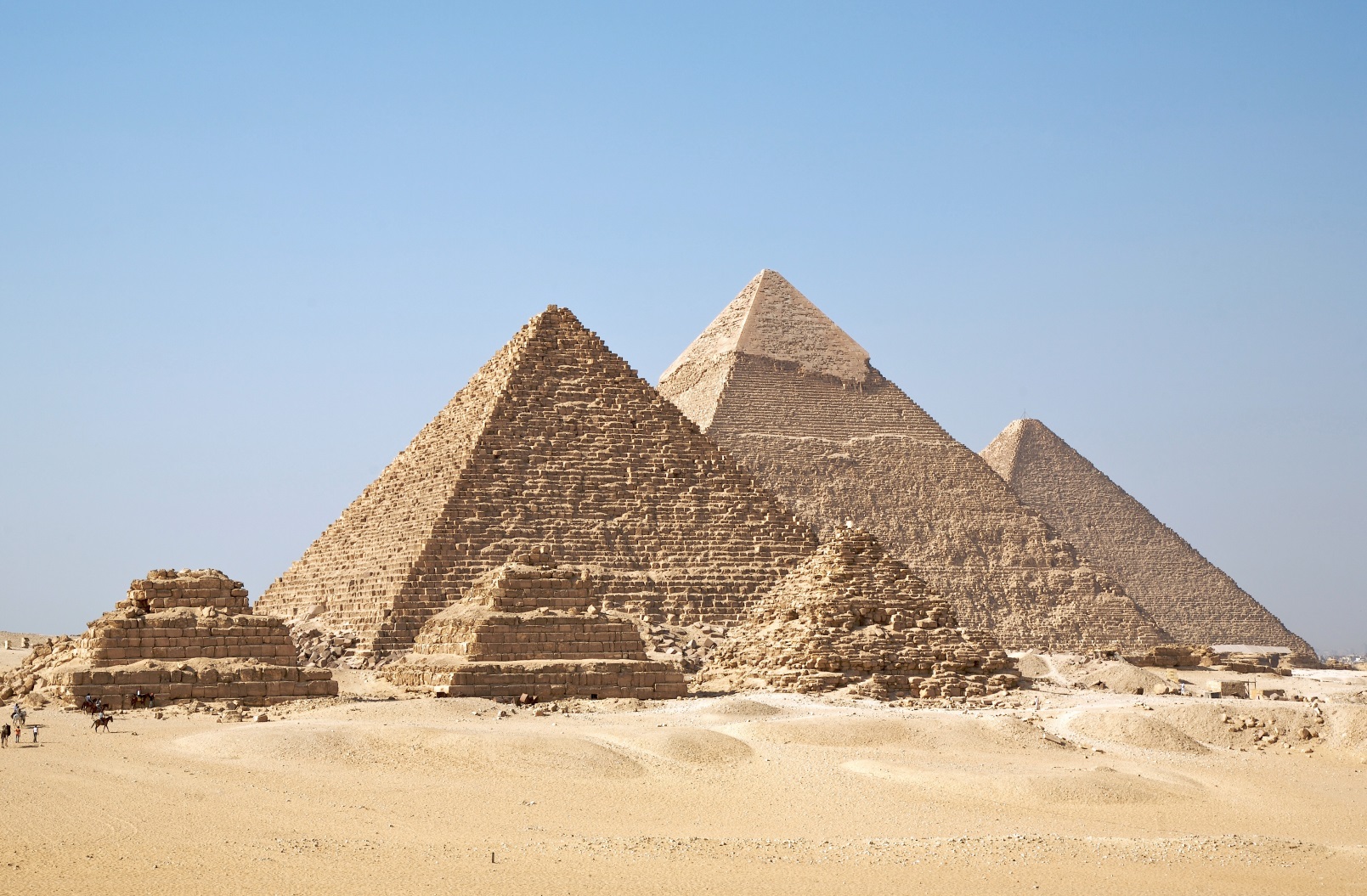
吉萨金字塔群(阿拉伯语:أهرام الجيزة)是指一大片位在埃及开罗郊区的吉萨高原内之陵墓群,于1979年登入联合国教科文组织世界遗产,于2007年7月7日获选为世界新七大奇迹中的荣誉奇迹。陵墓群建于埃及第四王朝,主要由三个金字塔组成,而当中最大的是胡夫金字塔(又称“大金字塔”),同时也是古代世界七大奇迹中最古老及唯一尚存的建筑物,现在旁边还设立了太阳船博物馆;次大的是卡夫拉金字塔;最小的是孟卡拉金字塔。此外,在这三个主要金字塔旁有著名的狮身人面像和3座属于皇后的小型金字塔。吉萨金字塔群是联合国教科文组织世界遗产孟菲斯及其墓地金字塔的一部分。
胡夫金字塔
胡夫金字塔是三者中最高也是最古老的金字塔,它也是世界上现存的最大的金字塔,埋葬的是埃及第四王朝时期的法老胡夫。它的四个边分别对应东南西北四个方向,误差很小。由于常年的风吹日晒,塔高已经由原先的146.5米变为137米,边长接近230米。胡夫金字塔由230万块巨石搭建而成,最重的石块可达50吨,最小的也有1.5吨。不过胡夫金字塔并非由这230万块石头简单堆砌而成,硬质的扶壁和软质的填石层构成了类似树木年轮的金字塔结构。因而,如果金字塔的一部分发生坍塌也不至于使整体崩坏。这些巨大的石头都为石灰岩,是从尼罗河东岸的图拉采石场开采、运输过来的。因为没有车轮,当年的埃及人可能是使用圆木运输的。金字塔的外面原先还有白色的石灰岩,因为地震、偷窃等原因如今外部的石块已经不复存在。根据公元前5世纪的古希腊学者希罗多德的记载,建造这样的金字塔需要10万人劳动20年。[1]
胡夫金字塔的内部有三个墓室,第一个位于地下,是在岩基上开凿出来的。第二个高于地平面,最初的一批探险者称其为女王墓室。然而后来根据研究得知这个墓室并没有埋葬胡夫的妻子,可能是放置法老自己的神像。第三个则是法老的墓室,它里面放置的红色花岗岩石棺几乎位于金字塔的正中心。[2]
卡夫拉金字塔
卡夫拉是仅次于胡夫金字塔的第二大金字塔,由胡夫的继任者卡夫拉建造。虽然它的高度只有136米不及胡夫的金字塔,然而它建在了一块高地上,看上去似乎更为高大,同时周围的附属设施也更为复杂。[3]据估计它一共用了488万吨的石头,它的坡度为53°,大于胡夫金字塔的51°。在金字塔的主墓室内有一个石棺,但是金字塔内部没有任何标记,甚至无法判断墓室内是不是埋葬了什么人。这个金字塔有两个上下排列,位于同一方向的入口。较高的那个距离地面15米,如今它是出入口。通往墓室的通道角度为25°,墙上贴着红色的花岗岩。较低的通道曾经有一个吊闸,可以用来关闭入口。这个通道的角度同它上面的那个完全一致,底下的通道内有一个开凿在岩基上的墓室。不过这个墓室没有完工,也没有投入使用。卡夫拉金字塔的顶部依然残留了一些石灰石,同胡夫金字塔一样,在1818年近代探险家进入金字塔内之前,它就曾被偷窃过。[4]
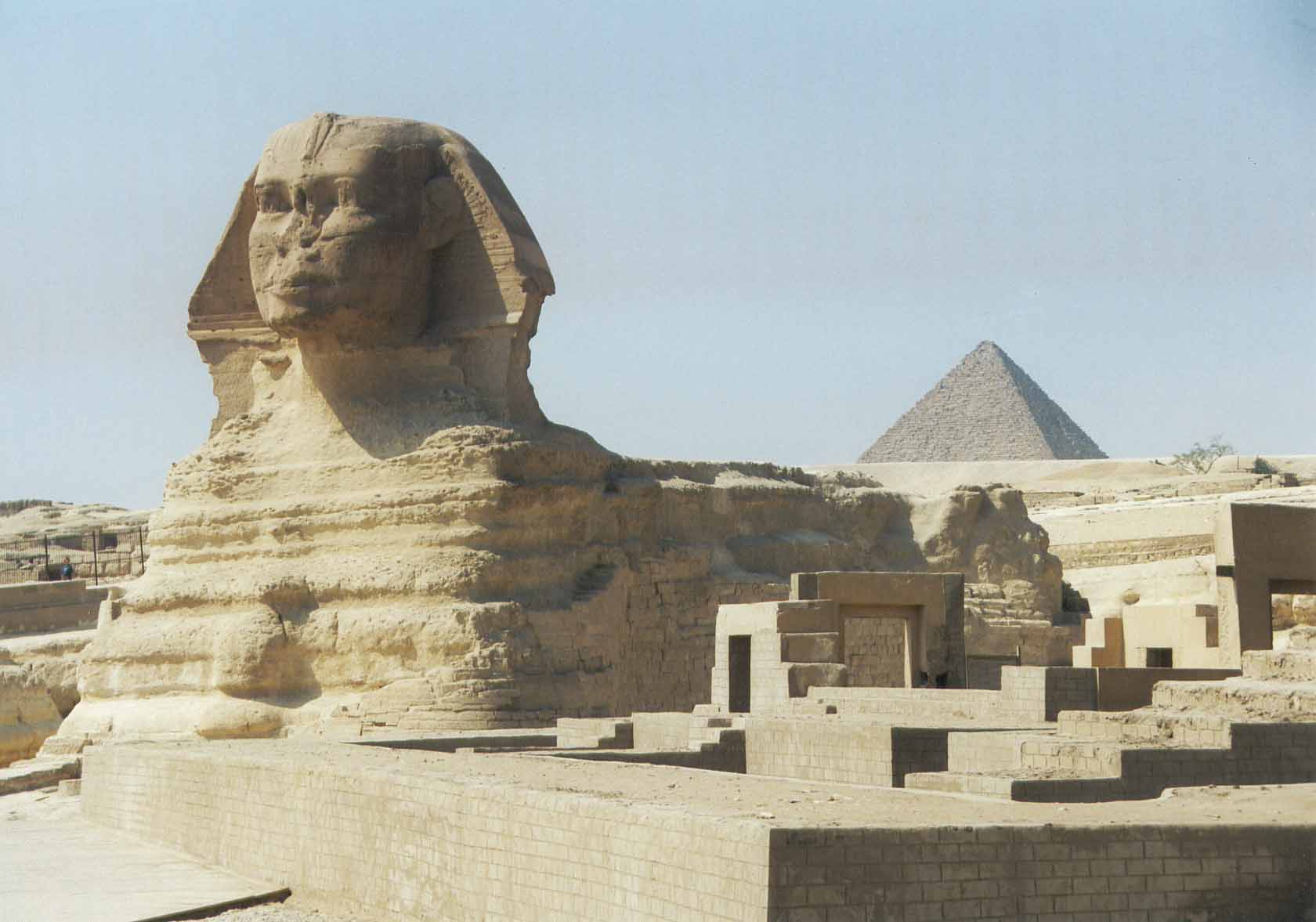
卡夫拉金字塔面前是著名的狮身人面像斯芬克斯,它长73.5米,高20米。然而狮身人面像的意义以及其制造者都是一个谜。[5]斯芬克斯其实是希腊的舶来品,在希腊神话中,这是一种狮身人面长着翅膀的雌性。斯芬克斯的头部和身体不成正比,有人认为这是因为现在头像是后来重新雕刻的。不过,考虑到斯芬克斯身体部分出现的多道裂缝,很有可能是工匠们不得已之下延长了身体,造成了现在的这种比例。原先用于支撑它头部的胡须,如今位于大英博物馆内。可是它的鼻子是何时以及如何消失的却很难搞清楚,根据16、17世纪时法国探险者的画像,当时它仍然有鼻子。后来的一些图像作者,实际上并没有亲眼见过斯芬克斯。等到19世纪拿破仑入侵埃及时,它的鼻子已经消失了。[6]
孟卡拉金字塔
孟卡拉是第四王朝时期的第16位法老,孟卡拉金字塔远小于前两座金字塔,它的高度只有大约65米,总体积大约只有卡夫拉金字塔1/10。不同于外面包覆石灰石的胡夫金字塔,孟卡拉金字塔底部包覆的是花岗岩。它内部的墓室同样也使用了花岗岩,开采难度要比石灰石高出许多。孟卡拉死得较为突然,他的金字塔也被迫停工,后来可能是他的继任者用土砖完成了剩余的建造工作。[7]
孟卡拉金字塔的周围还有三座小型金字塔,不过似乎都没有完工。最大的那个完成度较高,就像孟卡拉金字塔一样,它也是由部分花岗岩构成的。[8][9]
Bei den Pyramiden von Gizeh handelt es sich um das einzige noch heute erhaltene der Sieben Weltwunder der Antike und damit um eines der bekanntesten Bauwerke der Welt. Sie liegen ca. 15 Kilometer von der Innenstadt von Kairo, der Hauptstadt von Ägypten, entfernt direkt am Stadtrand von Gizeh, einem Vorort von Kairo mit 2 Millionen Einwohnern. Die Entfernung vom Stadtzentrum von Gizeh beträgt rund 8 Kilometer. Das ganze Areal befindet sich auf der westlichen Seite des Nils, aber in einiger Entfernung von diesem, weshalb es in der Wüste liegt.
Zu den Pyramiden von Gizeh zählen neben den drei Hauptpyramiden, der Cheops Pyramide, der Chephren Pyramide und der Mykerinos Pyramide auch die Große Sphinx von Gizeh, einige weitere kleiner Nebenpyramiden, in denen zum Beispiel die Frauen der Pharaonen begraben wurden, sowie Arbeiterdörfer, Tempel und Gräberfelder.
Die Pyramiden von Gizeh entstanden bereits in den Jahren 2620 bis 2500 vor Christus, was der 4. Dynastie entspricht. Aber schon zuvor, in der 1. bis 3. Dynastie, wurde das rund 3 Quadratkilometer große Areal der Pyramiden von Gizeh und der Sphinx als Grabstätte der Pharaonen genutzt. Inwieweit die damals entstandenen Gräber bei dem Bau der Pyramiden zerstört wurden ist allerdings unklar.(Quelle:http://www.aegypten-magazin.de/sehenswuerdigkeiten/die-pyramiden-von-gizeh/)
Die Pyramiden von Gizeh in Ägypten gehören zu den bekanntesten und ältesten erhaltenen Bauwerken der Menschheit. Sie stehen am westlichen Rand des Niltals, etwa acht Kilometer südwestlich der Stadt Gizeh (Gîza). Sie sind rund 15 km vom Kairoer Stadtzentrum entfernt und sind das einzige erhaltene der sieben Weltwunder der Antike. Sie zählen seit 1979 zum Weltkulturerbe.
三大ピラミッド(さんだいピラミッド)は、エジプト、ギザの砂漠にある、3基のピラミッドの総称。英語ではGiza pyramid complex(ギザのピラミッド群)と呼ばれる。隣接するスフィンクスとともに、エジプトを象徴するイメージとなっている。
造営時期は現在より約4500年前の、紀元前2500年頃とされ、いずれもエジプト第4王朝期に建設されている。古代エジプト王国のファラオの墓陵であり、被葬者はクフ王、カフラー王、メンカウラー王とされる。また、それぞれのピラミッドには王妃たちのピラミッドや衛星ピラミッド、参道やマスタバ墓群などが付属しており、いわゆるピラミッド複合体(ピラミッド・コンプレックス)を形成している。カフラー王のピラミッドの参道入り口にそびえたつギザの大スフィンクスも、このピラミッド複合体の一部に含まれている。こうしたギザに広がるピラミッド付属の墓地遺跡を総称してギザの墓地遺跡(ギザ・ネクロポリス)と呼び、メンフィスとその墓地遺跡の一部として世界遺産に登録されている。 クフによってこの地にピラミッドが建設されるまで、ギザの地は王墓の地となっていなかった。主に王墓が建設されていたのはギザの南にあるサッカラであり、世界最古のピラミッドとされるジェゼル王のピラミッドもこの地に建設されている。このピラミッドの建設は後世に多大な影響を及ぼし、それまでのマスタバ墓に代わって以後はピラミッドが王墓の中心的な様式となった。ジェゼル王のピラミッドはマスタバ墓を6段積み重ねたような、いわゆる階段ピラミッドであったが、その後ピラミッドの建設技術は進化していった。クフの前の王であるスネフェルはダハシュールに屈折ピラミッドを建設した。これはそれまでの階段ピラミッドから一段階進み、直線の稜線を持っていたものの、下部を急角度で建設したために上部で傾斜角を緩やかにせざるを得ず、上部と下部で傾斜が異なって屈折したように見えるピラミッドとなった。スネフェルはさらにその後、同じくダハシュールに赤いピラミッドを建設した。これは美しい二等辺三角形の形をした、世界最初の真正ピラミッドであり、ここでクフ王のピラミッドの建設を可能とした技術のかなりが出そろうこととなった。
The Giza pyramid complex is an archaeological site on the Giza Plateau, on the outskirts of Cairo, Egypt. It includes the three Great Pyramids (Khufu/Cheops, Khafre/Chephren and Menkaure/Mykerinos), the Great Sphinx, several cemeteries, a workers' village and an industrial complex. It is located in the Western Desert, approximately 9 km (5 mi) west of the Nile river at the old town of Giza, and about 13 km (8 mi) southwest of Cairo city centre.
The pyramids, which have historically been common as emblems of ancient Egypt in the Western imagination,[1][2] were popularised in Hellenistic times, when the Great Pyramid was listed by Antipater of Sidon as one of the Seven Wonders of the World. It is by far the oldest of the ancient Wonders and the only one still in existence.
Les pyramides de Gizeh, appelées aussi complexe pyramidal de Gizeh, sont l'ensemble des pyramides égyptiennes situées dans la nécropole de Gizeh sur le plateau de Gizeh. Ce complexe pyramidal égyptien est classé au patrimoine mondial de l'humanité depuis 1979.
Le plateau de Gizeh est situé sur la rive ouest du Nil dans le désert à 8 km du centre ville de Gizeh et à 25 km du Caire. Ce plateau, nivelé par l'homme il y a 4 500 ans1, a la forme approximative d'un carré de 1,6 à 1,9 km de côté2. Le plateau est délimité au sud-est et au sud-ouest par deux failles orientées respectivement NE-SO et NO-SE, avec un escarpement côté sud-est descendant à 40 m de dénivellation, au pied duquel courait un canal du Nil séparant la zone désertique de la terre fertile3. Ce canal présent au moment de la construction de la pyramide a dérivé vers l'Est probablement en raison d'une catastrophe naturelle, la rive ouest du Nil actuel étant désormais à 8 km à l’est du site. L’assise du plateau s’abaisse doucement vers le sud-est (l’inclinaison des roches va de moins de 5° à plus de 10°)4.
L'alignement des pyramides est situé sur le sommet d'un pli anticlinal d’axe NE-SW5. Contrairement à ce que l'on peut lire ou entendre, ce n'est pas la constellation du Grand Chien ou le lever héliaque de Sirius qui a dicté l'orientation N-S et E-W des trois grandes pyramides. Étant situées au milieu des carrières d'où proviennent les matériaux avec lesquels elles furent construites, leur orientation N-S et E-W est principalement commandée par la fracturation la plus fine des diaclases métriques diagonales (N-S et E-W) par rapport à l'axe du pli6 et qui ont été préférentiellement utilisées dans l'exploitation des carrières. Ces discontinuités facilitaient en effet l'extraction en servant de limites aux blocs7.
Комплекс пирамид в Гизе — комплекс древних памятников на плато Гиза в пригороде Каира, современной столицы Египта. Находится на расстоянии около 8 км по направлению в центр Ливийской пустыни от старого города Гиза на реке Нил, примерно в 25 км к юго-западу от центра Каира. Принято считать, что постройки были созданы в Древнем царстве Древнего Египта во время правления IV—VI династий (XXVI—XXIII века до н. э.).
Пирамида Хеопса (Хуфу) является единственным оставшимся памятником из семи чудес древнего мира. Также является национальным достоянием Египта.
 International cities
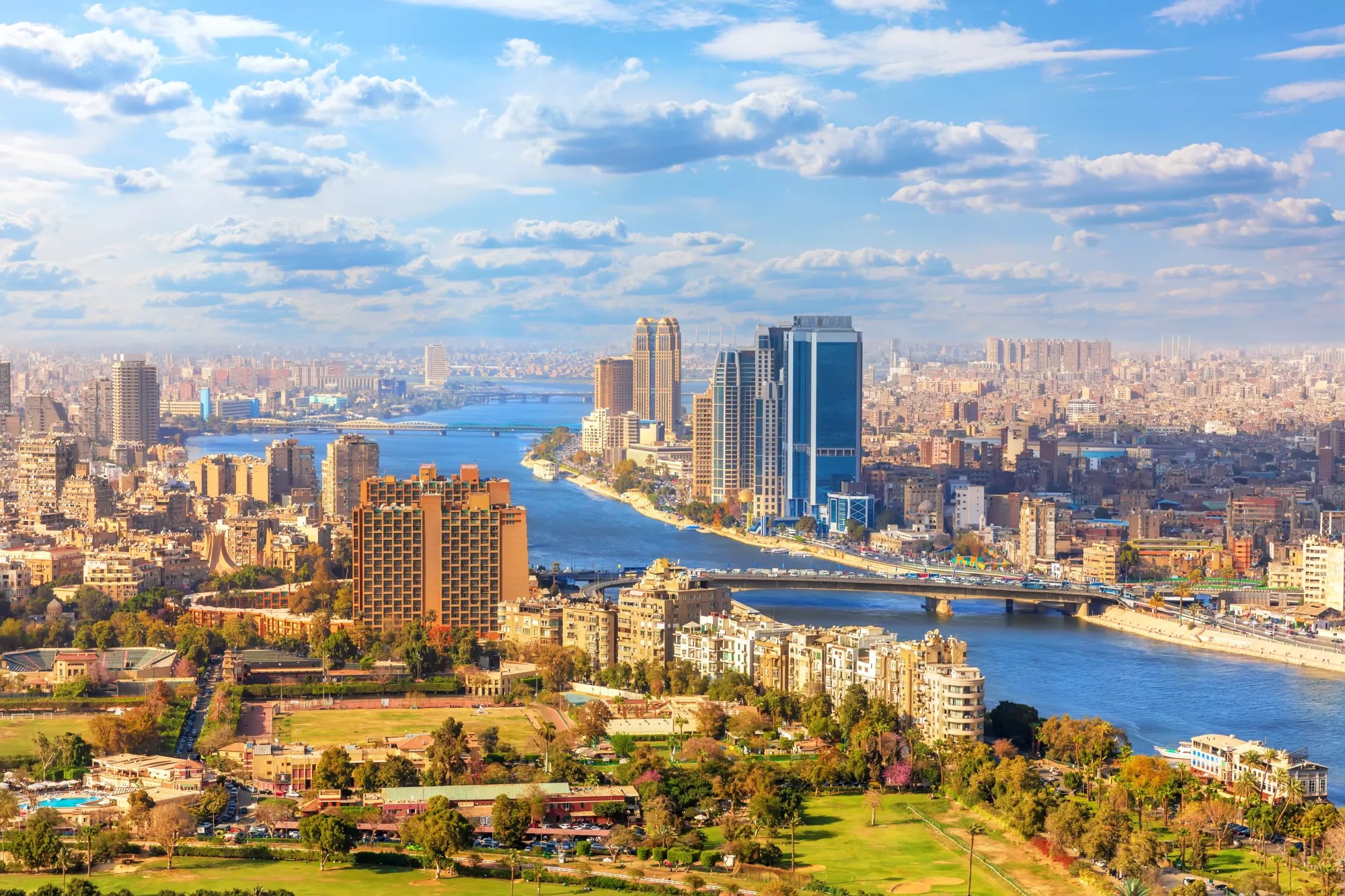
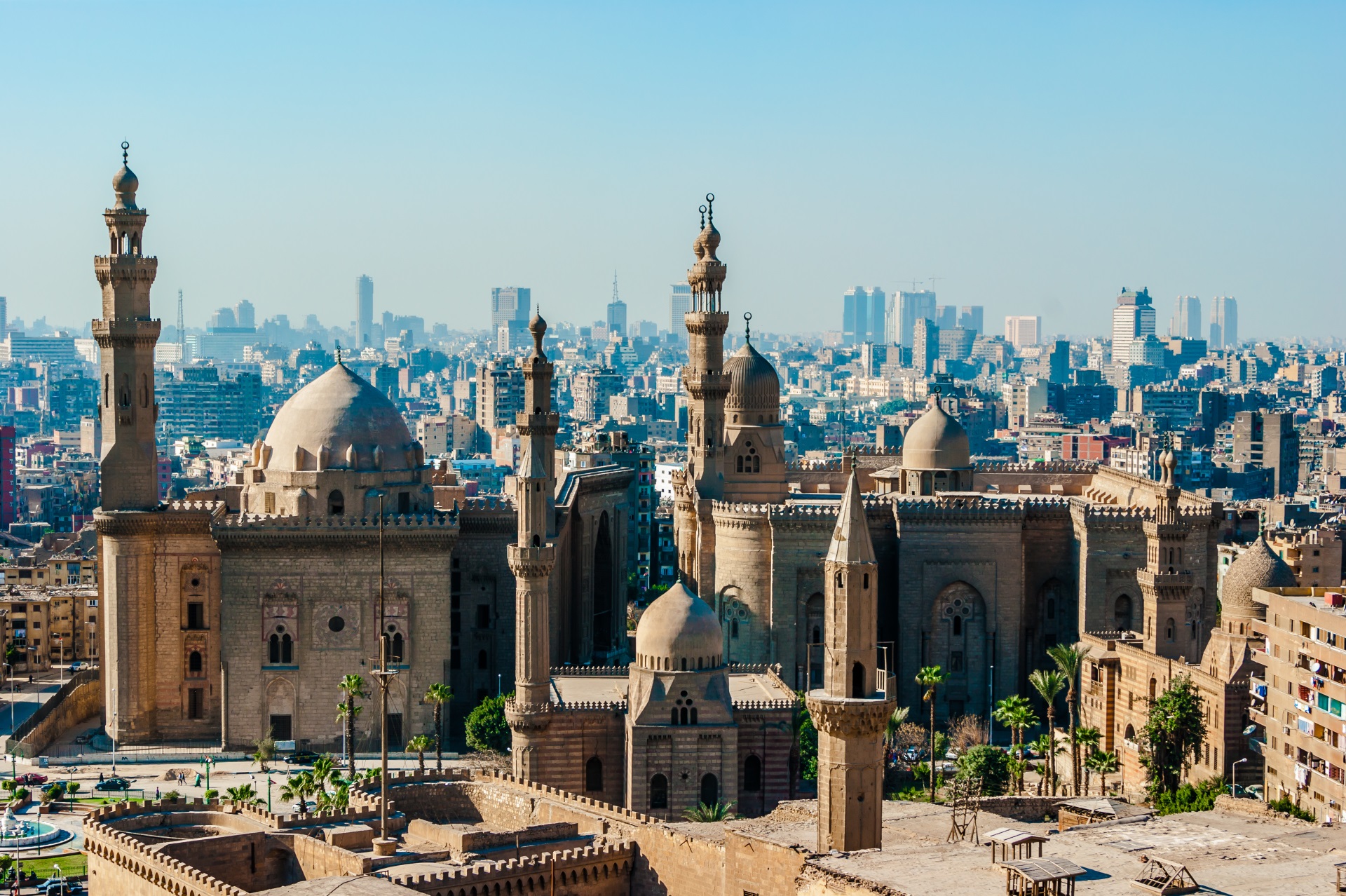
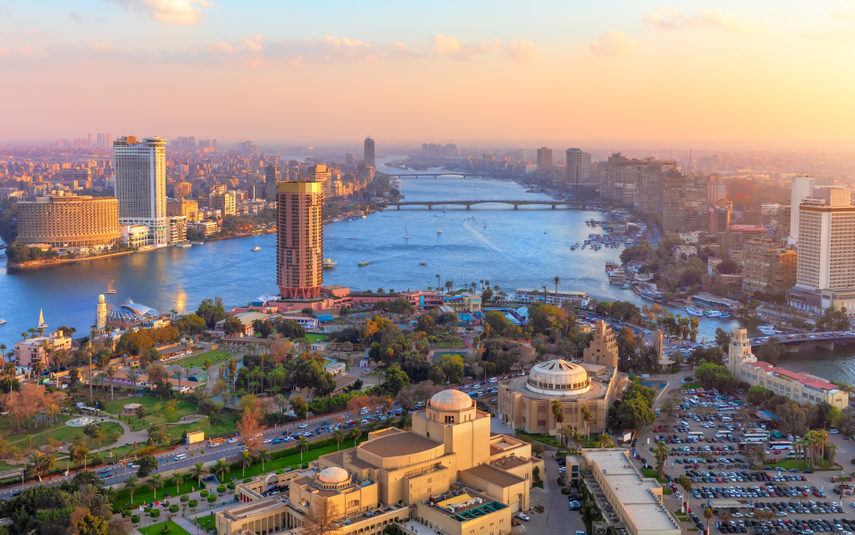
开罗(阿拉伯语:القاهرة,罗马化:al-Qāhirah,IPA:[ælˈqɑːhɪɾɑ] (ⓘ))是埃及的首都,埃及第一大城市以及全国经济、交通和文化中心,该城市横跨尼罗河,是整个中东地区的政治、经济和商业中心。由开罗省、吉萨省和盖勒尤卜省组成,通称大开罗地区,2021年,其区域共具有2130万人口,使得大开罗成为埃及和阿拉伯世界以及非洲最大的城市,是世界第十六大都会区。[1]开罗也是世界上最古老的城市之一,自古埃及时期的孟菲斯遗址(现位于赫勒万省赫勒万)与吉萨金字塔群,再到城市从埃及阿拉伯化之后的第一个首都福斯塔特所发展起来,现在的开罗地区,阿拉伯穆斯林占多数,科普特基督徒也占有较大比例。
开罗的历史中心于1979年被授予世界遗产地位。依照全球化及世界城市研究网络(GaWC)所公布之《世界级城市》名单中,开罗被列为属于BETA+级别的国际都市[6][7]如今,开罗拥有阿拉伯世界历史最悠久、规模最大的文化、影视和音乐产业,以及世界第二古老的高等学府艾资哈尔大学。许多国际媒体、企业和组织在该市设有地区总部;阿拉伯国家联盟的行政中心也设立于此。
目前开罗人口超过1000万,城市面积超过453平方公里,另外约有950万居民居住在城市附近。与许多其他城市一样,开罗也受到空气污染和交通堵塞的困扰。开罗地铁是非洲仅有的两个地铁系统之一(另一个在阿尔及利亚的阿尔及尔) ,位列世界上最繁忙的15个地铁系统之一,每年有超过10亿乘客乘坐。2005年开罗经济位居中东第一,在2010年全球城市指数中位列全球第43位。
Kairo (arabisch القاهرة, DMG al-Qāhira ‚die Starke‘ oder ‚die Eroberin‘[1]) ist die Hauptstadt Ägyptens und die größte Stadt der arabischen Welt. Sie wurde 969 von dem fatimidischen Feldherrn Dschauhar as-Siqillī gegründet. Von Ägyptern wird die Stadt oftmals auch einfach mit dem Landesnamen – مصر, hocharabisch Misr, ägyptisch-arabisch Maṣr – bezeichnet.
Kairo ist das politische, wirtschaftliche und kulturelle Zentrum Ägyptens und der Arabischen Welt. Die Stadt ist Sitz der ägyptischen Regierung, des Parlaments, aller staatlichen und religiösen Zentralbehörden (Mogamma)[2] sowie zahlreicher diplomatischer Vertretungen. Kairo ist der bedeutendste Verkehrsknotenpunkt Ägyptens und besitzt zahlreiche Universitäten, Hochschulen, Theater, Museen sowie Baudenkmäler. Die Altstadt von Kairo ist ein Ensemble islamischer Baukunst und wird seit 1979 von der UNESCO als Weltkulturerbe anerkannt.[3] Die Stadt hat den Status eines Gouvernements und wird von einem Gouverneur regiert, der vom Staatspräsidenten ernannt wird.
Kairo hat 9,1 Millionen Einwohner im administrativen Stadtgebiet (2017)[4] und die Metropolregion ist mit etwa 16,2 Millionen Einwohnern (2009)[5] vor Lagos in Nigeria die größte in Afrika. In Ägypten existiert allerdings keine Meldepflicht, weswegen die angegebenen Einwohnerzahlen Hochrechnungen auf Basis der Volkszählungsergebnisse darstellen. Inoffizielle Schätzungen geben bis zu 25 Millionen Einwohner für den Großraum an, was nahezu ein Drittel der Gesamtbevölkerung Ägyptens bedeuten würde.[6]
カイロ(アラビア語: القاهرة, al-Qāhira, アル・カーヒラ、 発音[ヘルプ/ファイル], コプト語: ⲕⲁϩⲓⲣⲏ, Kahire, 英語: Cairo)は、エジプトの首都。アラブ世界で最も人口の多い都市であり、アラブ世界及び中東を代表する世界都市の一つ。アラブ連盟の本部所在地でもあり、アラブ文化圏の中心都市でもある。
ナイル川下流河畔の交通の要衝として、中世に建設されてより現在に至るまで長い時代を通じ、イスラム世界の学術・文化・経済の中心都市であり続けた。都市自体の人口は965万6074人(2018年推定[1])、近郊を含めたグレーター・カイロ(カイロ都市圏)の人口は1,591万人で、世界第17位である[2]。『毎日新聞』によれば、カイロ都市圏の人口はその後(2016年時点)約2200万人へ増えた[3]。
アメリカのシンクタンクが2017年に発表した総合的な世界都市ランキングにおいて、世界62位の都市と評価された[4]。アフリカ大陸の都市ではヨハネスブルグに次ぐ2位である。一方、日本の民間研究所が2016年に発表した「世界の都市総合力ランキング」では世界41位と評価されており、アフリカでは1位である[5]。プライスウォーターハウスクーパースが公表した調査によると、カイロの2008年の都市GDPは1450億ドルで、世界第42位、アフリカでは第1位である[6]。
エジプトの乾燥した大地にナイル川が形作った肥沃なデルタ地帯のほぼ南端、要に位置し、河谷を流れてきたナイル川がデルタを形成する、その先端に位置する。エジプトはナイル河谷地方の上エジプトとデルタ地方の下エジプトとに古代エジプト以来、二分されており、その両者の接点にカイロは位置する。イスラム帝国が7世紀にエジプトを征服した時、征服者アラブ人の住まう軍営都市(ミスル)が置かれて以来のエジプトの首府である。
日本語でよく知られる都市名のカイロは、英語名の Cairo に由来しており、現地語であるアラビア語ではカーヒラ(القاهرة ; al-Qāhira、現代エジプト方言ではカーヘラ)という。しかし、現在でもミスル(مصر ; Miṣr、現代エジプト方言ではマスル。元々は「エジプト」を意味する呼称)という通称がよく用いられる。
カイロの中心都市はナイル川の右岸、東側に位置する。ナイルをはさんで対岸の西郊には、ピラミッドで有名なギーザの町がある。町の南は古代エジプトの中心都市の一つ、メンフィスである。
Cairo (/ˈkaɪroʊ/ KY-roh; Arabic: القاهرة, romanized: al-Qāhirah, pronounced [ælˈqɑːhɪɾɑ] ( listen)) is the capital of Egypt and the largest city in the Arab world. Its metropolitan area, with a population of over 20 million, is the largest in Africa, the Arab world, and the Middle East, and the 15th-largest in the world. Cairo is associated with ancient Egypt, as the famous Giza pyramid complex and the ancient city of Memphis are located in its geographical area. Located near the Nile Delta,[4][5] Cairo was founded in 969 AD by the Fatimid dynasty, but the land composing the present-day city was the site of ancient national capitals whose remnants remain visible in parts of Old Cairo. Cairo has long been a centre of the region's political and cultural life, and is titled "the city of a thousand minarets" for its preponderance of Islamic architecture. Cairo is considered a World City with a "Beta +" classification according to GaWC.[6]
Cairo has the oldest and largest film and music industries in the Arab world, as well as the world's second-oldest institution of higher learning, Al-Azhar University. Many international media, businesses, and organizations have regional headquarters in the city; the Arab League has had its headquarters in Cairo for most of its existence.
With a population of over 9 million[7] spread over 3,085 square kilometers (1,191 sq mi), Cairo is by far the largest city in Egypt. An additional 9.5 million inhabitants live in close proximity to the city. Cairo, like many other megacities, suffers from high levels of pollution and traffic. The Cairo Metro is one of the only two metro systems in Africa (the other being in Algiers, Algeria), and ranks amongst the fifteen busiest in the world,[8] with over 1 billion[9] annual passenger rides. The economy of Cairo was ranked first in the Middle East in 2005,[10] and 43rd globally on Foreign Policy's 2010 Global Cities Index.[11]
Le Caire (en arabe : القاهرة / al-qāhira, « La Victorieuse ») est la capitale et la plus grande ville d'Égypte. Sa population est de plus de vingt-deux millions d'habitants1, ce qui en fait la plus grande ville du Moyen-Orient et la seconde d'Afrique derrière Lagos. Elle serait également la sixième agglomération du monde en 2015. Bien qu'Al-Qāhira soit le nom officiel, en arabe égyptien, elle est plus souvent appelée Masr (le nom arabe de l'Égypte) ou el-Qahéra. Elle est située en amont du delta du Nil, sur les rives du fleuve ainsi que sur quelques îles adjacentes. Elle se trouve au nord du pays, à 178 km au sud-est d'Alexandrie et 127 km à l'ouest du canal de Suez. Les habitants du Caire sont appelés les Cairotes2.
La région de Memphis a longtemps été un centre majeur de l'Égypte antique. Vers le IVe siècle, les Romains établirent la cité-forteresse de Babylone le long de la rive est du Nil. Dès la conquête de l'Égypte par les Arabes en 641, Al-Fustat devient un centre administratif et religieux. Les Fatimides et leur troupes composées de Berbères kotamas d'Algérie fondent le noyau urbain actuel, alors nommé Al-Mansûriyyah, pour en faire leur nouvelle capitale. Située sur la route des épices entre l'Europe et l'Asie, la ville connaît une longue période de prospérité : vers 1340, la population du Caire atteint un demi-million d'habitants, ce qui en faisait déjà l'une des plus grandes villes du monde arabe. La peste noire frappe toutefois la cité plus de cinquante fois entre 1348 et 1517. Sous l'Empire ottoman, la ville perd son statut de capitale au profit d'Istanbul. Devenue capitale de l'Égypte moderne en 1922, elle connaît une forte poussée démographique et devient le centre politique et économique de l'Afrique du Nord et du monde arabe, abritant aujourd'hui un grand nombre de compagnies et d'organisations multinationales, dont la Ligue arabe.
La ville actuelle présente une grande diversité urbanistique et architecturale. Le centre historique de la ville comprend le Vieux Caire (quartier copte où se trouvent la forteresse de Babylone et le musée copte) ainsi que le quartier islamique, classé au patrimoine mondial de l'humanité, où se trouvent la citadelle de Saladin et le grand souk (Khân al-Khalili). Le Caire compte également de nombreuses mosquées, dont la mosquée Al-Azhar qui abrite également l'une des plus anciennes universités au monde. Centre névralgique de la ville moderne, la place Tahrir est devenue l'emblème de la révolution égyptienne de 2011. À l'ouest se trouve la ville de Gizeh et la nécropole antique de Memphis, avec ses trois grandes pyramides, dont la pyramide de Khéops. Au sud se trouve le site de l'antique ville égyptienne de Memphis.
Il Cairo (in arabo: القاهرة, al-Qāhira) è la capitale dell'Egitto, che conta più di 10 milioni di abitanti nel governatorato omonimo e circa 20,4 milioni[3] di residenti nell'area metropolitana adiacente, creando la mega metropoli cariota, la Grande Cairo[4] (in arabo: القاهرة الكبرة, Al-Qāhira al-Qobra): essa è la città africana più popolosa dopo la città nigeriana Lagos. La città è stata fondata sul Nilo.
Nonostante al-Qāhira sia il nome ufficiale della città, il Cairo viene chiamato semplicemente con il nome Egitto, Miṣr (in arabo: مصر) pronunciato Masr in dialetto locale.
El Cairo (en árabe, القاهرة Al-Qāhira 'la fuerte', 'la victoriosa') es la capital de Egipto y de su gobernación (muhafazah o provincia). Es la mayor ciudad del mundo árabe, de Oriente Próximo y de África, y los egipcios la denominan a menudo sencillamente con el nombre del país, مصر, pronunciado en árabe culto Misr y dialecto egipcio Masr.
Su área metropolitana incluye una población aproximada de unos 16 millones de habitantes,3 convirtiendo a El Cairo en la undécima urbe más poblada del mundo Es, también, el área metropolitana más poblada de todo el continente africano.4 Es conocida por los egipcios como la "madre de todas ciudades" y la "ciudad de los mil minaretes".5 También figura junto con Teherán, Estambul, Karachi, Damasco, Bagdad, Kuala Lumpur, Alejandría, La Meca, Casablanca y Yakarta como una de las urbes más importantes del mundo islámico. Fue fundada en el año 116 d. C., en lo que hoy en día se conoce como Viejo Cairo, cuando los romanos reconstruyeron una antigua fortaleza persa junto al río Nilo. Antes de su fundación, Menfis u otras ciudades eran la capital del imperio faraónico. El nombre actual se debe a los fatimíes, que bautizaron la ciudad con el nombre, Al-Qahira. Tras diversas invasiones como la de los mamelucos, otomanos, Napoleón y los británicos, El Cairo se convirtió en capital soberana en 1952.5
El Cairo está ubicada en las riberas e islas del río Nilo, al sur del delta. Hacia el sudoeste se encuentra la ciudad de Guiza y la antigua necrópolis de Menfis, con la meseta de Guiza y sus monumentales pirámides, como la Gran Pirámide. Al sur se encuentra el lugar donde se edificó la antigua ciudad de Menfis.
Каи́р (араб. القاهرة, Эль-Кахира[3] — «победоносная», копт. ⲕⲁϣⲣⲱⲙⲓ Кашроми[4] — «сокрушитель людей») — столица Арабской Республики Египет. Крупнейший город Ближнего Востока и третий по величине город Африки, после Лагоса и Киншасы (без учёта агломерации). Египтяне его часто называют مصر — Маср[5][6], то есть тем же словом, что и всю страну Египет.
 Afghanistan
Egypt
Albania
Angola
Antigua and Barbuda
Argentina
Armenia
Australia
Bahrain
Bangladesh
Barbados
Belgium
Belize
Benin
Bolivia
Botsuana
Brazil
Brunei Darussalam
Bulgaria
Burkina Faso
Burundi
Chile
China
Columbia
Costa Rica
Côte d´Ivoire
Cuba
Denmark
Demokratische Republik Kongo
Germany
Dominica
Dominikanische Republik
Djibouti
Ecuador
Estonia
Afghanistan
Egypt
Albania
Angola
Antigua and Barbuda
Argentina
Armenia
Australia
Bahrain
Bangladesh
Barbados
Belgium
Belize
Benin
Bolivia
Botsuana
Brazil
Brunei Darussalam
Bulgaria
Burkina Faso
Burundi
Chile
China
Columbia
Costa Rica
Côte d´Ivoire
Cuba
Denmark
Demokratische Republik Kongo
Germany
Dominica
Dominikanische Republik
Djibouti
Ecuador
Estonia
 European Union
Fidschi
European Union
Fidschi
 Financial
Finland
France
Gabun
Gambia
Georgia
Ghana
Grenada
Greece
Guatemala
Guinea
Guinea-Bissau
Guyana
Honduras
Hongkong Tebiexingzhengqu-HK
India
Indonesia
Ireland
Iceland
Israel
Italy
Jamaika
Japan
Yemen
Jordan
Cambodia
Cameroon
Canada
Kap Verde
Kasachstan
Katar
Kenya
Kyrgyzstan
Croatia
Kuwait
Laos
Lesotho
Latvia
Liberia
Liechtenstein
Lithuania
Luxembourg
Macau Tebiexingzhengqu-MO
Madagaskar
Malawi
Malta
Morocco
Mauritania
Mauritius
Mexico
Moldawien
Financial
Finland
France
Gabun
Gambia
Georgia
Ghana
Grenada
Greece
Guatemala
Guinea
Guinea-Bissau
Guyana
Honduras
Hongkong Tebiexingzhengqu-HK
India
Indonesia
Ireland
Iceland
Israel
Italy
Jamaika
Japan
Yemen
Jordan
Cambodia
Cameroon
Canada
Kap Verde
Kasachstan
Katar
Kenya
Kyrgyzstan
Croatia
Kuwait
Laos
Lesotho
Latvia
Liberia
Liechtenstein
Lithuania
Luxembourg
Macau Tebiexingzhengqu-MO
Madagaskar
Malawi
Malta
Morocco
Mauritania
Mauritius
Mexico
Moldawien
 Mongolei
Montenegro
Mosambik
Myanmar
Namibia
Nepal
New Zealand
Nicaragua
Netherlands
Niger
Nigeria
Nordmazedonien
Norwegen
Oman
Austria
Pakistan
Panama
Papua-Neuguinea
Paraguay
Peru
Philippines
Poland
Portugal
Republik El Salvador
Republik Haiti
Republik Kongo
Republic of Korea
Ruanda
Romania
Russia
Salomonen
Sambia
Samoa
Saudi Arabia
Sweden
Sweden
Switzerland
Genf
Senegal
Seychellen
Sierra Leone
Simbabwe
Singapore
Slovakia
Slovenia
Spain
Sri Lanka
Saint Kitts and Nevis
St. Lucia
St. Vincent and the Grenadines
South Africa
Suriname
Swasiland
Tajikistan
Taiwan Sheng-TW
Tansania
Thailand
Togo
Tonga
Trinidad und Tobago
Tschad
Czech Republic
Tunisia
Turkey
Uganda
Ukraine
Hungary
Uruguay
Vanuatu
Venezuela
United Arab Emirates
United States
United Kingdom
Vietnam
Mongolei
Montenegro
Mosambik
Myanmar
Namibia
Nepal
New Zealand
Nicaragua
Netherlands
Niger
Nigeria
Nordmazedonien
Norwegen
Oman
Austria
Pakistan
Panama
Papua-Neuguinea
Paraguay
Peru
Philippines
Poland
Portugal
Republik El Salvador
Republik Haiti
Republik Kongo
Republic of Korea
Ruanda
Romania
Russia
Salomonen
Sambia
Samoa
Saudi Arabia
Sweden
Sweden
Switzerland
Genf
Senegal
Seychellen
Sierra Leone
Simbabwe
Singapore
Slovakia
Slovenia
Spain
Sri Lanka
Saint Kitts and Nevis
St. Lucia
St. Vincent and the Grenadines
South Africa
Suriname
Swasiland
Tajikistan
Taiwan Sheng-TW
Tansania
Thailand
Togo
Tonga
Trinidad und Tobago
Tschad
Czech Republic
Tunisia
Turkey
Uganda
Ukraine
Hungary
Uruguay
Vanuatu
Venezuela
United Arab Emirates
United States
United Kingdom
Vietnam
 Important International Organizations
World Trade Organization
Roberto Azevêdo
World Trade Organization
Mike Moore
World Trade Organization
Ngozi Okonjo-Iweala
World Trade Organization
Pascal Lamy
World Trade Organization
Peter Sutherland
World Trade Organization
Renato Ruggiero
World Trade Organization
Supachai Panitchpakdi
Central African Republic
Cyprus
Important International Organizations
World Trade Organization
Roberto Azevêdo
World Trade Organization
Mike Moore
World Trade Organization
Ngozi Okonjo-Iweala
World Trade Organization
Pascal Lamy
World Trade Organization
Peter Sutherland
World Trade Organization
Renato Ruggiero
World Trade Organization
Supachai Panitchpakdi
Central African Republic
Cyprus

世界贸易组织(简称世贸组织或世贸;英语:World Trade Organization,缩写为 WTO;法语:Organisation Mondiale du Commerce,缩写为 OMC;西班牙语:Organización Mundial del Comercio,缩写为 OMC)是负责监督成员经济体之间各种贸易协议得到执行的一个国际组织,前身是1948年起实施的关税及贸易总协定的秘书处。
世贸总部位于瑞士日内瓦,现任总干事是罗伯托·阿泽维多。截至2016年7月29日,世界贸易组织共有164个成员。[5]世界贸易组织的职能是调解纷争,加入WTO不算签订一种多边贸易协议,但其设置的入会门槛可以做为愿意降低关税、法政上配合、参与国际贸易的门票,它是贸易体制的组织基础和法律基础,是众多贸易协定的管理者,是各成员贸易立法的监督者,是就贸易提供解决争端和进行谈判的场所。该机构是当代最重要的国际经济组织之一,其成员间的贸易额占世界贸易额的绝大多数,被称为“经济联合国”。
Die Welthandelsorganisation (englisch World Trade Organization, WTO; französisch Organisation mondiale du commerce, OMC; spanisch Organización Mundial de Comercio, OMC) ist eine internationale Organisation mit Sitz in Genf, die sich mit der Regelung von Handels- und Wirtschaftsbeziehungen beschäftigt. Sie wurde am 15. April 1994 aus dem General Agreement on Tariffs and Trade (GATT) in der Uruguay-Runde nach siebenjähriger Verhandlungszeit gegründet. Am 1. Januar 1995 nahm sie ihre Arbeit in Genf auf. Die WTO ist neben dem IWF und der Weltbank eine der zentralen internationalen Organisationen, die Handels- und Wirtschaftspolitik mit globaler Reichweite verhandelt.
世界貿易機関(せかいぼうえききかん、英: World Trade Organization、略称:WTO)は、自由貿易促進を主たる目的として創設された国際機関である。常設事務局がスイスのジュネーブに置かれている。
GATT(ガット)ウルグアイ・ラウンドにおける合意によって、世界貿易機関を設立するマラケシュ協定(WTO設立協定)に基づいて1995年1月1日にGATTを発展解消させて成立した。
本来GATTは、第二次世界大戦後の安定を見据え、国際通貨基金および国際復興開発銀行とともに設立が予定されていた国際貿易機関(ITO)の設立準備の際に、暫定協定として結ばれたものであった。国際貿易機関の設立が廃案となり、GATTがその代替として発展強化されていくうちに、再びこの分野の常設機関が求められ、WTOが設立されることとなった。発展解消であるため、GATTの事務局及び事務局長もWTOへと引き継がれることとなった[4]。
WTOはGATTを継承したものであるが、GATTが協定(Agreement)に留まったのに対し、WTOは機関(Organization)であるのが根本的な違いである。
を基本原則としている。また、物品貿易だけでなく金融、情報通信、知的財産権やサービス貿易も含めた包括的な国際通商ルールを協議する場である。
対抗処置の発動では、紛争処理機関(パネル)の提訴に対し全加盟国による反対がなければ採択されるというネガティブ・コンセンサス方式(逆コンセンサス方式)を採用した強力な紛争処理能力を持つ。これは国際組織としては稀な例であり、コンセンサス方式を採っていたGATTとの大きな違いで、WTOの特徴の一つといえる。
新多角的貿易交渉(新ラウンド)は、2001年11月にカタールのドーハで行われた第4回WTO閣僚会議で開始を決定し、ドーハ・ラウンドと呼ばれていた。2002年2月1日の貿易交渉委員会で新ラウンドがスタートした。しかし9年に及ぶ交渉は先進国と、急速に台頭してきたBRICsなど新興国との対立によって中断と再開を繰り返した末、ジュネーブで行われた第4回WTO閣僚会議(2011年12月17日)で「交渉を継続していくことを確認するものの、近い将来の妥結を断念する」(議長総括)となり事実上停止状態になった。
その後、2013年のバリ島における閣僚会議で、貿易円滑化協定を含む合意が成立し、2014年7月まで貿易円滑化協定をWTO協定に加える(附属書1Aに追加)するための文書を一般理事会で採択すべきとされた[5]。しかしインドが合意を蒸し返す状態で反対したため期限までに採択できなかった[6]。その後食糧備蓄への補助金の問題で先進国側が譲歩することでようやくインドが合意し、2014年11月27日の一般理事会で貿易円滑化協定が採択された[6]。WTO加盟国の3分の2が改正を受諾した日に発効することになっており、2017年2月22日にこの要件を満たし、協定が発効した。
The World Trade Organization (WTO) is an intergovernmental organization that regulates international trade. The WTO officially commenced on 1 January 1995 under the Marrakesh Agreement, signed by 124 nations on 15 April 1994, replacing the General Agreement on Tariffs and Trade (GATT), which commenced in 1948. It is the largest international economic organization in the world.[5][6]
The WTO deals with regulation of trade in goods, services and intellectual property between participating countries by providing a framework for negotiating trade agreements and a dispute resolution process aimed at enforcing participants' adherence to WTO agreements, which are signed by representatives of member governments[7]:fol.9–10 and ratified by their parliaments.[8] The WTO prohibits discrimination between trading partners, but provides exceptions for environmental protection, national security, and other important goals.[9] Trade-related disputes are resolved by independent judges at the WTO through a dispute resolution process.[9]
The WTO's current Director-General is Roberto Azevêdo,[10][11] who leads a staff of over 600 people in Geneva, Switzerland.[12] A trade facilitation agreement, part of the Bali Package of decisions, was agreed by all members on 7 December 2013, the first comprehensive agreement in the organization's history.[13][14] On 23 January 2017, the amendment to the WTO Trade Related Aspects of Intellectual Property Rights (TRIPS) Agreement marks the first time since the organization opened in 1995 that WTO accords have been amended, and this change should secure for developing countries a legal pathway to access affordable remedies under WTO rules.[15]
Studies show that the WTO boosted trade,[16][17][9] and that barriers to trade would be higher in the absence of the WTO.[18] The WTO has highly influenced the text of trade agreements, as "nearly all recent [preferential trade agreements (PTAs)] reference the WTO explicitly, often dozens of times across multiple chapters... in many of these same PTAs we find that substantial portions of treaty language—sometime the majority of a chapter—is copied verbatim from a WTO agreement."[19]
L'Organisation mondiale du commerce (OMC ; en anglais : World Trade Organization, WTO, en espagnol : Organización Mundial del Comercio, OMC) est une organisation internationale qui s'occupe des règles régissant le commerce international entre les pays. Au cœur de l'organisation se trouvent les accords de l'OMC, négociés et signés en avril 1994 à Marrakech1 par la majeure partie des puissances commerciales du monde2 et ratifiés par leurs assemblées parlementaires. L'OMC a pour but principal de favoriser l'ouverture commerciale. Pour cela, elle tâche de réduire les obstacles au libre-échange, d'aider les gouvernements à régler leurs différends commerciaux et d'assister les exportateurs, les importateurs et les producteurs de marchandises et de services dans leurs activités.
Depuis 2001, le cycle de négociation mené par l'OMC est le Cycle de Doha3. Bien que l'OMC ne soit pas une agence spécialisée de l'ONU, elle entretient des liens avec cette dernière4. Le siège de l'OMC est au Centre William-Rappard, à Genève. Depuis le 1er septembre 2013, l'organisation est présidée par le Brésilien Roberto Azevêdo qui a été élu directeur général.
L'Organizzazione mondiale del commercio, abbreviato in OMC (in inglese: World Trade Organization, WTO), è un'organizzazione internazionale creata allo scopo di supervisionare numerosi accordi commerciali tra gli stati membri. Vi aderiscono[3] 164 Paesi, a cui se ne aggiungono altri 22 con ruolo di osservatori,[4] comprendendo così oltre il 95% del commercio mondiale di beni e servizi.[5]
La sede dell'OMC si trova, dal 1995, presso il Centro William Rappard a Ginevra, Svizzera.[6]
La Organización Mundial del Comercio (OMC) fue establecida en 1995. Tiene su sede en Ginebra, Suiza, y sus idiomas oficiales son el inglés, el francés y el español. La OMC no forma parte del sistema de las Naciones Unidas, y tampoco de los organismos de Bretton Woods como el Banco Mundial o el FMI.Nota 1
Всеми́рная торго́вая организа́ция (ВТО; англ. World Trade Organization (WTO), фр. Organisation mondiale du commerce (OMC), исп. Organización Mundial del Comercio) — международная организация, созданная 1 января 1995 года с целью либерализации международной торговли и регулирования торгово-политических отношений государств-членов. ВТО образована на основе Генерального соглашения по тарифам и торговле (ГАТТ), заключенного в 1947 году и на протяжении почти 50 лет фактически выполнявшего функции международной организации, но не являвшегося тем не менее международной организацией в юридическом смысле.
ВТО отвечает за разработку и внедрение новых торговых соглашений, а также следит за соблюдением членами организации всех соглашений, подписанных большинством стран мира и ратифицированных их парламентами. ВТО строит свою деятельность, исходя из решений, принятых в 1986—1994 годах в рамках Уругвайского раунда и более ранних договоренностей ГАТТ. Обсуждения проблем и принятие решений по глобальным проблемам либерализации и перспективам дальнейшего развития мировой торговли проходят в рамках многосторонних торговых переговоров (раунды). К настоящему времени проведено 8 раундов таких переговоров, включая Уругвайский, а в 2001 году стартовал девятый в Дохе, Катар. Организация пытается завершить переговоры по Дохийскому раунду переговоров, который был начат с явным акцентом на удовлетворение потребностей развивающихся стран. По состоянию на декабрь 2012 года будущее раунда переговоров в Дохе остаётся неопределённым: программа работы состоит из 21 части, а первоначально установленный окончательный срок 1 января 2005 года был давно пропущен[3]. В ходе переговоров возник конфликт между стремлением к свободной торговле и стремлением множества стран к протекционизму, особенно в плане сельскохозяйственных субсидий. До сих пор эти препятствия остаются главными и мешают любому прогрессу для запуска новых переговоров в рамках Дохийского раунда. По состоянию на июль 2012 года, существуют различные группы переговоров в системе ВТО для решения текущих вопросов в плане сельского хозяйства, что приводит к застою в самих переговорах[4].
Штаб-квартира ВТО расположена в Женеве, Швейцария. Глава ВТО (генеральный директор) — Роберту Карвалью ди Азеведу, в штате самой организации около 600 человек[5].
На 26 апреля 2015 года в ВТО состояли 162 страны[6].
Правила ВТО предусматривают ряд льгот для развивающихся стран. В настоящее время развивающиеся страны — члены ВТО имеют (в среднем) более высокий относительный уровень таможенно-тарифной защиты своих рынков по сравнению с развитыми. Тем не менее, в абсолютном выражении общий размер таможенно-тарифных санкций в развитых странах гораздо выше, вследствие чего доступ на рынки высокопередельной продукции из развивающихся стран серьёзно ограничен[7].
Правила ВТО регулируют только торгово-экономические вопросы. Попытки США и ряда европейских стран начать дискуссию об условиях труда (что позволило бы считать недостаточную законодательную защиту работников конкурентным преимуществом) были отвергнуты из-за протестов развивающихся стран, которые утверждали, что такие меры только ухудшат благосостояние работников в связи с сокращением числа рабочих мест, снижением доходов и уровня конкурентоспособности[7].
Mitglieder der WTO
| Staat | Beitrittsdatum |
|---|---|
 Ägypten Ägypten |
30. Juni 1995 |
 Afghanistan Afghanistan |
29. Juli 2016 |
 Albanien Albanien |
8. September 2000 |
 Angola Angola |
23. November 1996 |
 Antigua und Barbuda Antigua und Barbuda |
1. Januar 1995 |
| Argentinien |
1. Januar 1995 |
 Armenien Armenien |
5. Februar 2003 |
| Australien |
1. Januar 1995 |
 Bahrain Bahrain |
1. Januar 1995 |
 Bangladesch Bangladesch |
1. Januar 1995 |
 Barbados Barbados |
1. Januar 1995 |
| Belgien |
1. Januar 1995 |
 Belize Belize |
1. Januar 1995 |
 Benin Benin |
22. Februar 1996 |
 Bolivien Bolivien |
12. September 1995 |
 Botswana Botswana |
31. Mai 1995 |
| Brasilien |
1. Januar 1995 |
 Brunei Brunei |
1. Januar 1995 |
 Bulgarien Bulgarien |
1. Dezember 1996 |
 Burkina Faso Burkina Faso |
3. Juni 1995 |
 Burundi Burundi |
23. Juli 1995 |
| Chile |
1. Januar 1995 |
 Volksrepublik China Volksrepublik China |
11. Dezember 2001 |
 Costa Rica Costa Rica |
1. Januar 1995 |
 Dänemark Dänemark |
1. Januar 1995 |
| Deutschland |
1. Januar 1995 |
 Dominica Dominica |
1. Januar 1995 |
 Dominikanische Republik Dominikanische Republik |
9. März 1995 |
 Dschibuti Dschibuti |
31. Mai 1995 |
 Ecuador Ecuador |
21. Januar 1996 |
 El Salvador El Salvador |
7. Mai 1995 |
 Elfenbeinküste Elfenbeinküste |
1. Januar 1995 |
 Estland Estland |
13. November 1999 |
 Eswatini Eswatini |
1. Januar 1995 |
 Europäische Union Europäische Union |
1. Januar 1995 |
 Fidschi Fidschi |
14. Januar 1996 |
| Finnland |
1. Januar 1995 |
 Frankreich Frankreich |
1. Januar 1995 |
 Gabun Gabun |
1. Januar 1995 |
 Gambia Gambia |
23. Oktober 1996 |
 Georgien Georgien |
14. Juni 2000 |
 Ghana Ghana |
1. Januar 1995 |
 Grenada Grenada |
22. Februar 1996 |
 Griechenland Griechenland |
1. Januar 1995 |
 Guatemala Guatemala |
21. Juli 1995 |
 Guinea Guinea |
25. Oktober 1995 |
 Guinea-Bissau Guinea-Bissau |
31. Mai 1995 |
 Guyana Guyana |
1. Januar 1995 |
 Haiti Haiti |
30. Januar 1996 |
 Honduras Honduras |
1. Januar 1995 |
 Hongkong Hongkong |
1. Januar 1995 |
 Indien Indien |
1. Januar 1995 |
 Indonesien Indonesien |
1. Januar 1995 |
 Irland Irland |
1. Januar 1995 |
 Island Island |
1. Januar 1995 |
 Israel Israel |
21. April 1995 |
| Italien |
1. Januar 1995 |
 Jamaika Jamaika |
9. März 1995 |
 Jemen Jemen |
26. Juni 2014 |
| Japan |
1. Januar 1995 |
 Jordanien Jordanien |
11. April 2000 |
 Kambodscha Kambodscha |
13. Oktober 2004 |
 Kamerun Kamerun |
13. Dezember 1995 |
| Kanada |
1. Januar 1995 |
 Kap Verde Kap Verde |
23. Juli 2008 |
 Kasachstan Kasachstan |
30. November 2015 |
| Katar |
13. Januar 1996 |
 Kenia Kenia |
1. Januar 1995 |
 Kirgisistan Kirgisistan |
20. Dezember 1998 |
 Kolumbien Kolumbien |
30. April 1995 |
 Demokratische Republik Kongo Demokratische Republik Kongo |
1. Januar 1997 |
 Republik Kongo Republik Kongo |
27. März 1997 |
 Kroatien Kroatien |
30. November 2000 |
 Kuba Kuba |
20. April 1995 |
 Kuwait Kuwait |
1. Januar 1995 |
 Laos Laos |
2. Februar 2013 |
 Lesotho Lesotho |
31. Mai 1995 |
 Lettland Lettland |
10. Februar 1999 |
 Liberia Liberia |
14. Juli 2016 |
 Liechtenstein Liechtenstein |
1. September 1995 |
 Litauen Litauen |
31. Mai 2001 |
 Luxemburg Luxemburg |
1. Januar 1995 |
 Macau Macau |
1. Januar 1995 |
 Madagaskar Madagaskar |
17. November 1995 |
 Montenegro Montenegro |
29. April 2012 |
 Malawi Malawi |
31. Mai 1995 |
 Malaysia Malaysia |
1. Januar 1995 |
 Malediven Malediven |
31. Mai 1995 |
 Mali Mali |
31. Mai 1995 |
 Malta Malta |
1. Januar 1995 |
 Marokko Marokko |
1. Januar 1995 |
 Mauretanien Mauretanien |
31. Mai 1995 |
 Mauritius Mauritius |
1. Januar 1995 |
 Nordmazedonien Nordmazedonien |
4. April 2003 |
 Mexiko Mexiko |
1. Januar 1995 |
 Moldau Moldau |
26. Juli 2001 |
 Mongolei Mongolei |
29. Januar 1997 |
 Mosambik Mosambik |
26. August 1995 |
 Myanmar Myanmar |
1. Januar 1995 |
 Namibia Namibia |
1. Januar 1995 |
 Nepal Nepal |
23. April 2004 |
 Neuseeland Neuseeland |
1. Januar 1995 |
 Nicaragua Nicaragua |
3. September 1995 |
| Niederlande |
1. Januar 1995 |
 Niger Niger |
13. Dezember 1996 |
 Nigeria Nigeria |
1. Januar 1995 |
 Norwegen Norwegen |
1. Januar 1995 |
 Oman Oman |
9. November 2000 |
| Österreich |
1. Januar 1995 |
 Pakistan Pakistan |
1. Januar 1995 |
 Panama Panama |
6. September 1997 |
 Papua-Neuguinea Papua-Neuguinea |
9. Juni 1996 |
 Paraguay Paraguay |
1. Januar 1995 |
 Peru Peru |
1. Januar 1995 |
 Philippinen Philippinen |
1. Januar 1995 |
| Polen |
1. Juli 1995 |
 Portugal Portugal |
1. Januar 1995 |
 Ruanda Ruanda |
22. Mai 1996 |
 Rumänien Rumänien |
1. Januar 1995 |
| Russland |
22. August 2012 |
 Salomonen Salomonen |
26. Juli 1996 |
 Sambia Sambia |
1. Januar 1995 |
| Saudi-Arabien |
11. Dezember 2005 |
 Samoa Samoa |
10. Mai 2012 |
| Schweden |
1. Januar 1995 |
 Schweiz Schweiz |
1. Januar 1995 |
 Senegal Senegal |
1. Januar 1995 |
 Seychellen Seychellen |
26. April 2015 |
 Sierra Leone Sierra Leone |
23. Juli 1995 |
 Simbabwe Simbabwe |
5. März 1995 |
 Singapur Singapur |
1. Januar 1995 |
 Slowakei Slowakei |
1. Januar 1995 |
 Slowenien Slowenien |
30. Juli 1995 |
| Spanien |
1. Januar 1995 |
 Sri Lanka Sri Lanka |
1. Januar 1995 |
 St. Kitts und Nevis St. Kitts und Nevis |
21. Februar 1996 |
 St. Lucia St. Lucia |
1. Januar 1995 |
 St. Vincent und die Grenadinen St. Vincent und die Grenadinen |
1. Januar 1995 |
| Südafrika |
1. Januar 1995 |
 Südkorea Südkorea |
1. Januar 1995 |
 Suriname Suriname |
1. Januar 1995 |
 Tadschikistan Tadschikistan |
2. März 2013 |
 Taiwan[1] Taiwan[1] |
1. Januar 2002 |
 Tansania Tansania |
1. Januar 1995 |
 Thailand Thailand |
1. Januar 1995 |
 Togo Togo |
31. Mai 1995 |
 Tonga Tonga |
27. Juli 2007 |
 Trinidad und Tobago Trinidad und Tobago |
1. März 1995 |
 Tschad Tschad |
19. Oktober 1996 |
| Tschechien |
1. Januar 1995 |
 Tunesien Tunesien |
29. März 1995 |
 Türkei Türkei |
26. März 1995[2] |
 Uganda Uganda |
1. Januar 1995 |
 Ukraine Ukraine |
16. Mai 2008 |
 Ungarn Ungarn |
1. Januar 1995 |
 Uruguay Uruguay |
1. Januar 1995 |
 Venezuela Venezuela |
1. Januar 1995 |
 Vereinigte Arabische Emirate Vereinigte Arabische Emirate |
10. April 1996 |
| Vereinigtes Königreich |
1. Januar 1995 |
| Vereinigte Staaten |
1. Januar 1995 |
 Vanuatu Vanuatu |
24. August 2012 |
 Vietnam Vietnam |
11. Januar 2007 |
 Zentralafrikanische Republik Zentralafrikanische Republik |
31. Mai 1995 |
 Zypern Zypern |
30. Juli 1995 |
 Egypt
Armenia
Azerbaijan
Belarus
India
Indonesia
Iran
Israel
Japan
Kasachstan
Kyrgyzstan
Moldawien
Mongolei
Republic of Korea
Russia
Singapore
Tajikistan
Thailand
Hungary
Vietnam
Important International Organizations
Egypt
Armenia
Azerbaijan
Belarus
India
Indonesia
Iran
Israel
Japan
Kasachstan
Kyrgyzstan
Moldawien
Mongolei
Republic of Korea
Russia
Singapore
Tajikistan
Thailand
Hungary
Vietnam
Important International Organizations
Die Eurasische Entwicklungsbank (Eurasian Development Bank - EDB) ist eine internationale Entwicklungsbank, die in die Entwicklung der Volkswirtschaften, den Handel und andere Wirtschaftsbeziehungen sowie die Integration in den eurasischen Ländern investiert. Auf der Grundlage des eingezahlten Kapitals (Stand: Januar 2023) gehören zu den Hauptaktionären: Russland (44,78 %) Kasachstan (37,28 %) Belarus (5,21 %) Tadschikistan (4,25 %) Kirgisistan (4,22 %) Armenien (4,22 %)
欧亚开发银行是一家总部位于哈萨克斯坦阿拉木图的开发性金融机构,成立于2006年。该银行主要投资欧亚大陆国家的经济发展项目。该银行在圣彼得堡设有分行,并在阿斯塔纳、比什凯克、杜尚别、埃里温、明斯克和莫斯科设有代表处。
截至2023年1月,该银行的主要股东有:
- 俄罗斯 (44.78 %)
- 哈萨克斯坦 (37.28%)
- 白俄罗斯 (5.21 %)
- 塔吉克斯坦 (4.25%)
- 吉尔吉斯斯坦 (4.22%)
- 亚美尼亚(4.22%)
Egypt
Algeria
Indonesia
Iran
Kuwait
Libya
Pakistan
Saudi Arabia
Turkey
United Arab Emirates
Important International Organizations
 Geography
 Party and government
 States of Asia


阿拉伯埃及共和国(阿拉伯语:جمهوريّة مصرالعربيّة, 发音 帮助·信息),通称埃及,是东北非洲人口最多的国家,面积为1,001,450平方千米,2020年2月人口突破1亿[3]。原存在于当地的古埃及是世界文明古国之一,与两河流域文明有一定程度的交流,不过在希腊与罗马人的统治下,古埃及文明在公元前逐渐没落,后来被阿拉伯文化所取代。二战后,埃及于1953年由阿拉伯人建立共和国,地理上该国地跨二洲即亚洲和非洲,西奈半岛位于西南亚(西亚),而该国大部分国土位于北非地区。伊斯兰教为国教。埃及人大部分信仰伊斯兰教逊尼派,最大的宗教少数派为科普特正教。另外还有基督教其他教派和伊斯兰教什叶派;官方语言为阿拉伯语,通用英语和法语。埃及经济的多元化程度在中东地区名列前茅。
埃及也被认为是一个中等强国,各项重要产业如旅游业、农业、工业和服务业有着几乎同等的发展比重,埃及的苏伊士运河是亚洲与欧洲的桥梁。在地中海、中东和伊斯兰信仰地区尤其有广泛的影响力。
2015年埃及经济发展会议(EEDC),埃及计划于2019年底正式迁往新首都,缓解开罗人口压力。后该搬迁计划被推迟至2021年7月。
Ägypten (Aussprache [ɛˈɡʏptn̩] oder [ɛˈɡɪptn̩]; arabisch مصر Miṣr, offiziell Arabische Republik Ägypten) ist ein Staat im nordöstlichen Afrika mit über 100 Millionen Einwohnern[6] und einer Fläche von über einer Million Quadratkilometern. Die Megastadt Kairo ist ägyptische Hauptstadt und die größte Metropole Afrikas und Arabiens, der Ballungsraum „Greater Cairo“ ist eine der bevölkerungsreichsten Stadtregionen der Erde. Weitere Millionenstädte des Landes sind Alexandria und Gizeh. Hinsichtlich der Wirtschaftsleistung beim BIP pro Kopf liegt Ägypten auf Platz 94 von 190 Ländern (2016, PPP).
Das Alte Ägypten gilt als eine der frühen Hochkulturen der Welt. Ägypten wird seit der arabisch-islamischen Expansion zur Maschrek-Region des arabischen Raumes gezählt. Es hat als interkontinentaler Staat eine Landbrücke vom größeren afrikanischen Teil nach Asien, zur Sinai-Halbinsel. Durch die Revolution von 2011 änderten sich die gesellschaftlichen und politischen Verhältnisse im Land.
エジプト・アラブ共和国(エジプト・アラブきょうわこく、アラビア語: جمهورية مصر العربية)、通称:エジプト(アラビア語: مِصر)は、中東および北アフリカに位置する共和制国家。首都はカイロ。
アフリカ大陸では北東端に位置し、西にリビア、南にスーダン、北東のシナイ半島ではイスラエル、パレスチナ国・ガザ地区と国境を接する。北部は地中海、東部は紅海に面している。
エジプトは中東と北東アフリカの接点に存在し、古代文明が存在していた地域のひとつに数え上げられる。その歴史は紀元前の時代にまで遡るほど古い。
人口はアラブ諸国で最も多く、2020年2月に1億人を超えている[2]。同国地域には数千年前の古代都市の痕跡や幾多もの史跡がナイル川に沿う形で点在している。
また、水源が乏しい国の一つとしても知られており、南北に流れるナイル川の河谷とデルタ地帯(ナイル・デルタ)のほかは、国土の大部分の95%以上が砂漠である[3]。ナイル河口の東には地中海と紅海を結ぶスエズ運河がある。
同国は現在、MENA地域において2番目に人口密度の高い国と見做されており、中でもカイロは世界で最も人口密度の高い都市のひとつに当たる。
Egypt (/ˈiːdʒɪpt/ (listen) EE-jipt; Arabic: مِصر, romanized: Miṣr), officially the Arab Republic of Egypt, is a transcontinental country spanning the northeast corner of Africa and southwest corner of Asia by a land bridge formed by the Sinai Peninsula. Egypt is a Mediterranean country bordered by the Gaza Strip (Palestine) and Israel to the northeast, the Gulf of Aqaba and the Red Sea to the east, Sudan to the south, and Libya to the west. Across the Gulf of Aqaba lies Jordan, across the Red Sea lies Saudi Arabia, and across the Mediterranean lie Greece, Turkey and Cyprus, although none share a land border with Egypt.
Egypt has one of the longest histories of any country, tracing its heritage along the Nile Delta back to the 6th–4th millennia BCE. Considered a cradle of civilisation, Ancient Egypt saw some of the earliest developments of writing, agriculture, urbanisation, organised religion and central government.[14] Iconic monuments such as the Giza Necropolis and its Great Sphinx, as well the ruins of Memphis, Thebes, Karnak, and the Valley of the Kings, reflect this legacy and remain a significant focus of scientific and popular interest. Egypt's long and rich cultural heritage is an integral part of its national identity, which reflects its unique transcontinental location being all Mediterranean, Middle Eastern and North African.[15] Egypt was an early and important centre of Christianity, but was largely Islamised in the seventh century and remains a predominantly Muslim country, albeit with a significant Christian minority.
Modern Egypt dates back to 1922, when it gained independence from the British Empire as a monarchy. Following the 1952 revolution, Egypt declared itself a republic, and in 1958 it merged with Syria to form the United Arab Republic, which dissolved in 1961. Throughout the second half of the 20th century, Egypt endured social and religious strife and political instability, fighting several armed conflicts with Israel in 1948, 1956, 1967 and 1973, and occupying the Gaza Strip intermittently until 1967. In 1978, Egypt signed the Camp David Accords, officially withdrawing from the Gaza Strip and recognising Israel. The country continues to face challenges, from political unrest, including the recent 2011 revolution and its aftermath, to terrorism and economic underdevelopment. Egypt's current government, a semi-presidential republic has been described by a number of watchdogs as authoritarian or heading an authoritarian regime, responsible for perpetuating the country's problematic human rights record.
Islam is the official religion of Egypt and Arabic is its official language.[16] With over 100 million inhabitants, Egypt is the most populous country in North Africa, the Middle East, and the Arab world, the third-most populous in Africa (after Nigeria and Ethiopia), and the thirteenth-most populous in the world. The great majority of its people live near the banks of the Nile River, an area of about 40,000 square kilometres (15,000 sq mi), where the only arable land is found. The large regions of the Sahara desert, which constitute most of Egypt's territory, are sparsely inhabited. About half of Egypt's residents live in urban areas, with most spread across the densely populated centres of greater Cairo, Alexandria and other major cities in the Nile Delta.
Egypt is a developing country, ranking 116th on the Human Development Index. Politically, however, it is considered to be a regional power in North Africa, the Middle East and the Muslim world, and a middle power worldwide.[17] Egypt has a diversified economy, which is the second-largest in Africa, the 33rd-largest economy by nominal GDP, and the 20th-largest globally by PPP. Egypt is a founding member of the United Nations, the Non-Aligned Movement, the Arab League, the African Union, Organisation of Islamic Cooperation and the World Youth Forum.
L'Égypte Écouter (en arabe : مصر / miṣr ; en arabe égyptien : مصر / maṣr masˤɾ), en forme longue la république arabe d'Égypte (en arabe : جمهورية مصر العربية) / jumhuriyat misr al arabiya2, est un pays se trouvant en Afrique du Nord-Est et, pour la péninsule du Sinaï, en Asie de l'Ouest. Située sur la côte sud de la Méditerranée orientale, le bassin Levantin, l'actuelle Égypte occupe l'espace géographique qui fut autrefois celui de l'Égypte antique.
Avec plus de 106 millions d'habitants en 2021, l'Égypte est le troisième pays le plus peuplé d'Afrique derrière le Nigeria et l'Éthiopie. En très forte croissance, sa population a été multipliée par quatre en soixante ans.
Sa capitale est Le Caire et sa monnaie la livre égyptienne. La langue officielle du pays est l'arabe, utilisé dans tous les documents et dans l'éducation. En revanche, la langue parlée est l'arabe égyptien (arabe dialectal). Le siwi — tamazight (berbère) de l'ouest du pays — est parlé à Siwa. Le copte n'est utilisé que comme langue liturgique des chrétiens d'Égypte. Le nubien est parlé par les habitants de Haute-Égypte, au sud d'Assouan, qui fait partie du nord de la région de Nubie.
L'Egitto (in arabo: مصر, Miṣr), ufficialmente Repubblica Araba d'Egitto (in arabo: جمهورية مصر العربية, Ǧumhūriyya Miṣr al-ʿArabiyya), è un paese transcontinentale che attraversa l'angolo nord-est dell'Africa e l'angolo sud-ovest dell'Asia attraverso un ponte di terra formato dalla penisola del Sinai. La maggior parte del suo territorio di 1 001 000 chilometri quadrati si trova nel Nord Africa e confina con il mar Mediterraneo a nord, la striscia di Gaza e Israele a nord-est, il golfo di Aqaba e il mar Rosso ad est, il Sudan a sud e la Libia ad ovest. Dal 1958 al 31 dicembre 1971 era denominato Repubblica Araba Unita.
L'Egitto è uno dei paesi più popolati dell'Africa e del Medio Oriente, e il 14º più popolato al mondo. Buona parte dei suoi più di 100 milioni di abitanti[6] vive vicino alle rive del fiume Nilo, su una superficie di circa 10 000 chilometri quadrati, dove si trova l'unica terra arabile del paese. Le grandi regioni del deserto del Sahara, che costituiscono la maggior parte del territorio dell'Egitto, sono scarsamente abitate. Circa il 42% dei residenti in Egitto vive in aree urbane, con la maggior diffusione di tutti i centri densamente popolati al Cairo, Alessandria e altre grandi città del delta del Nilo, come Mansura.
L'Egitto ha una delle più lunghe storie di ogni Stato moderno, essendo stato continuamente abitato dal X millennio a.C.[7] I suoi monumenti, come la piramide di Giza e la Grande Sfinge, sono stati costruiti per la sua antica civiltà, che è stata una delle più avanzate del suo tempo. Le sue antiche rovine, come quelle di Menfi, Tebe, Karnak e la Valle dei Re, al di fuori di Luxor, sono un focus significativo di studi archeologici e di interesse popolare. La ricca eredità culturale dell'Egitto, così come l'attrazione della sua riviera del mar Rosso, hanno fatto del turismo una parte vitale dell'economia, che impiega circa il 34% della forza lavoro del paese.
L'economia dell'Egitto è una delle più diversificate del Vicino Oriente, con settori quali il turismo, l'agricoltura, l'industria e dei servizi a livelli di produzione senza uguali. L'Egitto è considerato una media potenza,[8] con una significativa influenza culturale, politica e militare in Nord Africa, Vicino Oriente e mondo musulmano.
Egipto (en árabe, مصر, Miṣr, pronunciado en dialecto egipcio: Maṣr; en copto, Ⲭⲏⲙⲓ, khemi), oficialmente la República Árabe de Egipto (en árabe: جمهوريّة مصرالعربيّة Ŷumhūriyyat Miṣr Al-ʿArabiyyah7), es un país soberano transcontinental. Está ubicado mayoritariamente en el extremo noreste de África, mientras que en Asia se encuentra en la península del Sinaí. Limita con Sudán al sur, con Libia al oeste y con la Franja de Gaza (Palestina) e Israel al noreste. Al norte limita con el mar Mediterráneo y al sureste con el mar Rojo.
La mayor parte de su superficie la integra el desierto del Sahara. El río Nilo cruza el desierto de sur a norte, formando un estrecho valle y un gran delta en su desembocadura en el Mediterráneo. Estas tierras fértiles se hallan densamente pobladas, concentrando la mayor población nacional de África. Casi la mitad de los egipcios viven en áreas urbanas, sobre todo en los centros densamente poblados de El Cairo, su capital, y Alejandría.
Fue cuna de la antigua civilización egipcia, que junto con la mesopotámica fue el origen de la actual cultura occidental, influyendo decisivamente en la historia de la humanidad. Los restos de esta civilización jalonan el país, como las pirámides y la gran esfinge, o la ciudad meridional de Lúxor, que contiene un gran número de restos antiguos, tales como el templo de Karnak y el Valle de los Reyes. Egipto es actualmente un centro político y cultural importante del Oriente Próximo y se le considera una potencia regional. Su actual forma de gobierno es la república semipresidencialista. Entre 2013 y 2014 estuvo bajo gobierno interino, formado tras el golpe de Estado de 2013 que derrocó al primer presidente democrático del país, Mohamed Morsi.8
Еги́пет (араб. مصر Миср/Miṣr [misˤɾ], масри مصر Маср/Maṣr [ˈmɑsˤɾ], копт. Ⲭⲏⲙⲓ [kʰēmi]), официальное название — Ара́бская Респу́блика Еги́пет (араб. جمهورية مصر العربية Джумхурийят Миср аль-Арабийя, масри جمهورية مصر العربية Гумхурия Маср иль-Арабийя), — трансконтинентальное государство, расположенное в Северной Африке и на Ближнем Востоке (Синайский полуостров).
На северо-востоке граничит с Израилем и частично признанным государством Палестиной, на юге — с Суданом, на западе — с Ливией. На севере территория страны омывается водами Средиземного моря, на востоке — Красным морем, при этом оба моря соединены посредством искусственно сооружённого Суэцкого канала.
 Transport and traffic
Egypt
Airbus A220
=Bombardier CSeries
Airbus A320
A321-100 / -200
Airbus A320
A320-100 / -200
Airbus A330
A330-200
Airbus A330
A330-300
Boeing 737
737-800
Boeing 777
777-200ER
Boeing 777
777-300ER
EgyptAir
Transport and traffic
Egypt
Airbus A220
=Bombardier CSeries
Airbus A320
A321-100 / -200
Airbus A320
A320-100 / -200
Airbus A330
A330-200
Airbus A330
A330-300
Boeing 737
737-800
Boeing 777
777-200ER
Boeing 777
777-300ER
EgyptAir
 Aerospace
Star Alliance
Aerospace
Star Alliance
 Companies
 Egypt
Ethiopia
Brazil
BRICS summit
China
Egypt
Ethiopia
Brazil
BRICS summit
China
 Hand in Hand
India
Iran
Russia
South Africa
United Arab Emirates
Important International Organizations
Hand in Hand
India
Iran
Russia
South Africa
United Arab Emirates
Important International Organizations
 Economy and trade

金砖国家,简称金砖国,原称金砖四国(英语:BRIC)、金砖五国(英语:BRICS),现指九个主要的新兴市场国家,分别为巴西、俄罗斯、印度、中华人民共和国、南非、埃及、埃塞俄比亚、伊朗及阿拉伯联合酋长国。
金砖国家人口和国土面积在全球占有重要份额,是世界经济增长的主要动力之一。[1]组织中国家的共同点为领土面积大、人口多、发展中国家以及被认为有一定甚至巨大的发展潜力。所以可以说在可见的未来里,这个组织或者组织中某个或多个国家会一定程度上的影响甚至领导全球经济。
2010年12月23日,南非作为正式成员加入金砖国家。2023年金砖国家峰会后,南非总统宣布邀请阿根廷(后撤回加入申请)、埃及、埃塞俄比亚、伊朗、沙特阿拉伯(后搁置加入申请)、阿拉伯联合酋长国成为金砖国家的正式成员[2]。
BRICS (ein Akronym aus den Anfangsbuchstaben der ersten fünf Mitgliedsstaaten) ist eine Vereinigung von Staaten. Gegründet wurde sie (als BRIC) 2006 durch Brasilien, Russland, Indien und China. 2010 erfolgte eine Erweiterung um Südafrika, zu Jahresbeginn 2024 um Ägypten, Äthiopien, Iran und die Vereinigten Arabischen Emirate, nun zuweilen auch als BRICS plus bezeichnet.
BRICS is an intergovernmental organization comprising Brazil, Russia, India, China, South Africa, Iran, Egypt, Ethiopia, and the United Arab Emirates. Originally identified to highlight investment opportunities,[1] the grouping evolved into an actual geopolitical bloc, with their governments meeting annually at formal summits and coordinating multilateral policies since 2009. Bilateral relations among BRICS are conducted mainly on the basis of non-interference, equality, and mutual benefit.
BRICS est un acronyme anglais pour désigner un groupe de cinq pays qui se réunissent depuis 2011 en sommets annuels : Brésil, Russie, Inde, Chine et Afrique du Sud (en anglais : Brazil, Russia, India, China, South Africa).
Avant l'ajout de l'Afrique du Sud en 2011, le groupe était appelé BRIC, terme initial inventé en 2001 et qui a conduit à l'organisation des premiers sommets à quatre pays en 2009. Rarement utilisés, les équivalents français de cet acronyme - après l'adhésion de l'Afrique du Sud - sont ABRIC (Afrique du Sud, Brésil, Russie, Inde et Chine1), BRASIC ou encore BRICA2.
Avant l'ajout de l'Afrique du Sud en 2011, le groupe était appelé BRIC, terme initial inventé en 2001 et qui a conduit à l'organisation des premiers sommets à quatre pays en 2009. Rarement utilisés, les équivalents français de cet acronyme - après l'adhésion de l'Afrique du Sud - sont ABRIC (Afrique du Sud, Brésil, Russie, Inde et Chine1), BRASIC ou encore BRICA2.
L'acronyme BRICSAM (en anglais : Brazil, Russia, India, China, South Africa, Mexico) est également utilisé pour y adjoindre le Mexique, sans qu'il ne soit membre du groupe.
Il BRICS in economia internazionale è un'associazione di cinque paesi tra le maggiori economie emergenti. Il nome è l'acronimo delle iniziali dei cinque stati:
Tali economie si propongono di costruire un sistema commerciale globale attraverso accordi bilaterali che non siano basati esclusivamente sul petrodollaro. Il termine ha avuto origine dal precedente BRIC, con l'aggiunta della S relativa al Sudafrica.
En economía internacional,1 se emplea la sigla BRICS para referirse conjuntamente a Brasil, Rusia, India, China y Sudáfrica,2 aunque en este artículo se hará más referencia al BRIC, que excluye este último país, el que se unió al grupo en 2011. En términos generales, BRICS es el acrónimo de una asociación económica-comercial de las cinco economías nacionales emergentes más importantes del mundo. Los BRICS son considerados el paradigma de la cooperación Sur-Sur, aunque recientemente esta interpretación fue puesta en cuestión dadas las contradicciones entre los intereses de China y los demás miembros.3
Todas estas naciones tienen en común una gran población (China e India por encima de los mil cien millones, Brasil y Rusia por encima de los ciento cuarenta millones), un enorme territorio (casi 38,5 millones km²), lo que les proporciona dimensiones estratégicas continentales, una gigantesca cantidad de recursos naturales y, lo más importante, las enormes cifras que han presentado de crecimiento de su producto interno bruto (PIB) y de participación en el comercio mundial en los últimos años, lo que los hace atractivos como destino de inversiones.4
México y Corea del Sur son los únicos países comparables a los BRIC, pero sus economías se excluyeron debido a que ya son miembros de la OCDE.5 Estos países, Brasil, China, India y Sudáfrica, exceptuando a Rusia que pertenece al G-8, también forman parte del G-5. Argentina, en tanto, fue invitada a la cumbre de Fortaleza, junto a los miembros de la Unión de Naciones Suramericanas realizada en julio de 2014.
Em economia, BRICS é um acrônimo que se refere aos países membros fundadores (o grupo BRIC: Brasil, Rússia, Índia e China), que juntos formam um grupo político de cooperação. Em 14 de abril de 2011,[1] o "S" foi oficialmente adicionado à sigla BRIC para formar o BRICS, após a admissão da África do Sul (em inglês: South Africa) ao grupo.[2][3][4] Os membros fundadores e a África do Sul estão todos em um estágio similar de mercado emergente, devido ao seu desenvolvimento econômico. É geralmente traduzido como "os BRICS" ou "países BRICS" ou, alternativamente, como os "Cinco Grandes".
Apesar de o grupo ainda não ser um bloco econômico ou uma associação de comércio formal, como no caso da União Europeia,[5] existem fortes indicadores de que os quatro países do BRIC têm procurado formar um "clube político" ou uma "aliança", e assim converter "seu crescente poder econômico em uma maior influência geopolítica."[6][7] Desde 2009, os líderes do grupo realizam cúpulas anuais.[8]
A sigla (originalmente "BRIC") foi criada por Jim O'Neill em um estudo de 2001 intitulado "Building Better Global Economic BRICs".[9][10][11] Desde então, a sigla passou a ser amplamente usada como um símbolo da mudança no poder econômico global, distanciando-se das economias desenvolvidas do G7 em relação ao mundo em desenvolvimento.
De acordo com um artigo publicado em 2005, o México e a Coreia do Sul seriam os únicos outros países comparáveis aos BRICS, mas suas economias foram inicialmente excluídas por serem consideradas mais desenvolvidas, uma vez que já eram membros da Organização para a Cooperação e Desenvolvimento Econômico.[12] As relações bilaterais entre os países dos BRICS tem sido conduzidas principalmente com base nos princípios de não-interferência, igualdade e benefício mútuo.[13]
ब्रिक्स (BRICS) उभरती राष्ट्रीय अर्थव्यवस्थाओं के एक संघ का शीर्षक है। इसके घटक राष्ट्र ब्राज़ील, रूस, भारत, चीन और दक्षिण अफ्रीका हैं। इन्हीम देशों के अंग्रेज़ी में नाम के प्रथमाक्षरों B, R, I, C व S से मिलकर इस समूह का यह नामकरण हुआ है।[1] मूलतः, २०१० में दक्षिण अफ्रीका के शामिल किए जाने से पहले इसे "ब्रिक" के नाम से जाना जाता था। रूस को छोडकर[2], ब्रिक्स के सभी सदस्य विकासशील या नव औद्योगीकृत देश हैं जिनकी अर्थव्यवस्था तेजी से बढ़ रही है। ये राष्ट्र क्षेत्रीय और वैश्विक मामलों पर महत्वपूर्ण प्रभाव डालते हैं। वर्ष २०१३ तक, पाँचों ब्रिक्स राष्ट्र दुनिया के लगभग 3 अरब लोगों का प्रतिनिधित्व करते हैं और एक अनुमान के अनुसार ये राष्ट्र संयुक्त विदेशी मुद्रा भंडार में ४ खरब अमेरिकी डॉलर का योगदान करते हैं। इन राष्ट्रों का संयुक्त सकल घरेलू उत्पाद १५ खरब अमेरिकी डॉलर का है।[3] वर्तमान में, दक्षिण अफ्रीका ब्रिक्स समूह की अध्यक्षता करता है।
БРИКС (англ. BRICS — сокращение от Brazil, Russia, India, China, South Africa) — группа из пяти стран: Бразилия, Россия, Индия, Китай, Южно-Африканская Республика.
Сокращение БРИК (BRIC) было впервые предложено аналитиком Джимом О’Нилом в ноябре 2001 года в аналитической записке банка «Goldman Sachs» Building Better Global Economic BRICs (Кирпичи для новой экономики)[1][2]. До 2011 года по отношению к организации использовалась аббревиатура БРИК. В связи с присоединением ЮАР к БРИК 18 февраля 2011 года, по заявлению индийского министра финансов с этого времени группа стала носить название BRICS[3].
Последовательность букв в слове определяется не только благозвучием, но и тем, что само слово в английской транскрипции BRICS очень похоже на английское слово bricks — «кирпичи»[4], таким образом, данный термин используется в качестве обозначения группы стран, за счёт роста которых во многом будет обеспечиваться будущий рост мировой экономики.
Организация была основана в июне 2006 года, в рамках Петербургского экономического форума (ПЭФ) с участием министров экономики Бразилии, России, Индии, Китая. Помимо саммитов, встречи проходят на уровне глав МИД, министров финансов и др.
Эксперты не предполагали наличия координации экономических политик между странами БРИК. Тем более не предполагалось, что страны БРИК образуют некий экономический блок или официальную торговую ассоциацию, как Европейский союз. Однако со временем появились признаки, что «четыре страны БРИК стремятся сформировать политический клуб» или «союз», и таким образом преобразовать «свою растущую экономическую власть в большее геополитическое „влияние“». С сентября 2006 года началось налаживание политических связей в рамках БРИК: во время 61-й сессии ООН была проведена встреча министров иностранных дел четырёх стран. Главы государств БРИК впервые встретились 9 июля 2008 года в Тояко-Онсэн (Хоккайдо, Япония) в рамках 34-го саммита G8 и договорились о проведении полноформатного саммита, который состоялся в Екатеринбурге 16 июня 2009 года[5]. [источник не указан 1284 дня]
