



 Texas-TX




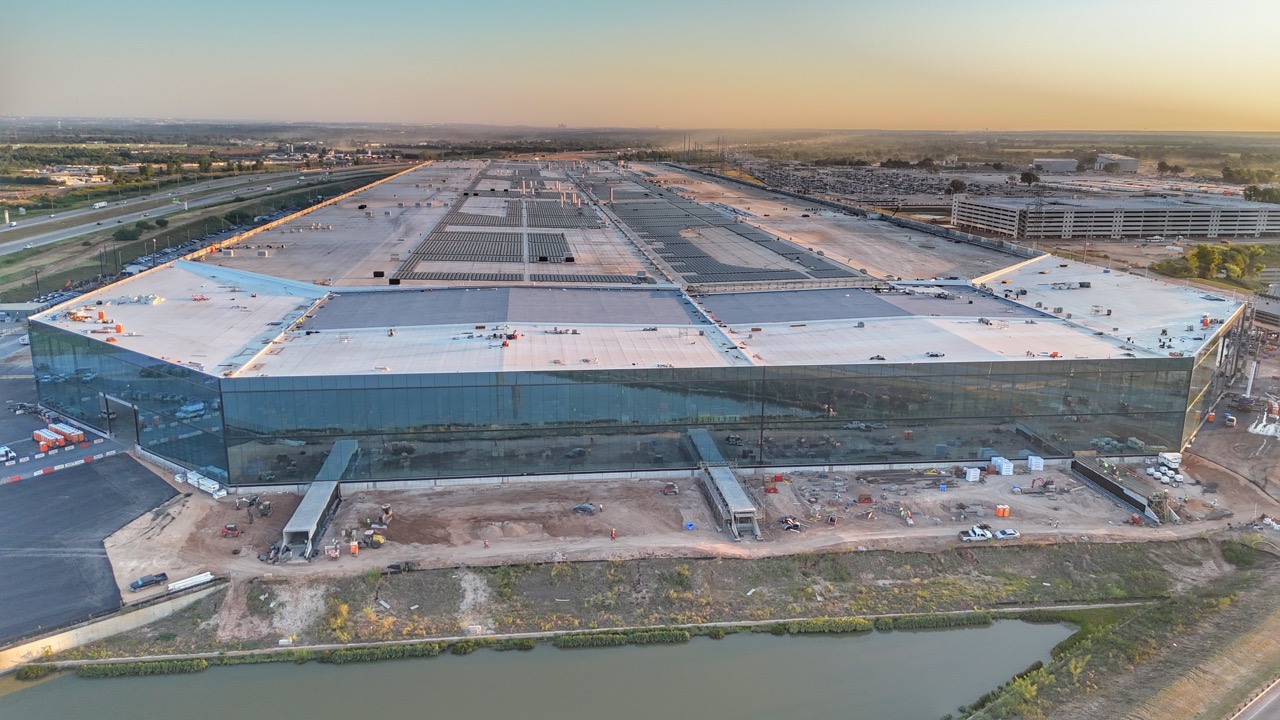
Tesla’s Cortex is a massive AI training supercomputer located at Giga Texas, designed to accelerate Full Self-Driving (FSD) and Optimus robot development. Featuring tens of thousands of Nvidia H100 GPUs, it enables faster, more efficient AI training for real-world applications, with expansion to Cortex 2.0 underway in 2026.
- Purpose: The supercomputer is built to train neural networks for autonomous driving (FSD) and the Optimus humanoid robot.
- Capacity: The initial cluster, which went live in Q4 2024, consists of roughly 50,000 Nvidia H100 GPUs.
- Cortex 2.0: A second, more powerful iteration is under construction at Giga Texas to meet growing AI demands, projected to be operational in 2026.
- Performance Impact: The increased compute power directly enables improvements in FSD, such as enhanced safety, higher resolution video inputs, and reduced latency.
- Scale: The project is massive, with the infrastructure consuming up to 500 megawatts and requiring specialized, high-capacity cooling systems.
- Optimus Integration: Cortex provides the intelligence to train Optimus robots for navigating complex, real-world environments.
特斯拉的Cortex是一台位于得克萨斯超级工厂的巨型AI训练超级计算机,旨在加速全自动驾驶(FSD)和Optimus机器人的研发进程。该系统搭载数万块英伟达H100 GPU,可为实际应用提供更快速高效的AI训练支持,其升级版Cortex 2.0计划于2026年投入运行。
目的:该超级计算机旨在为自动驾驶(FSD)和Optimus人形机器人训练神经网络。
容量:首批集群于2024年第四季度投入运行,包含约50,000块英伟达H100 GPU。
Cortex 2.0:为满足日益增长的人工智能需求,第二代更强大的系统正在Giga Texas工厂建设中,预计2026年投入运行。
性能影响:计算能力的提升将直接推动FSD功能改进,包括增强安全性、支持更高分辨率视频输入及降低延迟。
规模:该项目规模庞大,基础设施耗电量高达500兆瓦,需配备专用高容量冷却系统。
Optimus集成:Cortex为Optimus机器人提供智能训练支持,使其能够在复杂的真实环境中自主导航。