Deutsch-Chinesische Enzyklopädie, 德汉百科
 UEFA European Championship 2024
 Baden-Wuerttemberg
 Stuttgart
Germany
FIFA Fussball-Weltmeisterschaft 2006
UEFA European Championship 2024
Stuttgart
Germany
FIFA Fussball-Weltmeisterschaft 2006
UEFA European Championship 2024
 Vacation and Travel
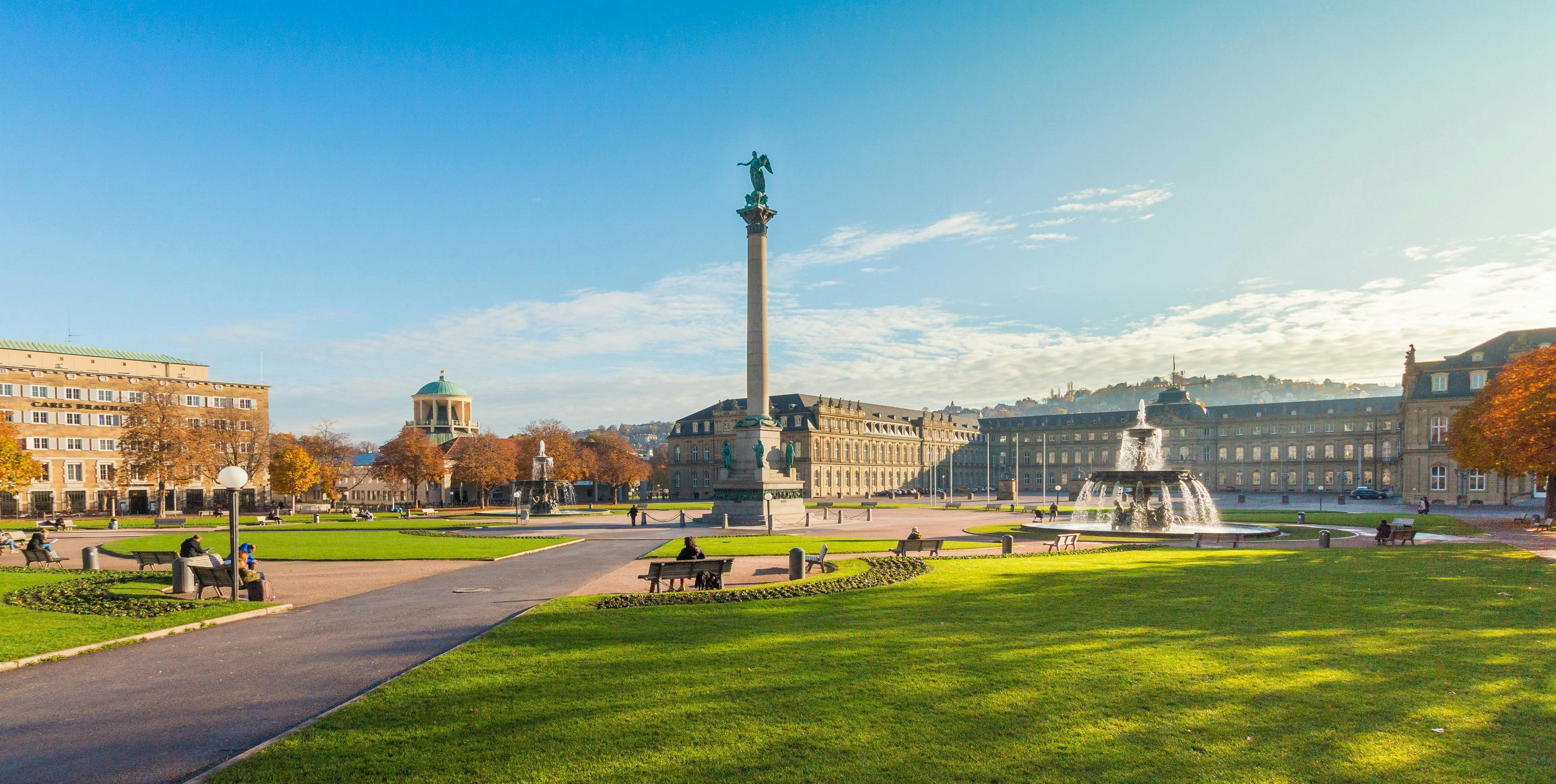

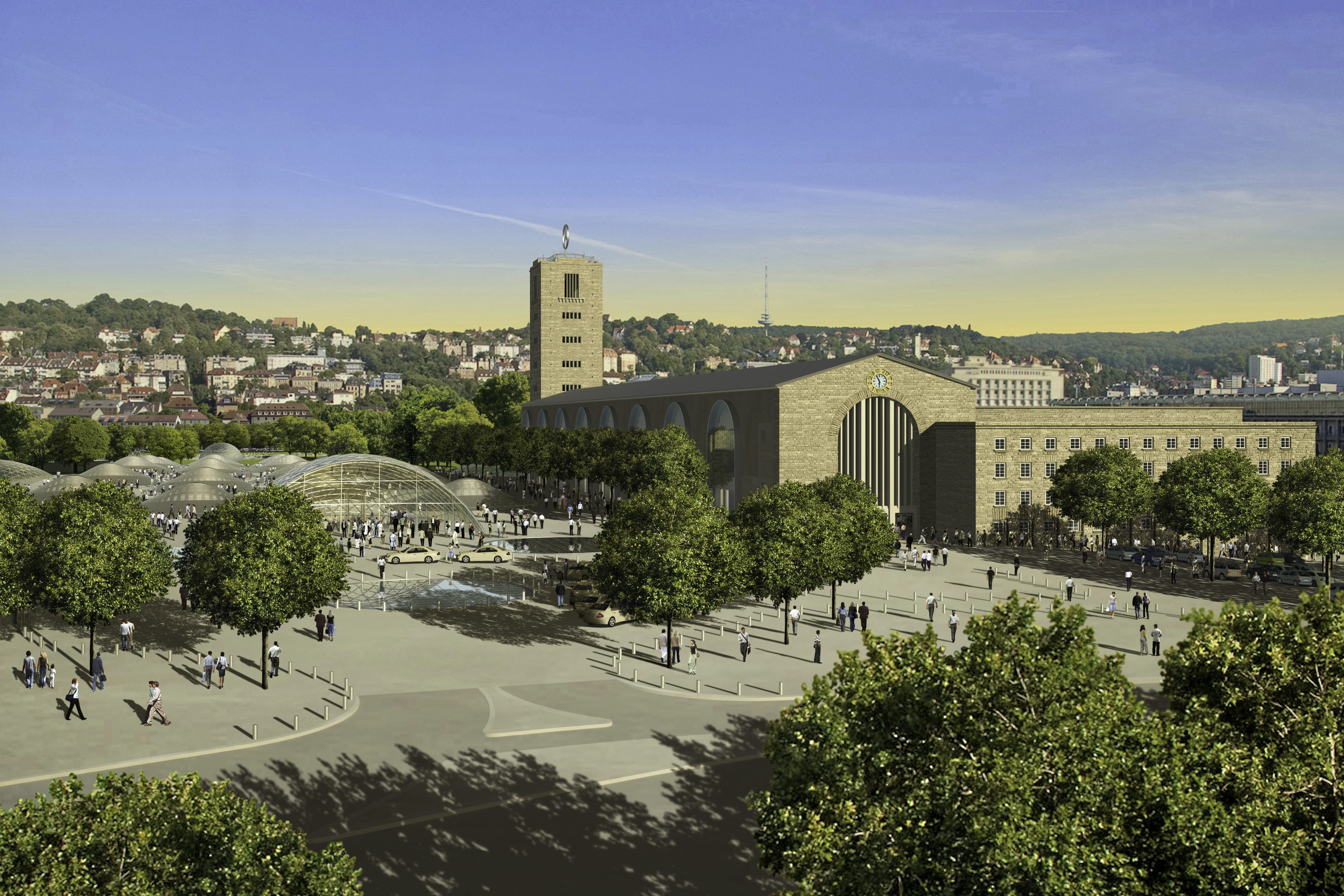
斯图加特是德国西南重镇,巴符州首府。它坐落在内卡河谷地,面积207平方公里,人口58.4万。斯图加特这个地名源自于德语马场(Stute Garter)二字,古时这里曾是王公贵族的养马场。可是这昔日的马场,今天竟是欧洲经济最发达、人均产值最高的大城市之一,誉满全球的“奔驰”汽车就是 在这里离开生产线。看到城徽上金底黑色骏马,想到斯图加特战后的残破,今日的繁盛,使人不由得赞叹,斯图加特-奔驰的骏马!斯图加特的历史可以追溯到 1000年前。公元950年左右,一位公爵看中这里青山环绕,水草丰美,于是把这里辟为养马场。13世纪这里发展成一座要塞。14世纪符腾堡伯爵迁来府 邸。此后,符腾堡伯国国势日隆,升为公国、王国,都城斯图加特的地位也步步提升,市区逐渐扩大。1871年德意志帝国宣告成立,符腾堡王国作为一邦加入, 斯图加特遂成为帝国西南重镇。从19世纪中叶起,斯图加特开始工业化,各类工厂如雨后春笋破土而出,市区所在的盆地显得过于窄小,于是工厂企业逐渐向坡地 发展,向郊区发展,形成大斯图加特工业区。第二次世界大战中,斯图加特饱经战火,13世纪以来逐渐发展形成的市中心,皆成废墟。现在市中心许多建筑物都是 50年代期间重建的。战后,斯图加特的经济发展更是蒸蒸日上。它已成为德国人均收入最高、失业率最低的城市之一。
斯图加特(德语:Stuttgart,中国大陆、台湾译为斯图加特;香港译为史特加)位于德国西南部的巴登-符腾堡州中部内卡河谷地,靠近黑森林。不仅是该州的州首府,也是州级行政区及斯图加特地区首府和该州的第一大城市。同时也是该州的政治中心:巴符州议会、州政府,和众多的州政府机关部门均设在这里。由于其在经济、文化和行政方面的重要性,是德国最知名的城市之一。
斯图加特是德国第六大城市,斯图加特区域是全国第四大城市联合体(仅次于鲁尔区、莱茵-美因区和柏林)。离斯图加特较近的大城市有:斯图北面204公里的法兰克福,和东南面220公里的慕尼黑。
ist die Hauptstadt des deutschen Landes Baden-Württemberg und mit rund 630.000 Einwohnern dessen größte Stadt. Die sechstgrößte Stadt Deutschlands bildet das Zentrum der rund 2,7 Millionen Einwohner zählenden Region Stuttgart, eines der größten Ballungsräume Deutschlands. Zudem ist sie Kernstadt der europäischen Metropolregion Stuttgart (etwa 5,3 Millionen Einwohner), der fünftgrößten in Deutschland. Stuttgart hat den Status eines Stadtkreises und ist in 23 Bezirke gegliedert.
Als Sitz der baden-württembergischen Landesregierung und des Landtags sowie zahlreicher Landesbehörden ist Stuttgart das politische Zentrum des Landes (siehe auch Liste der Behörden und Einrichtungen in Stuttgart). Es ist Sitz des Regierungspräsidiums Stuttgart, das den gleichnamigen Regierungsbezirk verwaltet. In Stuttgart tagt das Regionalparlament der Region Stuttgart, einer der drei Regionen im Regierungsbezirk Stuttgart. Darüber hinaus ist Stuttgart Sitz des evangelischen Landesbischofs von Württemberg und Teil der katholischen Diözese Rottenburg-Stuttgart. Die Stadt ist ein wichtiger Wirtschaftsstandort und Finanzplatz. Sie ist bekannt als Heimat der deutschen Automobilfirmen Daimler und Porsche.
Das Stuttgarter Stadtbild wird durch viele Anhöhen (teilweise Weinberge), Täler (insbesondere Stuttgarter Talkessel und Neckartal), Grünanlagen (u. a. Rosensteinpark, Schlossgarten, Höhenpark) sowie eine dichte urbane Bebauung mit hohem Anteil von Nachkriegsbauten, diversen Baudenkmälern, Kirchbauten und einigen Hochhäusern geprägt.
シュトゥットガルト(標準ドイツ語: Stuttgart、アレマン語:Schduagert(シュドゥアガート/シュドゥアゲアト))は、ドイツ連邦共和国の都市。バーデン=ヴュルテンベルク州の州都であり、ドイツ南西部の世界都市。人口は約62万人(2015年)。シュツットガルトとも表記される。
ネッカー川沿いにあり、シュヴァーベン地方北部とフランケン地方南西部であるヴュルテンベルク地方を境目とするドイツを代表する工業都市で、もっとも豊かな地域である。ダイムラー、ポルシェやボッシュなどドイツを代表する世界的な企業の本社がおかれている。一方ではブドウなどの栽培も盛んであり、中央駅のそばには今もブドウ畑が残る。ワインも生産され、農業も盛んな田舎街の側面を併せ持つ。
言語構成は上部ドイツ語の語群であるカトリックであるアレマン語の系統に属するシュヴェービッシュ(シュヴァーベン語)と、プロテスタントである上部フランケン語の系統に属する南フランケン語の一言語であるヴュルテンベルク語などの方言が混合する境界域に位置し、中部・北部ドイツ人たちからは「ドイツの田舎者」と揶揄されることがある。
隣接するエスリンゲン、ルートヴィッヒスブルク、フェルバッハ、ヴァイブリンゲン、などのUバーン(LRT:ライトレールトランジット、ほぼ専用軌道の路面電車)、Sバーン(都市近郊電車)が直通運転される近隣周辺都市を合わせて人口100万人を越えるシュトゥットガルト都市圏を形成する。中央駅正面から歩行者専用道路のケーニッヒストラーセが伸び、通りを進んでいくと左手に新宮殿、広場、旧宮殿、ラートハウス(市役所)、マルクトプラッツ(市場)、ブロイニンガーデパートなどが現われ、市の中心部となる。
欧州議会があるフランス・ストラスブールへ車で1時間半、ミュンヘンへ2時間、フランクフルトへ1時間半、スイス・チューリッヒへ2時間半とヨーロッパのへそともいえる絶好のロケーションに位置する。近隣の都市としては、約40キロ北にハイルブロン、35キロ西にシュヴァルツヴァルトの中心都市プフォルツハイム、60キロ北西にシュヴァルツヴァルトを越えライン川沿いにドイツ連邦最高裁判所、連邦憲法裁判所の所在地であるカールスルーエ、35キロ南にロイトリンゲンが位置している。
Stuttgart (/ˈʃtʊtɡɑːrt/ SHTUUT-gart;[4] German: [ˈʃtʊtɡaɐ̯t] ( listen); Swabian: Schduagert, pronounced [ˈʒ̊d̥ua̯ɡ̊ɛʕd̥]; names in other languages) is the capital and largest city of the German state of Baden-Württemberg. Stuttgart is located on the Neckar river in a fertile valley known locally as the "Stuttgart Cauldron." It lies an hour from the Swabian Jura and the Black Forest. Its urban area has a population of 609,219,[5] making it the sixth largest city in Germany.[6] 2.7 million people live in the city's administrative region[7] and another 5.3 million people in its metropolitan area,[8] making it the fourth largest metropolitan area in Germany. The city and metropolitan area are consistently ranked among the top 20 European metropolitan areas by GDP; Mercer listed Stuttgart as 21st on its 2015 list of cities by quality of living,[a][9] innovation agency 2thinknow ranked the city 24th globally out of 442 cities [10][b] and the Globalization and World Cities Research Network ranked the city as a Beta-status world city in their 2014 survey.[11]
Since the 6th millennium BC, the Stuttgart area has been an important agricultural area and has been host to a number of cultures seeking to utilize the rich soil of the Neckar valley. The Roman Empire conquered the area in 83 AD and built a massive castrum near Bad Cannstatt, making it the most important regional center for several centuries. Stuttgart's roots were truly laid in the 10th century with its founding by Liudolf, Duke of Swabia, as a stud farm for his warhorses. Initially overshadowed by nearby Cannstatt, the town grew steadily and was granted a charter in 1320. The fortunes of Stuttgart turned with those of the House of Württemberg, and they made it the capital of their county, duchy, and kingdom from the 15th century to 1918. Stuttgart prospered despite setbacks in the Thirty Years' War and devastating air raids by the Allies on the city and its automobile production during World War II. However, by 1952, the city had bounced back and it became the major economic, industrial, tourism and publishing center it is today.[12]
Stuttgart is also a transport junction, and possesses the sixth-largest airport in Germany. Several major companies are headquartered in Stuttgart, including Porsche,[13] Bosch,[14] Mercedes-Benz,[15] Daimler AG,[16] and Dinkelacker.[17]
Stuttgart is unusual in the scheme of German cities.[18] It is spread across a variety of hills (some of them covered in vineyards),[19] valleys (especially around the Neckar river and the Stuttgart basin) and parks. This often surprises visitors who associate the city with its reputation as the "cradle of the automobile".[20][21] The city's tourism slogan is "Stuttgart offers more".[22] Under current plans to improve transport links to the international infrastructure (as part of the Stuttgart 21 project), the city unveiled a new logo and slogan in March 2008 describing itself as "Das neue Herz Europas" ("The new Heart of Europe").[23] For business, it describes itself as "Where business meets the future". In July 2010, Stuttgart unveiled a new city logo, designed to entice more business people to stay in the city and enjoy breaks in the area.[24]
Stuttgart is a city with a high number of immigrants. According to Dorling Kindersley's Eyewitness Travel Guide to Germany, "In the city of Stuttgart, every third inhabitant is a foreigner."[25] 40% of Stuttgart's residents, and 64% of the population below the age of five, are of immigrant background.[26]
Stuttgart (prononcé en allemand : [ˈʃtʊtɡaʁt] Écouter, anciennement Stutgard ou Stougard en français2) est la capitale du Land de Bade-Wurtemberg, au sud de l'Allemagne. Sixième plus grande ville d'Allemagne, Stuttgart a une population de 613 392 habitants (recensement de décembre 20111) tandis que la région métropolitaine de Stuttgart en compte 5,3 millions (2008)3.
La ville se trouve au centre d'une région très peuplée et est entourée d'une couronne de petites villes. Cette zone urbaine intérieure appelée « région de Stuttgart » a une population de 2,7 millions d'habitants4, faisant du « Grand Stuttgart » la quatrième plus grande ville-région en Allemagne après la Ruhr, Francfort-sur-le-Main et Berlin.
Stuttgart se trouve sur une série de collines, de vallées et de parcs — fait inhabituel pour les villes allemandes5 et souvent cause de surprise pour les visiteurs qui associent principalement la ville avec sa réputation industrielle de « berceau de l'automobile ».
Stuttgart a le statut de Stadtkreis, ce qui fait d'elle une aire urbaine auto-administrée. La ville est également le siège du parlement régional et du conseil local.
La devise de la ville est « Stuttgart est plus » — pour les touristes et les affaires, Stuttgart se décrit elle-même comme « Standort Zukunft », traduit par la mairie en « Lorsque les affaires rencontrent le futur ». En 2007, le bourgmestre a présenté Stuttgart aux investisseurs étrangers comme « la puissance créatrice de l'Allemagne ». Avec les plans actuels visant à améliorer les liaisons de transport aux infrastructures internationales (dans le cadre du projet Stuttgart 21), la ville a dévoilé un nouveau logo et un slogan en mars 2008, se décrivant comme Das neue Herz Europas (« Le nouveau cœur de l'Europe »)6.
Stuttgart est parfois surnommée la Schwabenmetropole7 (métropole souabe8), une référence au dialecte souabe parlé par les autochtones.
Stoccarda (in tedesco Stuttgart , in dialetto svevo Schdùagert) è una città extracircondariale di circa 600.000 abitanti della Germania meridionale, capitale dello stato federato del Baden-Württemberg e del distretto amministrativo omonimo.
La città si trova in prossimità della Foresta Nera e del fiume Neckar. Ha una superficie di 207 km².
Stuttgart ( [ˈʃtʊtɡaʁt] (?·i); antiguamente y en desuso Estucardia en español) es la capital del estado federado alemán Baden-Wurtemberg. Con 600 038 habitantes,2 Stuttgart es la ciudad más grande de Baden-Wurtemberg y la sexta de Alemania. En Stuttgart encontramos el parlamento de su Bundesland y su gobierno correspondiente, así como otras autoridades políticas y de la administración federal. Las grandes ciudades alemanas más importantes y cercanas a Stuttgart son: Fráncfort (240 km al noroeste), Múnich (aproximadamente 220 km al sureste de Stuttgart) y Karlsruhe (a 80 km al noroeste).
Stuttgart tiene el estatus de ciudad-distrito, unificada por un presidente. También es sede del obispo evangélico de Wurtemberg y de un obispado católico (Bistum Rottenburg-Stuttgart). La ciudad posee dos universidades, escuelas técnicas y es sede de varios institutos de investigación, como el Centro Aeroespacial Alemán (DLR), el Fraunhofer o el Max Planck.
Stuttgart es la puerta de entrada a la Selva Negra y al Jura de Suabia. Rodeada de colinas, bosques y viñedos que llegan hasta el centro. El puerto se sitúa al noreste de la ciudad, a orillas del río Neckar.
Шту́тгарт (нем. Stuttgart [ˈʃtʊtɡaʁt], от нем. Stutengarten — «конюшенный сад», алем. Schduagert) — город в Германии, административный центр земли Баден-Вюртемберг, один из важнейших промышленных центров Германии, а также важный культурный центр. В Штутгарте проживает около 630 тысяч человек (декабрь 2016 года), город занимает по этому показателю шестое место в стране.
Штутгарт был основан в 950 году швабским герцогом Людольфом и до 1496 года оставался главным городом графства Вюртемберг, с 1803 года — курфюршества, с 1806 года — королевства Вюртемберг, а после 1918 года — республики Вюртемберг. После строительства в городе автозаводов будущего концерна Mercedes-Benz город стал известен как «колыбель автомобилестроения».
 Bavaria
Germany
Eurovision Song Contest,ESC
FIFA Fussball-Weltmeisterschaft 2006
UEFA European Championship 2020
UEFA European Championship 2024
Bavaria
Germany
Eurovision Song Contest,ESC
FIFA Fussball-Weltmeisterschaft 2006
UEFA European Championship 2020
UEFA European Championship 2024
 Geography
*World's Most Livable Cities
Geography
Geography
*World's Most Livable Cities
 History
M 1500 - 2000 AD
History
L 1000 - 1500 AD
History
N 2000 - 2100 AD
History
M 1500 - 2000 AD
History
L 1000 - 1500 AD
History
N 2000 - 2100 AD
 International cities
***Global Urban Economic Competitiveness
Olympic Summer Games
1972 Summer Olympics
Vacation and Travel
International cities
***Global Urban Economic Competitiveness
Olympic Summer Games
1972 Summer Olympics
Vacation and Travel
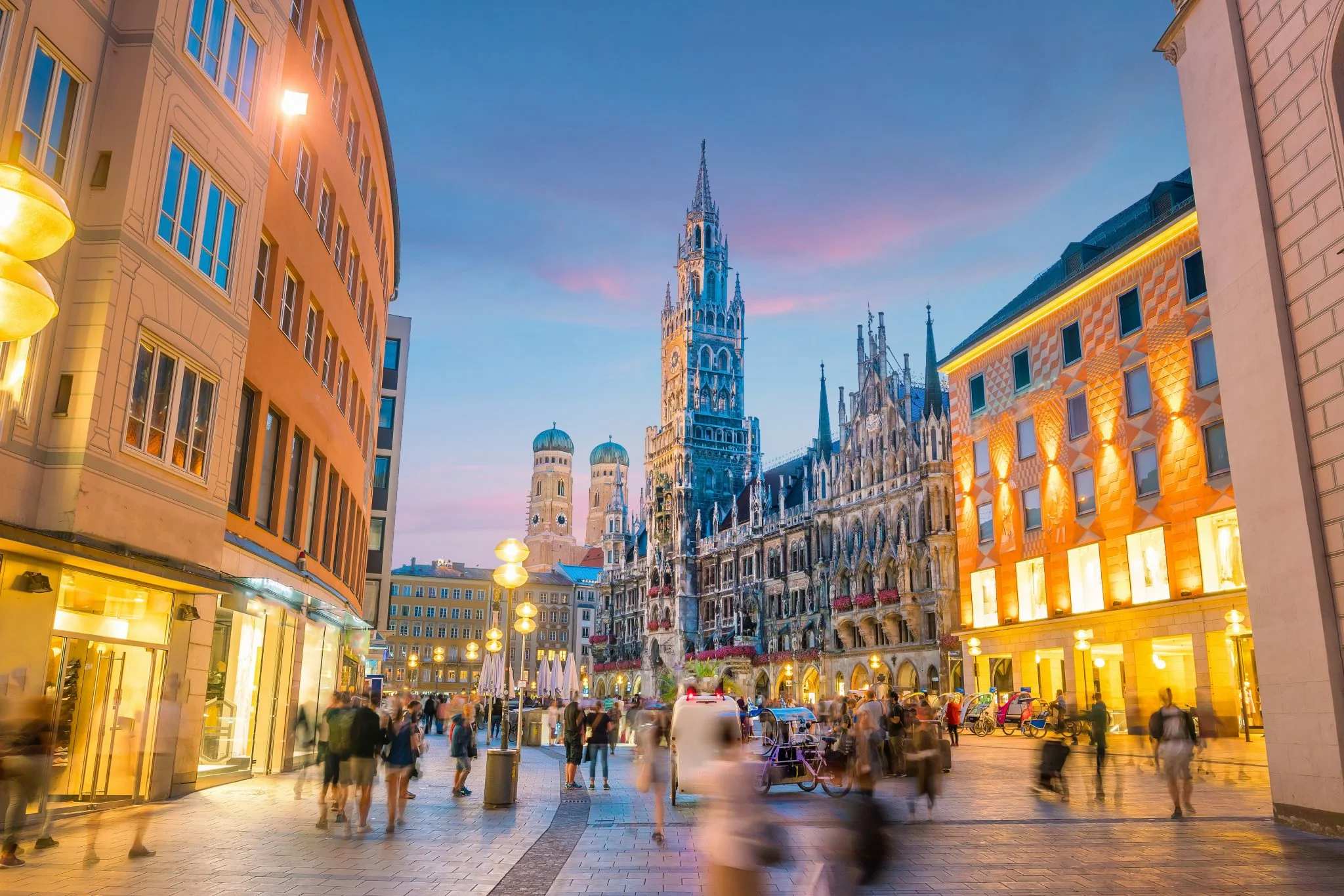
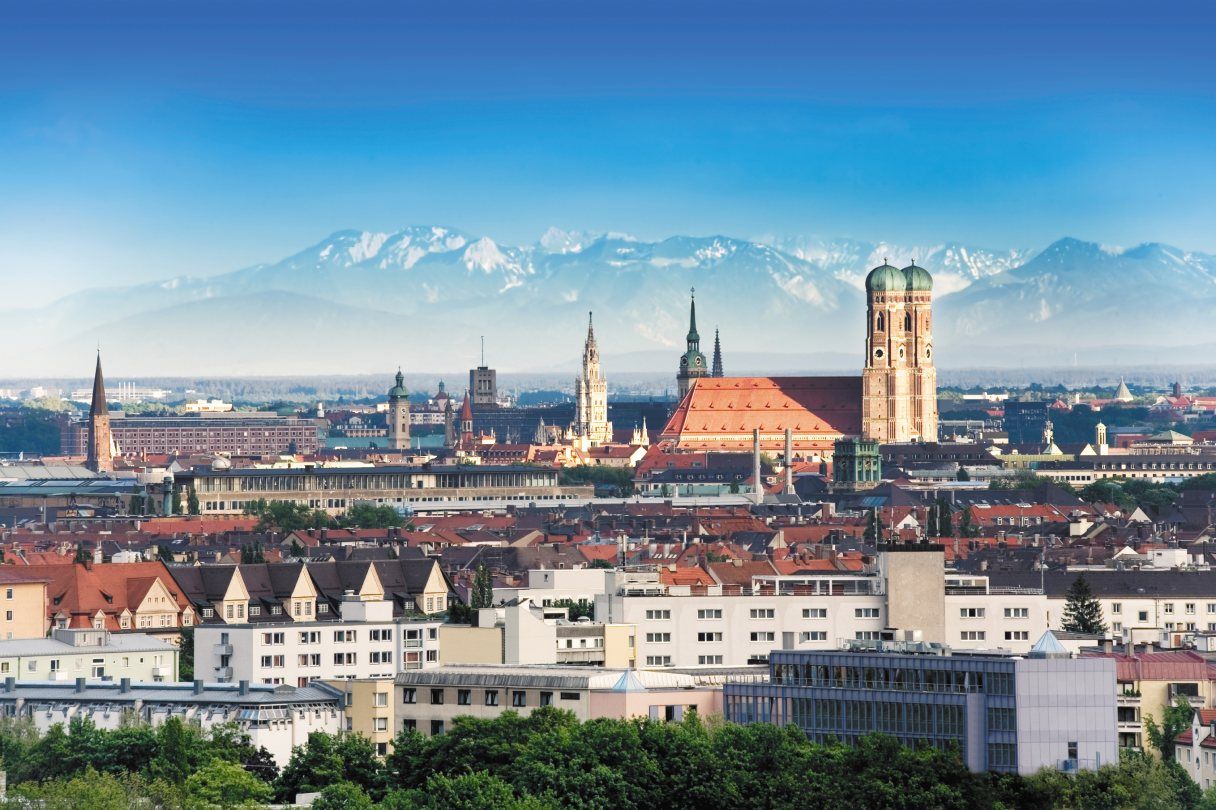
München (hochdeutsch  [ˈmʏnçn̩] oder [ˈmʏnçən̩];[4] bairisch [ˈmɪŋ(:)ɐ]) ist die Landeshauptstadt des Freistaates Bayern. Sie ist mit rund 1,5 Millionen Einwohnern die einwohnerstärkste Stadt Bayerns und (nach Berlin und Hamburg) die nach Einwohnern drittgrößte Gemeinde Deutschlands sowie die viertgrößte Stadt im deutschsprachigen Raum und zwölftgrößte der Europäischen Union. Im Ballungsraum München leben mehr als 2,9 Millionen Menschen,[5][6] die flächengrößere europäische Metropolregion München umfasst rund 5,7 Millionen Einwohner.
Die Landeshauptstadt ist eine kreisfreie Stadt und bayerische Metropole,[7] zudem Verwaltungssitz des die Stadt umgebenden gleichnamigen Landkreises mit dem Landratsamt München als Verwaltung, des Bezirks Oberbayern und des Regierungsbezirks Oberbayern.
München wird zu den Weltstädten gezählt.[8] Die Metropole ist eine der wirtschaftlich erfolgreichsten und am schnellsten wachsenden Europas. Sie ist Sitz zahlreicher Konzerne, darunter fünf DAX-Unternehmen (Allianz, BMW, Linde, Munich Re, Siemens). Hier befindet sich die einzige Börse Bayerns. In der Städteplatzierung des Beratungsunternehmens Mercer belegte München im Jahr 2018 unter 231 Großstädten weltweit den dritten Platz nach Lebensqualität.[9] Laut dem Magazin Monocle war es 2018 sogar die lebenswerteste Stadt der Welt.[10] Andererseits wird die Lebensqualität zunehmend durch Agglomerationsnachteile, wie Verkehrs- und Umweltbelastung sowie sehr hohe Wohneigentumspreise und Mieten[11][12] eingeschränkt, weshalb auch die Wohnfläche pro Einwohner weit unter dem Bundesdurchschnitt liegt.[13] München gilt als sicherste Kommune unter den deutschen Großstädten über 200.000 Einwohnern hinsichtlich der Kriminalitätsrate aller Straftaten.[14]
München wurde 1158 erstmals urkundlich erwähnt.[15] Die Stadt wurde 1255 bayerischer Herzogssitz, war von 1328 bis 1347 kaiserliche Residenzstadt und wurde 1506 alleinige Hauptstadt Bayerns. München ist Sitz zahlreicher nationaler und internationaler Behörden sowie wichtiger Universitäten und Hochschulen, bedeutender Museen und Theater. Durch eine große Anzahl sehenswerter Bauten samt geschützten Baudenkmälern und Ensembles, internationaler Sportveranstaltungen, Messen und Kongresse sowie das weltbekannte Oktoberfest ist München ein Anziehungspunkt für den internationalen Tourismus.
ミュンヘン(ドイツ語: München, ドイツ語発音: [ˈmʏnçən] ( 音声ファイル)[2], バイエルン語: Minga)は、イーザル川河畔にありバイエルンアルプスの北側に位置する都市。ドイツの連邦州であるバイエルン州最大の都市であり、同州の州都でもある。
ミュンヘン(標準ドイツ語:München, バイエルン語:Minga〔ミンガ〕、ミュンヘン方言:Münchn〔ミュンヒン〕)という名は僧院という意味で、ドイツ語で僧を表す「メンヒ」に由来する。漢字表記は「民顕」。"che" の部分の無声硬口蓋摩擦音 [ç] の音写を表すために、[hə]/[xə] の発音を示す「ヘ」ではなく、[çə] の発音を示す「ヒェ」を用い、「ミュンヒェン」とも表記される(こちらのほうがドイツ語の発音に近い)。また "Mü" の発音は正確には「ミュ」ではなく、[mʏ] であり、[ʊ] の形に唇を開き、[ɪ] と発音した音に近い。同じ上部ドイツ語に属するアレマン語では、Münche(ミュンヒェ/ミュンキェ)と発音される。英語やフランス語では Munich(英語:ミューニック[mjú:nik]/仏語:ミュニク[mynik])、イタリア語では Monaco(モナコ公国との区別のために、「バイエルンの」という意味の語をつけてMonaco di Baviera, モナコ・ディ・バヴィエラ)と呼ばれる。
ミュンヘンはベルリン、ハンブルクに次いでドイツでは3番目に大きな都市で、市域人口は140万人近くに達する。1972年にミュンヘンオリンピックが開催された。
ミュンヘンの標語は「ミュンヘンはあなたを愛している。」 "München mag Dich" だが、2006年以前は "Weltstadt mit Herz" 「心を持つ国際都市」であった。ミュンヘンの市章には地名の由来となった僧が表現され、黒と金の配色の市旗は神聖ローマ帝国の色で市の公式の色としてルートヴィヒ4世の時代以来使われている。
今日のミュンヘンは金融、出版の中心都市でたびたび、移住者などが住むのに適した場所として上位に位置付けられる。2011年のマーサー・ヒューマン・リソース・コンサルティングによる世界で最も居住に適した都市では4位を獲得した[3]。2010年のライフスタイルマガジンMonocleの調査では5位に付けており、未だにドイツの都市の中では高い位置にある[4]。経済的、社会的革新に関する162の指標の分析を基にした調査では2thinknowイノベーション都市指数で289都市中、世界では15位、ドイツ国内では5位に付けた[5]。
Munich (/ˈmjuːnɪk/; German: München [ˈmʏnçn̩] ( listen);[2] Austro-Bavarian: Minga [ˈmɪŋ(ː)ɐ]) is the capital and the most populated city in the German state of Bavaria, on the banks of the River Isar north of the Bavarian Alps. Munich is also the third largest city in Germany, after Berlin and Hamburg, and the 12th largest city in the European Union, with a population of around 1.5 million.[3] The Munich Metropolitan Region is home to 6 million people.[4]
The city is a major centre of art, technology, finance, publishing, culture, innovation, education, business, and tourism in Germany and Europe and enjoys a very high standard and quality of living, reaching first in Germany and third worldwide according to the 2018 Mercer survey,[5] and being rated the world's most liveable city by the Monocle's Quality of Life Survey 2018.[6] According to the Globalization and World Rankings Research Institute Munich is considered an alpha-world city, as of 2015.[7]
The name of the city is derived from the Old/Middle High German term Munichen, meaning "by the monks". It derives from the monks of the Benedictine order, who ran a monastery at the place that was later to become the Old Town of Munich; hence the monk depicted on the city's coat of arms. Munich was first mentioned in 1158. Catholic Munich strongly resisted the Counter-Reformation and was a political point of divergence during the resulting Thirty Years' War, but remained physically untouched despite an occupation by the Protestant Swedes.[8][citation needed] Once Bavaria was established as a sovereign kingdom in 1806, it became a major European centre of arts, architecture, culture and science. In 1918, during the German Revolution, the ruling house of Wittelsbach, which had governed Bavaria since 1180, was forced to abdicate in Munich and a short-lived socialist republic was declared.
In the 1920s, Munich became home to several political factions, among them the NSDAP. The first attempt of the Nazi movement to take over the German government in 1923 with the Beer Hall Putsch was stopped by the Bavarian police in Munich with gunfire. After the Nazis' rise to power, Munich was declared their "Capital of the Movement". During World War II, Munich was heavily bombed and more than 50% of the entire city and up to 90% of the historic centre were destroyed. After the end of postwar American occupation in 1949, there was a great increase in population and economic power during the years of Wirtschaftswunder, or "economic miracle". Unlike many other German cities which were heavily bombed, Munich restored most of its traditional cityscape and hosted the 1972 Summer Olympics. The 1980s brought strong economic growth, high-tech industries and scientific institutions, and population growth. The city is home to major corporations like BMW, Siemens, MAN, Linde, Allianz and MunichRE.
Munich is home to many universities, museums and theatres. Its numerous architectural attractions, sports events, exhibitions and its annual Oktoberfest attract considerable tourism.[9] Munich is one of the most prosperous and fastest growing cities in Germany. It is a top-ranked destination for migration and expatriate location, despite being the municipality with the highest population density in Germany (4,500 people per km²) . Munich hosts more than 530,000 people of foreign background, making up 37.7% of its population.[10]
Munich (/my.nik/) (München en allemand, prononcé : [ˈmʏnçən] Écouter ; Minga en bavarois) est une ville du sud de l'Allemagne et la capitale du Land de Bavière. Avec 1 548 319 habitants intra-muros au 30 juin 20171 et 2 351 706 habitants dans son aire urbaine2, elle est la troisième ville d'Allemagne par la population après Berlin et Hambourg. La Région métropolitaine de Munich, qui englobe également Augsbourg et Ingolstadt, compte quant à elle plus de cinq millions d'habitants. Traversée par l'Isar, affluent du Danube, elle se situe dans le district de Haute-Bavière, au pied des Alpes bavaroises.
Le nom de la ville provient du vieux haut-allemand Munichen (« par les moines »), en raison de la présence d'un monastère bénédictin à l'emplacement actuel de la vieille ville ; l'héraldique fait par ailleurs figurer un moine. Mentionnée pour la première fois en 1158, Munich devient la ville de résidence des ducs de Bavière en 1255 et de l'empereur romain germanique Louis IV. En 1506, après deux siècles de division, les principautés s'unifient pour former la Bavière. Ville catholique - ce dont témoigne la cathédrale Notre-Dame, principal édifice religieux de la ville -, elle est l'un des foyers de la Contre-Réforme. Devenue capitale de l'électorat de Bavière (1623) puis du royaume de Bavière (1805), elle devient un des principaux centres culturels, artistiques et scientifiques allemands au XIXe siècle, sous l'impulsion du roi Louis II.
Au cours du XXe siècle, Munich connaît un important développement industriel, devenant le premier pôle économique de la République fédérale allemande (1949-1990) puis de l'Allemagne réunifiée. Elle accueille notamment le siège de grandes sociétés comme Siemens, Allianz, BMW, Münchener Rückversicherung, Linde, Airbus Deutschland et HypoVereinsbank. Selon Eurostat, la zone urbaine élargie de la région métropolitaine de Munich est la plus importante d'Allemagne en termes de PIB avec 117,6 milliards d'euros, devant Hambourg, Berlin et Francfort. Avec un PIB par habitant de 53 073 euros, Munich est également l'une des villes les plus riches de l'Union européenne2.
Deuxième destination touristique d'Allemagne après Berlin, Munich est célèbre pour sa traditionnelle fête de la bière, l'Oktoberfest, qui se déroule chaque année de fin septembre à début octobre. Outre la cathédrale, la ville a également un important patrimoine historique, composé notamment du château de Nymphenbourg, de très nombreux musées richement dotés et de deux vastes jardins, le Hofgarten et le Englischer Garten (jardin anglais). Réputée être l'une des villes les plus agréables à vivre au monde, Munich accueille de nombreux évènements internationaux, dont les Jeux olympiques d'été de 1972, qui furent le théâtre d'une sanglante prise d'otages. Enfin, elle est le lieu de résidence de l'un des principaux clubs de football d'Europe, le Bayern Munich, qui joue dans l'Allianz Arena, au nord du centre-ville.
Monaco di Baviera (/ˈmɔnako di baˈvjɛra/; in tedesco: München, /ˈmʏnçən/, ; in bavarese: Minga) è una città extracircondariale della Germania meridionale, capitale (Landeshauptstadt) della Baviera. Situata sulle rive del fiume Isar, dopo Berlino ed Amburgo è la terza città tedesca per numero di abitanti[2], con una popolazione di circa 1 528 849 (30-04-2016) residenti nel comune,[3] 1 808 550 se si considera anche il circondario di Monaco e circa 2,7 milioni nell'area metropolitana.
È la città più importante della Germania meridionale, grazie alle residenze reali, agli immensi parchi, ai suoi musei, alle sue chiese barocche e rococò, al folclore bavarese ancora molto vissuto, alla vicinanza delle Prealpi e delle Alpi e naturalmente grazie alla birra ed alla sua manifestazione più famosa, l'Oktoberfest. Il santo patrono della città è San Benno di Meißen. Nel 2015[4] uno studio della società di consulenza globale Mercer ha classificato Monaco di Baviera al quarto posto tra le 20 città del mondo con la miglior qualità della vita; nel 2016[5] la città mantiene la sua posizione.
Múnich2 (AFI: ['mu.nitʃ], también [ˈmu.nik];3 en alemán, München, [ˈmʏnçən] (?·i); en austro-bávaro: Minga [ˈmɪŋ(ː)ɐ]) es la capital, la mayor y la más importante ciudad del estado federado de Baviera y,4 después de Berlín y Hamburgo, la tercera ciudad de Alemania por número de habitantes. Se encuentra sobre el río Isar, al norte de los Alpes Bávaros.
El lema de la ciudad es München mag Dich (A Múnich le gustas). Antes de 2006 era Weltstadt mit Herz (Ciudad cosmopolita con corazón). Su nombre, München, deriva de Munichen, del alto alemán antiguo, que significa «en el lugar de los monjes». El nombre de la ciudad viene de los monjes benedictinos que fundaron la ciudad; de ahí que en el escudo de la ciudad haya un monje. Los colores oficiales de la ciudad son el negro y el oro, colores del Sacro Imperio Romano Germánico, desde tiempos de Luis IV de Baviera.
El área metropolitana de Múnich incluye algunas localidades colindantes de esta ciudad. Según un estudio de 2009, Múnich es la ciudad con la mejor calidad de vida de Alemania.5
El Múnich moderno es un centro financiero y editorial. En cuanto a innovación social y económica, la ciudad se encuentra en el 15.º lugar entre 289 ciudades según un estudio de 2010, y es la quinta ciudad alemana para el 2thinknow Innovation Cities Index basado en un análisis de 162 indicadores.6
El exónimo en español de la ciudad, que posee la particularidad de contar con una «ch» final, algo ajeno al sistema fonológico español, nace de los exónimos en francés e inglés. Por tanto, la pronunciación del exónimo es, etimológicamente, [ˈmunik], a través de la pronunciación del exónimo en inglés, o ['munitʃ], siguiendo las normas de pronunciación habituales del español. El gentilicio es «muniqués» y su plural, «muniqueses». El Diccionario Panhispánico de Dudas desaconseja la pronunciación con diptongo [ˈmiunik], propia del inglés.7 Múnich fue sede de los Juegos Olímpicos de 1972.
Мю́нхен (нем. München [ˈmʏnçən], бав. Minga, лат. Monacum, Monachium) — город на реке Изаре, на юге Германии, в федеральной земле Бавария. Внерайонный город (нем. kreisfreie Stadt), одновременно являющийся административным центром Баварии и административного округа Верхняя Бавария.
Название города произошло от древневерхненемецкого Munichen — «у монахов».
Население Мюнхена — 1 542 886 человек (31 октября 2016)[6]. Таким образом, он является крупнейшим городом Баварии и третьим, после Берлина и Гамбурга, городом Германии. В Мюнхене находится правительство Баварии, правительство округа Верхняя Бавария, а также правительство мюнхенского городского округа.
Мюнхен славится своими пивоваренными традициями. В городе находятся шесть крупных пивоварен, которые снабжают пивом знаменитый на весь мир Октоберфест — праздник пива, кренделей, жареных курочек и каруселей, ежегодно проводящийся в конце сентября — начале октября на Терезином лугу.
Современный Мюнхен — не только сосредоточие культурных и музейных ценностей, но и крупный промышленный и исследовательский центр. Благодаря знаменитым университетам, одной из крупнейших в Европе Баварской государственной библиотеке, насчитывающей шесть миллионов томов, институтам имени Макса Планка и имени Хайнца Майера-Лейбница, ядерному научно-исследовательскому реактору и многим другим учреждениям Мюнхен удерживает прочные позиции в европейской науке. Также Мюнхен по праву считается ИТ-столицей Германии. Недвижимость в Мюнхене самая дорогая в Германии.[7]
Germany
FIFA Fussball-Weltmeisterschaft 2006
UEFA European Championship 2024
 Saxony
Salt roads in Germany
Vacation and Travel
Saxony
Salt roads in Germany
Vacation and Travel


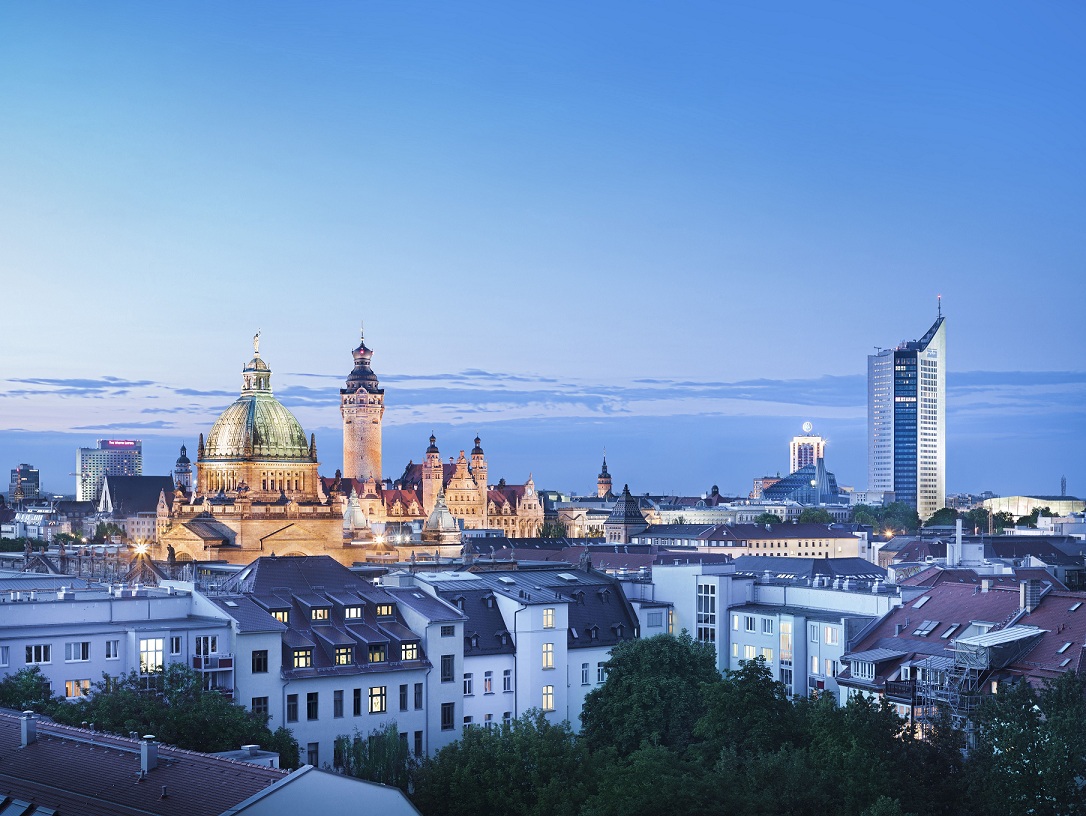
莱比锡是德国东部的第二大城市,位于柏林以南165公里,面积147平方公里,人口50.8万。这座城市坐落在莱比锡盆地中央,三条小河从市区流过,森 林绿地面积很大。市名莱比锡在当地古语中,意思是种有菩提树的地方。市区、郊外处处可见浓郁的菩提树。当年鲜花盛开季节,城中阵阵花香,沁人心脾。这里街 道整洁,商业繁华,又是世纪闻名的博览会城、书城和音乐城。大诗人歌德十分喜爱这座城市,称它为“小巴黎”。莱比锡还有音乐城的雅号。伟大的音乐家巴赫曾 在市内的托马斯教堂担任乐长20多年。他创作的《马太受难曲》等杰作首先在这里演出。巴赫精心培养的托马斯合唱团至今在世界上声誉不衰。教堂附近的巴赫纪 念馆记录了他为音乐献身的一生,特别是在莱比锡的活动。1843年,又一位杰出的音乐家门德尔松在这里创办了一所音乐学院,并亲自担任院长。为了纪念他, 人们把这所在世界上享有盛名的学校命名为门德尔松音乐学院。外地人在莱比锡会注意到,这里的居民酷爱音乐,差不多人人都会弹奏小提琴等乐器,该市的音乐生 活十分丰富多彩。著名的格万特豪斯交响乐团,已有200多年历史。
每年春、秋两季都在莱比锡举行国际博览会。1895年的世界第一届样品博览会和1918年的第一届技术博览会便在莱比锡举行。世界上第一个展览馆也于 1869年在莱比锡建成。莱比锡还是德国东部重要的交通枢纽。 莱比锡象所有德国东部的大城市一样,在两德统一后大兴土木,老建筑重新翻修,新建筑拔地而起,整座城市充满了生机。 1969年,钢架玻璃拱顶的新展览中心落成开业,这座完全现代化的建筑为每年25年左右的各种展览会提供了更大更新的场所。它的地面上铺以黑白花岗石拼砌 的椴树叶图案,是把椴树作为圣树的“椴树之乡”--莱比锡的象征。展览中心使这座起着连接欧市场桥梁作用的城市更具魅力。 莱比锡的主要游览景点大多数集中在方圆一公里的市中心区内,可步行前往。 旧市政厅大楼(Altes Rathauv) 在老城广场的中心是旧市政厅大楼(Altes Rathauv),它建于1557年,是德国最漂亮的文艺复兴建筑之一,现为市历史博物馆。它共分三层,最下面是棕红色石材砌筑的拱廊,中间为简洁的黄色 墙身,最上面是红瓦斜坡屋顶。屋顶上还建有六座造型优美的高阁楼,阁楼中间高耸的钟塔是广场的中心标志。这栋大楼以其优美的外观而成为德国最漂亮的文艺复 兴建筑之一。 老市政厅后有一小吃广场,摊贩云集,市民们在此休闲购物,市场里的花市更是生机盎然。市场北面有一座精致的白色建筑,两层楼高,初看并不起眼,但却是堪称 最有“价值”的建筑。原来它曾是谈判贸易楼,以前参加博览会的商人们就在这里签定合同。 从广场向东望去,一栋高大的塔楼便是莱比锡大学。在学校的名册上记录着莱辛、瓦格纳、歌德的名字。大学楼前的莱布尼茨纪念碑,是为了纪念这位曾在这里学习 过的著名学者。 南方天际线上高耸着俄罗斯记忆教堂和莱比锡大会战纪念碑,时刻提醒着人们纪念在1913年10月18日莱比锡民族大会战中为打败拿破仑而牺牲的军人。 同德累斯顿一样,莱比锡也以它的音乐而闻名。莱比锡音乐和戏剧的发展是那些曾经生长于斯的伟大音乐,如瓦格纳、门德尔松和舒曼等分不开的。享誉世界的布商 大厦乐团和巴赫曾担任乐长的托马纳乐合唱团以及门德尔松在莱比锡创办的德国第一所音乐学院都是这座城市的骄傲。 巴特勒斯大楼(Barthels Hof) 巴特勒斯大楼建于18世纪,现为集市广场最漂亮的购物区。 罗马努斯大楼(Romanus House) 罗马努斯大楼是莱比锡巴洛克式民居的典范。 老贸易楼(old Trading Borese) 老贸易楼建于1678年,楼前有歌德雕像。 迈德勒购物长廊(Madoge Passage) 迈德勒购物长廊是莱比锡现存最华丽和最完整的购物长廊,旁边有著名的奥尔巴赫酒家。 托马斯教堂(St.Thomas‘ Church) 托马斯教堂建于1500年,晚期哥特式。音乐大师巴赫就安葬在教堂的圣坛地下。 新布商大厦(New Gewand house) 新布商大厦是布商大厦乐团的第三个团址,对面是新莱比锡哥剧院。 尼古莱大教堂(St.Nidolai Church) 尼古莱大教堂是莱比锡最古老的教堂,建成于1175年。
莱比锡(德语:Leipzig,索布语:Lipzk)是德国萨克森州第二大城市,前德意志民主共和国(东德)第二大城市。位于萨克森州莱比锡盆地中心。它的古称是Lipsia或Lipzk,来源于斯拉夫语Липа,意思是“酸橙树”或“椴树”。歌德称它为“小巴黎”。
Leipzig ([ˈlaɪ̯pt͡sɪç]; Mundart Leibzsch)[2] ist eine kreisfreie Stadt sowie mit 591.686 Einwohnern (Stand: 30. Juni 2018)[3] die größte Stadt im Freistaat Sachsen. In der Liste der Großstädte in Deutschland nimmt sie nach Bevölkerung den zehnten Rang ein (Stand: 31. Dezember 2017). Für Mitteldeutschland ist sie ein historisches Zentrum der Wirtschaft, des Handels und Verkehrs, der Verwaltung, Kultur und Bildung sowie für die „Kreativszene“.[4]
Leipzig ist eines der sechs Oberzentren Sachsens und bildet mit der rund 32 Kilometer entfernten Großstadt Halle (Saale) im Land Sachsen-Anhalt den Ballungsraum Leipzig-Halle, in dem etwa 1,1 Millionen Menschen leben. Mit Halle und weiteren Städten in den Ländern Sachsen, Sachsen-Anhalt und Thüringen ist Leipzig Teil der polyzentralen Metropolregion Mitteldeutschland.[5]
Nach Verleihung des Stadtrechts und der Marktprivilegien um das Jahr 1165 entwickelte sich Leipzig bereits während der deutschen Ostsiedlung zu einem wichtigen Handelszentrum. Leipzigs Tradition als bedeutender Messestandort in Mitteleuropa mit einer der ältesten Messen der Welt geht auf das Jahr 1190 zurück und war eng mit der langjährigen Rolle Leipzigs als internationales Zentrum des Pelzhandels verknüpft. In der Zeit des Nationalsozialismus trug Leipzig von 1937 bis 1945 offiziell den Stadt-Ehrentitel Reichsmessestadt.[6] Die Stadt ist ein historisches Zentrum des Buchdrucks und -handels. Außerdem befinden sich in Leipzig eine der ältesten Universitäten sowie die ältesten Hochschulen sowohl für Handel als auch für Musik in Deutschland. Leipzig verfügt über eine große musikalische Tradition, die vor allem auf das Wirken von Johann Sebastian Bach und Felix Mendelssohn Bartholdy zurückgeht und sich heute unter anderem auf die Bedeutung des Gewandhausorchesters und des Thomanerchors stützt.
Im Zuge der Montagsdemonstrationen 1989, die einen entscheidenden Impuls für die Wende in der Deutschen Demokratischen Republik (DDR) gaben, wurde Leipzig als Heldenstadt bezeichnet.[7] Die informelle Auszeichnung für den so mutigen wie friedlichen Einsatz vieler Leipziger Bürger im Umfeld der Leipziger Nikolaikirche prägte den Ruf der Stadt[8] nach der Wende und wird beim Stadtmarketing unter dem Motto „Leipziger Freiheit“ aufgegriffen. Darüber hinaus ist Leipzig für seinen Reichtum an aufwändig sanierten bzw. rekonstruierten Kulturdenkmalen und städtischen Kanälen, den artenreichen Zoo sowie das durch Rekultivierung ehemaliger Braunkohletagebaue entstehende Leipziger Neuseenland bekannt.
ライプツィヒ(ドイツ語: Leipzig)は、ザクセン州に属するドイツの都市である。人口は約52万1千人(2012年12月現在)、ザクセン州では州都ドレスデンをやや上回って最大の都市で、旧東ドイツ地域ではベルリンに次いで2番目である。日本語ではライプチヒとも表記される(表記参照)。南部ドイツ語ではライプツィクと発音されることもある。
バッハやメンデルスゾーンそしてヴァーグナーらゆかりのドイツを代表する音楽の街、またベルリンの壁崩壊、ひいては東西両ドイツの統一の端緒となった住民運動の発祥地として知られる。
Leipzig (/ˈlaɪpsɪɡ/; German: [ˈlaɪptsɪç]) is the most populous city in the federal state of Saxony, Germany. With a population of 591,686 inhabitants as of June 30, 2018,[3] (1.1 million[4] residents in the larger urban zone)[1] it is Germany's tenth most populous city.[5][6] Leipzig is located about 160 kilometres (99 mi) southwest of Berlin at the confluence of the White Elster, Pleiße and Parthe rivers at the southern end of the North German Plain.
Leipzig has been a trade city since at least the time of the Holy Roman Empire.[7] The city sits at the intersection of the Via Regia and the Via Imperii, two important medieval trade routes. Leipzig was once one of the major European centres of learning and culture in fields such as music and publishing.[8] Leipzig became a major urban centre within the German Democratic Republic (East Germany) after the Second World War, but its cultural and economic importance declined.[8]
Leipzig later played a significant role in instigating the fall of communism in Central and Eastern Europe, through events which took place in and around St. Nicholas Church. Since the reunification of Germany, Leipzig has undergone significant change with the restoration of some historical buildings, the demolition of others, and the development of a modern transport infrastructure.[9] Leipzig today is an economic centre, the most livable city in Germany, according to the GfK marketing research institution and has the second-best future prospects of all cities in Germany, according to HWWI and Berenberg Bank.[10][11] Leipzig Zoo is one of the most modern zoos in Europe and ranks first in Germany and second in Europe according to Anthony Sheridan.[12][13] Since the opening of the Leipzig City Tunnel in 2013, Leipzig forms the centrepiece of the S-Bahn Mitteldeutschland public transit system.[14] Leipzig is currently listed as Gamma World City[15] and Germany's "Boomtown".[16]
Oper Leipzig has become one of the most prominent opera houses in Germany. It was founded in 1693, making it the third oldest opera venue in Europe after La Fenice (Venice, Italy) and the Hamburg State Opera (Hamburg, Germany). Leipzig is also home to the University of Music and Theatre "Felix Mendelssohn Bartholdy". It was during a stay in this city that Friedrich Schiller wrote his poem "Ode to Joy". Leipzig Gewandhaus Orchestra, established in 1743, is one of the oldest symphony orchestras in the world.
Leipzig Leipzig (Lipsk en sorabe) est une ville d'Allemagne centrale, au nord-ouest du Land de Saxe. Avec plus de 570 000 habitants1 (les Lipsiens), elle est la ville la plus peuplée de la Saxe, devant Dresde, la capitale politique du Land.
Lipsia (AFI: /ˈlipsja/[2]; in tedesco /ˈlaɪ̯pt͡sɪç/, nel dialetto locale Leibz’sch[3], in sorabo Lipsk) è una città extracircondariale di 531 562 abitanti[1] della Sassonia, in Germania.
Leipzig (en alemán: [ˈlaɪpʦɪç] (?·i)) o Lipsia, en español arcaico, es una ciudad alemana en el noroeste del estado de Sajonia. Con 571 088 habitantes2 a finales de diciembre 2016 es la ciudad más poblada de ese estado federado. Ya en el año 1165 recibió el derecho de ciudad y de mercado (ahora recinto ferial). Desde entonces, Leipzig se convirtió en uno de los centros de comercio más importantes de la Europa central. La ciudad tiene una larga tradición de recinto ferial y una de las ferias más antiguas (1190) de Europa. Junto con Fráncfort del Meno es Leipzig el centro histórico de la imprenta y el comercio. Además, cuenta con una de las universidades —tanto clásica como de música— más antiguas de Alemania. En las últimas décadas, Leipzig fue uno de los centros de las manifestaciones de los lunes (Montagsdemonstrationen) de 1989, las cuales dieron el impulso necesario a la reunificación alemana.
La ciudad de Leipzig tiene una gran tradición musical, debido, entre otros, a Johann Sebastian Bach, Richard Wagner y Felix Mendelssohn. La Orquesta de la Gewandhaus y el Coro de Santo Tomás han engrandecido la fama de la ciudad en el mundo de la música.
Ле́йпциг (нем. Leipzig, МФА (нем.): [ˈlaɪptsɪç] слушать, лат. Lipsia, в.-луж. Lipsk) — город в Германии, расположенный на западе федеральной земли Саксония. По численности населения (около 590 000 человек[4]) Лейпциг является крупнейшим городом Саксонии, и десятым — в Германии, а также наиболее быстро растущим большим[5] немецким городом.
Известный своим университетом и ярмарками, Лейпциг представляет собой экономический, культурный, научный и транспортный центр Средней Германии.
Совместно с расположенным в 32 км западнее Галле в земле Саксония-Анхальт Лейпциг образует городскую агломерацию с численностью населения порядка 1,1 млн человек, и является одним из экономически наиболее развитых регионов Восточной Германии.
После получения городских и торговых привилегий в 1165 году, Лейпциг уже во время немецкого расселения на восток приобрёл статус важного центра торговли, в первую очередь, благодаря торговле пушниной, угасшей после Второй мировой войны. Кроме того, с периода Позднего Средневековья, особенно с момента основания Лейпцигского университета, город был центром немецкого книгопечатания и книготорговли, сохраняя этот статус вплоть до конца 1940-х годов. Многолетняя деятельность Иоганна Себастиана Баха и Феликса Мендельсона Бартольди основали продолжающуюся до наших дней богатую музыкальную традицию Лейпцига, воплощением которой в настоящее время служат хор Святого Фомы и Гевандхаус.
Germany
Eurovision Song Contest,ESC
FIFA Fussball-Weltmeisterschaft 2006
 Financial
***Global Financial Center
UEFA European Championship 2024
Women's Soccer World Cup 2011
Geography
Geography
*World's Most Livable Cities
Geography
*World's Most Livable Cities
History
N 2000 - 2100 AD
Financial
***Global Financial Center
UEFA European Championship 2024
Women's Soccer World Cup 2011
Geography
Geography
*World's Most Livable Cities
Geography
*World's Most Livable Cities
History
N 2000 - 2100 AD
 Hessen
Salt roads in Germany
Vacation and Travel
Hessen
Salt roads in Germany
Vacation and Travel
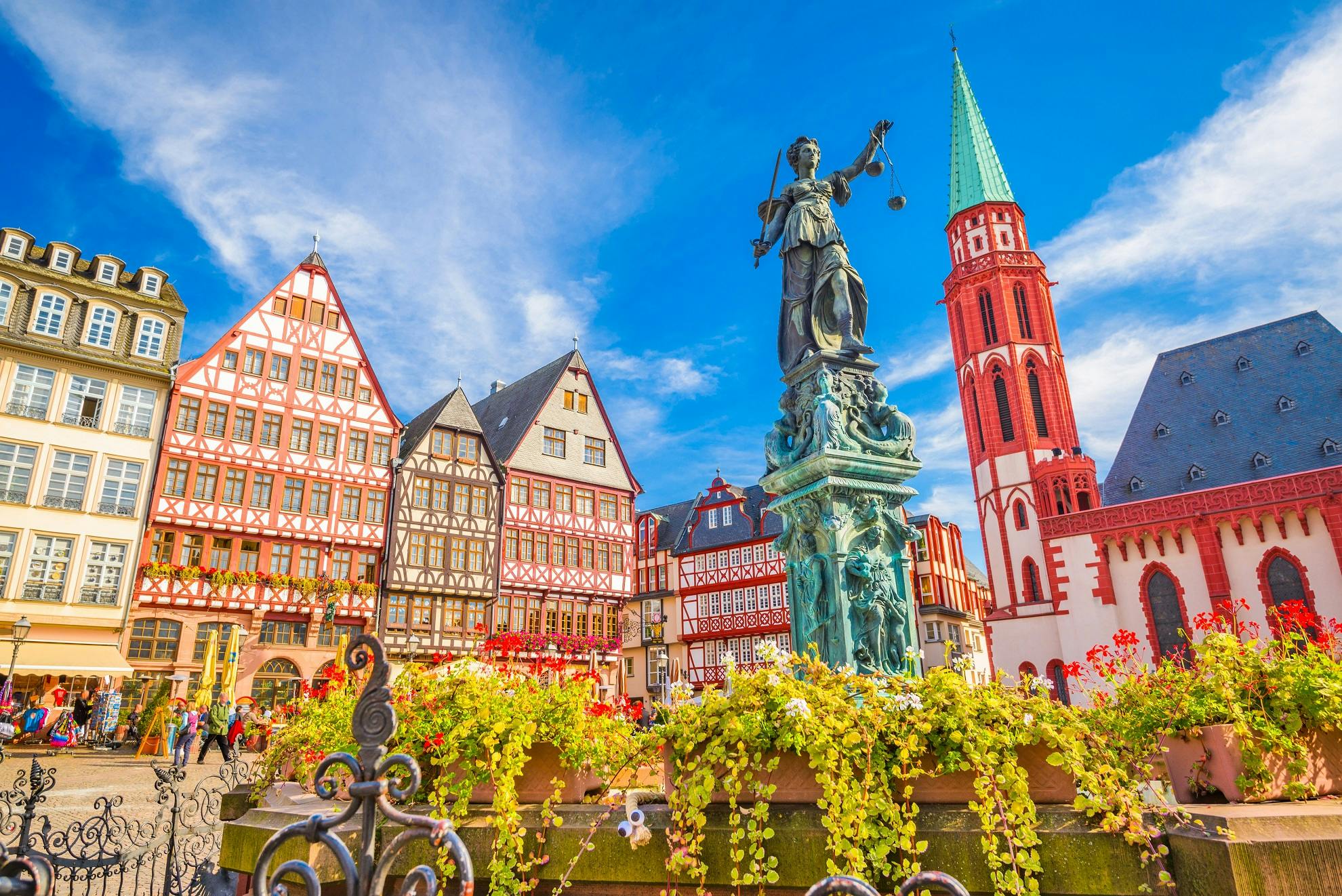
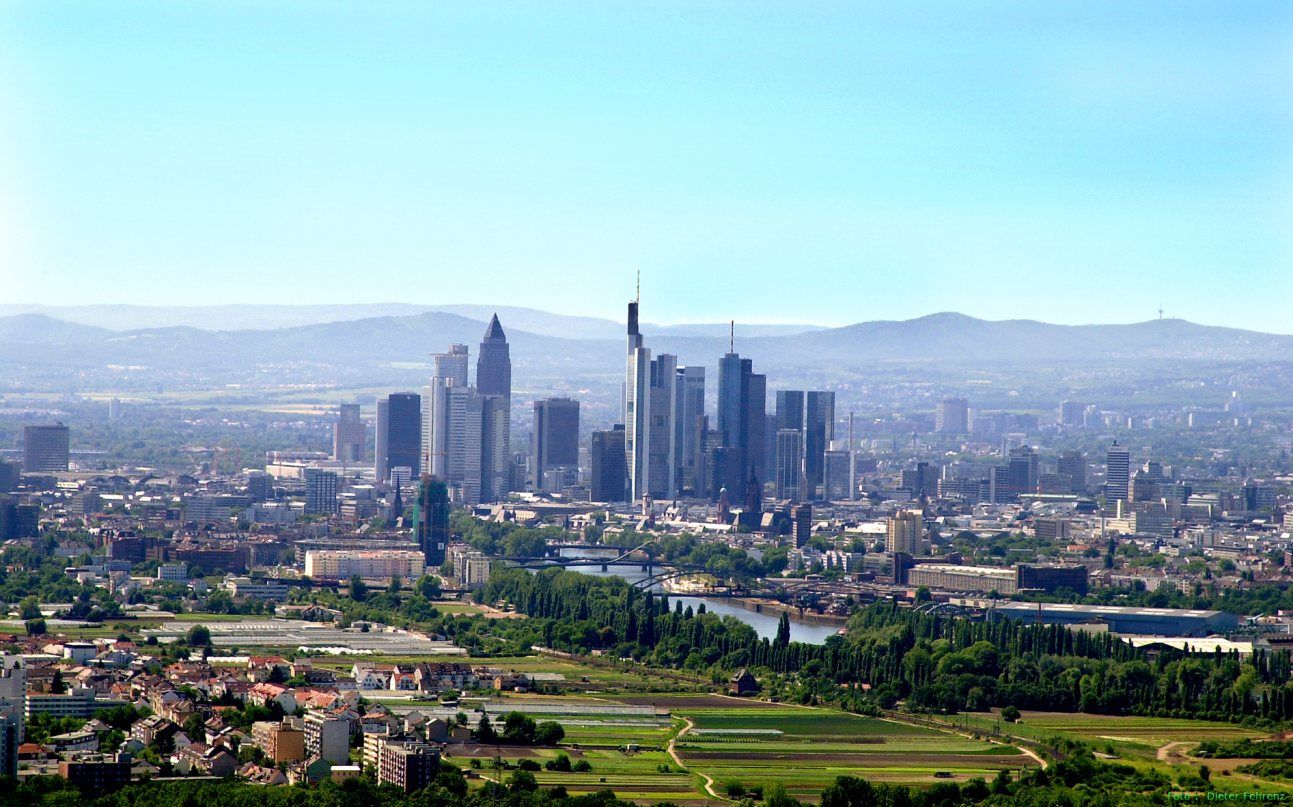
法兰克福的历史可以上溯到公元前后,那时莱茵河和多瑙河是罗马帝国的北方边界,但两河并不相连,其间无险可守,因此罗马人修筑了连接两河的长城。这座长城连绵数百里,从法兰克福附近经过。于是人们在这里设置了驻军营地,这一带成为边境要塞。随着罗马帝国的崩溃,这时军营圯毁,日渐荒芜,几乎被人遗忘,直到8世纪才再度兴起。传说,一天拂晓,漫天大雾,查理大帝打了败仗,逃到美因河边,找不到向导,无法渡河。危急之中看见一只母鹿,朝水边走来,他注意看那鹿,果然,这只鹿涉水过河了,大军也随之过河,转危为安。为了纪念这件事,查理大帝下令在当地建筑一座城市,取名法兰克福,意思是法兰克人(日耳曼民族中的一支)的渡口。公元794年法兰克福作为查理大帝的行都首次载入史册。此后法兰克福一直是德意志的重要政治舞台,目睹了多少大事件大庆典。神圣罗马帝国时期,皇帝由势力雄厚的诸侯即选帝侯选举。1152年,选帝侯们首次在法兰克福聚会,选聘书巴巴罗萨即红胡子一世为帝。 1356年卡尔四世颁布金牛诏书,正式规定,选皇帝在法兰克福举行。从1562年起,法兰克福又取代亚琛,成为皇帝加冕大曲举行地,前后有10位皇帝在这里加冕,登上皇帝宝座。神圣罗马帝国于1806年正式告终,从1816年到1866年,法兰克福又成为德意志邦联议会所在地。1848年在席卷欧洲大陆的革命风暴中,德意志各邦组成德意志国民议会,在法兰克福举行会议讨论德意志的统一问题,是为德国统一前奏。1866年法兰克福并入普鲁士,结束了从 1372年以来的帝国自由市的自治地位。法兰克福一直是一个繁荣的商业城市,德国统一后,这里工业迅速发展,化学工业尤为突出。德国三大化学工业公司之一的赫希斯特(Hoechst AG)公司就是在法兰克福起家的。1914年法兰克福又创办了约翰。沃尔夫冈·歌德大学(现已发展到3.7万多学生)。第二次世界大战中,33次大轰炸摧毁了法兰克福80%的建筑,留下1700万吨垃圾。千年古城,变为一片废墟。战后法兰克福迅速重建,发展惊人,令人咋舌,今天除化学、电子、机械工业外,第三产业如交通、金融、博览事业更是蓬勃发展,市区一改旧观,高楼林立,法兰克福一跃成为国际知名的大都市。 (Quelle:http://www.youer.com/)
法兰克福(德语:Frankfurt),正式全名为美因河畔法兰克福[1](Frankfurt am Main),是德国中西部黑森州的第一大城市,也是德国第五大城。城区拥有73万2688人[2],如合并周边城镇计算则约有230万人。整个法兰克福-莱茵河-美茵河都会区约有五百万人口,为仅次于莱茵-鲁尔的德国第二大都会区。法兰克福是一个民族文化多元化的城市,一半以上的人口有着移民背景,而四分之一的人口为外国公民。
自中世纪起,法兰克福即为德国的中心城市。公元794年时,法兰克福被授予帝国自由城市的地位。1815年,法兰克福自由市成为德意志州联的政治中心。在1848年革命时期,法兰克福国民议会在圣保罗教堂召开。在普奥战争中,与奥地利结盟的法兰克福被普鲁士王国所吞并后,在1866年正式失去城邦的主权。1875年时,法兰克福居民突破十万人,1928年时则已超过50万人。如今作为阿尔法级别的全球城市,法兰克福是许多欧洲及跨国大型企业的总部所在地。另外德国联邦银行、欧洲中央银行、法兰克福证券交易所及多家大型商业银行总部也设立在此,它是欧盟的经济中心。法兰克福掌握了全德国乃至全欧洲的钜大财富,遂有“美茵河畔曼哈顿”之戏称("Main"hattan 或 Manhattan am Main)[3]。
因其地理位置,法兰克福也是重要的交通枢纽。法兰克福高速立交桥是欧洲最为繁忙的陆路枢纽;火车总站为德国流量第二大的火车站,莱茵-美茵国际机场为德国规模最大的商用民航机场,也是欧洲重要的航空中转站。
法兰克福是歌德的诞生地,这位德国最受景仰的人文思想家,他的名字与德意志文化的传承及传播紧紧相连。法兰克福大学即以歌德为大学命名,德国政府也在世界各地成立“歌德学院”致力于德语教学。歌德在德语文化世界具备国粹瑰宝的地位,让这座城市始终散发着与有荣焉的光彩。
Frankfurt am Main ist mit etwa 736.000 Einwohnern die größte Stadt Hessens und die fünftgrößte Deutschlands. Sie ist kreisfrei und bildet das Zentrum des Ballungsraums Frankfurt mit etwa 2,5 Millionen[2] Einwohnern (mit Offenbach, Hanau und dem Vortaunus). In der gesamten Metropolregion Rhein-Main leben etwa 5,5 Millionen Menschen.
Seit dem Mittelalter gehört Frankfurt am Main zu den bedeutenden städtischen Zentren Deutschlands. Im Jahr 794 erstmals urkundlich erwähnt, war es seit 1372 Freie Reichsstadt und bis 1806 Wahl-, seit 1562 auch Krönungsstadt der römisch-deutschen Kaiser. Der Krönungsweg führte vom Römerberg über den Markt zum Kaiserdom. Von 1815 an war Frankfurt am Main Freie Stadt. Hier tagten die Bundesversammlung des Deutschen Bundes und 1848/49 in der Paulskirche mit der Nationalversammlung das erste deutsche Parlament. Nach dem Deutschen Krieg wurde der zuvor fast 500 Jahre unabhängige Stadtstaat Frankfurt 1866 Bestandteil von Preußen. Durch die rasche Industrialisierung setzte ein Bevölkerungsschub ein. Seit 1875 zählte die Stadt über 100.000 Einwohner, seit 1928 mehr als 500.000, im Jahr 2013 erstmals über 700.000. Als Zeichen der Verpflichtung zur europäischen Einigung nennt sich Frankfurt seit 1998 Europastadt.[3]
Heute ist Frankfurt einer der wichtigsten internationalen Finanzplätze, bedeutendes Industrie-, Dienstleistungs- und Messezentrum und zählt zu den Weltstädten.[4] Frankfurt am Main ist Sitz der Europäischen Zentralbank, der Deutschen Bundesbank, der Frankfurter Wertpapierbörse, zahlreicher Finanzinstitute (darunter Deutsche Bank, Commerzbank, DZ Bank, KfW), der Aufsichtsbehörden BaFin und EIOPA und der Messe Frankfurt. Die Internationale Automobil-Ausstellung, die Frankfurter Buchmesse und die Musikmesse gelten als Weltleitmessen ihrer Sparten. Die Stadt ist zudem Sitz der Sportverbände Deutscher Olympischer Sportbund, Deutscher Fußball-Bund und Deutscher Motor Sport Bund.
Dank seiner zentralen Lage ist Frankfurt am Main ein europäischer Verkehrsknotenpunkt. Der Flughafen gehört zu den größten der Welt, der Hauptbahnhof ist ein zentraler Bahnknotenpunkt und das Frankfurter Kreuz der meistbefahrene Straßenknotenpunkt Deutschlands. Darüber hinaus ist der DE-CIX in Frankfurt, gemessen am Durchsatz, der weltweit größte Internet-Knoten.
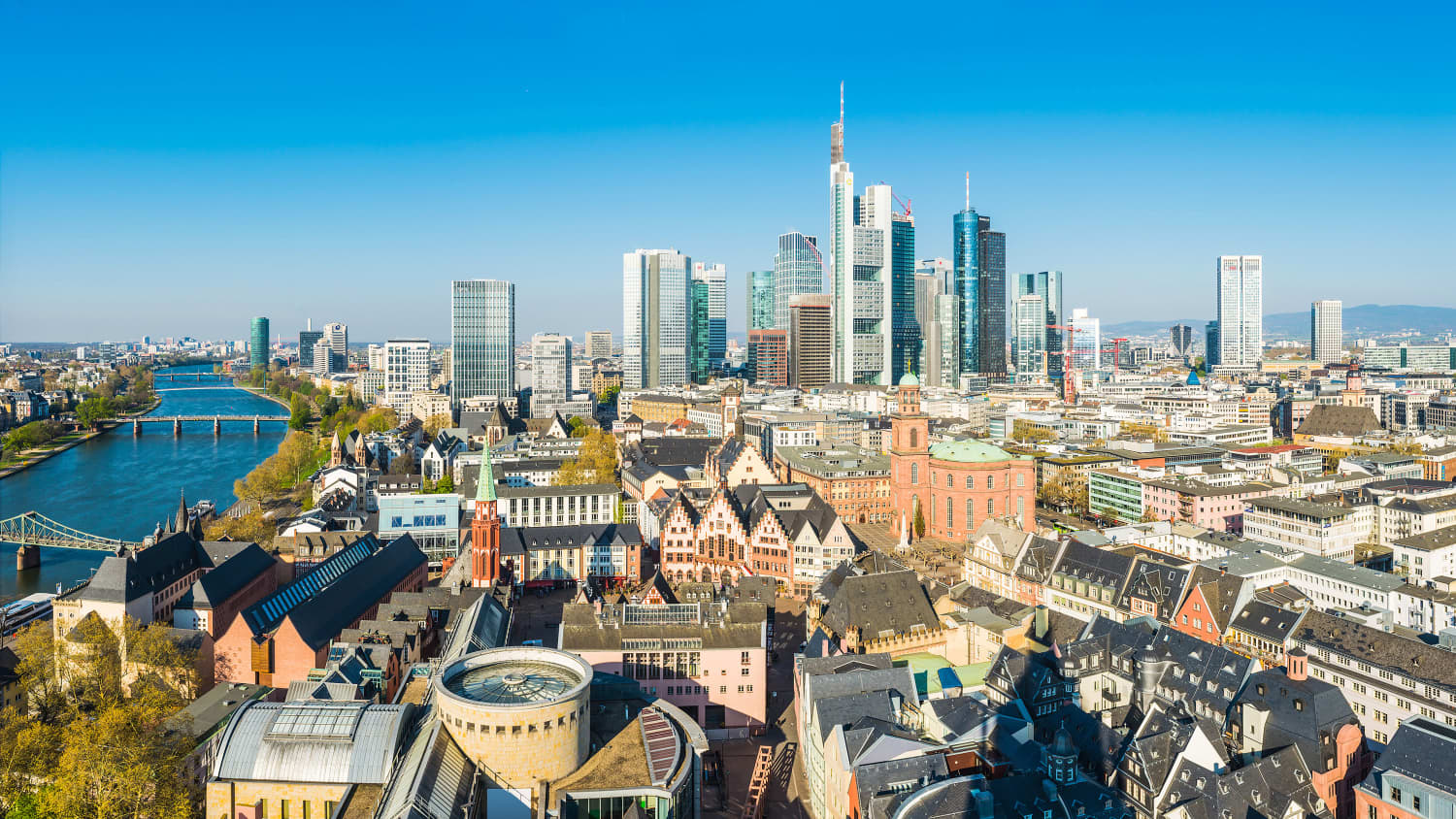
Eine Besonderheit für eine europäische Stadt ist die stetig wachsende Hochhaus-Skyline Frankfurts. Wegen der Ballung von Hochhäusern, die zu den höchsten Europas gehören, wird Frankfurt am Main mitunter als Mainhattan bezeichnet. Historische Wahrzeichen der Stadt sind das rekonstruierte Ensemble der Altstadt mit Römerberg samt Rathaus Römer, Dom-Römer-Areal und der Kaiserdom. Mehr als 40 Prozent des Stadtgebiets sind Parks und Landschaftsschutzgebiete, darunter der Frankfurter Grüngürtel mit dem seit 1372 im Besitz der Stadt befindlichen Frankfurter Stadtwald.
Das kulturelle Leben der Stadt ist wesentlich von bürgerlichen Stiftungen, Mäzenatentum und liberalen Privateninitiativen geprägt. Dazu gehören die Städtischen Bühnen mit den beiden Sparten Oper Frankfurt und Schauspiel Frankfurt, das Frankfurter Museumsufer, das Senckenberg Naturmuseum, die Schirn Kunsthalle und das Museum für Moderne Kunst, das Historische Museum und Goethes Geburtshaus in der Altstadt, die Alte Oper, das English Theatre, der Zoo und der Palmengarten. Die 1914 durch eine Bürgerstiftung als Königliche Universität gegründete Goethe-Universität ist die viertgrößte deutsche Hochschule nach Anzahl der Studenten. Sie brachte mehrere Leibniz- und Nobelpreisträger hervor. Darüber hinaus gibt es in der Stadt sieben weitere staatliche, kirchliche und private Hochschulen mit zusammen über 60.000 Studenten.
フランクフルト・アム・マイン (Frankfurt am Main) は、ドイツ連邦共和国ヘッセン州に属す郡独立市である。一般にフランクフルトと通称される。人口 72万人を超えるヘッセン州最大の都市(2016年現在)であり[2]、ドイツ全体でもベルリン、ハンブルク、ミュンヘン、ケルンに次ぐ第5の都市である。
中世以来、フランクフルトはドイツの中心都市の一つであった。794年には初めて文献に記録され、中世盛期の帝国自由都市であった。13世紀のライン都市同盟に参加している。
1806年まで神聖ローマ皇帝の選挙が行われる諸侯会議が開催された地であり、1562年以降は皇帝の戴冠式もこの都市で挙行された。1816年からドイツ連邦の議会がフランクフルト自由都市で開催され、1848年から49年にかけてはフランクフルト国民議会が開催された。1866年の普墺戦争により都市国家としての独立を喪失し、プロイセンに併合された。フランクフルトの人口は、1875年に10万人、1928年には50万人を超えた。
現在のフランクフルトは国際金融の中心地であり、工業や産業の中心でもある。経済的側面から世界都市の一つに数えられており[3]、欧州中央銀行、ドイツ連邦銀行、フランクフルト証券取引所、ドイツ銀行、コメルツ銀行、ドイツ復興金融公庫、DZ銀行、ヘッセン=テューリンゲン州立銀行(ヘラバ)の本社がある。ここに挙げきれない金融機関も多数存在する。
工業・産業・交通の要衝でもある。メッセ・フランクフルトは、世界最大の見本市会場の一つである。フランクフルト空港は世界最大級のハブ空港であり、鉄道についてもヨーロッパ最大級のターミナル駅であるフランクフルト中央駅がある。また、道路においてもフランクフルト・ジャンクションはドイツで最も自動車交通量が多いジャンクションの1つである[4]。フランクフルトの DE-CIX は、データ転送量において世界最大のインターネット中継点である。
Frankfurt, officially the City of Frankfurt am Main (German: [ˈfʁaŋkfʊɐ̯t ʔam ˈmaɪn] ( listen); lit. "Frankfurt on the Main"), is a metropolis and the largest city in the German state of Hesse and the fifth-largest city in Germany. Frankfurt was a city state, the Free City of Frankfurt, for nearly five centuries, and was one of the most important cities of the Holy Roman Empire; it lost its sovereignty in 1866.
In 2015, Frankfurt had a population of 732,688 within its administrative boundaries,[4] and 2.3 million in its urban area.[2][5] The city is at the centre of the larger Frankfurt Rhine-Main Metropolitan Region, which has a population of 5.5 million[1] and is Germany's second-largest metropolitan region after Rhine-Ruhr. Since the enlargement of the European Union in 2013, the geographic centre of the EU is about 40 km (25 mi) to the east of Frankfurt's central business district, the Bankenviertel. Frankfurt is culturally and ethnically diverse, with around half of the population, and a majority of young people, having a migration background. A quarter of the population are foreign nationals, including many expatriates.
Frankfurt is an alpha world city and a global hub for commerce, culture, education, tourism and transportation. It is the site of many global and European corporate headquarters. Frankfurt Airport is among the world's busiest. Frankfurt is the major financial centre of the European continent, with the headquarters of the European Central Bank, German Federal Bank, Frankfurt Stock Exchange, Deutsche Bank, DZ Bank, KfW, Commerzbank, several cloud and fintech startups[6] and other institutes. Automotive, technology and research, services, consulting, media and creative industries complement the economic base. Frankfurt's DE-CIX is the world's largest internet exchange point. Messe Frankfurt is one of the world's largest trade fairs. Major fairs include the Frankfurt Motor Show, the world's largest motor show, the Music Fair, and the Frankfurt Book Fair, the world's largest book fair.
Frankfurt is home to influential educational institutions, including the Goethe University, the UAS, the FUMPA, and graduate schools like the Frankfurt School of Finance & Management. Its renowned cultural venues include the concert hall Alte Oper, Europe's largest English Theatre and many museums (e.g. the Museumsufer ensemble with Städel and Liebieghaus, Senckenberg Natural Museum, Goethe House), the Schirn art venue at the old town. Frankfurt's skyline is shaped by some of Europe's tallest skyscrapers. The city is also characterised by various green areas and parks, including the central Wallanlagen, the City Forest and two major botanical gardens, the Palmengarten and the University's Botanical Garden. In electronic music, Frankfurt has been a pioneering city since the 1980s, with renowned DJs including Sven Väth, Marc Trauner, Scot Project, Kai Tracid, and the clubs Dorian Gray, U60311, Omen and Cocoon. In sports, the city is known as the home of the top tier football club Eintracht Frankfurt, the basketball club Frankfurt Skyliners, the Frankfurt Marathon and the venue of Ironman Germany.
Francfort-sur-le-Main (Frankfurt am Main en allemand), est une ville d’Allemagne, généralement appelée simplement Francfort malgré le risque de confusion avec la ville de Francfort-sur-l'Oder. Située sur le Main, la ville est, avec ses 731 095 habitants1 (les Francfortois), la cinquième ville d'Allemagne par sa population et la plus grande du Land de Hesse. Son aire urbaine compte 2 517 561 habitants2, dont un tiers ne possède pas la nationalité allemande.
Francfort est la quatrième place financière d'Europe ainsi que la ville la plus riche d'Allemagne avec un PIB par habitant de 85 300 euros. Elle est notamment le siège de la Banque centrale européenne (BCE), de la Banque fédérale allemande (Deutsche Bundesbank) et de la bourse de Francfort. Francfort est également un carrefour majeur européen. Son aéroport international est le troisième d'Europe après l'aéroport Paris-Charles-de-Gaulle et l'aéroport international de Londres Heathrow. La ville se caractérise par un nombre important de gratte-ciel. La ville est parfois surnommée Mainhattan en référence au cours d'eau qui la traverse et au quartier de Manhattan à New York. Son bâtiment le plus élevé est la Commerzbank Tower, siège social du groupe bancaire Commerzbank, culminant hors antenne à 259 mètres, et construit par Norman Foster.
Francfort est considérée à ce titre comme une ville mondiale de premier plan grâce à sa puissance économique, ses infrastructures et sa richesse culturelleNote 1. The Economist classe Francfort première de son classement des 140 villes les plus chères en Allemagne pour un expatrié en 2012 et dixième au monde3. Enfin, la qualité de vie à Francfort est l'une des plus agréables au monde selon le classement Mercer4.
Francoforte sul Meno (in tedesco Frankfurt am Main) è una città extracircondariale della Germania sud-occidentale, la quinta tedesca per numero di abitanti dopo Berlino, Amburgo, Monaco e Colonia. La città di 732 688 abitanti (2,2 milioni nell'area urbana) è al centro di una vasta area metropolitana di 14 800 km² denominata Rhein-Main, con una popolazione che supera i 5,5 milioni di abitanti.
Situata sul fiume Meno, Francoforte è il centro finanziario della Germania e uno dei principali in Europa. Qui hanno sede la Banca centrale europea, la Banca Federale Tedesca e la Borsa di Francoforte (terza al mondo per volume di scambi azionari).
L'aeroporto di Francoforte sul Meno è uno degli scali più trafficati del mondo, la stazione centrale della città è uno dei terminal più grandi in Europa, con oltre 130 milioni di passeggeri annui, e l'interscambio dell'autobahn A3-A5, che si trova nell'area urbana della città, è il più utilizzato del continente.
Francoforte è anche soprannominata "Bankfurt", "Mainhattan" (gioco di parole tra Main, il fiume Meno, e Manhattan, cuore finanziario di New York) o "Big Äppel" (altro riferimento a New York, dove l'Äppelwoi è un tipico prodotto locale).
Fráncfort del Meno2 ( /ˈfʁaŋkfʊɐ̯t am ˈmaɪ̯n/ (?·i) en alemán, Frankfurt am Main), comúnmente llamada Fráncfort,nota 1 es la ciudad más poblada del estado federado de Hesse, Alemania. Con 732 688 habitantes es también la quinta ciudad más grande del país (tras Berlín, Hamburgo, Múnich y Colonia). De acuerdo con Eurostat, la aglomeración urbana de la que Fráncfort forma parte, cuenta con 2 500 000 de habitantes.3Aunque la capital administrativa de Hesse es Wiesbaden, Fráncfort tiene una importancia económica mayor.
Desde la Edad Media Fráncfort se encuentra entre los centros urbanos más importantes de Alemania. Su nombre aparece por primera vez mencionado en el año 794. Desde la Alta Edad Media fue Ciudad Imperial Libre, hasta 1806 era la ciudad en que se elegía al emperador y desde 1562 también la ciudad en que se coronaba al emperador alemán del Sacro Imperio Romano Germánico. Entre 1816 y 1866 fue sede de la Confederación Germánica y en 1848/49, del primer parlamento alemán libremente elegido.
En la época actual Fráncfort es un centro económico y financiero importante en Europa (en ocasiones se le denomina inoficialmente «capital económica y financiera de la Unión Europea».4 La ciudad aloja al Banco Central Europeo (BCE), al Deutsche Bundesbank, a la Bolsa de Fráncfort y a la Messe Frankfurt, esta última, sede de importantes exposiciones, ferias y salones internacionales, entre otras, el Salón del Automóvil de Fráncfort, el más grande de su género, o el de la Feria del libro, la más importante del mundo.
Debido a su ubicación céntrica, Fráncfort es un nudo de transporte muy relevante en Europa. Dan cuenta de ello las instalaciones del Aeropuerto de Fráncfort, la Estación Central de Fráncfort del Meno y el nudo de autopistas más denso del mundo.5 La ciudad alcanzó por primera vez los 100 000 habitantes en 1875, en 1928 llegó a sumar por primera vez 500 000. En las regiones más cercanas a Fráncfort viven actualmente cerca de 1 800 000 habitantes, en toda la región del Rin-Meno 5 800 000.
Una particularidad de Fráncfort entre las ciudades alemanas es la concentración de edificios de altura en el centro, que dibujan un perfil característico, conocido localmente como la Frankfurter Skyline. Debido a estos rascacielos, que se cuentan entre los edificios más altos de Europa, se ha ganado el apodo de Mainhattan. Entre los edificios históricos que constituyen los símbolos de la ciudad se cuenta el casco antiguo reconstruido en el Römerberg y que incluye el Römer (edificio que aloja al Ayuntamiento de la ciudad) y la Catedral Imperial de San Bartolomé. Más del 40 % del área de la ciudad está cubierta por parques y áreas verdes protegidas, entre ellas, el «cinturón verde de Fráncfort» que incluye un bosque emplazado en terrenos que desde 1372 pertenecen a la ciudad.
Las instituciones ciudadanas e infraestructura tradicional que frecuentemente tuvieron su origen en fundaciones e iniciativas privadas desempeñan un papel significativo en la vida cultural de la ciudad. Se incluyen aquí las salas de espectáculos de la ciudad (Städtischen Bühnen, que alberga dos instituciones: la Ópera de Fráncfort y el Teatro de Fráncfort), la orilla de los museos (Museumsufer), el Museo Senckenberg de Historia Natural, la Schirn Kunsthalle y el Museum für Moderne Kunst (museo de arte contemporáneo), el Historisches Museum Frankfurt (museo histórico de Fráncfort), la casa natal de Goethe (Goethe-Haus, el teatro inglés (The English Theatre Frankfurt), el zoológico de Fráncfort y el jardín botánico (Palmengarten). La Universidad Johann Wolfgang Goethe fue fundada en 1914 y es, según el número de estudiantes, la cuarta más grande de Alemania. Varios galardonados con los Nobel y Leibniz se formaron en sus aulas. Además hay otras siete universidades e instituciones de educación superior en Fráncfort que en conjunto suman una matrícula de 60 000 estudiantes.
Фра́нкфурт-на-Ма́йне (нем. Frankfurt am Main [ˈfʁaŋkfʊɐ̯t ʔam ˈmaɪn] ), часто называемый просто Франкфурт — крупнейший город земли Гессен и пятый по величине в Германии с населением в 732 тыс. человек (по состоянию на 2015 год).
Город является центром крупного региона-метрополии Рейн — Майн (нем. Rhein-Main-Gebiet) с населением в 5,6 млн человек[4], второго по величине региона Германии. Город расположен на древней переправе (нем. «furt») на реке Майн и находится на территории Франконии, земли, населённой франками. Отсюда и происходит название города — «переправа франков»[5].
Франкфурт считается мировым «альфа-городом»[6] и является центром коммерции, культуры, образования, туризма и транспортным узлом[7]. Здесь находятся Европейский центральный банк, Федеральный банк Германии, Франкфуртская биржа и Франкфуртская ярмарка. Франкфуртский аэропорт (нем. Flughafen Frankfurt am Main/Rhein-Main-Flughafen) — один из наиболее загруженных международных аэропортов, а Центральный вокзал (нем. Frankfurt Hauptbahnhof) и Франкфуртская автомобильная развязка (нем. Frankfurter Kreuz) — одна из наиболее загруженных транспортных магистралей континентальной Европы. Франкфурт — единственный из городов Германии, вошедший в «двадцатку альфа-городов мира»[8]. Во Франкфурте располагалась штаб-квартира американской армии в Германии, а сам город после окончания Второй мировой войны находился в американской зоне оккупации (нем. Besatzungszone).
Согласно исследованию компании Mercer Human Resource Consulting, Франкфурт является вторым городом Германии и сорок восьмым в мире по уровню стоимости жизни[9][10][11].
В 2011 году Франкфурт-на-Майне был признан «криминальной столицей» Германии[12]. Однако надо учитывать, что в статистику включена контрабанда, которую выявляют во Франкфуртском аэропорту.
В Германии существует два города с названием Франкфурт: Франкфурт-на-Майне (земля Гессен) и Франкфурт-на-Одере (земля Бранденбург). В Германии в повседневной речи «по умолчанию» под именем Франкфурт понимают Франкфурт-на-Майне.
Germany
FIFA Fussball-Weltmeisterschaft 2006
UEFA European Championship 2024
 Hanseatic City
 North Rhine-Westphalia
Vacation and Travel
North Rhine-Westphalia
Vacation and Travel

多特蒙德位于莱茵河支流埃姆施尔河畔,面积280平方公里,人口60万。它是鲁尔区东部的经济文化中心。多特蒙德最早在公元855年前后见于记载。它 原是查理大帝的皇家要塞及莱茵河与威悉河之间的商路要站。10到13世纪,曾在这里举行过好几次帝国会议。1220年,多特蒙德成为帝国自由市,后来又加 入汉萨同盟。14世纪是它极为繁荣的黄金时代,据说英王爱德华三世为了向多特蒙德富商借债,竟以王冠作抵押,由此可见该市商业势力之一斑。但由于三十年战 争的惨烈破坏,多特蒙德一蹶不振,直到1815年并入普鲁士时,还只是一个4000人口的区区小镇。自19世纪30年代起,随着工业化的勃兴,多特蒙德以 地下有煤的优势,重振雄风,发展为煤钢基地、啤酒酿造中心和水陆交通枢纽。第二次世界大战中,它的旧城区几乎全部被摧毁,战后才得以重建。 古城新貌多特蒙德在战后修复了不少古建筑,同时又进行了现代化建设。在椭圆形的老城里,既有莱诺尔德、马利亚等4座中世纪大教堂雄峙,又有图书馆大楼和市 政大厦等现代化建筑高耸。新老建筑交相辉映,古城新貌,市景诱人。多特蒙德近一半土地由草坪、公园、森林和农业用地覆盖,到处是成行的树木,如茵地芳草。 在这里,曾两次举办“联邦花园展览”,故多特蒙德有“花园城市”之称。全市最美的公园要数南郊的威斯特法伦公园。它占地70公顷,内有220米高的电视塔 和拥有 1600个品种的玫瑰园。市郊南端的霍赫绥堡(Hohensyburg)也是风景佳丽的名胜。从鲁尔河谷拔地而起的青山上,留存着中古骑士城堡的遗址,供 人凭吊。山顶远眺,更有无限风光,使人留连忘返。 体育设施多特蒙德又是一个举世闻名的体育活动中心。第25届(1959)和第41届(1991)世界乒乓球锦标赛以及1974年的世界杯足球赛等许多国际 大赛都在这里举行。多特蒙德拥有威斯特法伦馆,容纳5万观众的威斯特法伦体育场,“红地”(Rote Erde)田径运动场和室内田径馆等近百处体育设施。威斯特法伦馆(West-falenhalle)建于1952年,高22米,为钢架与玻璃构成的圆形 建筑物。它可容纳2.2万名观众,是欧洲最大的体育馆之一。当年,容国团就是在这里力挫群雄,一举夺魁的。这座大型多功能体育馆也用于开会和演出。 啤酒酿造博物馆多特蒙德的啤酒酿造业源远流长,富于传统。早在1293年,国王阿道尔夫就授予多特蒙德酿造啤酒的特权。今天该市拥有6家大啤酒厂,年产量 达6亿多公升,足足可供全国每人饮用20多瓶。产量之高,令人惊奇,多特蒙德不愧是德国的啤酒之都。其产量在世界上也仅次于美国的密尔沃基,名列第二。感 兴趣的游人不妨在多特蒙德游览一下啤酒酿造博物馆(Brauereimuseum),还可以预约日期,参观一家啤酒厂。未到厂门,早就能闻到那浓郁的酒 香。车间里酿造用的大铜锅硕大无比,使围绕铜锅工作的人们看上去小得像蚂蚁。酿造师傅的工作岗位上都配有现代化调节装置,使人联想到发电厂的控制中心。灌 装啤酒之前的存贮 “罐”大得像小游泳池。厂内院落里,啤酒箱和铝制啤酒桶堆得像小山……啤酒厂的规模之大会给人留下深刻的印象。参观之后,主人照例会请参观者品尝品质优 越、味道可口的风味啤酒。开了眼界,饱了口福,游人一定会由衷地感到:啤酒之都-多特蒙德,的确名不虚传。
多特蒙德(德语:Dortmund),德国西部北莱茵-威斯特法伦州的重要城市,位于鲁尔区东部。截至2005年6月20日,多特蒙德人口有587,830人,是德国第七大城市。
鲁尔河从市内南面流过,小河埃姆斯查河流过多特蒙德市区。多特蒙德-埃姆斯河运河同样流入多特蒙德港,而多特蒙德港是德国最大的运河海港,连接多特蒙德与北海。
多特蒙德是北莱茵-威斯特法伦州的"绿色都市"。市内接近有一半地区是布满水道、林地、耕地和绿色地带和宽敞的公园例如威斯法伦公园和龙白克公园。根据历史所见,一百年前在市内范围大规模的采煤、炼炭、炼钢之后,现在的市容跟以前比较是一个颇大的对比。
多特蒙德是主场位于西格纳伊度纳公园威斯法伦体育场作赛,北莱茵-威斯特法伦的波鲁西亚多特蒙德足球俱乐部的根据地。西格纳伊度纳公园于1974年开幕,容量包含座席及立席为81,264人,是全德国最大的球场。球场过往已举办过1974年世界杯足球赛和2006年世界杯足球赛一些赛事。
Dortmund [ˈdɔʁtmʊnt] (Standardaussprache;[2][3] regional: [ˈdɔɐ̯tmʊnt]; westfälisch Düörpm, lateinisch: Tremonia) ist eine kreisfreie Großstadt in Nordrhein-Westfalen und mit rund 585.000 Einwohnern die achtgrößte Stadt Deutschlands. Nach eigener Aussage überschritt die Stadt bereits im Jahr 2016 erneut die 600.000er-Marke bei der Einwohnerzahl.[4] Dortmund ist Teil der Metropolregion Rhein-Ruhr mit rund elf Millionen Einwohnern, nach Fläche und Einwohnerzahl die größte Stadt im Ruhrgebiet und bildet das administrative, kommerzielle und kulturelle Zentrum Westfalens im Regierungsbezirk Arnsberg.[5][6]
Die vermutlich auf eine karolingische Reichshofgründung zurückgehende, einst wichtige Reichs- und Hansestadt entlang des Hellwegs entwickelt sich heute von einer Industriemetropole zu einem bedeutenden Dienstleistungs- und Technologiestandort: Früher vor allem bekannt durch Stahl, Kohle und Bier, ist Dortmund heute nach langjährigem Strukturwandel ein Zentrum der Versicherungswirtschaft und des Einzelhandels. Mit etwa 53.500 Studierenden an sechs Hochschulen, darunter die Technische Universität Dortmund und 19 weiteren wissenschaftlichen Einrichtungen gehört Dortmund zu den zehn größten Hochschulstädten Deutschlands[7] und ist auch ein bedeutender Wissenschafts- und Hochtechnologie-Standort. Neuansiedlungen und Unternehmensgründungen entstehen deshalb bevorzugt in den Bereichen Logistik, Informations- und Mikrosystemtechnik. Die Westfalenmetropole verfügt über eine vielfältige Kulturszene mit zahlreiche Museen und Galerien wie dem Museum Ostwall, dem Museum für Kunst und Kulturgeschichte oder dem Deutschen Fußballmuseum. Daneben gibt es das Theater Dortmund mit Opernhaus, dem prämierten Schauspielhaus [8][9] und dem Kinder- und Jugendtheater sowie das Konzerthaus.[8][10]
Dortmund ist mit seinem Hauptbahnhof und Flughafen wichtiger Verkehrsknoten und Anziehungspunkt für das vor allem östlich der Stadt ländlich geprägte Umland und verfügt mit dem größten Kanalhafen Europas über einen Anschluss an wichtige Seehäfen an der Nordsee. Überregionale Bekanntheit erlangt Dortmund durch den Fußballverein Borussia Dortmund mit seiner Heimspielstätte Signal Iduna Park, dem früheren Westfalenstadion. Weitere Anziehungspunkte und Wahrzeichen der Stadt sind außerdem das Dortmunder U, der Westenhellweg als meist frequentierte Einkaufsstraße Deutschlands,[11] die Reinoldikirche, die Westfalenhalle, der Florianturm und der Phoenix-See. Das Stadtbild und die Skyline werden auch durch markante Hochhäuser geprägt.
ドルトムント(標準ドイツ語: Dortmund, ヴェストファーレン方言(ドイツ語版): Düörpm)は、ドイツ連邦共和国の都市。ノルトライン=ヴェストファーレン州に属する。人口はおよそ58万人。 かつての工業地帯として知られるルール地方の代表的な都市。交通の要衝で、鉄道の結節点であり、ドルトムント・エムス運河を通じて北海と航路がつながっている。近隣の都市としては、西にボーフムが隣接し、約50キロ北にミュンスター、95キロ東北にビーレフェルト、55キロ南西にデュッセルドルフが位置する。デュッセルドルフから特急ICEで40分程度。石炭と鉄鉱石を産出し、鉄鋼工業が栄えると共に、ミュンヘンと並ぶ世界有数のビール生産地であったが、産業の構造変化によって衰退し、現在はハイテク産業や第三次産業に力を入れている。
Dortmund ([ˈdɔɐ̯tmʊnt] (listen); Low German: Düörpm: [ˈdyːœɐ̯pm̩]; Latin: Tremonia) is, with a population of 586,600 (2017), the third largest city of Germany's most populous federal state of North Rhine-Westphalia after Cologne and Düsseldorf, and Germany's eighth largest city. It is the largest city (by area and population) of the Ruhr, Germany's largest urban area with some 5.1 million (2011) inhabitants, as well as the largest city of Westphalia. On the Emscher and Ruhr rivers (tributaries of the Rhine), it lies in the Rhine-Ruhr Metropolitan Region and is considered the administrative, commercial and cultural centre of the eastern Ruhr.
Founded around 882,[2] Dortmund became an Imperial Free City. Throughout the 13th to 14th centuries, it was the "chief city" of the Rhine, Westphalia, the Netherlands Circle of the Hanseatic League.
During the Thirty Years' War, the city was destroyed and decreased in significance until the onset of industrialization. The city then became one of Germany's most important coal, steel and beer centres. Dortmund consequently was one of the most heavily bombed cities in Germany during World War II. The devastating bombing raids of 12 March 1945 destroyed 98% of buildings in the inner city center. These bombing raids, with more than 1,110 aircraft, hold the record to a single target in World War II.[3]
The region has adapted since the collapse of its century-long steel and coal industries and shifted to high-technology biomedical technology, micro systems technology and also services. In 2009, Dortmund was classified as a Node city in the Innovation Cities Index published by 2thinknow[4] and is the most sustainable and digital city in Germany.[5][6]
Dortmund is home to many cultural and educational institutions, including the Technical University of Dortmund and Dortmund University of Applied Sciences and Arts, International School of Management and other educational, cultural and administrative facilities with over 49,000 students, many museums, such as Museum Ostwall, Museum of Art and Cultural History, German Football Museum, as well as theatres and music venues like the Konzerthaus or the Opera House of Dortmund. The city is known as Westphalia's "green metropolis". Nearly half the municipal territory consists of waterways, woodland, agriculture and green spaces with spacious parks such as Westfalenpark and Rombergpark. This stands in a stark contrast with nearly a hundred years of extensive coal mining and steel milling in the past.
Dortmund is home to Ballspielverein Borussia 09 e.V. Dortmund, commonly known as Borussia Dortmund, a successful club in German football.[7][8]
Dortmund ˈdɔʁtmʊnt (API : /ˈdɔʁtmʊnt/) (latin : Tremonia, bas allemand : Düörpm, anc. franç. : Trémoigne), est une ville allemande située dans le Land de Rhénanie-du-Nord-Westphalie à l'extrémité est du bassin de la Ruhr. Sa population (586 181 habitants au 31 décembre 2016) en fait une des plus grandes villes de la région, la huitième plus grande ville d'Allemagne et la 34e de l'Union européenne.
Fondée vers 8821, Dortmund est devenue une ville libre impériale. Tout au long des XIIIe et XIVe siècles, c'était le "chef-lieu" du Rhin, de la Westphalie, du Cercle néerlandais de la Ligue hanséatique. Après la guerre de Trente Ans, la ville fut détruite et perdit de son importance jusqu'au début de l'industrialisation. La ville est alors devenue l'un des plus importants centres allemands du charbon, de l'acier et de la bière. Dortmund a donc été l'une des villes les plus bombardées d'Allemagne pendant la Seconde Guerre mondiale. Les bombardements dévastateurs du 12 mars 1945 détruisirent 98% des bâtiments du centre-ville. Ces raids de bombardement, avec plus de 1 110 avions, constituent un record pour une seule cible pendant la Seconde Guerre mondiale2.
La région s'est adaptée depuis l'effondrement de ses industries centenaires de l'acier et du charbon et s'est tournée vers la technologie biomédicale de haute technologie, la technologie des microsystèmes et les services. En 2009, Dortmund a été classée ville Noeud dans l'Index des Villes de l'Innovation publié par 2thinknow et est la ville la plus durable et numérique d'Allemagne3,4.
Dortmund est également connue comme la « métropole verte » de la Westphalie, près de la moitié du territoire municipal consistant en voie navigable, bois, espace agricole et espaces verts parmi lesquels de vastes parcs comme le Westfalenpark (de) ou le Rombergpark (de). Cette particularité contraste avec l'exploitation minière et la sidérurgie exercées dans la région pendant près d'un siècle. La ville se trouve sur la rivière Emscher, affluent du Rhin qui coule au sud de la ville. Le canal Dortmund-Ems relie à la Mer du Nord le port de Dortmund (de), qui est le plus grand port d'Europe situé sur un canal.Cette ville est également le siège du célèbre club de football Borussia Dortmund.
Dortmund ascolta[?·info] (in basso tedesco Düörpm) è una città extracircondariale di 585 813 abitanti della Renania Settentrionale-Vestfalia, in Germania. È il centro maggiore della regione della Ruhr, e il terzo (dopo Colonia e Düsseldorf) del Land.
Dortmund ( [ˈdɔɐ̯tmʊnt] (?·i); en bajo alemán: Düörpm; en latín: Tremonia, nombre hispánico tradicional) es una ciudad de Alemania localizada en el estado federado de Renania del Norte-Westfalia, está situada en la Región del Ruhr y es la octava más grande de Alemania, con una población de 601,402 habitantes (2018). Se encuentra en la región metropolitana del Rin-Ruhr y es considerado el centro administrativo, comercial y cultural del Ruhr oriental. El río Ruhr fluye al sur de la ciudad, y el pequeño río Emscher atraviesa el término municipal. El canal Dortmund-Ems también acaba en el puerto de Dortmund, que es el mayor puerto de canal europeo, y tiene enlaces de Dortmund hasta el mar del Norte. Dortmund se conoce como la "metrópoli verde" de Westfalia.
Fundada alrededor del año 882, Dortmund se convirtió en una Ciudad Libre Imperial. A lo largo de los siglos XIII y XIV fue la "ciudad principal" del Rin, Westfalia y el Círculo Holandés de la Liga Hanseática. Después de la Guerra de los Treinta Años, la ciudad fue destruida y su importancia disminuyó hasta el inicio de la industrialización. La ciudad se convirtió entonces en uno de los centros de producción de carbón, acero y cerveza más importantes de Alemania. Dortmund fue una de las ciudades más bombardeadas de Alemania durante la Segunda Guerra Mundial. Los devastadores bombardeos del 12 de marzo de 1945 destruyeron el 98% de los edificios del centro de la ciudad. Estos bombardeos, con más de 1.110 aviones, mantienen el récord de un solo objetivo en la Segunda Guerra Mundial.1
La región se ha adaptado desde el colapso de sus industrias siderúrgicas y carboníferas centenarias y ha pasado a la tecnología biomédica de alta tecnología, la tecnología de microsistemas y también los servicios. En 2009, Dortmund fue clasificada como ciudad Nodo en el Índice de Ciudades Innovadoras publicado por 2thinknow es la ciudad más sostenible y digital de Alemania. Hoy en día, Dortmund es el hogar de muchas instituciones culturales y educativas, incluyendo la Universidad Técnica de Dortmund y la Universidad de Ciencias Aplicadas y Artes de Dortmund, la Escuela Internacional de Administración y otras instalaciones educativas, culturales y administrativas con más de 49.000 estudiantes. 2 34
До́ртмунд (нем. Dortmund, н.-нем. Düörpm) — город земельного подчинения на западе Германии, в федеральной земле Северный Рейн-Вестфалия. Население 585 352[5]. Является крупнейшим городом-частью 5-миллионной конурбации-мегалополиса Рурской области и вторым по размеру городом в 10-миллионном конгломерате городов Рейнско-Рурского региона.
 Architecture
 Berlin

现存的奥林匹克体育场及周边的奥林匹克广场,是为1936年柏林奥运会而建造。二战期间受到战火的轻微毁坏,战后则被英国军方作为驻柏林总部至1994年。此场馆主要用作举行足球比赛,是德国足球甲级联赛球队柏林赫塔的主场,先后两次举办国际足联世界杯(分别是1974年及2006年),每年的德国足协杯决赛亦于此场馆举行。
Germany
FIFA Fussball-Weltmeisterschaft 2006
UEFA European Championship 2024
History
North Rhine-Westphalia
Vacation and Travel
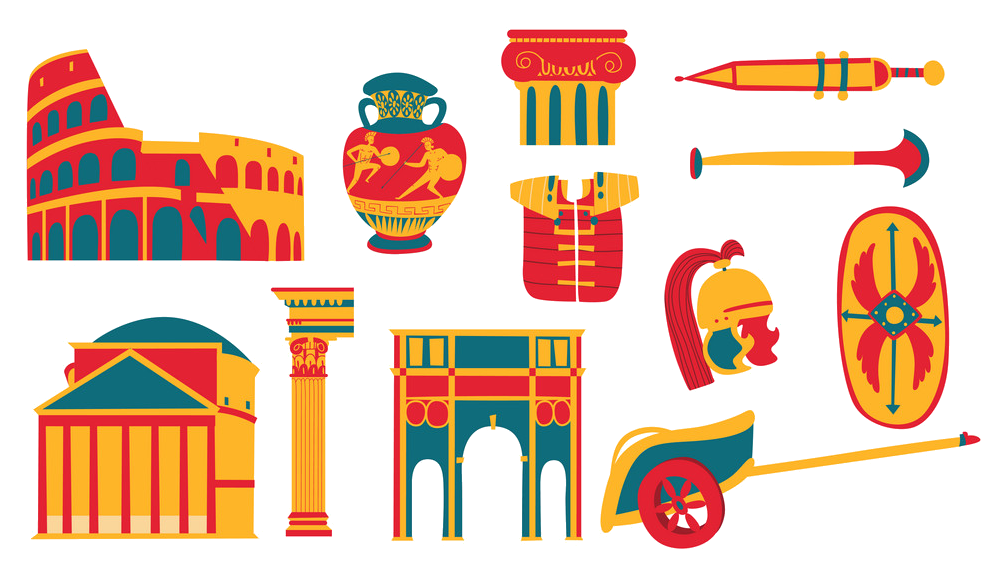 Cities founded by the Romans
 World Heritage
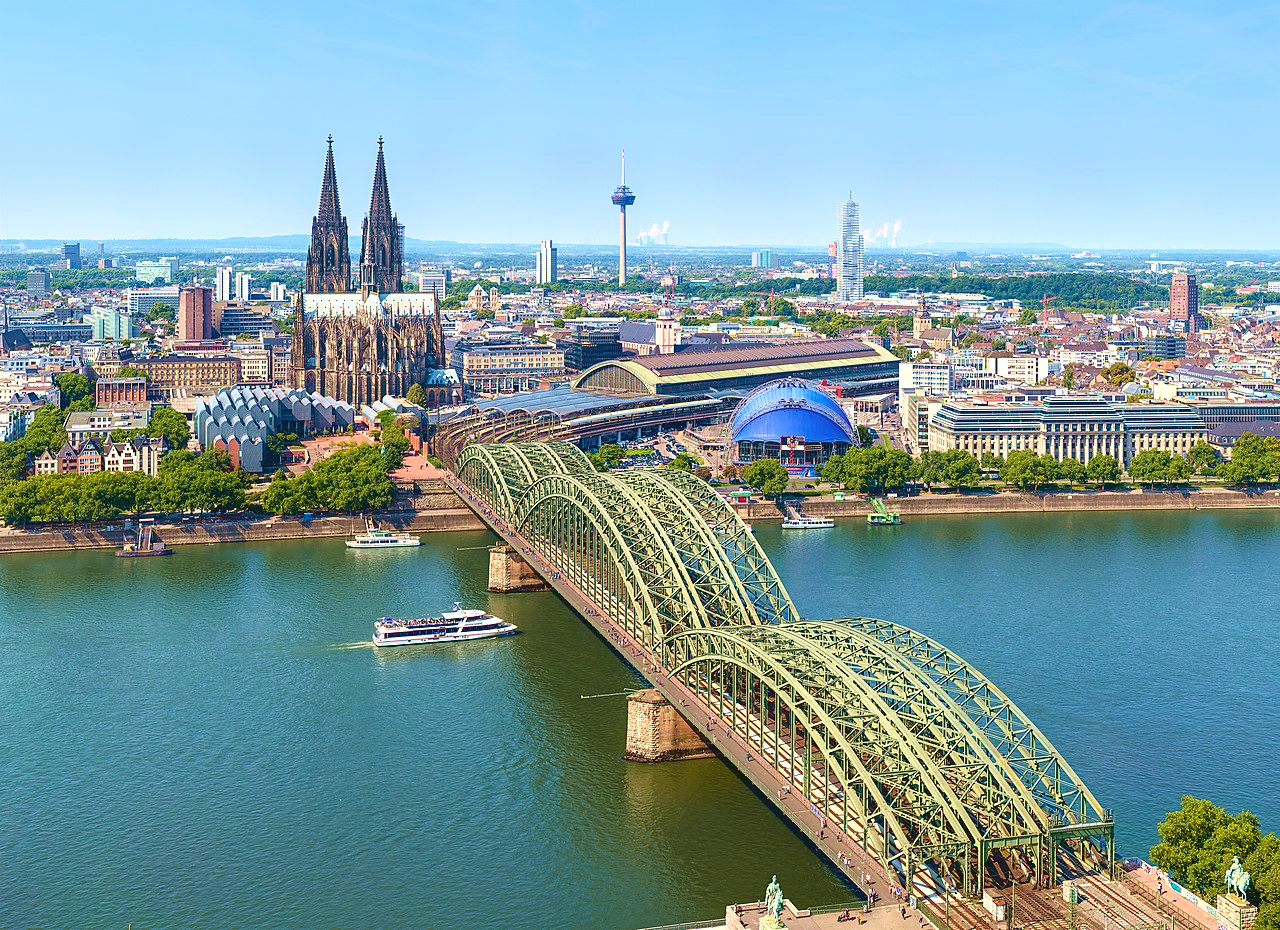
科隆的历史可以追溯到公元前1世纪。那时罗马帝国正称雄欧洲,皇帝奥古斯都派驸马阿格里帕挥师北进,抵达莱茵河边,与河东为数众多的日耳曼部落隔 河对峙。阿格里凰招募盟友乌比尔部落到河西来建起军营要塞,共同防守新开拓的边地。这是公元前38年的事。又过了几十年,营寨四周渐成街市。这时,阿格里 帕的外孙女,出生于此地的阿格里皮娜登上了皇后宝座。她恳请皇帝把自己的故乡升格设市。公元50年,后幸福克劳锹一世下诏,授予此地罗马城市的权力,并定 为名为科隆尼亚·克劳狄·阿拉·阿格里皮内西姆。这市名虽长,却道出了城市的历史渊源。科隆尼亚意为罗马人的拓居地,克劳狄是皇帝名,阿拉是乌比尔冲淡落 的祭坛,阿格里皮内西姆则是皇后名加词尾变化而来。天长日久,这冗长的市名遂简化为科隆。罗马时代是科隆历史上的第一个兴盛时期,这里商贾云集,街市繁 盛,城垣高磊,至今犹存的罗马塔(Romerturm),就是那时城垣的一部分。
科隆(德语:Köln,[kœln] listen 帮助·信息;1919年前德语也拼写为Cöln),是德国第四大城市,是北威州最大的城市,亦是德国内陆最重要的港口之一,莱茵地区的经济文化和历史中心。它已有2000多年的历史,是德国最古老的城市之一。中世纪科隆已经成为一个重要的教会中心和艺术知识中心。科隆在二战期间遭到严重破坏。今天它以其文化和建筑遗产以及许多重要的国际性活动而闻名。
1850年科隆的人口超过十万,在德国算作大城市。加上其第二住址在科隆的人其居民数今天超过一百万。
科隆也有天主教大主教,是天主教科隆大主教座堂所在地。哥特式教堂科隆大教堂1996年被指定为世界文化遗产;它是科隆的主要标志,非官方象征。
43%居民信奉罗马天主教,18%信奉新教,39%信奉其他宗教。直到二战从东德涌来的大量难民,罗马天主教徒一直占科隆居民的大多数。2005年,科隆见证最大的天主教青年盛会。第二十届世界青年日从8月15日星期一到8月21日星期日在科隆举办。
科隆位于欧洲一条重要的东西交通要道与莱茵河的交叉口上。莱茵河是欧洲南北交通的一条重要水道。科隆今天是德国铁路交通最繁忙的枢纽。它的内河港口是欧洲最重要的内河港口之一。
它还是一个文化中心,尤其是创造艺术的一个中心。它的狂欢节非常有名,此外它还是许多协会的驻地。在20世纪的后半叶科隆从一个以重工业为主的城市演变为一个以服务业为主的工业。今天科隆是一个媒体中心,市内还建造了许多新的办公楼。科隆的保险业也有跨地区性的意义。
科隆还以当地的“科隆啤酒”(Kölsch)闻名,Kölsch也是科隆方言,一句笑话说Kölsch是世界上唯一能喝的语言。科隆也是科隆香水或古龙水的发源地。
科隆是德国最大的大学城之一,市内共有85,183名入册的大学生,占市民总数的8.5%。科隆的外国人数量也很高,2004年底市内有175,515名外国籍居民,占市民总数的17.2%,尤其土耳其人社群是德国最大的之一。科隆因此有很长的多文化熔炉的传统。科隆人素来以开放、自由和宽容著称。
Köln (kölsch Kölle) ist mit mehr als einer Million Einwohnern die bevölkerungsreichste Stadt des Landes Nordrhein-Westfalen sowie nach Berlin, Hamburg und München die viertgrößte Stadt Deutschlands. Die kreisfreie Stadt gehört zum Regierungsbezirk Köln und ist das Zentrum des Ballungsraumes zwischen Kölner Bucht und Oberbergischem Land (siehe auch Region Köln/Bonn) mit gut vier Millionen Einwohnern. Sie ist zugleich das rheinische Bevölkerungszentrum der Metropolregion Rhein-Ruhr mit etwa zehn Millionen Einwohnern. Die heutige Metropole am Rhein wurde in römischer Zeit unter dem Namen Oppidum Ubiorum gegründet und im Jahr 50 n. Chr. als Colonia Claudia Ara Agrippinensium (kurz Colonia oder CCAA) zur Stadt erhoben.
Köln besitzt als Wirtschafts- und Kulturmetropole internationale Bedeutung. Sie zählt zu den wichtigsten Standorten der Chemie- und Automobilindustrie weltweit und beherbergt, teilweise zusammen mit einigen ihrer Vororte, Firmensitze und Produktionsstätten von zwölf internationalen Automobilmarken wie Ford und Toyota sowie zahlreicher Chemiekonzerne wie Lanxess. Die Karnevalshochburg ist außerdem Sitz vieler öffentlicher Verbände und professioneller Sportvereine. Zahlreiche Fernsehsender, Filmstudios, Musikproduzenten, Verlagshäuser und andere Medienunternehmen wie RTL und der WDR haben hier ihren Standort. Köln gilt ferner als eines der führenden Zentren des weltweiten Kunsthandels. Darüber hinaus zählt die Stadt vor allem aufgrund des bedeutenden Kölner Doms und ihrer romanischen Kirchen sowie weiterer mittelalterlicher Baudenkmäler, einer über 2000-jährigen Stadtgeschichte, bedeutsamer Veranstaltungen sowie ihrem kulturellen und kulinarischen Erbe zu den wichtigsten Reisezielen innerhalb Europas. Ebenfalls ist Köln bedeutender Kongress- und Messestandort: die Fototechnikmesse Photokina, die Fitness- und Gesundheitsmesse FIBO, die Süßwarenmesse und die Videospielmesse Gamescom gelten als Weltleitmessen, die Art Cologne als älteste Kunstmesse der Welt.[4] Dank der Universität zu Köln (etwa 50.000 Studierende), der Technischen Hochschule Köln (etwa 25.000 Studierende) und zahlreicher weiterer Hochschulen stellt sie obendrein den größten Bildungs- und Forschungsstandort im Westen Deutschlands dar.
Köln ist Sitz der größten römisch-katholischen Diözese Deutschlands[5] und war bis 1803 Sitz eines Kurfürstentums.
Die günstige Lage am Rhein mit der Querung bedeutender West-Ost-Handelsstraßen und dem Sitz weltlicher sowie insbesondere kirchlicher Macht trug im Heiligen Römischen Reich zur überregionalen Geltung Kölns bei. Als Hansestadt wurde sie durch Freihandel zu einem wichtigen Handelsstandort. Ihre Bedeutung als Verkehrsknotenpunkt zeigen heute der umfangreiche Schienenpersonenfernverkehr sowie der Bahnhof Eifeltor, der zu den größten Containerumschlagbahnhöfen Europas gehört. Ergänzt wird die Infrastruktur durch vier Binnenhäfen und den Flughafen Köln/Bonn.
ケルン(ドイツ語: Köln [kœln] ( 音声ファイル)、ケルン語: Kölle [ˈkœɫə] ( 音声ファイル)、英語: Cologne [kəˈloʊn])はドイツではベルリン、ハンブルク、ミュンヘンに次いで4番目に大きな都市である。ノルトライン=ヴェストファーレン州とヨーロッパでは1,000万人以上が住む大都市圏の一つであるライン=ルール大都市圏地域内では最大の都市である。ケルン市街地はライン川の両岸にまたがる。市内にはケルン大聖堂 (Kölner Dom) があり、カトリック教会のケルン大司教の拠点がある。ケルン大学(Universität zu Köln) は欧州でも最古で最大の大学の1つである[2]。
ケルンは1世紀にローマのコロニアとしてウビイの領域に創建された[3]。ゲルマニア・インフェリオルの州都として462年にフランク王国によって占領されるまで、地域の軍の司令部が置かれていた。中世、東西ヨーロッパを結ぶ重要な交易路の一つとして繁栄した。ケルンはハンザ同盟の主要なメンバーの一員で、中世やルネサンス期にはアルプス以北では最大の都市であった。
第二次世界大戦まで、ケルンは他にもフランスやまたイギリスの支配を幾度か経験している。第二次世界大戦中、ドイツの都市の中でも最も多くの空襲を受けた都市の一つでイギリス空軍(RAF)によって34,711トンの爆弾が都市に落とされた[4]。この空襲の影響でケルンの人口は主に住民の避難によって95%減少し、市街のほとんどが破壊された。出来るだけ多くの歴史的建築物を復元することを意図して、再建の結果として非常に混じり合った独特の都市景観を呈している。
ケルンはラインラントの主要な文化の中心で、30以上の博物館と100以上の美術館を擁している。古代ローマの遺跡から、現代の絵画や彫刻など展示も幅広い。ケルンメッセではアートケルンやimmケルン、ゲームズコム、フォトキナなど多くの見本市が開催されている。
Cologne (English: /kəˈloʊn/; German: Köln, pronounced [kœln] ( listen), Ripuarian: Kölle [ˈkœlə] ( listen)) is the largest city of Germany's most populous federal state of North Rhine-Westphalia, and its 1,075,935 (2016) inhabitants make it the fourth most populous city in Germany after Berlin, Hamburg, and Munich. The largest city on the Rhine, it is also the most populous city both of the Rhine-Ruhr Metropolitan Region, which is Germany's largest and one of Europe's major metropolitan areas, and of the Rhineland. Centred on the left bank of the Rhine, Cologne is about 45 kilometres (28 mi) southeast of North Rhine-Westphalia's capital of Düsseldorf and 25 kilometres (16 mi) northwest of Bonn. It is the largest city in the Central Franconian and Ripuarian dialect areas.
The city's famous Cologne Cathedral (Kölner Dom) is the seat of the Catholic Archbishop of Cologne. There are many institutions of higher education in the city, most notably the University of Cologne (Universität zu Köln), one of Europe's oldest and largest universities[2], the Technical University of Cologne (Technische Hochschule Köln), Germany's largest university of applied sciences, and the German Sport University Cologne (Deutsche Sporthochschule Köln), Germany's only sport university. Cologne Bonn Airport (Flughafen Köln/Bonn) is Germany's seventh-largest airport and lies in the southeast of the city. The main airport for the Rhine-Ruhr region is Düsseldorf Airport.
Cologne was founded and established in Ubii territory in the 1st century AD as the Roman Colonia Claudia Ara Agrippinensium, the first word of which is the origin of its name.[3] An alternative Latin name of the settlement is Augusta Ubiorum, after the Ubii.[4] "Cologne", the French version of the city's name, has become standard in English as well. The city functioned as the capital of the Roman province of Germania Inferior and as the headquarters of the Roman military in the region until occupied by the Franks in 462. During the Middle Ages it flourished on one of the most important major trade routes between east and west in Europe. Cologne was one of the leading members of the Hanseatic League and one of the largest cities north of the Alps in medieval and Renaissance times. Prior to World War II the city had undergone several occupations by the French and also by the British (1918–1926). Cologne was one of the most heavily-bombed cities in Germany during World War II, with the Royal Air Force (RAF) dropping 34,711 long tons (35,268 tonnes) of bombs on the city.[5] The bombing reduced the population by 95%, mainly due to evacuation, and destroyed almost the entire city. With the intention of restoring as many historic buildings as possible, the successful postwar rebuilding has resulted in a very mixed and unique cityscape.
Cologne is a major cultural centre for the Rhineland; it hosts more than 30 museums and hundreds of galleries. Exhibitions range from local ancient Roman archeological sites to contemporary graphics and sculpture. The Cologne Trade Fair hosts a number of trade shows such as Art Cologne, imm Cologne, Gamescom, and the Photokina.
Cologne (Köln en allemand, Kölle en kölsch) est une ville de l'Ouest de l'Allemagne, en Rhénanie-du-Nord–Westphalie. Avec environ un million d'habitants début 2014, Cologne est la plus grande ville du Land, devant Düsseldorf et Dortmund, et la quatrième ville d'Allemagne par sa population, derrière Berlin, Hambourg et Munich. Traversée par le Rhin, son agglomération de plus de deux millions d'habitants constitue le sud de l'aire métropolitaine Rhin-Ruhr, au cœur de la mégalopole européenne. La ville est notamment célèbre pour sa cathédrale, classée au patrimoine mondial de l'Unesco, ainsi que pour l'eau de Cologne.
Fondée par les Romains, qui en firent la capitale de la province de Germanie inférieure, Cologne est la plus ancienne des grandes villes allemandes, ce dont témoigne un important patrimoine antique. Sa situation géographique favorable dans la vallée du Rhin en fait depuis le Moyen Âge un carrefour important en Europe. De tradition catholique, Cologne devient dès le XIVe siècle un important centre culturel grâce à son université - aujourd'hui parmi les plus anciennes au monde. Archevêché, membre de la Ligue hanséatique, elle acquiert le statut de Ville libre d'Empire en 1475. Annexée par la France de 1801 à 1815, puis sous domination prussienne, Cologne est occupée après la Première Guerre mondiale et est victime de 262 bombardements alliés entre 1940 et 1945. Après avoir perdu 95 % de sa population, la ville est reconstruite et de nombreux bâtiments sont restaurés à l'identique.
À l'image de l'Allemagne de l'Ouest, la ville connaît un « miracle économique » (Wirtschaftswunder) et voit sa population s'accroître. Cologne accueille aujourd'hui de nombreux sièges sociaux d'entreprises, ainsi que des évènements d'ampleur internationale dans la Koelnmesse, comme les salons Gamescom et Photokina. Ville touristique, elle dispose d'un important patrimoine religieux (l'église Saint-Martin, les douze basiliques romanes) et de musées (le musée Ludwig, le Musée romain-germanique). Le pont Hohenzollern est en outre le pont ferroviaire le plus fréquenté d'Allemagne. Enfin, l'urbanisme de Cologne est en pleine mutation et comporte deux nouveaux quartiers issus d'une opération de rénovation urbaine et destinés à accueillir des entreprises dans les nouvelles technologies : MediaPark et Rheinauhafen – ce dernier étant en cours d'aménagement.
Colonia (AFI: /koˈlɔnja/[2]; in tedesco Köln , in dialetto locale Kölle, in francese e inglese Cologne) è una città extracircondariale di 1 075 935 abitanti, con l'agglomerato urbano 1 800 000 abitanti) della Germania, la quarta per numero di abitanti e la più grande del Land della Renania Settentrionale-Westfalia. È considerata la capitale economica, culturale e storica della Renania, quasi completamente ricostruita dopo i bombardamenti della seconda guerra mondiale.
Colonia (en alemán: Köln [kœln] (?·i); en kölsch: Kölle [ˈkœɫə] (?·i)) es la cuarta ciudad más grande de Alemania, precedida por Berlín, Hamburgo y Múnich, y la más poblada dentro del Estado federado de Renania del Norte-Westfalia, aunque Düsseldorf es la capital del Estado. Fundada en el año 38 a. C. como Oppidum Ubiorum («Ciudad de los Ubios»), fue posteriormente declarada colonia romana con el nombre de Colonia Claudia Ara Agrippinensium en alusión a la emperatriz Agripina, esposa del emperador Claudio y madre de Nerón.
Es un importante centro económico y cultural de importancia internacional y representa uno de los enclaves más importantes del mundo artístico. Es famoso por ser la sede del carnaval más espectacular del país. Además es la sede de muchas asociaciones, empresas mediáticas y numerosas cadenas de televisión, discográficas y editoriales. Su importancia reside en parte en su monumento más emblemático: la catedral, su historia de más de 2000 años, sus numerosos eventos internacionales, como su cultura y su gastronomía que lo hacen uno de los destinos más visitados de Europa. La Universidad de Colonia (alrededor de 50 000 estudiantes), la Escuela Técnica Superior de Colonia (alrededor de 25 000 estudiantes) y demás escuelas superiores representa la gran importancia educativa y de investigación dentro de la región del Rin-Ruhr.
La excelente ubicación en el río Rin, en mitad de las principales rutas comerciales entre este y oeste, como sede secular como Ciudad Libre Imperial tanto como su poder eclesiástico a través del arzobispado en el Sacro Imperio Romano le consiguió granjearse un gran prestigio e importancia en el país. Como ciudad hanseática ganó mucha importancia comercial a través del libre comercio con el resto de la Hansa. Su importancia como centro neurálgico de las comunicaciones siguen hoy día con la gran cantidad de viajeros en tren que salen cada día de la Estación Central (Hauptbahnhof), y la estación Köln Eifeltor, que es uno de los mayores patios de carga ferroviarios para el transporte de mercancías. La infraestructura ferrovial se complementa con cuatro puertos interiores para los trenes. El transporte aéreo también tiene su importancia en la ciudad debido al aeropuerto de Colonia/Bonn.
Кёльн (нем. Köln, рип. Kölle [ˈkœɫə], лат. Colonia) — город в Федеративной Республике Германия, в земле Северный Рейн-Вестфалия. Город-миллионник Кёльн является четвёртым по населению и третьим по площади городом Германии, а также одним из крупнейших экономических и культурных центров страны. Кроме того, Кёльн — крупнейший центр 10-миллионной надагломерации Рейнско-Рурского региона и центр 2-миллионной моноцентрической агломерации. «Метрополия на Рейне», как часто называют Кёльн, — это один из старейших городов Германии, который играл значительную роль в истории Европы на протяжении всего своего существования, начиная с Римской эпохи. Кёльн знаменит своим главным храмом — Кёльнским собором, одним из главных католических храмов Германии.
Germany
Eurovision Song Contest,ESC
UEFA European Championship 2024
Geography
Geography
*World's Most Livable Cities
North Rhine-Westphalia
Vacation and Travel

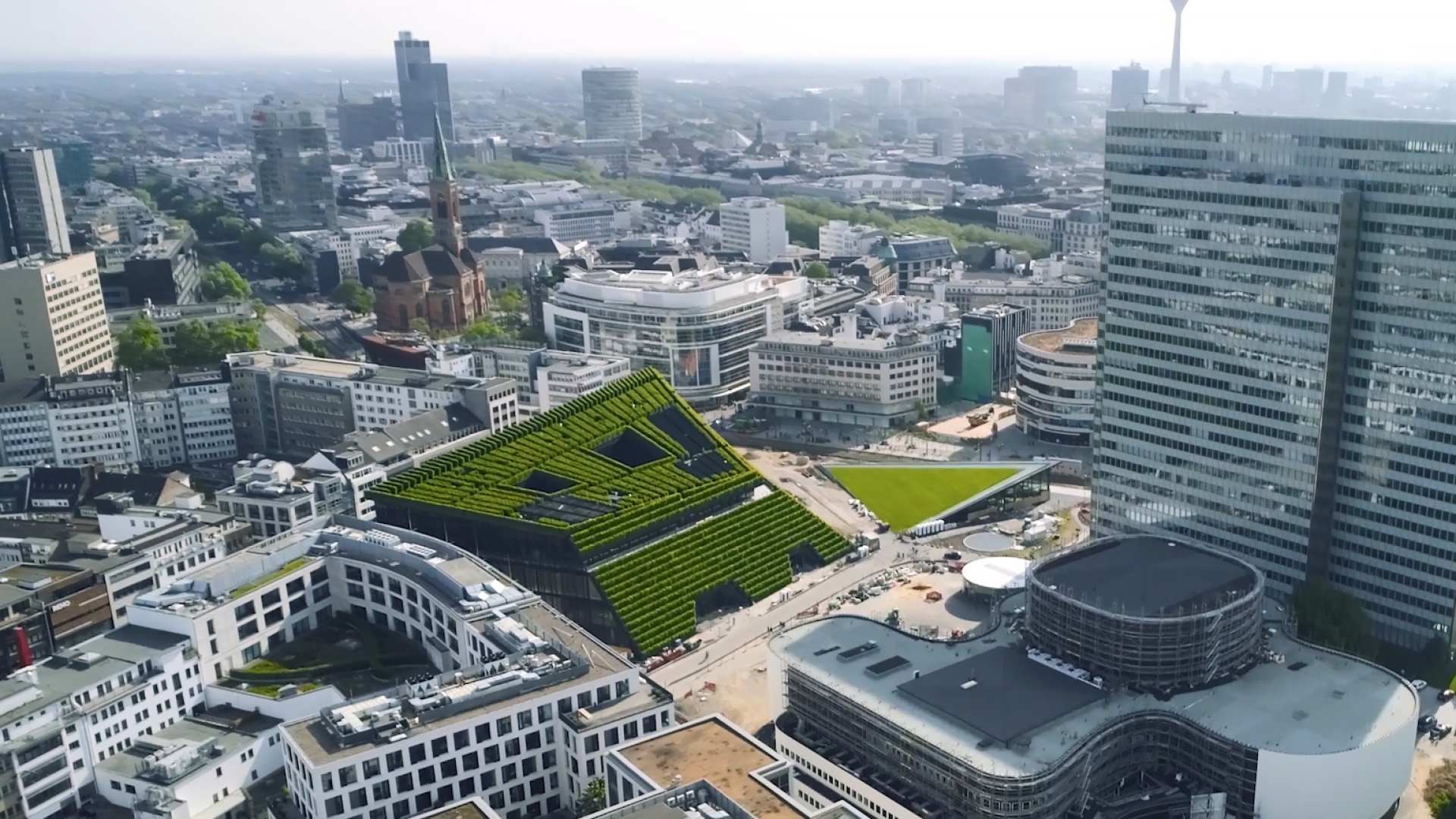
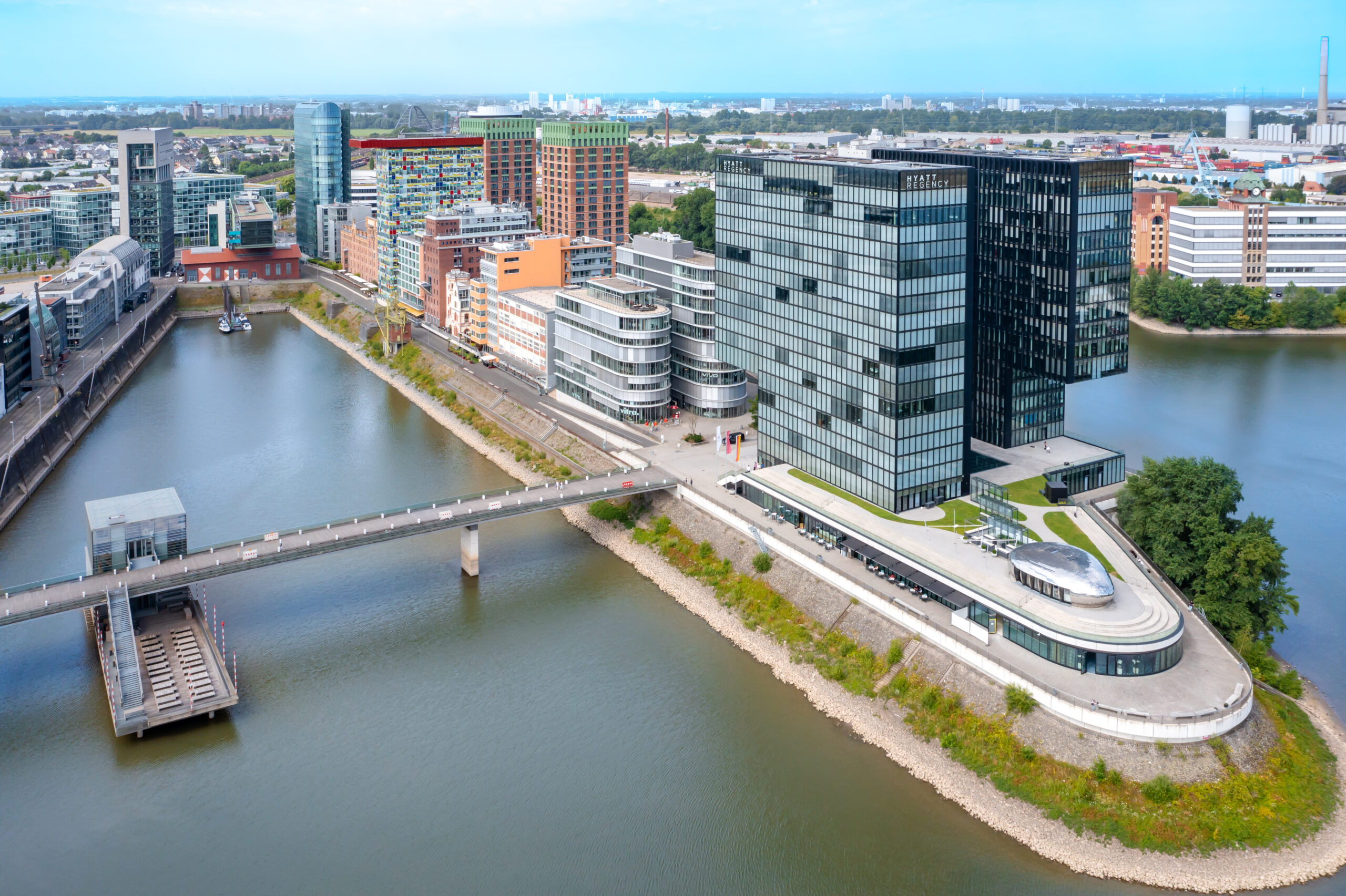

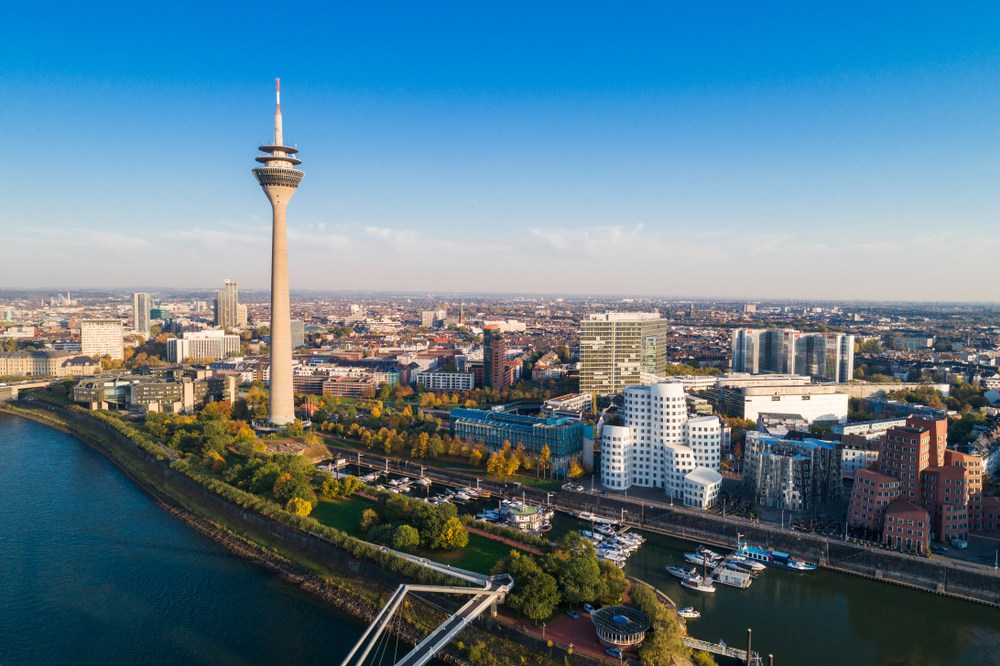
杜塞尔多夫(德语:Düsseldorf),是德国北莱茵-威斯特法伦州首府,位于莱茵河畔。杜塞尔多夫市区人口约58万人,是德国广告、服装和通讯业的重要城市[1][2][3]。杜塞尔多夫也是德国最大的海外日本人聚居地,市内有许多日资公司设立。杜塞尔多夫也是19世纪德国诗人海因里希·海涅的出生地。杜塞尔多夫位于莱茵-鲁尔都会区(Metropolregion Rhein-Ruhr)核心地带,该都会区人口超过1,100万人[4]。杜塞尔多夫位于蓝香蕉范围内,是5家财富世界500强公司与几间德国DAX指数公司总部的所在地。
著名的美术学院杜塞尔多夫艺术学院(Kunstakademie Düsseldorf)设立在此,其电子及实验音乐影响广泛。因莱茵河流经杜塞尔多夫,所以杜塞尔多夫是莱茵河狂欢节活动据点。每年7月有超过450万人参观莱茵河狂欢节[5]。
杜塞尔多夫 (德语:Düsseldorf或,英语:Duesseldorf),人口57万,位于莱茵河畔。杜塞紧邻世界著名的鲁尔区,是欧洲人口最稠密、经济最发达地区北莱茵-威斯特法伦州的首府,是德国广告,服装,展览业和通讯业的重要城市,欧洲物流中心城市。
市内有十三至十八世纪古迹、艺术学院、著名陶器博物馆等。杜塞尔多夫还是19世纪德国著名诗人海因里希·海涅的出生地。杜塞尔多夫最早的文字记载可回溯于1135年。1186年,杜塞尔多夫于被纳入伯格(Berg)的管辖地(伯格是中世纪时代在北莱茵-威斯特法伦州的一个领地)。在1280年,伯格的行政署被迁到此处。过后,杜塞尔多夫在1288年8月14日被赐城市地位。1380年,杜塞尔多夫成为伯格领地的区域首府。
Düsseldorf?/i ist die Landeshauptstadt Nordrhein-Westfalens und der Behördensitz des Regierungsbezirks Düsseldorf. Die kreisfreie Stadt am Rhein ist mit 617.280 Einwohnern nach Köln die zweitgrößte Stadt des Landes.[3] In Deutschland ist Düsseldorf nach Einwohnern die siebtgrößte Stadt. Düsseldorf ist Teil der Metropolregion Rhein-Ruhr mit rund zehn Millionen Einwohnern und der Metropolregion Rheinland mit 8,6 Millionen Einwohnern. Die Stadt liegt im Kern des zentralen europäischen Wirtschaftsraumes.
Im Jahr 1288 erhielt der Ort an der Mündung des Flüsschens Düssel in den Rhein das Stadtrecht. Vom Ende des 14. Jahrhunderts bis zum Beginn des 19. Jahrhunderts war die Stadt Regierungssitz von Ländern des Heiligen Römischen Reichs und des Rheinbundes: des Herzogtums Berg, der Herzogtümer Jülich-Berg und Jülich-Kleve-Berg sowie des Großherzogtums Berg, von 1690 bis 1716 auch Residenz des Pfalzgrafen und Kurfürsten Johann Wilhelm von der Pfalz. Vom 19. bis ins 20. Jahrhundert war sie Parlamentssitz der Rheinprovinz des Königreichs Preußen. Im Kaiserreich entwickelte sich Düsseldorf im Zuge der Hochindustrialisierung in Deutschland zum „Schreibtisch des Ruhrgebiets“ und wurde mit dem Überschreiten der Marke von 100.000 Einwohnern im Jahr 1882 zur Großstadt.
Die Rheinmetropole gehört zu den fünf wichtigsten, international stark verflochtenen Wirtschaftszentren Deutschlands.[4][5][6][7] Düsseldorf ist eine Messestadt und Sitz vieler börsennotierter Unternehmen, darunter der im DAX notierte Konzern Henkel. Zudem ist sie der umsatzstärkste deutsche Standort für Wirtschaftsprüfung, Unternehmens- und Rechtsberatung,[8][9] Werbung[10] und Kleidermode[11] sowie ein wichtiger Banken- und Börsenplatz.[12][13] Auch im Kunsthandel Deutschlands ist sie führend.[14]
Düsseldorf besitzt mehrere Rheinhäfen. Sein Flughafen Düsseldorf Airport ist das interkontinentale Drehkreuz Nordrhein-Westfalens. Die Stadt ist des Weiteren Sitz von 22 Hochschulen, darunter die renommierte Kunstakademie Düsseldorf und die Heinrich-Heine-Universität.[15] Überregionale Bekanntheit genießt Düsseldorf außerdem durch seine Altstadt („längste Theke der Welt“), seinen Einkaufsboulevard Königsallee („Kö“), seinen Düsseldorfer Karneval, den Fußballverein Fortuna Düsseldorf und den Eishockeyverein Düsseldorfer EG. Weitere Anziehungspunkte sind zahlreiche Museen und Galerien sowie die Rheinuferpromenade und der moderne Medienhafen. Das Stadtbild wird auch durch zahlreiche Hochhäuser und Kirchtürme, den 240 Meter hohen Rheinturm, viele Baudenkmäler und sieben Rheinbrücken geprägt. Bemerkenswert ist die große Anzahl ostasiatischer Einwohner, darunter die japanische Gemeinde, welche die größte japanische Gemeinde Deutschlands bildet.[16] In einem Vergleich der Lebensqualität von 231 Großstädten in der Welt nimmt Düsseldorf den sechsten Platz ein.[17][18][19][20]
デュッセルドルフ(Düsseldorf, ドイツ語発音: [ˈdʏsl̩ˌdɔɐ̯f] ( 音声ファイル))は、ドイツ連邦共和国の都市でノルトライン=ヴェストファーレン州の州都[2]。ライン川河畔に位置し、ライン・ルール大都市圏地域の中心でルール工業地帯のすぐ南西部にある。人口は約62万人。金融やファッション、世界的な見本市の中心都市の一つである[3][4][5]。また西ヨーロッパの中でもブルーバナナと呼ばれる、経済的にも人口的にもとくに発展した地域内に位置し、市内にはフォーチュン・グローバル500に含まれる5社や、いくつかのDAXに含まれている企業が本社を置いている。日本企業の進出も盛んで、デュッセルドルフ市内には約5,000人の日本人の駐在員やその家族などが居住し、日本総領事館などのあるインマーマン通りは日本人街の様相を呈している[6]。1971年にはデュッセルドルフ日本人学校も開校し、1990年前後には生徒数1000名近くにまで達した。2011年に行われたマーサー・ヒューマン・リソース・コンサルティングによる世界で最も居住に適した都市の調査では世界では5位、ドイツ国内では2位につけている[7][8]。
デュッセルドルフは経済的な中心としてだけではなく、芸術的な分野でも知られた都市で、デュッセルドルフ芸術アカデミー(英語版)からはヨーゼフ・ボイスやアウグスト・マッケ、ゲルハルト・リヒター、ジグマー・ポルケ、アンドレアス・グルスキーといった画家や写真家などの芸術家を輩出している。電子音楽の先駆者で影響を与えたクラフトワークも、デュッセルドルフを起点としている。デュッセルドルフはカーニバルの開催都市としても知られている。また、毎年7月にはGrößte Kirmes am Rhein (en) が開催され、450万人以上の人々が市内を訪れる[9]。
Düsseldorf (/ˈdʊsəldɔːrf/, German: [ˈdʏsl̩dɔɐ̯f] ( listen); Low Franconian and Ripuarian: Düsseldörp [ˈdʏsl̩dœɐ̯p]), often Dusseldorf in English sources, is the capital and, after Cologne, second most populous city of the most populous German federal state of North Rhine-Westphalia, as well as the seventh most populous city in Germany.[2] At the confluence of the Rhine and its tributary Düssel, the city lies in the centre of both the Rhine-Ruhr and the Rhineland Metropolitan Regions with the Cologne/Bonn urban area to its south and the Ruhr to its north. The city is the largest in the German Low Franconian (closely related to Dutch) dialect area. Most of the city lies on the right bank of the Rhine (as opposed to Cologne, whose city centre lies on the river's left bank). "Dorf" meaning "village", Düsseldorf is the largest settlement with that suffix in the German-speaking area.
Mercer's 2012 Quality of Living survey ranked Düsseldorf the sixth most livable city in the world.[3][4] Düsseldorf Airport is Germany's third-busiest airport after those of Frankfurt and Munich, serving as the most important international airport for the inhabitants of the densely populated Ruhr, Germany's largest urban area. Düsseldorf is an international business and financial centre, renowned for its fashion and trade fairs,[5][6][7] and is headquarters to one Fortune Global 500 and two DAX companies. Messe Düsseldorf organises nearly one fifth of premier trade shows.[8] As second largest city of the Rhineland, Düsseldorf holds Rhenish Carnival celebrations every year in February/March, the Düsseldorf carnival celebrations being the third most popular in Germany after those held in Cologne and Mainz.[9]
There are 22 institutions of higher education in the city including the Heinrich-Heine-Universität Düsseldorf, the university of applied sciences (Hochschule Düsseldorf), the academy of arts (Kunstakademie Düsseldorf) (Joseph Beuys, Emanuel Leutze, August Macke, Gerhard Richter, Sigmar Polke, and Andreas Gursky), and the university of music (Robert-Schumann-Musikhochschule Düsseldorf). The city is also known for its pioneering influence on electronic/experimental music (Kraftwerk) and its Japanese community.
Düsseldorf ou Duesseldorf2 (aussi anciennement en français et en néerlandais : Dusseldorp3) est une ville de l'ouest de l'Allemagne. Capitale et deuxième plus grande ville (après Cologne) du Land de Rhénanie-du-Nord-Westphalie, située principalement sur la rive droite du Rhin, elle se trouve aux limites occidentales de la vaste agglomération de Rhin-Ruhr qui regroupe environ 11 300 000 habitants4. Septième plus grande ville d'Allemagne, Düsseldorf a une population de 601 074 habitants (recensement de juin 2014)5. En 2018, la qualité de vie à Düsseldorf est l'une des plus agréables au monde selon le classement Mercer6.
Düsseldorf (IPA: [ˈdʏsl̩dɔɐ̯f], pronuncia[?·info]; in basso tedesco Düsseldörp, IPA: [ˈdʏsl̩dœɐ̯p]) è una città extracircondariale della Germania, capitale del Land della Renania Settentrionale-Vestfalia. Situata sulle rive del Reno (Rhein in tedesco) è a circa 40 km a nord di Colonia e a circa 20 km a sud della Regione della Ruhr con le città Duisburg, Essen e Dortmund. La città, dopo Colonia, è la seconda del Land e la settima dell'intera Germania e conta 613 230 abitanti. Situata al centro della regione metropolitana Reno-Ruhr e al centro dell'area economica europea, Düsseldorf fa parte, dopo Francoforte sul Meno, Berlino, Amburgo e Monaco, dei cinque centri più intrecciati e più importanti per quanto riguarda l'economia, il traffico, la cultura e la politica tedesca.
La città è nota per essere un polo fieristico ed è sede di parecchie aziende quotate in borsa, fra cui la Uniper e la Henkel che appartengono anche al DAX 30, il più importante indice della Borsa di Francoforte. Il volume d'affari di Düsseldorf è il più alto della Germania negli ambiti della moda, pubblicità, revisione contabile, consulenza giurisprudenza e consulenza aziendale, e anche una sede importante per banche e la borsa. L'aeroporto di Düsseldorf è il punto nodale internazionale del Land Renania Settentrionale-Vestfalia.
La metropoli possiede due porti interni ed è la sede di alcune università, tra cui la famosa accademia d'arte e l'Università Heinrich-Heine. È nota in tutta la regione per l'elegante boulevard Königsallee, il centro storico, il carnevale e la squadra di calcio Fortuna Düsseldorf. Una moltitudine di musei, gallerie e il lungofiume attirano tanto abitanti quanto turisti. La quantità di abitanti dell'Asia orientale è notevole, tra questi c'è la grande comunità giapponese. Nelle indagini sulla qualità di vita nazionali ed internazionali continua ad avere un ottimo risultato.
Düsseldorf1 ( /ˈdʏsl̩dɔɐ̯f/ (?·i)) es una ciudad de Alemania, capital del estado federado de Renania del Norte-Westfalia. Tiene una población de 593 393 habitantes.
Limita al norte con la ciudad de Duisburgo, al este y al sur con el distrito de Mettmann, y al oeste con el distrito de Rhein-Kreis Neuss. La ciudad está atravesada por el Rin, es el núcleo de un área metropolitana y es el centro económico de Alemania Occidental. Es también conocida por se Academia de Bellas Artes de Düsseldorf, con figuras de la talla de Joseph Beuys, Emanuel Leutze, August Macke, Gerhard Richter, Sigmar Polke y Andreas Gursky. En 2012 la consultora Mercer la situó como la sexta ciudad con más calidad de vida del mundo.
Дю́ссельдорф (нем. Düsseldorf [ˈdʏsl̩ˌdɔɐ̯f] слушать, н.-нем. Düsseldörp) — город на западе Германии, в Рейнско-Рурском регионе, административный центр федеральной земли Северный Рейн-Вестфалия и резиденция земельного правительства округа Дюссельдорф. Население — 592,4 тыс. человек (2011)[6]. Первое упоминание Дюссельдорфа относится к 1135 году, статус города — с 1288 года.
Расположенный в центре Рейнско-Рурского и европейского экономического регионов, Дюссельдорф — наряду с Берлином, Франкфуртом-на-Майне, Мюнхеном и Гамбургом — входит в пятёрку крупнейших экономических, транспортных, культурных и политических центров Германии[7][8]. В нём находятся штаб-квартиры множества крупных компаний, в том числе E.ON и Henkel Group. Городской аэропорт является международным хабом. В Дюссельдорфе расположены две гавани, а также многочисленные высшие учебные заведения, в частности Дюссельдорфская академия художеств и Университет Генриха Гейне.
Bavaria
Germany
UEFA European Championship 2020
UEFA European Championship 2024
 Sport
UEFA Champions League 2025/26
Vacation and Travel
Sport
UEFA Champions League 2025/26
Vacation and Travel
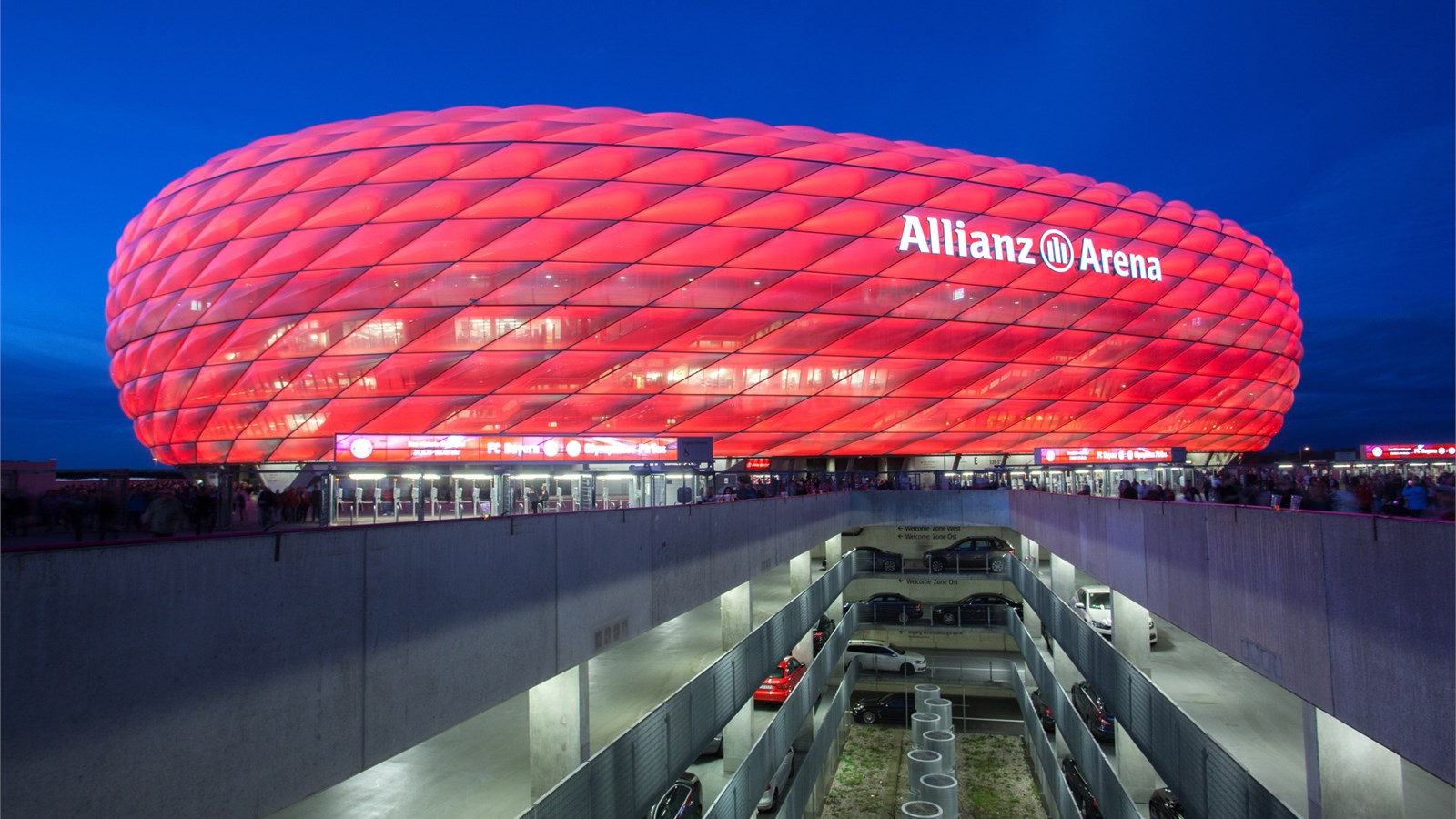
从2005-06赛季起,拜仁慕尼黑队将使用他们新的主场:安联体育场。作为慕尼黑市标志的奥林匹克体育场以充满艺术气息的顶棚设计曾经闻名于世,但如今 也要成为历史了。人们不禁要问,安联体育场为什么能给人留下如此深刻的印象,并成为慕尼黑市,尤其是拜仁慕尼黑俱乐部的新的标志?
安联体育场是欧洲最现代化的球场,2006年德国世界杯的揭幕战也放在了这里。当拜仁慕尼黑队主场比赛时,能容纳66000名观众的体育场将在照明系统的映射下成为一个红色的发光体,几英里外都可以看到。
安 联体育场由瑞士设计师雅克·赫尔佐格和皮埃尔·缪隆设计。外墙体由2874个气垫构成,其中1056个在比赛中可以发光。当体育场中比赛的球队发生变化 时,墙的颜色就可以随之改变,其奇妙之处将远超想象。慕尼黑人非常喜欢这个体育场,并亲切地将其称为“安全带”或“橡皮艇”。投票显示,大多数慕尼黑人都 愿意为这座“世界上最奇妙的体育场”支付更多的税款,而拜仁和1860也将分担相应费用。
Die Allianz Arena ist ein Fußballstadion im Norden von München und bietet bei nationalen Spielen 75.021 Plätze, zusammengesetzt aus 57.343 Sitzplätzen, 13.794 Stehplätzen, 1.374 Logenplätzen, 2.152 Business Seats (einschließlich 102 Sitzplätzen für Ehrengäste) und 966 Sponsorenplätzen. In der Allianz Arena bestreitet der FC Bayern München seit der Saison 2005/06 seine Heimspiele. Bis zum Saisonende 2016/17 war die Allianz Arena auch Spielstätte des TSV 1860 München. Außerdem war sie Spielort der Fußball-Weltmeisterschaft 2006 und Austragungsort des Champions-League-Finals 2012. Das Stadion befand sich zuerst im gemeinsamen Eigentum der FC Bayern München AG und der TSV München von 1860 GmbH & Co. KGaA. Später erwarb die FC Bayern München AG die Anteile der TSV München von 1860 GmbH & Co. KGaA und ist nun alleiniger Eigentümer.
Heimspielbetrieb FC Bayern München (seit 2005) TSV 1860 München (2005–2017) Veranstaltungen Länderspiele der deutschen Nationalmannschaft (seit 2006) Fußball-Weltmeisterschaft 2006 Champions-League-Finale 2012 Fußball-Europameisterschaft 2021 Spiele der National Football League (seit 2022) Fußball-Europameisterschaft 2024 Champions-League-Finale 2025
FIFA Fussball-Weltmeisterschaft 2006
UEFA European Championship 2024
North Rhine-Westphalia
Vacation and Travel

盖尔森基兴(德语:Gelsenkirchen)是德国北莱茵-威斯特法伦的一个城市,位于鲁尔区的北部。十九世纪中叶随采煤业兴起而发展。河港。德国最大采煤及炼焦业中心之一,并有钢铁、化学、炼油、机械、玻璃、服装等工业。盖尔森基兴是德国甲级足球联赛俱乐部沙尔克04的所在地。
Gelsenkirchen ist eine Großstadt im zentralen Ruhrgebiet in Nordrhein-Westfalen und gehört zur Metropolregion Rhein-Ruhr. Die kreisfreie Stadt im Regierungsbezirk Münster ist in der Landesplanung als Mittelzentrum ausgewiesen. Sie ist Mitglied im Landschaftsverband Westfalen-Lippe und im Regionalverband Ruhr. In Deutschland und darüber hinaus ist Gelsenkirchen vor allem als Heimat des Fußballclubs FC Schalke 04 bekannt.
Die Stadt in ihren heutigen Grenzen ist das Ergebnis mehrerer Gebietsreformen, durch die einige umliegende Gemeinden und auch größere Städte, darunter die ehemalige Großstadt (seit 1926) Buer (seit 1912 Stadt Buer) sowie der Stadtteil Horst – früher die Freiheit Horst, seit 1891 Amt Horst – nach Gelsenkirchen eingegliedert bzw. mit dieser Stadt zusammengelegt wurden. Schon mit der ersten größeren Eingemeindung 1903 lag die Einwohnerzahl Gelsenkirchens über der 100.000-Grenze, was es zur Großstadt machte. Heute liegt Gelsenkirchen mit seinen rund 260.000 Einwohnern auf Platz elf der 29 Großstädte des Bundeslandes. Früher hatte Gelsenkirchen aufgrund der vielen Fackeln, mit denen die Kokereien das überschüssige Koksofengas entsorgten, den Beinamen Stadt der 1000 Feuer. Seit den 1960er Jahren vollzieht sich ein Strukturwandel von der Montanindustrie zur Wissens- und Dienstleistungswirtschaft.
ゲルゼンキルヒェン (Gelsenkirchen) はドイツ連邦共和国ノルトライン=ヴェストファーレン州に属す都市。ゲルゼンキルヘンとも表記される。 ルール地方に位置する工業都市。近隣の都市としては、約 10 km 南東にボーフム、20 km 東にドルトムント、25 km 西にデュースブルク、約 40 km南西にデュッセルドルフが位置している。
Gelsenkirchen (German pronunciation: [ˌɡɛlzn̩ˈkɪɐ̯çn̩] (listen); (Westphalian) Low German: Gelsenkiärken) is a city in the federal state of North Rhine-Westphalia which, with a population 262,528 in 2016, is the 25th largest in Germany. On the Emscher River, a tributary of the Rhine, it lies at the centre of the Ruhr, the largest urban area of Germany, of which it is the fifth largest city after Dortmund, Essen, Duisburg and Bochum. The Rhine-Ruhr Metropolitan Region is one of Europe's largest urban areas. Gelsenkirchen is one of the southernmost cities in the Low German dialect area. The city is home to the football club Schalke 04, which plays at the Veltins-Arena in Gelsenkirchen-Erle.
Gelsenkirchen est un port fluvial allemand de 257 994 habitants situé dans le bassin de la Ruhr dans le Land de Rhénanie-du-Nord-Westphalie, près de Dortmund et de la frontière néerlandaise . Il est desservi par le canal Rhin-Herne.
Gelsenkirchen (in basso tedesco Gelsenkiärken) è una città extracircondariale tedesca del Land della Renania Settentrionale-Vestfalia con 262 528 abitanti.
Gelsenkirchen [ˌɡɛlzn̩ˈkɪʁçn̩] (?·i) es una ciudad situada en el estado alemán de Renania del Norte-Westfalia, y más concretamente en la zona norte de la región del Ruhr.
Гельзенки́рхен (нем. Gelsenkirchen, н.-нем. Gelsenkiärken, дословно — «комариная церковь») — город земельного подчинения на западе Германии, в земле Северный Рейн-Вестфалия. Расположен в северной части Рурской области, входит в административный округ Мюнстер.
Denmark
Germany
Germany
Germany
France
France
UEFA European Championship 2016
UEFA European Championship 2020
UEFA European Championship 2024
Greece
Italy
Netherlands
Portugal
Russia
Slovakia
Spain
Spain
Spain
Sport
(F)European football championship
Czech Republic
Union of European Football Associations

Der Henri-Delaunay-Pokal (französisch Coupe Henri Delaunay) ist die Gewinntrophäe der Fußball-Europameisterschaft, die seit 1960 verliehen wird.
Der versilberte EM-Pokal wurde 1960 in Paris von Pierre Delaunay entworfen und vom Goldschmied Adrien Chobillon angefertigt,[1] der seinerseits für den französischen Pokal verantwortlich zeichnete. Er ist etwa zehn Kilogramm schwer und hat eine Höhe von 42,5 Zentimetern. Benannt wurde er nach dem Franzosen Henri Delaunay, dem ersten UEFA-Generalsekretär und „geistigem Vater“ der Fußball-Europameisterschaft.
Die EM-Trophäe bleibt als Wanderpokal in ständigem Eigentum der UEFA. Sollte eine Mannschaft dreimal in Folge oder fünfmal insgesamt Europameister werden, erhält der entsprechende Verband eine originalgetreue Nachbildung der Trophäe vom europäischen Fußballverband.
 FIFA Fussball-Weltmeisterschaft 2018
Group H
FIFA Fussball-Weltmeisterschaft 2018
Group H
 FIFA Fussball-Weltmeisterschaft 2022
Group C
UEFA European Championship 2016
UEFA European Championship 2020
Group G
UEFA European Championship 2024
Poland
Sport
(F)UEFA Nations League
Sport
(F)Soccer at the Olympic Games
UEFA Nations League
UEFA Nations League A - Group 3
FIFA Fussball-Weltmeisterschaft 2022
FIFA Fussball-Weltmeisterschaft 2022
Group C
UEFA European Championship 2016
UEFA European Championship 2020
Group G
UEFA European Championship 2024
Poland
Sport
(F)UEFA Nations League
Sport
(F)Soccer at the Olympic Games
UEFA Nations League
UEFA Nations League A - Group 3