
Deutsch-Chinesische Enzyklopädie, 德汉百科
 Religion

 Saxony-Anhalt
 Geography
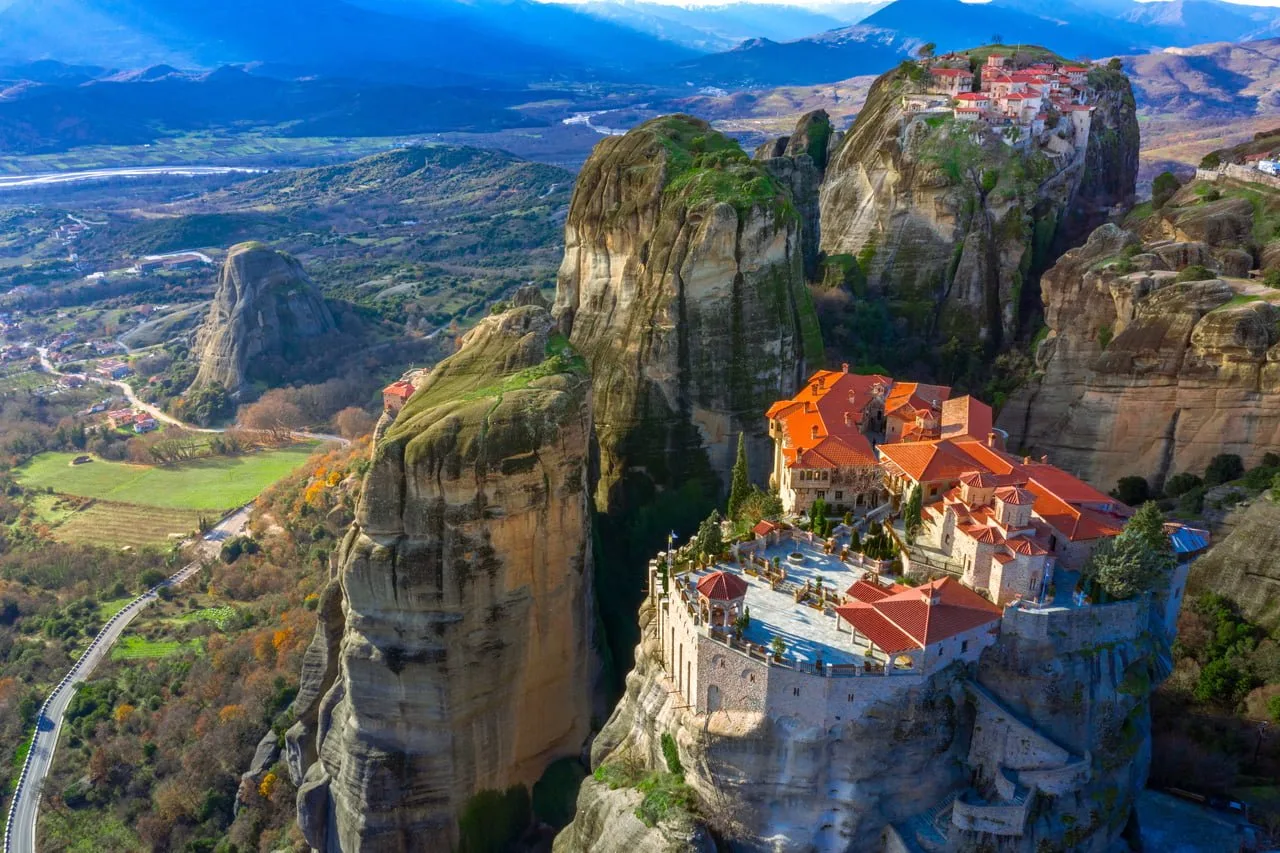
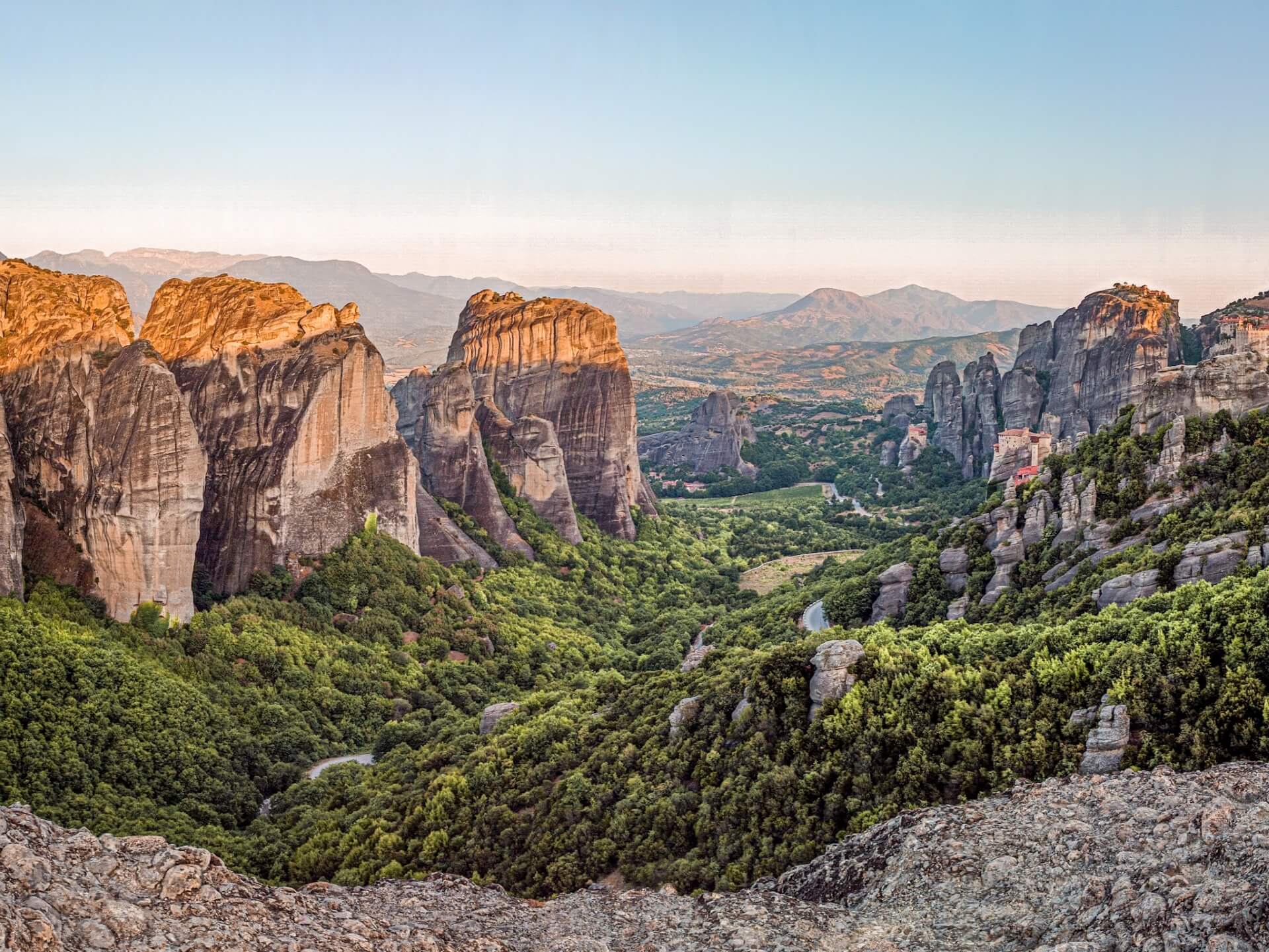
Die Metéora-Klöster (griechisch Μετέωρα (n. pl.)), östlich des Pindos-Gebirges nahe der Stadt Kalambaka in Thessalien, Griechenland gelegen, gehören zum UNESCO-Weltkulturerbe. Der Name Metéora leitet sich von altgriechisch μετέωρος metéōros, deutsch ‚in der Luft schwebend‘ (Neutrum Plural μετέωρα in der Bedeutung „Himmelserscheinungen“) ab. Dieser Name beschreibt die Lage der Klöster, die auf hohen Sandsteinfelsen gebaut wurden und bei dunstiger Luft manchmal zu schweben scheinen.
Die gesamte Anlage besteht aus 24 einzelnen Klöstern und Eremitagen, von denen heute nur noch sechs bewohnt sind. Die restlichen achtzehn Klöster sind entweder zu schwer zu erreichen oder wurden wegen Einsturzgefahr verlassen.
迈泰奥拉(希腊语:Μετέωρα,转写为Metéora,意为“悬浮的石头”、“悬浮在空中”或“在天空之上”)位于希腊中部,是东正教修道院中最大、最陡峭的建筑群之一,其重要性只仅次于阿索斯山[1]。它位于希腊中部色萨利平原的西北边缘,靠近皮尼奥斯河(Pineios)和品都斯山脉,最近的城镇为卡拉巴卡(Kalabaka)。当中有24座寺院(其中6座为完好)矗立在天然的砂岩支柱上。1988年,迈泰奥拉被列入联合国教科文组织世界遗产名录,为复合遗产。[2][3]
在迈泰奥拉6座保存至今的修道院中,有4座为修士所居住,剩余2座则是修女之居所。现今各修道院的居住人数均少于10名。今日迈泰奥拉已成希腊的旅游景点之一。
 Andalusia
 Architecture
 Mudejar architecture
Architecture
Renaissance architecture
Architecture
Islamic architecture
Religion
Spain
Mudejar architecture
Architecture
Renaissance architecture
Architecture
Islamic architecture
Religion
Spain
 World Heritage
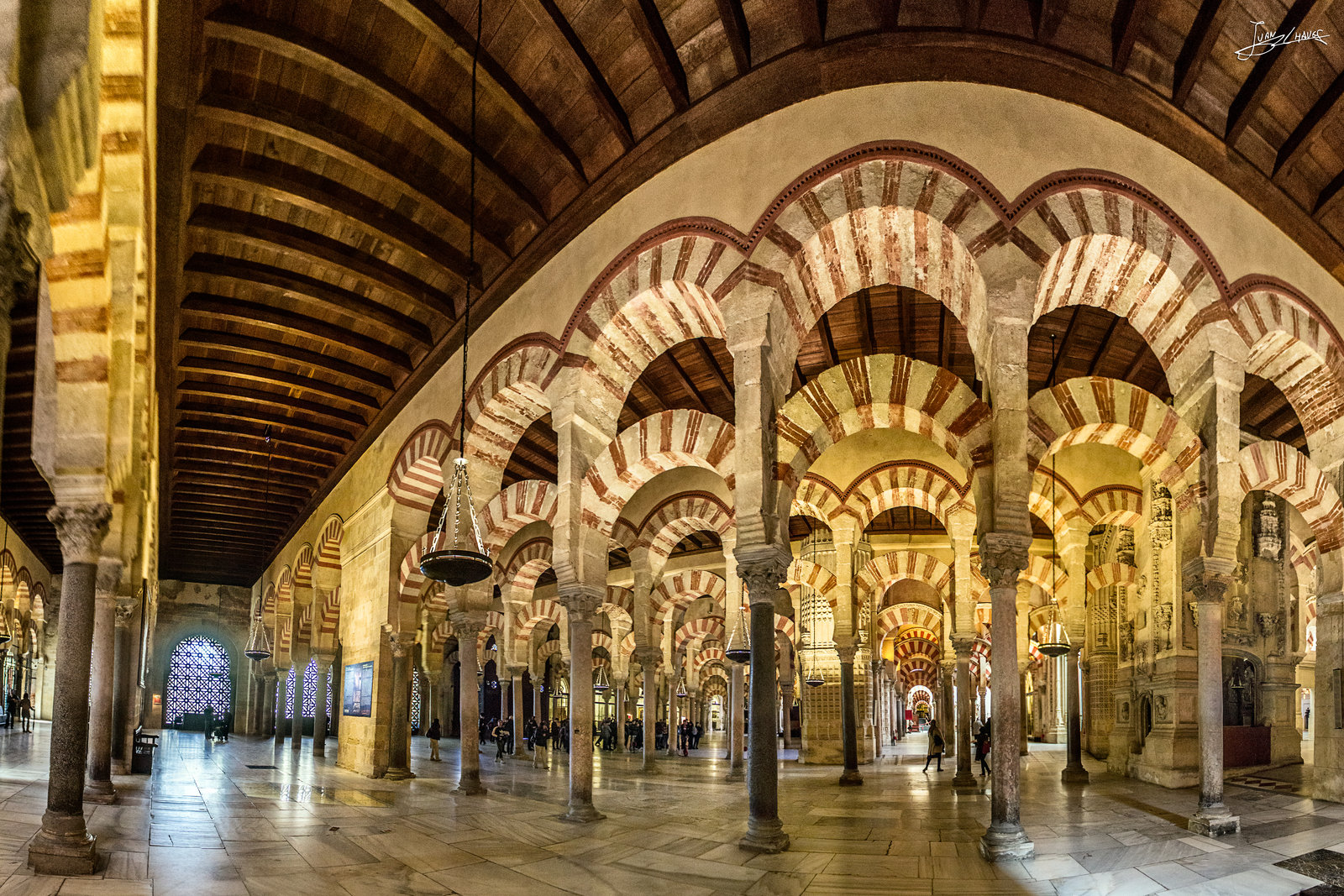
メスキータ (mezquita) とは、スペイン語でモスクという意味で、アラビア語 مسجد ("Masjid") に由来する[1]。しかし、一般的には固有名詞として、スペインアンダルシア州コルドバにあるカトリック教会の司教座聖堂「コルドバの聖マリア大聖堂 (スペイン語: Catedral de Santa María de Córdoba)」を指す場合が多い。本項は、この聖マリア大聖堂について解説する。
メスキータ (Mezquita) は「モスク」(ひざまずく場所)、ムスリム(回教徒)の礼拝堂の意味で、スペインに現存する唯一の大モスクである。アブドールラフマン1世は、グワダルキビール川の流れが変わるコルドバの小高い丘にメスキータの建設を始める。ここは紀元2世紀、戦勝祈願を行ったローマ神殿があったという伝説があり、西ゴート王国時代には聖ヴィアンテ教会があった神聖な場所であった。
The Mosque–Cathedral of Córdoba[1][2] (Spanish: Mezquita-Catedral de Córdoba), also known as the Great Mosque of Córdoba[3][2][4] (Spanish: Mezquita de Córdoba) and the Mezquita,[5][6][7] whose ecclesiastical name is the Cathedral of Our Lady of the Assumption (Spanish: Catedral de Nuestra Señora de la Asunción),[8] is the Catholic cathedral of the Diocese of Córdoba dedicated to the Assumption of the Virgin Mary and located in the Spanish region of Andalusia.[9] The structure is regarded as one of the most accomplished monuments of Moorish architecture.
According to a traditional account, a small Visigoth church, the Catholic Basilica of Saint Vincent of Lérins, originally stood on the site.[10][11][12] In 784 Abd al-Rahman I ordered construction of the Great Mosque, which was considerably expanded by later Muslim rulers. Córdoba returned to Christian rule in 1236 during the Reconquista, and the building was converted to a Roman Catholic church, culminating in the insertion of a Renaissance cathedral nave in the 16th century.[13][14]
Since the early 2000s, Spanish Muslims have lobbied the Roman Catholic Church to allow them to pray in the cathedral.[15][16] This Muslim campaign has been rejected on multiple occasions, both by the church authorities in Spain and by the Vatican.[15][17]
La mosquée-cathédrale de Cordoue, également connue sous son ancien nom de grande mosquée de Cordoue (Mezquita de Córdoba) et sous son nom ecclésiastique officiel de cathédrale Notre-Dame de l'Assomption (Catedral de Nuestra Señora de la Asunción), est un ancien temple romain qui devint église puis mosquée, et dans laquelle fut ensuite érigée une cathédrale. C'est un monument majeur de l'architecture islamique, témoin de la présence musulmane en Espagne du VIIIe au XVe siècle. Il s'agit du monument le plus accompli de l'art des Omeyyades de Cordoue. Convertie en église au XIIIe siècle après la Reconquista par le roi Ferdinand III de Castille, elle est depuis lors l'église cathédrale du diocèse de Cordoue en Espagne.
La mosquée-cathédrale de Cordoue a été classée au patrimoine mondial de l'Unesco en 1984.
La grande moschea di Cordova, oggi cattedrale dell'Immacolata Concezione di Maria Santissima in Cordova, è una delle principali espressioni dell'arte arabo-islamica e dell'architettura gotica e rinascimentale dell'Andalusia. È con l'Alhambra di Granada, la Aljafería di Saragozza e la Giralda di Siviglia la più prestigiosa testimonianza della presenza islamica in Spagna dall'VIII secolo al XIII secolo.
Mezquita-catedral de Córdoba,12 antes «Santa María Madre de Dios» o «Gran Mezquita de Córdoba», actualmente conocida como la Catedral de la Asunción de Nuestra Señora de forma eclesiástica o simplemente Mezquita de Córdoba de forma general, es un edificio de la ciudad de Córdoba, España.
Se empezó a construir como mezquita en el año 786, con la apropiación por los conquistadores musulmanes de la basílica hispanorromana de San Vicente Mártir y la reutilización de parte de los materiales, quedando reservada al culto musulmán.3 El edificio resultante fue objeto de ampliaciones durante el Emirato de Córdoba y el Califato de Córdoba. Con 23 400 metros cuadrados, fue la segunda mezquita más grande del mundo en superficie, por detrás de la Mezquita de La Meca, siendo sólo alcanzada posteriormente por la Mezquita Azul (Estambul, 1588). Una de sus principales características es que su muro de la qibla no fue orientado hacia La Meca, sino 51º grados más hacia el sur, algo habitual en las mezquitas de al-Ándalus.
En 1238, tras la Reconquista cristiana de la ciudad, se llevó a cabo su consagración como catedral de la diócesis con la Ordenación episcopal de su primer obispo, Lope de Fitero.4 El edificio alberga el cabildo catedralicio de la Diócesis de Córdoba, y por su carácter de templo católico y sede episcopal, está reservado al culto católico. En 1523, bajo la dirección de los arquitectos Hernán Ruiz, el Viejo y su hijo, se construyó su basílica cruciforme renacentista de estilo plateresco.
Hoy todo el conjunto constituye el monumento más importante de Córdoba, y también de toda la arquitectura andalusí, junto con la Alhambra, así como el más emblemático del arte omeya hispanomusulmán. Declarada como Bien de interés cultural2 y Patrimonio Cultural de la Humanidad como parte del centro histórico de la ciudad,5 se incluyó por el público entre los 12 Tesoros de España en 20076 y fue premiada como el mejor sitio de interés turístico de Europa y sexto del mundo según un concurso de TripAdvisor.7 En 2016 tuvo 1,81 millones de visitas, lo que la convierte en uno de los monumentos más visitados de España.8
Мески́та (исп. mezquita — «мечеть»), или Кóрдовская соборная мечеть — римско-католический собор (в прошлом — мечеть), расположенный в андалусском городе Кордова.[3] В Средневековье была второй по величине мечетью в мире. Является, возможно, самым замечательным памятником династии Омейядов. После испанской Реконкисты была преобразована в церковь, а некоторые детали интерьера, вроде колонн и арок, были стилистически заменены на византийский лад.
Architecture
Architecture
Romanesque architecture
 History
L 1000 - 1500 AD
History
History
L 1000 - 1500 AD
 Lower Saxony
Religion
Lower Saxony
Religion
 Vacation and Travel

 Bavaria
 Architecture
L 1000 - 1500 AD
Architecture
Baroque / Rococo architecture
Architecture
Neo-Gothic architecture
History
L 1000 - 1500 AD
Religion
Romania
Architecture
L 1000 - 1500 AD
Architecture
Baroque / Rococo architecture
Architecture
Neo-Gothic architecture
History
L 1000 - 1500 AD
Religion
Romania
