
Deutsch-Chinesische Enzyklopädie, 德汉百科
 Religion
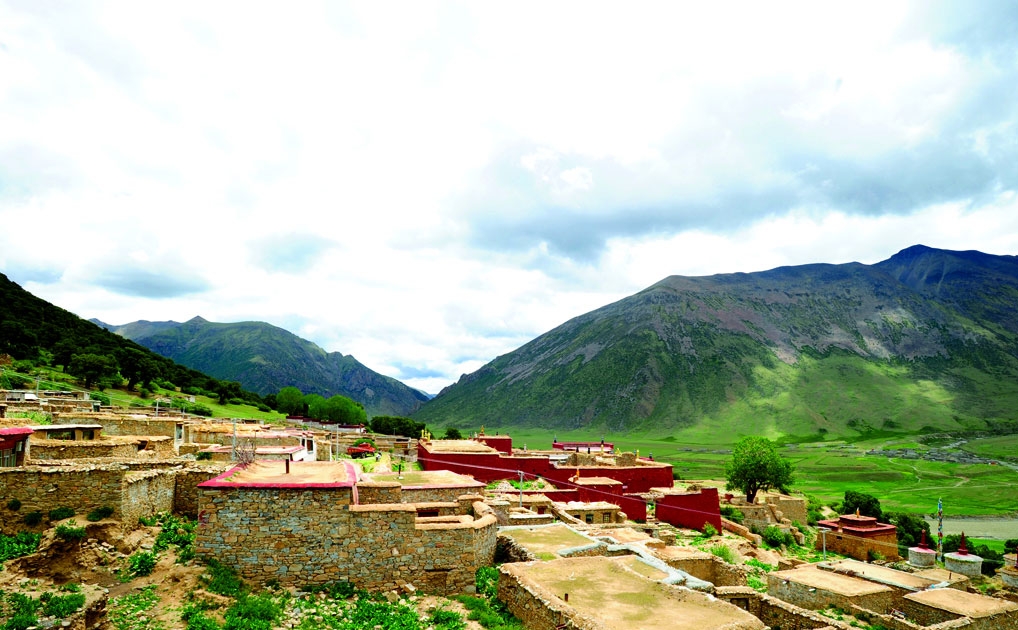
Das Radreng-Kloster war ursprünglich ein Kloster der Kadam-Schule, der ersten Sarma-Tradition des Buddhismus in Tibet. Es liegt im Tal des Radreng Rongchu (rwa sgreng rong chu) nördlich der Stadt Lhasa im Kreis Lhünzhub im Autonomen Gebiet Tibet der Volksrepublik China. Das Kloster wurde 1057 von Dromtönpa gegründet und war das erste Kloster dieser Schule, die sich rasch über Tibet verbreitete. Zu Beginn des 15. Jahrhunderts begründete Tsongkhapa die Gelug-Schule, in die die Kadam-Tradition aufging. Mitte des 18. Jahrhunderts wurde das Kloster zum Sitz der Radreng Rinpoches.

 Schleswig-Holstein

 World Heritage
 Madrid

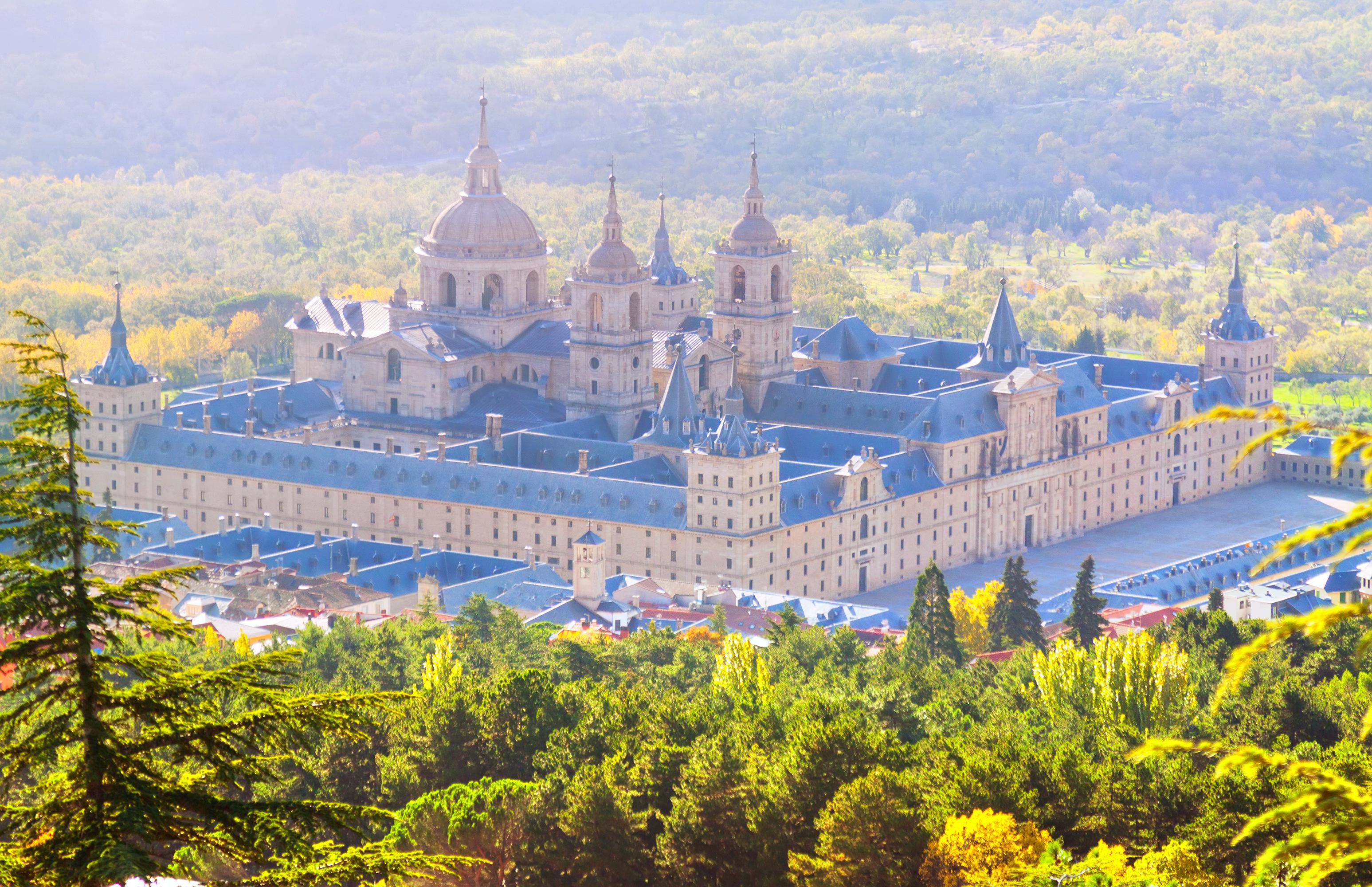
埃斯科里亚尔修道院全称“埃斯科里亚尔圣洛伦索王家修道院”,位于西班牙马德里市西北约50公里处的瓜达拉马山南坡。是世界上最大最美的宗教建筑之一。该 建筑名为修道院,实为修道院、宫殿、陵墓、教堂、图书馆、慈善堂、神学院、学校八位一体的庞大建筑群,气势磅礴,雄伟壮观,并珍藏欧洲各艺术大师的名作, 有“世界第八大奇迹”之称。
埃斯科里亚尔的外观过于庄严肃穆,朴实无华,就像它的总设计师腓力二世一样缺乏情趣。这里集合着王宫、教堂、墓地、图书馆等重要建筑。当同年代的中国明朝万历皇帝在骄奢淫逸时,西班牙的宫廷却像灰暗的“僧侣们的花园”。(Quelle: www.tripdv.com/view/v/zl_34510.html)
埃斯科里亚尔修道院(西班牙语:Monasterio de El Escorial,全称El Real Sitio de San Lorenzo de El Escorial“埃斯科里亚尔圣洛伦索王家修道院”),位于西班牙马德里市西北约50公里处的瓜达拉马山南坡。该建筑名为修道院,实为修道院、宫殿、陵墓、教堂、图书馆、慈善堂、神学院、学校八位一体的庞大建筑群,气势磅礴,雄伟壮观,并珍藏欧洲各艺术大师的名作,有“世界第八大奇迹”之称。
Der Real Sitio de San Lorenzo de El Escorial (Königlicher Sitz Sankt Laurentius von El Escorial) ist eine Schloss- und Klosteranlage, die in den Jahren 1563 bis 1584 auf Initiative des Königs Philipp II. von Spanien nach Plänen von Juan Bautista de Toledo und unter langjähriger Bauleitung von Juan de Herrera in der spanischen Ortschaft San Lorenzo de El Escorial in der Region Madrid errichtet wurde. Die Entfernung zur spanischen Hauptstadt beträgt etwa 45 Kilometer. Die Klosterburg ist der größte Renaissancebau der Welt.
王立サン・ロレンソ・デ・エル・エスコリアル修道院(おうりつサン・ロレンソ・デ・エル・エスコリアルしゅうどういん、Monasterio de El Escorial)はスペイン、マドリッド郊外のサン・ロレンソ・デ・エル・エスコリアルにある広大な宮殿、修道院、博物館にして図書館の複合施設である。サン・ロレンソ・デ・エル・エスコリアルはマドリッドの北西45kmに位置する町(マドリッド県) である[1]。
The Royal Site of San Lorenzo de El Escorial (Spanish: Monasterio y Sitio de El Escorial en Madrid), commonly known as El Escorial (Spanish pronunciation: [el eskoˈɾi̯al]), is a historical residence of the King of Spain, in the town of San Lorenzo de El Escorial, about 45 kilometres (28 miles) northwest of the capital, Madrid, in Spain. It is one of the Spanish royal sites and has functioned as a monastery, basilica, royal palace, pantheon, library, museum, university, school and hospital. It is situated 2.06 km (1.28 mi) up the valley (4.1 km [2.5 mi] road distance) from the town of El Escorial.
El Escorial comprises two architectural complexes of great historical and cultural significance: the royal monastery itself and La Granjilla de La Fresneda, a royal hunting lodge and monastic retreat about five kilometres away. These sites have a dual nature; that is to say, during the 16th and 17th centuries, they were places in which the power of the Spanish monarchy and the ecclesiastical predominance of the Roman Catholic religion in Spain found a common architectural manifestation.[1] El Escorial was, at once, a monastery and a Spanish royal palace. Originally a property of the Hieronymite monks, it is now a monastery of the Order of Saint Augustine. It is also a boarding school (Real Colegio de Alfonso XII).[2]
Philip II of Spain, reacting to the changes of the 16th century, dedicated much of his lengthy reign (1556–1598) and much of his seemingly inexhaustible supply of New World gold to stemming the tide. His protracted efforts were, in the long run, partly successful; however, the same impulse had a much more benign expression thirty years earlier in Philip's decision to build the complex at El Escorial.
Philip engaged the Spanish architect, Juan Bautista de Toledo, to be his collaborator in the design of El Escorial. Juan Bautista had spent the greater part of his career in Rome, where he had worked on the basilica of St. Peter's, and in Naples, where he had served the king's viceroy, whose recommendation brought him to the king's attention. Philip appointed him architect-royal in 1559, and together they designed El Escorial as a monument to Spain's role as a center of the Christian world.[3]
On 2 November 1984, UNESCO declared The Royal Seat of San Lorenzo of El Escorial a World Heritage Site. It is a popular tourist attraction, often visited by day-trippers from Madrid – more than 500,000 visitors come to El Escorial every year.
Le site royal de Saint-Laurent-de-l'Escurial (en castillan : Real Sitio de San Lorenzo de El Escorial) est un grand complexe (monastère, musée, collège bibliothèque, et palais) qui se trouve sur le territoire de la commune de San Lorenzo de El Escorial, située à 45 kilomètres au nord-ouest de Madrid, dans la Communauté autonome de Madrid (Espagne). C'est une ancienne résidence du roi d'Espagne. La Bibliothèque sera la source de tensions diplomatique entre l'Espagne et le Maroc, après que la précieuse collection du Sultan du Maroc Zaidan El-Nasir a été capturée par des vaisseaux espagnols au large du Maroc, elle sera offerte au roi Philippe II qui, sans doute, connaissait l'importance d'un tel trésor et qui l’incorporera dans la bibliothèque de l'Escurial, mais une grande partie de la collection est perdue après l'incendie de 16711.
Le site royal de Saint-Laurent-de-l'Escurial a été inscrit sur la liste du patrimoine mondial de l'Unesco en 1984.
Il monastero dell'Escorial, anche detto di San Lorenzo del Escorial, si trova in Spagna, nella comunità autonoma di Madrid, nel comune di San Lorenzo de El Escorial. Fu fatto costruire da Filippo II come residenza e pantheon dei re di Spagna, fu anche convento e chiesa dal 1563 al 1584. Nel 1984 è stato dichiarato Patrimonio dell'Umanità dell'UNESCO.
El Real Monasterio de San Lorenzo de El Escorial es un complejo que incluye un palacio real, una basílica, un panteón, una biblioteca , un colegio y un monasterio. Se encuentra en la localidad española de San Lorenzo de El Escorial, en la Comunidad de Madrid, y fue construido entre 1563 y 1584.
El palacio fue residencia de la Familia Real Española, la basílica es lugar de sepultura de los reyes de España y el monasterio –fundado por monjes de la Orden de San Jerónimo– está ocupado actualmente por frailes de la Orden de San Agustín. Es una de las más singulares arquitecturas renacentistas de España y de Europa. Situado en San Lorenzo de El Escorial, ocupa una superficie de 33.327 m², sobre la ladera meridional del monte Abantos, a 1028 m de altitud, en la Sierra de Guadarrama. Está gestionado por Patrimonio Nacional.
Conocido también como Monasterio de San Lorenzo El Real, o, sencillamente, El Escorial, fue ideado en la segunda mitad del siglo XVI por el rey Felipe II y su arquitecto Juan Bautista de Toledo, aunque posteriormente intervinieron Juan de Herrera, Juan de Minjares, Giovanni Battista Castello El Bergamasco y Francisco de Mora. El rey concibió un gran complejo multifuncional, monacal y palaciego que, plasmado por Juan Bautista de Toledo según el paradigma de la Traza Universal, dio origen al estilo herreriano.
Fue considerado, desde finales del siglo XVI, la Octava Maravilla del Mundo, tanto por su tamaño y complejidad funcional como por su enorme valor simbólico. Su arquitectura marcó el paso del plateresco renacentista al clasicismo desornamentado. Obra ingente, de gran monumentalidad, es también un receptáculo de las demás artes.
Sus pinturas, esculturas, cantorales, pergaminos, ornamentos litúrgicos y demás objetos suntuarios, sacros y áulicos hacen que El Escorial sea también un museo. Su compleja iconografía e iconología ha merecido las más variadas interpretaciones de historiadores, admiradores y críticos. El Escorial es la cristalización de las ideas y de la voluntad de su impulsor, el rey Felipe II, un príncipe renacentista.
路德宗是新教主要宗派之一,是以马丁·路德(Martin Luther 1483-1546)宗教思想为依据的各教会的总称。因其强调"因信称义"的教义,故亦称信义宗。
路德宗是在马丁·路德发动宗教改革后在德意志形成的。1546年马丁·路德去世,其追随者内部曾在教义问题上发生长期争论。1580年,为纪念《奥格斯 堡信纲》产生五十周年,86个路德宗邦立教会代表和约8000名路德宗牧师签署接受了将《奥格斯堡信纲》同《使徒信经》、《尼西亚信经》、《亚大纳西信 经》以及马丁·路德的《教理问答》和其他几个有关文献一起编成的《协同书》,教义之争方告结束。但在德意志,新教和天主教之间的斗争并未停止,最终酿成了 1618-1648年的三十年战争。战争很快蔓延成一场欧洲大战,结果,通过《威斯特伐利亚和约》的签订,归正宗获得了与路德宗、天主教平等的地位,路德 宗教会从此确立。
路德宗在教义上主要强调因信称义,认为人要得到上帝的拯救,不在于遵守教会的规条,而在于对上帝的信心;不在于个人的功德或善行,而在于上帝给人的恩 赐。人因着信被上帝成为义人,信徒都可通过祈祷直接与上帝沟通。因此,路德宗认为凡信徒皆可为祭司,无须各级神职人员为中介。同时,路德宗强调圣经是信仰 的根本,凡不符合圣经的礼仪、制度和学说,都在路德宗屏弃之列。天主教的七项圣事,路德宗只保留洗礼和圣餐两项,礼拜形式也更为简化,着重讲道和唱赞美 诗,并且允许神职人员结婚。路德宗还认为教会的组织形式与个人的得救无关,故主教制、长老制和公理制都可采用,具体情况由各地教会自行决定。
新教主要宗派之一。以J.加尔文的宗教思想为依据。亦称加尔文宗。产生于16世纪宗教改革时期,与安立甘宗和路德宗并称新教三大主流派。归正为经过改革而复归正确之意。在英语国家中,该宗因其教政特点又称长老宗。不过,虽然长老宗教会都属归正宗,但归正宗教会并非都实行长老制。
形成 16世纪初,在文艺复兴和宗教改革影响下,瑞士人文主义者和宗教领袖力图改革宗教生活,以《新约》为信仰与行为的唯一根据。1519年,U.茨温利在苏黎世进行宗教改革。他和奥科兰帕迪乌等因圣餐礼问题与马丁·路德在1529年的马堡会谈中发生分歧,遂与路德宗分道扬镳。斯特拉斯堡宗教领袖布塞尔主张由会众推选长老,协助牧师管理教会,为长老制之始。1553年加尔文在日内瓦进行改革,实施其在《基督教原理》中提出的理论。该书成为归正宗在教义、教政和教规方面的基本读本。
教义与体制 归正宗强调因信称义,认为信的本质就是相信通过基督而获得恩典──上帝赦罪的爱,传播神恩的福音是教会的责职;圣经即福音的见证。加尔文主义相信极端的 双预定说。认为人的得救与被弃绝,都由上帝预定。单预定说则认为上帝所预定的只是人的得救。该宗在荷兰的阿明尼乌派,肯定自由意志,认为人的得救与否亦取 决于其是否接受救赎而改恶从善,实质上否定了预定论,后与该宗分离。归正宗强调圣经权威至上,应据以判断一切传统;归正宗还认为任何人不应被赋予无限权 力,这一观点对现代法治有一定影响。该宗极重视教规,并由长老监督执行。
归正宗在崇拜礼仪中使用方言,摒弃祭台、圣像和祭礼,不承认圣餐中存在耶稣的真体与血,只承认其中有耶稣体血的德能,强调讲道,注重牧师和信徒教育以及信仰与社会生活之关系。
在长老会里,地方会众选出长老,组成由牧师主持的会堂进行管理;在地区一级,由牧师和代表各会堂的长老组成区会进行管理(见教政体制)。
 Bavaria



 Architecture
 Gothic architecture
 Baden-Wuerttemberg
 History
L 1000 - 1500 AD
Religion
History
L 1000 - 1500 AD
Religion
 Vacation and Travel

 Pennsylvania-PA
Der Rekonstruktionismus ist eine betont progressive Strömung des Judentums, die dieses in einer ständigen Weiterentwicklung sieht. Die Bewegung wurde in den 1930er Jahren durch den US-amerikanischen Rabbiner Mordechai Menahem Kaplan begründet. Ihr gehören weniger als 1 % der Juden weltweit an, vorwiegend in den USA.
犹太教重建派(希伯来语:יהדות רקונסטרוקציוניסטית;英语:Reconstructionist Judaism),是一个现代犹太人运动,将犹太教视为一个逐渐发展的文明。这一教派基于莫德采科普兰的概念发展,原本是犹太教保守派内部的一个流派,自1920年代后期开始发展,并在1955年自保守派分离[1],在1967年创建了拉比学院[2]。在美国和加拿大有超过100个犹太会堂属于犹太教重建派[3][4]。