
Deutsch-Chinesische Enzyklopädie, 德汉百科
 Kunst
Kunst

 Bayern
 Leben und Style
 Unternehmen
 *Jahrhundertealte Unternehmen der Welt
Unternehmen
Deutschland, Österreich, Schweiz
*Jahrhundertealte Unternehmen der Welt
Unternehmen
Deutschland, Österreich, Schweiz


 Architektur

 Rueckblick
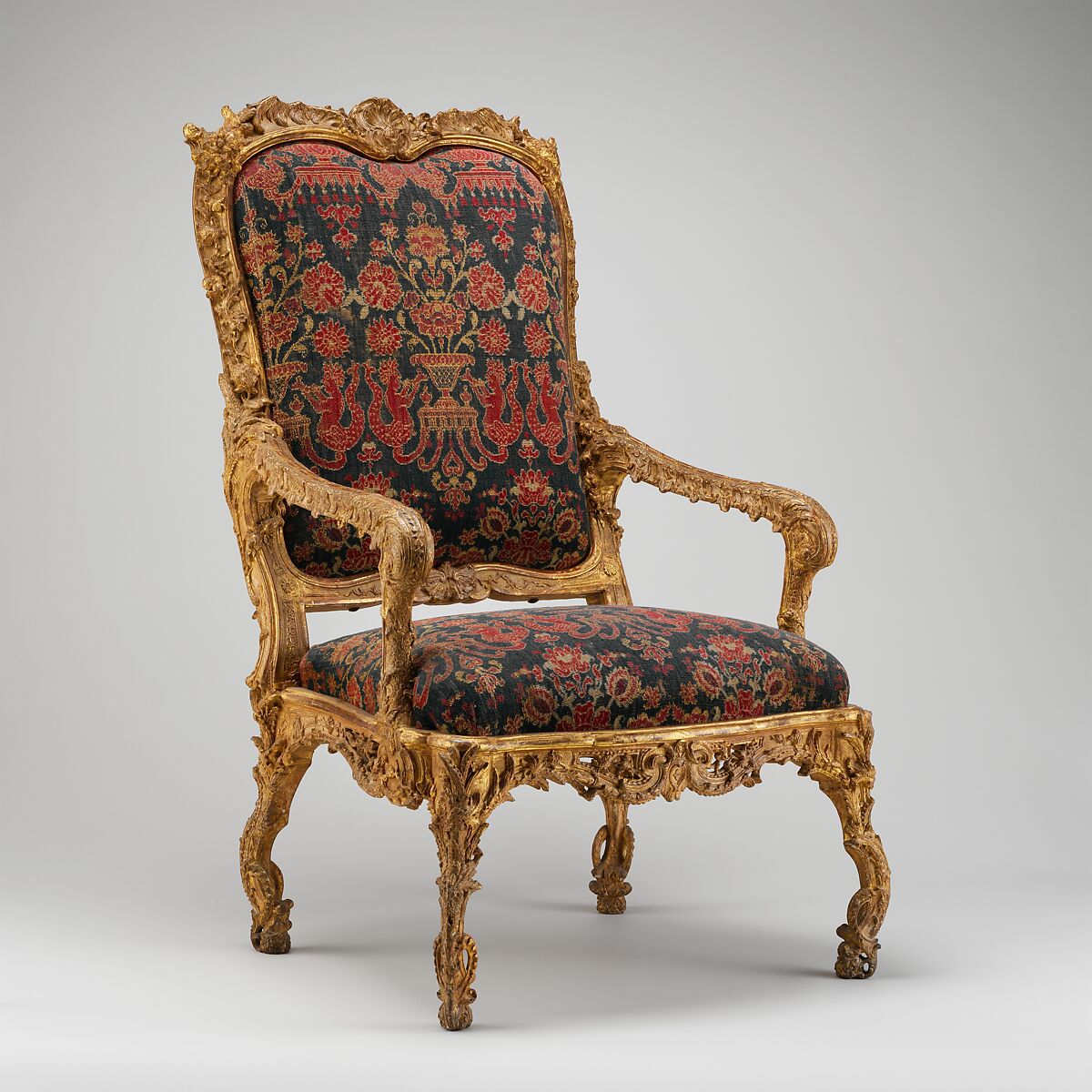
In the most recent catalogue of the furniture at Versailles,[1] where two related armchairs à châssis (with drop-in seats) are on display in the refurbished bedroom of Louis XIV, this extraordinary chair model was described as "to be dated probably to the second quarter of the eighteenth century."[2] This proposed dating was based on "the setting back of the armrest supports" and "the absence of a stretcher" between the legs.[3] The chair's overall appearance, however, as well as the Italianate, trapezoidal form of the seat make an earlier date much more plausible. Also, the ornamentation and the minimally curved, rather straight-looking arms with their stylized-volute "hand knobs" betray the pervasive influence of Charles Le Brun (1619–1690), director of the royal manufactory at the Gobelins and of the Académie Royale de Peinture et de Sculpture (since 1663) under Louis XIV. Le Brun's playfully arranged designs are echoed in many decorative works of the late seventeenth century, for example, four embroidered wall hangings of about 1685 and an ingeniously designed side table of about 1690, both in the collection of the Museum.[4]
Another argument put forward in the Versailles catalogue for a date after Louis's death in 1715 is a perceived similarity between the burly, branchlike legs of this chair model and the pieds de biche, or legs turned three-quarters forward and terminating in a doe's foot that became popular for furniture during the early Régence period (see the entry for acc. no. 1982.60.83).[5] The fanciful, imaginative leg design of this chair model, based on a series of incurving segments (chantournés en dedans), is far more sophisticated than the pieds de biche. It is firmly rooted in the zoomorphic foot forms of the seventeenth century and can be visually documented in the Grand Galerie at Versailles as early as 1684.[6] If the present chair model is datable between 1690 and 1710, it is one of the first examples made with a drop-in upholstered seat.
A date of about 1690 to 1710 is especially attractive because it enables us to entertain the idea that the suite of seat furniture to which this chair belongs recreated in gilded wood the silver furniture at Versailles that was melted down in 1689 to pay for the king's military campaigns.[7] This idea is supported by the simulated drapery ornamentation on the armrests. This so-called lambrequin motif (see the entry for acc. no. 69.292.1) is rarely found in contemporary French woodwork but is fairly common in the products of the court goldsmiths. Laurence Buffet-Challié observed of another example of this model, in the Lopez-Willshaw collection in Paris, that "the woodwork of this armchair [of] c. 1700 is carved almost as if it were the work of a goldsmith. The curved frame to the back and the seat, and the absence of stretchers anticipate the style of the eighteenth century."[8]
A recent discovery in a French publication of 1837 may offer a key to settling all these arguments. In his Moyen-Âge pittoresque: Monumens d'architecture, meubles et décors Philippe Moret published a lithograph of this chair model. The short caption gives no medium, dimensions, or other details about it, but the description reads, "Armchair used as King Stanislas's throne," and a provenance is given: "from the collection of M. Schwiter."[9] The king referred to must be the Polish prince Stanislas Leszczynski (1677–1766), who was elected king of Poland in 1704 and displaced in 1709 by Augustus the Strong of Saxony (1670–1733). In 1725 his fortunes rose again, when his daughter Maria was married to Louis XV (1710–1774). As the French king's father-in-law, Leszczynski was made duke of Lorraine and took up residence in Nancy, transforming that town into a major cultural center of the Rococo period.[10] The splendor-loving Leszczynski regularly received furnishings and luxury goods from the French court as gifts, and the opulent chair seen in the lithograph, the Museum's example, and other pieces of the suite may have been among them. By Leszczynski's time the style was certainly out of fashion, but their royal pedigree, flamboyant opulence, and highly unusual appearance must have been as fascinating then as they are today. At some point, the suite was broken up and scattered. We do not know if the armchair in the Schwiter collection was a wooden example (which, by the way it is characterized, seems likely) or if it was a silver version that had escaped the mint.[11] It was, however, called a throne, indicating not only a royal association but also that in 1837 only a single example was known. We remain in the dark as regards the Schwiter collection. A Louis-August Schwiter (1808–1889), later Baron Schwiter, is recorded in a portrait by Eugène Delacroix (1798–1863), today in the National Gallery, London (NG 3286). In his inventory of public-sale catalogues, Frits Lugt (1884–1970) mentions that a collector named Schwiter sold works of art at a series of auctions in Paris between 11–12 December 1863 and 16–17 December 1864 and that some of the lots included furniture.[12]
[Wolfram Koeppe 2006]
Footnotes:
1. Pierre Arizzoli-Clémentel. Versailles: Furniture of the Royal Palace, Seventeenth and Eighteenth Centuries. Vol. 2. Dijon, 2002, pp. 178–79, no. 59.
2. Ibid., p. 178. See also Daniel Meyer. "La restitution de la chambre de Louis XIV à Versailles." La revue du Louvre et des musées de France, 1980, p. 246.
3. Pierre Arizzoli-Clémentel. Versailles: Furniture of the Royal Palace, Seventeenth and Eighteenth Centuries. Vol. 2. Dijon, 2002, pp. 178–79, no. 59.
4. On the wall hangings, see Alice M. Zrebiec in Olga Raggio, James Parker, Clare Le Corbeiller, Jessie McNab, Clare Vincent, and Alice M. Zrebiac. "French Decorative Arts during the Reign of Louis XIV, 1654–1715." The Metropolitan Museum of Art Bulletin 46, no. 4 (Spring 1989), p. 32 and color ills. pp. 10–11. On the side table, which is based on designs by Le Brun, see James Parker in Olga Raggio, op. cit., pp. 22–23 and p. 3, fig. 4.
5. Pierre Arizzoli-Clémentel. Versailles: Furniture of the Royal Palace, Seventeenth and Eighteenth Centuries. Vol. 2. Dijon, 200, p. 178 (but the proposed interpretation of the pied de biche is not sound); and Wolfram Koeppe. "Möbel und Schaustücke." In Liselotte von der Pfalz: Madame am Hofe des Sonnenkönigs, ed. Sigrun Paas, pp. 179–88. Exh. cat., Heidelberger Schloss. Heidelberg, 1996, p. 185, fig. 5.
6. The chair's branchlike legs are unusual in the same way as are the animal legs of the side tables in the Grand Galerie seen in an etching of 1684 by Sébastien Le Clerc (1637–1714) in Olga Raggio, James Parker, Clare Le Corbeiller, Jessie McNab, Clare Vincent, and Alice M. Zrebiac. "French Decorative Arts during the Reign of Louis XIV, 1654–1715." The Metropolitan Museum of Art Bulletin 46, no. 4 (Spring 1989), p. 6, fig. 7.
7. Georges S. Salmann. "A Great Art Lover: The Late Arturo Lopez-Willshaw." Connoisseur 151 (October 1962), p. 74, fig. 6; and Nietta Aprà. The Louis Styles: Louis XIV, Louis XV, Louis XVI. London, 1972, p. 26, fig. 17.
8. Laurence Buffet-Challié. "The Seventeenth Century: France." In World Fruniture: An Illustrated History, ed. Helena Hayward, pp. 76–85. New York, 1965, p. 84, figs. 278, 279.
9. "Fauteuil ayant servi de Trône au Roi Stanislas"; Philippe Moret. Moyen-Âge pittoresque: Monumens d'architecture, meubles et décors du Xe au XVIIe siècle. 5 vols. Paris, 1837–40, vol. 1, pl. 18. There is a copy of this book in the Thomas J. Watson Library, Metropolitan Museum.
10. Stanislas: Un roi de Pologne en Lorraine. Exh. cat., Musée Historique Lorrain, Nancy. Versailles, 2004.
11. I hope that this rather speculative entry will encourage scholars to investigate the archives at Nancy and in Stanislas's residences and that their research will shed light on the mystery of these important chairs.
12. I am most grateful to Florian Knothe, Annette Kade Art History Fellow, 2005–2006, Metropolitan Museum, for sharing with me the fruits of his research on Schwiter.
 Geschichte

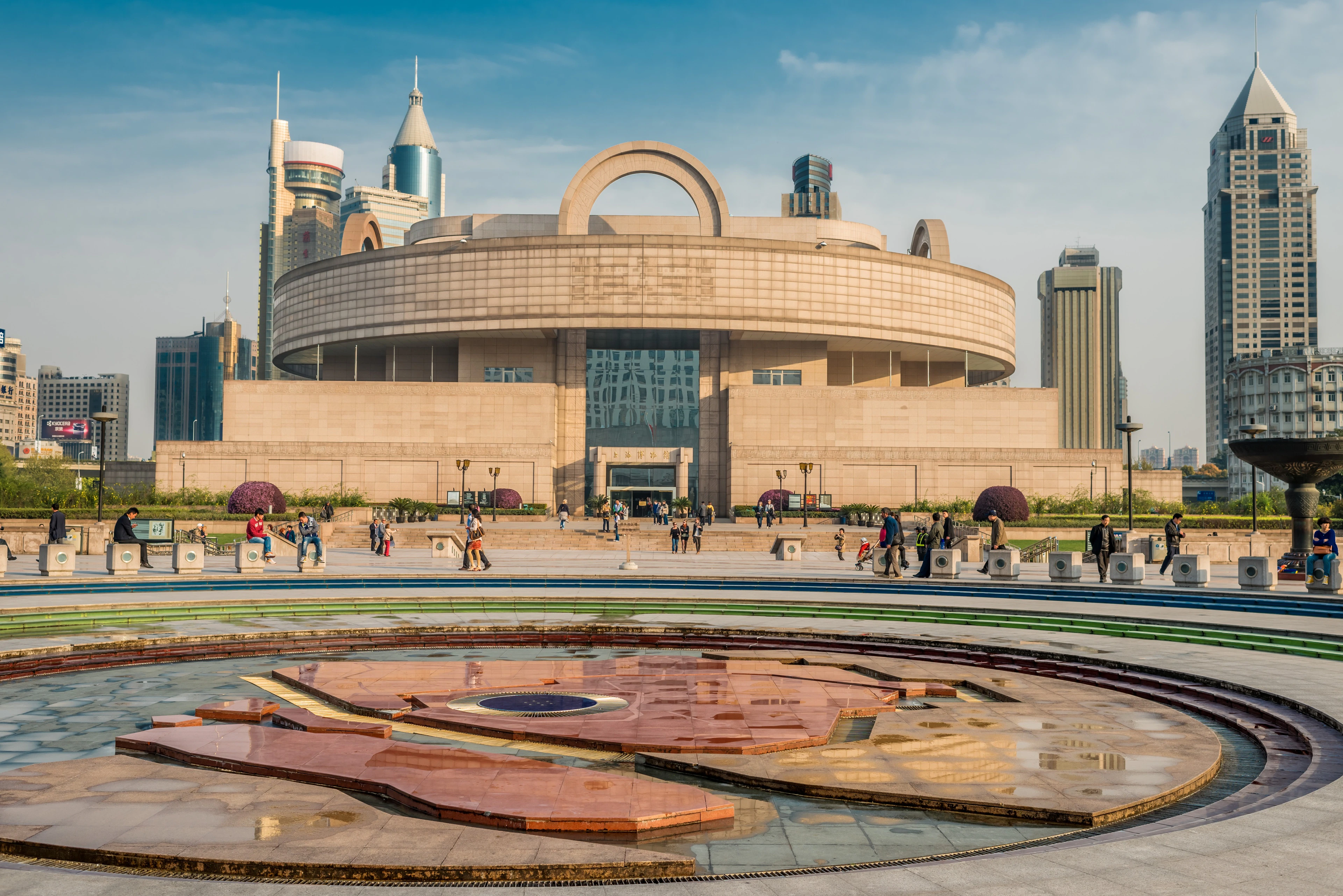
1956 als Museum für zeitgenössische Kunst eröffnet. Neben der Sammel- und Ausstellungstätigkeit, akademischen Forschung, Programmen für Bildung und für internationalen Kulturaustausch richtet das Museum seit 1996 die Biennale von Shanghai aus. Adresse: Nr.325, West Nanjing Road, Shanghai.

 Religion

Murudeshwara oder Murdeshwar ist ein ca. 1500 Einwohner zählendes Dorf im Gemeindebezirk (taluk) von Bhatkal im Distrikt Uttara Kannada im südwestindischen Bundesstaat Karnataka. Der Ort ist seit Jahrhunderten als Pilgerstätte bekannt und entwickelt sich mehr und mehr zu einem Tourismusziel. Murudeshwara liegt an der zumeist bergigen Westküste Karnatakas in einer Höhe von ca. 5 bis 25 m ü. d. M. knapp 200 km (Fahrtstrecke) südlich von Goa bzw. gut 150 km nördlich von Mangaluru.[1] Das Klima ist subtropisch schwül; Regen fällt nahezu ausschließlich während der Monsunmonate Juni bis Oktober.
Grasschrift
Japan
Japanische Geschichte
Kanzleischrift
Kursivschrift
Regelschrift
Shodō
Siegelschrift

Shodō (japanisch 書道, wörtlich: „Weg des Schreibens“) ist die nach Japan übernommene chinesische Kalligrafie. Die Grundlagen, also die Strichformen, die Schriftzeichen selbst, die Ästhetik, die Schrifttypen Siegelschrift (篆書 tensho), Kursivschrift (Semi-Kursivschrift, 行書 gyōsho), Grasschrift (草書 sōsho), Kanzleischrift (隷書 reisho) und Regelschrift (楷書 kaisho) und die Werkzeuge Papier, Tusche und Pinsel wurden etwa im 6. bis 7. Jahrhundert aus China übernommen.
Heute geht es bei der Schaffung eines Shodō-Kunstwerkes vor allem um eine expressive Darstellung und die Erlangung eines persönlichen Ausdrucks.
日本书法是日本书法流派的总称。 本节的范围包括从平安时代中期的世宗寺派到江户时代中期的大江派一脉相承的日式流派,其他著名流派列于其他流派。
日本书法始于平安时代中期的四宗寺派,由日本书法大师藤原幸成创立,镰仓时代(1185-1333 年)形成了许多书法流派,主要是四宗寺派的分支。 然而,由于这些流派的发展,日本书法从室町时代(1336-1573 年)开始变得形式化,到了室町时代的后半期,日本书法变得形式化和停滞不前。 在江户时代(1603-1867 年),幕府将大江派作为官方书法风格,大江派也在寺院学校教授。
| 書流 | 開祖 | 系列 | 時期 |
|---|---|---|---|
| 世尊寺流 | 藤原行成 | 小野道風 | 平安中期から室町中期 |
| 持明院流 | 持明院基春 | 世尊寺流 | 室町中期から江戸中期 |
| 法性寺流 | 藤原忠通 | 世尊寺流 | 平安後期から鎌倉中期 |
| 後京極流 | 九条良経 | 法性寺流 | 鎌倉 |
| 定家様(定家流) | 藤原定家 | 法性寺流 | 鎌倉 |
| 定家様(冷泉流) | 冷泉為和 | 定家流 | 室町後期から江戸後期 |
| 宸翰様(伏見院流) | 伏見天皇 | 世尊寺流、上代様 | 鎌倉 |
| 宸翰様(後醍醐院流) | 後醍醐天皇 | 宸翰様 | 南北朝 |
| 宸翰様(花園院流) | 花園天皇 | 宸翰様 | 南北朝 |
| 宸翰様(後小松院流) | 後小松天皇 | 宸翰様 | 室町初期 |
| 宸翰様(勅筆流) | 後円融天皇 | 宸翰様 | 室町中期から後期 |
| 宸翰様(後柏原院流) | 後柏原天皇 | 宸翰様 | 室町後期から江戸初期 |
| 青蓮院流(尊円流、御家流) | 尊円法親王 | 世尊寺流、伏見院流 | 南北朝から江戸 |
| 飛鳥井流 | 飛鳥井雅親 | 上代様 | 南北朝から安土桃山 |
| 三条流 | 三条西実隆 | 青蓮院流 | 室町 |
| 光悦流 | 本阿弥光悦 | 青蓮院流 | 江戸 |
| 松花堂流(滝本坊流) | 松花堂昭乗 | 青蓮院流、大師流 | 江戸 |
| 近衛流(三藐院流) | 近衛信尹 | 青蓮院流 | 江戸 |