
漢德百科全書 | 汉德百科全书
 Italien
 Essen und Trinken
 Toscana
 Freizeitpark
 Veneto

 Geographie
 Lombardia
 Trentino-Alto Adige
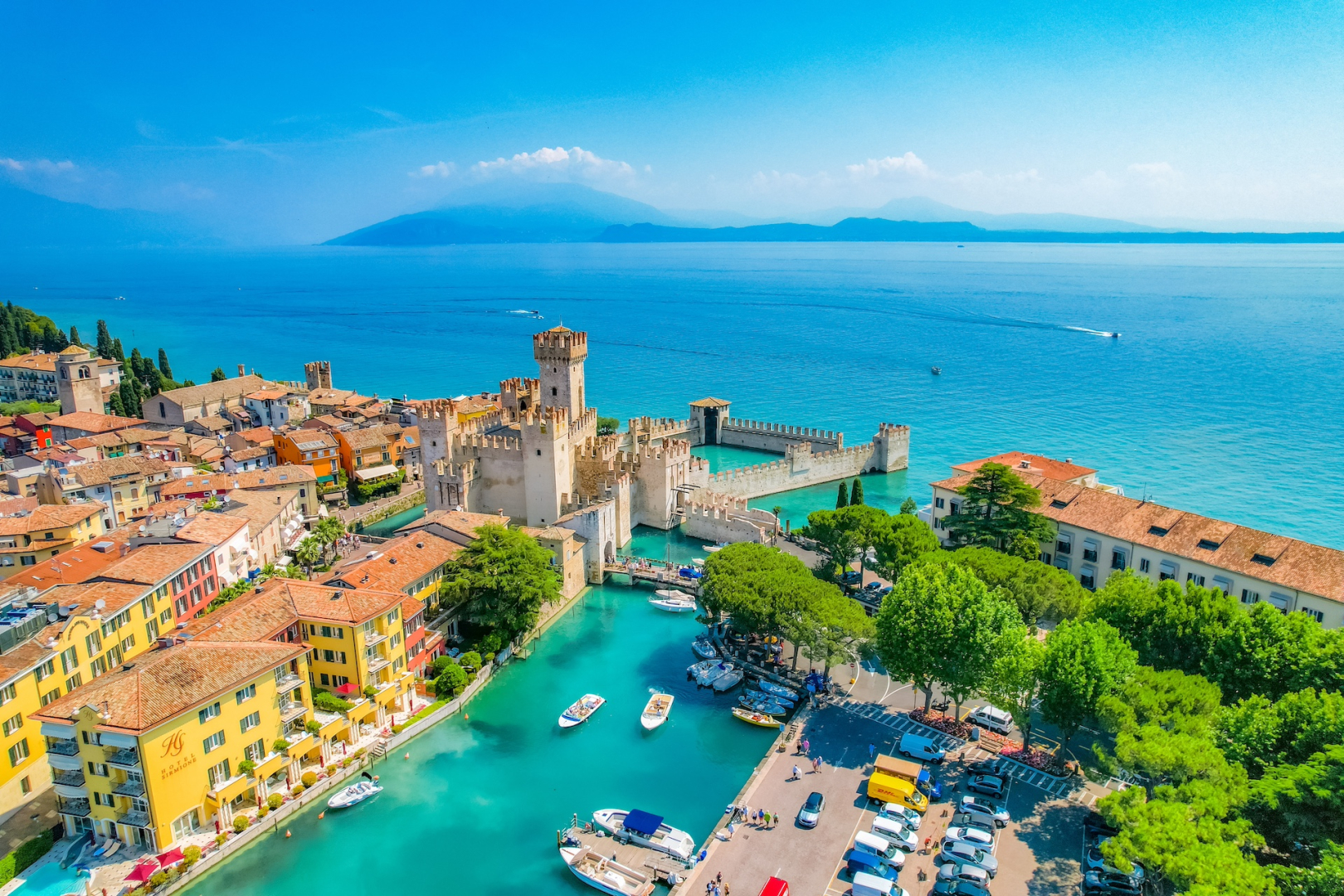
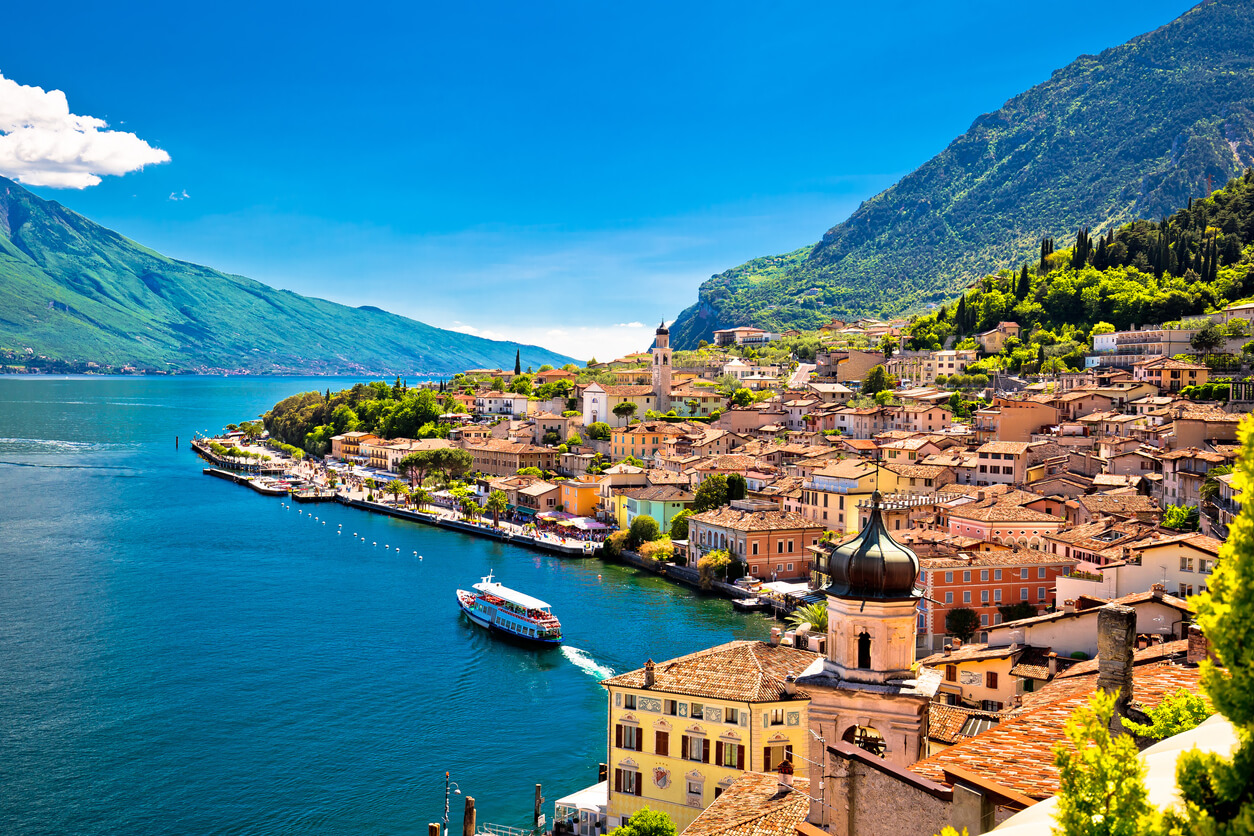
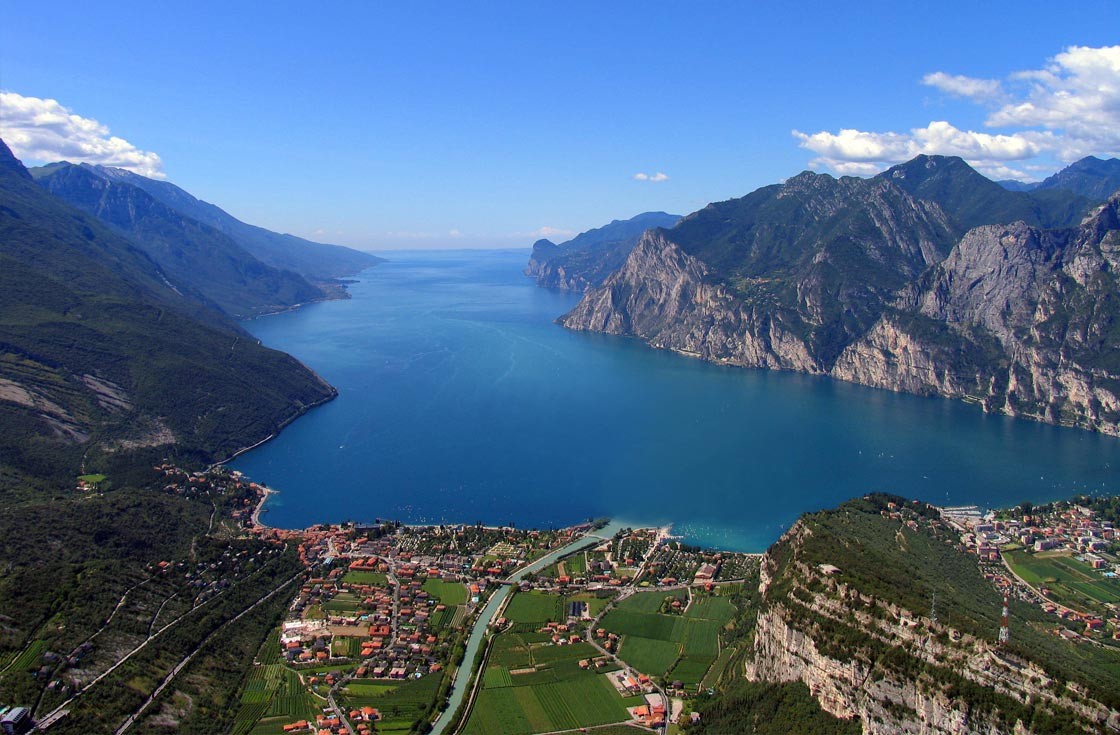
Der Gardasee (italienisch Lago di Garda oder Benaco), einer der oberitalienischen Seen, ist der größte See Italiens, benannt nach der Gemeinde Garda am Ostufer. Sein antiker Name lautete von etwa 200 v. Chr. bis 800 n. Chr. Lacus benacus. Der Name soll von einer alten Gottheit namens Benacus abstammen. Der Gardasee wurde in der vergangenen Eiszeit durch einen Seitenast des Etschgletschers geformt, dessen Spuren noch verfolgt werden können, insbesondere durch die Endmoränen um das Südufer z. B. bei Lonato del Garda, Solferino, Valeggio sul Mincio und Custoza. Erste Besiedlungen des Seeufers datieren um das Jahr 2000 v. Chr.
加尔达湖(意大利语:Lago di Garda)是意大利面积最大的湖泊,位于该国北部,约在威尼斯和米兰的半途之间,座落于阿尔卑斯山南麓,在上一次冰川时期结束时因为冰川融化而形成。现在的加尔达湖分别划归维罗纳(位于湖泊之东南方)、布雷西亚(西南)和特伦托(北)三省管辖。
通过布伦纳山口可以从北面轻易到达加尔达湖,因此该湖泊是一个热门的旅游景点,其岸边有不少高档酒店和旅馆。
 Religion
 Militär,Verteidigung und Ausrüstung

教皇的象征性军队是瑞士卫队,其漂亮的服装是米开朗基罗设计的。按照古老的传统,这支卫队由瑞士青年组成,他们是经过严格挑选后被招募来的。他们配备 有短剑和戟,即一种长矛,但他们也配备有相当现代化的武器。他们对教皇的忠诚是绝对的。1527年,罗马失陷,教皇逃到圣天使古堡,为保卫教皇,瑞士卫队 全体战死。(Quelle: www.worlddiy.net)
宗座瑞士近卫队(拉丁语:Pontificia Cohors Helvetica;德语:Päpstliche Schweizergarde;意大利语:Guardia Svizzera Pontificia;英语:Pontifical Swiss Guard),于1506年由教宗儒略二世建立。瑞士近卫队是现存最古老的军事组织之一。
瑞士近卫队的制服包含蓝色、红色、橙色和黄色,具有明显的文艺复兴时期外观。现代瑞士近卫队的性质,就如同教宗的保镖一样。瑞士近卫队配备的武器包含了传统的斧枪以及多项现代武器。
Die Päpstliche Schweizergarde (italienisch Guardia Svizzera Pontificia (GSP), lateinisch Pontificia Cohors Helvetica, auch Cohors Pedestris Helvetiorum a Sacra Custodia Pontificis) ist das einzige verbliebene päpstliche Militärkorps in Waffen. Sie sichert den Apostolischen Palast, die Zugänge zur Vatikanstadt sowie die Zugänge zur Sommerresidenz des Papstes im Städtchen Castel Gandolfo, und ist für die persönliche Sicherheit des Papstes verantwortlich. Die offiziellen Sprachen (Kommandosprachen) der Garde sind Deutsch und Italienisch. Die Gardisten vertreten öfter alle vier schweizerischen Landessprachen. Das Korps wurde im Jahre 1506 durch Papst Julius II. gegründet.
The Pontifical Swiss Guard (also Papal Swiss Guard, or just Swiss Guard; Latin: Pontificia Cohors Helvetica or Cohors Pedestris Helvetiorum a Sacra Custodia Pontificis; Italian: Guardia Svizzera Pontificia; German: Päpstliche Schweizergarde; French: Garde suisse pontificale) is a small force maintained by the Holy See that is responsible for the safety of the Pope, including the security of the Apostolic Palace. The Swiss Guard serves as the de facto military of Vatican City. Established in 1506 under Pope Julius II, the Pontifical Swiss Guard is among the oldest military units in continuous operation.[2]
The dress uniform is of blue, red, orange and yellow with a distinctly Renaissance appearance. The modern guard has the role of bodyguard of the Pope. The Swiss Guard is equipped with traditional weapons, such as the halberd, as well as with modern firearms. Since the assassination attempt on Pope John Paul II in 1981, a much stronger emphasis has been placed on the guard's non-ceremonial roles, and has seen enhanced training in unarmed combat and small arms.
Recruits to the guards must be unmarried Swiss Catholic males between 19 and 30 years of age who have completed basic training with the Swiss Armed Forces.[3]
La Garde suisse pontificale (en latin : Cohors Helvetica Pontificia) est une force militaire chargée de veiller à la sécurité du pape et du Vatican. Elle est la dernière Garde suisse encore existante (des détachements de mercenaires suisses servaient de garde rapprochée et protocolaire dans différentes cours européennes à partir du XVe siècle). Créée le 22 janvier 1506 sur l'ordre du pape Jules II, elle est la 2ème plus petite armée du monde avec 135 militaires contre 120 à la Compagnie des Carabiniers du Prince de Monaco.
La Guardia svizzera pontificia (detta anche semplicemente Guardia svizzera; in latino: Pontificia Cohors Helvetica o Cohors Pedestris Helvetiorum a Sacra Custodia Pontificis; in tedesco: Päpstliche Schweizergarde; in francese: Garde suisse pontificale) è un corpo armato fedelmente al servizio del papato dal 22 gennaio 1506. Si tratta dell'unico corpo di guardie svizzere ancora operativo.
La tipica uniforme colorata di foggia rinascimentale per le cerimonie solenni si accompagna ad abiti più sobri a livello operativo. La moderna guardia ha il ruolo di difesa personale del pontefice. La guardia svizzera pontificia è equipaggiata formalmente con armi tradizionali come alabarde, ma possiede in dotazione per tutte le guardie anche moderne armi da fuoco di piccola taglia.
Dal tentativo di assassinio di Giovanni Paolo II nel 1981, la guardia svizzera è stata orientata dal tradizionale ruolo meramente cerimoniale ad un ruolo più attivo nella difesa della persona del papa.
Le reclute di questo corpo devono essere necessariamente cittadini svizzeri dalla nascita, cattolici, maschi tra i 19 ed i 30 anni e devono aver fatto un periodo di formazione presso l'esercito svizzero.[1]
La Guardia Suiza (en latín: Custodes Helvetici; en italiano: Guardia Svizzera) es un cuerpo militar encargado de la seguridad del papa y de la Santa Sede. Otro cuerpo de guardias de origen suizo se encargó también de la seguridad del palacio de Versalles (Francia) durante el reinado de Luis XVI. El jefe ceremonial de la Guardia Suiza es el papa, soberano de la Ciudad del Vaticano. En la actualidad, se trata del ejército profesional más pequeño del mundo, con alrededor de 100 soldados.
Швейца́рская гва́рдия (полное название — лат. Cohors pedestris Helvetiorum a sacra custodia Pontificis «Пехотная когорта швейцарцев священной охраны Римского папы») — единственный в настоящее время вид вооружённых сил Ватикана. Её по праву можно считать старейшей армией мира, сохранившейся до наших дней. Основанная ещё в 1506 году, она на данный момент включает в себя около 100 гвардейцев, которые готовятся в швейцарских вооружённых силах и служат в Ватикане.
 Leben und Style
 Modewelt
 Unternehmen

 Sport
Argentinien
Brasilien
Deutschland
Diego Forlán
Sport
Argentinien
Brasilien
Deutschland
Diego Forlán
 FIFA Fussball-Weltmeisterschaft 2014
 FIFA Fussball-Weltmeisterschaft 2018
 FIFA Fussball-Weltmeisterschaft 2022
 FIFA Fussball-Weltmeisterschaft 2026
FIFA WM Goldener Ball
Frankreich
Italien
Kroatien
Lionel Messi
Luka Modrić
Maradona
Oliver Kahn
Paolo Rossi
Romário
Ronaldo
Salvatore Schillaci
Uruguay
Zinédine Zidane
FIFA Fussball-Weltmeisterschaft 2026
FIFA WM Goldener Ball
Frankreich
Italien
Kroatien
Lionel Messi
Luka Modrić
Maradona
Oliver Kahn
Paolo Rossi
Romário
Ronaldo
Salvatore Schillaci
Uruguay
Zinédine Zidane


 Argentinien
Brasilien
Bulgarien
Chile
Columbia
Deutschland
FIFA Fussball-Weltmeisterschaft 2014
FIFA Fussball-Weltmeisterschaft 2018
FIFA Fussball-Weltmeisterschaft 2022
FIFA Fussball-Weltmeisterschaft 2026
FIFA WM Goldener Schuh
Frankreich
Italien
Kroatien
Polen
Portugal
Russland
Tschechien
Ungarn
Vereinigtes Königreich
Argentinien
Brasilien
Bulgarien
Chile
Columbia
Deutschland
FIFA Fussball-Weltmeisterschaft 2014
FIFA Fussball-Weltmeisterschaft 2018
FIFA Fussball-Weltmeisterschaft 2022
FIFA Fussball-Weltmeisterschaft 2026
FIFA WM Goldener Schuh
Frankreich
Italien
Kroatien
Polen
Portugal
Russland
Tschechien
Ungarn
Vereinigtes Königreich

| Top goalscorer[45][46] | ||||||
|---|---|---|---|---|---|---|
| World Cup | Top goalscorer | Goals | Runners-up | Goals | Third place | Goals |
| 1930 Uruguay |  Guillermo Stábile Guillermo Stábile |
8 |  Pedro Cea Pedro Cea |
5 |  Bert Patenaude Bert Patenaude |
4 |
| 1934 Italy |  Oldřich Nejedlý Oldřich Nejedlý |
5[a] |  Edmund Conen Edmund Conen Angelo Schiavio Angelo Schiavio |
4 | None |
— |
| 1938 France |  Leônidas Leônidas |
7[b] |  György Sárosi Gyula Zsengellér Silvio Piola György Sárosi Gyula Zsengellér Silvio Piola |
5 | None |
— |
| 1950 Brazil | Ademir |
9[c] | Óscar Míguez |
5 | Alcides Ghiggia Chico Estanislau Basora Telmo Zarra Estanislau Basora Telmo Zarra |
4 |
| 1954 Switzerland |  Sándor Kocsis Sándor Kocsis |
11 |  Josef Hügi Josef Hügi Max Morlock Max Morlock Erich Probst Erich Probst |
6 | None |
— |
| 1958 Sweden |  Just Fontaine Just Fontaine |
13 | Pelé Helmut Rahn |
6 | None |
— |
| 1962 Chile |  Flórián Albert Flórián Albert Valentin Ivanov Valentin Ivanov Garrincha Vavá Garrincha Vavá Dražan Jerković Dražan Jerković Leonel Sánchez Leonel Sánchez |
4 | None |
— |
None |
— |
| 1966 England |  Eusébio Eusébio |
9 | Helmut Haller |
6 | Franz Beckenbauer Ferenc Bene Geoff Hurst Valeriy Porkujan Geoff Hurst Valeriy Porkujan |
4 |
| 1970 Mexico | Gerd Müller |
10 |  Jairzinho Jairzinho |
7 |  Teófilo Cubillas Teófilo Cubillas |
5 |
| 1974 West Germany |  Grzegorz Lato Grzegorz Lato |
7 |  Johan Neeskens Andrzej Szarmach Johan Neeskens Andrzej Szarmach |
5 | None |
— |
| 1978 Argentina[50] | Mario Kempes |
6 | Teófilo Cubillas |
5 | Rob Rensenbrink |
5 |
| Golden Shoe[44] | ||||||
| World Cup | Golden Shoe | Goals | Silver Shoe | Goals | Bronze Shoe | Goals |
| 1982 Spain |  Paolo Rossi Paolo Rossi |
6 | Karl-Heinz Rummenigge |
5 | Zico |
4 |
| 1986 Mexico | Gary Lineker |
6 |  Emilio Butragueño Careca Diego Maradona Emilio Butragueño Careca Diego Maradona |
5 | None[51] | |
| 1990 Italy | Salvatore Schillaci |
6 | Tomáš Skuhravý |
5 | Gary Lineker Roger Milla Roger Milla |
4 |
| 1994 United States |  Oleg Salenko[d] Oleg Salenko[d] Hristo Stoichkov[e] Hristo Stoichkov[e] |
6 | None |
— |
 Kennet Andersson Kennet Andersson Romário Romário |
5[f] |
| 1998 France[54] |  Davor Šuker Davor Šuker |
6 | Gabriel Batistuta Christian Vieri |
5 | None[g] | |
| 2002 South Korea/Japan[55] | Ronaldo |
8[h] | Miroslav Klose Rivaldo |
5 | ||
| 2006 Germany[57] | Miroslav Klose |
5 | Hernán Crespo |
3[i] | Ronaldo |
3[i] |
| Golden Boot[44] | ||||||
| World Cup | Golden Boot | Goals | Silver Boot | Goals | Bronze Boot | Goals |
| 2010 South Africa | Thomas Müller |
5[j] | David Villa |
5[j] | Wesley Sneijder |
5[j] |
| 2014 Brazil |  James Rodríguez James Rodríguez |
6 | Thomas Müller |
5 | Neymar |
4[k] |
| 2018 Russia | Harry Kane |
6 |  Antoine Griezmann Antoine Griezmann |
4[l] |  Romelu Lukaku Romelu Lukaku |
4[l] |
| 2022 Qatar | Kylian Mbappé |
8 | Lionel Messi |
7 | Olivier Giroud |
4[m] |
| Notes | ||||||
|
||||||

 Wirtschaft und Handel
Australien
Belgien
Chile
Dänemark
Deutschland
Estland
Finnland
Frankreich
Griechenland
Irland
Island
Israel
Italien
Japan
Kanada
Luxemburg
Mexiko
Neuseeland
Niederlande
Norwegen
OECD
Wirtschaft und Handel
Australien
Belgien
Chile
Dänemark
Deutschland
Estland
Finnland
Frankreich
Griechenland
Irland
Island
Israel
Italien
Japan
Kanada
Luxemburg
Mexiko
Neuseeland
Niederlande
Norwegen
OECD
 Emiel van Lennep
OECD
Don Johnston
OECD
Jean-Claude Paye
OECD
José Ángel Gurría
OECD
Staffan Sohlman
OECD
Thorkil Kristensen
Österreich
Polen
Portugal
Republik Korea
Schweden
Schweiz
Slowakei
Slowenien
Spanien
Tschechien
Türkei
Ungarn
Vereinigte Staaten
Vereinigtes Königreich
Emiel van Lennep
OECD
Don Johnston
OECD
Jean-Claude Paye
OECD
José Ángel Gurría
OECD
Staffan Sohlman
OECD
Thorkil Kristensen
Österreich
Polen
Portugal
Republik Korea
Schweden
Schweiz
Slowakei
Slowenien
Spanien
Tschechien
Türkei
Ungarn
Vereinigte Staaten
Vereinigtes Königreich
 Wichtige internationale Organisationen

経済協力開発機構(けいざいきょうりょくかいはつきこう)は、国際経済全般について協議することを目的とした国際機関。公用語の正式名称は、英語では"Organisation[1] for Economic Co-operation and Development"(イギリス英語表記)、フランス語では"Organisation de Coopération et de Développement Economiques"。略称は英語ではOECD、フランス語ではOCDE。
本部事務局はパリ16区の旧ラ・ミュエット宮殿に置かれている。事務総長はアンヘル・グリア。
The Organisation for Economic Co-operation and Development (OECD; French: Organisation de Coopération et de Développement Économiques, OCDE) is an intergovernmental economic organisation with 37 member countries,[1] founded in 1961 to stimulate economic progress and world trade. It is a forum of countries describing themselves as committed to democracy and the market economy, providing a platform to compare policy experiences, seek answers to common problems, identify good practices and coordinate domestic and international policies of its members. Generally, OECD members are high-income economies with a very high Human Development Index (HDI) and are regarded as developed countries. As of 2017, the OECD member countries collectively comprised 62.2% of global nominal GDP (US$49.6 trillion)[3] and 42.8% of global GDP (Int$54.2 trillion) at purchasing power parity.[4] The OECD is an official United Nations observer.[5]
In 1948, the OECD originated as the Organisation for European Economic Co-operation (OEEC),[6] led by Robert Marjolin of France, to help administer the Marshall Plan (which was rejected by the Soviet Union and its satellite states).[7] This would be achieved by allocating United States financial aid and implementing economic programs for the reconstruction of Europe after World War II. (Similar reconstruction aid was sent to the war-torn Republic of China and post-war Korea, but not under the name "Marshall Plan".)[8]
In 1961, the OEEC was reformed into the Organisation for Economic Co-operation and Development by the Convention on the Organisation for Economic Co-operation and Development and membership was extended to non-European states.[9][10] The OECD's headquarters are at the Château de la Muette in Paris, France.[11] The OECD is funded by contributions from member countries at varying rates and had a total budget of €386 million in 2019.[2]
Although OECD does not have a power to enforce its decisions, which further require unanimous vote from its members, it is recognized as highly influential publisher of mostly economic data through publications as well as annual evaluations and rankings of members countries.[12]
L'Organisation de coopération et de développement économiques (OCDE) est une organisation internationale d'études économiques, dont les pays membres — des pays développés pour la plupart — ont en commun un système de gouvernement démocratique et une économie de marché. Elle joue essentiellement un rôle d'assemblée consultative1.
L'OCDE a succédé à l'Organisation européenne de coopération économique (OECE) issue du plan Marshall et de la Conférence des Seize (Conférence de coopération économique européenne) qui a existé de 1948 à 1960. Son but était l'établissement d'une organisation permanente chargée en premier lieu d'assurer la mise en œuvre du programme de relèvement commun (le plan Marshall), et, en particulier, d'en superviser la répartition2.
En 2020, l'OCDE compte 37 pays membres et regroupe plusieurs centaines d'experts. Elle publie fréquemment des études économiques et sociales — analyses, prévisions et recommandations de politique économique — et des statistiques, principalement concernant ses pays membres.
Le siège de l'OCDE se situe à Paris (16e), au château de la Muette. L'organisation possède également des bureaux dans plusieurs autres métropoles, notamment à Berlin, Mexico, Tokyo et Washington.
L'Organizzazione per la cooperazione e lo sviluppo economico (OCSE) – in inglese Organization for Economic Co-operation and Development (OECD), e in francese Organisation de coopération et de développement économiques (OCDE) – è un'organizzazione internazionale di studi economici per i paesi membri, paesi sviluppati aventi in comune un'economia di mercato.
L'organizzazione svolge prevalentemente un ruolo di assemblea consultiva che consente un'occasione di confronto delle esperienze politiche, per la risoluzione dei problemi comuni, l'identificazione di pratiche commerciali e il coordinamento delle politiche locali e internazionali dei paesi membri[1]. Ha sede a Parigi nello Château de la Muette[2].
Gli ultimi paesi ad aver aderito all'OCSE sono la Colombia (28 aprile 2020),la Lettonia (1º luglio 2016) e la Lituania (5 luglio 2018), per un totale di 36 paesi membri.
La Organización para la Cooperación y el Desarrollo Económico1 (OCDE) es un organismo de cooperación internacional, compuesto por 37 estados,34 cuyo objetivo es coordinar sus políticas económicas y sociales. La OCDE fue fundada en 1961 y su sede central se encuentra en el Château de la Muette en París (Francia). Los idiomas oficiales de la entidad son el francés y el inglés.2
En la OCDE, los representantes de los países miembros se reúnen para intercambiar información y armonizar políticas con el objetivo de maximizar su crecimiento económico y colaborar a su desarrollo y al de los países no miembros.
Conocida como «club de los países ricos»,56 a partir de 2017, sus países miembros comprendieron colectivamente el 62,2 % del PIB nominal global (US$49,6 billones) y el 42,8 % del PIB global (Int US$54,2 billones).7
Организа́ция экономи́ческого сотру́дничества и разви́тия (сокр. ОЭСР, англ. Organisation for Economic Co-operation and Development, OECD) — международная экономическая организация развитых стран, признающих принципы представительной демократии и свободной рыночной экономики.
Создана в 1948 году под названием Организа́ция европе́йского экономи́ческого сотру́дничества (англ. Organisation for European Economic Co-operation, OEEC) для координации проектов экономической реконструкции Европы в рамках плана Маршалла.
Штаб-квартира организации располагается в Шато де ла Мюетт, в Париже. Генеральный секретарь (с 2006 года) — Хосе Анхель Гурриа Тревиньо (Мексика). Руководящим органом ОЭСР является совет представителей стран — членов организации. Все решения в нём принимаются на основе консенсуса.
По данным на 2011 год, в странах ОЭСР проживало 18 % населения мира[2].
 Hand in Hand
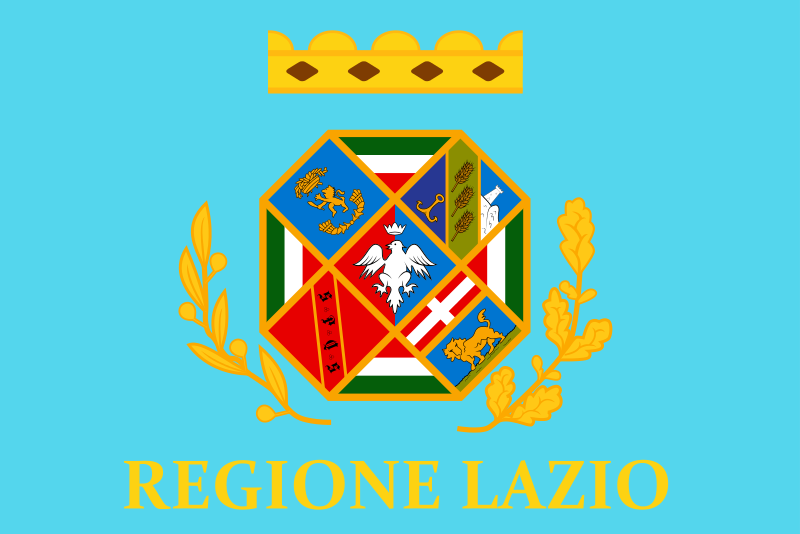 Lazio
Lazio

 Geschichte
 Architektur
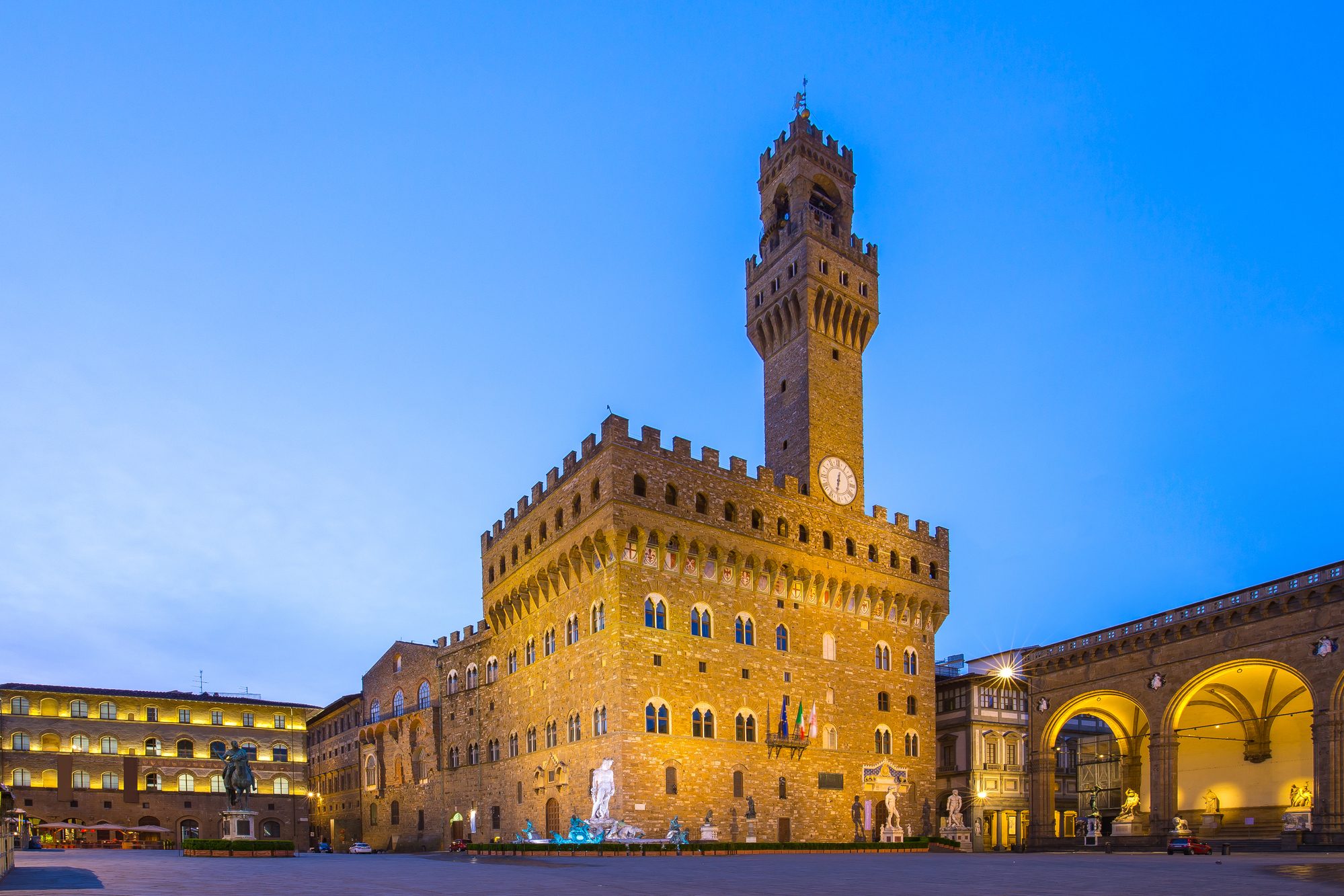
Der Palazzo Vecchio [paˈlatːso ˈvɛkːjo] („alter Palast“) stellte als Sitz des Stadtparlaments den Mittelpunkt der weltlichen Macht im Florenz des 14. Jahrhunderts dar. Er wurde 1314 fertiggestellt und hieß ursprünglich Palazzo della Signoria (die Signoria war die Regierung der Republik), bis die Verwaltung unter Herzog Cosimo I. aus dem Haus Medici in die Uffizien umzog. Infolge der Septemberkonvention diente der Palazzo Vecchio ab 1865 für einige Jahre als Sitz der Camera dei deputati des Königreichs Italien, nach der Verlegung der italienischen Staatsorgane nach Rom seit 1872 als Rathaus von Florenz.