
漢德百科全書 | 汉德百科全书
 Religion

 Architecture

 Vacation and Travel
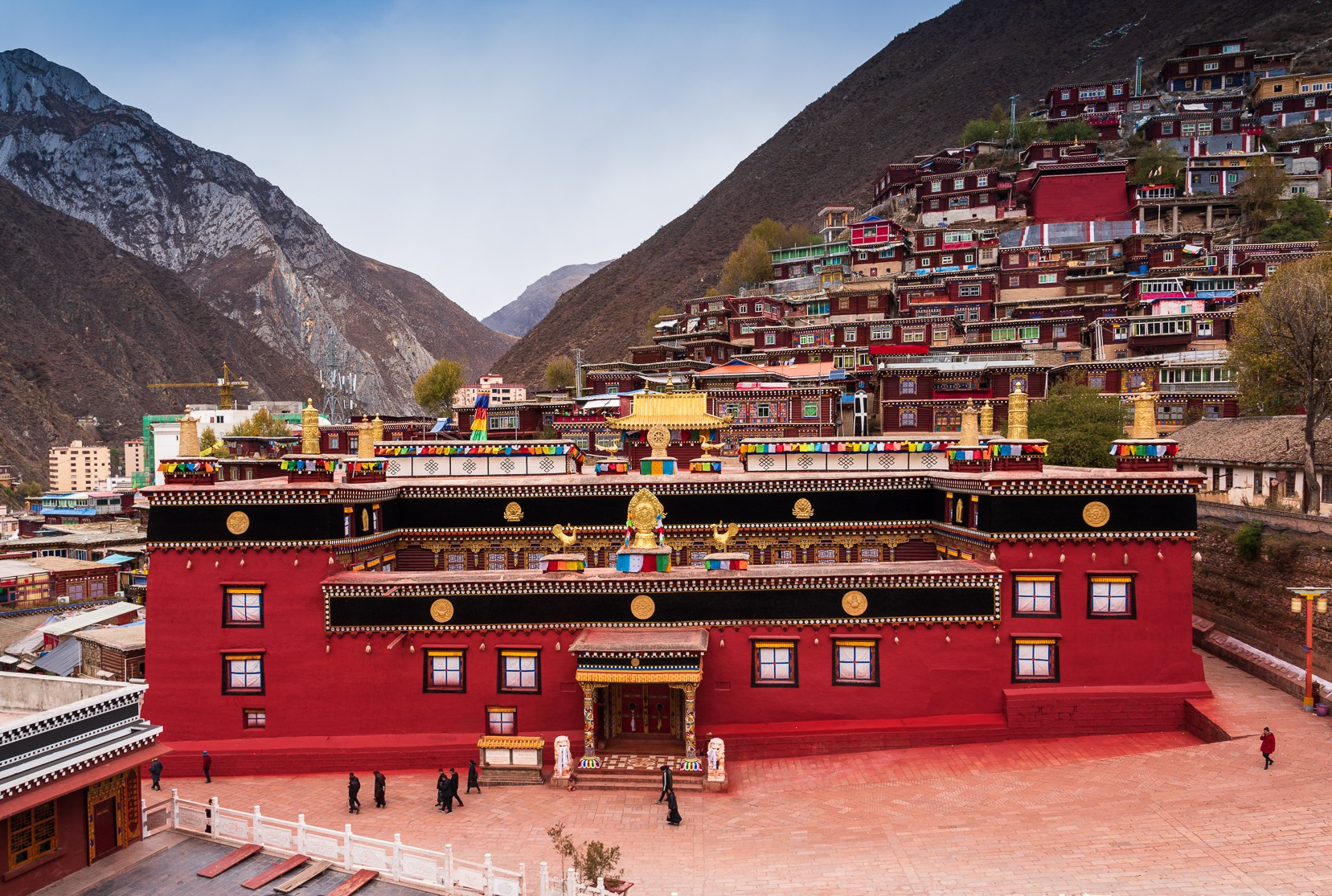
Das Angebot Dege Parkhangs umfasste religiöse Textsammlungen, gesammelte Werke bedeutender Lehrmeister der Sakya-Schule, Werke zur tibetischen Grammatik und Lexikographie, historiographische Texte wie Biographien, Werke zur Geschichte des Buddhismus und Genealogien, Werke zur Poetik, Astronomie, Kalenderrechnung, Logik und Medizin, womit ein Großteil der Genres tibetischer Literatur abgedeckt war.
Die Dege-Ausgabe des Kanjur (tib. bka' 'gyur; „Übersetzung der Worte (des Buddha)“) und des Tanjur (tib. bstan 'gyur; „Übersetzung der Lehrwerke“) (s. a. Buddhistischer Kanon) gehört zu den bekanntesten Erzeugnissen der Druckerei.
德格印经院,位于四川省甘孜藏族自治州德格县欧普龙山,为藏传佛教印经中心之一,1980年7月7日列为四川省重新确定公布的第一批省级文物保护单位[1]。1996年11月20日公布为第四批全国重点文物保护单位[2]。
清雍正七年(1729年),德格土司却杰·登巴泽仁在其家庙贡钦寺内另建佛殿,刻版印经。其子杰色·索朗贡布继位后,再扩建,为德格贡钦寺印经院。
贡钦寺是萨迦派的主要寺院。其印经主要为藏文大藏经甘珠尔和丹珠尔,以及《续部全集》和《修法大全》、萨迦派的《道果释义》、宁玛派《续藏》、噶当派《父法子法》、觉囊派《百行论》等,还有本教的《黑白花龙经》。该院最早刊刻的《三体合璧般若八千颂》为所藏经版中的精品。此外还收集刊印了著名的《德格版藏文大藏经》,闻名于世。
The Derge Parkhang, (pronunciation "Dehr-geh",[1] alternative names Dege Parkhang, Derge Sutra Printing Temple, Dege Yinjing Yuan, Derge Barkhang, Dege Barkhang, Barkhang, Parkhang, Bakong Scripture Printing Press and Monastery[2]) is one of the foremost cultural treasures of Tibet. Derge is a county seat in a high valley in Kham, an eastern district of traditional Tibet which is now part of China's Sichuan Province. The Derge Parkhang is a living institution devoted to the printing and preservation of Tibetan literature, a printing temple that holds the greatest number of Tibetan woodblocks in the world.
The Derge Sutra Printing Temple (Parkhang in Tibetan) is one of the most important cultural, social, religious and historical institutions in Tibet. Founded in 1729 by Demba Tsering, the fortieth King of Derge (1678–1739) with the spiritual and literature assistance of the 8th Tai Situ Panchen Chokyi Jungne, the Derge Parkhang is an active center for publication of Tibetan Buddhist sutra, commentaries, and thangka as well as works of history, technology, biography, medicine and literature. Books are still being made in the same way as they have been for almost three hundred years: handprinted from hand-carved wooden blocks. Cinnabar is used to colour the text red,[3] in which workers can print eight to fifteen pages manually a minute,[1] 2500 in a day,[2] from wooden blocks that have already been engraved with text.[4] Thirty printers are in working condition where printers work in pairs, one puts ink on wooden press, later cleaned in a trough, while the other rolls a piece of paper using a roller which is imprinted red with sayings of Buddha.[1][4]
L'imprimerie de Dergué ou Dergé Parkhang (tibétain : སྡེ་དགེ་པར་ཁང, Wylie : sde dge par khang, chinois : 德格印经院 ; pinyin : , aussi Dêgê ou Dergé) est une des trois plus importantes imprimeries tibétaines, située dans le bourg de Dergué, xian de Dêgê de la préfecture autonome tibétaine de Garzê, province du Sichuan, en République populaire de Chine, dans la région historique tibétaine du Kham. Elle a été fondé en 1729 par le 5e roi et 12e tusi de Dergué, Tenpa Tsering (tibétain : བསྟན་པ་ཚེ་རིང, Wylie : bstan pa tshe ring ; chinois : 登巴澤仁 ; pinyin : , 1678 ~ 1739)1.
Depuis 1741, on y imprime notamment, par impression xylographique, le Kangyour, collection des textes attribués directement au Bouddha Siddhārtha Gautama, et le Tanjur, collection des commentaires sur les paroles du Bouddha2Паркханг (тиб. sde dge par khang) — буддийский монастырь школы Сакья, специализирующийся на книгопечатании, подчинён монастырю Гонгчен. Расположен в городе Деге в Гардзе-Тибетском автономном округе в провинции Сычуань в Китае. Называется также Деге Паркханг[1], используются также транскрипции Баркханг, Баконг, Иньцзин Юань .[2]
Паркханг (Храм печати сутр) — знаменательный тибетский культурный центр. Деге раньше было самостоятельным королевством (Королевство Деге) и относилось к тибетской провинции Кам. В Паркханге сохранилась до сих пор традиция печати и сохранения тибетской литературы. В архивах Паркханга хранится самая большая в мире коллекция деревянных матриц для печати.
Монастырь Гонгчен основал Тангтонг Гьялпо (1385-1464).[3][4]
Типографию Паркханг построил в 1729 году Донгба Церен, XIV король Дэгэ (1678—1739). Здесь стали печататься многочисленные сутры, производиться тангки, печататься сочинения по истории, технологии, медицине, биографические описания и художественная литература. До сих пор книги печатают по традиционной технологии, существующей 300 лет — оттисками с деревянных матриц. Для выделения красным цветом текста и иллюстраций используется киноварь.[5]. Один рабочий за минуту может отпечатать вручную от восьми до пятнадцати страниц,[1] а в день — 2500 страниц текста.[2] Деревянные матрицы для оттисков вырезаются вручную.[6] Тридцать рабочих-печатников работают парами — один наносит краску на деревянный пресс, очищая его после печати, а другой подаёт рулон бумаги, при этом слова Будды, выделяемые красной краской, готовятся заранее.[1][6]
При типографии хранится двести тысяч деревянных матриц для книг, при этом 70% всего наследия тибетской литературы содержится на этих матрицах.[7].


 Baden-Wuerttemberg
 Bavaria
Germany
Bavaria
Germany
 Mecklenburg-Vorpommern
 Lower Saxony
 Saxony
 Saxony-Anhalt
 Schleswig-Holstein
 Thuringia
 Baden-Wuerttemberg
Bavaria
Baden-Wuerttemberg
Bavaria
 Berlin
Germany
Berlin
Germany
 Grand Est
 Hamburg
 Hessen
Lower Saxony
Hessen
Lower Saxony
 North Rhine-Westphalia
 Upper Austria
Austria
Poland
Upper Austria
Austria
Poland
 Rhineland-Palatinate
 Saarland
Saxony
Saxony-Anhalt
Saarland
Saxony
Saxony-Anhalt
 Salzburg
 Tyrol
Czech Republic
Tyrol
Czech Republic
 Vienna
 Baden-Wuerttemberg
Bavaria
Berlin
Baden-Wuerttemberg
Bavaria
Berlin
 Bremen
Germany
Hamburg
Hessen
Lower Saxony
North Rhine-Westphalia
Saxony
Saxony-Anhalt
Bremen
Germany
Hamburg
Hessen
Lower Saxony
North Rhine-Westphalia
Saxony
Saxony-Anhalt


 History
 Literature
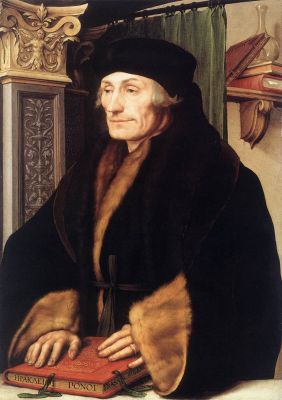
德西德里乌斯·伊拉斯谟(Desiderius Erasmus ,约1466—1536)尼德兰哲学家,16世纪初欧洲人文主义运动主要代表人物。1524年写了《论自由意志》并同马丁·路德通信,批评路德。他知识渊博,忠于教育事业,讽刺了经院式教育,反对死记硬背,主张学习自然科学。其一生始终追求个人自由和人格尊严。
伊拉斯谟,全名德西德里乌斯·伊拉斯谟·罗特罗达穆斯(Desiderius Erasmus Roterodamus;1466年10月28日—1536年7月12日),也译作伊拉斯姆斯、埃拉斯默斯、艾拉思姆斯、伊拉斯莫斯,史学界通称鹿特丹的伊拉斯谟(Erasmus von Rotterdam),是文艺复兴时期尼德兰(今荷兰和比利时)的人文主义思想家和神学家、天主教神父,为北方文艺复兴的代表人物。伊拉斯谟是一个用纯拉丁语写作的古典学者,并曾撰文尖锐地批评罗马天主教会的骄奢腐败,引发了欧洲各地教会呼吁变革的声浪。尽管如此,在宗教改革运动爆发后并未支持改革派,同时对于天主教会内的“动乱”感到自责,甚至因此婉拒了教皇国授予的枢机职位。
Desiderius Erasmus von Rotterdam oder nur Erasmus genannt[1][2] (* 28. Oktober 1466/1467/1469 in Rotterdam; † 11./12. Juli 1536 in Basel) war ein niederländischer Universalgelehrter: Theologe, Philosoph, Philologe, Priester, Autor und Herausgeber von 444 Büchern und Schriften. Er ist der bedeutendste Vertreter des europäischen Humanismus, der bekannteste Renaissance-Humanist und war ein einflussreicher Kirchenreformer. Als kritischer Denker seiner Zeit zählt Erasmus, der auch als „Fürst der Humanisten“ bezeichnet wird, zu den Wegbereitern der europäischen Aufklärung. Seine Wirkung reicht bis in die heutige Zeit.