
漢德百科全書 | 汉德百科全书
 Turkey
 Architecture
 Religion

萨班哲中央清真寺(土耳其語:Sabancı Merkez Camii)位于土耳其阿达纳,是土耳其第二大清真寺[2]。这座清真寺的外观和内部装饰类似于埃迪尔内的塞利米耶清真寺,但是拥有6个叫拜楼,又类似于伊斯坦布尔的苏丹艾哈迈德清真寺(蓝色清真寺)。
这座清真寺于1998年投入使用,是在没收的亚美尼亚公墓原址上建造的。[3][4][5]占地总面积52600平方米。[6]
萨班哲中央清真寺是由土耳其宗教基金会和萨班哲基金会共同建造。清真寺的所有权属于阿达纳宗教事务基金会,其使用权已移交给阿达纳省穆夫提办事处。
Die Sabancı-Zentralmoschee (türkisch Sabancı Merkez Camii) in Adana ist die zweitgrößte Moschee in der Türkei und eine der größten der Welt. Sie wurde im Jahr 1998 eröffnet, Architekt war Necip Dinç.
Die Moschee besitzt sechs Minarette, von denen die vorderen vier (um die Zentralkuppel herum platziert) eine Höhe von 99 Metern aufweisen, die zwei hinteren sind 75 Meter hoch. Die größte der fünf Kuppeln hat einen Durchmesser von 32 Metern und eine Höhe von 54 Meter.
Von außen erinnert diese Moschee an die Sultan-Ahmed-Moschee („Blaue Moschee“) und an die Hagia Sophia in Istanbul. Die Innenarchitektur erinnert an die Selimiye-Moschee in Edirne.
Finanziert wurde der Bau zu 50 % durch Spenden der Bevölkerung und zu 50 % durch die Industriellenfamilie Sabancı.
 History

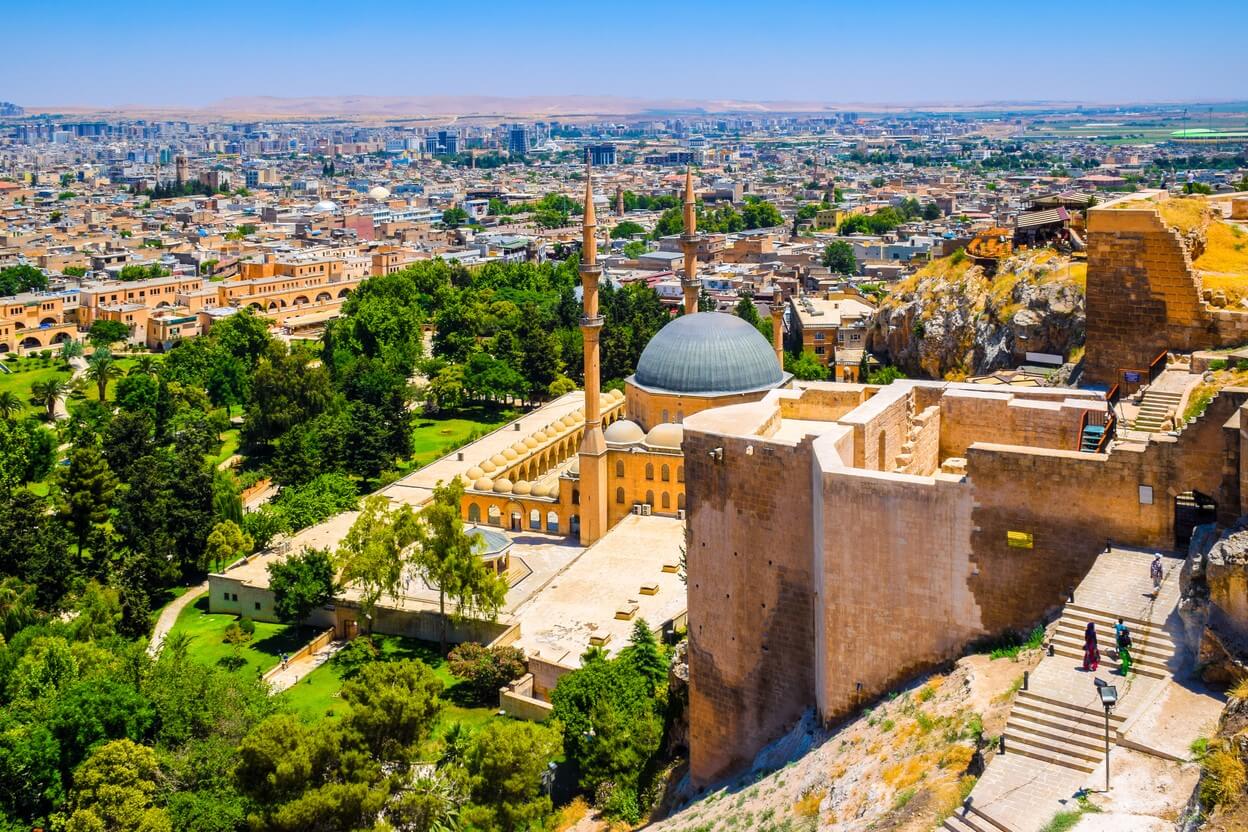
Die Selahaddin Eyyubi Moschee ist eine historische Moschee in Schanliurfa (Şanlıurfa).
Das Gebäude war einstmals die Kirche Saint Johannes Prodromos Addai und befindet sich in der Vali Fuat Bey Caddesi. Es wird angenommen, dass das Gebäude 457 n.Chr. von Bischof Nona erbaut worden ist. Das auch als Kathedrale bezeichnete Gebäude war Jahrhunderte lang die größte Kirche der Region. Das Gebäude lag viele Jahre in Trümmern und wurde im frühen 19. Jh. zu einer Moschee gewandelt, die dann allerdings auch baufällig wurde. Das Gebäude wurde zwischenzeitlich als Elektrozentrale genutzt.
Auf dessen Ruinen wurde im 20. Jh. n.Chr. wiederum eine Moschee gebaut und am 28. Mai 1993 eröffnet. Die Moschee wurde Sultan Saladin gewidmet.

 Geography

 International cities
 Ships and Nautics


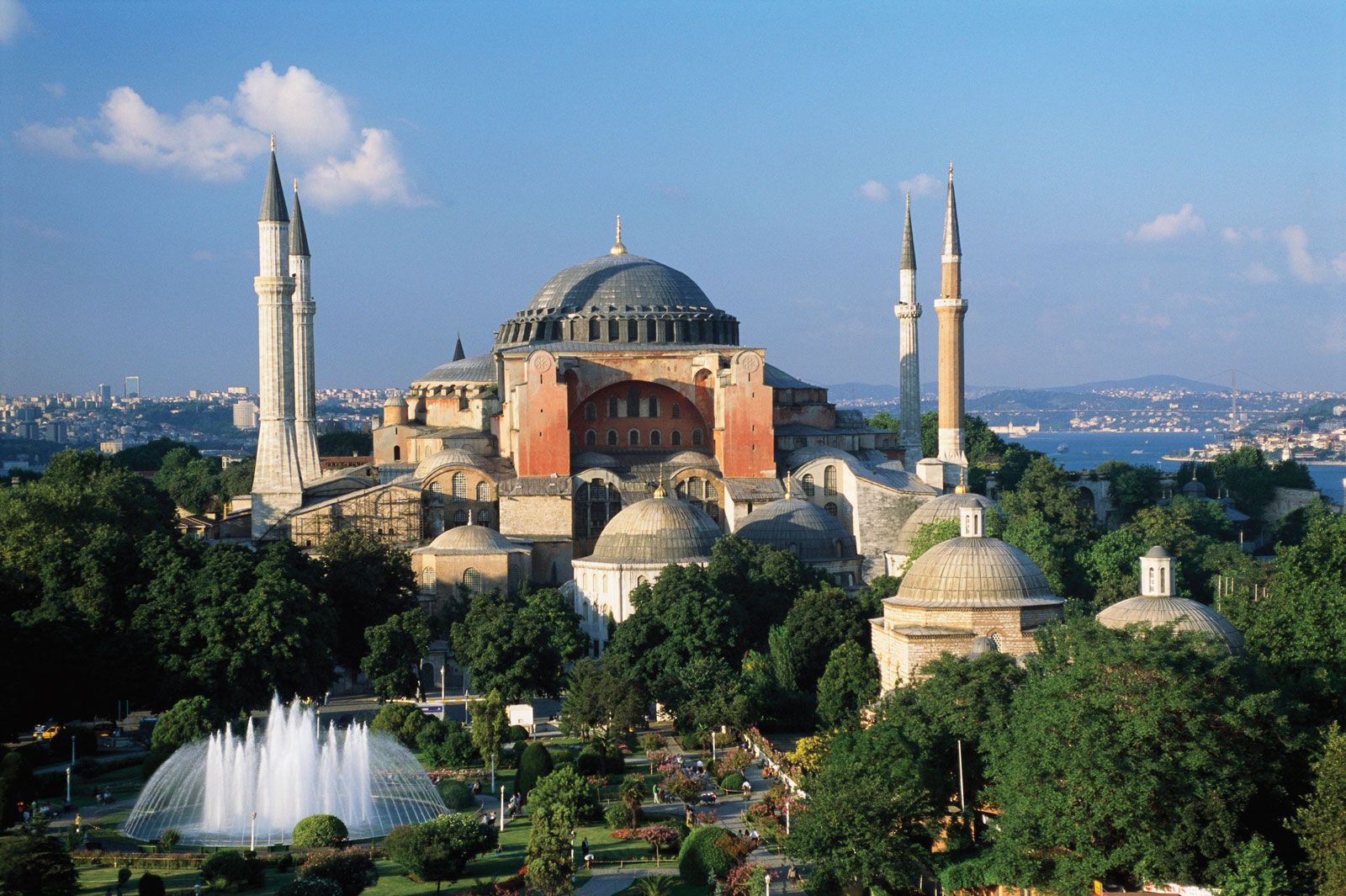
Die Hagia Sophia (vom griechischen Ἁγία Σοφία „heilige Weisheit“; türkisch Ayasofya) oder Sophienkirche ist eine ehemalige byzantinische Kirche, die später eine Moschee wurde und heute als Museum (Ayasofya Müzesi, „Hagia-Sophia-Museum“) genutzt wird. Sie befindet sich in Eminönü, einem Stadtteil im europäischen Teil Istanbuls. Nach dem Niederbrennen zweier Vorläuferbauten verfolgte Kaiser Justinian mit dem Bau einer Kuppelbasilika im 6. Jahrhundert n. Chr. ein besonders ambitioniertes baupolitisches Programm. Sie ist dabei nicht nur die letzte der spätantiken Großkirchen, die seit Konstantin dem Großen im Römischen Reich errichtet wurden, sondern gilt in ihrer architektonischen Einzigartigkeit oft als eine Kirche ohne Vorbilder und ohne Nachahmung.[1] Die Kuppel der Hagia Sophia bleibt mit 32 Metern Spannweite bis zum heutigen Tage die größte über nur vier Tragepunkten errichtete Kuppel der Architekturgeschichte und gilt mit der gigantischen Umsetzung und ihrer besonderen Harmonie und Proportionen als eines der bedeutendsten Gebäude aller Zeiten.[2][3] Als letztes großes und bei Weitem bedeutendstes Bauwerk der frühbyzantinischen Architektur und Kunst der Spätantike[4] brachte sie zugleich ein neues Paradigma des Kirchenbaus hervor, das teils im Gegensatz zu seinen älteren Vorläufern stand und in der Folge einen der Grundpfeiler der christlichen Baukunst bilden sollte, der die Sakralarchitektur in Ost und West nachhaltig beeinflusst hat.[5][2] Die Hagia Sophia war die Kathedrale Konstantinopels, Hauptkirche des Byzantinischen Reiches sowie religiöser Mittelpunkt der Orthodoxie und ist heute ein Wahrzeichen Istanbuls.
Als Krönungskirche der byzantinischen Kaiser (seit 641), als Kathedrale des Ökumenischen Patriarchats von Konstantinopel und Ort wichtiger historischer Geschehnisse ist die Hagia Sophia in besonderer Weise mit der byzantinischen Geschichte sowie allgemein als universell gedachte Modellkirche der Hauptstadt der christlichen Oikumene, Konstantinopel, mit der Ideengeschichte des Christentums verbunden.[6] Geplant als Bau von universeller Bedeutung, blieb sie über die Zeit des Mittelalters auch ein universelles christlich-spirituelles Zentrum. Auf der rechten Seite des Naos symbolisiert das Omphalion daher auch die Mitte der Erde, den sprichwörtlichen „Nabel der Welt“. Ihr Bau und ihre Symbolkraft waren aber insbesondere für die orthodoxe Christenheit und das Reich von außerordentlicher Bedeutung. Daher gilt sie den meisten orthodoxen Christen noch heute als großes Heiligtum.
Nach der Eroberung Konstantinopels durch die Osmanen im Jahr 1453 wurden christliche Insignien, Inneneinrichtung, Dekorationen und Glocken der Hagia Sophia entfernt oder durch Putz verdeckt. Nachdem die Hagia Sophia anschließend als Hauptmoschee der Osmanen adaptiert worden war, stellten sich die Sultane des 16. und 17. Jahrhunderts mit bedeutenden architektonischen Rezeptionen der Hagia Sophia in die byzantinische Tradition; die berühmteste Rezeption ist die Sultan-Ahmed- oder Blaue Moschee; in jüngster Zeit ist die neue Sabancı-Zentralmoschee von Adana zu nennen. Mithin geht die heute geläufigste Bauform der Moschee als Zentralkuppelbau letztlich auf die Hagia Sophia zurück, während in den ersten Jahrhunderten der islamischen Geschichte noch der Typus der Pfeilerhallenmoschee (wie z. B. die ehemalige Hauptmoschee von Córdoba oder die Umayyaden-Moschee) dominiert hatte, wobei letztere ursprünglich als Basilika errichtet und erst später in eine Moschee umgewandelt wurde. Allgemein ist die Hagia Sophia trotz der islamischen Indienstnahme unter den bedeutenden frühchristlichen Sakralgebäuden in rein architektonischer Perspektive heute weniger verändert überliefert, als es die großen frühchristlichen Basiliken Roms und Jerusalems sind.[7]
圣索菲亚大教堂(希腊语:Ἁγία Σοφία;拉丁语:Sancta Sapientia;土耳其语:Ayasofya)是位于现今土耳其伊斯坦布尔的宗教建筑,有近一千五百年的漫长历史,因其巨大的圆顶而闻名于世,是一幢“改变了建筑史”的拜占庭式建筑典范[1]。
索菲亚在希腊语里的意思是神圣智慧[2]。其拉丁语名称则为Sancta Sophia,希腊语全名是“Ναός τῆς Ἁγίας τοῦ Θεοῦ Σοφίας”,解作“上帝圣智教堂”,教堂供奉在正教神学里的耶稣[3][4]。大教堂称为“圣索菲亚”(Ἁγία Σοφία),是特别献给天主圣智的那一位,即圣三中的圣言。这种对耶稣的称呼可能源自保禄(保罗)对基督的描绘,格前1:24 “基督却是天主的德能和天主的圣智(Σοφία)”。
在该教堂伫立的地点曾经存在过两座被暴乱摧毁的教堂,公元532年拜占庭皇帝查士丁尼一世下令建造第三所教堂[5]。在拜占庭雄厚的国力支持之下,由物理学家米利都的伊西多尔(Isidore of Miletus)及数学家特拉勒斯的安提莫斯设计的这所教堂在公元537年便完成了其建造[6]。刚竣工时的圣索菲亚大教堂是正教会牧首巴西利卡形制的大教堂,在1519年被塞维利亚主教座堂取代之前圣索菲亚大教堂一直是世界上最大的教堂[7]。圣索菲亚大教堂由360年落成直至1453年期间都是君士坦丁堡的大教堂[8]
奥斯曼土耳其人在1453年征服君士坦丁堡,苏丹穆罕默德二世下令将大教堂转变为清真寺[9],还将钟铃、祭坛、圣幛、祭典用的器皿移去,用灰泥覆盖基督教镶嵌画[10]。日后又逐渐加上了一些伊斯兰建筑,如米哈拉布、敏拜尔及外面的四座叫拜楼。
随着土耳其共和国的建立,1934年该教堂失去了其宗教意义。1935年2月1日,这座见证了数个帝国兴盛衰亡的建筑以博物馆的身份重新对世人开放[11]。
大教堂藏有大量圣物,当中以一个15米(49英尺)高的银圣幛最具特色,圣索菲亚大教堂是君士坦丁堡牧首的圣座,在将近千年的时间里都是正教会的焦点。1054年,枢机宏伯特到圣索菲亚大教堂的祭坛将牧首米恰尔一世·色路拉里乌逐出教会[12],该事件被视为东西教会分裂的开端。
作为接近500年来伊斯坦布尔最重要的清真寺,圣索菲亚大教堂是众多奥斯曼帝国时期清真寺如苏丹艾哈迈德清真寺(蓝色清真寺)、塞札特清真寺、苏莱曼尼耶清真寺、鲁斯坦帕夏清真寺、奇力克阿里帕夏清真寺的模范。
アヤソフィア(トルコ語:Ayasofya、古典ギリシア語:Ἁγία Σοφία (Hagia Sophiā)、現代ギリシア語:Αγία Σοφία (Aagia Sophia))は、トルコのイスタンブールにある博物館[1]。東ローマ帝国(ビザンツ帝国・ビザンティン帝国)時代に正統派キリスト教の大聖堂としての建設を起源とし、帝国第一の格式を誇る教会、コンスタンティノープル総主教座の所在地であった[2]が、1204年から1261年まではラテン帝国支配下においてローマ・カトリックの教徒大聖堂とされていた。その後は1453年5月29日から1931年までの長期間にわたりモスクとして改築を繰り返し使用されて現在の特徴的な姿となり[3]、後に世俗化された。1935年2月1日から博物館 (トルコ語: Ayasofya Müzesi) として使われている[4]。
東ローマ帝国の代表的な遺構であり、しばしばビザンティン建築の最高傑作と評価される。その歴史と威容から、オスマン帝国の時代においても第一級の格式を誇るモスクとして利用された。日本語では慣用的に「ハギア・ソフィア」と呼称されるが、厳密にはトルコ語読みは「アヤソフャ」、古典ギリシア語読みは「ハギア・ソピアー」、現代ギリシア語読みでは「アギア・ソフィア」に近い。正教会では「アギア・ソフィア大聖堂」と呼ばれ、「ハギア・ソフィア大聖堂」と表記されることも多い。
Hagia Sophia (/ˈhɑːɡiə soʊˈfiːə/; from the Greek Αγία Σοφία, pronounced [aˈʝia soˈfia], "Holy Wisdom"; Latin: Sancta Sophia or Sancta Sapientia; Turkish: Ayasofya) is the former Greek Orthodox Catholic patriarchal cathedral, later an Ottoman imperial mosque and now a museum (Ayasofya Müzesi) in Istanbul, Turkey. Built in 537 AD at the beginning of the Middle Ages, it was famous in particular for its massive dome. It was the world's largest building and an engineering marvel of its time. It is considered the epitome of Byzantine architecture[1] and is said to have "changed the history of architecture".[2]
From the date of its construction in 537 until 1453, it served as an Eastern Orthodox cathedral and the seat of the Ecumenical Patriarch of Constantinople,[3] except between 1204 and 1261, when it was converted by the Fourth Crusaders to a Roman Catholic cathedral under the Latin Empire. The building was later converted into an Ottoman mosque from 29 May 1453 until 1931. It was then secularized and opened as a museum on 1 February 1935.[4] It remained the world's largest cathedral for nearly a thousand years, until Seville Cathedral was completed in 1520.
The current building was originally constructed as a church between 532 and 537 on the orders of the Byzantine Emperor Justinian I and was the third Church of the Holy Wisdom to occupy the site, the prior one having been destroyed by rioters in the Nika Revolt. It was designed by the Greek geometers Isidore of Miletus and Anthemius of Tralles.[5] The church was dedicated to the Wisdom of God, the Logos, the second person of the Trinity,[6] its patronal feast taking place on 25 December, the commemoration of the birth of the incarnation of the Logos in Christ.[6] Although sometimes referred to as Sancta Sophia (as though it were named after Sophia the Martyr), sophia being the phonetic spelling in Latin of the Greek word for wisdom, its full name in Greek is Ναός της Αγίας του Θεού Σοφίας, Naos tēs Hagias tou Theou Sophias, "Shrine of the Holy Wisdom of God".[7][8] The church contained a large collection of relics and featured, among other things, a 15-metre (49 ft) silver iconostasis.[citation needed] The focal point of the Eastern Orthodox Church for nearly one thousand years, the building witnessed the excommunication of Patriarch Michael I Cerularius officially communicated by Humbert of Silva Candida, the papal envoy of Pope Leo IX in 1054, an act that is commonly considered the start of the East–West Schism.
In 1453, Constantinople was conquered by the Ottoman Empire under Mehmed the Conqueror, who ordered this main church of Orthodox Christianity converted into a mosque. Although some parts of the city of Constantinople were falling into disrepair, the cathedral was maintained with an amount of money set aside for this purpose. Nevertheless, the Christian cathedral made a strong impression on the new Ottoman rulers and they decided to convert it into a mosque.[9][10] The bells, altar, iconostasis, and other relics were destroyed and the mosaics depicting Jesus, his Mother Mary, Christian saints, and angels were also destroyed or plastered over. Islamic features—such as the mihrab (a niche in the wall indicating the direction toward Mecca, for prayer), minbar (pulpit), and four minarets—were added. It remained a mosque until 1931 when it was closed to the public for four years. It was re-opened in 1935 as a museum by the Republic of Turkey. Hagia Sophia was, as of 2014, the second-most visited museum in Turkey, attracting almost 3.3 million visitors annually.[11] According to data released by the Turkish Culture and Tourism Ministry, Hagia Sophia was Turkey's most visited tourist attraction in 2015.[12]
From its initial conversion until the construction of the nearby Sultan Ahmed Mosque (Blue Mosque of Istanbul) in 1616, it was the principal mosque of Istanbul. The Byzantine architecture of the Hagia Sophia served as inspiration for many other Ottoman mosques, such as the aforementioned mosque, the Şehzade Mosque, the Süleymaniye Mosque, the Rüstem Pasha Mosque and the Kılıç Ali Pasha Complex.
La basilique Sainte-Sophie (du grec Ἁγία Σοφία / Hagía Sophía, qui signifie « sagesse de Dieu », « sagesse divine », nom repris en turc sous la forme Ayasofya) est une grande basilique chrétienne de Constantinople construite dans un premier temps au IVe siècle, puis reconstruite bien plus grande au VIe siècle, sous l'empereur byzantin Justinien, où elle a acquis sa forme actuelle. Elle est devenue mosquée au XVe siècle sous Mehmet II. Elle est située sur la péninsule historique d'Istanbul. Depuis 1934, elle n'est plus un lieu de culte mais un musée. Son esplanade est à la mesure de la gloire de Byzance. Souvent surnommée la Grande Église, la basilique est dédiée au Christ, « sagesse de Dieu », selon la tradition théologique chrétienne. La dédicace du sanctuaire est célébrée le 25 décembre.
Santa Sofia (in turco: Ayasofya; in greco: Αγία Σοφία, Agia Sofia) è uno dei principali monumenti di Istanbul.
Dedicato alla Sophia (la sapienza di Dio), dal 537 al 1453 l'edificio fu cattedrale ortodossa e sede del Patriarcato di Costantinopoli, a eccezione di un breve periodo tra il 1204 e il 1261, quando fu convertito dai crociati a cattedrale cattolica di rito romano sotto l'Impero latino di Costantinopoli.
Divenne poi moschea ottomana il 29 maggio 1453 e tale rimase fino al 1931. Fu poi sconsacrato e il 1º febbraio 1935 divenne un museo.
Santa Madre Sofía o Hagia Sophia (del griego: Άγια Σοφία, «Santa Sabiduría»; en latín: Sancta Sophia o Sancta Sapientia; en turco: Ayasofya) es una antigua basílica patriarcal ortodoxa, posteriormente convertida en mezquita y actualmente en museo, en la ciudad de Estambul, Turquía.1
Desde la fecha de su dedicación en el año 360 y hasta 1453 sirvió como la catedral ortodoxa bizantina de rito oriental de Constantinopla, excepto en el paréntesis entre 1204 y 1261 en que fue reconvertida en catedral católica de rito latino, durante el patriarcado latino de Constantinopla del Imperio latino, fundado por los cruzados. Tras la Conquista de Constantinopla por el Imperio otomano, el edificio fue transformado en mezquita, manteniendo esta función desde el 29 de mayo de 1453 hasta 1931, fecha en que fue secularizado. El 1 de febrero de 1935 fue inaugurado como museo.
A veces llamada Sancta Sophia (como si fuera el nombre de Santa Sofía), sophia es en realidad la transcripción fonética al latín de la palabra griega "sabiduría" —el nombre completo en griego es Ναός τῆς Ἁγίας τοῦ Θεοῦ Σοφίας: «Iglesia de la Santa Sabiduría de Dios»—.23
El templo estaba dedicado a la Divina Sabiduría, una imagen tomada del Libro de la Sabiduría del Antiguo Testamento y que hace referencia a la personificación de la sabiduría de Dios o segunda persona de la Santísima Trinidad. Su fiesta se celebra el 25 de diciembre, el aniversario de la encarnación del Verbo o Logos en Cristo.4
Famosa por su enorme cúpula, está considerada como el epítome de la arquitectura bizantina, y se dice de ella que «cambió la historia de la arquitectura».5 Fue la catedral con mayor superficie del mundo durante casi mil años, hasta que se completó la obra de la catedral de Sevilla en 1520. El edificio actual fue reconstruido entre 532 y 537 para ser usado como iglesia, por orden del emperador bizantino Justiniano I, siendo la tercera iglesia de la Santa Sabiduría edificada en ese mismo emplazamiento. El diseño es obra del arquitecto y físico jonio Isidoro de Mileto y del matemático y arquitecto lidio Antemio de Tralles.
La iglesia contiene una gran colección de reliquias de santos, y contó con un iconostasio de plata de 15 metros. Fue la sede del Patriarca de Constantinopla y el punto focal religioso de la Iglesia ortodoxa oriental por casi mil años. En esta iglesia el cardenal Humberto excomulgó a Miguel I Cerulario en 1054; acto que comúnmente se considera como el comienzo del Gran Cisma.
En 1453 Constantinopla fue conquistada por los turcos otomanos bajo las órdenes del sultán Mehmed II, quien posteriormente decidió que el templo se convirtiera en mezquita.6 Las campanas, el altar, el iconostasio y los vasos de sacrificio fueron retirados, y muchos de los mosaicos fueron enlucidos. Durante el dominio otomano se le añadieron detalles arquitectónicos islámicos, como el mihrab, el minbar y cuatro minaretes. El edificio se mantuvo como mezquita hasta 1931, fecha en que fue cerrado al público por el gobierno de Turquía hasta su reapertura, ya como museo, en 1935.
Mezquita principal de Estambul durante casi 500 años, Santa Sofía sirvió como modelo para muchas otras mezquitas otomanas, como la mezquita del Sultán Ahmed —también conocida como la Mezquita Azul de Estambul—, la Mezquita Sehzade, la mezquita de Solimán, la mezquita Rüstem Pasha y la mezquita Kiliç Ali Pasha.
Собо́р Свято́й Софи́и — Прему́дрости Бо́жией[1], Святая София Константинопольская, Айя-София (греч. Ἁγία Σοφία, полностью: Ναός τῆς Ἁγίας τοῦ Θεοῦ Σοφίας; тур. Ayasofya) — бывший патриарший православный собор, впоследствии — мечеть, ныне — музей; всемирно известный памятник византийского зодчества, символ «золотого века» Византии. Официальное название памятника на сегодняшний день Музей Айя-София (тур. Ayasofya Müzesi).
Во времена Византийской империи собор находился в центре Константинополя рядом с императорским дворцом. В настоящее время находится в историческом центре Стамбула, район Султанахмет. В 1453 году после захвата города османами Софийский собор был обращён в мечеть, а в 1935 году он приобрёл статус музея. В 1985 году Софийский собор в числе других памятников исторического центра Стамбула был включён в состав Всемирного наследия ЮНЕСКО[2].
Более тысячи лет Софийский собор в Константинополе оставался самым большим храмом в христианском мире — вплоть до постройки собора Святого Петра в Риме. Высота Софийского собора — 55,6 метров, диаметр купола 31 метр.
 Art
Art

Das Zafer Anıtı (Siegesdenkmal) in Ankara, früher auch hakimiyet-i milliye genannt, steht am Ulus-Platz.
Nach einer Kampagne der Tageszeitung Yenigün zur Errichtung eines Denkmales für die Helden im Türkischen Befreiungskrieg schrieb die türkische Regierung einen internationalen Wettbewerb für die Gestaltung des Denkmales aus. Der österreichische Künstler Heinrich Krippel bekam 1925 den Auftrag für das Denkmal. Krippel ließ das Denkmal in den Vereinigten Metallwerken (Wien) gießen. Am 24. November 1927 wurde das Denkmal auf dem Ulus-Platz von Kazim Özalp in Anwesenheit von Ismet Inönü enthüllt. Die Statue wurde mit von Yunus Nadi Abalıoğlu gesammelten Spenden finanziert.
安卡拉的 Zafer Anıtı(胜利纪念碑)原名 hakimiyet-i milliye,位于乌卢斯广场。
Argentina
China
 Eat and Drink
 *Types of tea, Tea growing areas, Tea ceremony, Tea culture
India
Indonesia
Iran
Japan
Kenya
Sri Lanka
Turkey
Vietnam
*Types of tea, Tea growing areas, Tea ceremony, Tea culture
India
Indonesia
Iran
Japan
Kenya
Sri Lanka
Turkey
Vietnam

 Afghanistan
Egypt
Albania
Angola
Antigua and Barbuda
Argentina
Armenia
Australia
Bahrain
Bangladesh
Barbados
Belgium
Belize
Benin
Bolivia
Botsuana
Brazil
Brunei Darussalam
Bulgaria
Burkina Faso
Burundi
Chile
China
Columbia
Costa Rica
Côte d´Ivoire
Cuba
Denmark
Demokratische Republik Kongo
Germany
Dominica
Dominikanische Republik
Djibouti
Ecuador
Estonia
Afghanistan
Egypt
Albania
Angola
Antigua and Barbuda
Argentina
Armenia
Australia
Bahrain
Bangladesh
Barbados
Belgium
Belize
Benin
Bolivia
Botsuana
Brazil
Brunei Darussalam
Bulgaria
Burkina Faso
Burundi
Chile
China
Columbia
Costa Rica
Côte d´Ivoire
Cuba
Denmark
Demokratische Republik Kongo
Germany
Dominica
Dominikanische Republik
Djibouti
Ecuador
Estonia
 European Union
Fidschi
European Union
Fidschi
 Financial
Finland
France
Gabun
Gambia
Georgia
Ghana
Grenada
Greece
Guatemala
Guinea
Guinea-Bissau
Guyana
Honduras
Hongkong Tebiexingzhengqu-HK
India
Indonesia
Ireland
Iceland
Israel
Italy
Jamaika
Japan
Yemen
Jordan
Cambodia
Cameroon
Canada
Kap Verde
Kasachstan
Katar
Kenya
Kyrgyzstan
Croatia
Kuwait
Laos
Lesotho
Latvia
Liberia
Liechtenstein
Lithuania
Luxembourg
Macau Tebiexingzhengqu-MO
Madagaskar
Malawi
Malta
Morocco
Mauritania
Mauritius
Mexico
Moldawien
Financial
Finland
France
Gabun
Gambia
Georgia
Ghana
Grenada
Greece
Guatemala
Guinea
Guinea-Bissau
Guyana
Honduras
Hongkong Tebiexingzhengqu-HK
India
Indonesia
Ireland
Iceland
Israel
Italy
Jamaika
Japan
Yemen
Jordan
Cambodia
Cameroon
Canada
Kap Verde
Kasachstan
Katar
Kenya
Kyrgyzstan
Croatia
Kuwait
Laos
Lesotho
Latvia
Liberia
Liechtenstein
Lithuania
Luxembourg
Macau Tebiexingzhengqu-MO
Madagaskar
Malawi
Malta
Morocco
Mauritania
Mauritius
Mexico
Moldawien
 Mongolei
Montenegro
Mosambik
Myanmar
Namibia
Nepal
New Zealand
Nicaragua
Netherlands
Niger
Nigeria
Nordmazedonien
Norwegen
Oman
Austria
Pakistan
Panama
Papua-Neuguinea
Paraguay
Peru
Philippines
Poland
Portugal
Republik El Salvador
Republik Haiti
Republik Kongo
Republic of Korea
Ruanda
Romania
Russia
Salomonen
Sambia
Samoa
Saudi Arabia
Sweden
Sweden
Switzerland
Genf
Senegal
Seychellen
Sierra Leone
Simbabwe
Singapore
Slovakia
Slovakia
Slovenia
Slovenia
Spain
Sri Lanka
Saint Kitts and Nevis
St. Lucia
St. Vincent and the Grenadines
South Africa
Suriname
Swasiland
Tajikistan
Taiwan Sheng-TW
Tansania
Thailand
Togo
Tonga
Trinidad und Tobago
Tschad
Czech Republic
Tunisia
Turkey
Uganda
Ukraine
Hungary
Uruguay
Vanuatu
Venezuela
United Arab Emirates
United States
United Kingdom
Vietnam
Mongolei
Montenegro
Mosambik
Myanmar
Namibia
Nepal
New Zealand
Nicaragua
Netherlands
Niger
Nigeria
Nordmazedonien
Norwegen
Oman
Austria
Pakistan
Panama
Papua-Neuguinea
Paraguay
Peru
Philippines
Poland
Portugal
Republik El Salvador
Republik Haiti
Republik Kongo
Republic of Korea
Ruanda
Romania
Russia
Salomonen
Sambia
Samoa
Saudi Arabia
Sweden
Sweden
Switzerland
Genf
Senegal
Seychellen
Sierra Leone
Simbabwe
Singapore
Slovakia
Slovakia
Slovenia
Slovenia
Spain
Sri Lanka
Saint Kitts and Nevis
St. Lucia
St. Vincent and the Grenadines
South Africa
Suriname
Swasiland
Tajikistan
Taiwan Sheng-TW
Tansania
Thailand
Togo
Tonga
Trinidad und Tobago
Tschad
Czech Republic
Tunisia
Turkey
Uganda
Ukraine
Hungary
Uruguay
Vanuatu
Venezuela
United Arab Emirates
United States
United Kingdom
Vietnam
 Important International Organizations
World Trade Organization
Roberto Azevêdo
World Trade Organization
Mike Moore
World Trade Organization
Ngozi Okonjo-Iweala
World Trade Organization
Pascal Lamy
World Trade Organization
Peter Sutherland
World Trade Organization
Renato Ruggiero
World Trade Organization
Supachai Panitchpakdi
Central African Republic
Cyprus
Important International Organizations
World Trade Organization
Roberto Azevêdo
World Trade Organization
Mike Moore
World Trade Organization
Ngozi Okonjo-Iweala
World Trade Organization
Pascal Lamy
World Trade Organization
Peter Sutherland
World Trade Organization
Renato Ruggiero
World Trade Organization
Supachai Panitchpakdi
Central African Republic
Cyprus

世界贸易组织(简称世贸组织或世贸;英语:World Trade Organization,缩写为 WTO;法语:Organisation Mondiale du Commerce,缩写为 OMC;西班牙语:Organización Mundial del Comercio,缩写为 OMC)是负责监督成员经济体之间各种贸易协议得到执行的一个国际组织,前身是1948年起实施的关税及贸易总协定的秘书处。
世贸总部位于瑞士日内瓦,现任总干事是罗伯托·阿泽维多。截至2016年7月29日,世界贸易组织共有164个成员。[5]世界贸易组织的职能是调解纷争,加入WTO不算签订一种多边贸易协议,但其设置的入会门槛可以做为愿意降低关税、法政上配合、参与国际贸易的门票,它是贸易体制的组织基础和法律基础,是众多贸易协定的管理者,是各成员贸易立法的监督者,是就贸易提供解决争端和进行谈判的场所。该机构是当代最重要的国际经济组织之一,其成员间的贸易额占世界贸易额的绝大多数,被称为“经济联合国”。
世界貿易機関(せかいぼうえききかん、英: World Trade Organization、略称:WTO)は、自由貿易促進を主たる目的として創設された国際機関である。常設事務局がスイスのジュネーブに置かれている。
GATT(ガット)ウルグアイ・ラウンドにおける合意によって、世界貿易機関を設立するマラケシュ協定(WTO設立協定)に基づいて1995年1月1日にGATTを発展解消させて成立した。
本来GATTは、第二次世界大戦後の安定を見据え、国際通貨基金および国際復興開発銀行とともに設立が予定されていた国際貿易機関(ITO)の設立準備の際に、暫定協定として結ばれたものであった。国際貿易機関の設立が廃案となり、GATTがその代替として発展強化されていくうちに、再びこの分野の常設機関が求められ、WTOが設立されることとなった。発展解消であるため、GATTの事務局及び事務局長もWTOへと引き継がれることとなった[4]。
WTOはGATTを継承したものであるが、GATTが協定(Agreement)に留まったのに対し、WTOは機関(Organization)であるのが根本的な違いである。
を基本原則としている。また、物品貿易だけでなく金融、情報通信、知的財産権やサービス貿易も含めた包括的な国際通商ルールを協議する場である。
対抗処置の発動では、紛争処理機関(パネル)の提訴に対し全加盟国による反対がなければ採択されるというネガティブ・コンセンサス方式(逆コンセンサス方式)を採用した強力な紛争処理能力を持つ。これは国際組織としては稀な例であり、コンセンサス方式を採っていたGATTとの大きな違いで、WTOの特徴の一つといえる。
新多角的貿易交渉(新ラウンド)は、2001年11月にカタールのドーハで行われた第4回WTO閣僚会議で開始を決定し、ドーハ・ラウンドと呼ばれていた。2002年2月1日の貿易交渉委員会で新ラウンドがスタートした。しかし9年に及ぶ交渉は先進国と、急速に台頭してきたBRICsなど新興国との対立によって中断と再開を繰り返した末、ジュネーブで行われた第4回WTO閣僚会議(2011年12月17日)で「交渉を継続していくことを確認するものの、近い将来の妥結を断念する」(議長総括)となり事実上停止状態になった。
その後、2013年のバリ島における閣僚会議で、貿易円滑化協定を含む合意が成立し、2014年7月まで貿易円滑化協定をWTO協定に加える(附属書1Aに追加)するための文書を一般理事会で採択すべきとされた[5]。しかしインドが合意を蒸し返す状態で反対したため期限までに採択できなかった[6]。その後食糧備蓄への補助金の問題で先進国側が譲歩することでようやくインドが合意し、2014年11月27日の一般理事会で貿易円滑化協定が採択された[6]。WTO加盟国の3分の2が改正を受諾した日に発効することになっており、2017年2月22日にこの要件を満たし、協定が発効した。
The World Trade Organization (WTO) is an intergovernmental organization that regulates international trade. The WTO officially commenced on 1 January 1995 under the Marrakesh Agreement, signed by 124 nations on 15 April 1994, replacing the General Agreement on Tariffs and Trade (GATT), which commenced in 1948. It is the largest international economic organization in the world.[5][6]
The WTO deals with regulation of trade in goods, services and intellectual property between participating countries by providing a framework for negotiating trade agreements and a dispute resolution process aimed at enforcing participants' adherence to WTO agreements, which are signed by representatives of member governments[7]:fol.9–10 and ratified by their parliaments.[8] The WTO prohibits discrimination between trading partners, but provides exceptions for environmental protection, national security, and other important goals.[9] Trade-related disputes are resolved by independent judges at the WTO through a dispute resolution process.[9]
The WTO's current Director-General is Roberto Azevêdo,[10][11] who leads a staff of over 600 people in Geneva, Switzerland.[12] A trade facilitation agreement, part of the Bali Package of decisions, was agreed by all members on 7 December 2013, the first comprehensive agreement in the organization's history.[13][14] On 23 January 2017, the amendment to the WTO Trade Related Aspects of Intellectual Property Rights (TRIPS) Agreement marks the first time since the organization opened in 1995 that WTO accords have been amended, and this change should secure for developing countries a legal pathway to access affordable remedies under WTO rules.[15]
Studies show that the WTO boosted trade,[16][17][9] and that barriers to trade would be higher in the absence of the WTO.[18] The WTO has highly influenced the text of trade agreements, as "nearly all recent [preferential trade agreements (PTAs)] reference the WTO explicitly, often dozens of times across multiple chapters... in many of these same PTAs we find that substantial portions of treaty language—sometime the majority of a chapter—is copied verbatim from a WTO agreement."[19]
L'Organisation mondiale du commerce (OMC ; en anglais : World Trade Organization, WTO, en espagnol : Organización Mundial del Comercio, OMC) est une organisation internationale qui s'occupe des règles régissant le commerce international entre les pays. Au cœur de l'organisation se trouvent les accords de l'OMC, négociés et signés en avril 1994 à Marrakech1 par la majeure partie des puissances commerciales du monde2 et ratifiés par leurs assemblées parlementaires. L'OMC a pour but principal de favoriser l'ouverture commerciale. Pour cela, elle tâche de réduire les obstacles au libre-échange, d'aider les gouvernements à régler leurs différends commerciaux et d'assister les exportateurs, les importateurs et les producteurs de marchandises et de services dans leurs activités.
Depuis 2001, le cycle de négociation mené par l'OMC est le Cycle de Doha3. Bien que l'OMC ne soit pas une agence spécialisée de l'ONU, elle entretient des liens avec cette dernière4. Le siège de l'OMC est au Centre William-Rappard, à Genève. Depuis le 1er septembre 2013, l'organisation est présidée par le Brésilien Roberto Azevêdo qui a été élu directeur général.
L'Organizzazione mondiale del commercio, abbreviato in OMC (in inglese: World Trade Organization, WTO), è un'organizzazione internazionale creata allo scopo di supervisionare numerosi accordi commerciali tra gli stati membri. Vi aderiscono[3] 164 Paesi, a cui se ne aggiungono altri 22 con ruolo di osservatori,[4] comprendendo così oltre il 95% del commercio mondiale di beni e servizi.[5]
La sede dell'OMC si trova, dal 1995, presso il Centro William Rappard a Ginevra, Svizzera.[6]
La Organización Mundial del Comercio (OMC) fue establecida en 1995. Tiene su sede en Ginebra, Suiza, y sus idiomas oficiales son el inglés, el francés y el español. La OMC no forma parte del sistema de las Naciones Unidas, y tampoco de los organismos de Bretton Woods como el Banco Mundial o el FMI.Nota 1
Всеми́рная торго́вая организа́ция (ВТО; англ. World Trade Organization (WTO), фр. Organisation mondiale du commerce (OMC), исп. Organización Mundial del Comercio) — международная организация, созданная 1 января 1995 года с целью либерализации международной торговли и регулирования торгово-политических отношений государств-членов. ВТО образована на основе Генерального соглашения по тарифам и торговле (ГАТТ), заключенного в 1947 году и на протяжении почти 50 лет фактически выполнявшего функции международной организации, но не являвшегося тем не менее международной организацией в юридическом смысле.
ВТО отвечает за разработку и внедрение новых торговых соглашений, а также следит за соблюдением членами организации всех соглашений, подписанных большинством стран мира и ратифицированных их парламентами. ВТО строит свою деятельность, исходя из решений, принятых в 1986—1994 годах в рамках Уругвайского раунда и более ранних договоренностей ГАТТ. Обсуждения проблем и принятие решений по глобальным проблемам либерализации и перспективам дальнейшего развития мировой торговли проходят в рамках многосторонних торговых переговоров (раунды). К настоящему времени проведено 8 раундов таких переговоров, включая Уругвайский, а в 2001 году стартовал девятый в Дохе, Катар. Организация пытается завершить переговоры по Дохийскому раунду переговоров, который был начат с явным акцентом на удовлетворение потребностей развивающихся стран. По состоянию на декабрь 2012 года будущее раунда переговоров в Дохе остаётся неопределённым: программа работы состоит из 21 части, а первоначально установленный окончательный срок 1 января 2005 года был давно пропущен[3]. В ходе переговоров возник конфликт между стремлением к свободной торговле и стремлением множества стран к протекционизму, особенно в плане сельскохозяйственных субсидий. До сих пор эти препятствия остаются главными и мешают любому прогрессу для запуска новых переговоров в рамках Дохийского раунда. По состоянию на июль 2012 года, существуют различные группы переговоров в системе ВТО для решения текущих вопросов в плане сельского хозяйства, что приводит к застою в самих переговорах[4].
Штаб-квартира ВТО расположена в Женеве, Швейцария. Глава ВТО (генеральный директор) — Роберту Карвалью ди Азеведу, в штате самой организации около 600 человек[5].
На 26 апреля 2015 года в ВТО состояли 162 страны[6].
Правила ВТО предусматривают ряд льгот для развивающихся стран. В настоящее время развивающиеся страны — члены ВТО имеют (в среднем) более высокий относительный уровень таможенно-тарифной защиты своих рынков по сравнению с развитыми. Тем не менее, в абсолютном выражении общий размер таможенно-тарифных санкций в развитых странах гораздо выше, вследствие чего доступ на рынки высокопередельной продукции из развивающихся стран серьёзно ограничен[7].
Правила ВТО регулируют только торгово-экономические вопросы. Попытки США и ряда европейских стран начать дискуссию об условиях труда (что позволило бы считать недостаточную законодательную защиту работников конкурентным преимуществом) были отвергнуты из-за протестов развивающихся стран, которые утверждали, что такие меры только ухудшат благосостояние работников в связи с сокращением числа рабочих мест, снижением доходов и уровня конкурентоспособности[7].
Mitglieder der WTO
| Staat | Beitrittsdatum |
|---|---|
 Ägypten Ägypten |
30. Juni 1995 |
 Afghanistan Afghanistan |
29. Juli 2016 |
 Albanien Albanien |
8. September 2000 |
 Angola Angola |
23. November 1996 |
 Antigua und Barbuda Antigua und Barbuda |
1. Januar 1995 |
 Argentinien Argentinien |
1. Januar 1995 |
 Armenien Armenien |
5. Februar 2003 |
 Australien Australien |
1. Januar 1995 |
 Bahrain Bahrain |
1. Januar 1995 |
 Bangladesch Bangladesch |
1. Januar 1995 |
 Barbados Barbados |
1. Januar 1995 |
 Belgien Belgien |
1. Januar 1995 |
 Belize Belize |
1. Januar 1995 |
 Benin Benin |
22. Februar 1996 |
 Bolivien Bolivien |
12. September 1995 |
 Botswana Botswana |
31. Mai 1995 |
 Brasilien Brasilien |
1. Januar 1995 |
 Brunei Brunei |
1. Januar 1995 |
 Bulgarien Bulgarien |
1. Dezember 1996 |
 Burkina Faso Burkina Faso |
3. Juni 1995 |
 Burundi Burundi |
23. Juli 1995 |
 Chile Chile |
1. Januar 1995 |
 Volksrepublik China Volksrepublik China |
11. Dezember 2001 |
 Costa Rica Costa Rica |
1. Januar 1995 |
 Dänemark Dänemark |
1. Januar 1995 |
 Deutschland Deutschland |
1. Januar 1995 |
 Dominica Dominica |
1. Januar 1995 |
 Dominikanische Republik Dominikanische Republik |
9. März 1995 |
 Dschibuti Dschibuti |
31. Mai 1995 |
 Ecuador Ecuador |
21. Januar 1996 |
 El Salvador El Salvador |
7. Mai 1995 |
 Elfenbeinküste Elfenbeinküste |
1. Januar 1995 |
 Estland Estland |
13. November 1999 |
 Eswatini Eswatini |
1. Januar 1995 |
 Europäische Union Europäische Union |
1. Januar 1995 |
 Fidschi Fidschi |
14. Januar 1996 |
 Finnland Finnland |
1. Januar 1995 |
 Frankreich Frankreich |
1. Januar 1995 |
 Gabun Gabun |
1. Januar 1995 |
 Gambia Gambia |
23. Oktober 1996 |
 Georgien Georgien |
14. Juni 2000 |
 Ghana Ghana |
1. Januar 1995 |
 Grenada Grenada |
22. Februar 1996 |
 Griechenland Griechenland |
1. Januar 1995 |
 Guatemala Guatemala |
21. Juli 1995 |
 Guinea Guinea |
25. Oktober 1995 |
 Guinea-Bissau Guinea-Bissau |
31. Mai 1995 |
 Guyana Guyana |
1. Januar 1995 |
 Haiti Haiti |
30. Januar 1996 |
 Honduras Honduras |
1. Januar 1995 |
 Hongkong Hongkong |
1. Januar 1995 |
 Indien Indien |
1. Januar 1995 |
 Indonesien Indonesien |
1. Januar 1995 |
 Irland Irland |
1. Januar 1995 |
 Island Island |
1. Januar 1995 |
 Israel Israel |
21. April 1995 |
 Italien Italien |
1. Januar 1995 |
 Jamaika Jamaika |
9. März 1995 |
 Jemen Jemen |
26. Juni 2014 |
 Japan Japan |
1. Januar 1995 |
 Jordanien Jordanien |
11. April 2000 |
 Kambodscha Kambodscha |
13. Oktober 2004 |
 Kamerun Kamerun |
13. Dezember 1995 |
 Kanada Kanada |
1. Januar 1995 |
 Kap Verde Kap Verde |
23. Juli 2008 |
 Kasachstan Kasachstan |
30. November 2015 |
 Katar Katar |
13. Januar 1996 |
 Kenia Kenia |
1. Januar 1995 |
 Kirgisistan Kirgisistan |
20. Dezember 1998 |
 Kolumbien Kolumbien |
30. April 1995 |
 Demokratische Republik Kongo Demokratische Republik Kongo |
1. Januar 1997 |
 Republik Kongo Republik Kongo |
27. März 1997 |
 Kroatien Kroatien |
30. November 2000 |
 Kuba Kuba |
20. April 1995 |
 Kuwait Kuwait |
1. Januar 1995 |
 Laos Laos |
2. Februar 2013 |
 Lesotho Lesotho |
31. Mai 1995 |
 Lettland Lettland |
10. Februar 1999 |
 Liberia Liberia |
14. Juli 2016 |
 Liechtenstein Liechtenstein |
1. September 1995 |
 Litauen Litauen |
31. Mai 2001 |
 Luxemburg Luxemburg |
1. Januar 1995 |
 Macau Macau |
1. Januar 1995 |
 Madagaskar Madagaskar |
17. November 1995 |
 Montenegro Montenegro |
29. April 2012 |
 Malawi Malawi |
31. Mai 1995 |
 Malaysia Malaysia |
1. Januar 1995 |
 Malediven Malediven |
31. Mai 1995 |
 Mali Mali |
31. Mai 1995 |
 Malta Malta |
1. Januar 1995 |
 Marokko Marokko |
1. Januar 1995 |
 Mauretanien Mauretanien |
31. Mai 1995 |
 Mauritius Mauritius |
1. Januar 1995 |
 Nordmazedonien Nordmazedonien |
4. April 2003 |
 Mexiko Mexiko |
1. Januar 1995 |
 Moldau Moldau |
26. Juli 2001 |
 Mongolei Mongolei |
29. Januar 1997 |
 Mosambik Mosambik |
26. August 1995 |
 Myanmar Myanmar |
1. Januar 1995 |
 Namibia Namibia |
1. Januar 1995 |
 Nepal Nepal |
23. April 2004 |
 Neuseeland Neuseeland |
1. Januar 1995 |
 Nicaragua Nicaragua |
3. September 1995 |
 Niederlande Niederlande |
1. Januar 1995 |
 Niger Niger |
13. Dezember 1996 |
 Nigeria Nigeria |
1. Januar 1995 |
 Norwegen Norwegen |
1. Januar 1995 |
 Oman Oman |
9. November 2000 |
 Österreich Österreich |
1. Januar 1995 |
 Pakistan Pakistan |
1. Januar 1995 |
 Panama Panama |
6. September 1997 |
 Papua-Neuguinea Papua-Neuguinea |
9. Juni 1996 |
 Paraguay Paraguay |
1. Januar 1995 |
 Peru Peru |
1. Januar 1995 |
 Philippinen Philippinen |
1. Januar 1995 |
 Polen Polen |
1. Juli 1995 |
 Portugal Portugal |
1. Januar 1995 |
 Ruanda Ruanda |
22. Mai 1996 |
 Rumänien Rumänien |
1. Januar 1995 |
 Russland Russland |
22. August 2012 |
 Salomonen Salomonen |
26. Juli 1996 |
 Sambia Sambia |
1. Januar 1995 |
 Saudi-Arabien Saudi-Arabien |
11. Dezember 2005 |
 Samoa Samoa |
10. Mai 2012 |
 Schweden Schweden |
1. Januar 1995 |
 Schweiz Schweiz |
1. Januar 1995 |
 Senegal Senegal |
1. Januar 1995 |
 Seychellen Seychellen |
26. April 2015 |
 Sierra Leone Sierra Leone |
23. Juli 1995 |
 Simbabwe Simbabwe |
5. März 1995 |
 Singapur Singapur |
1. Januar 1995 |
 Slowakei Slowakei |
1. Januar 1995 |
 Slowenien Slowenien |
30. Juli 1995 |
 Spanien Spanien |
1. Januar 1995 |
 Sri Lanka Sri Lanka |
1. Januar 1995 |
 St. Kitts und Nevis St. Kitts und Nevis |
21. Februar 1996 |
 St. Lucia St. Lucia |
1. Januar 1995 |
 St. Vincent und die Grenadinen St. Vincent und die Grenadinen |
1. Januar 1995 |
 Südafrika Südafrika |
1. Januar 1995 |
 Südkorea Südkorea |
1. Januar 1995 |
 Suriname Suriname |
1. Januar 1995 |
 Tadschikistan Tadschikistan |
2. März 2013 |
 Taiwan[1] Taiwan[1] |
1. Januar 2002 |
 Tansania Tansania |
1. Januar 1995 |
 Thailand Thailand |
1. Januar 1995 |
 Togo Togo |
31. Mai 1995 |
 Tonga Tonga |
27. Juli 2007 |
 Trinidad und Tobago Trinidad und Tobago |
1. März 1995 |
 Tschad Tschad |
19. Oktober 1996 |
 Tschechien Tschechien |
1. Januar 1995 |
 Tunesien Tunesien |
29. März 1995 |
 Türkei Türkei |
26. März 1995[2] |
 Uganda Uganda |
1. Januar 1995 |
 Ukraine Ukraine |
16. Mai 2008 |
 Ungarn Ungarn |
1. Januar 1995 |
 Uruguay Uruguay |
1. Januar 1995 |
 Venezuela Venezuela |
1. Januar 1995 |
 Vereinigte Arabische Emirate Vereinigte Arabische Emirate |
10. April 1996 |
 Vereinigtes Königreich Vereinigtes Königreich |
1. Januar 1995 |
 Vereinigte Staaten Vereinigte Staaten |
1. Januar 1995 |
 Vanuatu Vanuatu |
24. August 2012 |
 Vietnam Vietnam |
11. Januar 2007 |
 Zentralafrikanische Republik Zentralafrikanische Republik |
31. Mai 1995 |
 Zypern Zypern |
30. Juli 1995 |
Australia
Australia
Belgium
Brazil
China
Germany
Financial
International Bank for Cooperation
France
 Hand in Hand
India
Iran
Italy
Japan
Canada
Netherlands
Republic of Korea
Russia
Saudi Arabia
Switzerland
Spain
Turkey
United States
United Kingdom
Hand in Hand
India
Iran
Italy
Japan
Canada
Netherlands
Republic of Korea
Russia
Saudi Arabia
Switzerland
Spain
Turkey
United States
United Kingdom
 Washington, D.C.
World Bank
Barber Benjamin Conable
World Bank
Alden Winship Clausen
World Bank
Eugene Isaac Meyer
World Bank
Eugene Robert Black
World Bank
George David Woods
World Bank
James David Wolfensohn
World Bank
Jim Yong Kim
World Bank
John Jay McCloy
World Bank
Lewis Thompson Preston
World Bank
Paul Wolfowitz
World Bank
Robert Strange McNamara
World Bank
Robert Zoellick
World Bank
Ajay Banga
Important International Organizations
Washington, D.C.
World Bank
Barber Benjamin Conable
World Bank
Alden Winship Clausen
World Bank
Eugene Isaac Meyer
World Bank
Eugene Robert Black
World Bank
George David Woods
World Bank
James David Wolfensohn
World Bank
Jim Yong Kim
World Bank
John Jay McCloy
World Bank
Lewis Thompson Preston
World Bank
Paul Wolfowitz
World Bank
Robert Strange McNamara
World Bank
Robert Zoellick
World Bank
Ajay Banga
Important International Organizations
 Economy and trade
Economic and political research
Economy and trade
Economic and political research

Die Weltbank bezeichnet im weiten Sinne die in Washington, D.C. (USA) angesiedelte Weltbankgruppe bzw. im engen Sinne die Internationale Bank für Wiederaufbau und Entwicklung als Teil dieser Gruppe. Die Weltbankgruppe hatte ursprünglich den Zweck, den Wiederaufbau der vom Zweiten Weltkrieg verwüsteten Staaten zu finanzieren.
Die Weltbankgruppe umfasst die folgenden fünf Organisationen, die jeweils eine eigene Rechtspersönlichkeit besitzen:
- Internationale Bank für Wiederaufbau und Entwicklung (International Bank for Reconstruction and Development, IBRD; auch World Bank)
- Internationale Entwicklungsorganisation (International Development Association, IDA)
- Internationale Finanz-Corporation (International Finance Corporation, IFC)
- Multilaterale Investitions-Garantie-Agentur (Multilateral Investment Guarantee Agency, MIGA)
- Internationales Zentrum für die Beilegung von Investitionsstreitigkeiten (International Centre for Settlement of Investment Disputes, ICSID)
Die Organisationen der Weltbankgruppe sind durch verwaltungsmäßige Verflechtungen und durch einen gemeinsamen Präsidenten (im Fall der ICSID als Vorsitzender des Verwaltungsrates) verbunden.
世界银行(英语:World Bank)是为发展中国家资本项目提供贷款的联合国系统国际金融机构[2]。它是世界银行集团的组成机构之一[3],同时也是联合国发展集团(UNDG)的成员。
世界银行的官方目标为消除贫困。根据其有关协定规定(修订并于1989年2月16日生效),其所有决定都必须旨在推动外商直接投资和国际贸易,以及为资本投资提供便利。[4]
世界银行由两个机构组成:国际复兴开发银行与国际开发协会。世界银行与世界银行集团并不一样,后者由国际复兴开发银行、国际开发协会(该两项通称“世界银行”)、国际金融公司、多边投资担保机构以及国际投资争端解决中心等5个机构组成[5]。然而在某些非正式场合,世界银行集团也可被简称为“世银”。目前该组织历代的行长都是美国人,另外重大决议时需要85%的票数才得以通过提案,而美国的投票占比从未低于15%,因而美国的投票比例被俗称为“否决权”。
世界銀行(せかいぎんこう、略称:世銀、英語: World Bank)は、各国の中央政府または同政府から債務保証を受けた機関に対し融資を行う国際機関である。本部はアメリカ合衆国ワシントンD.C.。加盟国は189ヶ国。
当初は国際復興開発銀行のみを指したが、1960年に設立された国際開発協会とあわせて世界銀行と呼んでいる。国際通貨基金と共に、第二次世界大戦後の金融秩序制度の中心を担っている。
The World Bank (French: Banque mondiale)[3] is an international financial institution that provides loans[4] to countries of the world for capital projects. It comprises two institutions: the International Bank for Reconstruction and Development (IBRD), and the International Development Association (IDA). The World Bank is a component of the World Bank Group.
The World Bank's most recent stated goal is the reduction of poverty.[5] As of November 2018, the largest recipients of world bank loans were India ($859 million in 2018) and China ($370 million in 2018), through loans from IBRD.[6][7]
La Banque mondiale (parfois abrégée BM) est une institution financière internationale qui accorde des prêts à effet de levier à des pays en développement pour des projets d'investissement.
Elle comprend deux institutions : la Banque internationale pour la reconstruction et le développement (BIRD) et l’Association internationale de développement (AID, IDA en anglais), créées pour lutter contre la pauvreté en apportant des aides, des financements et des conseils aux États en difficulté1.
La Banque mondiale est un sous-ensemble du Groupe de la Banque mondiale. Ce regroupement d'organisations financières internationales est également constitué de la Société Financière Internationale (IFC), de l'Agence Multilatérale de Garantie des Investissements (MIGA) et du Centre international pour le règlement des différends relatifs aux investissements (CIRDI).
Son siège est à Washington D.C. Le président est élu pour cinq ans par le Conseil des administrateurs de la Banque. Elle fait partie des institutions spécialisées du système de l'Organisation des Nations unies (ONU). Elle publie tous les ans une contribution sur un thème du développement dans son World Development Report.
En 2014, elle a accordé 65,6 milliards de dollars de prêts, dons, prises de participations et garanties, dont 20,9 milliards en Afrique et au Moyen-Orient.
La Banca Mondiale (in lingua inglese World Bank) comprende due istituzioni internazionali: la Banca internazionale per la ricostruzione e lo sviluppo (BIRS) e l'Agenzia internazionale per lo sviluppo (AIS o IDA), che si sono prefisse l'obiettivo di lottare contro la povertà e organizzare aiuti e finanziamenti agli stati in difficoltà.[1] La sua sede è a Washington D.C.; il presidente è eletto per cinque anni dal consiglio di amministrazione della banca. Fa parte delle istituzioni specializzate dell'Organizzazione delle Nazioni Unite.
El Banco Mundial (en inglés: World Bank, abreviado: WB) es una organización multinacional especializada en finanzas y asistencia. Se define como una fuente de asistencia financiera y técnica para los llamados países en desarrollo.1 Su propósito declarado es reducir la pobreza mediante préstamos de bajo interés, créditos sin intereses a nivel bancario y apoyos económicos a las naciones en desarrollo. Está integrado por 189 países miembros.2Fue creado en 1944 como parte del Acuerdo de Bretton Woods.3 Tiene su sede en la ciudad de Washington D.C., Estados Unidos.
En 1945, en el marco de las negociaciones previas al término de la Segunda Guerra Mundial, nace lo que a la fecha se conocería como el sistema financiero de Bretton Woods (llamado así por el nombre del complejo hotelero de la ciudad, New Hampshire, donde fue concebido) integrado por dos instituciones fundamentales para entender las políticas de desarrollo que tuvieron lugar a partir de la segunda mitad del siglo XX: el Banco Internacional de Reconstrucción y Fomento (BIRF) y el Fondo Monetario Internacional (FMI).
Concebido el primero, en un principio, con el fin de ayudar a las naciones europeas en la reconstrucción de las ciudades durante la posguerra, poco a poco fue ampliando sus funciones, creándose más organismos que funcionarían paralelamente a este, integrando lo que hoy conocemos como el Grupo del Banco Mundial (GBM).
Всемирный банк (также Мировой банк, англ. The World Bank) — международная финансовая организация, созданная с целью организации финансовой и технической помощи развивающимся странам[1].
В процессе своего развития Всемирный банк претерпевал различные структурные изменения, поэтому под термином Всемирный банк на разных этапах понимались разные организации.
Вначале Всемирный банк ассоциировался с Международным банком реконструкции и развития, осуществлявшим финансовую поддержку в восстановлении после Второй мировой войны Западной Европы и Японии. Позднее в 1960 г. была создана Международная ассоциация развития, которая взяла на себя часть функций, связанных с политикой этого банка.
Afghanistan
Egypt
Albania
Antigua and Barbuda
Argentina
Armenia
Azerbaijan
Bahrain
Bangladesh
Barbados
Beijing Shi-BJ
Belarus
Belgium
Amber Road
Bolivia
Bosnia Herzegovina
Bulgaria
Chile
China
Chongqing Shi-CQ
Columbia
Costa Rica
Cuba
Demokratische Republik Timor-Leste
Dominica
Dominikanische Republik
Ecuador
Eritrea
Fidschi
Financial
Financial
*China economic data
Fujian Sheng-FJ
Gansu Sheng-GS
Georgia
Grenada
Greece
Guangdong Sheng-GD
Guangxi Zhuangzu Zizhiqu-GX
Guyana
Hainan Sheng-HI
Hand in Hand
Hebei Sheng-HE
Heilongjiang Sheng-HL
Henan Sheng-HA
Honduras
Hongkong Tebiexingzhengqu-HK
Indonesia
Iraq
Iran
Jamaika
Yemen
Jiangsu Sheng-JS
Jilin Sheng-JL
Jordan
Cambodia
Kasachstan
Katar
Kenya
Kenya
Kyrgyzstan
Croatia
Kuwait
Laos
Latvia
Liaoning Sheng-LN
Libanon
Lithuania
Luxembourg
Madagaskar
Malaysia
Malediven
Malta
Moldawien
Mongolei
Montenegro
Myanmar
Nei Mongol Zizhiqu-NM
Nepal
New Zealand
Nicaragua
Ningxia Huizu Zizhiqu-NX
Ningxia Huizu Zizhiqu-NX
Nordmazedonien
Oman
Austria
Pakistan
Palestine
Papua-Neuguinea
Peru
Poland
Portugal
Qinghai Sheng-QH
Republik El Salvador
Republic of Korea
Republic of the Sudan
Romania
Russia
Switzerland
Silk road
Serbia
Serbia
Shaanxi Sheng-SN
Shanghai Shi-SH
Sichuan Sheng-SC
Singapore
Slovakia
Slovenia
Somalia
Sri Lanka
South Africa
Suriname
Syria
Tajikistan
Taiwan Sheng-TW
Thailand
Tianjin Shi-TJ
Tianjin Shi-TJ
Trinidad und Tobago
Turkey
Turkmenistan
Ukraine
Hungary
 Vacation and Travel
Uruguay
Uzbekistan
Venezuela
United Arab Emirates
Vietnam
Vacation and Travel
Uruguay
Uzbekistan
Venezuela
United Arab Emirates
Vietnam
 World Heritage
Economy and trade
Xinjiang Uygur Zizhiqu-XJ
Zhejiang Sheng-ZJ
Cyprus
World Heritage
Economy and trade
Xinjiang Uygur Zizhiqu-XJ
Zhejiang Sheng-ZJ
Cyprus

Als Seidenstraße (chinesisch 絲綢之路 / 丝绸之路, Pinyin Sīchóu zhī Lù ‚die Route / Straße der Seide‘; mongolisch ᠲᠣᠷᠭᠠᠨ ᠵᠠᠮ Tôrgan Jam; kurz: 絲路 / 丝路, Sīlù) bezeichnet man ein altes Netz von Karawanenstraßen, dessen Hauptroute den Mittelmeerraum auf dem Landweg über Zentralasien mit Ostasien verband. Die Bezeichnung geht auf den im 19. Jahrhundert lebenden deutschen Geografen Ferdinand von Richthofen zurück, der den Begriff 1877 erstmals verwendet hat.
Auf der antiken Seidenstraße wurde in westliche Richtung hauptsächlich Seide, gen Osten vor allem Wolle, Gold und Silber gehandelt.[1] Nicht nur Kaufleute, Gelehrte und Armeen nutzten ihr Netz, sondern auch Ideen, Religionen und ganze Kulturkreise diffundierten und migrierten auf den Routen von Ost nach West und umgekehrt: hierüber kamen z. B. der Nestorianismus (aus dem spätantiken Römischen Reich) und der Buddhismus (von Indien) nach China.[1]
Die 6.400 Kilometer[1] lange Route begann in Xi’an und folgte dem Verlauf der Chinesischen Mauer in Richtung Nordwesten, passierte die Taklamakan-Wüste, überwand das Pamirgebirge und führte über Afghanistan in die Levante; von hier wurden die Handelsgüter dann über das Mittelmeer verschifft. Nur wenige Kaufleute reisten auf der gesamten Route, die Waren wurden eher gestaffelt über Zwischenhändler transportiert.
Ihre größte Bedeutung erreichte das Handels- und Wegenetz zwischen 115 v. Chr. und dem 13. Jahrhundert n. Chr. Mit dem allmählichen Verlust römischen Territoriums in Asien und dem Aufstieg Arabiens in der Levante wurde die Seidenstraße zunehmend unsicher und kaum noch bereist. Im 13. und 14. Jahrhundert wurde die Strecke unter den Mongolen wiederbelebt, u. a. benutzte sie zu der Zeit der Venezianer Marco Polo um nach Cathay (China) zu reisen. Nach weit verbreiteter Ansicht war die Route einer der Hauptwege, über die Mitte des 14. Jahrhunderts Pestbakterien von Asien nach Europa gelangten und dort den Schwarzen Tod verursachten.[1]
Teile der Seidenstraße sind zwischen Pakistan und dem autonomen Gebiet Xinjiang in China heute noch als asphaltierte Fernstraße vorhanden (-> Karakorum Highway). Die alte Straße inspirierte die Vereinten Nationen zu einem Plan für eine transasiatische Fernstraße. Von der UN-Wirtschafts- und Sozialkommission für Asien und den Pazifik (UNESCAP) wird die Einrichtung einer durchgehenden Eisenbahnverbindung entlang der Route vorangetrieben, der Trans-Asian Railway.[1]
Die "Neue Seidenstraße", das "One Belt, One Road"-Projekt der Volksrepublik China unter ihrem Staatspräsident Xi Jinping umfasst landgestützte (Silk Road Economic Belt) und maritime (Maritime Silk Road) Infrastruktur- und Handelsrouten, Wirtschaftskorridore und Transportlinien von China über Zentralasien und Russland bzw. über Afrika nach Europa, dazu werden verschiedenste Einrichtungen (z. B. Tiefsee- oder Containerterminals) und Verbindungen (wie Bahnlinien oder Gaspipelines) entwickelt bzw. ausgebaut. Bestehende Korridore sind einerseits Landverbindungen über die Türkei oder Russland und andererseits Anknüpfungen zum Hafen von Shanghai, über Hongkong und Singapur nach Indien und Ostafrika, Dubai, den Suez-Kanal, den griechischen Hafen Piräus nach Venedig.[2]
Das Projekt One Belt, One Road (OBOR, chinesisch 一帶一路 / 一带一路, Pinyin Yídài Yílù ‚Ein Band, Eine Straße‘, neuerdings Belt and Road, da „One“ zu negativ besetzt war) bündelt seit 2013 die Interessen und Ziele der Volksrepublik China unter Staatspräsident Xi Jinping zum Auf- und Ausbau interkontinentaler Handels- und Infrastruktur-Netze zwischen der Volksrepublik und zusammen 64 weiteren Ländern Afrikas, Asiens und Europas. Die Initiative bzw. das Gesamtprojekt betrifft u. A. rund 62 % der Weltbevölkerung und ca. 35 % der Weltwirtschaft.[1][2]
Umgangssprachlich wird das Vorhaben auch „Belt and Road Initiative“ (B&R, BRI) bzw. ebenso wie das Projekt Transport Corridor Europe-Caucasus-Asia (TRACECA) auch „Neue Seidenstraße“ (新絲綢之路 / 新丝绸之路, Xīn Sīchóuzhīlù) genannt. Es bezieht sich auf den geografischen Raum des historischen, bereits in der Antike genutzten internationalen Handelskorridors „Seidenstraße“; zusammengefasst handelt es sich um zwei Bereiche, einen nördlich gelegenen zu Land mit sechs Bereichen unter dem Titel Silk Road Economic Belt und einen südlich gelegenen Seeweg namens Maritime Silk Road.
丝绸之路(德语:Seidenstraße;英语:Silk Road),常简称为丝路,此词最早来自于德意志帝国地理学家费迪南·冯·李希霍芬男爵于1877年出版的一套五卷本的地图集。[1]
丝绸之路通常是指欧亚北部的商路,与南方的茶马古道形成对比,西汉时张骞以长安为起点,经关中平原、河西走廊、塔里木盆地,到锡尔河与乌浒河之间的中亚河中地区、大伊朗,并联结地中海各国的陆上通道。这条道路也被称为“陆路丝绸之路”,以区别日后另外两条冠以“丝绸之路”名称的交通路线。因为由这条路西运的货物中以丝绸制品的影响最大,故得此名。其基本走向定于两汉时期,包括南道、中道、北道三条路线。但实际上,丝绸之路并非是一条 “路”,而是一个穿越山川沙漠且没有标识的道路网络,并且丝绸也只是货物中的一种。[1]:5
广义的丝绸之路指从上古开始陆续形成的,遍及欧亚大陆甚至包括北非和东非在内的长途商业贸易和文化交流线路的总称。除了上述的路线之外,还包括约于前5世纪形成的草原丝绸之路、中古初年形成,在宋代发挥巨大作用的海上丝绸之路和与西北丝绸之路同时出现,在宋初取代西北丝绸之路成为路上交流通道的南方丝绸之路。
虽然丝绸之路是沿线各君主制国家共同促进经贸发展的产物,但很多人认为,西汉的张骞在前138—前126年和前119年曾两次出使西域,开辟了中外交流的新纪元,并成功将东西方之间最后的珠帘掀开。司马迁在史记中说:“于是西北国始通于汉矣。然张骞凿空,其后使往者皆称博望侯,以为质与国外,外国由此信之”,称赞其开通西域的作用。从此,这条路线被作为“国道”踩了出来,各国使者、商人、传教士等沿着张骞开通的道路,来往络绎不绝。上至王公贵族,下至乞丐狱犯,都在这条路上留下了自己的足迹。这条东西通路,将中原、西域与大伊朗、累范特、阿拉伯紧密联系在一起。经过几个世纪的不断努力,丝绸之路向西伸展到了地中海。广义上丝路的东段已经到达了朝鲜、日本,西段至法国、荷兰。通过海路还可达意大利、埃及,成为亚洲和欧洲、非洲各国经济文化交流的友谊之路。
丝绸之路经济带和21世纪海上丝绸之路(英语:The Silk Road Economic Belt and the 21st-century Maritime Silk Road[1]),简称一带一路(英语:The Belt and Road Initiative,缩写B&R)[1],是中华人民共和国政府于2013年倡议[2]并主导的跨国经济带[3]。
一带一路范围涵盖历史上丝绸之路和海上丝绸之路行经的中国、中亚、北亚和西亚、印度洋沿岸、地中海沿岸的国家和地区。中国政府指出,“一带一路”倡议坚持共商、共建、共享的原则,努力实现沿线区域基础设施更加完善,更加安全高效,以形成更高水平的陆海空交流网络。同时使投资贸易的便利化水平更有效的提升,建立高品质、高标准的自由贸易区域网。以使沿线各国经济联系更加紧密,政治互信更加的深入,人文交流更加的广泛[4]。
シルクロード(絹の道、英語: Silk Road, ドイツ語: Seidenstraße, 繁体字:絲綢之路, 簡体字:丝绸之路)は、中国と地中海世界の間の歴史的な交易路を指す呼称である。絹が中国側の最も重要な交易品であったことから名付けられた。その一部は2014年に初めて「シルクロード:長安-天山回廊の交易路網」としてユネスコの世界遺産に登録された。
「シルクロード」という名称は、19世紀にドイツの地理学者リヒトホーフェンが、その著書『China(支那)』(1巻、1877年)においてザイデンシュトラーセン(ドイツ語:Seidenstraßen;「絹の道」の複数形)として使用したのが最初であるが、リヒトホーフェンは古来中国で「西域」と呼ばれていた東トルキスタン(現在の中国新疆ウイグル自治区)を東西に横断する交易路、いわゆる「オアシスの道(オアシスロード)」を経由するルートを指してシルクロードと呼んだのである。リヒトホーフェンの弟子で、1900年に楼蘭の遺跡を発見したスウェーデンの地理学者ヘディンが、自らの中央アジア旅行記の書名の一つとして用い、これが1938年に『The Silk Road』の題名で英訳されて広く知られるようになった。
シルクロードの中国側起点は長安(陝西省西安市)、欧州側起点はシリアのアンティオキアとする説があるが、中国側は洛陽、欧州側はローマと見る説などもある。日本がシルクロードの東端だったとするような考え方もあり、特定の国家や組織が経営していたわけではないのであるから、そもそもどこが起点などと明確に定められる性質のものではない。
現在の日本でこの言葉が使われるときは、特にローマ帝国と秦・漢帝国、あるいは大唐帝国の時代の東西交易が念頭に置かれることが多いが、広くは近代(大航海時代)以前のユーラシア世界の全域にわたって行われた国際交易を指し、南北の交易路や海上の交易路をも含める。つまり、北方の「草原の道(ステップロード)」から南方の「海の道(シーロード)」までを含めて「シルクロード」と呼ばれるようになっているわけである。
シルクロード経済ベルトと21世紀海洋シルクロード(シルクロードけいざいベルトと21せいきかいようシルクロード、拼音: 、英語: The Silk Road Economic Belt and the 21st-century Maritime Silk Road)とは、2014年11月10日に中華人民共和国北京市で開催されたアジア太平洋経済協力首脳会議で、習近平総書記が提唱した経済圏構想である。
略称は一帯一路(いったいいちろ、拼音: 、英語: The Belt and Road Initiative, BRI; One Belt, One Road Initiative, OBOR)。
The Silk Road was an ancient network of trade routes that connected the East and West. It was central to cultural interaction between the regions for many centuries.[1][2][3] The Silk Road refers to both the terrestrial and the maritime routes connecting East Asia and Southeast Asia with East Africa, West Asia and Southern Europe.
The Silk Road derives its name from the lucrative trade in silk carried out along its length, beginning in the Han dynasty (207 BCE–220 CE). The Han dynasty expanded the Central Asian section of the trade routes around 114 BCE through the missions and explorations of the Chinese imperial envoy Zhang Qian.[4] The Chinese took great interest in the safety of their trade products and extended the Great Wall of China to ensure the protection of the trade route.[5]
Trade on the Road played a significant role in the development of the civilizations of China, Korea,[6] Japan,[2] India, Iran, Afghanistan, Europe, the Horn of Africa and Arabia, opening long-distance political and economic relations between the civilizations.[7] Though silk was the major trade item exported from China, many other goods were traded, as well as religions, syncretic philosophies, sciences, and technologies. Diseases, most notably plague, also spread along the Silk Road.[8] In addition to economic trade, the Silk Road was a route for cultural trade among the civilizations along its network.[9]
Traders in ancient history included the Bactrians, Sogdians, Syrians, Jews, Arabs, Iranians, Turkmens, Chinese, Malays, Indians, Somalis, Greeks, Romans, Georgians, Armenians, and Azerbaijanis.[10]
In June 2014, UNESCO designated the Chang'an-Tianshan corridor of the Silk Road as a World Heritage Site. The Indian portion is on the tentative site list.
The Belt and Road Initiative (BRI) or the Silk Road Economic Belt and the 21st-century Maritime Silk Road is a development strategy adopted by the Chinese government. The 'belt' refers to the overland interconnecting infrastructure corridors; the Silk Road Economic Belt (SREB) component. The 'road' refers to the sea route corridors; the 21st Century Maritime Silk Road (MSR) component.[2] The initiative focuses on connectivity and cooperation between Eurasian countries, primarily the People's Republic of China (PRC).
Until 2016 the initiative was known in English as the One Belt and One Road Initiative (OBOR) but the Chinese came to consider the emphasis on the word "one" as misleading.[3]
The Chinese government calls the initiative "a bid to enhance regional connectivity and embrace a brighter future".[4] Independent observers, however, see it as a push for Chinese dominance in global affairs with a China-centered trading network.[5][6]
La route de la soie est un réseau ancien de routes commerciales entre l'Asie et l'Europe, reliant la ville de Chang'an (actuelle Xi'an) en Chine à la ville d'Antioche, en Syrie médiévale (aujourd'hui en Turquie). Elle tire son nom de la plus précieuse marchandise qui y transitait : la soie.
La route de la soie était un faisceau de pistes par lesquelles transitaient de nombreuses marchandises, et qui monopolisa les échanges Est-Ouest pendant des siècles. Les plus anciennes traces connues de la route de la soie, comme voie de communication avec les populations de l'Ouest, remontent à « 2000 avant notre ère au moins ». Les Chinois en fixent l'ouverture au voyage de Zhang Qian en 138-1261. Mais la route de la soie s'est développée surtout sous la dynastie Han (221 av. J.-C. - 220 ap. J.-C.), en particulier Han Wudi.
Puis sous la dynastie Tang (618-907). À partir du XVe siècle, la route de la soie est progressivement abandonnée, l'instabilité des guerres turco-byzantines, puis la chute de Constantinople poussent en effet les Occidentaux à chercher une nouvelle route maritime vers les Indes. L'abandon de la route de la soie correspond ainsi au début de la période des « Grandes découvertes » durant laquelle les techniques de transport maritime deviennent de plus en plus performantes. Du côté chinois, les empereurs Ming Yongle, puis Ming Xuanzong chargent, à la même époque, l'amiral Zheng He d'expéditions maritimes similaires.
La nouvelle route de la soie ou la Ceinture et la Route2 (stratégie aussi appelée OBOR en anglais pour One Belt, One Road3) est à la fois un ensemble de liaisons maritimes et de voies ferroviaires entre la Chine et l'Europe passant par le Kazakhstan, la Russie, la Biélorussie, la Pologne, l'Allemagne, la France et le Royaume-Uni.
Le nouveau nom est Initiative route et ceinture (Belt and Road Initiative, B&R selon l’acronyme anglais) afin de marquer le fait que ce projet ne se limite pas à une seule route4.
Outre l'amélioration de la connectivité ferroviaire, il s'agit aussi d'une stratégie de développement pour promouvoir la coopération entre les pays sur une vaste bande s'étendant à travers l'Eurasie et pour renforcer la position de la Chine sur le plan mondial, par exemple en préservant la connexion de la Chine avec le reste du monde en cas de tensions militaires sur ses zones côtières5.
La Nouvelle route de la soie a été dévoilée à l'automne 2013 par le gouvernement chinois en tant que pendant terrestre du collier de perles6 ; elle est l'une des priorités de la diplomatie chinoise, sous la présidence de Xi Jinping7.
Selon CNN, ce projet englobera 68 pays représentant 4,4 milliards d’habitants et 62 % du PIB mondial8.
Per via della seta (in cinese: 絲綢之路T, 丝绸之路S, sī chóu zhī lùP; persiano: راه ابریشم, Râh-e Abrisham) s'intende il reticolo, che si sviluppava per circa 8.000 km, costituito da itinerari terrestri, marittimi e fluviali lungo i quali nell'antichità si erano snodati i commerci tra l'impero cinese e quello romano.
Le vie carovaniere attraversavano l'Asia centrale e il Medio Oriente, collegando Chang'an (oggi Xi'an), in Cina, all'Asia Minore e al Mediterraneo attraverso il Medio Oriente e il Vicino Oriente. Le diramazioni si estendevano poi a est alla Corea e al Giappone e, a Sud, all'India. Il nome apparve per la prima volta nel 1877, quando il geografo tedesco Ferdinand von Richthofen (1833-1905) pubblicò l'opera Tagebucher aus China. Nell'Introduzione von Richthofen nomina la Seidenstraße, la «via della seta».
La destinazione finale della seta che su di essa viaggiava (non certo da sola ma insieme a tante altre merci preziose) era Roma, dove per altro non si sapeva con precisione quale ne fosse l'origine (se animale o vegetale) e da dove provenisse. Altre merci altrettanto preziose viaggiavano in senso inverso, e insieme alle merci viaggiavano grandi idee e religioni (concetti fondamentali di matematica, geometria, astronomia) in entrambi i sensi, manicheismo, e nestorianesimo verso oriente. Sulla via della seta compì un complesso giro quasi in tondo anche il buddhismo, dall'India all'Asia Centrale alla Cina e infine al Tibet (il tutto per trovare itinerari che permettessero di evitare le quasi invalicabili montagne dell'Himalaya).
Questi scambi commerciali e culturali furono determinanti per lo sviluppo e il fiorire delle antiche civiltà dell'Egitto, della Cina, dell'India e di Roma, ma furono di grande importanza anche nel gettare le basi del mondo medievale e moderno.
La Nuova via della seta è un'iniziativa strategica della Cina per il miglioramento dei collegamenti e della cooperazione tra paesi nell'Eurasia. Comprende le direttrici terrestri della "zona economica della via della seta" e la "via della seta marittima del XXI secolo" (in cinese: 丝绸之路经济带和21世纪海上丝绸之路S, Sīchóu zhī lù jīngjìdài hé èrshíyī shìjì hǎishàng sīchóu zhī lùP), ed è conosciuta anche come "iniziativa della zona e della via" (一带一路S, tradotta comunemente in inglese con Belt and Road Initiative, BRI) o "una cintura, una via" e col corrispondente iniziale acronimo inglese OBOR (One belt, one road), poi modificato in BRI per sottolineare l'estensione del progetto non esclusivo solo della Cina[1], nonostante la prospettiva sinocentrica, com'è stato illustrato in un recente studio italiano[2].
Partendo dallo sviluppo delle infrastrutture di trasporto e logistica, la strategia mira a promuovere il ruolo della Cina nelle relazioni globali, favorendo i flussi di investimenti internazionali e gli sbocchi commerciali per le produzioni cinesi. L'iniziativa di un piano organico per i collegamenti terrestri (la cintura) è stata annunciata pubblicamente dal presidente cinese Xi Jinping a settembre del 2013, e la via marittima ad ottobre dello stesso anno, contestualmente alla proposta di costituire la Banca asiatica d'investimento per le infrastrutture (AIIB), dotata di un capitale di 100 miliardi di dollari USA, di cui la Cina stessa sarebbe il principale socio, con un impegno pari a 29,8 miliardi e gli altri paesi asiatici (tra cui l'India e la Russia) e dell'Oceania avrebbero altri 45 miliardi (l'Italia si è impegnata a sottoscrivere una quota di 2,5 miliardi).
La Ruta de la Seda fue una red de rutas comerciales organizadas a partir del negocio de la seda china desde el siglo I a. C., que se extendía por todo el continente asiático, conectando a China con Mongolia, el subcontinente indio, Persia, Arabia, Siria, Turquía, Europa y África. Sus diversas rutas comenzaban en la ciudad de Chang'an (actualmente Xi'an) en China, pasando entre otras por Karakórum (Mongolia), el Paso de Khunjerab (China/Pakistán), Susa (Persia), el Valle de Fergana (Tayikistán), Samarcanda (Uzbekistán), Taxila (Pakistán), Antioquía en Siria, Alejandría (Egipto), Kazán (Rusia) y Constantinopla (actualmente Estambul, Turquía) a las puertas de Europa, llegando hasta los reinos hispánicos en el siglo XV, en los confines de Europa y a Somalia y Etiopía en el África oriental.
El término "Ruta de la Seda" fue creado por el geógrafo alemán Ferdinand Freiherr von Richthofen, quien lo introdujo en su obra Viejas y nuevas aproximaciones a la Ruta de la Seda, en 1877. Debe su nombre a la mercancía más prestigiosa que circulaba por ella, la seda, cuya elaboración era un secreto que solo los chinos conocían. Los romanos (especialmente las mujeres de la aristocracia) se convirtieron en grandes aficionados de este tejido, tras conocerlo antes del comienzo de nuestra era a través de los partos, quienes se dedicaban a su comercio. Muchos productos transitaban estas rutas: piedras y metales preciosos (diamantes de Golconda, rubíes de Birmania, jade de China, perlas del golfo Pérsico), telas de lana o de lino, ámbar, marfil, laca, especias, porcelana, vidrio, materiales manufacturados, coral, etc.
En junio de 2014, la Unesco eligió un tramo de la Ruta de la Seda como Patrimonio de la Humanidad con la denominación Rutas de la Seda: red viaria de la ruta del corredor Chang’an-Tian-shan. Se trata de un tramo de 5000 kilómetros de la gran red viaria de las Rutas de la Seda que va desde la zona central de China hasta la región de Zhetysu, situada en el Asia Central, incluyendo 33 nuevos sitios en China, Kazajistán y Kirguistán.1
La Iniciativa del Cinturón y Ruta de la Seda o Belt and Road Initiative, abreviada BRIZNA (también One Belt, One Road, abreviado OBOR y también la Nueva Ruta de la Seda) y NRS (Nueva Ruta de la Seda) por las siglas en español, es el nombre con que se conoce el proyecto político-económico del Secretario General del Partido Comunista de China, Xi Jinping, que propuso en septiembre de 2013 en sus respectivos viajes a Rusia, Kazajistán y Bielorrusia. Bajo el pretexto de que "hace más de dos milenios, las personas diligentes y valientes de Eurasia exploraron y abrieron nuevas vías de intercambio comercial y cultural que unían las principales civilizaciones de Asia, Europa y África, colectivamente llamadas ruta de la seda por generaciones posteriores", el proyecto quiere conectar Europa, Asia del Sur-Oriental, Asia Central y el Oriente Medio, mediante el modelo económico, e implícitamente político, chino.12
El proyecto parte de la reconstrucción de la antigua ruta de la seda y la creac